How to Embrace Acceptance and Shift Your Perspective for Happiness | Caryn Meininger Podcast
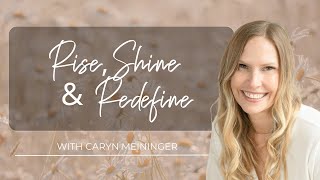
Dr. Linda Nami, a coach who works with trauma survivors, describes how acceptance and simple practices like breath work shifted her perspective after divorce, her father's death, and a suicidal crisis. She uses the whiteboard analogy: life plans get erased by unexpected events, so the question becomes "now what?" Micro-meditation and sensory grounding help move from victimhood to choosing happiness.
Chapters
When you get to the moment that you can say, okay, now what? That is your pivotal moment. So one of the first things I would say to you is, sit with it. It's not going to feel good. Sit with it anyway. And if that means you cry, cry. I promise you the tears will stop. If it means you're angry and you need to scream, then you fill up a sink with water, put your face in there and scream. That is the number one step, is you just accept where you are. I say sit with it. And there are meditations that we work with where I would say, sit with it.
Welcome to the Rise, Shine and Redefine podcast where we explore personal growth, relationships, and transformative mindsets. I'm Karen Meininger, your guide and ally on this journey. Imagine a space where your true beauty shines, where every challenge is a step toward your best self, and where family and personal development intertwine. As your BFF for mindset mastery, I'm here to share insight and laughter, to guide you through the highs and lows, and to celebrate your journey towards authenticity and fulfillment. Join us as we redefine what it means to live beautifully, love our journey, and embrace our true selves. Let's Rise, Shine and Redefine together.
Welcome back to the Rise, Shine and Redefine podcast. I am here with Dr. Linda. Nami is the founder of Light in Me and she's intuitive focus on helping individuals harness our inner strength through a blend of therapeutic and spiritual practices. And I am so excited to be here with you today and can't wait to dive in, learn all the little magical nuggets that you have for us today. And I would love for you to share how you started the Light in Me and where this came from and how you started to really show up for yourself and create such a beautiful coaching program for people.
Okay. Good morning, Karen. Thank you for having me. The background of Light in Me comes from that. It started with the way I talk to myself. People have limiting beliefs. They use negative self talk, and that is a darkness. So the way to do away with darkness is to switch on a light so one day realize it's the light inside of me that has to take away the darkness. And I simply then came up with the name the Light in Me.
I love that. I mean, yeah, we're always trying to find the light, but I also feel we almost need the dark to have light and we need. We need that polarity. And so what inspired you to start Light of Me? Where does your journey begin?
So my background is in Counseling. So it gives me a little bit of a unique perspective as a light coach. So. So my life was basically filled with the dark. I worked it every day. I took it home with me. I had a lot of life changes, which I think we'll get into. But I took all of that darkness, and not just within me, but within other people. And I started to realize there's got to be a better way. There's got to be a way that you don't wake up and go to bed and feeling as if there's dark. And so as I went through my history with a divorce or losing my father too early, or maybe just having that Groundhog Day where every day it's like you wake up, you get through it, you go to bed, and you do it again, is when I started to realize that with my unique background as a counselor, I took that and then I said, okay, but now what? There's got to be more. There's got to be a way that whether it's raining, snowing, a hurricane, whatever, there's got to be a way that every day you can wake up and see the light. And so I just found some different methods through taking my educational background and adding in a certificate in meditation and in life coaching. And I thought I got a gift, and that gift needs to be shared. That's where that light in me needs to shine so that you can find the light in you.
So beautiful. I love that. And I want to unpack more of this transformational journey you had told me off air or previously you went through a divorce. Let's unpack that a little bit, because I know this can be a little deep. And if you're willing to share, you know, how you came out of or what sounded very traumatic and really finding the light in you to move through and to move forward and find this compassion for yourself.
I'm sure there are listeners out there now who have gone through a divorce. Whether it's something that you have chosen yourself or if it's something that's chosen for you, divorce is traumatic. And in my case, it was chosen for me. And I know we'll get into the whiteboard analogy, so I won't get into a whole lot of that about what we talked about. In the case of my divorce, I had been married for 22 years when I discovered that my former husband had a girlfriend. So I don't have to tell anyone who's been through it. It takes your breath away. So you have a choice at that point. What are you going to do? Am I going to live the same life as he's moving forward and surround myself in darkness and sadness and crazy? Or am I going to look at that as the pivotal moment of saying there's more to life and transform myself, which is what I choose to do? It's a good life. Gets scary. No matter who you are, and whether it's this divorce or it's a sickness or, you know, fill in the blank, life gets scary. And then it's up to us to either decide to stay in that dark or to find a way to go there's better. And I will forever be grateful to my former husband for doing what he did, because I don't know that I realized how unhappy I was until I was no longer unhappy. Yeah, those moments that change a person.
Yeah. So, okay, not to bring you back to the trauma, but you find out your former husband has a girlfriend. And I think for a lot of people out there that this may or may not happen for them or. Or something happens in the marriage where you. You're really. There's no more choice. It's like, okay, we can choose the choices. You either move on through it and try to find the happy and the light, or you and you find the perspective, or you stay on the hamster wheel and stay in the darkness. So what was it for you when you were in this moment of darkness, of trauma, of disbelief, like, after you kind of processed what was actually happened, what was the small step that you kind of took to go and find the light? Because I think for a lot of people, they're just in the loop. They're in the loop and they get out of it, and it's like, what can I do to at least shift 1 millimeter out of this loop to start changing it? And what did that look like for you?
Well, for me, I didn't have a. Someone who could sit down with me and recognize, you know, where I was and a way to get out of it. So my story is probably a little bit different because now I'm going to stop and I'm going to go, there's me. There are other life coaches. There are people now that you can reach out to and go help. But at the time that I went through this, and I'm going on 12 years now, it very much seemed like I was all alone. So the pivotal moment for me, and this is one that I'd say I don't recommend to anyone, is I wasn't pretty. Like, I was in disbelief. I did crazy woman scorned scenarios that I stopped now and I go, who was I? The pivotal moment for me, in all honesty, was as I was leaving our home where we raised our kids, and he now was living there with a girlfriend who I found out later was pregnant. I think that the moment that kind of hit me, and this is where it will happen to people. You have a moment where you're just like, oh, my, like, something's gotta change. The pivotal moment for me was as a counselor, I became very suicidal. And the shift came when I remember going through paperwork and moving into this little one bedroom apartment. When I looked at paperwork from my life insurance policy and he was the beneficiary, and I just remember this light bulb going off that was like, he's taken enough from me. And if I choose to end my life right now, I just benefited him more, like, maybe financially, but it somehow was this little shift where I was like, what am I doing? Like, I just keep finding ways to make life harder for me, but it would have helped him. And I think it was in that moment that I reached out and I got help. And I ended up being hospitalized in a mental hospital as a counselor. Like, that's a what in the world. And I think that that's. That's that moment where people have the moment where you're just like, it's got to be done differently.
Yeah. It's almost like, okay, this is rock bottom. I'm not going any lower. And I get it, because even though, you know, as coaches, we're in counselors, we're supposed to be judgment free, but we're also human. And these judgments come up and it's like, yeah, if that's what's was going to get you up to, not die because you didn't want your former husband to benefit any further, sometimes those things are the shift that we need.
Yeah, absolutely.
And.
It can be beautiful. Yeah. And then the other moment that I remember vividly is, I mean, of course I was in a much better situation than a lot of women. Our children at the time were 21 and 18, which it didn't seem like it was a benefit then, but it truly is. But I feel like the other moment that I had this complete light bulb moment was my children, you know, without getting into too much personal, we knew my former husband's girlfriend. He had worked with her, so we knew her name, we knew who she was. It was not like something random. It obviously took years to grow into what it was. And I can remember, you know, wanting to be. And I was that angry woman, scorned And a lot of my anger was placed toward her, which in hindsight, I'm like, she was single, you know, you don't know the story she got. But the other moment that I can really remember is the light bulb moment is my children were absolutely amazing to her. They were lovely to her, you know, and they have since accepted their half brother and sister as their own. And I got angry a lot. And this is part of where I say to women I work with now, one of my big things I say is, you've got to shift your perspective if you ever want to change your reality. So to live in that anger and to be angry with my children for being so wonderful to her wasn't doing anyone good. And I had a very good friend of me one time sit me down and he looked at me and he said, linda, why are you angry with your children for living what you've taught them? And all of a sudden I was like, he is so right. You know, I raised my kids to be non judgmental and to understand that a lot of times people we love will do very painful things, but it doesn't make them any less a wonderful human being. And my former husband and his girlfriend truly are lovely people. They truly are. And how can I hold this anger? Because my kids have chosen to live that life where I would say to them, you know what, maybe he wasn't the best husband, but he's an amazing father. Or you know what, maybe I wouldn't have wanted them to make those choices. But you love them anyway. So that's the other moment where I was like, get rid of that darkness. Shift your perspective. Choose to look at all the good that this horrible event placed into your life because you can change the way you look at things. And it's the same, you know, Wayne Dyer. I don't know if you're familiar with Wayne Dyer, but he always said, change the way you look at things and the things you look at change. So it's that same shift your perspective and change your reality. And it's a conscious choice that we all get to make in every moment, every day, until it gets easier.
Yeah. And I don't know if you're familiar with Byron Katie's work, but she's. She also says if you argue with reality, you will lose 100 of the time.
Yes, you will. It's the one sure thing.
Yes. So I love that, like shifting your. First of all, it's just having the awareness. Right. Like you are fully aware, I think what happens. A lot of people get in the loop. And they're so angry. And they think by being angry it's going to change the outcome and it will not. The only person that's suffering is you. So holding on to the judgment and holding on to the anger is just going to make you suffer. It's not changing the relationship that your daughter's going to have with the girlfriend. It's not going to change the relationship your children have with their dad. It's only hurting you. And for you to have that awareness, I really want to applaud you because a lot of people like to be in the victim mentality and they really want to feel bad for themselves because for whatever reason, they think that's making them feel safe.
Correct.
So here you are, your whole life is turned upside down. You have this hope of being an empty nester, reconnecting with your husband, really just reconnecting with yourself. And then bam, it's a race. And I know you mentioned going through all of this. You came up with something called the whiteboard analogy. And. And I really want you to unpack this because I think it's really important. I want you guys to listen up because the way you look at reality, like as you shift your blocks and you shift your perspective, the relationship that you have with the block or with yourself will change. So please share this whiteboard analogy and how it pertains to your life and how it can pertain to maybe somebody listening out there and hopefully give them a new perspective.
Great. Okay, so we all have a whiteboard. And this whiteboard is. And you can pick an age, say any age, so it could be even, you know, take it to the basics of when I'm five, and your kindergarten teacher says to you, so what do you want to be when you grow up? And I was going to be on Broadway. So my whiteboard had the picture of. I'm a singer, I love music. So probably when I was 5 to 10 or whatever, my whiteboard, of course, was me on Broadway. And I could see it because it's there. So then you get a little older. Let's say you're maybe 15. I still wanted to be on Broadway, but it's just, as we get older, we are taking this whiteboard and we're drawing a picture. And this is our future. It's the way it's supposed to look. This is what is supposed to happen. So in my case, again, I got married at 21 to this amazing man who's, you know, whatever, a veterinarian. We were gonna, you know, I was gonna get him through, and then we were gonna move to this house and have two kids. And you draw your whiteboard. And so what happens with a whiteboard is something happens along the line, whether you're 5, 15. In my case, I was 42. You know, it might be somebody who's Their. Their 50s, 60s, whatever. Your whiteboard is your vision, it is your drawing, it is your future, and it's what you see, because you know that's going to happen. But what happens with the whiteboard analogy is something comes in. In my case, it was a divorce. It was my former husband, and he takes the eraser and he goes, gone. It could be an illness. It could be. I have my whole vision, and I work with some women especially, who have had cancer. That's not on your whiteboard. I didn't put cancer on my whiteboard. It may be a car accident. I didn't put a car accident on my whiteboard. You may lose a child. It may be something horrific like a school shooting or your house burns down. But the whiteboard analogy is that we, at whatever age we are in, have drawn the perfect picture of our beautiful future. And something or someone comes in and just erases it. And then it's that moment when you go, now what? So the way that I work with it is to say to an individual or groups that I talk to is take this moment to look at your whiteboard and ask yourself, when was it erased? Because I don't know an individual out there whose whiteboard has not been erased, and sometimes more than once. So then you have to stop and go, now what? And part of the work I do with people is to say, let's accept where you are right now. We're going to stop at the hamster wheel. We're going to stop with the ruminating thoughts. We're going to just say, here I am as it is. It's okay. Now what? So then the work I would do with people is I come in and I use things. You know, there'll be people who go, I just don't feel right. But they will not quite be able to identify that moment when it was gone, yet they know it's not there. So then I come in and we work with a program that I would call balance the wheel of your life. We would look at each six different areas in your life and try to identify which one is not in balance with another one. Because. Because the only way to unlock that light and keep coming back into it is to recognize those areas where we have the darkness. And then we'd move into things. There's a lot of I'll do meditations with people where it's just the stop, breathe, accept. And it's a step. I mean, it's a process. And there's manifestations we would use and visualizations we would use. But the best thing about saying, I want to help you unlock the light within you is to realize that all of our light is different, but it all shines just as bright. But it takes getting to know someone and getting to know your own life, where you can walk away from work you've done with me and go, but now I have a light to shine. And then you shine your light to other people. One of the best things that I like to do, and this is whether I'd be working with you as an individual or if I'm talking to a group of people, is at the end of a session or a workshop and is to just stop and say, check in with yourself. How do you feel? Because may the light in me shine to the light in you and then radiate for the world to see. Because that's what it's about. It's about whatever the darkness is, turning off the dark and turning on the light and then carrying it on, not just selfishly for you because you'll feel amazing, but because that's what the world needs, is a whole lot more light.
So beautiful. And I love. You know, you kind of help people with their own inner wisdom and bringing it out and learning how to accept. Because once we accept, we can move through it, right? And we can. We can learn to forgive, and then it's not so hard. And I think, like, especially women who have gone through what you've gone through, they want to take full responsibility with no compassion. And so finding their light, their light is so dim that how can you get them to a place of, wait a minute, like, you have a light within you, like you were saying, and really shine it on other people. I think it's such beautiful work. And I'm so happy that there are coaches and people out there to support and hold space, because I feel like we get so drowned in the darkness.
Oh, we do.
And love. Like, how can we accept? Like, how can we accept what is right now? And how can I meet you where you are right now so you don't feel alone? Because I think that's what happens. We feel. We feel alone, and then nobody understands what we're feeling because sometimes we can't put it into words. So you, as their Coach or any coach can really hold their hand and be like, okay, no, you have this from within. I learned a really long time ago. And it was called Creative Insight Journey, and it was called Yak y A K. And it's like, you always know. Like, you always know. You have the internal wisdom. You have the universe or angels, God, whoever you believe really guiding you and supporting you. If you come into a place of receiving to move on to the next level. Right. And I think that whiteboard analogy is so beautiful and. And just understanding the lens and the perspectives and. Okay, wait, how can I look at this differently? If you have a car accident and five people, five different people are looking at this car accident, they're going to get five different experiences from each one.
Correct.
But the reality was the same. It was a car accident. So you and your life have a choice of how you want to view the reality. And once you shift it, it softens and it. It does. It just feels so incredible and so amazing. So you've had a couple other transitions. I know you said your dad passed away and that was a whiteboard moment that got erased for you. How did you redraw on your whiteboard after that?
You know, he was young. He was 68, and he had a heart attack. That's one of those moments again, nobody puts that on their whiteboard. I had a heart attack at 47. Nobody puts that on their whiteboard. I think that through every instance that happens to someone, you get a little better at realizing, I got through this pain and I can do it again. Life is not easy. And I always would love to sit down with somebody who decides to work with me and say, I want to assure you that life gets easier, but it never does. And that is not for me to be like, It's a negative, dark statement. That is, like you said, that's reality. So to first of all be able to look at what is happening and say, I can't do anything about it is definitely a choice. And I was so focused when I lost my father at getting my mother through it that I don't know that I actually grieved until much, much, much later. I have three sisters, and I'm very close to them all. And I am so fortunate to have the love and support of my mom and my sisters that looking back at that time, if I couldn't have leaned on each of them, I don't know who I might have been or what I might have done. And that's just another shift that I would encourage anyone. When you are in pain is to stop and say, who? Who do I have? Because when it is so dark that you don't know what step to take next, it's really hard to realize you have a support system. So that's when I say, who do I have? Because the goal of being able to look at the whiteboard analogy is to be able to look at it and fear it, but to realize that there are people. And if you can truly say, and I do have people are like, no, but I'm alone, then you have yourself and you have that light. So it's being able to look at. I don't want the pain. I don't want the hurt. I don't want the anger. But I have the tools to take one more step and then one more step and one more step, and none of it's easy. Like, I don't ever want a listener to hear me and think, what was easy? Because, Again, it's been 12 years since my former husband and I went our different ways. And it has been 14 years since my father died, and it still hurts every day. But you don't focus on the hurt. You focus on knowing it's there. And I can get through it. You learn to live with it, not ever be like, oh, I gotta get through it. Because you won't. You never will. There's never a painful moment. There's never a time your whiteboard is erased that you forget what was there. That picture's still there. You just learn to acknowledge it and move forward. The other thing I like to say is people go, oh, so I have to let it go. And I'm like, never, Never, ever, ever look at your history and your pain and choose to let it go or work to let it go. It doesn't happen. Let it be. It's there. Just let it be. And then take one more step.
I love that I lost my dad almost five years ago, and I can completely relate. And it's like, you're in this darkness. And, no, I don't want to let my dad go. I don't want to let my sadness go. But at the same time, it's like, well, I know my dad wouldn't want me to be unhappy or sad about him. He was like that. So when. When I start to shift and be like, okay, wait a minute. What were the good things about my dad? And have the happy memories, it brings smiles and laughter to your face, and you start to become grateful that you had that experience with a loved one, that you got to experience that laughter, that support that love. And when you shift again, this whiteboard analogy and this perspective shift, we can really hone in and start to change from within and not have to suffer so much. Yeah, maybe life doesn't get easier, but it doesn't have to get harder.
It doesn't. And it gets more beautiful. It truly gets more beautiful with every day. Every day you live and you go to bed and you wake up, it's beautiful. And there is a light. And I've worked with people who will sit down and say, there's not. I lost a child. I'm like, no, right now, you feel as if there's nothing. But you know what? I see my dad and my kids every day. I see my dad and my sisters every time I talk to them. And he was this incredible force who. I see my dad sometimes when I will work with married couples, and I hear myself saying things to them, like, improve your argument. Don't raise your voice. I realize how much those people that we have lost live on in us again and again and again. And, you know, my son is getting married in June, and my father was my son's best friend. And I can remember years ago thinking, oh, my God forbid anything happens to my dad, because I don't know what will happen to my son. Let me tell you what. My son blossomed. And, you know, he's got that light where I see so much of my dad in him. And I'm gonna be sad on the day that my son gets married to think that my dad's not there. But, you know, my dad wasn't there to see my son graduate from college or when he got his master's or when he became a dentist. He was not physically there. But all you have to do is when you shift a little bit, my dad's right there, and my son's eyes, and he's so proud. And that's where I say to people, pain hurts. But you can choose to say, this pain hurts, or you can choose to make it beautiful pain. And that is really a blessing to be able to have that knowledge that it can be beautiful pain. And, you know, we talked a little bit about polarity. You don't know what the light is. And until you've experienced the dark, it's the same thing where I'd say. I would never say to anyone, the pain goes away, but it's that same polarity. It can be pain. It's still there, but you can make it a beautiful pain.
Yeah. And it's like, if I'm not condoning, let's experience pain. But if there is pain there, like you said, there's polarity. So there is the opposite of pain.
Right. And that's the reality where you say, I'm not condoning, let's experience pain. Nobody's gonna say, hey, go experience it. But we are all going to experience it. And it's just again, when you said, how do you accept where you are? I think that's one of the first things that I would encourage anyone is to say, accept you're in pain, and it's not going to change. Pain is a fact of life.
So what can somebody do to start shifting into acceptance? Because there's pretend acceptance of, like, yeah, it's fine, it's fine. And then they're truly accepting where it's very neutral. And how can somebody start the process of accepting? Because I feel like it's a lot of trouble.
Yeah. Because I'm sure, you know, people are sitting out there and listening and saying, okay, great. So I just said, I'm angry or, great, I'm hurting. Now what? And again, that's part of what I would say is transformational coaching. When you get to the moment that you can say, okay, now what? That is your pivotal moment. So one of the first things I would say to you is, sit with it. It's not going to feel good. Sit with it anyway. And if that means you cry, cry. I promise you the tears will stop. If it means you're angry and you need to scream, then you fill up a sink with water, put your face in there and scream. That is the number one step, is you just accept where you are. And I say, sit with it. And there are meditations that we work with where I would say, sit with it. Let it wash over you. You are angry, you are hurt. This isn't fair. And that's okay. You're gonna sit with it.
Yeah. I think we're in this society of feelings are. Are bad and a sign of weakness, and we don't want to feel the feelings. We try to push them away. And like, for me. Yeah, for me, like, I suffer from anxiety. I have anxiety all the time. And the other day I was in the shower and I was speaking, okay, I have the sensation of anxiety coming up. And what I did in that moment is I shifted this sensation to not mean anxiety, but to mean, oh, there's a breakthrough coming. Same sensation in the body, new thought.
You're shifting the way you're looking at it.
Right. And so I think for people to come into acceptance is like, feel it be still. What? Feel all the sensations. Do a body scan. Okay, my throat is closing up. I feel heavy breathing. Like my body hurts and aches. And whatever that sensation is, is really sitting with that. I love that. I think that really is the first step to becoming into alignment of acceptance of. Okay, I'm going to give you a.
Little something because with your panic attacks or your anxiety, where I would say to you, that's in the very moment that I would say, do a prayer, be present meditation, which is kind of what you're doing, except that for a lot of people, when you're in that moment of a panic attack, it's those symptoms that you're afraid of, because a lot of people will be like, I thought I was having a heart attack. So in that moment, I would say do a be present meditation. Find your pulse, whether it's your neck, your wrist, your heart, and focus on that. And be like, okay, my heart is beating. And then come up with, like you said, as you're shifting, come up with some different words. I feel my heart. I am alive. Or as it is, like, just come up with simple. Where you repeat it and you're noticing something else and not so much of that anxiety. And it's the same thing you're doing. It's just a shift, which I tell people. I mean, just shift. Yeah. And you're doing great. That great practice of just letting it wash through you.
Yeah. And just getting really present. Like. Right. Because when we're present, we're not traumatized by the past and we're not worried about the future. And I think we're in such a go, go, go grind society that it's like, I was getting my nails done yesterday, and I was like, this is taking too long. Like, I couldn't just sit and enjoy getting my nails done. It was like, no, Like, I need to get stuff done. I need to do this. I have it. And like. Like the loop. The loop happens. And when we can get still and be like, okay, wait a minute, let's get present. As my dad would always say, it is what it is. And when we can really get present, if this is what it is, you.
Focus on the beauty of the now.
Yeah.
So, yeah. When you're getting impatient or you're getting angry or you're getting scared, wherever you are, you focus on the beauty of the now. And it's. There's another simple exercise where I would give people to kind of transform from the whiteboards. Gone. To the next step. I practice meditation all day long. Part of it is I get up every morning at 4, and I will do what people traditionally see as meditation, and I'll take an hour, and I will sit in silence, and I will journal. But meditation is something that you can practice all day long. So when you're at the nail salon and you're getting impatient, or you're in traffic and you're getting impatient, or somebody says something that just makes you angry, and it's like you said, you feel yourself going here and not staying here. A simple exercise and part of meditation practice is to be present and look at the beauty. So what I would say to you is, in that moment, either look for five different sites you didn't notice before or listen for five different sounds. And then. So you do that and you notice the beauty of the sights or the beauty of the sounds. You've brought yourself back to this moment.
Yeah. I love tapping into the senses to get present. You're like, okay, what am I seeing? What am I hearing? What am I feeling? What am I pacing? What am I saying? Smelling? And. And with the visual. What. Something that I learned also going on with. With finding five things is also picking a color and being like, okay, where are there five things that are this color? And then it almost becomes like, oh, it's like, okay, now I'm gonna get some challenge myself and be present, and I'm gonna find everything red. Like, I remember I went for a walk and I went on a color walk, and I was like, okay, I'm gonna pick the color yellow. And I walked outside and there was this beautiful, like, tree with jello flowers on it. And I've lived there for years and never once noticed these jellyflowers on a tree. So just really finding the beauty.
That's a beautiful thing.
Yeah, I love that. I really love the idea of tapping into your senses and getting present, because I think a lot of people don't know how to get present. And it's like, well, okay, I'm present. Yeah, I'm here. But your mind is still like, everywhere.
Else, feeling whatever emotion or. Yeah, exactly.
Yeah. It can get really challenging for people, especially when they are in the darkness and in this victim mentality and can't get out of it. But at the end of the day, you guys, it. You're the one suffering. Like, you're the one. Your pain projecting onto others isn't changing the reality. Exactly. And I think we tend to feel, especially if we're feeling shame about our own stuff, we feel by continuing the shame and punishing ourselves somehow that is going to serve us in some kind of way.
Exactly. And the other point that I would make to that is, let's go back to the example of me. And I keep saying we just have to accept it as it is. Another way to look at this, which is all part of I really am big on transformational thoughts and speaking is I have the choice. I could be happy without my former husband or I could be unhappy without my former husband. But the common denominator there is either way, I'm without my former husband. And it's the same as when you look at a death. I can make that choice to wallow in the pity of losing my father or to do things that make my father proud. Either way, I don't have my father. So when you talk about the anger and you think it's going to make a difference, that's when I would stop and say to whoever I'm working with, either way, the whiteboard's been erased. That is the common denominator. That is something you cannot change. So change what you can.
Yeah. And you always have the power of choice. Something I teach my now 6 year old. But you can choose. You can choose. And when you choose to be happy, more happiness is going to show up for you. And if you choose to be in pain and suffering and wallowing in your mistakes, you're gonna. More of that is gonna show up.
Right.
It's like manifestation. Right.
Your vibes will always speak louder than your words.
Right.
So we're gonna shift in that vibration.
Yeah. And so like, you look at your life like a movie, right? Like your thoughts and your, like everything that you're thinking and how you're choosing to live, it's going to show up in your reality on screen. Yeah. And it's hard to grasp when you're not in it. But like you said, Wayne Dyer, change. Well, Wayne Dyer also said, change your thoughts, change your life.
Right.
And it is so powerful because what happens is the thoughts don't actually hurt us. It's believing. It's believing that thought. And you can start shifting what you believe about thoughts. Oh, now start with the end in sight.
That's another thing. You always start with the end in sight. This is where I want to be. This is where I envision myself. And a really big part of the light in me is, how do I help you if I'm with you? See that end and how do you get to it? And there are so many ways. And that's where, you know, I'm like, oh, we could do Podcast after podcast, because you start with the acceptance of where you are. You recognize where you want to be. But that waiting room is that time in between, and what do you do with it? And that's where I'm like, you meditate, you manifest, you visualize, you do your focus wheels. There's all this work that you can do in between that seems kind of scary on your own, but work with a coach. I mean, if people are listening and you don't choose to work with me, there are coaches out there. Work with someone until you get the belief and the knowledge that you can and will do this, your life will change.
Yeah, I want to talk a little bit, a little bit more about meditation. I think it's definitely a lot more trendy now. A lot more people are getting into it, but I think people fear that they don't do it. Right. And my belief is that there's no wrong way to meditate.
Correct. There is no wrong way to meditate.
Right.
So there are different ways, sure, but no way.
What would you recommend for somebody who's just like, okay, I'm listening to this podcast. I want to start changing my life. I want to start transforming, transforming my life. I know I need to get still. I know I need to get present. I'm going to start meditating. What can somebody do to take five minutes out of their day to start making this a practice? Like, what's, like a good tip for somebody who doesn't know a lot about meditation?
You know, a lot of people say that I want to meditate, but I'm. I can't sit still or I. I can't have a blank mind, so I'm just not going to do it. And that's where I say, meditation is never about having a blank mind. Meditation is not about being, you know, sitting in silence. Some people choose to do that form of meditation. I do that every morning. But meditation more is about bringing your thoughts back to the now. So the simplest way when I do meditation coaching with people is, is you start by just saying you can't do it wrong, but you can scare yourself into not doing it at all. And again, I've done this for 12 years. You're not going to go to bed tonight and wake up tomorrow and meditate for 45 minutes to an hour. The way I do it is a practice. And everything you do, every bit of practice, makes you that much better at doing it. So if you were to say, but I just want to meditate five minutes a day, I would give you one of Two things. One of those would be to say, then break it up into five separate minutes. Because five minutes at once might seem really difficult. And if I'm going to break it up into five separate minutes, I would say to you right now, give me five different times today. So maybe it's going to be at like 11am, 1p pm, 3pm, 5pm and 7pm and I would say at those moments, set your timer. And for the next minute, whatever your mind was going to do here, here, and here is when you're going to find those five things that are red or look at your five different sites. You just meditated and then do it again. And that's meditation. The other way I would do is to say to you, in fact, five minutes a day, it's change your life in five minutes a day is a program that I used to do with married couples who would come in for counseling. But I'm going to take it one step further. Anyone can do this. So you pick five minutes in the morning, and you're not going to get out of bed. You're going to set your timer, or if you have your snooze, five minutes where you're going to lay there and you're going to feel the pillow behind your head or the coolness of the sheets or the cute little French bulldog snoring next to you, you're going to pet her. That's meditation. And then you, you know, you build on that. Meditation really is simple, but like I said again, it is a practice.
All right, for all you moms out there, I don't want to hear excuses of why you can't meditate. You can even do this with your kids. Like, hey, wait a minute, let's find five colors right now and set the timer for one minute. And you just got really present. And if you do have children now, your children are learning how to get really present, right?
And, you know, that's the other thing that you and I talked about a little bit, is that when I started my doctorate, which is in crisis and trauma counseling, kids are afraid. People are afraid. You know, we've lived through Covid and there are mass murders, and it's a scary time. And like you and I talked about a little bit before the podcast, my vision when I started my dissertation was I wanted to find a way to introduce meditation into schools so that kids learn the basic meditation, just like you said, hey, you know, moms. But I want everybody to know how to meditate. It truly is so beneficial to you emotionally and mentally and Physically, there's a study that Rumi did that said one hour of meditation is equal to four hours of good sleep. So that is somewhere that I would say if you take nothing else from this whole podcast, go learn to be present and do those be present meditations and share it with your kids, share it with your parents, share it with your friends. It is so beneficial and so needed at this point in time.
Absolutely. I think that is a beautiful tip and a beautiful takeaway is just learning how to get present. When you get present, you're free, you feel free, things soften, you are safe, we're always in fight or flight. And when you're present, you're safe. I mean, unless you're literally being chased by a tiger, you know, or something.
But later, after you escape the tiger, there's going to be a good story. You're going to shift your perception, change reality and realize it was a beautiful thing that happened.
I love that. Yeah, absolutely. So, Dr. Linda, where can people find you? How can they connect with you? Where are you present?
The easiest way to find me is to go to my website, which is www.thelightinme.net. if I have any, any events that I'm doing will be on the website. If I'm going to be on a podcast, it will all be there. And there's also a contact form, so I encourage anyone who's listening. If you have questions, reach out to me. Part of what I do is connecting with people wherever you are and I love that. So send me a text, send me an email. If you have a question about something I've said, go ahead and ask. And if you're somebody who wants to work with me again, I have on my website, I'll give you a 15 minute consultation so you can tell me maybe what's going on and I can tell you how I would help you. Anytime we make the choice to shift our perspective, it is not a one size fits all. So to take the 15 minutes to connect with me to see how I can work with you is certainly a beneficial thing to do. I also do public speaking. If you are listening and you're a company and you're like, I want her to come in and work with a company or give a talk about any of these things, the whiteboard, analogy or meditation or manifestations or visualization. Again, just reach out to me through the website where you will see, see my phone number and you. And there's a contact form.
Beautiful. Thank you so much for taking your time today. I thought this episode was incredible. There are so many magical nuggets in this episode. I really hope you guys can take away some of what Dr. Lynn said. I mean, this was incredible insight and just so beautiful. And I really wanted to thank you you so much for being here today.
Oh, thanks for having me. It was fun.
Thank you so much for joining us today and being a part of our journey towards redefining success and creating an abundant life. If today's episode inspired you, we have a special gift for our listeners. If you love the podcast, consider leaving us a five star review on your favorite podcast platform. As a token of our gratitude, we're offering an exclusive Rise and Thrive checklist designed to help you create a thriving morning. Here's how you can claim it. Simply take a screenshot of your review and send it to us@helloarenm.com that's hello. Once we receive your screenshot, we'll send you the Rise and Thrive checklist straight to your inbox. Remember, your reviews help us keep the podcast going and reach more listeners who are on their path and redefining their life. So your support means the world to us. Until next time, keep rising, keep shining, and dare to redefine your life in extraordinary ways. This is Karen Meininger wishing you well and lots of love.