Building a Biotech with Celine Halioua, Founder and CEO of Loyal
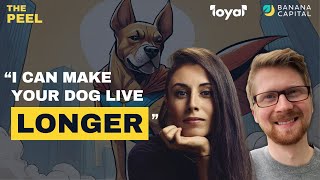
Celine Halioua founded Loyal to develop the first FDA-approved drug extending lifespan in dogs, using decades-old IGF-1 research. Dogs show aging signals in six months and lifespan gains in four years, making trials feasible. The company raised $5 million in seed funding and projects a $125 million total raise, targeting a multi-billion-dollar market.
Chapters
had been really interested in this biology around IGF-1 and growth hormones, where if you modify this gene, which gave them really, really low levels of growth hormone, you actually made the worm live significantly longer. And there had been all this foundational work for decades showing, you know, reducing growth hormone, extending lifespan. At the same time as I was like banging my head against the wall trying to figure this out on the human side, I found this paper that showed the genetic dog size lifespan, the association with these genes. And so I thought like, oh, this is really interesting. I know how to make big dogs live longer. To skip ahead a little bit, when I got that term sheet, I didn't like reply for a week and I think he thought I was shopping it. I actually just was like not sure if I wanted to sign it or not. It was a really, really serious decision to decide to start Loyal. In fact, Laura had to like convince me to start Loyal. She like took me on a walk and she was like, you really should do this. This is like the thing you should do. I like remember the boots we were sitting in where I was like, okay, I'm gonna do it.
Welcome to The Peel, where we explore the world's greatest startup stories. I'm your host, Turner Novak, founder of Nant Capital, venture capital firm that helps its portfolio companies live longer. I'm excited to share this conversation with Celine Halioua, founder and CEO of Loyal. Loyal is a biotech company developing medicine to help dogs live longer and healthier lives. We talk through all things longevity and why it's historically been a hard market to build in and invest in. Celine then shares why it's possible to extend dogs' lives with drugs that slow their rate of aging and why she thinks it will also work on humans. Celine is building one of the few startups in Silicon Valley getting drugs approved by the FDA, and she shares why she went the FDA route and what she's learned. We also talk through the differences between building a biotech and software startup, raising her seed round when she didn't even know if she wanted to build the company, why the rate of growth is the most important and hardest skill to measure when hiring, and all her biggest mistakes made as a founder. I love this conversation and I think you will too. Shout out to Todd Goldberg and Julian Weiser for helping suggest topics for our convo. Let's jump in after a quick word from Warp. This episode is brought to you by Warp. If you're a founder with employees in multiple states, you know managing state tax compliance is a pain. Warp not only automates state tax compliance, but also offers a user-friendly experience tailored to the unique needs of startups. With their robust in-house team of experts, Warp ensures your startup remains compliant across all 50 states, giving you the peace of mind you need to focus on scaling your business. They also make it easy for startups to provide health benefits for employees, hire international contractors, and even claim R&D tax credits. Hundreds of startups trust Warp to handle their payroll and compliance needs, You can go from zero to payroll live in just 2 days, and their customer support team is friendly and responds super fast. Don't let payroll and compliance hold your startup back. Visit joinwarp.com/peel or tap the link in the description to get started and receive a $1,000 gift card when you run your very first payroll. That's joinwarp.com/peel. Thank you, Warp. Now let's jump in to today's episode. Celine Halioua, how's it going? Welcome to the show.
Going good, going good. How's it going with you?
It's going pretty well. I'm excited to learn about longevity, Loyal, life extension, how to make a biotech company. I think those are kind of all the, the rough topics we're going to hit on. But I think the first one that's super interesting is longevity just in general. What is it? Why is it a thing? Why do you think it's even possible to extend lives?
So I'll say first what it's not, at least from my POV, and then what I'm trying to do. So we're not working on immortality, we're not working in radical lifespan extension. I'm sorry, Peter Thiel, I don't think loyal's gonna make you live to 150. The way I'm really interested in working on longevity and anti-aging is really actually much more boring. It's preventative medicine for multiple seemingly unrelated age-related diseases at the same time. But the way I usually describe it is, you know, the majority of older Americans are on statins to reduce their risk of a certain category of age-related cardiovascular diseases with age. Can we create a daily pill that reduces the risk of, for example, cognitive decline, osteoarthritis, and cancer at the same time? You know, diseases that are historically considered very different mechanistically, but the aging thesis is basically that they're all underlaid and under, And driven by the ways that our bodies break down and age over time. And the end state disease is the finality of it, but you're actually building the foundations of these diseases for decades prior. So yeah, that's how we're working on, um, maybe one day we'll get to radical lifespan extension, but it's not in the pipeline today. Yeah.
So a good way to think about it is maybe traditionally people think of longevity and they think live forever. You think of longevity as just your, your cells age slower and they, they break down slower.
Yeah. The way to think about it is like live healthier, longer. So we're explicitly looking at lifespan extension. As far as I'm aware, we're developing the first, you know, hopefully FDA-approved drug to extend lifespan and healthspan, right? We're not looking at any disease cases, anything like this, but the focus is really on extending lifespan by extending the number of quality years, right? So the focus is Can we take this organism, in our case, spoiler alert, dogs, and make them healthier for longer? And if the dog is healthier for longer in their period, they'll invariably live longer too. So the lifespan extension is secondary to the quality of life improvement, which for both dogs and humans is what we actually want, right? People just actually want to have a higher quality of life, and therefore then you also hopefully have the longer, quantitized too.
So this is a question I didn't want to miss while we're on the longevity, from Fred Ehrsam. He's the one of the founders of Coinbase. He wanted to know just what do you think are some realistic predictions around what longevity will look like just over our lifetime? Assume that's the next 50 years. I don't know, maybe average listener, what do you think we'll see in terms of like the quantitative lifespan extension?
That's a really, really hard question to answer on the human side. Because if we wanted to extend lifespan in humans on average, you actually wouldn't block and tackle age-related diseases first. You'd block and tackle basic care. And from an actuarial perspective, that would actually extend lifespan much more effectively and with a much higher probability than, you know, trying to develop, you know, some existential niche difficult longevity drug, right? So I'm talking about things like You know, obesity, metabolic decline, preventative medicine for different diseases, right? However, most of the time when people are asking about lifespan extension, they're not asking about the preventative medicine aspect of it. They're asking about, okay, I'm already doing everything, right? I'm super healthy. I got like one of those Levels patches and an Oura ring and an Apple Watch and 8 Sleep and like all this shit. Now that I'm in my optimized state, how do I get a drug to help me live healthier, longer. And I think, I mean, what we're trying to do candidly is get the first drug FDA approved first for dog lifespan extension, but we're gonna try to do this in humans too. And I think the minute there's one drug that's approved for, you know, generalized lifespan and healthspan extension, I think we're gonna see many approved for this. And then it's going to kind of start this space race, so to speak. And this is a pretty standard model in biotech, right? We're seeing this right now with the weight loss drugs, with the GLP-1s. Where, you know, there was a lot of work that went into these drugs. They're actually pretty old drugs, but now that somebody's proven the TAM and proven the demand, now there's a bunch of Gen 2s, Gen 3s, Gen 4s that are potentially going to be way better than these first-gen drugs. And I think that's going to happen with longevity too. We might see a really rapid increase from there. So I think the biggest variable is going to be when does that first lifespan extension drug get approved? You know, hopefully we do it, or hopefully we don't do it, not because we fail, but because somebody else does it faster. But I think that's going to be the big driver of how much longer we actually get to live.
So a little bit of a detour. I remember hearing you say once you, you were super cognizant about building loyal. When you, when you say failing, you specifically said you don't want to fail in a way that holds back the rest of the industry. Why is that so important to you?
So there's a couple of things. One is I think there's a lot of responsibility when you're working on something novel, right? So even in the biotech space, if you are working on a breast cancer drug and the breast cancer drug fails, nobody's going to be like, you know what, it's not worth it to go after breast cancer anymore. If you're working on, I don't know, B2B SaaS or like Salesforce competitor or whatever, right? Like, and you fail, people are going to be like, Oh, that's a hard problem. Like, here's another $5 million for your next shot. And they'll also fund the 5 other companies to try to do this, right? When you're doing something weird and novel where like the baseline assumptions that go into it are not consensus yet, like dog longevity, like longevity in general, failures are seen not only as a result of the luck or decisions that you've had in this shot on goal, but also the validity of the field. And so I'm, I think Loyal has gotten far enough along now where if we imploded tomorrow, I would like to think that like this idea of venture-backed longevity, dog longevity startups would still make it because we've made so much progress. But for a really long time, if we kind of imploded, I think we would've burned out the area, not just for us, not just for me personally, for my career, um, but probably also more broadly for dog longevity drugs, right? At least for a period of a few years until somebody came in and was able to do that. I felt that a lot when I first started fundraising for Loyal for two reasons. One, animal health. There was a number of animal health startups that got started around dog cancer drugs, which we can go into it if we want, but at a high level is a bad idea 'cause dog cancer drugs actually make very little money. So they're not venture scale at all. And so a bunch of VCs lost money on those and then were like, we're not touching animal health again. One of the reasons why you don't have a lot of biotech investors. And again, the assumptions are very different going into dog longevity drugs, but it's just an activation energy that's too high. And two, I mean, not to bring up the, I don't know what to call it, black sheep, elephant, whatever. Elizabeth Holmes really did this, you know, for female founders. And I'm really cognizant of that too. And I'm the in our very small niche, relatively high-profile female deep tech founder. And if I imploded for certain reasons, then people would be like, oh, it's a pattern. Yep, that's true. Fuck women, can't fund them. And of course, I get those questions all the time. I have been for 5 years. I react much more rationally to them now than I used to. Um, but yeah, it's, it's, it's a, it's a big responsibility.
Yeah, I'm glad you're doing it. I mean, it's a good, it's a good mission as someone with a dog that is very adored by her family. We are very excited for her to hopefully be able to live a little bit longer.
We should have dog cameos. Where's your dog?
My dog's asleep on my bed, but mine does not come with me to work. Otherwise I wouldn't get any work done.
Hmm. Fair, fair.
I think the reason we first connected was you had written a bunch of things on How to build a biotech startup. And I thought it was super interesting because some of them were non-intuitive. They made sense to me after I read through what you wrote, but it was, it was new for me. So I think at a high level, what are some of the biggest differences between building a biotech startup and more of a traditional Silicon Valley startup?
So there's a lot of things. There's this really, really good blog post from Sam Altman that talks about basically this idea that doing hard things is paradoxically easier. And I 100% agree with that. I 1,000% agree with that. I think I have had so many tailwinds building Loyal because what we're building is hard. And what we're building is something that people really, really, really, really want in a way that like just nobody's gonna care that much about software, right? Some software companies like Figma, you know, has really built like a cult following behind it. But the vast majority, you know, do not have people like, You know, you should see the customer support emails we get, like people like, you know, begging us for the drug or like early access and things like that. You know, people are very, very motivated by this. And so it's, I would say one of the big differences is that when you start a software company, I've never run a software company, right? But from what I understand, it's a lot of, you know, product market fit. Does the market actually want this? There's not really that many questions on can you actually build this? Thing, right? I'm sure there's nuances, and I'm sure some engineers getting like really offended now, but like on average, like, can you build the thing is not a massive existential risk. It's the market. That's the risk. On the other side, in bio, we have a little bit of market risk because nobody's obviously commercialized the longevity drug. But in general, it's like pretty consensus that if we bring a safe and effective dog longevity drug to market, that enough people are going to want this that will at least make enough revenue to justify a billion-dollar valuation, if not much, much higher.
Yeah, it's kind of a rhetorical question. Do you want to live longer, yes or no?
Like, you would not believe, Turner, how many people have passed on Loyal because they don't believe in the market, including some like big tier funds where they're just like, we don't think people are gonna pay for this. And I'm like, like, is this just your excuse? Do you not just like me? Like, Take another excuse, guys, but it's actually very common.
I found that sometimes it can be hard to digest consumer market size if something isn't there. Like, it can be hard to take these subjective concepts, like let's just say mental health. There's no real— maybe if you go back a couple years, there, it wasn't really a concept people thought about. It was stigmatized. I'm sure if you Googled how big the market was, it was like a billion or two, and it was just therapists. It was services. Maybe you could put this in a similar category. It's like, what's the market size for longevity? It's people going to clinics and getting blood transfusions to live longer. Like, it's a different, it's a different market altogether.
Yeah. So I mean, this is one of the things I learned actually, and I think I did really well in my Series B and I historically did very, very badly at. So whether it's we have more data, we've come to more consensus, I've become a better founder at just talking about market sizes, which to finish your point, basically the big focus I had in the early days was how do we do this? If we did it, we were pretty sure it was gonna be valuable, right? And so then it was like the how. And so I was super, super focused on that for years. Now we're getting to this transition where like, okay, we're pretty sure it works. So now it's like, how do we bring this to market? One of the biggest things I learned was exactly that. How do you paint a vision of a market where there's no direct comparable? And previously the answer realistically was the only people who invested in the company were people who had dogs and got it. Now I have finally started to get some not dog people to invest in the company because they understood how to make those comps. So like very specifically in my world, I had drugs that I, that I had similar like patterns. So for example, heartworm preventative, right? It's a recurring drug that you give to the dog for the rest of the dog's life. That's to prevent something that if the drug works, you never see it happen, right? You're not getting an acute benefit, you're getting the reduction of a negative. And heartworm preventatives are super successful. A third of US dogs, over 33 million dogs, are on a heartworm preventative. And one of the leading drugs, Heartgard, makes half a billion a year. And there's a billion competitors on the market, right? It's a super fractured market. So the total class makes probably closer to $2 billion. A year in revenue and it's super high margin revenues and explaining the market and like what, like the, the margin on that revenue is like all of these things and just basically being more quantitative about it went from, oh God, everybody's passing 'cause they don't believe in the market, at least at the face of it, to people really believe in the market. And then the question became on distribution and all these other things that were, you know, a bit more hard for me because I'm again, de novo, doing all of this, but in general, like much more tractable questions to answer.
And then I think another really big difference with bio is you raise a lot of money early on versus compared to software. Like it's just a little bit more dilutive. Can you talk about that?
Oh, kind of. It like isn't, it isn't. So I would say it's upfront more dilutive, back end less dilutive. So upfront, yeah, my seed round was $5 million. I sold probably about a third of the company. Which like, knowing what I know now, would've never done that. At the time I was like, I wanna get the money in. I think I have a hypothesis for what's gonna work, but if I'm wrong, I wanna have a few cycles. It ended up being the first thing we looked at worked, which was nice, but very rare in biotech. And I wanted to be able to hire people from an industry in a world that's not super startup friendly. Like there was literally just a, a new biotech startup announced today this like AI thing started with a billion in funding.
I actually, yeah, I saw that.
It's insane, right? And so like people who work on biotech startups often actually don't really have the cultural risk desire or tolerance or just like normalization as you have in tech, right? To obviously you're not going to pay, I'm not going to pay somebody as much as a seed stage company as they might get at Genentech. But I can't go that much lower. There's not like a predisposition where like, oh, I wanna work for 3% equity. You kind of have to give some degree of career certainty. And so having that seed of $5 million was super important for us even though we barely spent any of it before we went and raised our next round.
Why did that happen?
Because we got the proof of concept and then basically right after, so I started the company January 2020, we closed the seed, just me and that $5 million and then we started hiring. Then COVID hit and we raised a COVID SAFE that I think doubled, like it was like 6 or 7 million that brought the company's value up significantly. I think it was like 45 million, but also just gave us a lot more runway. And we did that because we thought the market, like everybody at the time was like, oh God, like the world's gonna explode. Like we're done. We didn't realize at the time we were about to enter the biggest bull market in quite some time. If I had known that, maybe I wouldn't have raised that money.
Yeah, that's fair.
But to finish what I was saying here is that, yeah, like upfront we needed to raise a lot more, right? There was no hacking. I wasn't like sitting in a lab like typeheading that shit doesn't work, right? But now, you know, as we're getting closer to market, if I'm directionally correct in our launch timelines and the margins, we might never need to raise money again, right? So we'll be at $125 million total. And the drug should be throwing off significant revenues and we're going to have competitors. But because of the FDA approval process, the challenges we went through become our moat. So realistically, it's going to be at least 5 years before there's another dog launch in the drug market. That's 5 years of exclusivity. And we have 10 years of like explicit exclusivity on our drug. And so like there's no race to the bottom. There's no like tech ad, Facebook ad destruction. And then the last thing is it's just way fucking harder to build. There are just not that many CEOs that can build this company. And not to be egotistical, but it's just true, right? Like it's, you have to have bio context, you have to have the dog context, you have to have the consumer context. And there's just fewer people who have that who also wanna start a company. So on the backend, hopefully our life's actually gonna be a lot easier.
And I think you mentioned too, you specifically did the FDA route instead of, you know, like a, like just a supplement or something. Like you could have done that way easier. You probably would've been selling it already. Can you, I mean, you maybe you touched on a little bit, but why the FDA approval and then how is that gone?
Yeah, so there's a couple reasons. So the predominant one in the, though, the ideas that I had worked on before I started Loyal was this idea of how do we get the first drug FDA approved just for lifespan and healthspan extension. So classically when you go through FDA approval, it's for diseases, you know, diabetes or cancer or whatever it is. And then you try to impact that disease. You prove that a placebo-controlled trial, and if it works, and you know, I'm super hand-wavy here, you get FDA approval for treating that disease, right? That's great. What I really wanted to show is that this idea of a drug not targeting an acute indication, but instead targeting the inherent decline over time, which leads to these acute indications later on, is both more, more potentially tractable, right? It's easier to prevent something or reduce the risk of something than it is to wait, you know, to 30 years until you have dementia and then loss of neuronal mass and all of these things. And then try to like bring the brain mass back. It's a much harder problem. So I wanted to show that this was tractable, and I also wanted to show this wasn't crazy science. And so I wanted to show the world that, oh yeah, this idea that sounds like the Fountain of Youth, or like, you know, all of these things where like there's all this like shady marketing around, you know, help your dog, yourself live a longer, healthier life if you just buy this product or eat this supplement or like do this magical hack. I wanted an objective third party, doesn't give a shit about Loyal, doesn't give a shit about, you know, the aging thesis to be like, the data shows that this is legitimate. And I really felt like creating that regulatory pathway and subjecting ourselves to the highest quality bar, one of the highest quality bars in the world, was super important for legitimacy of the field. And I think this made the longevity field really been missing as a whole. So, yeah. And then, I think also, I just candidly, from a legal perspective, like, I really want to be able to say we got the first drug FDA-approved for lifespan extension. I think that's a life accomplishment that's very, you know, I will be very proud if we achieve it.
And then, why has it historically been so hard to get lifespan extension drugs approved?
Predominantly, it just takes a long time, right? And so, if you're going to claim something on a drug, and a drug says, you know, it's for Whatever it is, you have to show in a, you know, FDA-sanctioned, placebo-controlled, double-blinded, randomized, et cetera, et cetera, basically all these scientific integrity standards that the drug does what it says it does. And to do this in lifespan extension is really hard, right? So if I gave you a lifespan extension drug today, I'd have to follow you for decades. I don't know how long you're gonna live. What if you decide that you're really into motorcycling? And you crash your motorcycle tomorrow, like you're gonna destroy, and you're on the drug, you're gonna destroy my stats because you died of a motorcycle accident even though, you know, you were on the longevity drug. And so to quantitatively show that a drug is extending healthy lifespan would require one of the largest and longest pivotal studies. And just from a company feasibility perspective, like what VC is gonna fund that? What anybody is going to fund that?
You're a startup, you, you're 4 and a half years old.
Yeah, no, totally right. The patent life is done by that point. You have effective patent life of 15 years, probably done at that point. You know, retention for that type of study, the cost of it, it's just a logistical nightmare, right? Which is why you see all these people going after these shorter diseases where you can prove efficacy much faster. The cool thing about dogs is that you can see lifespan extension in about 4 years. I mean, you can see biological aging in about 6 months. So you can see changes in like kind of well-accepted measures of age and functional decline in these dogs, which is still like, you know, from a tech perspective, you're like, oh my God, you guys are 4 and a half years old and you're still not making money. But from a bio perspective, it's hella fast. Like the average drug takes like 9 years to get on market. We're on track to have our first product on market 4.5 years after founding. And like, now that I know now, we could have done it way faster, but it's because the feedback loops are faster. So it was kind of this, I don't wanna say hack because that's also an extremely important thing to work on in its own right, but it was uniquely feasible in the canine population. and the TAM is so damn large that the combo made it possible to fund this moonshot.
Yeah, that makes sense. And I, you've mentioned this before, I'll, I'll let you kind of talk through it. The reason that this actually works in dogs and it's super measurable and like all these differences and ages of the different species, can you kind of explain why it even would work in the first place with dogs?
Yeah, so there's a couple of reasons. What we started with and kind of the original insight of the company was that the bigger a dog is, the shorter their lifespan is. So, you know, my Rottie is gonna live about 10 years. A Great Dane on average might live 7 to 8 years, while a Chihuahua might live 17 to 18 years. And it's actually a really strong inverse negative correlation. So with every, you know, pound a dog gains, from a body mass perspective, their expected lifespan actually goes down, from an actuarial perspective, which is, really strange. Like, there's no other species that I'm aware of where you have a 2x differential in expected lifespan within the species, right? Like, I'm not living double as long as, like, basketball players because I'm short and they're tall. Um, there's really no other world where you see that. And when you dig into the genetics, the kind of insight I had— and again, this is built off of, you know, decades of scientific work, so it's, it's not like I discovered it on my own, but it's more of like connecting the dots. That it looks like big dogs have an accelerated aging disease that we inadvertently gave them due to historical inbreeding for size. So when we were selectively breeding dogs to create all the breeds we have today, right? So like Schnauzers and Poodles and German Shepherds and Rotties, these are artificial constructs that humans have created. We created breeds by selective breeding, by inbreeding most of the time.
And this is like over the last thousand years, whatever. Like, we had no idea what we were doing.
We had no idea. No, we were inbreeding ourselves, right?
Yeah.
Um, and our dogs. And so that's really effective at creating this diversity, right? That's why you see such a diversity in a 3, 4-pound, like, Pom versus, like, you know, a Mountain Dog or something like that, or a Great Pyrenees. But it also created genetic mistakes, which people are very well aware of. Right? Like the flat-faced dogs have a lot of trouble breathing. German Shepherds get hip dysplasia. Goldens have certain forms of cancer. They get a really high rate. And the thesis is that, oh, when we selectively bred dogs to grow really, really big in puberty, which is what we were selecting for, like, oh, that puppy grew really big and that puppy grew really big, breed 'em together. It turns out the genetic pathways that drive that also seem to drive the rate of aging. So a Great Dane and a big dog is just, we hypothesize and what we think we've shown, aging at a faster rate, losing resilience to age-related diseases at a higher rate, and then getting sick faster and dying sooner. And the aha moment for me is that the genetic pathways that drive this are a very well-understood longevity pathway, which I don't know if you want to go into the science, but at a high level, it's around basically these little proteins that circulate in your blood called growth hormone and IGF-1, where the same thing of hyper sounds. So if you have, you know, Chihuahuas have really, really low levels of these growth hormones, so they don't grow very big in their, you know, infancy. If you make that change to a mouse, so you can make a mouse have a very low levels of growth hormone, you get a small mouse that lives a super long time. In fact, the longest-lived mouse strain is low growth hormone. And then the inverse is true too. So if you take a mouse and have, make them have super high growth hormone levels, like a Great Dane or a Pyrenees, you get a really big mouse, a Titan mouse they're called, that lives a short period of time. And this has been shown over and over again from, you know, C. elegans to mice. And then there's even correlation data, um, like Ashkenazi Jew centenarians have a genetic mutation that makes them like a chihuahua, and they're obviously correlated with being centenarians. Um, so it's kind of the connection of like all this really, really strong longevity data with this genetic data on dogs and then the understanding, you know, facilitated by some like VC friends I had, or VCs who kind of tracked me down, honestly, being like, people would pay for something like this. Because I didn't know anything in the dog market at the time besides the fact that I loved animals. Um, and so the combo was like, oh, this is like a really cool way to work on this problem.
So one more question on this. If we, if, if the loyal drug is successful, dogs taking it, are they gonna be smaller just naturally or?
No, no, no, no. So you actually wouldn't wanna give it to a dog in puberty. You give it to a dog after they're fully grown. So these pathways are super normal, right? Like if you are really big, you will have higher levels of growth hormone. It's just that other organisms, it turns down after the animal's fully grown and in these big dogs it doesn't.
Got it. Okay. Like the aging component of their, of their DNA or their genetics.
Basically you wanna have high levels of growth hormone in puberty 'cause growth hormone's like this little protein that binds to your cells and says grow, divide, grow, divide. And that's exactly what you want when a dog or a human or whatever is in puberty. But the problem is, is once the animal is fully grown, when you have these super high levels still, it's saying grow, divide, grow, divide. But the way to kind of think about it is the dog's just turning over at a faster rate. They're metabolically aging faster. And so what the drug does is it reduces the concentration of these growth hormones in their blood to levels that are seen still in normal dogs. It's about the level of like an Aussie Shepherd, about a 40 to 50% reduction. So it's still like within the bounds of what's seen naturally in healthy dogs, but much lower. Than what you see in these like super concentrated big dogs.
Okay. So then just thinking then tactically or practically how the loyal drug plays out in the wild, like in, in a dog, it makes it so that— and so when we talk about like preventative aging medicine, it just means that you are less likely to get a disease that is related to age, like cell?
The way to think about it is that it's slowing the rate of aging of these big dogs. So you're taking, if a big dog is that had an expected lifespan of 8 years versus a Chihuahua, and you can say the Chihuahua is the baseline, 'cause another data point is that wolves, which are very, very large in captivity, will live 16, 17, 18 years, right? And the average lifespan of a Chihuahua. So let's like assume that Chihuahua lifespan is 1x, which you could argue that it's not, but whatever, 1x. Then the Great Dane is aging at a 2x faster rate. The drug is trying to bring that dog to aging at a 1.5x faster rate, for example. So we're not, we're probably not gonna make Great Danes live till 18, right? I will find out when we complete this, the full lifespan extension study, but we'll hopefully help them basically stretch out those healthy years and then therefore live a longer life.
I think I understand. I'm, I'm hoping everyone listening has a pretty good understanding at this point. And I think the story about how this all started, it's really interesting too. I don't know where the best place to start with the story, but I'll kind of let you decide how far back we go. There's a lot of interesting pieces. So when you kind of tell people the story of Loyal, the founding story, where do you usually start?
It's like the kind of thing where like you look back and you're like, oh, this totally makes sense that I was going to build a dog longevity startup. But it was not really, it was never in the plan. Like even I remember when I raised the C round for Loyal, I still feel embarrassed saying like, oh, I'm working on dog longevity, which is funny. I like really love being like, what do you do? Dog longevity, right? It's like such a fun thing. Funny two-word phrase, but at the time, yeah, it was just a little bit less socially validated, I guess you could say. So the quick background that, you know, I grew up a crazy animal girl, like 15 cats, 4 dogs, hamsters, bearded dragons, fish, mice, everything. I'm a vegetarian.
Okay.
Yeah, I'm like a, I'm like a really big animal person, which I think a lot of people don't realize. I actually like animals more than I like people. I talk about the longevity stuff a lot because that was like— I decided early on that working— the way I think about it is that age-related diseases and unhealthy aging, let's call it, reduce our free will and reduce our ability to do what we want to do with our lives. And I thought that was the most important problem to work on, so I've always focused myself on that. But I've always been like this huge animal person. I just decided early on, like, that just wasn't where I was going to spend my life energy, so to speak. But yeah, I mean, undergrad in neuroscience, that's where I discovered the aging thesis or learned about the aging thesis. Then started a PhD at Oxford on the economics of preventative medicine, which is where I was basically trying to understand basically the interaction between the economics of developing drugs and the financial incentives, which may be something interesting to talk about. It's How do you align incentives? What with what you want? I think you've seen that go really well and really badly in a number of healthcare startups in the Valley. I've tried to build a company where our incentives are 100% aligned with what's best for the consumer. We're still optimizing to help dogs and our patients live longer, healthier lives. I had a really interesting time at Oxford, and by interesting I mean bad.
Yeah, I've heard the, I've heard the story.
Yeah. Which actually was in retrospect like the catalyst for me because I had always kind of grown up, I didn't grow up with like money or like parents who did anything entrepreneurial. My mom was a teacher, my dad's a construction guy. Like I didn't know anything on this world. And so going to Oxford, I was always all like, oh, bow down to the ivory tower. Like I made it, like this matters so much. All these letters behind my name, da da da da da. And then going into that and realizing that actually it's just all people and it's all people and their flaws and that a lot of them actually didn't know anything. A lot of them did, to be clear, but a lot of them didn't and were just like resting in laurels and like politics. It was extremely frustrating, but it also kind of broke my brain in a way that made me realize that if these idiots could get this far, that I can do anything I want to do too. And that there actually were like there's rules in biotech, there's ethical rules, there's biological rules, but the rules that I thought from the societal perspective actually didn't really exist. And that was so super helpful for me to make me realize that like I have autonomy in what I want to do and how I will like want to shape the future of the world, um, in the vision that I think is right. So that was kinda like the awakening for me, so to speak.
And then is that when you met Laura at Longevity Fund?
Yes. Yeah. So I reached out to Laura because I was so frustrated about my situation at Oxford, which ended up being the most, you know, you know, cold emails. Highly recommend them.
It was a cold email. Okay. Do you remember what you sent?
Something like, hire me. And then I failed all the hiring interviews and she still hired me. I mean, that's a story for another day, but I was super incompetent. I had no idea what the hell I was doing. I didn't know anything about VC.
Wait, how did you get a job if you failed everything and you were incompetent?
Well, I was really passionate and I was really smart. Smart, but I just was not qualified to be an associate. I mean, I would argue even now, like, obviously I know a lot more about the Valley. I still think I'd be a shitty investor.
Most people actually are, I think.
Is my angel portfolio is doing pretty well, but it's just because I have interesting friends. It's not because I actually have any investor skill sets at all.
Yeah, that's, that's fair. What is a good— what makes a good investor? I mean, you've worked with a bunch of VCs. Angels. In your perspective, I mean, this is a total sidebar in the story right now, but what makes a good investor? Like, as a founder, what do you appreciate the most?
I think it's a combination of humble, asks really good questions, and then strong in the stuff that they do have context for. So I think the investors that have struggled with Loyal are the ones where, candidly, their ego gets damaged, or they feel uncomfortable uncomfortable about the fact that they don't understand the science. And then they get like insecure and then they get worried and da da da da, right? That doesn't work, right? Versus a really, I mean, I'm not an expert in all the science we're doing at Loyal anymore. I haven't been for a really long time. But the reason I'm a good CEO, so far at least, is I'm really good at asking questions and drilling down to the basics and like understanding the principles of something and then building up and facilitating the team and facilitating technical talent that's better than myself. And good VCs are that way too. So like, I think a really good example of this is Josh Kopalin at Firstround. Josh has invested in a few bio companies. He has some frameworks, but I'm obviously much more technical than he is, but he is so fucking good at like drilling down into the principles and the basics and how I'm thinking about something and the rationale and like my logic flows that even if he has zero context about what we're talking about, he can point out the like flaws in thinking or the gaps or the holes and just be like, consider this. But then he also gives me complete freedom to do whatever I think is best. And he's, I think it's actually very impressive that he's let me make my mistakes and learn. Have I made mistakes? I mean, I'm a first-time founder. It's been the biggest company I've worked at since 3 people, right? Like I didn't know what the hell I was doing, but he gave me guidance and really good VCs in general give guidance Give context. Here are the variables you may not be thinking about. Here's the world context. Like, the macro was really important to me 'cause I'd never seen a macro shift before XRP to whatever the hell we're in now. They'll give you the context and then they let me lead through it. And that's really, really, really powerful. I think the ones that have failed are the ones that have tried to micromanage me because they just, they can't. Like, even if they are smarter than me or better than me, they don't have enough context. And then so they end up leaving the, or trying to leave the company at bad places. Hmm.
What's the biggest mistake? You mentioned you kind of speedrun all of them.
Oh God, so many. Like I had our manufacturing timelines totally wrong. We ended up like, I thought the drug wasn't gonna get approved in 2 years, but it's actually, it was like a 4-year timeline. And I had to tell Josh after he invested, be like, JK, uh, it's actually 2024 launch, not 2022 launch. That was a bad one.
Why'd you get that wrong?
Because it was just a, it was an assumption. And so basically in human medicine, the efficacy timeline is what drives the timeline to market authorization and being able to sell the drug. And so I was always thinking in that framework, but in, in dog drug development, it's actually the manufacturing that's the timeline driver. And so I just hadn't thought about it enough because I was like, oh, that's just like the checkbox at the end. Because in human medicine, a lot of that's front-loaded. So it was just the missing context combined with not having the right people around the table. And then I think the other mistake, I just like did not run board meetings. And I would say actually, I think one of the best things I did was started having board meetings from day one at Loyal. So every quarter since I started the company 4 years ago, and one of our investors told me over drinks a few months ago that our board meeting, our first board meeting was one of the worst board meetings he'd ever been to.
Oh no.
I know. I thought it was, I mean, it was like, it was very accurate.
So what'd you do?
I just learn fast. Like my model for myself is I start lower than most people, but my growth rate is so much higher that I iterate into a much better place much faster. And so I think now that people have been around me for a while are like used to that pattern. Right? They're like, oh, she's probably gonna fuck that up the first time, but then she'll learn really quickly and then do it way better the second time. So we actually end up in a way better place. And I think that's honestly better because I mean, obviously everybody fits themselves, but I think it's nice because then I, I'm, I learn super fast. I like make a mistake once, but I won't make it again. I'll make a new mistake, but I won't make that old mistake. And that's really kind of been the cycle and It's, I think again, to your earlier question, I think the good investors helped me through that. And obviously if I ever lied about something or was disingenuous or any of that, like that should be a mark on my character. But all these have been genuine mistakes that have not been repeated. And so it's allowed me to make my mistakes, allowed me to be forthcoming with my mistakes, which has also been super important with the board because then I have an accountability. To it. And that also forces the learning. 'Cause I don't wanna be like, hey, you're saying I fucked up 6 months ago, I did it again. Sorry guys. Right? Like I don't wanna do that. So I use that as a motivator for myself to get better faster, even when it's super painful to be like, oh, I'm actually an idiot and mess this up. So yeah.
Yeah. And speaking of rate of growth, I know you've said before the hardest part about hiring is predicting someone's rate of growth. Have you, have you figured out how do you measure that in someone, candidate, just getting to know them, you know, how fast they'll, they'll get better or learn?
It's really hard. I think you, I think the only predictor is looking back, but I've also found, I think you kind of have to accept the fact that it's a, like, I understand why VCs like co-founders, right? Because you have a double shot on goal of like one of them growing. Into the person you need to be, right? I mean, did not figure it out, but I think it's kind of true, right? Versus, but then the reason like I'm a, and again, it depends on your personality type, but at least for personality types of myself, I'm actually pretty anti-co-founders. I think it's super difficult to predict and bet on anybody's personal growth but yourself. And so like I've had people, I've had executives that, well, I've had team members where I was like, this person's changed me. Like, I believe in co-founders now. You know, they're so high growth. I'm learning so much from this partnership. This is amazing. And then they hit a growth wall and they just don't make it past it, at least in this, in the environment they were in at Loyal. And it was really, really hard to predict. And I don't know, maybe somebody better than me could have predicted it, but I think the fact of the matter is an organization almost always moves at a higher rate than any individual can. And at a certain point, you can't give people the opportunity to make mistakes in the organization. You have to, you have to have somebody in that seat who's already learned and who can do the right thing for the org. And so there's always this inherent tension, like learning management skills inside of a startup is really, really difficult because I can't let somebody who's a first-time manager make that many mistakes, right? Because we're trying to hit our milestones, we have things to do. I can always hire an experienced person to lead an organization, so why would I allow that person to do that? Of course you wanna grow your talent, so there's always this inherent tension between the two. So I think the only thing you can do is have super fast feedback loops, how that person takes feedback and integrates it, and like hopefully, and what they're inherently motivated by. But in the end, I think you have to be okay with the fact that often a company will outgrow. Again, I think it's less for like lower-level team members, but like on the leadership side, companies will like, will outgrow people as they scale and you just have to facilitate that and like be, I don't know, it's been one of the toughest parts of Boyle honestly for me.
Really?
It's really heartbreaking.
And this is even not really a topic a lot of people talk about, but I mean, it's come up a couple times on the podcast of founders talking about understanding when they should remove themselves from the business or when they should shift back roles, however you want to describe it. That's a really hard thing to do.
I, I hate to talk about self-awareness because I feel like there's unself-aware people who are like, I'm self-aware. And yeah, but I, I try very much to set a standard in like my executive team and with my investors of like always opening the door for feedback, always opening, like, tell me what I'm doing wrong, tell me why I'm gonna fail, like give me this feedback anonymously, to my face, written, verbal, however it is. And like really anchoring myself and the team on the outcome, which is, you know, I wanna build a pharma company. That is my goal. I want Loial to be a Fortune 500, a Fortune 100 company. That's like the aging pharmaceutical company, right? Like let's, you know, high goals, but I really, I really truly want to do that. I, where I am today would be a fucking terrible CEO of that company. Horrendous. Fired immediately, right? Like I know that I am not that person today and I know I have to probably change 100 times over to become that person. And so I just try to give people that permission to understand that I know that, I know I'm fucking things up. I don't know what they are and I need your help to make sure I'm doing better and growing. And then in myself, just like meditating on that end goal and not who I am today. I think the minute you get attached to who you you are today, it gets really difficult. And it's harder and harder the further along you get because like where I am now, I could probably make a cushy amount of money and like get interviews and all that shit for the rest of my life. But it's still insufficient even though it's comfortable, it's still insufficient for where I want to go. So you always just have to like, I don't know, I think it's one of the reasons why being a CEO is kind of miserable.
Yeah. Is it miserable? Is it fun too, would you say?
Yeah. I love it. I think it's an honor to be able to make— I have no glass ceiling, I have no nothing. Like, it's all up to me. And having that autonomy is really, really epic. Like, there's always— it's like, it's like the Dune scene. He's like, I see our enemies at every side, but I see a path through, right? Like, there is a path there. I think there's always a path. A path through, right? Like, even if like our drugs imploded tomorrow, right, there would still be a path for the company to succeed if I'm clever enough, if I execute well enough, if I think it well enough through. Like, there's always— there's no alternate universe. There might only be one in billions, right? But there's no way— there's no universe in the world where there's success at the end of it. And I think it's really, really cool to be in control of that and have it within your like scope of possibility that you create whatever feature you want.
It's all really interesting to hear you say this when I know, and I think you mentioned earlier, but like you didn't actually think you were going to start a company. So you kind of started doing this research around longevity when you're at Longevity Fund. And you were like, why has nobody actually done this before? Why has it never worked? And then you found this research on dogs, and you just like talk through how this all happened, and then getting the very first term sheet to start the company.
Yeah, so I was at Longevity Fund. I thought I was gonna be at Longevity Fund forever. Like, I thought my, like, path to facilitating the longevity field was facilitating Laura. I mean, we are a really good combination, or are a good combination. She's like super genius, and I'm like the more like practical operational execution combo. And that worked really, really nicely as a GP chief of staff. So I was like, this is who I am, I'm facilitating Laura's genius. I mean, I was so— I wanted to do that. In fact, Laura had to like convince me to start Loyal. Oh, really? Okay, really? No, she like took me on a walk around, I think it was like SoMa, it's like Harrison Street area, like where the Airbnb HQ is and whatnot. And she was like, you really should do this, like you need to do this, like this is like the thing you should do. And I was like, no, but like I want to stay with you, I believe in you, longevity fund. She really like pushed me over the edge, like to skip ahead a little bit, when I got that term sheet, I remember, so the term sheet was getting to my Greg, Greg Rosen, and I didn't like reply for a week and I think he thought I was shopping it and I wasn't shopping it. I actually just was like not sure if I wanted to sign it or not. And I remember I decided not because of him, but because of me, right? Like, do I really want to do this? Like it was a really, really serious decision to decide to start Loyal. And I remember we decided in the mail, The Mill, the restaurant? Yeah, The Mill. It's like this coffee shop. It's like infamous for having a $10 avocado toast.
Yeah, I've gotten that avocado toast before.
Yeah. And I, I like remember the booth we were sitting in where I was like, okay, I'm gonna do it. And of course this is with Laura, her like guiding that final nudge that we wanted to do it. But yeah, backing up a little bit, I've been working for Laura and had been really interested in this biology around IGF-1 and growth hormone because her mentor was Cynthia Kenyon, who had discovered this genetic pathway in worms where if you modify this gene, which gave them really, really low levels of growth hormone, um, which is what we think chihuahuas have that drive their extended lifespan. Um, you actually made the worm live significantly longer. And then the inverse was true too. And there had been all this foundational work for decades showing, you know, reducing growth hormone, extending lifespan. And I just didn't understand why this hadn't been translated out into humans. And I wanted to develop a drug. It basically, I first did a traditional thing where I was like, okay, what's the disease that we can develop this for? Like thyroid eye disease or like IGF-1 driven cancer. And I was like, I, I don't wanna fucking do this. Like, this is terrible. You know, like I don't wanna become the eye person for the next 20 years. And I became really obsessed with like, well, how do we get a drug approved for for lifespan extension, because fundamentally it looked like what this mechanism worked best for was lifespan extension, not anything else. And I, at the same time as I was like banging my head against the wall trying to figure this out on the human side, again, I only had context for human biotech. I found this paper that showed the genetic dog size lifespan association with these genes. So basically that these small dogs had super low levels of growth hormone IGF-1, and these big dogs had super high levels. And when you look at the genetic driver of dog size, there's only 6 genes that actually really control dog size, and 4 of 'em are in this pathway. 4 of 'em are related to growth hormone IGF-1. For context, I couldn't sequence you and say how tall you are. There's really no human size gene. You can sequence a dog and tell about 10 pounds of how big they are. Um, that 10-pound variance is mostly just, is the dog overweight? Overweight or underweight. Okay. So you can tell a dog's size really, really like easily from a genetic way. And it's around these growth hormone IGF-1 pathways. And so I thought like, oh, this is really interesting. I know how to make big dogs live longer, right? 'Cause it was the connecting of these dots between this dog genetic pathway and the longevity work on the IGF-1 side. And then I went to this camping retreat that was led by the Embark Truck founders. And they had brought all these people together and I was sitting at the campfire, didn't know anybody. So I was just drinking and joking about how I knew how to make somebody's dog at that campfire live longer. And some VC there, I used to remember the tri— it was like, it was like Dave Fontenot, Ryan Shea, and Greg Rosen. I'm pretty sure are the 3 people who were involved. And like one of them overheard me talk to the other one about it. And then the other one ran into Greg Rosen at YC down the day. So thank you, YC. You rejected me 3 times, but they still facilitated Loyal. Not for Loyal, but also for Loyal, but not just for Loyal. And they told Greg Rosen about me. Greg heard about it and basically was like, Celine, you don't understand. This isn't just like an interesting scientific insight. Um, this is also a really, really big market because he had just gotten involved in Doodle. He was an early investor in Ro, which was this whole consumer pharma side. And yeah, he worked with me for like 3 months, 4 months. It went from like a very, very ugly pitch deck to an only like mostly ugly pitch deck. And then he gave me the first term sheet and then I raised the seed.
Didn't respond to him for a week. That's wild.
I know. I feel kind of bad knowing what I know now. Being naive is, is a, it's a blessing. I just wanted to be sure though. Like, I wanted to— this is— I think it's honestly helpful to have come from a background where I never thought I'd really be a founder and I wasn't like really optimizing for that because it was such a big deal to me to decide to do this and to decide to take this amount of money. And I think it's one of the— like, it's not the only reason we've done well, but I think it's one of the reasons early on I was able to iterate so fast.
Yeah, so this was actually a question from Julian Weisser at Tech. He asked, how did you decide that this was the right path to start a company? What was— is there a specific decision, or—
yeah, so I decided this was the right path for a couple of things. One is that it made so much objective sense, and I couldn't figure out a reason why it didn't make sense. And two, that I thought I was uniquely adept to start it. So I don't think like any of these thyroid eye disease or cancer companies or whatever I could do it, I could probably figure it out, but I wasn't like the best person in the world to start this company or start those companies. With Dog Longevity, I'm probably not the best person in the world, but there was an argument that I had a unique background that made me end up putting me in the 90th percentile or something, right? I have the arts, we didn't talk about this, but I originally gone to school for art. You know, I have really like big like design and you kind of can't tell from how I dress today, but I actually really care about like aesthetics and beauty and like consumer and UX and all of that, which is important for a consumer-led product. I was a huge and I am a huge animal person, so I had empathy with the market and a desire to work on it, which a lot of biotech people, you know, a lot of biotech people are dog people, but a lot of them want to focus on human. And I had the longevity background. And number 4, bonus, is that the kind of funding that we would need for this company was not going to be East Coast biotech. It was going to be West Coast Silicon Valley, right? East Coast biotech wouldn't really fund something like this for a multitude of reasons. Doesn't fit into their economic model. I don't fit their founder model, things like that. We were really a Silicon Valley type of company, and I was able to combine the technical competence to get this off the ground, but also the ability to communicate and think and lead a company in a Silicon Valley way. Um, which if you've ever talked to like East Coast biotech funds, it's, I mean, they wear suits, right? It's a very different vibe.
Meanwhile, we are, for people listening and not watching, we are currently both wearing the same shirt, the same sweatshirt, same color. We're both wearing gray undershirts, which you can't see, which we bonded over that earlier.
Yeah, it's, it's real fashion here.
So then one of the interesting things you mentioned was This is probably about a month or two ago. I'm trying to think about when this episode will air, but you announced a Series B that you raised. You actually told me that in the end of 2022, you tried to also raise a Series B and you failed. What happened and what'd you learn?
So a couple of things. I'll break them up into macro and loyal. So macro is never insufficient or never sufficient. Like that thing where it's like, you see see the path. There was always a path where I should have had a successful Series B in 2022. But the background context of why it was so much harder is I think that was like one of the worst quarters in history to raise a growth round.
Yeah, I'm pretty sure it was.
Lesson learned on that one. And, and so the— basically people didn't want to invest in like weird, hard things. And, and looking back at it, I kind of call it like the FTX effect, which is, you know, a bunch of people just got super embarrassed with their LPs LPs by investing in FTX, who then, you know, went through this whole thing and now is in jail. Um, and they didn't want to then go back to their LPs and be like, you know, sorry about losing all your money in FTX, now we're doing this dog longevity company.
Yeah, it's like, can you think of something even crazier than FTX? Well, here's an even a look like similar level of craziness.
We're doubling down. And so again, that's not the reason why, but it did make it, I think it made the second category, which is me, why I think I could have gotten away with it in another macro environment, but didn't get away with it in that macro environment. So this aspect on me is that I had a lot of the flaws of being a founder that was, that grew up in SERP, right? I always was talking about like the big vision or dog longevity and human longevity and pharma. And I didn't really have a conscientious approach to this is the money we're raising, this is the milestone it unlocks, here's the redundancy in case I'm wrong on the timeline, and here's why we're worth so much more once we do that, right? I didn't have the empathy of understanding how a VC, especially a growth stage VC, thinks about an investment in that way, right? I didn't think about the fact that future financing risk, like they all knew that the market was crashing, right? Everybody knew that. And so nobody wanted to be the last one on the— what, what's the negative of the last one on the train? Basically, they didn't want to hold the bag, right? Because all of a sudden they were looking at the, uh, rest of their portfolio, and a bunch of them, they already were going to have to like bridge them out. They were already struggling, right? They were having to do a bunch of layoffs, and they didn't want to add another company that was capital intensive to that stack. And so I came with this like big pie-in-the-sky vision, but no real, like, details and empathy and guts of, like, what we were going to do as a cash and where it was going to bring us and what it was going to bring us forward to there. I also didn't understand, like, company milestones super well. Like, I would talk about milestones as the milestones that mattered to me, right? Which, to be clear, mattered to a company but didn't necessarily have the oomph as, like, investable milestones. So, for example, We had received the data from our big dog short lifespan drug that basically made me confident that we were going to earn conditional efficacy approval from the FDA. However, I thought that was the investible milestone. That wasn't the investible milestone. Investible milestone was getting the FDA sign-off a year later, which is what we got at the end of 2023. And I was like, why? Like, we know it, we have it.
It's already here. Yeah.
It's here. Like, why are we being valued off of this? But it's because for the investor, there was a huge, huge delta between this lady is saying that this data is sufficient for the first ever lifespan extension approval or efficacy approval. Again, it's not on market yet versus, oh, here's the one page from the FDA, right? The delta and the amount of diligence they had to do, the amount of work, you know, the embarrassment factor. These are from people who have, you know, probably never invested in something like this before. It just, I just didn't understand that in that dynamic of when you go to your LP and you go to your partnerships and say like, I want to do this investment and you know, here's the risk we're taking. So when we took that risk off the table and showed we have the, the, it's called reasonable expectation of efficacy, we have the reasonable expectation of efficacy sign-off from the FDA. That was a huge, huge moment when people were like, oh shit, she's right. Like they actually are doing it. And then they were able to buy into everything else. So yeah, it was super fucking painful at the time. It totally knocked my confidence. I'd always been like a really, really good fundraiser and I was like one of the first times within the, like, I failed at a lot of things within the company, but I was like a really like egg in your face failure. And then I spent like 9 months the summer of '23 like raising our $8 million like safe bridge to be able to fund the company through to Loy2 launch, which I'd historically raised that amount of money in 30 minutes. Literally. But looking back on it, I'm actually so thankful it all happened because it taught me how to operate in such a more rigorous way that we're now taking forward. We have a shit ton of money to bank now, right? But I now will use that so much better than if that had never happened. So it, it all worked out.
Yeah. It's kind of like that one meme. It's like the Bane meme. It's like, I grew up in the darkness. You, do you know what I'm talking about?
I can't remember exactly what the quote is, but like, I was shaped and molded by it. You merely adopted it or whatever.
Yeah. Something like that. Like you kind of need to go through that in order to really appreciate it.
I really had to.
Yeah. I mean, it's a good, it's a good just forcing function. And I wanted to ask this because I think it's kind of, it stood out to me as a bold statement. You said you think that Silicon Valley can produce 10 times more deep tech companies. Why do you think that?
Because they're doing basically nothing right now.
Okay, so you go from 1 to 10.
Yeah, it's like the, the multiplier act now. So I think probably since I've said this, it's become a lot more like mainstream, right? Like the American Dynas, um, the Arrow stuff, the space stuff, like these all jumped. And I think they're gonna have a similar thing to what I was talking about at the very beginning, where they need to succeed, or at least one of them needs to succeed, or they're going to have a bunch of funds that fundraised around this, you know, American dynamism, deep tech, hard tech, whatever it is, and then flop like climate tech did, you know, when I was in middle school. But I've heard the stories. So I think their success is going to be super important to the future of deep tech in the Valley. But I do think, I mean, again, I'm not an expert on this. You could argue that some of the AI stuff fits into that. You know, a lot of it's like discovery work. I'm a different ilk. And I think we're gonna have more weird companies that are gonna get started. You know, I'm really excited for when, if and when we earn the approval and have this drug on market, because then you're gonna, then people will objectively see, like I've been saying this, right? Like, oh, it's gonna be high revenue, high margin, you know, high stickiness, no competition. But like when, if and when we actually have those numbers, I think that's gonna be so helpful and help people understand like, oh, this is why it's worth it. Right? Like, this is why you should go through all this pain, because what's on the other side is so damn cool.
Yeah, that's true. And something like this new Salesforce competitor versus helping people live a longer life, the, the impact is arguably quite a bit bigger too.
Yeah. And it's the kind of thing like people, like we have a lot of family offices and high net worth investors, and a lot of it is because they want to be able to be proud of what they're doing with their money, right? And this is like a really nice thing where it's like there's a very objective path to a very high ROI, especially at the valuation we're at currently, and you're doing good for the world, right? So it's like venture-scale philanthropy is kind of how I think about it. And it's— I genuinely feel that way, right? You're genuinely funding important work that couldn't get done in any other setting. And there's a path to making a lot of money off of it too. And so I think when you can find those opportunities to make money and do well doing it, do well for the world while doing it, I think it attracts a lot of really good people around you.
Yeah. Last question. You kind of touched on— you're oddly a good angel investor even though you shouldn't be. You talked about big problems that, you know, people should solve. Is there anything you'd invest in or anything you'd be like if you weren't doing Loyal, if you had to start over or if somebody came to you?
Well, I don't really have money anymore. Well, I guess I have some money. Okay, but not— I am not willing to invest it in startups personally. So I used to have a spearhead fund, which is how I did all this.
Oh, got it. Okay.
So like I invested in, like, I was like the first check into Hadrian. Longer story, I made a lot of money off of like one of my ex's companies, Curative. Like, you've done like people like that. So I think what I— again, I don't have time to do this shit anymore. All I spend time is on Loyal. But like historically what I looked for is people who are super, super mission motivated. Had a technical insight that was earned, right? So it's not like they were like, oh, I'm gonna start a company, what am I gonna start? But they were like, they had built context in something, found an opportunity, and landed on entrepreneurship as the way to like realize that opportunity. And then had a degree of like high growth. Immigrants also always help. Immigrants are always good at stuff like this. So yeah, that's what I, that's what I looked at.
Yeah, that makes sense.
Well, cool.
This is a lot of fun. I know you have to get going, but thanks for taking the time to chat.
So nice to see you.
And it was nice to see you all too. If you want to support the show, share this episode with the founder who's building a biotech company. If you don't want to miss future episodes, subscribe to my newsletter in the show notes and you'll get new ones plus the transcripts in your inbox every week. Thanks again to Celine for coming on, to Todd and Julian for topic suggestions. Thanks for listening. See you next time.
More from Celine
Life Extension Innovations, Moonshots & Snake Oil (with Celine Halioua & James Peyer)

This Entrepreneur Built A Multimillion Dollar Company To Help Your Dog Live Longer | Forbes