What Happens to Society When We Live to 100? with Celine Halioua
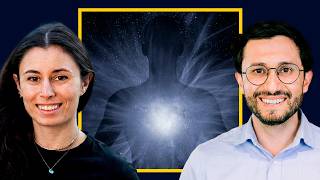
Longevity researcher Celine Halioua discusses what happens to society if people routinely live to 100 or beyond. She argues aging should be treated as a disease, predicts more people reaching 115 in good health rather than radical 1,000-year lifespans, and explores how this shifts retirement, insurance, and family dynamics.
Chapters
You've been in longevity since it was niche. Like, it feels like over the last, what, 7, 8 years, this has become pretty mainstream, at least in Silicon Valley, in terms of people talking about it and thinking about it as a topic. What, what aspects of longevity right now do you feel like are non-consensus that you expect to become more consensus in the future?
The idea of FDA-approved drugs for lifespan extension is the biggest thing. I think longevity is still synonymous with supplements or tests, or I did this thing and I optimized my resting heart rate. And like, to be clear, like, those things probably do help, but I don't think it's seen as like a biological process that is intervenable, just like any other biological process that occurs in someone. Um, I think the minute we hopefully get a drug approved, that will change. and it'll be considered like pathological aging. I think should be considered a disease space just like anything else, right? Um, and with that will come like a quantification of are you aging in a, like, in a way that one would expect, like a detangling of the physiological decline of age and the chronological age. Obviously chronological age is great. I'm happy I am 31 now and not like an idiot 21-year-old anymore, right? But I do sure wish that I had the ability to learn new languages as robustly as I did when I was 21, or, you know, be able to deal with the insult of low sleep, right, um, as well as I did when I was 21. Oh my God, the new dog has been sleeping with me every night because I don't have the heart to kick her out, which is really bad. I need to work on it. But she literally, like, she's giant and she sleeps so chaotically, and it's just— I feel like a new mother.
Can you tell us a little about your new dog?
Oh, absolutely. Pull my arm. Um, so I, I, um, just adopted a baby Rottie, uh, named Wilma slash Squishy, depending on how I'm feeling in the moment. I think she's just gonna be a two-named dog at this point.
Most of them are like hundreds of named dogs.
I know.
I think Harper has hundreds of names at this point.
But she still has a predominant name of Harper. Like, I'm not sure which one's gonna be the predominant. Is it Squishy? Is it Wilma?
A Rottie named Squishy is pretty amazing.
It's kind of hilarious, isn't it? And she is a squishy. Like, her face is so like squishy. So I wasn't planning on adopting another dog. I've been pretty like traumatized after losing my senior Rottweiler, Della, last year. But one of the shelters that we do some work with at Loyal, um, the SF SPCA. I was like, oh my God, we had this really cute dog come in, look how sweet she is, she has a snaggletooth, you want to come meet her? And I kept on like putting it off, putting it off. I'm like, no, I'm traveling, no, I don't have time. And finally they got me to come in last weekend and I went home with the dog. I didn't even bring a dog bed in my car because I was like, there's no way. And actually I brought dog food with me because I was going to give it to the shelter And, uh, yeah, that did not work out.
I'm not shocked.
I, you know, literally nobody is but me. Uh, I like to think that I'm like moderately self-aware, but I think on this variable I was not at all. But she's super sweet. But I've never had a young dog before.
Oh wow.
I've always adopted senior dogs.
So you, your first dog was Wolfie as an adult, right? Yeah, as an adult. Okay.
We had a bunch of dogs as kids.
Were they all seniors when you were kids?
No, but they were mostly just like random rescues we found on the side of the road.
So you never had puppies?
No, we never adopted a puppy, and I never did the puppy training thing. And also, again, Texas, so we had like a backyard, right? Like, it is a little bit different than like city dog training. Uh, so, um, yeah, my white carpets are not white anymore.
Well, we have an amazing trainer for you if you need it.
Actually, yeah, that would be great.
She's in Oakland, but maybe she'd come out to you because you're a celebrity. I'll let you know.
Thank you, thank you.
Shout out to Toby. Um, so going back to longevity, one of the things that people talk about is the idea of like a 1,000-year human, or there's, I think, these ideas— I see the eye roll— these ideas that longevity can make us live like hundreds of years long, and it seems like that's probably unrealistic. What do you think are the better ways to think about longevity?
I think the way to think about it is long-tail outcomes that maybe 5 random people in this Japanese fishing village have lived to 115, and they still do the Sudoku every morning or whatever. Like, I think those long-tail outcomes becoming more like, uh, common outcomes— that's how I think about it, right? I think radical lifespan extension is going to require a subset of interventions that are going to be so very difficult. And I think completely possible, to be clear. Every— everything is in theory biologically possible, It's just how complicated is it, and specifically, what is the ratio between when you need to intervene, how extreme the intervention is, and are there near-term trade-offs to that long-term intervention?
I've heard some stats where it's like 1 in 3 people who are born today folks think will live longer than 100 years. So do you believe that? Or I guess, how do you think that— what's life going to look like in 100 years from now?
I think the biggest thing is we have a lot of societal norms around unhealthy aging, um, and aging writ large that will hopefully push out over time. I think the issue with human is that so much of aging is environmental and behavioral, and no drug's going to change that. It's going to help, but it's not going to change that. But like, if you keep that same ratio, you're hopefully just going to shift the curve over a little bit, and you're still going to have some people that live really long and really well because they go running every day and they're like also genetically lucky, and you know, maybe they don't live near a power plant so they don't have all like the, like, carcinogens or whatever. Um, and you're gonna have people who just get their shit out of the stick no matter what, right? Um, but hopefully everybody will move over to the right a bit. I'm really excited about a world— one of my favorite ideas is that, you know, you get very— like, what's the impact of increased cognitive flexibility and reduced cognitive aging in a society? So, you know, people tend to crystallize as they age. Um, we kind of consider this normal. Like, you know, everybody's like, oh, my racist grandpa, right? Or like, I don't know what the thing's gonna be that like millennials are considered like old school boomer for, right? But I'm sure there was something that Gen Zs will look at us and be like, oh my God, like, they're, they're so archaic, why don't they understand how the world works? And it is interesting that you kind of have these like crystallizations within like cultural norms of society, of society and of generations. And I do wonder if like a cognitive aging drug will change that. If it'll change your ability and like increase your ability to relearn something or change your priors or, um, adapt your worldview in a way that is, I think, actually just very biologically difficult with age and with, with time. I mean, even something as simple— like, I think about this a lot— it's like, I don't listen to new music anymore. I listen to like the stuff I like, like new music from the same artists I like, but I don't listen to like the new stuff. Um, and you could say that's like social because I'm not like listening to the radio or not hanging out with like, you know, people at a time. But I think it also is a little bit of a crystallization of preferences that like maybe aging drug would change.
Do you think it's nostalgia too, or like almost like a, a love for what you already are like experiencing, or like some draw to something that you know so well and it comforts you?
I just find it difficult now. Like I used to love the process of like my Discover Weekly and like learning new music and like adding new things to my like, uh, saved songs list. And now I'm just like, I could do that, but that just sounds really painful. I'm just gonna listen to this like 2000s album instead. I'm gonna listen to The Strokes, right? And I do think some of it's that, but I think some of it's just like— I think some of it is just a crystallization, right? I don't want to like learn or adapt any music. I want to stay in my one musical swim lane. Um, so I think that's like an interesting potential, you know. I don't think the music thing particularly matters, but like if it could change how you view society or POVs on society. Um, and then also like the burden of elderly, sick parents. What does a society look like where, um, our parents are healthier longer, are able to support us longer? Where, you know, you— the word of child isn't responsible necessarily until later, much later in life, to do that sort of caretaking, both financially but also just from a responsibility and like physical standpoint. I think that could actually be a really big driver of increased socioeconomic equality, right? Because, you know, if God forbid our parents need to be in a— in, in care, we can probably afford a home for them or support or nursing or whatever. Vast majority of people cannot. I couldn't have 5 years ago, right? And that is a limiter of socioeconomic mobility, right? I'm very lucky that my parents have been healthy and I've been able to take huge career leaps and leave them and go and do things that have allowed me to build Loyal and whatnot. Some people, their parents get diagnosed with cancer and they have to stay at home. There's no choice. Right, and that they cannot take the opportunity to move to Silicon Valley.
It's really interesting to think about what does the future look like if people can live longer and healthier lives? Like, health insurance changes, life insurance changes.
Yeah.
Retirement planning changes.
Yeah.
I mean, it's one of the fascinating things of like, you know, you look at your 401(k) or whatever you're trying to figure out, like, how many years can this get me, right? But it's like, oh, you can live to 85 if you pull X amount out per year. But it's like, okay, what about if I live to 100? Like, how do I even know Yeah, that's what it's going to be.
That's true.
It's really interesting in terms of the implications of just like how we structure the world.
You're about to max out your 401k tonight, aren't you?
Yeah, seriously, putting it up. I mean, well, I gotta start microdosing some sort of, uh, drug to make me live longer at this point.
Deal.
It might be my kids' 401ks that, uh, they actually have to care about. We'll see if we get to get these drugs in time.
Working on it. Yes, at least our dogs will. At least Harpo will.
At least Harper will. I hope so. Yes, I really hope that we can get to Harper. She's 5 now.
So, okay, yeah, next 5 years we can pull that off.
Hey, this is Ben Casnocha, co-founder of Village Global. Thanks so much for tuning in to the Village Global Podcast, where we go deep on all of the biggest topics in tech. If you enjoyed this conversation, please subscribe to our YouTube channel. You can check us out on Spotify, Apple, wherever you get your podcasts. We'd love to see you for the next one.
More from Celine
Life Extension Innovations, Moonshots & Snake Oil (with Celine Halioua & James Peyer)
This Entrepreneur Built A Multimillion Dollar Company To Help Your Dog Live Longer | Forbes