Celine Halioua: The Key to Longevity
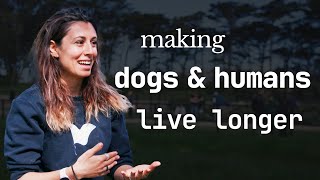
Celine Halioua, CEO of Loyal, explains why her biotech company is developing longevity drugs for dogs first. Dogs offer faster trials, shorter timelines, and a cash-pay market that sidesteps the insurance and regulatory barriers blocking human aging drugs. Her path from art school through neuroscience to a PhD in preventive medicine shaped an unconventional approach to extending lifespan.
Chapters
It doesn't matter what religion you are. There's a God in biology.
It feels like there's sort of a new age of bio. No one seems to be talking about it outside of bio.
We don't have the laws of biology as outlined as we have in, you know, perhaps in physics. So you can't be top-down. You really have to be facilitatory. There could be a milestone that's super important to your company, right? That for you internally is your go/no-go if something makes sense, but has almost zero value in the market. Charlie!
This is now the best S3 interview ever. We're here in San Francisco, California, at a dog park with CEO and founder, Chief Dog Officer Celine Halioua of Loyal. And this is 2 days after some pretty big news for you guys, right?
Yeah. Yeah. We just announced our $45 million Series B, which was pretty good. Got to fund all that dog drug development, all that manufacturing. Now have the money to do it.
Given what Loyal does, we're here, of course, at a dog park. We just filmed the S3 episode with 2 incredible dogs. One is yours and one is Charlie. Charlie.
Charlie and Della. Della, come here.
Della's coming.
Della. I know that because you're not the star anymore, you don't want to—
I know in the episode we dove into a lot of the complexities of getting a longevity drug and efficacy data in front of the FDA, and we talked a lot about that process. But what was your personal story to founding Loyal?
It was that thing when you look back and it makes complete and total sense that all of these foundational things had to come into place to be able to start this company. It was actually one of the reasons I decided to start Loyal is I thought that the context I had made me one of the few people who could actually do a really good job at this versus like if I was doing a small molecule human ocular, like there's nothing in my background where I'm like, yeah, like Celine's.
What was your background?
So I actually got into college for art school. Cool. And then I switched to neuroscience and I did 4 years of neuro at UT Austin and—
Hold on, that's a weird switch. Can you elaborate?
Sorry. So you're actually not allowed to like make that switch anymore at UT Austin because they gave me a full ride for art school. Um, and then I got in, and then I was like, psych, I'm going to neuroscience! And they never would have accepted me. I was like bottom 10 of my high school, um, but like had really good to perfect like test scores. And so I think it's like my sneaky suspicion is they gave me the scholarship because I was going to up their average ACT and SAT score in the art school. I have no idea, honestly. Um, but I got it, and that was also very, uh, fortuitous. But yeah, I switched immediately to neuroscience, which was an interesting transition. And basically spent 4 years in the lab.
But what inspired you to make that transition, or did you always know that was what you wanted to do?
So the summer before I started college, I did an internship at a neuro-oncology clinic, a radiology neuro-oncology clinic, basically where people were getting, you know, the worst diagnoses of their lives. And it— I kind of had this breakdown where I realized that we don't really have free will, that there are certain diseases that we can get that if we're diagnosed, there's not anything that anyone can do for you. These were patients who were getting diagnosed with, like, glioblastoma specifically, which is a really, really aggressive form of brain cancer, which actually isn't thought to be super age-related. But it was kind of this first thing where I was like, oh wow, like, it doesn't matter how much money, effort, time, care somebody puts into it, if you get diagnosed with a certain category of things, many of which are age-related, that's kind of it. Like, you don't get to do the things that you want to do in your life anymore. And I just didn't want to live in a world where that was the case. And I decided to do neuro because I Knowing what I know now, this is not accurate, but at the time as an 18-year-old, I was like, oh, like neuro is a class where like in Neuro 101 they're like, yeah, we don't understand how this works, that works, that works, versus I felt like in the other disciplines you're catching up for a lot of time and then you start getting into the novelty. Again, not particularly accurate, but it was just my rationale as an 18-year-old. And then I just spent 4 years in the lab. Actually, that was another rule they have at UT Austin now is you can't do as many credits in the lab as I did, so So sorry, UT.
You've ruined a lot of things for people at your university.
No, I know. I think you should undo all these rules.
Yeah, they sound like dumb rules.
Because it was actually really beneficial because that was kind of where I got like that first scientific framework. I started a PhD at Oxford in economics of preventative medicine.
So this was always of interest for you, this idea of preventative medicine, it sounds like.
Yeah, so it comes from a couple of things. One is I got really interested in Parkinson's disease specifically, which is a neurodegenerative disorder. We lose a certain type of dopaminergic neuron, which causes many of the symptoms and eventual death that you see in Parkinson's patients. And so the lab I was working in, one of the labs I was working in, was trying to replace these with stem cells. And this was back when it was just embryonic stem cells. And California created this whole Regenerative Medicine Institute to be able to do stem cell research after President Bush made it He basically put a stoppage in all embryonic stem cell research. And so I remember working in this lab and I was like, this is so fucking complicated because it's like, get the specific type of precursor neurons out. You had to put them into this patient who was, you know, in a pretty bad state. They were in late-stage Parkinson's. That's why they were in these, you know, studies, getting to differentiate into the exact type of neuron that you need. This is a bunch of different subtypes that integrate into the brain and then release enough dopamine to like make up for this. And it was just like, yeah, like obviously we need to have acute therapies, but why are we not— why are we doing nothing and then at this very end stage then trying to do these extreme interventions? And so I got that, plus I like didn't have a lot of like good health insurance when I was younger. And so just like the combo is just, we should be— how do we incentivize economic, um, economic incentivization, which is kind of key to you know, every other disease, unfortunately, preventative medicine.
One thing that always strikes me about, you know, deep research like bio stuff that's really hard is that it sort of just takes research for the sake of its own research, right? It doesn't even kind of require a point all the time. I always wonder like, what's the difference between going from research to spinning out and founding a company and having a lot of conviction over that?
One of my philosophies is that opportunity is at the intersection. And I think that was really kind of a pattern of my career. Like, For example, I worked in a nanochemistry lab and an alcohol dependency lab and kind of brought those two together to work on building neural tracers because one of the challenges we were trying to specifically highlight certain subtypes of neurons to see how deep they reacted to alcohol-induced alcohol dependency. And it was not a radical idea. No, none of the combos were radical in their own field, but it was a combination of two competencies that made that idea a good one or a decent one. Um, and now it's really how I would think about Loyal too, right? It was, um, it was the combination of the context on longevity biology, so specifically this idea of, um, you know, this idea that a drug can extend healthy lifespan of an organism, combined with the dog market, which most people who know anything about biology, especially longevity biology, don't know anything about the dog market. Combined with kind of this consumer insight, Celine Halioua, like a pharma brand that people love, which I think is really our— it's, it's one of the reasons why we would be able to successfully have a venture scale outcome, which is necessary if you're going to fund something as, you know, we've been going for now. It's a lot of money every day. So I don't think any of the idea, like the individual insights, were not particularly radical. But it was a combination of the contexts that were necessary.
Do you think that's like your founder superpower is like taking two totally different things and like cross-sectioning them?
Yeah.
When did you first realize that?
In undergrad.
Really?
Because that was, again, that was how I excelled.
Like in neuroscience or was this something—
That and also just like the different, like I worked in a bunch of different labs at the same time, brought the insights from one into another. Same thing, I did the same thing in my PhD that I dropped out of because it's all cool. Founders do. Um, so yeah, I think that's always been like— I think one thing that's like really important is just to be like radically candid with yourself. Where's your superpower and where it's not? Mine was never like, I'm gonna go super deep in one field and discover something that nobody's ever discovered before and then like build a company around that. Like, that was just never gonna be me. But mine was like having a really good instinct and good ideas, seeing opportunities where others didn't, and then facilitating others to build in that. And I think that's why Loyal has done well. Hello. Hi, Della. Oh, I don't know if she'll be able to make it up there. I don't want to. Hi, Schnooty Booty.
What has been the hardest technical challenge, uh, for you with Loyal, and how have you engineered or wet labbed your way out of it?
So one of the interesting things about dog drugs, which I actually really like, and again, it plays into this economic incentivization of preventative medicine, I kind of think about every dog-dog owner relationship as a like micro single-payer healthcare system.
Yeah, it literally is.
It is, right? Because I care about Della's health today and I care about her health in 2 to 3 years from now. Yeah. And so, and for the rest of her life, right? I say 2 to 3 years because she's a senior dog, unfortunately. And so that's really important because the way I think about aging drugs, you know, I say longevity, lifespan extension, like all this sexy shit, but it's just preventative medicine for age-related diseases and preventative medicine for aging itself. And that fact that it's all cash pay, or largely cash pay in dogs, and because you have that one owner for the, you know, hopefully the rest of the dog's life, meant that actually a drug that doesn't have any like super extreme immediate benefit but gives a dog more healthier years economically is incentivized to make sense. And so one of the challenges that comes with that is then how do you build a drug that is cash pay accessible for the majority of the population, right? A lot of times, you know, the infrastructure for building a drug, the COGS is not the question, right? It's, the question is, does it work? Is it safe? Does it target what you want to do? And the manufacturing infrastructure is not necessarily built around minimizing COGS, because candidly, that's not the thing that's driving up pharma costs and drug costs. It's like all the other bullshit. And so we had to, build that in, which for the small molecule drugs, the daily pill drugs, is not like terribly complicated. But for things like the injectables we're working on, it is really, really complicated. And so I would say that the kind of the intersection of the CMC with the product profile has been one of the bigger challenges we've dealt with.
In other deep tech spaces, it feels like sometimes a single company like SpaceX, for example, can come in and totally revolutionize like a sector, you know, in their example, like launch. Do you think there's room for that today in kind of modern biotech or anything like that?
Yes and no. There's, I always say, it doesn't matter what religion you are, there's a god in biology, right? And it's really, really, really complicated. And unlike things like aerospace where, I'm not an expert, but from what I understand, a lot of it's just the rules of physics, which are relatively well understood for aerospace travel and whatnot. And a lot more of it's just all the micro conditions things could succeed or fail on in edge cases, right? But the problem space is relatively well understood, which works really, really well for like an Elon-style way of thinking something through. Or in this biospace, it's true and not true, right? Because we don't know a lot of the variables, a lot of it's missing, right? So we, you know, we'll have a hypothesis, right? But you don't know like the 10— you make one change in a dog, for example, lower their growth hormone, you don't know the knock-on effects necessarily of like a drug, right? Like one example is people, um, like 20 years ago were trying to develop drugs to, uh, inhibit IGF-1 for cancer because it's actually— it's a big cancer driver. And the drugs worked as designed, but then they didn't realize that the body upregulated other receptors that basically overcame the benefit of the drug. And so that was like— discovery is always there. That said, I think there's a lot of calcification in bio and you can go a lot faster and you have to always be ethical and rigorous, but a lot of things can be paralyzed. For example, that's something we do a lot, right, where we care a lot about an extra month of burn. So we'll develop 3 formulations at once, test them all in parallel, submit things at the same time. We don't wait for one dossier from the FDA to be approved before working on another dossier. We're doing everything right. It's like we're going for broke because it is broke if we don't work right. I think there's a lot of stuff there. I think there's a lot of just like framework questioning. It's actually one of the big cultural things I work on at Loyal is we have to both respect where the lines are. There are certain things that are actual lines, ethically, regulatory, otherwise. But then often bio people put a buffer that's like this much. And so part of my jobs is questioning those a little bit more. Okay, what's— where's the actual line? What's the buffer we've built in? What is the like actual reg that says we can do this, we can't do this, actual biological law, or we don't know and then we have a confidence interval around it and here's how we're going to, um, here's how we're going to like design our experiment to take into account that confidence interval. And so I think there is a lot of— I think drug development could be— I mean, we saw it with COVID vaccines. It can be a lot faster. Yeah, can be a lot, lot faster.
But that was hard. That was for like a state zero. There was no like prior research or I guess there was some prior research.
Not for that specific. Yeah. Like, Bing. Yeah, it's in some of it was like regulatory compliance, obviously, but it was also just doing things at risk, which is not super common. In bio. And we could go more into details of how these things are funded and da, da, da, da, da, the type of leadership teams that you often see, which are really good at one specific thing, but maybe not so good at this. There's a lot of variables here, but the TL;DR is, yeah, I think you have to be very cognizant and very humble going into bio because you just don't know what you don't know. But if you could approach that with some first principles, deep textile thinking too, I think you can build magic.
And some risk, as you were saying. And some risk. Using that to kind of fuel the engine, like you were saying.
Yeah, you just have to be okay with it. Yeah.
And it feels like there's sort of a new age of bio kind of support companies or bets in the space that are newer and faster and more hungry than previous plays. Do you sort of feel that way or think there's like kind of a new revolution happening in bio or? I think so.
I think we're in the early innings of it. Super early.
No one seems to be talking about it outside of bio.
I think also because there's different factions of bio and there's the more conservative factions don't like they're not into this as much, honestly. I mean, there's a whole like subset of like bio that like wouldn't be interested or like look at something like Loyal. So I think it is happening. I think it's going to be slow and I think it is unfortunately a little bit fraught, more higher risk of false failing, although maybe that's true with the deep tech industries too. I don't know it as well. But, you know, you can be right and have a really good hypothesis and the process be correct. then the end result still be failure for reasons that have nothing to do with your core thesis. One of the things that we did at Loyal that was a little bit different is we've had multiple products basically from day one, which you normally wouldn't do. It definitely increased our burn, but we did it in our case because we knew the core thesis that you could extend a dog's lifespan with a pharmaceutical was almost certainly true, right? It's true in basically every other organism, so it's probably true in dogs. It was just like, did we pick the right one? Like, Did the biology work out, the manufacturing, the safety, all of that? We didn't want to have a false fail because I knew if Loyal failed, it would, you know, be very, very hard to push forward given there's no thesis here, like generalized thesis. And I knew it might like nuke the space for everybody else too. When you're doing something weird, not to be narcissistic, but it's just true. Like we see that pattern in, it happened in longevity also like 10, 15 years ago. It's like very common. Like somebody fails big and they're like, oh, that space is broken. They don't go there anymore. You can really hold back a field that way.
It seems like every deep tech startup, whether you're bio or not, you're deep tech. You need a— you need an economic engine. You need a lot of capital to make it a reality and kind of have its power laws start to take effect. And we were filming, you were talking about how you just had a successful raise that you announced just a few days ago, and you had some stories and insights to share about that, that process.
Yeah, I think one of the big— so I've been candid about this and I'll be candid about it here. I did try to raise a Series B a year and a half ago. 2 years ago now, I guess, ended up being the worst quarter for growth stages or growth rounds in probably 10, 15 years. So I really did not nail my timing there, but also that the story was wrong and the way I was thinking about Loyal was wrong. And I— it was extremely painful at the time because we'd always had like pretty easy, like top of market raises and then to go in and fail. Our Series B was like pretty fucking brutal, honestly. Knocked my confidence for a while, but it was net so positive. So, so, so, so positive both for how we operated internally and also importantly and crucially here, how I thought about the use of capital to milestones unlocked and risk management of these milestones. So for example, one thing that I and I think a lot of like bio people struggle with is the fact that there could be a milestone that's super important to your company, right? That for you internally is your go/no-go if something makes sense that has almost zero value in the market. Yeah, right. I was telling you earlier about how we, you know, we got the efficacy dossier approval from the FDA in I think it was November of 2023 now. So a little bit, a few months ago now. And we've had that data for a long time, like a year and a half prior to that. So I knew the drug was going to get approved. I didn't know exactly when, how many cycles it would take, but I felt 100% confident. And I was like, come on, investors, like, why aren't you giving me money? Right? But what I didn't understand was the importance and the, like, the funding milestone was not the data, even though that was important. The funding milestone was the finalized efficacy, effectiveness approval from the FDA. Right. That was the objectively valuable milestone. And it's similar to for the other things we have to go, right? So now the entire fundraise that I did, it was just around basically us getting marketing authorization and conditional scenarios around it, right? So we're late 3 months, 6 months, we, you know, are wrong about this thing or whatever it is, and still being able to hit that objectively valuable milestone, right? And that was a pretty easy story to sell because I think it's true that if we get the marketing authorization from the FDA, that we'll be able to raise more at a much higher valuation? Sure. Right. And so anchoring there versus being like, oh well we're going to do this, we're going to get this readout and that readout and dah-dah-dah-dah-dah, then having the confidence intervals around that— There's a lot of other things that change in terms of how we supported diligence and all of that, some of which went well, some of which I made mistakes on. But at a high level, I think that was the most important thing because it took away the future financing risk or nullified the future financing risk. Which in deep tech I think is one of the biggest risks you have to deal with. Who's going to take the bag next, basically?
What are some of the major differences in your mind of building like another deep tech startup versus a bio startup or a software startup?
Well, a big one is, so for the software startup, the risk is product market fit. It's not can you do it. For us, it's really like, can you build it? Because we know people are going to want it. We're not 100% sure. We actually have a little bit of market risk because it's a new product category. But I think it's relatively low. Like you can get to comfortable. I don't know.
When you're a bio tech company, you're not even out of kind of like stealth really. And then you have an Emmy speech. And I think there's considerable fit. For those who aren't aware of what I'm referencing, this past year at the Emmys, I think the producer, showrunner of Beef— Beef— shouted you out publicly at his Emmys acceptance speech, asked the FDA to hurry up and accept you and Loyal so that he can make his dog live longer because he said in his speech he does everything for his dog.
Yeah, that was completely random. We don't know him. He's not an investor. I wasn't even watching the Emmys. I was working and I got like 10 calls at once that we just gotten a shout out.
I remember I like went on Twitter and saw like you tweet like, did we just get mentioned at the Emmys? And 5 minutes later it was like a clip of it. You're like, yo, that was incredible.
Yeah, no, that was live. Um, no, no orchestration there. Um, and then there was a whole panic because we were like, oh God, it's like, is the FDA gonna get mad? Yeah, right. I know, I get to do a bunch of writing. We ended up sending him like a gift box of like loyal stuff because we wanted to be sure we were going to get in trouble first. But yeah, I think so. Right. Really the big question— oh, actually, one other anecdote. I don't think I've ever convinced somebody who wasn't a dog lover to, like, write a significant check into Loyal. Now the growth stages has been a little bit easier. But even like Valor, who we announced as part of this round, who's a big deep tech investor, one of the reasons they got so excited is the day we announced the effectiveness approval for Loy-1, John's wife, who's a veterinarian, got like 10 calls from her clients asking for the drug.
Yeah. Okay. So that's the difference. It's like we know people want it within a high degree of certainty, but, but can we build it is the question.
Can we build it? It's a question. Honestly, again, the future financing risk is something that I did not— for me, I was always like a naive, optimistic founder. I'm like, of course I want to raise the money. But if you're like writing a $2 million, $3 million, $4 million seed check in a company in 2019 with a first-time founder who's 24, who doesn't know jack shit, there's a lot of risks there. But one of them is just like are they going to be able to raise enough money to like build this? But one of the, I would say, the benefits of working in dog drugs versus, again, I'm not super experienced in aviation, but my expectation is that it's much more expensive to build what you need to build, right? Versus for us, $125 million in, like, unless we really fuck up something, like, we're going to get it. We're going to get there with it.
This next question I love asking deep tech founders, especially bio founders. And the question is, how do you think Can you try to describe how you think? Like, are there any mental models or what? It's a little weird.
It's a really interesting question. I think, I think there's a lot of different models of like how founders can think. I think people in deep tech can think of the founder who's like super duper duper in the weeds. It's actually, for me, I'm a lot more instinctful. It's actually one of the interesting things about building a company like Loyal is that there's core competencies that if you have a core competency, one aspect, you almost certainly do not have core competency in another, right? Because it takes decades of context to be really good at FDA reg. Our regulatory executive has been in many, many animal health companies before Loyal. Same thing with CMC, same thing with our metabolic sciences lead, same thing with kind of our supply chain people. Like every single facet requires, you know, decades of context. And it's very different from, I think, software startups where you have like these young guns who are like, yeah, like, you know, I know the forefront. It's really more about the context. And so I obviously will go very deep into these specific things. And, um, actually until recently I was able to go deep in basically everything. Now actually, ironically, as we go into launch, that's the stuff that I don't have as much experience with personally and where my scientific frameworks don't apply as much. Um, so I, I rely more on advisors there. But it's like going really deep, but then it's really more just like leading with context and facilitation and like allowing the better ideas to come up from below, so to speak. Again, I think it's an inherent aspect of biology, a bit of a difference where it's not a physics— I mean, it is, but, you know, we don't have the laws of biology as outlined as we have in, you know, perhaps in physics. And so you can't be top-down. You really have to be facilitatory. And somebody's scientific intuition is honestly extremely valuable when you're doing something novel. And I just don't have that because I've not been doing basic science for 40 or 50 years. So yeah, I think that's how I think. I'm also a Type 3 Wing 4 Enneagram, which means I like conciseness and TL;DRs. They like, literally, it's a thing that like, we like TL;DRs, which I thought was so unique for like culturally bringing that to the company. And it turns out it's just, I'm just pre-programmed to be that way.
So that's, that's really good culture. I think, I think more startups should lean, lean towards a TL;DR, less acronyms, less verbose. Oh my God. I hate it.
I hate— like, bio is so verbose and so, like, really complex. It's like, it's like a prideful thing that, like, oh, I can read this paper and you can't.
What do you think some of the biggest learnings you've had have been since starting Loyal?
I mean, there's a lot of, like, technical ones. I don't think that's, like, super interesting. I think growth rate is the biggest predictor of success or lack, both in yourself and executives. And also, it's really, really hard to predict it.
You can only back Can you elaborate what you mean by growth rate?
Just like the ability to take feedback, both that's given to you but also sense it even if it's not given to you. Like fundraising is a really good example where nobody told me all the shit that I just told you about why my first Series B didn't work out. I had to figure it out. I had to intuit. I had to like have empathy and EQ for how they were thinking in the market and like learn more about like the variables that matter to them and their incentives and all of that to kind of like nail it down. And of course I had advisors along the way that were helping me too, but that was a really, really big part of it. And I think you have to have this like super— again, maybe bad opinion, but like I feel like the growth rate you have to have is almost toxic because you feel like constantly like, oh, like I answer that question too verbosely, like, oh, I lost my train of thought, right? Like that's the only way.
See, that's what I mean though. That's like a mode of thinking, right? I guess it is like hyper-questioning your performance and growth so you can do better over time.
Yeah. And so I think one of the things I've learned there is like I think I've always been that way, candidly. Um, I think it's the things I've learned is one, how crucial that is. Like, it's not just like a nice to have, it's a need to have. There's also downsides of it. So being super— especially for employees and team members— so being very cognizant of that. But also that it's really hard to predict in basically anybody but yourself. Um, we've had a lot of people at Loyal who are super, super good, super, super good, super, super good, and then hit a growth wall because past a super— it's like every level is harder. It's like a video game. Right? Um, and you people sometimes hit walls. And so it's one of the reasons I actually really love being a solo founder is I can back myself growing, right? Like, one of my goals is to— I want to be the CEO of a Fortune 500 company or Fortune 100 company or whatever, right? Like a big, big impactful company. I can only back myself growing into that, and I can support and give all the tools to help the people around me grow to it too. But I used to have this whole like complex around it of like Why aren't you raising to the opportunity that I gave you? I trusted you and you didn't grow to it and you didn't. And you just can't. You can't. You just like, you have to back yourself and you have to be high integrity and honest and support people, but then also just move forward and continue moving forward. And just like, it's a, it's just a variable you can't control.
Did you ever have any anxiety or stress when you were considering founding Loyal? Like, do I get a co-founder or do I do it solo? I mean, you founded Loyal when you were very young on a very hard problem space, uh, and you're doing amazing.
Like, No, I just knew myself honestly. Like, I like— I mean, I'm a solo, uh, solo child. What is it? Single? Only child. Only child. Only child. Lonely. I'm an only child. I've always been like pretty independent. Like, I'm pretty introverted. Like, I'm a social introvert is like how I would describe it. So I just knew myself. It actually wasn't as big deal as other— as I thought. Like, a lot of people were like, oh, you're not going to be able to fundraise. Like, people would ask me questions, I'd look for a good answer, and then they were fine. Charlie!
This is now the best S3 interview ever. Hi, Thomas. What do you think? No, that's— Yeah, I can take this. Yeah. What do you think most deep tech companies get wrong?
I think they don't understand the— so there's like the laws of physics, the laws of biology, which you can't break or move. But then there's also often like laws of regulation or realities of the economics of things that are really, really important too. So like, I'll give an example. Um, I don't think we could. I always say dogs first to extend human lifespan, and then you can get the first drug approved for, you know, lifespan extension in dogs, and that this is actually paradoxically the fastest way to get human lifespan extension. I'm not just like talking my book, like, I think it's actually not possible to go human first. What I realized is that the reason why we don't have an aging drug today doesn't have anything to do with the biology. The biology is there for a first-generation aging drug, in my opinion. Um, I think most people's opinions. Um, not radical lifespan extension, not Bryan Johnson style, like psychosis, right? But just like longer, healthier life. It's there. The reasons we don't have it are almost entirely logistical and operational and financial, right? Things like, if I wanted to see if a drug extended your lifespan, um, or even you in 20 years or whatever, it would take decades and decades and decades to see efficacy. Um, it would be absolutely the most expensive study ever run. The insurance incentives aren't there, right? So like the insurances that we are on is tied to our employer. On average, you stay on insurance for 2 years. They don't wanna pay for something that's gonna give benefit to another insurance provider. So then it becomes like a Medicare, Medicaid government thing. That's a different intervention point. There's also just a lot of like risk mitigation in humans, which to be clear, in dogs too, the safety actually is in some ways more important because dogs can't speak, and humans take dog drugs often. Ivermectin with all the COVID stuff, right? But you don't have the— you get the feedback loop much faster. And then finally, it was the financing thing, right? So biotech financing is very much around acquisitions market, right? Like early-stage biotech companies in a traditional way are just externalized R&D for all these big pharmaceutical companies. And so what these biotech investors will often fund or build are things that they think that these big pharma companies are going to want in 2, 5, 10 years. There is no pharma company that today, tomorrow, or even 10 years from now wants a human longevity drug. There's no market for it really. And so, and you can, you could argue that's not true. I think that's actually not going to be true. I think there'll be a space race in this. But at least from the canonical perspective, it's not considered something that people are going after. And so getting the funding that you need to develop a human aging drug would just be functionally impossible, in my opinion. Like, maybe you could do it, but it'd be really, really hard. Versus in dogs, you don't have any of these issues. You can see lifespan extension in like 3 to 5 years. You can see biological aging intervention in about 6 months. There's an accelerated regulatory pathway, which makes it economically feasible to get the drug approved in 4 to 5 years. There's no insurance mechanism. It's all the single-payer healthcare system. And the market is, you know, obviously not as large as human drugs, but it's still really big. Like NexGard, the flea and tick, made $1.2 billion last year. Apoquel makes about $850 million a year. Heartgard, which has been generic for 25 years, made half a billion dollars last year. And it's all very high margin revenue. So really the thesis, it's build a, I call it, single billion dollar business around dog aging drugs. If we only do that, that's, you know, Fantastic. But we can use the, A, the revenue, and B, the biological insights, because dogs have co-evolved with a shared environment with us, they get the same age-related diseases we do, to then fund and develop human aging drugs and be kind of excluded from the kind of economic and logistical challenges that you'd have if you had a startup that from day one was trying to do human aging. And I think the thing that people don't understand is that the economic side of it is almost as important, if not more important, than the scientific side. It's having the revenue and having the profitability and having the leverage in fundraising that we'll have from having a product that hopefully is producing, you know, $100 million to half a billion a year in sales to then funnel back in. And even if we have to raise more money, we can raise it in a position of power. Sure. Which most biotech companies would buy. I mean, these go public without having a drip of revenue, right? And they almost never commercialize on their own. So it's really like a business model thing. So I think to your earlier question of like, what do deep tech founders think about? I think that's a big thing. They don't think about the business models, the incentives, like what are they actually building? How does that align them? You can be as mission motivated as you want, but your mission motivation has to be in line with the like soul-sucking economic incentives or you won't actually do the thing that you want to do.
Okay, final question. I like asking founders this. What is your current life philosophy?
My current life— I think I'm like really toxic, so I don't think anybody should follow my life philosophy. Like my life philosophy is that my job is to build Waymo. And make this successful. I don't think that's toxic. It's like I think about the world like microgrid and macrogrid. I think Loyal's macrogrid. If we get this drug approved, it's going to help a lot, a lot, a lot of people and dogs and hopefully kind of further the development of better medicines in general. And microgrid, which is I will always do the thing that's in the best interest of the company and, you know, hitting that macro good, but trying to do microgrid in terms of like, you know, I almost all my executives are women. Right. And I think that's a cool thing. It's like being able to hire in that type of environment. Like, does it be like microgrid? Like, everybody at Loyal has fully covered platinum health insurance. So it's our own little mini socialized healthcare system as much as possible in the US. Like, that's kind of how I think about stuff.
But yeah, I think that's it. We filmed in a dog park. This was great.
We didn't. We only got like a little distracted. Well, That was—
I was so good.
More from Celine
Life Extension Innovations, Moonshots & Snake Oil (with Celine Halioua & James Peyer)

This Entrepreneur Built A Multimillion Dollar Company To Help Your Dog Live Longer | Forbes