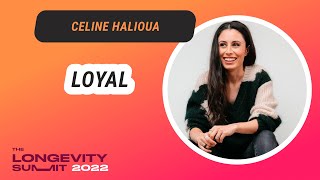
The Science and Business of Making Dogs Live Longer — Celine Halioua, Loyal
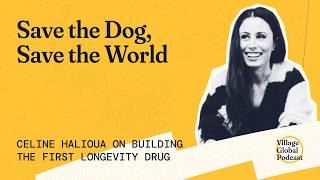
In this interview Celine Halioua, founder and CEO of Loyal, walks through the origins, strategy, and progress of her biotech company that is developing FDA‑approved drugs to extend the healthy lifespan of dogs as a pathway to human longevity. She recounts her personal journey from art school to neuroscience, the decision to target dogs first, and the company’s current status as a mid‑stage consumer biotech with over $250 million raised. Halioua explains Loyal’s milestone‑based fundraising model, the regulatory milestones (efficacy, safety, manufacturing) that have been achieved, and the conditional approval pathway that reduces risk. She describes the massive 1,300‑dog, 70‑site clinical trial, the planned commercialization through veterinarians and direct‑to‑consumer channels, and the multi‑product pipeline covering senior dogs, large‑breed dogs, and future cat and horse programs. The conversation also covers the broader vision of using dog data to accelerate human longevity drug development, timelines for dog approvals (aiming for five FDA approvals by 2030), manufacturing challenges, and the company’s culture and founder advice for other deep‑tech founders. Finally, Halioua mentions community initiatives such as a charitable merch line supporting a senior‑dog rescue.
Chapters
If you had told me that 5 or 6 years later that I would have raised a quarter of a billion dollars for this company, I would have thought you're crazy. You cannot develop a human longevity drug today, and everybody thinks that's because of the biology, but it's actually not because of the biology, it's because of logistics. Oh, by the way, most human drugs fail. So like multiply that number out by the failure rate before you actually get a drug approved. It's not a matter of, you know, if we will get the first longevity drug approved. It really, in almost every universe, is when do we get this drug approved?
Thanks so much for joining us today, Celine. Great to have you on.
Excited to be here.
So to start, I'd love to just hear a little bit about the founding of the company. Can you tell me a little bit about your own history, kind of up to the point where the company began?
Oh my God. I mean, how long do we have? Do you want like the TL;DR? Let's do TL;DR. Okay. I got into college for art school. Summer before I started, had a total like existential crisis, realized that, you know, biology in our bodies and health is actually the determinant of our free will, and switched to neuroscience. Got really interested in the biology of aging, um, worked on the biology of aging for a while, um, became obsessed with how could we get the first drug approved that's not just targeting end-stage disease but instead the processes by which we break down and age over time. Initially was doing that in humans, worked on human biology and venture and otherwise for a while, and then realized actually I think the best way to get a longevity drug through to market into the consciousness writ large was to go dogs first. And I guess like while all of this is happening, there's like a parallel path of like I'm a crazy animal person. So it all kind of worked out really well.
Dogs, cats, horses. All of the above.
Squirrels, turtles, hamsters.
My dog does not like squirrels. Squirrels and dogs is a dangerous mix.
It is a dangerous mix. Thankfully, there are no squirrels today, but I may or may not have had— we used to rescue a lot of wild animals when I grew up in Texas. And so we definitely had baby squirrels. There was one living in my aunt's house. It was a thing. That's very Texas. Yes, it truly, truly very Texas. That's amazing.
And can you tell me a little bit about the state of Loyal today? Like, how many people is it? What are the products that you have? Like, just what does the business look like?
So I'd say we're like a mid-stage consumer biotech company. Working on developing the first FDA-approved drugs for lifespan extension, going dogs first. We have raised now over a quarter of a billion dollars, which is honestly like a combination of interesting, exciting, and terrifying to say out loud. Unpack that. Well, it's like, okay, it's like, holy shit. Like if you had told me, you know, 5 or 6 years ago and I started Loyal and I was like, oh my God, I raised $5 million seed. Wow. Like that's crazy. If you had told me that 5 or 6 years later, that I would have raised a quarter of a billion dollars for this company, I would have thought you're crazy, right? Like, that was a thing like established people did who like had a network and who were super successful and were like, not like the people I admired, and like, or like the people I admired, they admired the people who did that. And then so for that to be like the case is like kind of crazy. Um, it's also a lot of responsibility. It's a lot of capital that I've been given as a chaperone to hopefully turn into a successful organization and a successful product and successful science. I mean, obviously I don't think there's anybody better to give it to, so like, thank you. But I, I don't know, I think you always have to stay a little bit like on edge when you have that amount of responsibility.
Fundraising at the beginning was somewhat easy. So we were an early investor in you, we were in your first round. I think there was a lot of people who had pretty high conviction yet when you in the beginning, right? And but as time went on and we got out of COVID and money, felt less free, like it was harder to raise for you. How have you kind of caught your stride, do you think, with fundraising?
Yeah, I would say it was, um, like a U-shape in terms of the y-axis is easiness, and it's easier higher up and less easy lower down. Um, the very, like, the early rounds were easy, so just relatively speaking, right? There was a lot of thought, there was a lot of insight, there was a lot of effort obviously that went into that, right? It becomes easy when a very complicated idea is diligence so well over years that it becomes obvious, right? Um, so like, with that caveat, you know, I would say to seed in this A, or relatively simple, so to speak, because it was mostly just vision. I have a dream that we're going to develop longevity drugs for dogs. There's no details, there's no, like, there's no reality to destroy that, like, what if story, and especially at a seed valuation, right? Like, obviously it, you know, I think our seed was like $12 million pre-money or something, which I know is like pauper status compared to all the seed rounds that are getting done today. It's pretty easy. It's like, okay, well, in most scenarios this fails, but in the one scenario it doesn't, like, obviously the ROI is there. So like, obviously we should do this investment. Then the, like, I'd say early stage growth rounds, specifically our Series B, was really difficult because then you start having like to be a real company. Here's going to be the margin, here's the revenue, here's the commercialization strategy, here's the executives. And then for us, that was also timed with XRP imploding. So basically everyone losing a ton of money. And you know, once when people lose money, they become conservative. And I would say like this round was— I mean, raising a growth stage round is never easy, but it was, you know, on paper like as quote unquote easy as like the Series A. Or to seed in terms of like speed and all of that. And I think that's because we now really understand the business and we have— we know what a Camelo— it's like a very obvious story in many ways. It's obvious what you're underwriting. It's obvious who would or would not underwrite it. It's obvious where the ROI is. It's obvious what the risk is. Um, and we've executed pretty well, relatively speaking. Um, so there's a lot to underwrite there. Even though it's still a bit of a what-if story because we haven't brought the drug to market yet.
Can you share a little bit more on milestone fundraising? This is something I've heard you talk about, and I feel like there's so much information out there on how to raise as a software business, but actually as a deep tech business, it feels pretty opaque still. Yeah. And you've learned a lot about this, partly from Blake Scholl.
I was about to give him a shout out. Yeah, these are just all his ideas bastardized.
Well, can you explain what you learned from him and like, what are kind of the core— what are the core unlocks for you that have happened in terms of milestone-based fundraising?
Yeah, I'd also say to give another shout out at Koppelman. Josh Koppelman at Firstround has taught me a lot of this. Um, because like when you're a bio person, you don't, you don't learn to think this way. And that was a lot of my journey was understanding how to think in this manner. Um, so basically the idea, you kind of have this inverse flipping when you're building a deep tech company versus like a software company, right? In a software company, you know, you can build it, right? Like building your whatever note-taking app is like definitely possible. The question is product-market fit, scalability, durability of moat, retention, all of these things, right? So your rounds almost immediately in most cases become around metrics and scaling and okay, we found a growth engine that works. So it's like throw some like wood on that fire or whatever it is and going from there. In deep tech, it's different. In deep tech, the end state is usually not 100% objectively, but like pretty consensus that it's going to be valuable. You know, there's going to be a huge moat, right? A, because it's just difficult, but also usually just patents or federally enforced exclusivity or whatever it is. The question is like, can you get there? Can you get through the regulatory, the technical hurdles to be able to get to this market and unlock? So then fundraising becomes based on milestones on the way to that approval, in our case, that increase the probability that that vision of a future that we're creating is going to occur. So if you say that like we're a billion-dollar company when a drug gets approved, right, for example, um, then, you know, every time we have an incrementally increased— a milestone that incrementally increases the probability of success, our valuation goes up as a fraction of that. So we don't have revenue. We're not proving that, right? But we have an increased likelihood of opening the lid on a market opportunity that is pretty objectively considered very valuable.
For deep tech founders at day zero, what advice would you give them in terms of this milestone-based fundraising? What do you wish that you had known back at the start of the business in terms of how to do this fundraising that you wish you knew now?
I mean, you map them out. A, B, sanity check them to see if they are actually objectively valuable to other people, uh, right? So like one of the challenges I had is the milestones that matter to me, especially as a bio founder, um, were not often— that did not always correlate to what an investor cared about. So like for example, we had the efficacy data for— we've had two drugs get efficacy approval from the FDA so far. We had that data at least a year, year and a half before we actually got the formal, like, piece of paper from the FDA that said that, like, you've fulfilled the efficacy requirements for this drug. And so for me, I was like, well, great, we, we have efficacy. Like, value us. Like, we have efficacy. Holy shit, the data worked. But obviously, from an investor perspective, the real milestone— like, the data was an incremental milestone, but the objectively valuable milestone was the actual piece of paper from the FDA that represented the closure of that risk, the closure of the efficacy risk, the closure of the safety risk. It reflected a nullification of the regulatory risk. And candidly, it made it really easy for them, the diligence, right? If I said, look at this data, this data means we're going to get efficacy approval, your average journalist investor cannot underwrite that, right? They can't come to that same conclusion as me without like a lot of work. Versus like, hey, here's this piece of paper where the FDA says we've met the efficacy bar. It's literally 2 pages PDF. They can diligence that. They can, they can read that. And so there was a lot of things like that where I was like, I feel confidence at this point. And it didn't necessarily— I didn't necessarily have enough empathy to understand the investor POV and whether that mattered or not.
So for the Series C you just closed, you also recently had some pretty exciting regulatory milestones. Can you want to talk about those?
The narrative for the Series C, I think, was pretty simple. It was, we have ameliorated the major risks that usually prevent a drug from launching. So there's 3 things that you need to, at a high level, get approved before you can launch a drug through the FDA, dog drugs and human drugs: efficacy, safety, and manufacturing. We're under conditional approval pathway, which means we don't have to show full efficacy before we launch. We have to show like a a shorter duration efficacy, which we can go into if that's interesting. Usually drugs fail because they don't work or they aren't safe, or they don't work at a dose that is safe, right? Drugs don't usually fail because you can't manufacture them, right? Sometimes they do, to be clear, but like for a daily small molecule pill, which is what our first drug is, pretty unlikely, right? And so for this drug, and one of the milestone of this raise was, We have efficacy, we got night approval from the FDA, uh, and we have safety. And therefore you can, with some discount, basically table the vast majority of existential biological risk that would prevent this drug from making it to market. Now of course you could always find out tomorrow the dog turned— the drug turns dogs blue. Like, bio is unfortunately like no door is ever fully closed. But as confident as you can be with the data we have today, this drug has hit those biological milestones. And you can say, we don't have to worry about that. So what do we have to worry about? It's manufacturing. Annoying, difficult, technically challenging. Team hiring is hard. Very complicated long-term milestones has certain capital risk, but it's not biological risk. It's all solvable with enough money, with enough time. It's all solvable. So then suddenly the company became— it's not a matter of, you know, if we will get the first longevity drug approved. It really, in almost every universe, is when do we get this drug approved? And so then investors just underwriting IRR, right? And honestly, they're just underwriting, okay, do I like— does my fund model mean that I want to invest now and I get the discount because the drug's not approved yet? Or am I just going to wait until it's like super competitive post-approval? But I'm okay with that because I don't want to take that last little bit of risk. But I can be competitive on price, which presumably post-approval, the company will like be very competitive on price. And that was a pretty— I mean, it's a complicated story, but it was realistically a pretty simple story to tell.
So does that mean the next milestone for you is effectively this manufacturing component? Yes. Yes. Great. And the milestone after that, how do you think about that? Like, what's 2 out? 2 out?
I mean, so we'll get the— hopefully we'll get the manufacturing approval as soon as we physically can. Then once you do that, you submit to the FDA basically saying like, hey, look, we have a drug, we've done all the things, can we market it? They say, yes, sounds good. And then you launch. So then past that, then we're actually going to start looking a little bit like a software company in that we're going to be making revenue. We're going to have retention. We're going to have penetrance numbers. We're going to have, you know, market adoption rates and customer acquisition costs and all of these things. And now that's really where the milestones are going to be post-approval.
How are you thinking about commercialization? Like, you know, people want this drug in their hands, right? Are you going to go through vets? Are you going to be able to sell this thing on Chewy? Like, how— what is that? Do you have a sense of what that looks like now? And what should people expect?
Kind of the OG vision of Loyal was a pharma brand that people love. And it's actually been really cool, you know, since that moment, this kind of thesis that consumer pharma is going to become where the world is going has actually been totally validated. Right, where consumers— weight loss drugs are a canonical example here— consumers are driving and chasing towards certain classes of pharmaceuticals and driving prescription decisions. Now, of course, there still needs to be an independent physician— in the case of GLP-1s, it's a doctor, in the case of our drug, a veterinarian— who decides if it's like in the best interest of the organism in front of them. But it's consumer-driven in a way that most pharmaceuticals have historically not been. Like, really the only other ones are like Botox. I'm really excited about the world where I think we're gonna have a two-pronged distribution approach, um, where we will distribute to veterinarians, and this will be like kind of the canonical path, right? You go to your veterinarian, veterinarian says, hey, like, Fluffy's getting a little bit older, we have this like product available, just got conditionally approved, uh, to extend their lifespan, like, I think Fluffy would be a candidate, right? And then they'll say like, yes, it sounds good, and they'll get prescribed a drug. Right. I think that's like our long-term growth driver. I think that's how you may, uh, hit the majority of America is becoming a trusted partner to the veterinarians to, as another tool in their toolbox to help aging dogs, of which, you know, hopefully every dog gets old and ages and like ages into needing a loyal product. I think the early adopters are going to be these like consumers who are very cognizant already for whatever reason that their dog is aging. They think about it already. Their dog is their child. Um, and they're gonna go and they're gonna ask their veterinarian for Loyal, um, or they're gonna go on loyal.com and request Loyal, right? Um, and I think that's gonna be all of the kind of earned media communication, representation of the thesis, the kind of the activation of in the general populace that like, hey, this like this thing that you just consider inevitable, that one of the downsides of adopting a dog is that, you know, you're signing up for a lot of pain and, you know, 8 to 15 years, maybe there's something you can do about it.
There's some fascinating network effects there too, in terms of like consumers will go to their vets and ask for it. The vets then learn about it. The vets then prescribe it to more dogs.
And so it's fascinating. No, exactly. It's actually— we've gotten some, some of the vet— we're already doing like pre-education of vet chains, mostly on like the biology of aging, because they've never been, uh, prescribed a product like this before. And a lot of them, um, reach out to us, the vet clinics, because they're like, we're getting asked for this drug already. And like obviously we can't prescribe it yet, but like, do you— can we learn something about it so we can talk to our dog owners about it?
One of the things we didn't get a hit on is the fact that you're actually a multi-product business. Can you talk about the different products that you have and you're working on and just the timeline and kind of state of each one?
One of the other things I would say is like very different about biotech versus software is you— in software, like generally speaking, you'll like start as a product Uh, you'll like scale it out and maybe you'll have like add-on products, right? But it's really like you have a core value prop. With drugs, there's a couple different variables, but basically with drugs, I cannot make a drug work or not work. There is nothing I can do if Loytu does not work to make it work, or if it's not safe. But I do know that our core thesis is correct, that a drug can extend a dog's healthy lifespan. And so one of the early decisions we made, which was like a bit controversial, but I think has worked out well for us, was we're going to have multiple shots on goal on this same thesis. Right. So we, we've had multiple drug programs basically since year one of the company. And so right now what we have is two categories of products. One is for senior dog lifespan extension. So dogs of most sizes, most breeds who are already showing signs of aging. Our first product's in this category. We have a couple more that we haven't announced that we're working on. It'll be like next generation versions of that. And then we have a category of drugs for large dog lifespan extension, uh, so basically helping, um, things like Great Danes, Bernese Mountain Dogs, you know, Rottweilers— I'm a Rottie gal— uh, live a lifespan that's closer to what small and medium-sized breeds get to live. And we'll have a lot more products beyond that too, you know. And we did this for a couple of reasons. One is that there's a lot of dogs out there, and the biology of what might help, you know, a tiny dog is never know what might help a Bernese Mountain Dog. But also because at the time when we made these decisions, we wanted to be de-risked so that— I, I was really nervous with the idea of a false fail. So the thesis is correct, but we end up picking the wrong drug, so the drug fails and then the company fails. I really, really— that was like my nightmare scenario. And then, by the way, it probably blows up the opportunity for everybody else after me. So I really wanted to ensure that we had as many shots on goal that were reasonable to be able to bring a product to market for longevity for dogs, regardless of which one it was.
You've thought a little bit about longevity drugs for other animals too. Can you share, like, are people going to get this for cats? Are they going to get it for other types of animals? If not, why not?
Um, so I am, uh, both a cat person and a horse person. Um, cats are interesting. So cats are little biological aliens. So things that might work in humans or in dogs can sometimes be toxic to to cats. Like, it's why like random plants are toxic to cats that are like totally like a non-issue to any other organism. So you'd want to be careful on safety there. But the bigger issue is that cats just live a really long time. So to be able to prove that a drug is extending a cat's lifespan is just going to take a very long time. But luckily we have a whole contingency at Loyal nicknamed Disloyal for Cats.
Disloyal is a good name of a brand.
It is really good, isn't it? I mean, it kind of fits, right? It also explains cats pretty well. It really does. They are advocating hard for a cat longevity drug. So I think we— it'll probably happen at some point. It's just a much longer pathway. Horses are much harder. They need a lot of drug, but— Expensive. Expensive. Well, and also they're performance animals usually. So it's like you— then you have the whole like doping issue. Like, is a longevity drug for horses also a doping product, or are we gonna get banned immediately by the governing bodies of equestrian sports? Like, I don't know. So it's a little bit more complicated, but yes, I'm hoping we expand out into other animals and obviously into humans.
One of the challenges just with cats is, you know, you have to run a clinical trial effectively to prove efficacy, right? And it's easier for dogs— they have a shorter lifespan, you can actually show efficacy in a shorter timeline. For cats, that might be harder because of the longer timeline. Can you talk a little bit about what it looks like to run an animal study like this in the loyal study that you've done?
A common misconception that people have is that we went dogs first because basically the regulatory bar is lower. And that's actually not true. It is quote unquote easier to develop a dog drug, but it's for the reason you said. It's because dogs live a shorter life and you can see biological aging in a relatively faster period of time versus in a human or even a cat, it would take much longer to see that same lifespan benefit. One of the things we have to do is, you know, we're almost 6 years old. We haven't made a dime of revenue because we have to prove to the agency the drug works and is safe. And so the kind of classical way you do that, the canonical way you do that is by running a clinical trial. So we are currently running the largest ever clinical trial in animal health history, as far as we're aware. That is 1,300 dogs across over 70 clinical trial sites in the US. It's just people's pet dogs, you know, like you know, who enrolled at their veterinary clinic. And it's a really simple study. It's just 50/50 on the drug or on the placebo. They don't know which one they're on. We don't know. The dog doesn't know. The veterinarian doesn't know. And we're measuring everything on these dogs. We're banking samples. We're quantifying their quality of life. We're looking at the diseases they develop or don't develop, their behavioral patterns, and the dog owners. And we'll follow them for the rest of their life. To hopefully quantify whether our drug does or doesn't extend the healthy lifespan of dogs. And it is super complicated. It's like the ultimate customer service job, with the caveat that it's also very regulated. So you have to be super careful about data quality. You have to be super careful about all of these things. But it's been really fun. It's honestly one of my, the favorite things we've done at done at Loyal.
When you think about the company 10 years out, what do you imagine Loyal looking like?
Mm, I think we'll be a multi-subsidiary company that's developing numerous products for dog longevity, probably for cat longevity by that time, and also human drugs. Um, I think we'll also be working on early discovery and R&D. So right now I'd consider us more of like a clinical company. We take an existing biological hypotheses and ideas and we turn those into drug products and then prove, uh, hopefully that they are efficacious and safe for lifespan extension. But we're not like de novo discovering biology of aging, right? Um, in 10 years I think we're going to have an extremely robust pipeline and discovery unit that's ideating new mechanisms and new ways to intervene in the aging process to hopefully slow it, but potentially even reverse it one day too, which is the holy grail, right? Um, and I also think in 10 years aging will be a lot more consensus, and most pharma companies will have an explicit aging division within their organizations.
Why do you think pharma companies have been so slow to adopt this?
Because it's not canonically considered something you develop a drug for. Like, one of the biggest risks, um, when you guys invested, uh, besides random chick, never done anything besides like being an associate at a two-person venture fund, uh, didn't finish her PhD, um, and like very disagreeable, which, you know, adds a lot of other risks, um, besides all of that risk that you guys took, and oh, but it's just an idea and literally nothing else, um, and a like mediocrely designed slide deck.
Sounds like a great founder to me.
Uh, could have gone worse. Um, it, it also was, you know, I had this idea that the FDA would accept the drug could be approved for lifespan extension and healthspan extension itself, even though it had never been done before and was canonically considered impossible. And I mean, that was the case, right? This was not considered— like, a pharmaceutical is developed for a disease like Alzheimer's, like cancer, like the flu. It is not developed for, hey, you're aging. Oh, you're still aging. Oh, you're aging at a little bit of a faster rate now. You're aging better or you're aging worse, right? That, that isn't something that you develop a pharmaceutical for. And so I didn't think that had to be the case. I didn't think that was true. I didn't think it was inherent. I thought it was a self-limitation of the field. But nobody had shown before that that was possible. So I think there's just any— I think we'll really definitively show it's possible if and when the drug gets approved. Right. I think that's the catalyst moment for everyone.
When you think about taking what you've learned and bringing it to humans, you've talked about this vision of essentially going from this pathway for dogs to using this on humans, which is kind of the holy grail, right?
Save the dogs, save the world, right? Exactly.
Yeah, that's the thesis. But I've never heard you actually go in depth on that idea of like, what would it look like to create a human drug? Do you have like some conception of what that part of the business will look like in the future?
Yeah, I mean, I— we don't have like a drug candidate yet because I think some of the challenges was doing what the original insight of the company was, that you cannot develop a human longevity drug today. And everybody thinks that's because of the biology. But it's actually not because of the biology, it's because of logistics and like financial norms. It's because running a lifespan extension study in humans would take forever. It would cost billion-plus dollars. By the time you're done running it, your patent would be expired, so you're not gonna get any of the ROI of the drug that you just invested billions of dollars in developing. Um, oh, by the way, most human drugs fail, so like multiply that number out by the failure rate before you actually get a drug approved. Um, it's difficult in certain healthcare systems. To do something like that, right? The ROI is usually higher for acute medicine drugs versus preventative drugs. Um, and so all of those issues were preventing— the thesis was that these were the reason, the real reasons why we don't have longevity drugs for humans today. But luckily those reasons don't exist in dogs because they have a shorter life. It's a cash pay system. You're economically incentivized for your dog to be healthy today and 5 years from now, so you'll invest in preventative care much more easily and much more quickly. Um, and so A, it was that you can go dogs first, and then while you can't go for humans, and then B, that actually by doing it in dogs it accelerates, and I believe is the fastest way to a human longevity drug. And there's two reasons for this. One is the biological, right? So okay, if like one of the reasons why we can't develop human drugs for longevity is because the failure rate, you know, the success rate of a dog, of a new human drugs, about 9%, and for a number of reasons. But one of the big reasons is that we, you know, prove and test and ideate new drugs in like mice, uh, which don't really age in the way we do, and mechanisms, right, that don't really exist in the way we do. And we translate over to humans and everything breaks, right? We've cured most diseases in mice, or like versions of these diseases in mice. We haven't done that in humans. Versus in a dog, like a dog naturally ages over time. A dog naturally develops dementia, um, so they develop Parkinson's, they develop cancer like we do, um, they develop osteoarthritis like we do. So if a dog— if our drug can successfully slow the rate of unhealthy aging in these dogs, it's not one-to-one that it's going to work in a human, but it's certainly much more compelling than it working in a mouse, right? So then that makes the ROI more compelling, right? Maybe you are willing to run that billion-dollar Lifespan extension study if the probability of success is 40% instead of 9%, right? So that's the first one. But the second, and I think actually the thing I didn't appreciate when I started the company but I appreciate much more now, it's actually just the economic model of biotech. Most biotech companies never make money. Most biotech companies exist to be externalized R&D for Big Pharma to take an idea or an asset, bring it to a value inflection point. You see some efficacy, you show it's safe, you have a compound, a compound seems like it makes sense, and then sell it to Big Pharma. They're not actually— biotech isn't a commercialization engine in most cases. There are notable exceptions, right? But in most cases, you're exiting long before you bring that product to market versus for us. And so you, you're always having to think about your investment in the scope of what would have an ROI for a pharma company. Right. And this is partially also because, again, developing a human drug is just so stupid expensive and it's so risky. For a dog drug, it's like $50 mil-ish all in to bring a dog drug from idea to approval, not including a team. And so it is much more reasonable to raise that money in the private markets. It's much more reasonable to fund the entire lifecycle. And in the commercialization, we believe, and I guess we'll find out, that you can do it yourself because there isn't all that insurance payer PBM crap that makes it so difficult to commercialize on the human side. So actually a small company can commercialize. And so I actually think the fact that we have the potential of being a revenue-generating biotech, biopharma company, um, means that then we have a hopefully a bolus of cash that we can do whatever the fuck we want, right? We can go invest it in crazy incinerator uses of capital like human longevity. And that's fine because we have a cash engine. And so I think that's that plus the mission motivation, plus the team, plus the dog dataset, I think is how we're going to be able to do that.
Yeah, it makes a ton of sense, especially on the revenue generation side. It's like you now have a core business model that can help fuel these bigger and bigger moonshots that can be a part of the business.
Yeah. And I mean, and it's not like I'm the first one to come up with like that was the Tesla moonshot, right? Like a lot of these deep tech companies, like you have to bring something to market. Whoo, great. Okay, now you bring the next thing, now you bring the next thing. Each— the previous one's success funds the next most audacious, most audacious, most audacious, um, next step.
Yeah, to your point on Tesla, Tesla— I mean, the, the speed at which you can get cars to market though is more regular, right? Whereas like, because of these clinical studies, you actually could be 10 years for a human, 20 years for a human. How are you thinking about timeline for these? So what do you expect the timeline to be in terms of like drugs are starting to fall into consumers' hands on the dog side? And how long do you think the clinical studies could take for humans if you were to run something like that?
On the dog side, we'll hopefully have a drug approved in a year, year and a half. It really just depends on the manufacturing timeline. That's the problem, right? That's a determinant. If we— we're going to resubmit manufacturing this year, hopefully we get it. If we don't pull it off, which is entirely possible, then it adds another at least 6 months to that cycle. So that's really the biggest determinant. That's where I'm spending all my time right now. We're working on it. Sorry. If anybody's listening to this and like really good at drug manufacturing, hit us up because that shit is complicated. I really underestimated it. So that's on the dog side. Then we'll have a couple of products. Hopefully every— we want to have 5 approvals by 2030 is the vision. So 5 dog approvals by 2030. Human, I mean, we haven't even begun to design this clinical trial. Um, and I think there's a lot of questions, right? Like, do we explicitly look at mortality risk reduction, right? So like, you're reduced— the risk of you dying in any one year and the ability of a drug to reduce that. Do we look at what we think are leading indicators of mortality risk reduction but still more general than disease? Like, all of these things are going to determine. So I can't really give you a timeline for a human longevity trial right now. I think actually the biggest issue is I think we have a little bit of a catch-22 with what kind of drug you develop for human longevity because again of this patent issue, right? You need— and you need something like the, the bar is going to be so high for safety, you're really going to want to hit a mechanism that is like well understood and established. But if the mechanism and the API, the drug, are well understood and established, it probably doesn't have enough patent life left on it to be protected post-approval.
And how long do you think a human study would be? Is that like a 10-year study, or—
I mean, again, depends what you're looking at, right? So it's like you have this tension between probability of success and ability to see a readout in a period of time. So you could run a 10-year lifespan extension study, but it's going to be in relatively older or high-risk individuals. If you're in older high-risk individuals, the probability of success of that study in general is going to go down because those individuals might be too, quote unquote, far gone down the aging process to be intervenable, or to be intervenable with that type of mechanism. So then you can go earlier, right? Like, I could start you on a longevity drug today. I would— I feel pretty confident there's things I can give you today that would extend your lifespan significantly. But it's going to take us, hopefully, 50, 60 more years to see if it extends your lifespan, to see how much it extends your lifespan relative to somebody on a placebo. And so that's the tension is like, what's that right intervention point where you're intervening early enough that you actually do see biological efficacy, but not so early that by the time the study reads out, the company's dead.
You've been in longevity since it was niche. Like, it feels like over the last, what, 7, 8 years, this has become pretty mainstream, at least in Silicon Valley, in terms of people talking about it and thinking about it as a topic. What, what aspects of longevity right now do you feel like are non-consensus that you expect to become more consensus in the future?
The idea of FDA-approved drugs for lifespan extension. Is the biggest thing. I think longevity is still synonymous with supplements or tests, or I did this thing and I optimized my resting heart rate. And like, to be clear, like, those things probably do help, but I don't think it's seen as like a biological process that is intervenable, just like any other biological process that occurs in someone. Um, I think the minute we hopefully get a drug approved, that will change. And it'll be considered like pathological aging, I think, should be considered a disease space. There's like anything else, right? Um, and with that will come like a quantification of are you aging in a, like, in a way that one would expect, like a detangling of the physiological decline of age and the chronological age. Obviously chronological age is great. I'm happy I am 31 now and not like an idiot 21-year-old anymore, right? But I do sure wish that I had the ability to learn new languages as robustly as I did when I was 21, or, you know, be able to deal with the insult of low sleep, right, um, as well as I did when I was 21. Oh my God, the new dog has been sleeping with me every night because I don't have the heart to kick her out, which is really bad. I need to work on it. But she literally, like, she's giant and she sleeps so chaotically and it's destroyed— I feel like a new mother.
Can you tell us a little about your new dog?
Oh, absolutely. Pull my arm. So I, I just adopted a baby Rottie named Wilma slash Squishy, depending on how I'm feeling in the moment. I think she's just going to be a two-name dog at this point.
Most of them are like hundreds of name dogs. I know. I think Harper has hundreds of names at this point.
But she still has a predominant name of Harper. Like, I'm not sure which one's going to be the predominant. Is it Squishy?
Is it Wilma? A Rottie named Squishy is pretty amazing.
It's kind of hilarious, isn't it? And she is a squishy. Like, her face is so like squishy. So I wasn't planning on adopting another dog. I've been pretty like traumatized after losing my senior Rottweiler, Della, last year. But one of the shelters that we do some work with at Loyal um, the SF SPCA. I was like, oh my God, we had this really cute dog come in, look how sweet she is, she has a snaggletooth, you want to come meet her? And I kept on like putting it off, putting it off. I'm like, no, I'm traveling, no, I don't have time. And finally they got me to come in last weekend and I went home with the dog. I didn't even bring a dog bed in my car because I was like, there's no way. And actually I brought dog food with me because I was going to give it to the shelter And, uh, yeah, that did not work out. I'm not shocked. I, you know, literally nobody is but me. Uh, I like to think that I'm like moderately self-aware, but I think on this variable I was not at all. Um, but she's super sweet. But I've never had a young dog before. Oh wow. I've always adopted senior dogs.
So you, your first dog was Wolfie as an adult, right? Yeah, as an adult.
Okay, we had a bunch of dogs as kids.
Were they all seniors when you were kids?
No, but they were mostly just like random rescues we found on the side of the road.
So you never had puppies?
No, we never adopted a puppy, and I never did the puppy training thing. And also, again, Texas. So we had like a backyard, right? Like, it's a little bit different than like city dog training. So yeah, my white carpets are not white anymore.
Well, we have an amazing trainer for you if you need it. Actually? Yeah. That would be great. She's in Oakland, but maybe she'd come out to you because you're a celebrity.
I'll let you know. Thank you.
Thank you. Shout out to Toby. Thanks, Toby. So going back to longevity, one of the things that people talk about is the idea of like a 1,000-year human, or there's, I think, these ideas— I see the eye roll— these ideas that longevity can make us live like hundreds of years long. And it seems like that's probably unrealistic. What do you think are the better ways to think about longevity?
I think the way to think about it is long-tail outcomes that maybe 5 random people in this Japanese fishing village have lived to 115 and they still do the Sudoku every morning or whatever. Like, I think those long-tail outcomes becoming more like, uh, common outcomes— that's how I think about it, right? I think radical lifespan extension is going to require a subset of interventions that are going to be so very difficult. And I think completely possible, to be clear. Every— everything is in theory biologically possible, It's just how complicated is it, and specifically, what is the ratio between when you need to intervene, how extreme the intervention is, and are there near-term trade-offs to that long-term intervention?
I've heard some stats where it's like 1 in 3 people who are born today folks think will live longer than 100 years. So do you believe that? Or I guess, how do you think that— what's life going to look like in 100 years from now?
I think the biggest thing is we have a lot of societal norms around unhealthy aging, um, and aging writ large that will hopefully push out over time. I think the issue with human is that so much of aging is environmental and behavioral, and no drug's going to change that. It's going to help, but it's not going to change that. But like, if you keep that same ratio, you're hopefully just going to shift the curve over a little bit, and you're still going to have some people that live really long and really well because they go running every day and they're like also genetically lucky, and you know, maybe they don't live near a power plant so they don't have all like the, like, carcinogens or whatever. Um, and you're gonna have people who just get the shit out of the stick no matter what, right? Um, but hopefully everybody will move over to the right a bit. I'm really excited about a world— one of my favorite ideas is that, you know, you get very— like, what's the impact of increased cognitive flexibility and reduced cognitive aging in a society? So, you know, people tend to crystallize as they age. Um, we kind of consider this normal, like, you know, everybody's like, oh, my racist grandpa, right? Or like, well, I don't know what the thing's gonna be that like millennials are considered like old school boomer for, right? But I'm sure there was something that Gen Zs will look at us and be like, oh my God, like, they're, they're so archaic, why don't they understand how the world works? And it is interesting that you kind of have these like crystallizations within like cultural norms of society, of society and of generations. And I do wonder if like a cognitive aging drug will change that, if it'll change your ability and like increase your ability to relearn something or change your priors or adapt your worldview in a way that is, I think, actually just very biologically difficult with age and with time. I mean, even something as simple, like I think about this a lot, it's like I don't listen to new music anymore. I listen to like the stuff I like and like new music from the same artists I like, but I don't listen to like the new stuff. Um, and you could say that's like social because I'm not like listening to the radio or not hanging out with like, you know, people all the time, but I think it also is a little bit of a crystallization of preferences that like maybe aging drug would change.
Do you think it's nostalgia too, or like almost like a, a love for what you already art, like, experiencing, or like some draw to something that you know so well and it comforts you?
I just find it difficult now. Like, I used to love the process of like my Discover Weekly and like learning new music and like adding new things to my like, uh, saved songs list. And now I'm just like, I could do that, but that just sounds really painful. I'm just gonna listen to this like 2000s album instead. I'm gonna listen to The Strokes, right? And I do think some of it's that, but I think some of it's just like I think some of it is just a crystallization, right? I don't want to like learn or adapt to new music. I want to stay in my one musical swim lane. So I think that's like an interesting potential, you know. I don't think the music thing particularly matters, but like if it could change how you view society or your POVs on society. And then also like the burden of elderly sick parents. What does a society look like where our parents are healthier longer, are able to support us longer, where, you know, you— where the child isn't responsible necessarily until later, much later in life, to do that sort of caretaking, both financially but also just from a responsibility and like physical standpoint? I think that could actually be a really big driver of increased socioeconomic equality, right? Because You know, if God forbid our parents need to be in, uh, in, in care, we can probably afford a home for them or support or nursing or whatever. Vast majority of people cannot. I couldn't have 5 years ago, right? And that is a limiter of socioeconomic mobility, right? I'm very lucky that my parents have been healthy and I've been able to take huge career leaps and leave them and go and do things that have allowed me to build Loyal and whatnot. Some people, their parents get diagnosed with cancer and they have to stay at home. There's no choice, right? And that they cannot take the opportunity to move to Silicon Valley.
It's really interesting to think about what does the future look like if people can live longer and healthier lives, like health insurance changes, life insurance changes. Yeah. Retirement planning changes. Yeah. I mean, it's one of the fascinating things of like, you know, you look at your 401(k) or whatever you're trying to figure out, like, how many years can this get me, right? But it's like, oh, you can live to 85 if you pull X amount out per year. But it's like, okay, what about if I live to 100? Like, how do I even know? Yeah, that's what it's going to be. That's really interesting in terms of the implications of just like how we structure the world.
You're about to max out your 401(k) tonight, aren't you?
Yeah, seriously, putting it up. I mean, well, I got to start microdosing some sort of drug to make me live longer at this point. Deal. It might be my kids' 401(k)s that they actually have to care about. We'll see if we get a get these drugs in time.
Working on it. Yes. At least our dogs will. At least Harper will.
At least Harper will. I hope so. Yes, I really hope that we can get it to Harper. She's 5 now, so the next 5 years we, we can pull that off. Be great. As a side note, um, you— it's interesting you're talking about microdosing. I was with my neighbor last night, and, uh, he's in his 60s, and he was— he's, he's gay. He lived in San Francisco during the '80s, and he got AIDS— or sorry, he got HIV when he was 24. And he had a few years where he like didn't need drugs or anything, but then his doctor started microdosing him on like the newest HIV drugs from the black market. So they literally had like a black market in downtown San Francisco, which is a warehouse, and people would either have extra drugs or they had a partner who had the drugs and they passed away, and they'd take all these drugs and then they'd farm them out to all the other people who lived in San Francisco at the time so that they could essentially like microdose them. And what they end up realizing was like, this was actually a really good solution to like reduce AIDS that some of these doctors were doing before Haim. Wow. Yeah, it's super fascinating to like hear from him. And he— so he, um, he's had cancer. I don't know. I, I don't know.
PrEP is another one of like the OG, uh, like consumer marketed pharmaceuticals.
Yeah, I mean, this was a drug that they had in the '80s, so I think what he was saying was that it's become more of a cocktail over time. Yeah, I mean, I was just learning from him and I don't think he was an expert, but, uh, it was just fascinating to hear his story of like he's had cancer twice and— but he's like pretty much has it fully under control now. And like, that's amazing. AIDS won't kill him, which is crazy. That's amazing. But it's interesting to think about. I was, I was thinking about like, what are the things that we should be microdosing today? Like, should I be microdosing like GLP-1s or something else? Like, what are the types of things that I should be taking? Or like, are other people experimenting with? I don't want to put you on the spot and ask you because it's like, maybe we shouldn't recommend this to people. But it's interesting to think about what could be out there.
Yeah, I'm going to, I'm going to go no comment on that.
That's great. Yeah. No, no, no advice to the people out there. In terms of advice, though, do you have advice for founders that are coming up, just given your whole journey of like what you've experienced? You've been through all kinds of shit.
Well, I do write a yearly lessons blog, Year 5 Lessons, Year 4 Lessons. I missed one year, sorry. Um, gosh, I think the big— what would be some generalistic advice? I think one of them is understand the incentives around you. I didn't understand people like venture or making money, what venture funds care about, investor dynamics. Like how all that works, because I just didn't know anything about this world, right? I didn't even like have money in the stock market until like 2 years into Loyal, right? I just like didn't understand a lot of these aspects of life. And I'm not saying you have to to be a CEO, but you should understand the economic incentives of the people around you. I think it's really important and helps explain behavior. It also like, I tried really hard to design a company that is economically incentivized to do the right thing. And do the thing that's right for dog owners and people. Um, and I think I've done a, so far, relatively good job of that, but you have to understand the complexities. So that's one. Two is don't try to make people into what you think they can be. Take people as they are today and be surprised if they change and grow. I think this has been a perpetual challenge of mine personally and professionally. Um, and it actually, like, probably some of my worst blowups with team members have been people who I thought I was doing the right thing by, like, pushing them or believing they could be X when actually they were telling me loud and clear they wanted to be Y. I think don't be emotionally attached to like the process or the how. Be emotionally attached to the what. Um, you know, I think one example of this is like all the 996 stuff. That is like the canonical like, I'm attached to— I'm emotionally attached to the how we get something done, not the what we're getting done. Like what matters is the endpoint. It's the building of a successful product that generates great revenue, or whatever the end goal of your company is, it's not really how you get there. And in fact, how you get there is probably going to change a lot over time, over stages of the company, over what the company needs. And if you become really— if you define yourself around, I think all companies should operate in this one manner, or I think our drug has to be this drug, or whatever it is, you'll end up actually, I think, reducing the probability of success of hitting the end goal. So like, Loyal's goals have always been very explicitly getting the first drug FDA approved for lifespan extension. It was not get X, Y, and Z compound approved for lifespan extension, right? It was just like something that's safe and efficacious, getting it approved for lifespan extension. And that actually, I think, saved Loyal's butt many times. Um, and I think, I think also just like finding your security. I don't think you can be insecure, um, and run a good company. I think it's— I don't know, maybe it depends from company to company, but like, I think it is— I found a lot of success from like not being particularly emotionally attached to who I am at any moment, and instead like trying to understand who do I need to be tomorrow for Loyal to succeed, and leaning into the discomfort, leaning into the change, leaning into Um, however I might be suboptimal, and like the implicit feedback I get from others, um, in addition to the explicit, so that I can continue to scale.
Before this meeting, you mentioned that you wish you had someone vibe coding for you and building AI tooling for you. And I think for me, what was surprising about that was I think about your business as one that's maybe really defensible to AI, right? Like, there's so many of these companies that it feels like this is a really hard business. Like, any— anyone with a, you know, Claude code can go and recreate this type of a company. Yours is not that, but you're still using AI tools and stuff inside, it sounds like. Is that true? Like, oh, barely.
I'm not really an AI girly. Um, we use some, and we're actually working on it right now. Really curious. There's a lot of roles we have that are extremely labor-intensive, and to be clear, I don't think we're going to replace those roles with AI, but like, does it— like, we have a pretty stringent ratio between the CRAs, the clinical research associates, and like the number of dogs in a study. And can that ratio become higher if there's tools, right? So like, instead of having to grow the team 1 to 1 with the clinical trial count, can we grow the team, you know, 2 to 1 trial to person or whatever? Is there efficiencies that way? And specifically, I'm trying to figure it out now because I want to do that before we blow up the team. I don't want to do the thing that is happening a lot across industry right now where, you know, whole teams are getting like sliced. I think it's just terrible for a multitude of reasons. Um, so we're doing that. Um, but honestly, like, a lot of, a lot of stuff is, is so regulated, the datasets often don't exist, that it's actually, it's all very early. For, for a company like us. So again, there's things you can do internally where being a better intellectual worker, like, will obviously help Loyal. Um, but it's not like I can have, like, an AI agent do this job of this FTE. Like, it's going to be augmenting the humans.
As we wrap up, any shameless plugs for Loyal or specific experts, people that you want to meet? You mentioned that manufacturing experts is one that you want to try and connect with. Is there anything else like that that's bopping around in your mind?
With our Series C announcement, uh, we opened up our first, uh, merch drop. Shop. And so you can now go on merch.loyal.com to buy Loyal merch. And this is great if you want to rep merch or whatever, but the reason why I care about it is because we're donating all of the proceeds to Muttville, which is the senior dog rescue where I adopted Della from. So if you want to rep Loyal and donate money to a shelter that has done a lot of good for a lot of dogs out there.
What are some of the examples of swag that you have there?
We have a bandana for dogs. Great. Uh, we have a really cute hoodie that I'm actually so excited for. That says save the dogs, save the world on the arms.
For humans, not a dog.
For humans. No dog hoodies. Sorry. We only have the bandana for dogs. I mean, look, I guess you can put the stuff on the dog too, but I'm not endorsing. We have t-shirts. We have sweatshirts. Um, all the kind of classical stuff. And the team are the models for it, which is really cute. So the team who built out the merch store, uh, are actually the team who model each of the the pieces. That's so fun. Yeah, so we, we, I resisted a merch store for a while because I, it, it can sometimes be a bit of a negative meme, but I realized that you can just do it as a charity event and that's actually the best way to do everything.
It's amazing. Well, congrats on the recent Series C and thanks so much for joining us today.
Thank you.
More from Celine

Life Extension Innovations, Moonshots & Snake Oil (with Celine Halioua & James Peyer)

This Entrepreneur Built A Multimillion Dollar Company To Help Your Dog Live Longer | Forbes