Loyal’s Celine Halioua: From Defying Doubters To Pioneering Dog Longevity
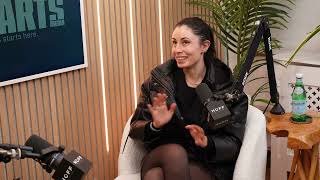
In this Upstarts Podcast episode, founder and CEO Celine Halioua discusses the creation and growth of Loyal, a biotech company dedicated to extending the healthy lifespan of dogs. Halioua recounts her personal journey from a neuroscience student and human‑ageing researcher to an entrepreneur who saw an opportunity to tackle the problem of dog longevity, a market with no existing investment memo. She explains how the company pivoted from human drug development—recognizing the prohibitive cost and timeline—to a dog‑focused strategy that leverages a shorter development cycle and a clear market need. The conversation covers Loyal’s upstart moments: convincing skeptical investors, defining a new regulatory pathway with the FDA for lifespan‑extension drugs, and launching the largest ever veterinary clinical trial (≈1,300 dogs). Halioua describes the company’s portfolio approach (multiple drug candidates, drug‑agnostic), rigorous safety and efficacy standards, and manufacturing challenges likened to automotive production. She outlines the business model that aligns revenue with dog health—pricing for accessibility, no insurance, and longer drug usage as dogs live longer. Funding milestones (≈$25 M for conditional approval, total ≈$135 M raised) and the cultural aspects of hiring scientists from human pharma, building a deep‑tech yet consumer‑oriented culture, and leveraging press for talent acquisition are detailed. Finally, Halioua shares her long‑term vision: expanding to cats and eventually humans, seeding the next generation of founders, and ensuring ethical alignment between profit and pet welfare.
Chapters
I would say Loyal is almost entirely composed of upstart moments. People literally laughed in my face when I would say what I was working on for a long time.
Why? Because it wasn't, it wasn't the $100 billion thing they're used to?
Well, it's just like I always say, like, nobody has an investment memo for dog longevity.
Welcome to the Upstarts Podcast, our weekly show where we talk to emerging startup founders about their upstart moment. It's our belief that upstarts are challengers who are pushing the status quo to achieve high impact, punch above their weight, and improve the world. I'm Alex Conrad, founder and editor of Upstarts Media. I'm joined today by Celine Halioua, founder and CEO of Loyal. Loyal is to us a real upstart company. They are trying to improve longevity for dogs, a long, arduous, and sometimes underappreciated category. She's making up the category as she goes. This podcast is brought to you by Mercury, radically different banking that's already loved by 300,000 entrepreneurs. Thanks for coming, Celine.
Excited to be here.
Loyal stood out to us at Upstarts because Celine's been working on this since 2019, right? And she's doing something crazy that I think really embodies an upstart spirit. You were trying to extend the longevity of dogs, right?
Yep.
By 2 years is what I think.
Hopefully even more.
Hopefully even more. That is amazing. And this is also a business where you don't get results right away. There isn't a lot of revenue for this company. There's— and it's been a few years for you to build this. So tell me a little bit about what inspired you to be working on this. And we can talk a bit about what this means for dogs, for the humans watching, and also for company builders who might be curious about how you built Loyal today.
Yeah, so I started Loyal when I was about 24 years old. I never thought I'd be a founder, CEO. I didn't even know about entrepreneurship until I was like 22, honestly. It was kind of a random walk that led me here with like interest in a couple of things. One, I've always been a huge animal person. I've been a vegetarian my entire life. I grew up with like 15 cats and 4 dogs and hamsters and rescued squirrels. And like my friends in SF say I have a farm basically. And to be clear, I live in the city.
You have multiple rescue cats right now.
I do. I do. I am currently a crazy cat lady and I'm sure I'll become a crazy dog lady again soon. So I was really always loved animals. But I professionally, I was working on bio and the idea of trying to develop medicines for some of the worst diseases that humans deal with, of which, you know, age-related diseases, ones like cancer, neurodegenerative disorders, Parkinson's, are both very terrible and also very intractable with current medicine. And so I got really passionate about the idea of can we develop drugs that target the way we age over time? So basically, instead of trying to target You know, you're healthy, healthy, healthy. And then one day you get diagnosed with the cancer and then we like throw all these like things at you to try to like help you have some more healthy years. Can we develop a drug that targets the inevitable decline that we all have?
But for humans, right?
For humans.
You were not Dr. Dolittle yet.
No, I was not Dr. Dolittle. I was all in this is in humans and happy to go into how like how I somehow became a dog longevity lady.
Well, yeah, I mean, go take us from scientists caring about human longevity to what you've told me is not pet tech, but is biotech focused on dogs, right?
Yeah, consumer animal pharma is how I like to call it.
It's a new category. You can really call it whatever you want. That's right.
That's right. I just like being special. So basically I did an undergrad in neuroscience and it was while I was studying neuroscience that I learned about the kind of terror of neurodegenerative disorders. So think of, you know, diseases like dementia, Parkinson's, Alzheimer's, these things where you lose yourself, right? Because you lose your, lose your brain and you lose your brain function. And specifically, I got very interested in research that was showing that, you know, while we think of this as a disease of the elderly, often people are developing the first signs of it subclinically, but like mechanistically when they're our age. Okay. Which is horrifying.
Very, very. Right?
That this disease—
I don't like that at all.
Yeah, sorry to like scare you. It's starting to develop now. So by the time we become symptomatic, the symptom is actually not the disease. It's the downstream consequence of all the damage the disease has done and accumulated over decades. And so it's one of the reasons why it's infamously difficult to develop a drug for Parkinson's, for example. Like they try to do things that delay it or slow it, but there's nothing— there's not a pill I can give you that makes— like antibiotics that make you get better from it, right? It's all about managing symptoms and trying to give the person as many— as much healthy time, but it's always in a worse quality of life. And so I just thought this was like super unacceptable, right? I, you know, when you're a kid, you're like, oh, like adults can always fix everything. And the realization that like that wasn't the case and we kind of all have these ticking time bombs inside of us and that one day you could just get this diagnosis and that's it, right? I kind of had like an existential breakdown, honestly. I was just like, I can't live in that world knowing that. And so then it became like, how can I work on this problem? And I was like, okay, I'm gonna be a nurse. Then I was gonna be a doctor. Then I was gonna be a researcher. And it's kind of through this random walk that I got interested in this aging thesis and this idea of, Well, why don't we develop drugs against the decline that precipitates, you know, the formalization of a disease diagnosis? And so obviously I wanted to do that in humans. I started a PhD at Oxford and having to go into more details. But long story short, I kind of realized that there's a lot of reasons you can't develop a drug for aging and lifespan extension in humans today, but it's actually not biological. It's just time.
That is so interesting. And Celine Halioua, now as a dog owner, selfishly, I want to know, how do you go from that to making drugs to improve dog lifespan, because I think that's an upstart shift right there.
Yeah, it's a huge shift. I mean, basically the realization was that if I wanted to develop and target this problem in humans straight on, like linearly, I would have to raise $1 billion easy. It would take decades.
Which if you're an AI company now is maybe not so hard.
Yeah, now it's actually—
Especially in 2019 for bio is And like a totally unproven person, right?
I was like an associate at a venture fund when I was having this idea and I was a PhD student before, right? Like Loyal is basically my first job unless you count gelato scooping. I was a great gelato scooper.
And VC clearly not what you'd call a real job then.
I mean, it was just like me and the GP.
Fair enough.
So it wasn't even like I wasn't even at an institution. And so, yeah, I realized you can't do it in humans, but you can do it in dogs. And oh, by the way, this is like the canonical problem of having a dog and loving a dog is that they live a shorter life than you, right? You go through these life milestones together, but they're only able to be there for a period of time that's much, much shorter. And you kind of are signing up for this inevitable decline and loss. And it's just like, it's so painful to lose a dog. I mean, if you've had a dog and you've lost a dog, you know the pain of losing a dog.
I know you've gone out of your way since to sort of adopt and help older pets. Were you already doing this? Was this something that was already personal or is that something that kind of came along the way?
We've always had like the misfits, I would say. Like all of our— I've never bought an animal in my life. I guess I bought my goldfish, but like it was like the first pet.
I'll forgive you that one.
Thank you. I appreciate it. It's always been like the animals that needed a home for whatever reason. And I started adopting senior dogs a few years ago. Because most people don't want senior dogs. And it's honestly like symbiotic, like they just want a couch to sleep on. And I'm a busy founder who can't go and like run a Malinois 3 times a day. And so they get a nice home. I can afford the care that they need, which is often expensive. I get like the inevitable, like deep love that you get from a senior dog.
Part of why I ask is because I feel like, you know, that, that fear of loss of your pet is hard and scary for people. Maybe deters them from, from taking a chance on those pets. And it seems like it's a big part of Loyal, right? That you could maybe have a couple extra years with your pet before they're aged and maybe declined in their sort of full abilities. Is that on the right track?
Definitely. I mean, one of the things, and this is all like pending FDA sign-off, etc., is like I'd actually really love the idea of like if you go and adopt a senior dog from a shelter, you get a coupon for a year's worth of Loyal or something, right?
That'd be cool.
Because that is exactly why they don't adopt senior dogs. And I mean, I'm considering adopting a dog. My previous senior dog passed away a few months ago. And even me, like, literally being like the senior dog longevity lady, I'm hesitating adopting another senior dog because it was so unbelievably brutal.
How much was it personal drive versus seeing that this might be the easier mark or like the more achievable market opportunity to get to that maybe more expensive human goal down the road?
It was both. I never thought I'd work on dog drugs. I wanted to be a vet when I was a kid. But besides that, I really never thought I'd be in this space. But no, I mean, honestly, actually, it just started as a crazy idea. So I'd been working at Longevity Fund. We were working on this problem of how do we get the first drug FDA-approved for lifespan extension? Been like banging our heads against the wall.
This was a fund that was looking at a bunch of different ways that we could improve lifespan.
Yes.
Basically.
So it was basically the first venture fund that was investing in therapies to extend human lifespan. And every company that pitched us like had the same narrative, like, oh, we have this drug, extends lifespan in mice, but, you know, FDA is evil, aging isn't a disease. So we're developing it for this specific like osteoarthritis or an eye disease or whatever. And I was like, that's great. But like, can we also develop longevity drugs for longevity? And so it was kind of like a funny realization that you could do it in dogs and a dog circumvented. But I actually didn't know anything about the market. Like, I didn't grow up bougie coastal, right? I grew up in like the suburbs of Austin before Austin was like the hip place that all the tech people go now. I didn't know there was this whole market of people that pay like hundreds of dollars a month for their pet care. I just thought it was like interesting scientifically. And then actually a VC heard what I was working on and thinking about and was like, holy crap, like Celine, you don't understand. This is the biggest market ever.
Did people—
He was a poodle owner.
Oh, well, there you go.
And a VC. C, obviously. So like VC plus doodle owner, it was like—
I'm not sure I would trust a doodle owner on advice. But yeah.
They are a little spicy.
I do have a rescue mutt, which makes me kind of militant there.
Yeah.
But yeah. Were you already maybe a black sheep or an upstart to care about longevity in Silicon Valley, or was it when Loyal kind of goes all in on dogs that maybe some people are like, what are you doing?
People literally laughed in my face when I would say what I was working on for a long time.
Why? Because it wasn't the $100 billion thing they're used to? Well, it's just like—
I always say like nobody has an investment memo for dog longevity. Like I'm the first dog longevity company you've ever talked to. I'm most people's first, either first bio investment or first dog investment or first longevity investment, right? Like there's not a lot to reference when it comes to Loyal. And so, and also just like the phrase dog longevity almost sounds like it should be on a TV show about Silicon Valley. Like it's kind of memetic.
In a way, but then, but then And when I've— like, we wrote about Loyal last year.
Yeah.
And I think readers were passionate in the responses.
Oh, yeah.
Like, they will maybe laugh a little bit, but then they will also be really interested because if they don't have a dog, someone else they love has a dog, and they're like, oh, that sounds so silly, tell me more.
It's actually hilarious. There was this one, one of the investors that ended up investing in us, he wasn't personally a dog person at the time, and so he was like really skeptical. And then he was like, yeah, so I asked every dog owner I ran into in the last week if they would buy the dog longevity drug. And all of them were like ravenous and like asking me to tell me. And they're like, ah, we'd pay thousands of dollars. And I was like, yeah, of course, dude. But it's like very non-obvious, I think, if you haven't had that problem before.
I think you at some point, you guys projected it would take 5 years, $25 million to make a drug here. Was that right?
Uh, eugh. Depends what you count. I think 5-ish is about right. Maybe 6. I think if you do everything right, you can do it in 5 to 6 years and then, you know, extends out if you start making mistakes. $25 mil is probably accurate for conditional approval if you don't include the team.
Okay. Would you have anticipated 6, 7 years ago that you would need to raise $135 million?
I wouldn't have thought I could, honestly.
Yeah. So what was it like talking to VCs, do they think you were a crazy upstart or?
Oh yeah. Yeah. I mean, there's always, it's, it's always been very binary. They either got it and loved it immediately, or they're like, this is like, I'm not gonna take you seriously. Right. I also didn't pattern match very well. Silicon Valley tends to look backwards at the previous generation of founders that made their funds a lot of money. And then that becomes like the pattern match for the current generation of what's like hot or not, like Palmer Luckey is like one right now. And you see all like the good no-tech bros all are like the same, like, fuck yeah, America, right? That's just because it's a pattern match. Before that it was Zuck, before that it was whatever. And I don't fit any of those pattern matches for like a lot of reasons.
And you're in a category that some might initially think is a consumer product. But I know when we wrote about Loyal last year, you were clear to me, I don't see this as just like a consumer product or pet tech, like the people you identify with our sort of deep tech, really kind of hard science peers?
Yeah, it's like, well, we're kind of like a lot of things, right? Like we're a, we're a biocompany. We're doing as rigorous a science as any biotech company, but we also are a consumer company. I think we're culturally a deep tech company, right? We're an Adams-based company that's built in Silicon Valley, but we're kind of everything and nothing at the same time. And so it just makes it difficult because no matter who you're talking to, even if they understand, you know, variable A, B, and C about the company, they don't understand D, E, F. Right. Because there's, again, there's no dog longevity fund out there.
Right.
I don't know if there ever will be. Maybe there will be one day. Right.
I mean, you could get into cats. We could have a fund that does all sorts of animals.
I mean, I love my cats. They don't always convince me that I should expand into cat longevity drugs.
Fair enough. I know we also talked in our article last year that cats already live pretty long.
Yeah.
It would be really hard to track in the first place.
Yes. And trying to give a cat a pill every day is like my cat is currently getting a daily pill.
I will keep far away from my mother's cats. In that regard, for sure.
Yeah, it's not easy.
You now have a lot positive from a momentum standpoint. You have had conditional approval of— efficacy approval, efficacy approval, a couple steps in this journey. Could you talk a little bit about that? And then we can sort of talk about where you feel you are in the journey, because I know it can be very different. Yeah, for a founder almost on a daily or hourly basis.
I love that question, actually. So we're obviously going through the FDA process. Many people don't realize this, but the FDA regulates animal drugs as strictly as they do human drugs. Actually, it's an extremely rigorous process. So we've been going through that for a long time.
With a study of what, 1,300 dogs?
1,300 dogs running right now. It's the largest ever clinical trial in dogs or cats or I think any animal species that's ever been run, at least in the US. And to be able to sell our drug and bring it to market and, you know, you be able to have it prescribed to your dog one day, we have to basically get the agency sign-off on 3 major things. One, that it works or it's like conditionally believed to work. The second is that it's safe, which for a drug like this, it's for relatively healthy dogs to keep up healthy longer. The safety bar is extremely high. And a third, that you can manufacture it reliably at scale. And so again, like manufacturing a pharmaceutical is so unbelievably complicated. A metaphor comparison I use is car manufacturing. Right? Like when Tesla first came online and started manufacturing cars, you know, it was a nightmare. Like the meme is Elon Musk like sleeping on the floor of the factory. It's kind of the same thing for manufacturing a pharmaceutical. The big difference is that you can't let suboptimal product roll off the floor into patients. Like you could only launch and start selling once it's literally perfect.
And I hope you don't need to sleep in the—
I legally cannot. You know, you have to wear like those bunny suits when you go into the manufacturing facilities. It's all very regulated. So I am not sleeping on the floor of our manufacturing facility, FDA. Sounds good. But metaphorically speaking. I understand. I am in my soul, in my soul. And so it's safety, efficacy, manufacturing are the three main things. We earned the efficacy approval last year, which was a huge, huge deal for our senior dog lifespan extension drug. We've also earned it for another drug for large dog lifespan extension. And then we just earned the safety approval. A few weeks ago, which was really important to all of us.
Because— and safety concerns, correct me if I'm wrong, had been one reason why you kind of moved away from the gene therapy that you had studied in your previous life.
Yes. The thesis is that— go very quickly— what we realize is that we cannot do harm first and foremost. And two, hopefully we can help. If we have a product that definitely does not do harm or in the highest likelihood it does not do harm, and then hopefully extends lifespan, veterinarians and dog owners will buy that. If you have a drug that even, you know, in a very small portion of the population can have drastically negative effects, that risk-reward is not worth it because the dog in front of you is currently healthy. Right? It's not like a cancer drug where, you know, the dog is going to die in 12 months from, you know, whatever cancer they have. So you're willing to give them the chemo even though the chemo has a bunch of negative side effects with it. Right? A drug like this, it needs to be basically as safe as milk. And so we picked drugs that we believed were that way. But to prove it was extremely rigorous. It took a lot of time. It took a lot of data. And so having the agency's independent sign-off, you know, the efficacy approval is probably the sexiest approval, but I think the safety was actually the most important one.
So do you feel like you are nearing a finish line or like you can see—
Yeah, you can see it. Yeah, I can see the light.
What is— and how does that feel as a founder?
I, you know, it's funny when you become a founder, you— at least I, do not have high highs or low lows anymore. I'm kind of like always in like the middle, like meh, good. So like, I think if I sit back and think about it, I'm like, wow, I cannot believe it. But it's in some ways I'm like, oh yeah, well, like we did the thing we said we were going to do. Right.
So the problem for me is a year into Upstarts, I feel the meh about the wins because I feel like we should be getting them. And then I still take any loss really hard. You feel the meh.
Yeah.
So it's more like the hating losing more than the loving winning. But I'm sure 6 years, 7 years in, maybe you just get used to that.
I, yeah, I never was like that big about wins. Like, I've never been really that good at celebrating, which is not great when you're a leader. And thankfully, yeah, the lows, I'm just like, well, fuck, right? And then you move on and you go do the next thing. Yeah, it's like, uh, you know, every so often like something goes wrong, you're just like, oh no, like the world is exploding, and you're just like, well, gotta move on now, going into the future. And I found that is more sustainable.
When I launched Upstarts Media last year, I had big ambitions and a lot to figure out. I knew I needed a bank that could move at my speed and grow with me too. With Mercury, I was able to get started in minutes without leaving my desk. Mercury made it easy to send and receive wires and manage the cash flow of our growing business from day one. Now I can spend less time with busywork and more time with the founders I like to cover. Building a media startup comes with new challenges every day. But with Mercury, banking is one I don't need to worry about. You don't accept outdated tools like floppy disks and fax machines anywhere else in your work and life. Why accept them for something as important as your money? Visit mercury.com to learn more and apply online in minutes like I did. Mercury is a fintech company, not an FDIC-insured bank. Banking services provided through Choice Financial Group and Column NA. Members FDIC. So part of the hope of this show is that we talk to people at different stages of their startups. All of them will be probably bigger than upstarts, but still, you know, from, from sort of public recently to about to have a big breakthrough, showing traction, to sort of think about sort of the impacts of their upstart technology, but also think about their upstart moment and sort of what are the lessons even as you're sort of still in the process. So I'm curious, do you feel like you've had your upstart moment so far with Loyal?
And what would you define as an upstart moment?
Well, an upstart moment could be that moment where you felt like the odds were most against you or you would have to really push the status quo.
Oh, yeah.
You know, sort of that big challenger moment where you were like, yes, we can do this. It will be disruptive. It will be great. You know, burn the ships.
Oh, yeah. I would say Loyal is almost entirely composed of upstart moments. And then like maybe recently.
That is partly why I was so excited to have you on the show. I do feel like Loyal is a classic. —company?
Yeah, I mean, when we started, the first thing was just the fact that we thought we could get a drug approved for lifespan extension. Seems really obvious now. Everyone's like, oh yeah, longevity, like mainstream all over Twitter. That was not the case. There— before Loyal came around, there had never been the FDA acceptance that a drug can be approved for lifespan extension and healthspan extension itself. Point blank, period. In fact, it wasn't even considered possible because the FDA regulates drugs for diseases. And, you know, lifespan extension is not a disease. And so that was really the biggest risk we took. And honestly, like, it's a really good example, I think, of being naive and thinking from first principles actually is a superpower sometimes. If I knew what I know now, I probably wouldn't think I could convince the agency of that.
The CEO of NVIDIA said a few months ago, and it kind of went viral, that he thinks that founders need to have some sort of like healthy ignorance or sort of, you know, blinders on to be successful in a way.
You do, and it's really difficult when you're building in something that's deeply technical or atoms or physics-based, because there are things you do need to listen to, right? And then there's lots of things where you need to ignore, and developing the judgment of when should I listen to the status quo, when should I listen to the expertise, and when should I say, I hear you, I understand, but I'm still going down this way. I think that's something that Loyal has done generally quite well, and it's one of the reasons we've been successful, right? You don't want to do the binary burning all the boats, versus you also don't want to just like stay on the boat because that's where you end up where everybody else is going, right? So I think that was our biggest upstart moment. I think deciding what drugs to develop was a really big one, specifically doing multiple drugs at once.
What was the reasoning there besides just ambition or reaching more dogs than you could with one drug?
So it was that the— I felt very convicted early on, and I think we ended up being correct about this, that it was inevitable that you can develop a drug to extend dog lifespan. Like that was— there is some pharmaceutical agent out there that is safe and efficacious for extending dog lifespan. That would be like a sufficiently good product for dog owners.
You have this upstart hypothesis that if you believe it, then that unlocks other— Exactly. So then it's okay.
Well, if you then say, okay, but now I'm going to develop LOY-1 for dog longevity, you're introducing new risk because you're like, I believe this thing, which is you know, you believe a ubiquitous truth about the universe, but Loi-1 working and being safe for dog longevity is not a ubiquitous truth, right? If you knew that, it wouldn't be a research program, right? And the problem with bio is that the truth is predetermined. That drug either is safe and efficacious for longevity or it isn't. And you cannot change the outcome of whatever the universe has predetermined for that, right? It's more about you trying to make a good shot on goal and finding out as quickly as possible if you were correct or not. And so the problem there is— OK. Wait. Want me to re-explain that?
That's crazy to think about. Yeah. No, well, I guess history has been written of whether the drug works or not. And then you just have to spend all this time playing it out, right? Exactly. That must be kind of weird mentally. Yeah, you cannot—
if a drug doesn't work, you cannot make it work. And you cannot make an unsafe drug safe. Now, if you're unethical, maybe you can, right? But obviously, that's never been how we've operated at Loyal. And that's why the goal of the company has always been to get the first drug FDA-approved for lifespan extension. It's never been get LOY-1 approved for lifespan extension, LOY-2. We're actually totally drug agnostic. I obviously have biological hypotheses that I really enjoy personally, but I've always made it super clear to the team from day one, I don't give a shit what our first drug is. All right. I just want a drug that is safe and that works and is a good product for veterinarians and dog owners.
Does that mean if something went wrong with Loyal One, it wouldn't faze you? You would be like, we've got more shots on goal?
Yeah, yeah, no, totally. I mean, it's— Loyal One was originally our first program. Now Loyal Two is going to be our first program because Loyal One had challenges with manufacturing. Like, that's just kind of the way it goes. And it was very non-consensus to have a portfolio approach with such an early company because it multiplies out the cost significantly. But it was actually, I think, crucial to our success because it meant that we were insulated against the existential externalized risks around the biological risk that we couldn't control. Because my biggest fear was that Loyal is correct, but then we choose the wrong drug or this was like luck isn't on our side and then the company fails and it not only, you know, burns our shot on goal, but it burns everybody else's shot on goal.
So in a way, your craziest thing was sort of the picking that this is the category, this is the thesis, but then you can maybe de-risk or sort of remove that picking risk. By being more agnostic, more kind of objective about having a few plays within that.
Is that right? Yeah. And it's one of the cool things about working on dog drugs is it's still very expensive, much more expensive than software, but it's an order of magnitude or two cheaper than doing human drugs. And so that means that we've been able to do that. Like we've raised a lot of money pre-revenue, but relative to a human program or human company, we've barely raised anything.
I do think like for the audience, this might be something where I, you know, kind of as a weirdo who's covered Silicon Valley for 15 years and studied it a lot, I, you know, I remember even early in my career there were a lot more biotech companies that were basically going public. Yeah. On a hope and a prayer. And they're using an IPO as a fundraising opportunity and they either became huge businesses today, but most of them no one's ever heard of. I feel like the bar is higher or there is like more visibility on you to sort of achieve these results per dollar raised where it's, it's, it's not like you're doing some generic drug, we don't know who you are, we don't know the name of the drug, and it's either, oh, good, you know, that was good, or, oh, we move on to the next. Like, this is a big bet, which I really respect.
Yeah, no, I, I'm very cognizant. I think that's what happens when you work in an incipient field in general, is you carry the weight of the field on your shoulders a little bit, right? Longevity as a category is bigger than cancer, right? And, you know, anytime a cancer drug fails, people are like, well, We're not going to develop cancer drugs anymore. They're like, no, that mechanism doesn't work. That pathway didn't work. But with longevity, the jury is still out, unfortunately, on whether this is a legitimate class of, you know, pharmaceutical targets. And so every time there is a big clinical failure, people sometimes think, well, you know, let's not invest in this field. This doesn't make sense. And then the inverse is true too. Like the first time we have a drug that's successful, like if we end up getting our drug to market and it's a market success and obviously biological success, I think that's going to spur a ton of investment in this space, which is exactly what the field needs. Do you want that?
Because right now you kind of have this double-edged sword where I think it might be really cool to be the trailblazer and sort of the face of this emerging category. But as we just talked about, there's, there's more pressure there. It's probably, you know, a validating sign if there are more people trying to do what you guys are doing. How do you think about sort of the market growing up around you?
I don't think it's winner take all in bio. Obviously, like, we're eventually going to have competition. That's probably going to irritate me a lot. I'm going to be like, you're just copying my work. You'll do a fire tweet about it. Yeah, exactly. But realistically, I think anybody who gets into this space is doing it because they want to work on, you know, increasing free will and reducing our vulnerability to disease. And I think ethically you have to be supportive.
Do you feel like you have to still prove it every day as an upstart, or do you feel like now at scale you get momentum, things get kind of a bit easier, you know, now, now a while into the journey, what is that like for you?
I think it's both. I think it's definitely easier. You know, people are excited about what we're doing. They know what we're doing. You know, a lot of people who apply to work at Loyal, for example, I've heard about the company, have often applied many times, are fans of the organization. We're able to recruit ourselves. We get a lot of attention, which is helpful for lots of different things. We actually recruited our clinical trials in part via press. Which is like very non-canonical. I remember you had a great photo shoot and some—
Yeah. A bunch of dogs. Yeah. Yeah. I forget what publication.
It's like the best part of my job. Yeah.
The research on this chat was really fun, of course.
Oh, yeah. Lots of cute dog photos. I think you're probably thinking about the Wired cover. That's right. Yeah. They brought all these senior dogs in. The whole scandal was that I wanted my dog to be on the COVID and they ended up having the editor's dog on the COVID No! I know.
This is why I had to leave big magazines. I know. If we ever had a print cover, you could pick the pet that would go on it. Thank you. I appreciate that. It was really a scandal, honestly. Wow, breaking news there.
My dog was cuter. I'm sure it was. But yeah, I think all of those things, like doing something unique, is just such, such a tailwind. I also simultaneously think that we, you know, I think we're undervalued. I think we're underappreciated. I think we're still not consensus because we're not building in a space that's like obviously hot.
Is this uninformed dismissal? Because I feel like these, these are probably people not qualified to be like, oh, well, actually, I looked at Loyal 2 and I don't believe in it. They just are not excited about anything that is not their own little world right now.
Right? Yeah. Well, I think there's just like once an idea or a trend becomes mainstream, then you just get a whole pooling of capital of people who are like, oh, I believed in it the entire time. And longevity is closer than it's ever been, but it's not quite there yet. And also people don't sometimes understand why we went dogs first besides loving dogs. So it seems like, oh, it's just that's the dog company. Like they're not doing the human stuff, not understanding that, you know, there's a whole strategy for, you know, the path we're taking and the thesis being that it might not be like as the crow flies, the closest path, but I think it's actually the closest path in terms of the realities of building a pharmaceutical.
You mentioned a minute ago that hiring, like people have maybe learned about the company or they're excited about, they've maybe already applied before. Was there a moment where you noticed that it was maybe easier to get people to buy into the vision or want to join? Because I assume that wasn't the case at the very beginning, at least as much.
No. I mean, nobody we hire has worked on— I mean, now we hire people from the animal pharmaceutical industry, but generally speaking, we hired scientists from the human side and had to convince them that it was worth their time to work on dog drugs, which even if they love dogs, they're still like, I don't know if I want to detour off my pharma career path to go work on dog stuff. Also, this is like crazy young CEO. I think it started changing when we got our first big pieces of press. I think the Wired article was very legitimizing. I think there's a couple of others we've had. Also, I just found that Loyal, the first time you hear Loyal, it's kind of, it sounds crazy, right? You kind of laugh a little bit. But then once you hear it on repeat, you're like, oh, like this actually makes a lot of sense, right? Like one, one kind of thing I've noticed that most of our investors passed the first time they met me, and then they invested in an extra round.
So you didn't hold it against them. You gave them a second chance. Sometimes. It depends on the group.
Some of them irritated me a lot, and I do hold it against them. Fair. But many of our investors passed for the first time and then invested the second time, and I think it's because it's kind of this idea that needs to marinate a little bit, and maybe that's on me on the storytelling, but I think there's just so many facets of it to understand why it makes sense.
With Upstarts, you know, it's important that I think we're showcasing companies that can both be big companies themselves and have that high impact. How do you balance sort of the business potential and sort of the, the size of the corporate side that I'm sure you have in your visions, plus the sort of, I think, more obvious and emotionally grabbing human impact that you can have for, you know, the families of all these great pets?
Yeah, so that was actually very hard for me because I actually love building and operating a company now. I don't know if I'd have another job. Hopefully Loyal's my only job in perpetuity. But I definitely, I definitely at the time was very like uncomfortable with running a corporation whose job it is, is to make money and shareholder value. And I felt like there was this tension in between it. And I think the thing I realized, and actually a talk I give to my team too, because many scientists and veterinarians will feel this way, is that it's not zero-sum, right? You can actually do both and they don't have to be taking from each other. You know, I've designed the company and what we've done in a way to be— we are economically aligned with the best interests of, you know, dogs, right? You know, if your dog is on Loyal and our drug works, we will make more money if your dog lives longer because your dog will be on the drug longer, right? Like, we are incentivized for as many dogs as possible on drug, right? Because there's so many dogs in the US, because there's no insurance mechanism, right? So actually, us being priced at a good, like, accessible price point is how we make the most revenue, right? It's not like this human thing where we charge half a million dollars because some insurance company is going to pay for it. That dynamic does not exist in veterinary medicine. And so, you know, I think we've designed an organization that is— our economic interests are aligned with the ethical interests. And that's something I really, really, really love about working on canine and veterinary medicine, because that's actually a lot more difficult to do in human medicine because of all the kind of convoluted incentives we have with the, the healthcare system, uh, here in the U.S.
So getting this first drug to full approval and into the market will be winning in a major way, right? And then there will also be having that sustainable company that you don't need to ever have another job as well. That'll be the second side of winning. Is that fair? Yeah.
The way I think about it is my first goal is to get the first drug FDA-approved for lifespan extension. The second is to build a consumer pharma company. And then the third is to use the revenue and the biological insights and a team from our first drugs to be reinvested into the organization to build more and better longevity drugs for a wide variety of species, including humans. That's awesome. I want us to develop more dog drugs and better dog drugs. Second generation, third generation. I want us to develop cat drugs. As much as I joke about my cats being little shits, they are, but I love them. I want to work on human drugs.
I know you're still along the journey, but have, have there been newer founders who have already reached out or been inspired by Loyal and come to you for advice? And are you able to spend some time kind of maybe seeding that next generation as well?
Yeah, I try to. I try to. We definitely— there's a lot more pet tech companies now. There's, I think, a cat longevity company now. Oh, okay. I think there might be another dog longevity company or there was another dog longevity company. There's— I think actually the pattern match I'm happiest about hopefully facilitating is founder-led bio companies, right? Because again, classically the pattern match for founder for biotech companies is like old white guy, right? Who's like sold 10 companies before and like worked at Pfizer for 30 years, which is fine. You know, they've done a lot for health, but I also think you can have young entrepreneurial tech-style founders building this space if you're smart about what kind of program you work on. And so I think that's definitely been hopefully a pattern match I've helped build positively. And of course, female founders. There's not a lot of female founders in general. There's even less in deep tech. Yeah. There's even less that are not in like femtech or somewhere where women have permission to be CEOs, right? And so I'm hoping that's positive too. And I, yeah, it's something I actually like care a lot about is creating a positive pattern match because there weren't a lot for people to pattern match me against. Which made my life harder.
Well, that's why, you know, partly why I think it would be great if Loyal does become this large standalone company, because it would help seed another generation where maybe your employees could start companies. People could, you know, there could be like a whole tree that comes out of you being a category creator here.
Yeah, I really— I would be like, the honor of a lifetime if that happens, honestly.
Well, Celine, I could talk to you about this stuff for literally days. I care so much about your mission. This is the kind of startup that I think we can all both learn from and root for and support. So thank you so much for coming on the show.
Thank you. It was fantastic.
Awesome. Since recording this conversation, Celine did get that preliminary efficacy approval from the FDA for her senior dog drug. Loyal also announced a $100 million funding round that takes their total funding to more than $250 million.
More from Celine
Life Extension Innovations, Moonshots & Snake Oil (with Celine Halioua & James Peyer)
This Entrepreneur Built A Multimillion Dollar Company To Help Your Dog Live Longer | Forbes