Creating Longevity Drugs for Dogs with Loyal Founder Celine Halioua | S13E3
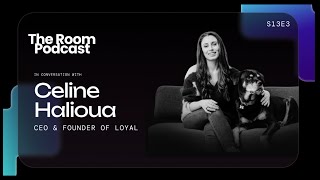
Celine Halioua founded Loyal to develop the first longevity drug for dogs, after discovering that the genetic driver of dog size also controls lifespan. The company is running a 1,300-dog trial over 4-5 years and has raised $150 million, betting that treating aging in big breeds could unlock insights for human longevity.
Chapters
when we selectively bred dogs for size, we seem to have given them an accelerated aging disease. And therefore that means that a big dog's short lifespan might actually be treatable. And I just thought this was funny. I would like joke with people about like, ahaha, I know how to make your dog live longer. It kind of like got out in the grapevine and they're like, Celine, this is not only like interesting scientifically, this is also potentially a very interesting company.
Welcome back to season 13 of The Ruum Podcast. Claudia, can you believe we've been doing this this long?
No, it's been 5 years. So many episodes, so many incredible conversations telling the stories of some of the world's most iconic founders and funders. And whether our listeners are new for the first time today or have been with us from season 1, we're so grateful for the community we've built.
Completely. Uh, we've had the mission to open the door to the room where it happens for those entire 5 years and have been able to do so over 120 episodes with hard-earned lessons from some of the top technology and consumer founders of our time.
And we've been through a lot personally as well. We have indeed. I built, scaled, sold my startup Priv. You were our first investor, so you've been there through the entire journey and you've also recently graduated from HBS. You're now building at Vercel, and through it all, we've brought the funder and founder perspective.
Yeah, it's really been an incredible journey, and I'm thrilled that I'm back full time in San Francisco and we're probably here to stay. That means that there's more for us in terms of growth, both inside and outside of the physical room. But what's important to have really out there is these stories, and we've been able to do so over incredible guests from the CEO and founders of Flexport, Perplexity, Particle, Zapier, Zillow, Vanta. I could go on.
These guests and their enterprises have generated over $100 billion enterprise value and really, frankly, moved the markets and growing, especially in 2025 with everything that's going on in AI. So I'm so excited to share Season 13 stories that are maybe a little bit more AI-focused than past seasons.
Absolutely. And you can find us IRL and URL, especially with our events such as our annual conference, INSIDE Summit, upcoming SF Tech Week events and beyond.
And if you want to get information around those events, subscribe to The Room Podcast and subscribe to our newsletter at theroompodcast.com.
Perkins Coie supports the most innovative entrepreneurs and investors in fast-moving and high-growth sectors, addressing their myriad of legal needs. But the firm doesn't just provide end-to-end legal and business counseling to its startup clients. It also facilitates introductions to key advisors and sources of capital. Perkins Coie's interactive website, Startup Percolator, offers access to programs, resources, and rich dynamic content designed to assist entrepreneurs on their startup journey. To learn more, go to startuppercolator.com and perkinscoie.com.
This podcast is brought to you by Mercury, the banking platform businesses like The Room Podcast use to simplify their finances. It's time banking did more than hold your money. Now it can. With Mercury, you can pay bills in seconds, close the books faster, and even send invoices. Not only does Mercury do away with a patchwork of tools, it eliminates guesswork, giving you complete and accurate visibility into your business's finances, all from one account. Apply in minutes at mercury.com.
Today we're diving into the frontier of longevity. However, this episode isn't your classic longevity story. Celine Halioua, the founder and CEO of Loyal, is building a clinical-stage animal health company that is developing the first longevity drug for dogs. Celine's path to founder market fit wasn't linear. She studied neuroscience at UT Austin, pursued a doctorate in philosophy and economics of healthcare at Oxford, and ultimately served as the chief of staff for the Longevity Fund. Along the way, a frustration with reactive treatments for neurodegenerative diseases and a key insight that the genetics of dog size and age pulled her away from venture into company building. Since launching Loyal in 2019, Celine raised over $150 million and led the company through historic regulatory milestones, including what are believed to be the first and second FDA acceptances that a drug could be effective in developing lifespan extension. Today, Loyal is running one of the largest companion animal studies ever. And in this episode, she opens up about choosing dogs first in an effort to align her patients' life cycle to that of venture timing. Key insights and themes in this episode include building a category in a regulated market, safety-first innovation for preventative drugs, and ultimately how to build a brand before a usable product. Let's open the door. Celine, thank you so much for joining us in the room today.
Excited to be here. Let's do it.
So excited to have you. Let's get started at the beginning. You grew up in Austin, Texas, before heading into neuroscience and then the longevity space. It's a comprehensive time in your life when you're growing up and figuring out what you wanna do with your career. How did that early upbringing shape the way that you view and see the world?
It's one of those things where you look back at your upbringing and you're just like, oh, it all made sense. It's kismet. I was born and destined to be a Dog Longevity founder. But it really wasn't that at all. It was a total random walk. I got into college first. I was a total truant and like terrible student in high school, bottom 10 of my class. Like it's really funny when Whenever I run into people from high school, cuz they're like, how is it you? Of everyone? Cuz I went to like a public magnet school that was full of dweebs. I was not on anyone's list to do something interesting. And then gone to college for art school, then switched to neuroscience, then wanted to be a nurse. Then I was like, no, I'm gonna aim higher. I'm gonna be a PA. And then I was like, no, no, no, I'm gonna be a doctor. And then eventually wanted to be a neurosurgeon. Then last minute I did a pivot, went into a PhD in health economics, which I'm not a mathy person. And then did a hardcore pivot again and went to VC. And I was like, cool, this is my home. I'm gonna facilitate longevity by facilitating others, by giving them money. And then I was like, oh, hard pivot, longevity. And not only longevity startup, dog longevity startup. And now I feel like I found my home and I'm very happy that my random walk landed here. But it, yeah, that was not the master plan.
It often is never the master plan. Although it is funny, some people felt like from day one knew what they were going to do. So I guess we're curious, although I think I know the answer based on how you answered that question, but did you always think you were gonna become a founder?
No, I didn't even know what a founder was until I was like basically graduating undergrad.
You mentioned a few parts of this path, right? Neuroscience at UT Austin, working in neuro-oncology, and then doing the longevity research that I'm sure is underpinning much of your work today at Oxford. What was the project or experiments that you were working on early that made you feel like longevity had a place and had some momentum behind it at this time?
I kind of landed in longevity in a somewhat non-standard way. I got interested in longevity, not because of any interest in immortality or radically extended lifespans or anything like that. I got into it due to an interest in age-related diseases, specifically neurodegenerative disorders. So diseases where you have basically brain loss and the desire to develop a preventative or a better drug for these diseases that are very difficult to treat with kind of quote unquote classical medical intervention. So I was working in a lab that was trying to develop stem cells to replace the certain type of neuron that's lost in Parkinson's patients that leads to them developing or being symptomatic of Parkinson's disease. And it was just, I remember thinking it was like the Swiss cheese model, right? Where like every little thing had to go right in order for the patient to get some benefit. And even then, like, not that much benefit. It wasn't like you're curing people, right? It was just slowing the decline or maybe getting a little bit of function back if you were extremely lucky. And it just seemed ridiculous to me that this was the majority of effort in age-related diseases and that we weren't working on reducing the risk and probability of somebody getting those diseases. And so that's how I kind of landed on aging. Cause the idea of the aging field in my view is developing drugs that target the way we broadly decline over time that lead to us developing diseases and reclassifying what is a treatable condition in the human body away from reactive to more preventative or more interventional in earlier stages. So yeah, that was how I ended up there. And then it was really, how do I want to do this? And what does that look like? That was the random walk over time.
I would love to hear a little bit more about your dog story. Who was your first dog and who is your current dog and how did ultimately like this passion for longevity and of course such a tragic disease that exists in humans intersect with your passion for dogs?
Well, I think we have to bring Della in if we're gonna do this.
Obviously.
Honestly insulting if we don't. Come here, Della belly. You know, I really should have like a podcasting setup. Okay, can you guys see me? Yes. And hopefully you can see some of Della's— oh, she's so sweet— Bella's eyebrows. So I've always been a big animal lover. I grew up with a ton of rescue animals, mostly cats, but also rescue dogs. My first dog was a Chow named Highway because we found him on the highway. We also had two dogs named Puppy, Puppy 1 and Puppy 2, because we found them as puppies. We just had all these ridiculous rescue animals growing up. And I've been vegetarian my entire life for animal reasons, animal love reasons. And so I always knew that this was something that was super important to me. What I didn't know, or what I didn't think, is that I wanted to do a career in animals. But it was kind of something that came back over time because when I was early 20s, like working on ideas behind Loyal, it made sense. If I didn't like dogs, trying to work on a dog longevity drug would be pretty disingenuous at best. But I love them. And so when the intersection came, like this idea of working on a dog longevity drug, it was obviously very compelling from a scientific standpoint, but also really compelling from like a soul standpoint. And that was one of the things that made it irresistible for me.
I love to use that as a segue to chat a little bit more about the journey into Loyal, but TL;DR for our listeners, Loyal is pioneering longevity drugs for dogs, which could be the first FDA-approved medicine that really explicitly targets aging in dogs. What was the aha moment behind starting Loyal? And tell us a little bit more about those early days around deciding, hey, I'm gonna start this company and I'm the right person to do this.
She's snoring a little bit. Honestly, I think the world deserves to hear Della's snores. I was at Longevity Fund, this venture fund focused on funding and starting companies for longevity, and it was implicitly for humans, right? It wasn't, you know, explicitly for humans, but the whole point was extending lifespan and quality of life of humans. And we would have a number of companies pitch us because it was really one of the only like shops at the time working on longevity, and Laura, the GP, has a very strong reputation in this space. But every single pitch really had this exact same narrative. We have this drug or this mechanism, it extends lifespan in mice. Oh no, you can't develop a drug for human longevity. FDA's evil, blah, blah, blah. Like all these reasons why we can't do it. So we're going to take this longevity drug and develop it for osteoarthritis or whatever other disease that wasn't aging, but don't worry, once we get the drug approved for this, then we'll like sneak attack and make it also a longevity drug. And that strategy, I think it has merits, but was always deeply frustrating to me because if you're working on a knee drug, in the end you become an, an osteoarthritis company, right? Because to develop a drug and get FDA approval takes 10+ years. The specialty is highly specialized. So the question is no longer, is this a good longevity drug? The question becomes, is this a good knee osteoarthritis drug? And those optimizations are not necessarily the same. I would actually argue that they're inverse. If something is going to be a really efficacious drug for generally slowing the aging process, it seems unlikely to me that it would also somehow be a best-in-class osteoarthritis drug or best-in-class, whatever specific disease that you're trying to target. And so I became really obsessed with how can we develop a drug for lifespan extension itself, where it's not being developed for any specific disease, any specific use case, except for taking a relatively healthy human and keeping them healthier longer. You know, I really quickly ran into a bunch of walls. That had nothing to do with biology. It was, how do you logistically run a lifespan extension study? How do you intersect it with patents? Patents only last 20 years. It sounds like a really long time until you realize that running a human lifespan study would probably take 20 years. And there's a shit ton of work you have to do before a drug ever can even potentially enter a human. And then how does that fit into our current healthcare system? It's just like, would a VC ever fund it? Like, no, probably not. And so I got really frustrated and initially I was trying to run this down and figure out a solution. And it was while I was doing this that I found this really interesting paper on the genetics of dog size. And it was basically talking about how there's one gene that is the predominant driver of whether a dog is big or small. It's this gene that controls the release of growth hormone, which is this little protein that circulates in your blood and binds to your cells and tells those cells to basically grow, divide, grow, divide. And that was really interesting for two reasons. One, dog size is deeply correlated with lifespan. So a big dog like Della will on average have a much shorter life than a small dog like a Chihuahua. And there's actually a very extreme differential. A Chihuahua will have an average lifespan of about 18 years while a Bernese Mountain Dog or Great Dane is living only 7 or 8 years. And we kind of like accept this as normal, but it's actually very weird because usually the larger a mammal is, the longer their lifespan is, not the other way around. And two, this genetic pathway that this paper had identified as being a driver or the predominant driver of a dog's size is also a very well understood longevity pathway that basically had shown that if you made a mouse or a worm that had the genetic change associated with a small dog, you got a very long-lived mouse. And if you made a genetic change that was associated with a big dog, you got a very short-lived mouse. So I just thought this was cool. And I was like, oh, of course. When we selectively bred dogs for size, we seem to have given them an accelerated aging disease. And therefore that means that a big dog's short lifespan might actually be treatable. And I just thought this was funny. I would like joke with people about like, ahaha, I know how to make your dog live longer. It kind of like got out in the grapevine that I was like working on this and like thinking about this. And they're like, Celine, this is not only like interesting scientifically, this is also potentially a very interesting company. People love their dogs. Like this is such a problem that everyone has. And slowly over time I was like, oh shit, this is the way to do it. This is how you get a longevity drug on market. And this is how you kick off the space race of longevity and how you help our pets. Which is the most important thing.
It's fascinating how you went from one side of the table looking at all these other longevity startups to being on the other side with almost a happenstance insight that then has become such an incredible mission. That being said, biotech is super capital intensive and full of long timelines, as you mentioned, 20 years to run a longevity study. Tell us a little bit more about what it was like to convince early investors and team members to buy into such an ambitious vision, and And maybe tell us a little bit more about how this word on the street actually became what Loyal is today.
It's funny, one of the interesting paradoxes about startups and doing crazy shit, especially crazy difficult technical stuff, is that I feel like there's this commonality that you can't really know what you're getting yourself into, or you'll convince yourself out of it. And if I had all the context I have today, I probably would convince myself out of it because I'd be like, here are the 20 reasons. Why this will never work. And I think people saw it was a good idea, saw that there was really strong founder market fit, thought, you know, if there's a 0.1% chance of this working, it's obviously massive. Like all the classical seed reasons. But also I had no idea how hard this was. I had no idea. Like, I was like, ah, it's just a drug. You just manufa— it's fine. You just manufacture it. You just put in the drug machine and then out pops the drug. The fractal complexity of working on something like this. I think you have to be naive and then update super, super, super quickly because if you're naive for too long, it kills you. And it's one of the reasons I feel like you see this pattern in deeply technical industries like biotech, like space, like automotive, like energy, where the disruption doesn't come from the incumbents. It comes from the new kids on the block because you have to be able to suspend disbelief and it's extremely difficult to suspend disbelief if you have any degree of context past a certain point. So that was one part of it. I'm happy to go more into fundraising strategy if it's interesting. In terms of the gossip chain of Silicon Valley, so I had just moved here because while I was working for Laura, I was still enrolled at Oxford and I was flying back and forth. It's a whole thing. In economy, I would like to add, unlike budget airlines that are now bankrupt, I would also like to add, this was not luxury here. But as I was working on this, I didn't really know anybody. I was like trying to make friends and I went to like some camping trip with a bunch of founders and I didn't know anybody and I'm not like the queen of extroversion. And so I was just kind of sitting around the campfire drinking a cider, shooting the shit with somebody who had a dog, cuz naturally that was like my comfort point and like talking about how I knew how to make their dog live longer. And started talking about the idea. And it turned out on the other side of the campfire, there was some VC or angel or something who heard me and then ran into another VC who ran into another VC at YC Demo Day and was like, yo, I met this crazy chick. This sounds right up your alley. Like, do you want the introduction? And so then they reached out to me and were like, do you wanna chat? And I was like, sure, whatever. And helped catalyze what became the seed round of Loyal. But after I got the term sheet, I'd sat on it for like 2 weeks. And in retrospect, the guy totally thought I was shopping it. I wasn't shopping it at all. I just was decided to, if I wanted to start a company, and it took me 2 weeks to be like, okay, I'm gonna do this shit. And like, I'm a founder. So yeah, go take those invites even when it's socially awkward. You might, uh, might start a company out of it.
End up with a term sheet. I guess that's a good segue to kind of asking who is the first person to say yes to an investing in you and loyal?
Laura Deming was the first, first. I was a straight out of college kid. I didn't have money to go work on a crazy idea for 9 months. She paid my salary. I worked at the fund. They put like $500K in or something to like pay me basically. And, you know, really was the first to be like, you should be a founder. The second was somebody named Greg Rosen, who's an investor at Box Group, who's the guy who heard about me at YC Demo Day. He's not a scientific guy at all. but he's a golden doodle owner, one, and two, he had been an investor, an early investor in Ro, and so knew a lot about the intersection of consumer and pharma and how interesting that could be. And so he was the one who helped me understand that there was a market here because while I personally love dogs, there's like a dog culture that I didn't really know because parents are immigrants. We didn't grow up in that, right? Like we took great care of our dogs, but we weren't like the crazy dog people, right? Who like pushed their dog around in a pram or whatever.
No shade to crazy dog people, but I love them.
I'm, I am one, but like, we also just didn't have the money. Right. And so it was just like a totally different game. And so just him helping me understand the space and like this world totally outside of biotech where, you know, you don't really think about markets because obviously if you develop a cancer drug, it's valuable and obviously people are gonna spend money on it. You never think about that. You think about the biological problem. He was really the kind of the second one. And then Collaborative Fund ended up co-leading that round. That's incredible.
It's so cool to hear how you through the literal grapevine, like built trust with some early investors who took a bet on you. But looking at some other stakeholders, Loyal is really tackling a deeply scientific, but also emotional terrain. Tell us, how did you go about building trust with both regulators, but also pet owners who would be potentially leveraging Loyal for the first time on one of their most loved family members?
The first thing we did was a decision very early on is that we optimize for safety and not even known safety, but just anything that could have any sort of risk. Generally, uncertainty is correlated with safety in drugs, different types of drugs, targets, et cetera. Like anything can introduce random variability that then compounds to a safety risk, even if it's only in some portion of the population. And so we picked mechanisms and drugs and formulations and strategies and doses. Everything was optimized around radically high safety, much, much higher than the already very high bar that the FDA has. Because I want to be able to hand on heart say that this might not work but it won't do harm. That was really important because this is a preventative, right? This is to keep your relatively healthy, but not acutely ill older dog healthier. Your dog doesn't have cancer. This isn't treating kidney failure. There isn't a tolerance for even a small percentage of dogs, God forbid, having a bad adverse event. I think that built a lot of trust with both parties. You can't really have these philosophical conversations with the agency. So this is just me projecting what I would think if I was them. If they're going to even play ball on helping create a regulatory pathway for something like this, they need to feel confident in there not being a tragedy induced. And so, I think the combination of us really indexing for safety, and then secondly was we never try to get something around or like push something that we don't believe in. We do things at a degree of rigor that is way above what's expected for a startup. Like I would back any of our science and it's just that trust, right? And that integrity that I think is important, obviously when you're doing anything, but it's non-negotiable when you're working on living animals and the children in many ways of people. Maybe that sounds obvious, but I think in Silicon Valley there's often been this ethos of like hack, move fast, break things. We do move fast and we do ask questions and we do innovate, but we don't innovate in certain verticals and we don't die on certain hills, that could have a negative impact on a dog and therefore on the human. And I think that's really earned us a lot of credibility.
We're about to get a little bit deeper into sort of the scaling journey of Loyal and a little bit more about your quote-unquote product. But especially at the beginning, we know journeys aren't always a straight line as a founder, I certainly lived this, high highs, low lows. Tell us a moment that didn't quite go as planned and how you turned it around.
Oh gosh. There's a million. There's so many.
That is always the initial knee-jerk answer. I mean, it's true.
I, I'm just trying to think of one that's like applicable to a broader population. I can talk about one thing that might be relevant for this group if you're not an AI founder, which is the first time I tried to raise our Series B, I failed. So I started Loyal, obviously we closed our seed around January 2020, and then after that became Xurp. And I'd never been a founder before. I hadn't really been in Silicon Valley before. And so the only fundraising environment I ever experienced was Xurp and was the frothiness that was those 10 years or so, or 5 to 10 years. And so then in, gosh, was it end of '22, beginning? I don't remember when everything started crashing, but when things started crashing and interest rates got hiked and the fundraising wheels fell off the bus and all of that, Loyal is a really strange company and that used to be an advantage, especially, or was not maybe as deeply interrogated when people were just throwing money around. And then suddenly people were like, we just lost a bunch of money in FTX. And like all this crypto implosion, and also our LPs like don't actually really want to do capital calls because they're making a ton of money off of interest, right? And is this going to be the deal that we bring to our partnership to do while we're doing nothing else, right? The crazy dog longevity company, N of 1, started by like a young woman, like in a market nobody knows, with like technical risk and Da da da, and all of this, right? And of course not. Of course the answer was no, right? Like, that's completely and utterly logical. And I was totally unable to raise, and I didn't know what to do because suddenly this door had been slammed shut. We had spent, not crazily, but certainly in a much less rigorous manner than we do today, again, because it always felt like money grew on trees. We didn't even realize. And also, I didn't even understand fundraising in a more tight environment. So what I ended up doing was totally redoing everything about how we operated the company, the culture, how we spent money, where we spent money, prioritizing things. We didn't— we prioritized everything. We felt like we were prioritizing, but really we're just like doing everything, right? How we communicated this to the organization, how we thought about exploratory science and basically not doing it for a long time or only doing it in certain manners that were low cost but high ROI, basically cut everything down. And then to where we only needed, I think about $6 or $7 million to bridge the gap with the cash we had in the bank today to get to another major milestone that I thought would enable our next fundraise, which was the, the efficacy approval of our big dog short lifespan drug. And I didn't know where to raise this money. It was like $6 million, which doesn't sound like a lot. I literally had once raised $7 million in a 30-minute phone call, like one phone call. There was nothing else, right? I know, like this was the context. And to be clear, that wasn't— there was kind of two pools of capital in this time. One was Silicon Valley. Silicon Valley's always been like relatively rigorous cuz we're weird, right? And weird is always takes a little bit more of a, a sharp eye. But there also was another pool of capital of just like really rich people who were were just individuals who were just throwing money. And I'm very thankful for them, but that pool disappeared when the stock market crashed, when interest rates went up, when crypto crashed, that pool was gone. And so then it was, where do I go and raise the $6 million? Because the VC pool I know is gone, and then the other pool is gone. And it ended up being like this— what I discovered over like 9 months is this whole world of family offices and Executives and individual high net worths and just like through like a journey over 9 months, raised the $6 million and then we hit this milestone and then we were able to raise like a Series B, you know, got like a term sheet on our first day, the classical good round again, right? So my first Series B, total failure. Second Series B, a year and a half later, term sheet on the first day. And I think the difference besides obviously much improved fundraising skills and like learning about this whole new world was also just a much stronger understanding of my business. That previously I'd always pitch dog lifespan, human lifespan. Yeah. Research. Yeah. Like, this is so cool. Don't you wanna invest? And it became that, but also much more operationally disciplined, milestone disciplined in a way where I could show, yes, this is obviously super cool and super impactful. And it's a good investment, and that those don't have to be held in contradiction. We can be a good investment where somebody, I believe, can make a really good return on their invested capital and be doing something super sick, super exciting, super good for the world. And I think I always thought that those had to be an exclusion. And one of the things I learned through that was that actually when you can bring 'em together, that's where you build generational companies.
No, thank you so much for walking us through some of those harder moments over the last 5 years of being a founder and having to have that like check-in with yourself a Wow, some of the assumptions that I had about the market and the way that the market worked and the way that I told my story are no longer working because the things have changed, the market has changed, and now I need to internalize that change and actually go execute upon it. Of course, which you've done incredibly successfully well and have gone on to raise these future rounds of funding. That wasn't everyone's ability or everyone's journey, and figuring that out too has been like interesting to watch and observe as we've been growing up in our careers in Silicon Valley too. But it's incredible that you're at this milestone now and looking at the product itself, you know, what's available on the website, at least it looks like you guys have 3 really interesting drugs in development, some of which are at different phases of the clinical lifecycle. So I'd love to dive in a bit on that journey itself with the product and just talking a little bit about the duality of your product, because I guess you're having to sell within the space of like clinical trials and someday you'll be selling to end users. So how have you thought about building a brand when you don't have a product ready yet to go to market?
Basically at a high level, we have two categories of drugs and we're working on more in the internals. One is large dog lifespan extension. So kind of this original biology that led to the aha moment of Loyal. There's Loy-1, which is an injectable, Loy-3, which is a daily pill. The numbers don't matter. Basically there's just two drugs in that category. And then there's our senior dog lifespan extension drug, which will actually hopefully be our first product on market, currently codenamed Loitu. These are all at different stages, but our furthest along drug we're hoping we'll be able to bring to market next year. Again, we can't fully control it. It's extremely regulated, all of these things, but we're getting close. It's interesting trying to build a drug and build a brand around this, because I'm not gonna pretend like I realized this going in. I think this is a learned experience, is that yeah, brand is good for driving sales and revenue and CAC and da da da, right? But brand has value across a multitude of areas of your company. One example I'll give is I was on the phone with somebody right before this, and there was like some senior executive I wanted to talk to, and they were like, oh, they'd love to talk to you because their wife is a huge fan of Loyal. Right? And like stuff like that happens all the time. Almost every team member that we've hired in the last 6 months, I would say, already knew about Loyal, had previously applied to Loyal, and proactively sought us out. The priming is helpful with investors, of course, especially being a weird idea. I find that people actually often do not invest in Loyal the first time we talk to them. We have that pattern across a multitude of our investors. Investors who I love and work very closely with, but who just were like, the many rational reasons why this didn't make sense were higher than the like, I won't do this. And then you start thinking about Loyal every time you see a dog. And so there's a lot of reasons to invest in building a brand and awareness before you have a product. I would say the balance we try to hold is not being frustrated. Because we can't predict our launch timelines, we can't fully control them. It's extremely regulated and we cannot sell a single pill until we have the FDA's approval to do so, which is important. And we went down this path on purpose, but we also get angry emails from people saying like, my dog is not gonna be around. And why isn't this on market yet? And why can't you send it to me? It's heartbreaking because of course I want to. And I can't for a multitude of reasons that would be extremely unethical. That's not what that dog owner wants to hear. What they wanna hear is, I will do anything to have a shot. And like, how dare you decide that's not like worth the risk to you. And so it's really a balance, honestly. And you just have to tread carefully.
Thank you so much for peeking behind the curtain there for us. And of course, the goal is actually having this drug in market and then of course being able to reach pet owners wherever they're able to purchase medicine like this, and there's been definitely like a boom in pet tech health in general, and even like pet insurance, which I've seen spike in the US and more people adding it to their insurance provider bundles even too. So there's been a lot of tailwinds here, and I'm curious how this has impacted the regulator relationship to companies like yours. Like you say, it's extremely difficult, which is definitely the words I hear most common when in reference to the FDA. How does it differ in challenge level compared to getting a human drug, is it as rigorous or what are the trade-offs and just how can our listeners think about the approval process you're going through right now?
I think a common misconception people have is that we went dogs first because the FDA or regulatory bar is lower and that it's easier. And it is easier, but not because of the reason people think. The reason it's quote unquote, air quotes, easier predominantly is because dogs live a shorter life. So you can run a lifespan extension study, which we are currently doing. We have 1,300 dogs across the US, the largest ever animal health clinical trial being run to hopefully definitively show lifespan and healthspan extension in our drug. And that's gonna take somewhere between 4 to 5 years, which is an extremely long time in animal health. So that was really the aha moment, and you can actually see biological aging in a dog in about 6 6 months, depends on the breed, obviously, but at a high level at about 6 months. The safety standards are obviously different, but they're very, very high in dogs, especially actually since, because a dog can't talk. So it's kinda like pediatrics where in some ways the standard is higher because you're not gonna be able to tell that the dog is like super nauseous or like having some kidney pain or whatever because they can't talk to you. So the bar in some ways is much higher. Manufacturing, it's almost the exact same. Thank God for all the people who were taking horse dewormer during COVID Luckily that was manufactured to basically human standards. There are lots of reasons to not take horse dewormer for your COVID, but manufacturing quality is not one of them. And so, yeah, that really facilitates and makes the company reasonable to execute in a venture timeline, which was important because we've raised $150 million or so. We haven't made a dime in revenue. It's much cheaper to develop a dog drug, but it's still expensive. It's not software.
Companies that are building software have huge teams oftentimes, and I can only imagine that the team is extra important in this domain where you are creating a drug from scratch. You're having to navigate these regulatory processes and you're having to do so in a reasonable amount of time. It's a tall order. So tell us a little bit more about how you thought about building the team and what advice you would give to founders recruiting teams, especially that cut across such different domains from wet lab science to marketing.
Oh man, I would say this is the hardest part of building the company from my POV. I've never built a software company, so maybe I'm just bastardizing it, but from my external POV, you know, there's a subset of skill sets that you need for a traditional, let's say, B2B SaaS company. And there's a decently large amount of people who have worked in a startup that's building a software-based product selling to enterprises who, you know, opt into the norms of a startup and like have that context and know how to work with the other skill sets that exist. In bio, and especially animal health, that is much less of a thing. There is not a huge startup industry. So you're often pulling people from bigger companies and making the transition from a big company to a small company is hard in any discipline. I would argue it's even harder because it's not like the big companies in animal health or human health were very recently startups. Like Pfizer has been around for over 100 years. A human company at our stage, like approximately a year out from launching a drug, is often over 1,000 people. In theory, somebody who's at a company of the same stage on the human side, like, should have similar context. You know, they probably, they have redundancy in the team. They have executive structure. They have established norms. They have real HR. They, like, they have all of these things that are just so different. And so, the things that I found beneficial are just, one, having a mission that cuts through the noise. 2, having clarity on what hills you want to die on versus not die on in terms of culture, personality, how your team works, et cetera. Don't try to start a company like the 996 or whatever. Like, that's not gonna happen in bio for like 100,000 different reasons. Not that it should happen in bio either. Like, we're a fully remote company. One of the hills I decided not to die on was making people move outta their like beautiful homes in basically any other place to a condo in SF. Because that is just not like a trade that this employee group wants to make, as they honestly shouldn't, because it's not like there's 20 other companies they could join if Loyal doesn't work, right? Again, 'cause there's not really an industry for like this here. And, you know, the third is being really intentional about where you reinvent and where you don't, which is honestly a stumbling block I've hit a few times now. You always wanna ask questions, you wanna innovate, you wanna figure things out from first principles. But there's also, to be able to innovate in this industry, you have to understand the norms so deeply to understand if there is a room or reason to innovate, or if there actually is a reason that something is done the way it is and you just don't have enough context to realize it. And that's really difficult because there's not a book somewhere. There's also no culture of like sharing information like there is in tech in bio. So there's not a book. It's just like that information is in someone's head and you have to like figure out what are the right questions to ask and like get them to talk to you so you can figure that out. And there's a lot of companies that have died because they decided to innovate on things that didn't ultimately matter and got smacked in the face by the reality of regulation or biology or veterinary medicine, right? So it's hard.
Building any company is tough, let alone the type of company that you're building. Just huge kudos to everything that you've accomplished and the team that you've put together so far. As we look to the future a little bit, I'm sure this is a question that a lot of our listeners have, but how do you think Loyal's work in dogs could potentially translate to longevity solutions for humans.
My favorite topic because the kind of initial thesis of the company was that if you could extend a dog's lifespan, you are actually pretty close to extending a human's lifespan too. The reason being that dogs are actually very biologically close to us a number of ways. Obviously genetically they get similar diseases to which we do, especially age-related diseases, which is of relevance and predominant interest to me. The thing that people don't realize or value as much is that dogs have just shared an environment with us for a really long time. My dog literally sleeps on the couch that I work from every day, right? And like may or may not eat some of the food that I eat and is exposed to all of the environmental things in the air and all of that. And all of these things are relevant biologically to aging. They also reflect our habits, right? Like Della walks as much as I do. I walk as much as Della does. Hopefully I walk a little bit more 'cause she's a 13-year-old arthritic rottie and does not walk that much. But you know, there, there is an association between dog and dog owner. If you can extend a dog's lifespan, it is by no means one-to-one to extending a human's lifespan. I wish life was that simple. It's not. But it does teach you a lot about how we age, the complexity of human aging, and I think puts you on the right path to developing a human drug. And I would argue, and I will find out, that it is actually paradoxically closer than the canonical strategy of developing a longevity drug for like a knee arthritis and then trying to develop it for human longevity. I guess we'll find out, but that's really the thesis and that's really the excitement that we have.
This sort of time in longevity more broadly is a super exciting one and one that I think consumers are really paying attention to. So we're excited to really keep our finger on the pulse of the loyal journey and the problem space more broadly. As we come up on time today, we'd love to ask our hero question from the podcast. And the question is, who is a woman in your life that has had a profound impact on you and your career?
I think the answer is Laura, the founder of Longevity Fund. I wouldn't be in Silicon Valley if it wasn't for her. I wouldn't have figured out what I'm capable of if it wasn't for her. I wouldn't have had the bravery to start this company if it wasn't for her. And I wouldn't have thought there was a space for me in longevity if it wasn't for her. That's awesome.
We'll have to tag Laura when we post this episode. Celine, thank you so much for taking the time today. It was fascinating and inspiring to hear your story and the story of Loyal, and we can't Wait for what's next.
Awesome. Thank you, ma'am.
Thank you so much for joining us at The Room Podcast. If you want more from The Room every week, subscribe to our newsletter at theroompodcast.com/newsletter. We'll be back next week with a new episode, an inspirational guest. Tuesday, 10 AM Eastern, 7 AM Pacific. See you in the room. Perkins Coie supports the most innovative entrepreneurs and investors in fast-moving and high-growth sectors. Addressing their myriad of legal needs. But the firm doesn't just provide end-to-end legal and business counseling to its startup clients. It also facilitates introductions to key advisors and sources of capital. Perkins Coie's interactive website, Startup Percolator, offers access to programs, resources, and rich dynamic content designed to assist entrepreneurs on their startup journey. To learn more, go to startuppercolator.com. And perkinscoie.com.
This podcast is brought to you by Mercury, the banking platform businesses like The Room Podcast use to simplify their finances. It's time banking did more than hold your money. Now it can. With Mercury, you can pay bills in seconds, close the books faster, and even send invoices. Not only does Mercury do away with a patchwork of tools, it eliminates guesswork giving you complete and accurate visibility into your business's finances, all from one account. Apply in minutes at Mercury.com.
More from Celine
Life Extension Innovations, Moonshots & Snake Oil (with Celine Halioua & James Peyer)

This Entrepreneur Built A Multimillion Dollar Company To Help Your Dog Live Longer | Forbes