Creative Conversations Episode 2 with Clare Downham
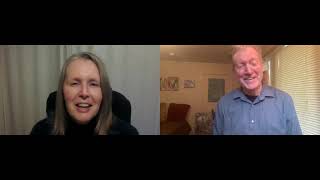
A YouTube interview (Creative Conversations Episode 2) between host Tom Maddox and guest Clare Downham (the "Queen of Calm"). Clare, from Leeds, recounts burning out as a primary-school headteacher, discovering hypnotherapy training and launching a coaching practice (the domain uniquejourney.co.uk), and learning to trust a present-moment creative intelligence. They discuss reframing procrastination as creativity, everyday evidence of an innate mood-regulation/resilience system, the accidental creation of a podcast from client audios, and plans to travel and work from a motorhome named Trevor.
Chapters
Well, hello everybody, and thanks for joining me on the second episode of Creative Conversations. I'm Tom Maddox. I'm an artist based in Portland and I love talking to people from all over the world. You know, creativity is a big subject and it's actually just an excuse to talk about anything really. But today my, my guest is from England. Her name is Clara Downham, AKA the Queen of Calm. And as you listen, you'll find out why. And I love these conversations. They're very meandering. We never know where they're going to go. And she tells a little bit about her story, how she came to do the work she's doing today, along with a great story of how she accidentally created a podcast. And the podcast is known as the Comcast. And I will include some information about Claire in the notes below. So I hope you enjoy this chat. And here is Claire. Hi, Claire.
Hi, Tom.
Yeah, so good to see you. And thanks for being my, my second guest on this experience. YouTube.
Yeah.
Yeah. It's been a full month plus since the first one and I'm really delighted to chat with you. And you and I are in a group together. We talk about a lot of fun stuff. Some of it's focused around business and being an entrepreneur and those sort of things. But I just really have enjoyed your. I don't know how I should say it. Your. It's kind of a playful spirit, but there's also a lot of substance behind, I think, the things that we talk about. So that's a good combination. So for today, the subject's wide open, but I thought maybe if you just told people a little bit about where you're from and a few things about what you're up to in life.
Yeah. So I'm from and still live in Leeds in West Yorkshire, which is in the kind of slap bang east to west in the middle of the UK and north to south not far off either. So it's pretty much the center, the center of the UK. And I've lived here most of my life, actually 51 years. I've. I've been other places, but I've come back, always come back to here. And what am I up to in the world? Is a really great question. So much more than I ever dreamed was possible is probably the answer. I'm helping people a lot and loving, loving that, just loving that turning up with people to help them to feel better by helping them to see a bit more about their own kind of psychological functioning and how, and helping them to see that they're okay like that's one of the main things I like to point people to, to, to just keep reminding them how amazingly they're actually doing because a lot of the time they can't see that. And I love to help people to see that. And that's come from a place of my own huge transformation. Just really in the last couple of years, since January 2020 when I, a very frustrated, very tired business owner, went to have some coaching because I didn't think I was doing enough in life or was enough or you know, was productive enough and procrastinated too much and wasn't motivated enough and was helped to see. Well, helped for all of that to fall away really. And what that meant for me was a stepping into a place of things coming out of me now that I don't know where they come from all the time, you know, in terms of creativity, but feeling inspired, loving my business, which I definitely wouldn't have said was the case a few years ago. And yeah, just really enjoying the playfulness of it, the enjoyment of it. Being amazed by the stuff I'm just putting into place and doing, you know. So in the world of physically creating things, there's a lot, a lot coming out of me despite the fact of me being a procrastinator, Tom. So it's amazing, isn't it?
Yeah.
That belief wasn't quite solid.
Well, I think you proved that one can be both creative and procrastinating, have all those qualities at the same time.
And maybe like as you're saying that I think what I saw when I went for my first, I suppose, transformational coaching sessions was that I was calling something procrastination. That was actually creativity. Uh huh. And as you just said that I just thought, oh no, but that's because they're, that they're the same thing. And now I'll explain that maybe because what I used to do was I used to, I used to do that 12 week year planning thing where you know, you block in your block plan 12 weeks at a time. Oh and I had a three year and a five year plan and there's a lot of goal ahead thinking planning and so I would. Well first of all I used to procrastinate like mad to even write the plan in the first place.
Okay.
Take me weeks to write, be halfway through the period of time it was supposed to cover before I'd actually done the flipping thing. And, and then I would. So it would have like three, two or three goals for each 12 week period and I would. And there was A couple of tasks to do each week for each goal. So it was very, very overly planned, overly meticulous and, and so that was what past me had put on the table and present moment me when I don't want to do that, I want to do this. So that's progressing. That's what procrastination looks like, doesn't it? It's following this, this guided in the moment, this is ready to come out of me. And I was going, no, you're not supposed to let that out of you now you're supposed to be doing this. And it, that the, the friction that created was me actually squashing my creativity.
Oh right.
Because that's what I thought. That's, I called that procrastination.
But now, now you see it a little differently apparently.
Oh just a little bit, yeah. They're huge. Hugely differently.
Well yeah, I mean that's an example of seeing something as being procrastination, actually being. Wait a minute, that's not a bad thing. What actually is happening here is something very creative and you recognize that.
Because it's, it's ready to come out of us when it's ready to come out of us, isn't it? Yeah. And I can't. I thought I could write a 12 week plan that would then dictate when I was ready to bring forth a blog. Like, you know, it's week three at ten past two on a Tuesday. So now a blog must come forth from my body. And it's just like really, really? That's like saying, right, it's ten past two on a Friday and it's always going to sunshine in the uk. I mean it's just as ridiculous as that, isn't it really? Because it clearly doesn't do anything like that on Most Fridays at 2 o' clock in the UK it doesn't sunshine. So but it's like that, it's trying to, it's trying to dictate the weather. Right. It's as ridiculous as that. But I didn't see that for such a long time because the world says, doesn't it? The world says you've got to plan and you've got to have goals and if you're in business, it's almost like, you know, kind of the unconscious learning that happens when you're a child. I feel when you enter the world of business you go through another load of unconscious learning where you just like you're in the thick of it. You don't realize it's all other people's thinking and you Think, oh, business has got to look like this. There's all these rules and you almost take that on board without knowing that you're taking it on board. You just think it's right because there's all these more experienced people telling you that it's right.
Yeah.
And it's not. It's just their made up stuff.
Yeah. Yeah. And you know, it's funny, it's actually kind of cute the way you were describing, you know, the planner of me who says, in three weeks I'm going to do this. And then there's like another person shows up in that moment and says, what? What did you get me to do? I'm not doing that.
It's hysterical, really, that we think we can control ourselves in the future. Yeah, to that level is just bonkers. Yeah. Really?
So, so it sounds like it's a little easier now to, to be.
Yeah.
Work into.
And, and the irony of it is that I, I did flit all over the place before and, and never really got those things or on the plan done. But now I don't plan really that much. I have a general direction of travel. I generally know vaguely where I want my business to go, but I'm really kind of, oh, there's something that might be interesting and I'm kind of open and so. But the stuff, the quantity of stuff that I'm doing, that's coming out of me, that's, that's coming from this present. The ideas, the things I could do next, the ways of tweaking bits in my business that are like. All of that is just literally, it's just spilling out of me all the time. And it gets done because it's come from this. I'm stealing a Michael Neal phrase now, but it's coming from this real time responsive intelligence. Yeah, it's, it's this, this is ready to come out of me now, in this moment. I mean, I, I created an accidental podcast, Tom. Oh, you having put off for ages. Like I had the idea to do a podcast ages ago.
Yeah.
And then I faffed around it and not really done it. And then, and then I had a client and she was telling me that she was watching I give my clients some videos to watch. And she said, I'm watching your videos while I'm driving. And I said, oh, are you. That's interesting. She said, it's fine because I'm not looking at the picture, I'm just listening to the words. And I said, I don't think the police would quite see it the way and you'd be super calm as you're getting three points on your license and a massive fine. So let's not do that. So out of that desire to help my client, I took the audios of the videos that I'd given her and made them into a podcast. Literally within two days, I'd uploaded hours of podcast content into a space and given it to her. And then I went, oh, so now I've created a podcast, haven't I? So now I just upload the tracks on a daily basis when I make them. And I've now got a podcast that's got new content every day. And that just came from, oh, here's a thing that's happened. I need to protect my client from getting arrested, so. Or getting a massive fine. What can I do? And then there was a podcast. Yeah, because that real time responsive intelligence responded to something that was happening in real time that needed addressing. And it, and it just happened. And it was so easy to. I literally sat there like totally focused on it. You couldn't have distracted me with phones or emails. Right? Just super focused and just banged all these tracks onto this podcast, like super quick. And. Yeah, and that's what inspiration does for us, I think. It brings us this, this surge of energy and that's coming through us. I think. Not, not from us. It's, it's this, it feels like it's coming from somewhere else. Otherworldly kind of thing, you know?
Yeah. You know, Claire, as you say that I can really, I can feel that too. Like, I can feel that in this moment and the way you talk about it, the thing that really strikes me is, is your trust, your trust in it. But it feels like to me, you know, it's there. You know, you can count on it. You know, if, if life throws you a curveball, it's going to give you something. And that, that is to me, that is that whether you call it trust or confidence is, is so much easier to live that way and it's so much easier to, to create things. I mean, a lot of. Is very similar to, to painting. You know, when I paint, I would never say I'm going to paint next Tuesday at 3 o' clock because who knows, it's something for me that it just kind of, it just kind of grabs me. But I always know in the moment something's going to come out and it doesn't need to be planned. And in fact, many times when, when I have anything more than just like, like a color or a shape or emotion come to me if there's any more than that, it never goes in that direction. Ultimately, like, even. Even, like more than one step ahead of what I'm thinking about. A painting will never go there because once you take a step, then all of a sudden everything gets wiped away. And there's that, what you were talking about, that inspiration, that intelligence that comes through us in a moment. That's exactly what happens when I paint. And it's a total. It's a total joy to be that way. And so the fact that you can. You know, I've sort of reflected on this to. To see that kind of thing happening more and more in life, not just when I'm painting, because it's like a universal. To me, it's a universal thing, principle, whatever, that we have access to this amazing, amazing, unlimited potential, whatever you want to call it. But you can feel it. I can feel it as you speak, like if it's coming out as you speak. So.
Yeah, And maybe I didn't know it was there for a long time. I think. I think I got a glimmer of it when I. When I burnt out. So I was a. I was a primary school headteacher, which. In the UK, yeah, 3 to 11, age range of a big, big school. It was, well, in the UK at 400 little children, so it was. That's quite. Well, nearly 500, actually, in the school I was in. And I. I went to school one day near. Over. Just over seven years ago, and I couldn't do it. I couldn't switch on my computer, I couldn't carry on. And I was really sick. I had adrenal burnout and I was absolutely. There was nothing left of me, really. I was just exhausted, physically and emotionally. Physically as much as anything. I hadn't slept for months. Excuse me, that's the mention of sleep, you see. Is it my turn now to join the party? I'll just turn up and. But what I. I think that was when I started to get a glimpse of this. I think I read Gabby Bernstein's the Universe has Got your Back and. And other books like that kind of course in miracle type stuff at that time. And. And I think when I. Two things happened when I was sick that year. The. The first thing that I. Well, one of the things that happened was on almost exactly a year from when I walked out of work, I resigned. And 10 days after that I got an email inviting me to train to be a hypnotherapist, which ended up being my first business.
I see.
But also in that year, I Bought a domain name randomly. While I was sick with feeling terrible. I bought this domain name, uniquejourney.co.uk. and. And then did nothing with it because I'd had this idea for something I could do with a website. But then I was, you know, absolutely flat, no motivation, not feeling very well. So I didn't do anything with it. So when I did the hypnotherapy training, bearing in mind I bought the domain name before I knew I was going to do the hypnotherapy training. When I did the hypnotherapy training, I was like, oh, that's my business name. Because hypnotherapy does provide this kind of unique journey for people to get better. And, and I think that really kind of, I got a lot of trust from that, a lot of belief that there's something around me, in me, coming through me, that is loving and caring. And even in our darkest times, it's still there. It's, you know, and it's still. I like the. Sometimes people describe resilience. It's like this rope. There's something pulling us through life around our middle, you know, and it never stops doing that, keeps pulling us forward. And the way that all worked out was just super like, yeah, reassuring. I think that life's gonna turn out, going to be fine and, and not, you know, not even now. It's more. Not that it's going to turn out, but it's okay now. Yeah.
Yeah. I love your description of the, of being pulled back. Something that, that has sort of come online for me in the past couple years. And like you, I hadn't realized that it was there all along. In fact, it had always been doing that all my life. But when you see it, when you see it in real time happening, and then you see it over and over again, then, you know, you can, you can count on it. And I'm kind of curious since. Since to me, like, I've heard before, you know, you know, the word resilience especially has been kind of like almost like a buzzword psychology and education for the past, definitely the past five, ten years. I've heard it a lot. And, you know, I might have thought if I'd bothered to think about it, what resilience was that I, that I understood it and I knew what it was. But to actually wake up to this really amazing power has totally flipped the way I see life. Like in the past, I would say, you know, most, most of my life, definitely most my adult life, I've gone through Periods of, like, feeling really inspired, really hopeful, and then periods of not knowing what to do and then going down into. To depression, into worry, and then something would happen. And then all of a sudden I'd be flying high again. I'd be going to a new part of the world. I'd be meeting new people, getting new jobs, feeling high and inspired. And it seemed like it was, you know, a cycle going on and on. But what I didn't realize, that. That through all those times, whether I would have said I was in a down period or an up period, the same thing was happening on a daily basis. I was having both happy thoughts and unhappy thoughts. But just that there's something about that to. To realize that all through life I've been going up and down. Every time I go down, something pulls me up. Every time I go down, it's almost like a reverse gravity that goes up, must come down, but everything that goes down must come up. And I love the way you described it. And I'm curious, when you talk to people, do you find them. Do you see the moment where they catch on to that?
Yeah. And I don't know if it always comes in. In one moment, I feel like it's. It is like a drip. Drip?
Yeah.
You know, that there's a seeing of it in perhaps one area of life. And then it's almost like they've got that area of life, you know, it's all wrapped in gold paper now, and it's all shiny, that bit. But then there'll be some of that. And that's the same for me, too. And I'm sure it's the same for you, Tom, that, you know, there's still some parts of life where it doesn't seem to be there or it's not as accessible, maybe, but it is always there. And I think just even when you, like is. You know, I'm not feeling it at the moment. I'm feeling a bit like I think there's something now in me that this almost still. There's just this reassuring kind of little voice going, no, it is. It's okay. You're okay. You okay? And I think like, my. My little thing is being the queen of calm. Yes. And. And that is like people misunderstand that because they think that means that I'm calm all the time. And trust me, Tom, don't tell anybody but it. But it isn't true. I have my moments. You ask my other half. Yes. But it. It's not. It's not being calm like Zen, like all the time. But it's having this sense that that's. That sits underneath everything all the time. So I can be, you know, a crying menopausal mess, which I do tend to be sometimes. And I know that's okay. I know I'm okay being like that because I know that doesn't fundamentally mean that I've broken myself or I've broken my resilience or the calm's gone. I know it just means that in that moment, I'm a little bit caught up in something and I'm feeling that. And. But that's okay because underneath that are those innate qualities. The calm resilience, the confidence, you know, the peace, love, wisdom. Wisdom, innate wellbeing. All those things are like, in me all the time. And so I like the. I mean, Michael Neal called it an upside down duck once, but I like an upside down swan better. I think it's got more class to it is. You know how people say. Lots of people are like super calm on the top and then, you know, but actually underneath they're literally falling apart the seams because the literally panic paddling underneath. Well, I feel like I'm. I'm like I'm calm underneath, despite the fact that sometimes I can. And certainly the world can look like it's lost the plot. And I'm. I'm. I feel like I'm like the swan. The calm, serene thing is underneath all that. And it's. It's always, always there. And that's super reassuring.
Yeah. But, you know, one of the things that I really appreciate about. About what you just said was, and this is true of many of the people were in a. Were in some groups together and a larger community that, that without fail, everybody who talks about something, whether it be, you know, they have something that's working in their lives that they accomplished or, you know, I'm painting and I'm creative and I feel good about that at the same time. Everybody talks about the moments when they fall apart, when, When. When whatever they're doing or their. Maybe their entire life feels like a big mess. And I just love that. That authenticity to, To. To like almost every person to a person will talk about that, but that you. You can have all those experiences but still feel like you're. You're generally in a good place or you. You still know that you have something you can count on. And to me, that's. That's like the best feeling to, to have that. Do you, do you relate to that at all?
Absolutely. Absolutely. And what I'm seeing More and more is. Is this. This guidance system that we've got that. That we. We misunderstand often. And that's, you know, the feeling. The feeling that we have, yeah, is always guiding us. And unfortunately, in the world right now, we've been made to. Well, not us anymore, I guess, but a lot of it seems that society is saying some feelings are bad, some are good, but. But when you realize they're all information, that. That is, there doesn't need to be any bad feelings or good feelings anymore. None of them are. Need to be labeled there. They're all information. Now, I'll be honest, I don't always see it in the moment because we all. I definitely sometimes, you know, lose my, you know what and get caught up in something. But. But when you do, more and more start to see that you're being guided by this. The whole system is just perfect. All our feelings, the. And the guidance we get and, you know, how that tells us about our state of mind and, and helps us to see that maybe, you know, we need to settle down a little bit before we, you know, do the next thing or speak to somebody or make a decision or whatever. I think it's so. It's so clever, and for me, that's so transformational because I spent years trying to fix that system when it's not broken. You know, trying to control my feelings, control my thoughts, make them be different. All that stuff around, well, I've got to force myself to do these things. I've got to be different. I've got to think different. It was exhausting. And I was stuck in that for such a long time. And to now have a feeling and go and see, oh, yeah, that's information. That's part of the reason why the calm sits under everything is just. Well, the feeling's nothing to be afraid of now. It's just. It's just letting me know. It's just like a warning light on your car dashboard, isn't it? Just saying, hey, your thinking's a bit interesting right now, Claire. Take note.
Or stop watching the video and listen to the podcast. You know, you know, sort of a my own journey and my own story. How, how I began to see, you know, what we call this innate resilience, you know, being brought back to, you know, a nice feeling, a calm state, or just a happy, happy place. Happened about three years ago when I was going through a period in my life where I was feeling very depressed. And I've had periods in my adult life where I've felt that way. You know, in the midst of this amazing life that I've had. And it got so bad for me that for the first time I went in and I saw a doctor and I said, this has happened before, but this is the worst, and it doesn't feel like it's going to end. So we agreed to try some medication, which I had never tried before. And I've always been kind of neutral toward medication. Whatever helps people, I'm in favor of. But if you can do it without, great. Well, the medication didn't really seem to do much after a couple weeks, and we agreed to stop. And I'm glad we stopped, because what happened after that was a miracle because I began to see myself just as you were saying. Somehow in real time, I would notice myself, like my mood or my psyche going down, and I would notice it happening, and then I would notice it would bob back up. Like that analogy of having a beach ball that you try to push down, you let go, it bobs up. And the place where I first saw it was really. I love this example because it's so mundane, it's so ordinary. And I was just going for the.
Bus.
And I missed the bus by like 10 seconds. And I would always say to myself, I hate missing the bus. Now I have to wait for the next one. So I was feeling that, and I got to the little terminal and I sat down and I thought, well, there's nothing else I can do but wait for the next bus. So I sat down.
But.
But I noticed in real time going from being upset about missing the bus and having to wait to like within 20, 30 seconds of being like, oh, I'm fine. I don't mind sitting here. It's a nice day. But there was something in that, because I noticed it happened. I noticed that little phenomenon. And then later, a lot of these things happen while I'm on the bus or trying to take bus. Another time I was at a bus station and I was waiting and I noticed myself worrying about finances and the future and money, which is something. Something I've worried about a lot in my life and just going down. And then after about 20 seconds, I came right back up. Wow, that's interesting. There it is again. And then I started noticing it everywhere, like all the time. You know, I'd be in the. And these are such small, kind of silly, even unimportant things. I'd be at the checkout line at grocery store. I'm always going for like the. The shortest line and maneuvering and trying to judge. And then I'd be in a line, and then some. All of a sudden, something got very slowed down in front of me. And then I said to myself, I wonder how long this is going to last? Because I was catching on. And it lasted like 10 seconds. And then I was happy again. So it's really. To me, it's that simple that you can see that it's happening all the time. And as I caught onto this, my view of myself at some point, I don't even know when it happened, the view of myself as being a diagnosed depressed person just wasn't even there anymore. Like, I don't even know when it went away. And so flash forward to about six months later. I go in to see him, see my doctor for some routine, you know, yearly things like some blood work. And she comes into the room, and the first thing she says is, how's your mood? Because she. She doesn't know any of this. She saw me six months earlier when. When the medication failed. She said, how's your mood? I said, my mood's great. And I was kind of taken back by how strongly it came out, but in the moment, it was true. And she stopped. And she said, really? What's going on? And I just said, I just realized my mood regulates itself.
Wow.
That was it. And she was like, oh, good, good. And we went on with the. The, you know, whatever else we needed to talk about as a very short visit. And part of me, after. After we had that little exchange, I thought, oh, wow. I don't know if I really communicated the depth of how different I am than I was before. So as she was leaving, she. She just said, tom, I'm really glad you're feeling better. And I said, yeah, thank you. I thank you. You know, I always believed that in order for me to not be a depressed person, I had to. This is what I was saying to her. I had to stop having depressing and worrying thoughts. But what I realized was that each of those thoughts take care of themselves. It's kind of like if you're hungry, which is not a pleasant feeling, right? But if you're hungry and you know there's food available that you like, you don't freak out about being hungry. It was the same thing with my thoughts. And it was so interesting because as I said that to her, it's almost like I could feel this light going off in the room. It was impacting her. And she stopped, and she said, wow, what a great way to start my day. Then when I went to get some blood tests done, I looked at the printout of my visit and things we talked about, and then at the very bottom it said, because this was my diagnosis, major recurrent depression. She had that listed. And then underneath she wrote, in full remission.
Oh, wow, that is so cool.
Isn't that great? And it's not like, you know, I'm saying, saying to people necessarily who are watching this, who are going through depression or even have gone through major depression, that what I'm describing is a cure, but it's just my experience of exactly what you were talking about, that things don't have to change that much. Like, to this day, I'm sure I have thousands of negative, worrying thoughts every day. It's just human, it's just natural. But the fact that they kind of hit me or, you know, hard or gently, they kind of just have their little 20, 30 second dance or life and then they move on. And I'm like, I don't know what that just was, but I'm fine now. And so that's exactly what. What it sounds like you're describing. And it's such a gift that if you can. I'm hoping it's a gift of this podcast, you know, and, and whatever, you know, work we both do in the future, but it's such a gift, I hope to people to know that. That it doesn't really take a lot for. For life to look very different. So.
Yeah, I love that. Mine tends to be a kind of wry smile and a kind of. Oh, there you go again. Never mind. You know, it's just like, you know, yeah, whatever. Like a teenage, like my teenagers used to say to me, whatever, you know, that if the negative thought turns up or the, you know, you know, the ones that aren't very nice or they, they are just like very much okay, then whatever. And then they, and then like you say they, they just. I think they just don't seem so serious. Right, right. And. And therefore they don't. They don't seem true anymore.
Right.
Yeah, they really did used to feel true.
Yeah.
You know, the doom and gloomy ones.
Yeah. So I'm curious with, with all that. And as you look, we. We can. We can bring the future manager back in for a few seconds when you. What are some things that you're interested in creating? I mean, I happen to know that you have a. Is it like a camper van of some sorts that you have some, Some hopes for? Do you want to talk about that?
Yeah. Yeah. We have a motorhome called Trevor.
Trevor.
My daughter thinks she's funny. So my motorhome's called Trevor. It's not even alliterated, is it? That could have been like Maples, the motorhome. Also know it's Trevor anyway, so, yeah, that, that's just a place where myself and my fiance are playing at the moment. So it's. It's on the drive. We'll be away in it this weekend. We travel for his work a little bit and I work from the van. So we're starting to kind of play in that space of living in it for periods of time. Yeah. And I mean, the adventure we kind of have in mind is. Is to travel for a few months at a time. Although that's now limited to three months for us in the uk. We can only be tomorrow for three months at a time now. Yeah. Thanks, Brexit. So we'll. Yeah, we'll do patches, hopefully abroad, come home for a bit. I mean, we've both got. We've got four kids between us. Eventually, I'm guessing we'll all be grandchildren, so we'll want to. We will want to be back here some of the time. So, yeah, so we're just playing in the UK at the moment because travel's too much faff, quite frankly, for us. So we're, you know, in terms of traveling abroad, so for now we're just playing here. We're seeing places in the UK. I mean, I've been here 51 years, as I said, and places I've not seen. And he's only been here 18 years, so there's big chunks of the UK that he's not seen. So, yeah, the aim being long term, to. To live and work in the motorhome.
Nice.
And coach from there from wherever we happen to be.
Nice. That's awesome. And I guess, you know, the uk, at least compared to the United States, not so quite big geographically. So it seems like you can pretty easily get. Can you get pretty much anywhere in the day?
That would be a serious trek, I guess, in a day. Yeah, we can get like from where we are because we're in the middle.
In the middle too.
Yeah, yeah, we're in the middle. So, yeah, we can get. We could get to the top of Scotland in a day. That'd be quite a. Quite a drive. Or we can get. And we can get down to the bottom of like, Cornwall, which is the south, southwest kind of, you know, the bit that looks like the foot. That's. That's the. That's Cornwall. We can get down to there definitely in sort of Six hours. Ish. So, yeah, we can. We can get places pretty easily and there's just chunks of it that even I've not seen. So we're always looking for new walks to go on and new adventures to.
Yeah.
To do in this country.
So, yeah, that will be part of your podcast or your blog or have any inclinations towards, like.
Yeah, yeah, maybe I follow a few accounts on Instagram where they, you know, that the tracking their travels, it's not emerged yet as a thing, but it's kind of there in the background that it might be. There might be space for that to be part of. Part of what I share out there in the world. Yeah, we shall see.
You'll make it up in the moment. Something unexpected will come to you.
Yeah, yeah, yeah, definitely.
Well, this has been a lovely conversation, Claire. It's so good. And you're Queen of Calm title. You wear it very well.
Thank you.
I do feel it. I definitely feel it all the time, and I felt it in the groups and the previous conversations we've had. And there's more to come, right? There's always more to come.
Absolutely. It's been an absolute pleasure, Tom. I've really enjoyed it.
Me too.
Yeah, it's been lovely.
Okay.
More from Clare

Navigating Life with Ease – What Nothing Means from a 3 Principles Perspective
Navigating Life with Ease – What Abundance Means from a 3 Principles Perspective
Navigating Life with Ease – What Burnout Means from a 3 Principles Perspective
Navigating Life with Ease – What Obligation Means from a 3 Principles Perspective
Navigating Life with Ease – What Intention Means from a 3 Principles Perspective

Navigating Life with Ease – What Seeking Means from a 3 Principles Perspective
Navigating Life with Ease – What Thought Vs Thinking Means from a 3 Principles Perspective

Navigating Life with Ease – What Magic Means from a 3 Principles Perspective