Navigating Life with Ease – What Obligation Means from a 3 Principles Perspective
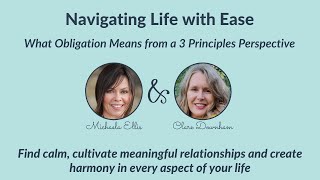
In this candid podcast episode, host Clare Downham and guest Makayla Ellis examine the concept of "obligation" through the lens of the 3 Principles philosophy. They argue that obligations are not inherent duties but stories and resistance we attach to tasks. The conversation weaves personal anecdotes—such as Clare’s experience with tax filing, bookkeeping, salsa dancing, networking, and burnout—as well as Makayla’s recent scheduling challenges, to illustrate how framing a task as an obligation creates stress. They discuss how self‑employment can reduce perceived obligations compared to employed roles, where external expectations (e.g., Ofsted, governors, parents) generate more pressure. The duo introduces George Kao’s "Joy Pro" approach, suggesting that any task can be done with joy if the story around it is shifted. They also explore how language carries energetic weight, noting how repeated use of words like "hate" or "obligation" can alter their felt meaning. The episode highlights the importance of listening to one’s inner guidance, setting boundaries, and allowing rest (e.g., "floppy joggers" and naps) to prevent burnout. Overall, the discussion offers a perspective shift: by recognizing obligations as self‑created narratives, one can reclaim ease, joy, and harmony in daily life.
Chapters
Welcome. This podcast is a series of candid conversations exploring the human experience from a completely new perspective. In it, we will be diving deeply into the meaning of commonly used words and pointing you away from that old stressful way of looking at life. And towards a new paradigm. This will help you find a sense of calm, cultivate meaningful relationships, and create harmony in every aspect of your life. Here is Navigating Life with Ease with Makayla Ellis and Clare Downham.
Hey, good day, Clare.
Hello, how are you?
I'm well, how are you?
Good, good, good, good.
Looks like you got a little bit of sun.
Yeah, we had— we've had a bit of sun today. Nice, nice autumn sun.
It's been nice. Nice.
Yeah, good, good. Do you have a word for me?
I do, and it is obligation.
Oh. Yes, obligation. I think I, I relate to that a lot less than I used to. I don't know if that's being self-employed or the kids having left home, or seems to be— there seems to be less obligations in my life. In fact, an awful lot less, or less things that feel like obligations, maybe, because it's something Like, if something— if there's something to do, that, that's got to be how we feel about it, hasn't it? Obligation. Because it could just be a thing to do, and then it's become an obligation because of how we're relating to it, or who it was who asked us to do it, or do you know what I mean? Or, or perhaps there's like a time scale imagined or otherwise. That makes something feel like anything other than a task. Because what is an obligation other than a task with a big fat story wrapped around it? Like, you know, doing our taxes, for example. I generally have a big fat story wrapped around that. And this year I did it right. So our tax year finishes on the 5th of April, restarts on the 6th of April, and I did my tax return on the 8th of April. So like literally got it out, out the gate. I've done no bookkeeping since then. It's like it's the same task, and somehow last year I managed to be like up to date every month, you know, I was doing my bookkeeping, just putting my receipts in, making sure everything was tallying up and all that shenanigans, and then Yeah, this year, no, obviously feels like an obligation again. And isn't that funny? Because it isn't even real, is it? Like, it is literally a task that involves me sitting at my computer and, you know, attaching my PDF receipts to my bookkeeping system. But somehow there's some resistance there at the moment. And is that because it's like it's a have-to-do. And, and maybe part of that is that because it is a thing I have to do, I know I'm gonna get it done. I've never not done it by the 31st of January because we have till the 31st of January the following year to actually get it done. Um, I've never not done it, but it's just, it's just so funny to see myself going through this funny relationship with it where sometimes it just feels really easy and other times there is so much resistance because it feels, yeah, it feels like I have to do that, I have to do it. And now I don't want to do it, I'd rather do some creative fun thing that's more— that feels like it's coming from, you know, my creative side rather than my bookkeeping side. But yeah, I just think everything that we— everything that feels like an obligation is because we wrapped something around it that isn't real. 'Cause everything could be done with joy, everything. You know, I'm in, because I'm doing George Kao's little AI thing, I got his joyful productivity thing included. It's called Joy Pro, he calls it. And that's all about, all he talks about is, well, you know, that you can find joy in every single task, even things that apparent obligations, that then, then they can actually be fine. And also, like, even what I've done there, I've just seen, is wrap a negative thing around an obligate— around even the word obligation— that it makes things— it doesn't, because again, that's just a word, isn't it? It doesn't really have any meaning in itself, in other than this thing we've wrapped around. But generally you would, I think most people would say if something was an obligation, it would have a negative slant to it rather than a positive one. But even that's not true. That's just, words are so interesting in terms of like how much stuff we wrap around them. And make them to be something. So somebody in my family uses the word hate a lot. Hate a lot of things. Things that people do and things, customer service and all sorts of things. And I remember one time they'd been, we'd been spending some time with this person, Bruce and I, and I was like, oh my God, the word is just, oh, oh, it's so awful. It's just, why would you use that word? I don't use that word. And then suddenly realized that that word probably doesn't have anywhere near the same energetic feel that it has. I'm like, oh, I've stopped saying that word. I don't really say hate anymore. I used to say it a lot, and something happened where I just went, oh, I don't really want to say it. But that word probably doesn't feel the same energetically as this member of my family because they use it so often that it's like saying kittens to them. It just doesn't happen. And isn't that— that's probably the same with obligation. Oh, I've got this obligation, like, I've got this thing to do, it's an obligation. Like, yeah, that's gonna feel terrible when you— but you could say it in a complete— you could feel it in a completely different energetic vein, couldn't you, to that? It's It's really interesting. It's not a word I think about a lot. It's not a word I use, actually. I don't think I view— I don't think I view anything in my life much as an obligation. I mean, that's probably part of the joy of being self-employed. I should ask Bruce, actually. Come on, Bruce, tell us in the podcast how he— whether he sees parts of— obviously he's employed, and whether when you're employed you have more things that feel like an obligation because somebody else is expecting you to do. I mean, I could list things as a head teacher, how many things I had to do that felt like an obligation because Ofsted, they're the people who inspect the schools over here, they might be expecting me to, the governors wanted it, the teacher, the parents are wanting a newsletter, there's a Māori parent who wants a meeting with me that they might have, I probably would have felt more like that about certain things. I probably just don't trip over that concept that much really now. Yeah, I'd love to know what your thoughts are on that.
Yeah, well, yeah, I, I really see it as something on the table to do, that the only thing that makes it feel like an obligation is our resistance to do it. Because if it— you mentioned early about it just being a task or whatever, and if we didn't have this story wrapped around it, and the story, you know, if it's feeling like obligations, like, oh, that's resistance. It's always resistance. It's always not going with the flow, as, as I see it. So I had I have been away a lot this month, and, um, so there was a number of things that I might typically do around here or do with other people, or, you know, calls that I'd make or whatever, that weren't being done. And now that I'm kind of back and there's, you know, no trips in this— in, in, in in the schedule. I have, so I— it feels like there's an urgency kind of to, uh, and when I'm saying that, it's like, ah, an obligation. And it didn't come to me until yesterday, uh, Rob and I had talked about I'm going paddleboarding this morning, and then this afternoon we have time to go and run another errand. This store is going to be open. It's just like, do you want to do that? And I kind of forgot about it because there's also a friend who I have been wanting to meet up with socially. I haven't seen her for a long time, and I sent her a note. I said, hey, do you want— I'm going to be back in town at 2, and do you want to go for a walk or something? And then, and she said, her comment back, no. That was it. I didn't hear from her. And then I remembered Rob and I and that plan's like, oh my gosh. So I sent a note to her because there's other times that we can meet, but she said, it's okay, you don't have to fit me in. And it— for me, the, the word came up. I was just like, yeah, I'm not— it's not like— it was like, how do I say, it was like the word obligation sort of came up in the way of, it's not mine, it's not— I just want to do it. It's nothing to— there's no obligation there. But just the words and how it fit, how it said about trying to fit her in, it felt like, no, no, I don't want anyone to feel that it's kind of an obligation that I have to fit someone in or fit something in. And it's— anyway, so it's like I have to step back and see what is my story. It's like, oh yeah, I feel like I need to sort of catch up, but I don't. There's nothing to catch up to. I'm putting my own meaning around all of the things that I want to do, but the obligation I'm making is like, it has to happen quick. Like, I have to squeeze it all into this week and sort of get all of the things done that I want to get done, done quickly. So then what? I don't know. Then what? Life continues on. So we make up kind of story. It always is a story. It always is a story. It's always in wanting it to be different than it is, fighting against— you know, I'm thinking about this and it's like, oh, that store is only open from 2 to 4. There's, you know, and then it's like, okay, then we're talking about having William and his friend, his girlfriend, over for supper. And then, you know, and it's like, oh, then I'm you know, I have a busy day tomorrow, I don't want to do it later. And it was looking at what is it, what is it that I'm making, trying to make myself do to, you know, when she said fit in, it's like, yeah, I was, I was trying to fit stuff in. I started doing it before I even left for my last getaway. I started booking things into the evenings this week, like looking at all the thing, all the people and tasks and stuff that I needed to get done, but I made it like an obligation. I put a time— with time, I made a time, and there isn't, there isn't one. There's not one. And it actually created more stress in me, really. I didn't really see it all that clearly, but it's like, oh my gosh, I was, I was, I, in setting up these things before I even left, I created more of a feeling of this like obligation because now I've said I want to do it and it's like I've been away, I really would just rather be at home. I'd rather not do anything for a while. So Yeah, anyway, that's where this obligation comes in. It is like you said, it's all just a big fat story and it creates a tension and stress in our, in our bodies, in our lives. And then things are like, then I do things like that, like double book, you know, where I'm not even thinking, there's no clear anything happening because it's all happening up here in my head and it's cloudy, you know. It's like the snow globe shaking. Yeah. Anyway, so it's like, oh, things will happen when they happen, you know. And what do I really want to do? Robert said to me, said, well, what do you really want to do? It's like I kind of didn't feel like I had the that I could, because it would mean backing out on things. Even the things— even what I love to do, paddleboarding today, even that is like— before it felt like, ah, I just kind of want to be at home. I mean, now I'm okay. I had more time home yesterday, so I feel better about it. But it's just like, man, if we just follow what our essence is what our wisdom is trying to tell us. Hey, Makayla, you need a break. You need some time. Did I know before I left that I might want that time? And it's like, yeah, but you know what, it's been a long time. I need to make that happen. I didn't. I didn't.
I wonder how many obligations were actually— I was thinking initially about all the people, but actually we probably mostly create them for ourselves. Like you know, the thinking that— I don't know, almost thinking, well, you know, before lockdown, my life was quite busy, weekends and stuff, going places. And then that lovely quiet— I quite liked it. Lots of people didn't like lockdown. I was like, oh, this is lovely, I don't have to go anywhere or do anything, isn't it nice? And then it seemed like, I don't know, like lots of people stepped back into they'd enjoyed the rest, but maybe felt like they have to, almost to be a whole human being. That if you're not going out and about all the time doing things and seeing people and connecting with people, and like, sometimes I think like, I can, I can do people to a certain point. And actually, I think I worked out during lockdown that I'm more of an introvert than I thought I was, because I've got to the point where like, yeah, you're all right. Like yesterday morning, I went to the Professional Speakers Association where I used to go a lot, and it was really nice. I saw people I haven't seen, probably some of them since before lockdown, and it was really enjoyable. But by the time it got to, say it was like 9 till, I think it finished at 1. By the time it got to 1 o'clock, I'm like, yeah, you're lovely, but I've had enough of you. And there was an opportunity to go for lunch, you know, afterwards with this group of people. Now, luckily, I'd already arranged, like I said to you then, I'd arranged to see Sophie, rather than come home and record the podcast. I arranged to have lunch with Sophie instead. And I was like, relieved that I'd done that because I was like, I really want to stay. And you're lovely people, but I don't want— I'm done now. I've done my bit of socialising for today. And I think I would probably— yeah, we do that though, don't we? We make You know, so many times in the past I've thought, oh, I'll make myself stay. Or, or, you know, when you just not feel like— I've done this where I've not felt like it and gone networking. Oh my God, there's no— if you're just even feeling a little bit off, don't go networking. Yeah, thing to do because there's all these people, loads of new people. You've got to be all kind of shiny and smiley and sociable. And what you want to do is sit in the corner of the sofa with them. Electric blanket on eating chocolate. So these days I don't, I just go, not feeling it. I didn't go to one a couple of weeks ago because I just thought, I just, I'm not, I'm just not in the mood for networking. And before I wouldn't, it would have been, no, you need to go because you've said you're going and you mustn't let people down and you mustn't not go because now you said you'll go. And now I'm just like, nah, I'm not feeling it. I message people and say I'm not coming, but I'm not coming because I'm just, you know, just not— I say I'm not well. I just don't say I'm just not in the mood for the lot of you. You know, you do, you just make some, like, you know, excuse about not feeling so good or whatever. But, um, but yeah, I, I think in the run-up to burnout, I created a lot of those obligations, almost like even things that I did enjoy, like going salsa dancing, like, right, I'm going salsa dancing every single Tuesday night. That's when it's happening, every single Tuesday night. And on Tuesday night, I could be on my knees with exhaustion. I'm gonna make myself go. It's like, what, what the heck is that? What even is that? Because then it ruins the thing that you actually enjoy. And it almost becomes a, you know, I love networking, I love going to the PSA, I loved salsa dancing when I was doing that a lot. And but not if I'm kind of going thumbscrews on, you've got to go to this thing, when really then it, then something, even something just shows that even something that's joyous can start to feel like an obligation if you're not listening to yourself. Because really, like you've just said, you should just say, I'm not going to do that actually, because I'm just not feeling it, rather than going. And then the next time, I think somehow it probably takes the shine off a bit because you've made that thing into a bit of an obligation, you know, by making yourself do something that actually you don't really want to do and you're not feeling well enough to do. Or you— it's okay to be too tired to do at 54, I think. And, you know, it's okay to just go, actually, I'm just not— I'm We want to sit on the sofa in our PJs. After all, that is the best thing to do in the whole wide world, isn't it?
Really, isn't it?
Yes. Naps, PJs, or floppy joggers, as we call it. You know, you put your jogging bottoms in at the end of the day. We call them floppy joggers. Bruce often goes, is it floppy jogger time? Can I go and put my floppy joggers on?
Yeah, that's hilarious. Yeah.
It's funny, isn't it?
Yeah, yeah, we can come up with— I mean, we could go on because there's so many stories that we could make up about any one thing that'll have it feel like an obligation. And even the being tired, because have you ever noticed when you— it's like, oh, I'm tired, and then you cancel out of something, and then, and then all of a sudden you're like huh, now what, now what can I do? You know, it wasn't really about being tired, it was about the story that you told yourself. There's something you're resisting about it, and often it's a made— it's another made-up story. And then when you extricate yourself from that commitment, that obligation, and then all of a sudden you have all the energy in the world. So even that is telling. That it's like, oh crap, yeah, I made— that was a story too. It's like I'm not even being truthful with myself. It's not that I'm too tired. It's not that I don't feel I have enough time, you know. I just want to be— it's like there's another story, you know. We layer them.
Yeah, I, I did that with my burnout when I finally— because I, I was hanging on to my job and not resigning because I thought obligation. I'm the headteacher of the school, I'm supposed to go back, I'm supposed to be doing this job. And when I finally resigned, although I didn't like suddenly get better overnight, that there was something really shifted. I, I just did start to feel better because it was only like a month and a half later when I managed to go on the hypnotherapy training, and I couldn't have concentrated for that long prior to that because it obviously was weighing, you know, the thought of going back to work. You know, the obligation and the thought to go back. Oh, it was all just so, you know, and it was just too much for me to kind of process, I think, in a way. Just keeping on thinking, oh, what would it be like when I go back and I've been off for a year and it'll all change and how will I get back into it? And it just, you know, it was just because there was this huge weight around it. And when I finally just did let go, the relief was just huge. It was you know, because I just didn't have to think about that ever again because I wasn't going to go back. So yeah, that was a really good word. Amazing. Yeah, not a word I thought— think about much until then, and that was really— that was really interesting. Really interesting. Thank you.
Yeah, thank you.
Good. Yeah, that's good. Until next time.
Yes, have a lovely one.
You too. Take care. Bye. Bye.
Hey, thank you for being a part of Navigating Life with Ease. We'd love to hear your feedback and receive a review on your favorite podcast platform. This will help others who'd also like more ease in their life to find us. We're here to support you, so if you have any words you'd like us to or you have a question, please reach out to us at navigatinglifewithease@gmail.com. Again, thanks for listening, and stay tuned for more episodes of Navigating Life with Ease.
More from Clare

Navigating Life with Ease – What Nothing Means from a 3 Principles Perspective
Navigating Life with Ease – What Abundance Means from a 3 Principles Perspective
Navigating Life with Ease – What Burnout Means from a 3 Principles Perspective
Navigating Life with Ease – What Intention Means from a 3 Principles Perspective

Navigating Life with Ease – What Seeking Means from a 3 Principles Perspective
Navigating Life with Ease – What Thought Vs Thinking Means from a 3 Principles Perspective

Navigating Life with Ease – What Magic Means from a 3 Principles Perspective
Navigating Life with Ease – What Conflict Means from a 3 Principles Perspective