Stephan Speaks: Why Men Say “I’m Not Ready” (And What They Really Mean)

Relationship coach Stephan Speaks explains why men say they're not ready for commitment and what readiness actually requires. He breaks down five essential questions for anyone seeking marriage: belief in marriage itself, vision of gender roles, what your partner needs, whether you can meet those needs, and whether God comes first.
Chapters
Listen, like I always say, block out the noise, focus on what's real, stay with what matters. This is where grind meets growth. This is where stories break silence and build legacy. This is Talk Less. Talk less, do more. Make me laugh. All right, everybody, welcome back to Talk Less Show, where conversations go a little bit deeper than the surface and Let me do an introduction for today's guest because I feel like he's someone so special to me personally because I've been watching him for years and years, and the fact that he's sitting across from me is very special. So today's guest is someone whose work I've genuinely spent time with. I've watched his videos, I sat with his advice, and honestly had moments where it changed me, triggered me, and forced me to look inward at how I love and how I choose. What I appreciate about his voice is that it doesn't comfort you, it confronts you. It asks you to take responsibility not just for who you date but for the patterns you keep repeating. And what Whether you agree with him or not, his work makes you think. This conversation isn't about dating rules or red flags. It's about emotional capacity, fear, attachment, and the ways we protect ourselves from love while we're saying we want it. It's genuinely very special to have Stefan Speaks on Talk Less Show. Welcome.
Thank you for having me.
Oh my God, it is truly, truly special.
Oh, I appreciate that.
All right, well, before we dive into everything, um, the first Question that I always ask every guest is, if there's one thing you can talk less about, what would it be?
Literally talk less about? Mm-hmm. In general, or when it comes to this field of relationships and stuff?
In general, in your life. Maybe what you would do more of, because, you know, sometimes we talk a lot and we don't do things.
Okay, so talk less, do more of. Hmm, nothing's really coming to mind. I mean, You know what, the only thing that came to mind is like, talk less of how much social media is a cancer.
So true.
Like, I let social media irk me too much. And not irk me in the sense of like people making comments to me, just the whole culture of social media. And like, even now on Twitter or X, you know, people, they'll just post lies just to get engagement.
Yeah.
And it just bothers me when I see that. It's like all the genuineness is being taken out of the internet at a— it's like on steroids now.
Yeah.
And so that's something that I probably need to talk less about, or at least think less about, because like you can't control it. It is what it is. They create a monster and that monster ain't going away no time soon.
No.
If ever.
And I mean, it's like kind of our jobs now.
Yeah. But again, I don't mind— like, I think there's a good and there's a bad.
Yeah.
I think the internet has created an opportunity for people to have platforms that should have platforms, uh, people to tap into their talents and gifts that otherwise would not have had access. So I think that's beautiful, but then it's let in a bunch of trolls. It's let in people who will lie, who have no integrity, who will spread nonsense just to get clicks and views. That's the part that it's like, man, I wish it wasn't like that, but again, it is what it is. You can't control it.
Yeah, I agree with you. I think, see, like, I'm kind of like, when I started social media, I went in with the mindset of I don't really care about the comments. And if they comment something negative or bad, I'd always be like, thank you for watching. Thanks for stopping by.
That's the right way to do it.
Because to me it's like, well, you're watching me. I'm not— I don't even know who you are. So like, I don't really care. But at the same time, I had people on like, you know, Charleston White. He's a very controversial figure, but— and then people love him and people hate him.
Yeah.
And that's sometimes— and he literally told me, he's like, that's what I had to do in order to become this figure and like this, you know, big content creator that everybody knows about. Because otherwise people don't want to listen. People don't want to listen to nice things.
That's— yeah, it's unfortunate. And you know what, I think it's not that people don't want to listen to nice things, but it's that it's not enough people are going to click on the nice stuff for the creator to get compensated enough to keep this thing going, or it's very difficult. To maintain that. And then the algorithm now rewards sensationalism and negativity. And part of that is because it knows that's what people are drawn to. So yeah, it's just an unfortunate situation, you know, but it is what it is.
All right. So I— you've been doing content for years and years and years on Instagram.
Yeah.
This is— how many years?
15 years, 14, 15 years.
Wow. And you've like— I mean, the amount of followers you have and the amount of views, I can only imagine. How does it feel to know that millions of people are watching you?
I feel like I'm numb to it, to be honest with you. I feel like I don't ever grasp it. You know, today, even in the gym, I was trying to get a workout in before I came here, and I got stopped in the sauna by someone who recognized me, and then he needed advice about a very deep situation. So like, these things happen all the time, and yet, I don't know, I just look at those moments like, this is what God wanted to happen. This is where God wanted me at that moment to help this person. So just the whole followers thing, I don't know, I don't really, I don't think about it too much, you know? And I think now because of the algorithm doesn't reward followers anymore, it's like you can have millions of followers, but your video or your post still doesn't go anywhere. And then the next post could go crazy. So to me, I guess that's also kind of made me like not really focus on how many I have, But I just keep my mind on doing what I'm supposed to do, doing what God wants me to do. And the other stuff, you know, it's cool, it's interesting. But I guess, again, I still don't know how to grasp it. I really don't.
Was it something that you wanted to do, like, when you were younger?
Hell no.
What did you want to do? Who did you want to be? How did you even become a relationship expert?
Oh, man. So, I never wanted to, like, I didn't choose this, this chose me. Growing up, I wanted to be a basketball coach.
Okay.
But then it was like, well, you know, I come from a Caribbean family, we're Haitian. And you know, they don't— they talk about doctor, accountant, lawyer, like, you know, something like that. So nobody's trying to hear about being a coach. And in my young mind, I didn't know the potential earning of a coach. So I was like, okay, that's not really a viable option, right? And so since I was great at math, it was like, okay, why don't you be an accountant? So then I went to school for accounting. 2 years in, I was like, this is not for me. And I'll never forget, I went on a field trip. I was part of the National Association of Black Accountants at my college. Okay. And we went to one of the Big Six accounting firms, and they did this whole presentation. This one guy was just like, how during tax season you won't have a life. You know, if your kid has a football game, you're not going to make it. And it was a sadness I remember in his spirit.. And I was like, this is not for me. I don't like this. So at that point I was like, all right, I'm gonna walk away from this accounting thing. Plus the classes were getting harder and I was just like, man, I'm not feeling this. I always had a fascination with psychology. Mm-hmm. But then I thought, once again, everyone was like, you can't make no money with a psychology degree. That's not gonna take you anywhere. So I didn't push that any further. So I had to find a, a field that I could transition my credits from that I wouldn't lose all this work I've done after 2 years in college. So management information systems, IT, was like the cleanest transition. And I liked IT and computers and all this kind of stuff. So I actually just switched to that, um, got my degree in that. But when I graduated, I was a manager of a call center. I was actually getting into real estate investment. Um, I never used a degree. To this day, I've never used that degree. Um, and then it just went from— all right, then I Quit my job, went full force into real estate investment. I have like— I was up to like 15 properties. I was like 25, 26 years old. 15 properties, I'm living it up, big car, big house, all that stuff. And then the market crashed. And I wasn't prepared. I was young, I didn't know what I was really doing, you know. I just kept accumulating. And then from there, it was God— I felt God led me to— well, I actually tried teaching at one point. Horrible teacher, will never teach again in my life, all right. At least in that structure, I'm a horrible teacher. And so, felt God was telling me to go to Georgia, moved to Georgia, surrounded by married people, they're all asking me or coming to me for advice or confiding in me. That and the combination of I was going through this very deep spiritual journey. And that led to my first book, How to Get a Woman to Have Sex with You If You're Her Husband, okay. Because all the husbands were complaining about a lack of sex. And all the women were like, well, why doesn't he know what he should be doing? To make it happen. And so, from there it was always just me asking God, what do I do next? So, it was never, oh, I'm going to be a relationship coach or I'm going to be this relationship speaker, whatever. It was, all right, what do I do next? I did the book, then it was do a blog. Mind you, I hate writing, all right. I failed classes because I didn't turn in papers. So, the idea of doing a blog, again, this is not what I wanted to do, but it was what I was being led to do spiritually or being told to do spiritually. Made the blog, then it was become certified as a coach, then it was actually the speaking. And again, in speech— I literally in my speech classes, I wouldn't get in front of the class and speak. I'm super introverted. So, all these things I'm doing now are completely against who I was or anything I would choose for my life, you know. But it was just, all right, this is what God wants me to do, so I'm going to do it. And just one thing after another, and now, Here I am. Here you are.
But you know, writing in college and writing in blogs or speaking is two different things though.
Yeah, absolutely. But I still, I'm more of a speaker than a writer. So I eventually, even with my books, learned to rather than having to type it up, I just speak it and then I have somebody transcribe it. It's so much easier for me that way.
Yeah, that's, if I were to do it, I would do the same way because I would love to have a book, but at the same time, I'm like, man, I'm gonna get lost writing it.
Yeah, it's too much. It's too much. Speak it, transcribe it, Edit it. That's it.
You're not married, right?
No.
So do people ever come at you, how can you be a relationship coach when you're not married?
All the time.
What do you say about that?
So there's so many layers to how I can respond or how I do respond to it. Number one, someone told me a long time ago when I started this journey, it was my, my loctician, and she said, God doesn't call the qualified, he qualifies the called. You know, so she was telling me like, listen, don't worry about it. This is your gift. This is your thing. This is what God has called you to do. Just do it. I also kind of give the analogy of you don't go to a doctor and say, oh, your arm's not broken, you can't treat my broken arm.
So true.
Okay, like the doctor can acquire knowledge and wisdom in regards to how to treat your broken arm. And then if you're going to look at the fact that if he has spent years already helping people with their broken arm, you're not questioning that. So, it's the same thing, it's like, okay, that may have been more of a viable argument when I when I first started off. But after all these years, all these people I've helped, sat down with, all that I've learned, it's like the proof is in the pudding at this point. Either it helps you or it doesn't. And that's why I don't really argue with people about that. It's like, if that is not— if that issue doesn't qualify me for you, that's perfectly fine. Then you go find that person that you feel more comfortable listening to. But let those who feel— who are being helped by me be helped. And at the end of the day, I tell people, again, I can give all kinds of breakdowns and analogies at the end of the day, ask God if you should be listening to me or not. Because that's what I want people to do regardless. You know, I don't want people just to listen to people because they think they're qualified. That's how people get screwed, scammed, and fall for nonsense because they think, oh, they have this label or they have this qualification. No, but is that what God wants them to do? So just ask God, and if God says I'm legit, then okay, don't question it. If he says don't listen to me, then don't listen to me. I'm cool with that, you know? So that's the way I approach it.
I always say, you know, there is, there is a person who is meant to be a coach and there is a person who's meant to be a player. Not always they're going to intersect, you know?
Yeah, exactly.
Because I'm a great tennis player, but I'm a much better tennis coach because I don't care about playing, but I care about coaching people. Yeah. And I love it. Like, I'm passionate about that. I want people to learn. To me, getting number 1 in the world is not going to mean anything, but to my student get a number 1 in the world, that's going to mean the world.
Yeah.
So I was kind of like, there's 2 different buckets that you can place yourself in. And it's very sad when people start attacking somebody and it's like, like you said, you don't like it, go ahead, find somewhere else.
Exactly.
There's therapists for that. There's so many different things. And I personally, I'm not really a big fan of therapists in the US just because it's very structured and I don't like it because a lot of times it's like, well, you're like a robot. At this point, I'd much rather talk to ChatGPT or watch YouTube video that's going to be more impactful and more useful than listening to a therapist. Because you're going to go by the book and then you're going to give me a test. And at the end of our conversation, you're going to ask me, how do you rate our conversation today from I don't agree to completely agree? Well, if I'm talking to you, I'm not going to say I don't agree because it's like, how am I going to— I can't do that, right? Yeah. So it's kind of like it's such a, such an interesting concept. And that's why, like, For me, your videos were very, very impactful. So I want to get into the love and relationships. Okay. Okay. Okay. And I'm going to torture you with questions. And I'm so excited for that because I have so many. And I want to start with, do you think most people are actually afraid of love or they're afraid of what love is going to require them to do or be?
All of it. They are afraid of all of that. I think people like or they love the idea of love. They love the idea of receiving love, right. But what is required to pour back into someone, what is required as far as— because no one's perfect, right. And in a relationship, the more you love— the person you love most has the power to hurt you the most, okay. And so, once you've been through any level of hurt with someone you've cared about deeply, most people have that PTSD, they're a little traumatized, they haven't healed from it. So now, though they still want love, they are afraid of the potential of what it can do to them. As well as, yes, many are not considering— because love and relationship are two different things, all right. People conflate it all the time. You can love someone dearly but not be able to be in a relationship with them, okay. And so, for a lot of individuals, by getting that confused, they get with the wrong person. Or again, in fantasizing what they want the love to look like and not considering what's going to be required of them and the reality that this person will have their shortcomings. There's going to be some ups and downs. You got to be able to deal with that as well because everything's not going to be perfect. And all of that just contributes to people running from it when it actually is in their face.
Yeah, and I feel like a lot of times we have these standards of how love is supposed to feel like or what you're supposed to do, you know, especially for— like, I can only speak for women, right, because I'm a woman. So a lot of times people will be like, don't double text, Or, you know, one thing that I don't really understand is when a lot of women tell me, a lot of my friends, to be like, you need to treat a man like shit. That's when he's going to respond. That's— the man want to be treated like shit. And I'm like, I don't subscribe to that logic.
Yeah, it's silly. So part of that is because the whole belief that men are hunters and they like to chase. And what women aren't considering, and even some men, when they speak that message to people is that once a man is emotionally invested, that goes out the window, all right. So, yes, if he's just trying to sleep with you, have fun with you, there are some men who will enjoy that you're making it difficult for them and that just motivates them more. But if he's really into you, that's going to hurt him and that can make him pull away or even if he keeps going, you're planting very bad seeds in that relationship. So that even if you guys do get together, it's going to come back to haunt you. So, I think what's important that people have to do is they have to just be themselves, okay. So, going back to the whole double texting. If you're a woman— so, I'll give you an example. If you're a woman who loves to communicate daily, you love to text, all this stuff. You meet this guy you like and your girls are like, no, play it cool, don't call him, don't text him, right. All right, let's just say it works and he gets with you, but he got with you thinking you don't stress him about communication, you don't blow up his phone. At some point, the real you is going to come out. And when the real you who loves to text and call starts throwing all this pressure on him, he's like, whoa, I didn't sign up like this, where did this come from? You're switching up on me. Now, to that woman, she'll see it as, oh, he's not serious, he's playing games. No, you sold him a lie. You weren't yourself in the beginning. So, there's a lot of women who they're married and they wake up one day and they're like, who the hell are they? Because they tried to fit this role that wasn't really them, and that's not sustainable for anyone. So, it's always best to identify who are you really? Some people are going to be very— they need a lot of communication or a lot of being up under each other. Someone else likes a little bit more space, a little bit more freedom. Whoever you are, neither one is wrong. Be you and only get with the person who aligns with your true self because that's the only way you're going to be able to sustain it over the long run and make it something healthy.
Yeah, because I feel like— so I was just reading this book called Attach, right? I'm also very much into psychology, into, you know, learning more like self-development, all of that stuff. And it was very interesting to see how if you have, um, Is it like the, the safe— what is it, the safe attachment? What is it? There's avoidant.
You know, I need to read up on all the attachment styles.
So there's basically like avoidant, there is secure, anxious, and avoidant, right? And so if you have a secure attachment style, it's going to be very hard with you for you to be with, with avoidants. Or if you have an anxious attachment style, it's going to be hard for you to be with avoidant because every time you're anxious, when you need comfort, they're going to pull away. Right. And so a lot of times, like, I'm that person that you're describing. I love to communicate. I'm very much like— and when I text, I text. You know, I'm not like, I'm not going to just say one thing or one word. No, I'm a texter. I'm a communicator. If I'm on the phone, I'ma speak my mind. And a lot of times, like, when I talk to men, I'm like, I don't get it. I might be doing too much. Like, I might be doing too much.
And it's like, no, because you got to look at it this way. It's how it's viewed is very dependent on how interested someone is in you. All right. So example, as a woman, 10 guys could DM you, hi beautiful, right now. If you don't like those 10 guys, you're like, oh my God, this is so annoying. What's wrong with these men? They're thirsty. Guy number 11 can DM you, hey beautiful, and you're like, oh my gosh, that's so sweet, right? Okay, he's saying the same thing, but your perception of his action changes based on how much you're interested or like the guy. So, same thing, while you're calling and texting, to the guy who's not that serious or that into you, yes, he may view it as this is too much, right. Or that's just not who he is, he doesn't like that level of communication. But the problem is you may withhold it on the guy who actually likes it and appreciates it because he's into you. So, you blowing his phone up makes him feel good, it doesn't make him feel overwhelmed, you see. And this is where people shoot themselves in the foot. They keep trying to change their approach because they think, well, this will work, or you shouldn't do this. No, just be you, you see what I'm saying? Because if he is a guy who doesn't like it, then you're only going to push him away faster. That's good, you're weeding him out. Whereas the other guy who actually likes you and appreciates it, it's going to draw him in closer, you see. So, you just— it just boils down to be yourself. There's no— There's no such thing as you're doing too much really at the end of the day. Unless it's a situation of like, I know women who they meet a guy and I had one client, she bought the guy a car in her name and she gave him credit card. Like, okay, that's doing too much, right? Like, you guys aren't even official yet, he hasn't poured into you in these ways, that's different. And you got to be real, am I acting out of who I am or am I acting out of some kind of fear or desire to be validated by this person, okay. So, her doing all those things A lot of that's not really because that's who she is. That's her— that's coming from a sense of insecurity and feeling like you got to go above and beyond to impress this person. That's a completely different issue, right? That we have to correct, but you have to be true to who you are.
Buying a car is a little much.
It's a lot, you know, bless her heart. I think she got it situated, so things are going in a good direction now. But it's this real thing that happens.
I know I can see it because I'm the same way, like as a woman or just as a friend, I'm always— I love to give. So it's literally my love language. I love to give gifts. I like to make sure, you know, people need me, whatever it is, time, attention, money. I don't know about money because I know it's kind of like an icky one, you know? I'm not sure if I have the money and if you need the money, sure. And a lot of times, like my friend, she always tells me, she's like, you're just, you're doing too much charity work, you're being too nice. But I'm like, if that's me as a person, why can't I be myself?
Exactly. And if you, again, if you're giving because that's just who you are, then there's nothing wrong with that. If you're giving because you're trying to again win favor in people's eyes and trying to impress them, that's where it's a problem. So it always comes down to why are you really doing this? What's the true intent behind this? But if it's just who you are, it's just who you are. I don't think it's a big deal at that point.
Yeah. And one time I had this, I had this one conversation with this one man that I met, and we were just sitting in the car listening to music, talking. And, and then he said something. He said something like this. He literally looked me in the eye and he goes, I don't think I've ever been in love. And I was kind of like, you know, it was like a first time, literally. It was our first time really, like, connecting like that. And I was like, I don't really know what that means. And at the same time, I caught myself thinking, is this now a challenge for me to see if I can make you fall in love with me? Or are you just trying to be vulnerable with me?
You see, and in that moment, you should ask that question. Oh, see, this is where women and people in general get themselves in trouble. They start to assume, right? And they start to analyze, could it mean this? Could it mean that? And now overthinking the situation can cause them to react in ways that creates more problems, okay. And the whole time you're driving yourself crazy stressed out because you know the date ends and you're still thinking about he said that, what did it really mean? What should I do now? Rather than that was your opportunity to ask, are you saying you want me to make you fall in love? Are you saying like what made you express that? Discuss it, you know, and I think if we dive deeper into each other in those moments, we would learn so much more and we would eliminate all this confusion and over-analyzation in a lot of situations.
Because a lot of times I personally feel like, well, I don't want to jump into it. I feel like, you know, there's— I have a problem of just like you're saying, love doesn't equal relationships. I have a problem of jumping into things too quick, right? And so now I'm like, well, I don't want to you know, this is not a what are we conversation. But I also don't want him to feel that way. And so now I guess like I'm putting myself in this position where I'm going and sitting there and my wheels are spinning and I'm thinking what is happening?
Well, so I'm going to give you a different way to look at it. The issue isn't you jumping into things too quick. The issue is you're not doing enough due diligence before you jump in, okay. So, there are people who got married after 3 months and people say that's too short. You need more time to know each other. But if two people spent 3 months talking every day, hours on the phone, in person, asking all these questions, right. They may know more about each other in 3 months than two people know in 2 years because they don't talk enough, they don't communicate. The time is not the real factor here. It's how much knowledge you guys have gained of each other and understanding of each other to know who you're dealing with. Now, granted, you can always say, oh, you never completely know. Yes, but we're just not having enough deep conversation and we're not doing enough due diligence. And especially when it comes to, or specifically when it comes to women, not listening to your intuition. So, it's like, okay, why are you jumping in that fast? Is it because you're just so excited and you just want to make things happen? Or is it because truly in your spirit you're like, no, this is it, this is where I'm— this is what I'm supposed to be doing right now. If you're a believer, have you talked to God about it? Like, these are the things that you can do And in some cases, yes, some people can move fast and it's per— I know a couple who came to one of my shows and they said they got married after 3 months. I think now they've been married for like over 5 years. And people had told them, oh, they're moving too fast. And they saw some of my videos that broke that down. Like, listen, it's not about time, it's about really doing your due diligence and knowing each other. And thank God they didn't listen to other people saying, oh, you shouldn't do this. And they've been happily married for all those 5 years.
Yeah.
You know, and that was a couple of years ago, so probably still happily married. So yeah, it's about doing the deeper work.
And I feel like a lot of times this is where I struggle with it, right? Because, you know, my whole brand is talk less, do more. And I'm a very big believer into doing things and actions. And I've seen your stuff. You say the same thing. And to me, a lot of times, like, okay, we can have the conversations, right? But then like, let's say if I tell somebody I love for you to check in on me, you know, when I am I always did this, this famous example when my tire blew out, you know, no man checked in on me. No man even called me. And I was just like, this is just, this is diabolical. I cannot be with a man that's not checking in on me when my tire is blowing out. Like, that's like the most manly thing to do. Just at least call and be like, you know, and I would appreciate if somebody would be like, hey, let me take you to a tire shop and get you a new tire. Because all the men that I'm around, they all got enough funds to afford a new tire. But it's just like the matter of And not that I don't have the money to afford the tires, just the principle, you know. And so like, to me, it's like, okay, we can have those conversations, but at what point conversations are enough? And, you know, how do we move those conversations to actions? And what do we believe?
Well, don't view having the conversation as getting the man to act in this way. The conversation is to see if he will. It's to expose, okay, when he has the information of you like to be checked on and he still doesn't check on you, he's exposed himself as, okay, this isn't going to work. Because he can't say, well, I didn't know that's something that you find important. And listen, there are some men who they may get the impression of you that you're this independent woman that can handle yourself. So, they don't want to, you know, be overbearing. Like, I had one situation I spoke at a podcast about men sometimes overthinking themselves and withholding certain actions because they don't know how women will receive it. And the interviewer was saying how she had a friend, they go on a date, at the end of the date the bill comes, the man looks at the bill, the woman looks at the bill, no one's making a move on the bill. After like 2, 3 minutes he finally reaches for the bill, he says, oh, thank God. And she's like, what do you mean by that? He said the last date he went on, the bill came, he reached, the lady cursed him out. Oh, you think I can't pay for my food? You know, what are you assuming? And so now he's like, I'm just trying to make sure there's not a problem. So, people don't realize how much both sides are overthinking, overanalyzing, have PTSD. So, conversations can clear that up. And now it's okay, will you be— will you act on it now that you have this information?
And how do you remove that boundary? Because not the bound— not the actual boundary that you have as a person, but the boundary of that asking the questions and stop overthinking. Because a lot of times, You know, you can assume and then you're like, well, I don't know him enough. Can I even ask that question?
Again, it always goes back to when someone likes you, you asking those questions makes them feel good because it shows that you are invested and that you're giving them the opportunity to give you clarity, okay. Whereas I always say the guy who's serious about you wants to bring you peace and clarity. The guy who doesn't will give you confusion and chaos, all right. So, he will dance around things, he won't really answer it. He'll be like, damn, why you got all these questions? You got too many feelings, what's going on here? But again, that's just showing you he's not either serious about being with you or emotionally mature enough to be with you. Whatever the case may be, that will show you that doesn't work for you, okay. So, in order to remove those boundaries, you just have to do it. And establish it as early as possible. The problem is you wait too long, it starts to get more and more uncomfortable. You start to get a little bit more weary of it. And again, people— so many situations have gone left because people jump to conclusions rather than just having a conversation.
I feel like it's the scariest thing to do. And I'm a podcaster, I can ask you any questions. I can ask— if we sit and the camera is on, I can ask any question that comes to my mind, I have no problem. But the moment it gets to personal relationships, and I'm a very confident person too, But the moment it gets to relationships, I'm like, man, it's like I become— not that I become insecure, but I become so scared to just speak my truth or like speak my voice or ask questions that come to me in my mind. And then I sit there and I think about it and I'm like, oh my God. And that's like—
so it's understandable. And that's what happens to a lot of people. So one way to help lessen that is before you even get to a point of having to ask a question, let's say you go on a date with a guy tomorrow. And on that first day, you say, hey, let me ask you something. If I'm wondering or questioning something, are you comfortable with me asking you questions in those moments? And if he's like, yeah, absolutely, boom, that green light will make it easier. I'm not saying you'll automatically not be afraid anymore going forward, but knowing he's already said yes, you can ask me questions, will make it easier for you. But if you wait for the moment to come first to need to ask a question and you haven't gotten his clearance yet, you're going to be like, well, damn, what if he, you know, this is too soon, phone, you're gonna overanalyze it, and you may not ask because your fear will get the best of you.
Yeah, because one time I did ask the guy if I can ask him questions. He was like, yeah, absolutely. And I asked him some personal, very personal questions. And then when it got to the point where I was like, I really need some clarity because I don't know what's going on here, I chickened out. I couldn't do it. I couldn't do it. I was literally— I was sitting there, I was like, oh, okay, well, I have this thing to do, I have this thing to do. So I put it away and I never did it. And then he said something, he said something that kind of hurt me. It was really like I asked him about like going somewhere and then he was like, he asked me when and I said, you know, we can align our schedules and figure it out. And he's like, well, good luck doing that. When he said good luck doing that, it just hurt my feelings so bad. I don't know why. I just felt so like unappreciated and as if it's like your time is important, my time is not important. You tell him you good luck. I'm like, my mind went left completely. And then he reached out because I didn't respond and he reached out a week later and he was like, hey, where you been? But in my mind, I'm like, well, you already told me to fuck off.
So, so like, and in his mind, he didn't say anything close to that, right? So it reminds me of one time there was a couple, married couple, they go to a counselor and, you know, they're having their issues. So the counselor's like, all right, I want the husband to say how he feels and what's his perception of what's going on. So the husband gives his whole rundown. So the counselor's like, all right, she turns to the wife. I want you to repeat or tell me what he just explained. And they spent the next hour trying to get her to say what the husband said because she kept taking it in a different direction. Well, because it's like what he said versus what she heard, you see. So, for a lot of women, you guys are hearing things differently, you're processing it differently, and the guy's like, yo, I didn't— that's not what I meant. So, again, you allow your emotions to dictate in that moment and you run with it and the situation is getting sabotaged, but all that needed was a conversation. And an opportunity for him to be like, no, no, that's not what I meant. This is what I'm saying. And trust me, guys who are genuinely trying to get to know a woman, who are serious about having a relationship, they much rather you ask a question than jump to conclusions. Yeah, because they know what happens.
And you know what, I went petty on it. I didn't say happy birthday to him.
I didn't see—
I went so crazy. I was like, you know what, bet it's your birthday tomorrow. I'm not even gonna say happy birthday. And then when he responded, I said, I've been looking for luck. Because I'm just at this point, I'm like, well, you trying me, I'm gonna try you. But it's like, and I'm just sitting there, I was like, my God, why my feelings are so hurt? I don't get it. Like, I've known this person for 2 weeks, but my feelings are so hurt because he said good luck.
And, and that just shows you might have some things that you have to heal from. Oh, a lot of things. That's being triggered in that moment. There may be some PTSD there from something that you've experienced before. But either way, you got to get out of your own way, right? And allow the situation to really show itself if it's someone you should be entertaining or not. But you jump into conclusion— and again, this is not just a you thing. This is what a lot of women do. A lot of men are doing it as well. People are doing it. They're jumping to conclusions rather than just having conversations.
Yeah, because I'm always like a conversation person, but then I have friends that were in my ear and they're like, oh, don't give him no more energy.
You see, and that's the thing, and you got to understand, you got to understand who you're speaking to. These women probably have had their own negative experiences. They may be speaking out of a negative bias, their own lack of healing. They're not going to give you the best guidance in those moments. They're not trying to maliciously give you bad guidance, But they don't know any better in that moment. And they think they're helping you out, but in reality, they're making the situation worse. The only guidance should have been, yo, why don't you go talk to him and find out what he meant by that? Again, and I guess I know better because I'm in the position of being a coach. And people tend to be very black and white as far as their assumption of situations. Whereas I know it can mean so many different things, right. Situations are not always what they seem. And because I'm aware of that, I know better. And I'll even give one example that I learned when I was younger. Because I'm someone who— I hate being stood up. Like, if there's a pet peeve I have, it's being stood up. You can cancel on me, you can cancel on me last minute, and I'm still cool. But if you stand me up, you'll get my wrath, right. So, in college, I was supposed to go on a date with this girl, she stands me up, I don't hear from her. So, I call her and I cursed her out on a voicemail, right. I think like 3 days later I hear from her, it turns out her uncle had died. And that always taught me like you just never know. And rather than me jumping to a conclusion that even though yes, standing someone up is bad, right. You should be more respectful and let someone know, but you just never know what may have happened. If anything, at least talk first, curse out second. Like, it's like, okay, if I talk to you, give me some BS answer, you show you playing games, all right, then it's a little bit more understandable. But don't just jump to conclusions. And that's what I've learned in life. So, I think again, with dating so many people— and it's because people are so afraid to get hurt. It's like, I'm going to hit you before you hit me, you know. They're bracing for something bad, so they're assuming bad every single time. And it's like, it's not even like that.
And I feel like what's been happening lately, especially in the— maybe in the past decade or something, maybe even longer, and just in the new era, I feel like love has turned into strategy, especially with social media. Everything is strategy. You go online and the things that you listen to, oh, you need to have standards. As a woman, you need to have standards of this and this and that. If he does this, then you do that. And it's like, this is not a battlefield. Like, goddamn, I don't know what's happening anymore because it's like you can't be yourself.
But that's the thing, I think that's the mistake because there is a level— I don't want to call it strategy, but there is an understanding you have to have of people of the opposite sex. And of course, being open to learning that specific individual that you're dealing with because though there might be some foundational principles Things can vary with each person, right. But the problem is when you start to dive into the area of being something you're not in order to handle this situation, you've lost, all right. So, it has to start with you figuring out who you are, you walking confidently in that and not deviating from that. Now, of course, there's always things we can improve upon ourselves, but we should not change who we are if that's not really in alignment with who we are.
And a lot of times, so, you know, one thing that I've kind of noticed a lot, a lot of times people would say, well, I'm not ready for a relationship. And so, but they still do things that are relationship-like, or they would still, you know, approach you in a way, or they would try to like, you know, talk to you or take you out on dates. And to me, it's very confusing. So why are you telling me you're not ready to be in a relationship? And If a man tells me that, my ideology is that I'm going to believe what you tell me because it's black and white. Whatever comes out of a man's mouth, sometimes I'm like, listen, I'm going to believe what you say because that's the only thing I can do. And then yet their actions are very different.
Okay, so because this is really a man thing as far as more common with men, right? When a man says I'm not ready for a relationship, he's saying I am not ready to be obligated and committed to you. That has nothing to do with I'm not ready to be— to enjoy you in relationship type of ways, all right. Because going out with you, sleeping with you, all these things, a man can still enjoy all of that. He could still want to experience that with you. But him saying no relationship means I don't want to be tied down to this situation, I don't want to be obligated. There's a difference between me choosing to engage with you in certain ways versus now I'm obligated because I'm your man, you see. So, I think women have to learn to separate that because that's really what it boils down to. Tons of men love relationship behavior, all right. And the reality, if you go back in the days, men knew in order to have access to a woman he had to commit to her. Back in the days, it was like there's no way around that, all right. In this world where we have more of a hookup culture, where there's more casual dating, men have learned that they can still get the benefits of relationship without the sacrifices of obligation and commitment. And so, that's really what it boils down to. It also means I'm not sure that I view you as someone I want to have that long-term obligation and commitment to. So, it's one thing to have to just entertain or enjoy you for now, but there's a lot more that comes with saying, okay, I'm going to be in a relationship with you. Because then the next question becomes, am I even open to marriage? Because, you know, am I ready for that to go to that level with you? There's a lot more at stake there. So, that's really all it boils down to. And I think, I know, I understand it confuses women, but I think it's because women view relationship or they view the relationship behavior as like, well, why can't we just have a relationship? But again, it's the commitment and obligation part.
But then I think it makes me think about the fact that, so why can't you just be honest and say—
Because 9 times out of 10, he's not going to be able to enjoy you if he flat out just says— if he uses the words, I do not want to be committed or obligated to you. A lot of women ain't going to go for that, let's be real. Like, she hears that, she's not feeling it. But him saying I'm not ready for a relationship, it gives a little bit of hope of like, it can maybe happen later, I'm just not there yet. So, women are more willing to kind of take the risk, right. So, it's the verbiage matters, you know, and I'm not saying that's right, that's the way a man should handle it. I'm just explaining why he doesn't just say it flat out. Also, especially in today's world, you know, let's be real. Depending on the type of man you are will determine how much leeway you get with certain things. So, if a man, let's say, has money, is going to provide certain benefits to that woman, right. And he's like, yo, I'm not ready for relationship. She may be more willing to entertain that because she can still benefit from that in various ways. If he don't have all that going on, she's less likely to accept, oh, you don't want a relationship. It's like his currency is commitment, you see, his currency is obligation. If he doesn't give that, he better come out the pocket. If he's not coming out the pocket, like, you got to pick one, you see. So, that leans into why a lot of men aren't going to be as forthcoming about that. And let's be real, the guys who have the resources to pull it off and still get the woman that they want, right? That's a very small percentage.
Yeah, and sometimes also, this is another thing, like when we were sitting down in that car and having that conversation, I remember how he was talking to me about his past relationships and how his ex specifically was very obsessive, calling him and texting him every single day. They were falling asleep on FaceTime, this and that, which is like, again, You know, I would never be that person because to me it's like, I want to fall asleep. Either I'm with you falling asleep or I'm falling asleep with my dog and cat next to me and I'm reading a book and, you know, I'm falling asleep just because I'm like, but at the same time, like, I think what happens when that conversation occurs, you as a woman, you kind of start thinking like, oh, I don't want to be like other girls. I don't want to do that. I want to like, and it's kind of like to me, I found myself thinking like, man, again, like, is this a challenge or like, what are we doing?
No. So again, and this goes back back to you have to know yourself and you have to stand on what is best for you. If you know you want a relationship, right, then don't entertain that. If he says, I'm not ready for relationship, I don't think I want that— because let's be real, I'm not saying it's never happened, but more times than not, if a man says to you from the beginning, I'm not ready for a relationship, it's not going to turn into a committed relationship, right? More times than not, okay. So if you know that's not going to work for you, Okay, then don't entertain it. Don't overanalyze it, don't think, oh, well, maybe things will change later. And the problem is it's not in even hoping that things may change, it's in giving yourself fully while hoping for the change to happen, all right. So, you're incentivizing the delay. Why would he now— if I'm getting everything from you, I always use the analogy, if you go to a job you're supposed to work 40 hours, but you've only been showing up 20 hours getting a 40-hour check. You're going to just suddenly start working the 40 hours?
Hell no.
No, all right. You're like, yo, this is too good. Because again, at the end of the day, to be able— for a man to be able to enjoy you in that way without commitment or obligation, if that's what he wanted from the beginning, like, that's the dream life for him, that's perfect. So, he's not going to just magically now say, oh, you know what? Everything's been going great, let me now just be committed and obligated to her. It's not going to happen like that, you know. Most guys who are trying to be committed to you are going to let you know from the beginning, or at the very least, they're not going to say, I'm not ready for a relationship, you know. They might say, okay, let's, you know, we need time to learn each other, get to know each other, but they're not going to shoot down relationship in that way because they wouldn't want to risk that with the woman they're actually trying to be with.
Why people are so scared of commitment these days?
Well, it's not— I don't know if it's scared of commitment, but I think it's more so scared of committing to the wrong person. As well as, again, I think what we have to be honest about is for men, there's a greater— and it can happen with women too— but there's a greater chance of seeing a woman that you want to experience, engage with, right? But not seeing a future with her. So, like, I remember there was a guy I had as a client, and he said he was waiting for his wife. He wanted to be married, but in the meantime, he's in the streets, right? He's dating, he's doing his thing, sleeping around. And he said women would be like, what are you doing? If you say you want a wife, why are you behaving this way? And to him, it was like, what am I supposed to do in the meantime? Like, yeah, I want a wife, but in the meantime, I still— if I see a woman that I find attractive, I still want to go on a date, I still want to do fun things, I still want to sleep with somebody. So, I'm going to do that until I meet that woman I can fully commit to, you see. So, a lot of men, it's not a fear of commitment, it's just that they don't see commitment with that woman, right. Now, are there people who fear commitment?
Yes.
Right. And that fear of commitment comes from past traumas, past experiences. I had one guy who said literally he felt every time he became committed to a woman, things went downhill. Like, when he was just dating the woman, things would be great, everything would be wonderful. And once he would make it official, everything goes left. So, he literally became scared of making things official with any woman, all right. And we had to dive deep into that and uncover all this trauma and help him with the healing. But yes, there are going to be situations where people fear commitment. Not to mention, for a lot of men, commitment again comes with obligation. And because we live in a world where men are looked at to be more providers, right, and step up in that area, that man knows if I commit to her, this is a bigger responsibility I'm taking on. This is a bigger bill I'm taking on. It's different than just we're kicking it, okay. So, the fear of commitment for some is they don't truly feel ready to be the man that that woman needs him to be, all right. But again, they may still want to enjoy that woman. So, that's why they'll still talk to her, they'll still flirt with her, they'll still approach her in a very romantic way, but their willingness to take it all the way comes from or their unwillingness to take it all the way stems from they don't really feel like I'm at that place where I could be confident about being in an official relationship with this woman. And again, I'm not saying it's right, I'm not saying it's fair, I'm just explaining what happens in many of these situations.
I also have this other example that, and you know, you can tell me because I remember when I heard that, I kind of was like, wow, this is so crazy to me. There is a big baby mama culture, right? And there is a difference between baby mama where you don't have any relationship with the baby dad or you have a committed relationship with, you know, with— it's like two people in a relationship, they have a kid, they commit to having a child together, but they don't commit to having marriage together. Yeah. One person wants marriage. Another person is like, uh, but usually it's men that's like, uh, I'm not sure. Like, I need my finances right. I need this and this. But in my mind, how do you commit to have a child, which is a much longer responsibility than committing to having a marriage, knowing that your woman wants a marriage?
Because, okay, so here's what I have found to be the problem for women who commit to a baby but not really are committing to marriage. They want the baby, they don't want the man, okay? The man was just the tool to get the baby. All right, so for them, they view men as a hassle, as a burden. They don't want someone else having a say-so over their child, you know, or they want to have more power and control. They don't want someone interfering with how their vision of raising this child, okay. So, for that woman, she may even pick a man that she knows won't marry her, won't step up, because she wants to be able to be free to just have her child and enjoy raising her child. And there are some people say, oh, that doesn't exist, no woman asks to be a single mother. That's a lie. I have had people say to me, give me the baby, not the man, okay. Now, for the men, what happens in a lot of situations is the baby is a tool to keep an attachment to the woman, okay. So, they're not really committing to having a baby, they're committing to having an attachment to the woman, all right. And they know by impregnating her You ain't going nowhere, I'mma always have access to you. So, there are some men who have purposely impregnated the woman because they want an attachment to her. And they thought— and yes, some of them thought the baby would then be leverage to get her to marry or stay with him, and it didn't work out that way. But they were never really committed to the idea of raising a child. They were just committed to the idea of I got to keep this woman in my life, and impregnating her is a guaranteed way to do it. More guaranteed than actual marriage, you see. Because if we just get married and don't have a baby, we can get divorced and that's it, access is gone. But once the baby is there, you locked in at least 18 years, you know. And reality, let's face it, you're going to deal with that person even past the 18 years in most cases. So, that's what's happening on both sides unfortunately in many situations.
I don't understand it. I'm just— and I don't know, do you think that that whole old school love of like, you know, dating each other, then, you know, getting engaged, getting married, having children, is that— was that something that was pushed on the society, or is that like the right way to love or be in a relationship?
That is the best. So look at it this way, the world needs structure. And that system had structure to it, all right. The current system, there is no structure and therefore there's chaos, okay. So, it is best, that was what was best in order to create families, to create stronger communities, right. And by breaking down the family unit, you break down the communities. Like, things are very different now than they used to be because of how we're going about relationships and and having babies and all these different things. So, I do think we'd be better off if we went back to the old ways of doing it, but then there's cons to that too. Like, neither approach is perfect, right? So, it depends on what you're prioritizing as an individual or as a community, as a society, which way you want to go with that. Because some would argue, well, then, you know, that old system, women had less power in that old system. You know, so that's a problem that would have to be addressed, right, if we try to switch back to it, so to speak. I also think that what made the older system easier was we didn't have the internet, okay. And I generally believe that has created a lot more problems. Just in the simple fact that, you know, like there was a TikTok I saw the other day, it was talking about how men aren't attractive and how like women have been tricked into entertaining unattractive men, right. That's how, you know, it's been pushed on y'all. And I'm like, that's not— in my view, that's not what happened. Back in the days, because women couldn't work, the focus was always on the man who provided resources. You also had households where the father was there, right. So, the father wasn't accept— like, the guys who are getting with women right now, impregnating them, marrying them, a large portion of them would have never made it through the father back in the days, you see what I'm saying? Like, that was a barrier that these guys could not cross. And it was always understood because back then we didn't have all this casual dating, casual hookup. It was friends or married, that's it. So, it was understood that you had to come with a certain level of qualification. You had to have your stuff together, all these things, right. And with that, there was always a greater emphasis on a woman finding someone that can love her and provide for her, not necessarily the guy who looked great, okay. A guy looking good was a luxury, was a bonus, right. And so, what would happen, and this is also due to how women are wired, It is much more likely for a woman to find non-physical attributes about the man attractive that make her more attracted to him overall. And back in the days where we had work and community, a lot of relationships did not start from she saw him and thought, oh my gosh, I want this guy. It was maybe she worked with him and through time she was like, I love how he makes me laugh, I love how nice he is to people. You see, there were things she learned about him that was so endearing that made her more attractive. Fast forward to now, the environment doesn't allow for that process anymore. So, if the woman doesn't see what she likes off rip, she's like, no, I'm not entertaining it. Not to mention back then, because there was no— See, we always talk about the illusion of options or how it's messed up men's mind, and it has, no doubt. But back then, if you were dealing with a guy who wasn't that attractive, attractive, but you like certain things about him. It was easier because you only had the neighborhood to compare him to, so to speak, okay. So, he may have still been good in neighborhood standards, right. Now, you got to look at this dude you're not really attracted to and then see more attractive men on the internet or and see other women with these attractive men. Well, that's going to make it harder for someone who values attraction more, you see what I'm saying. So, there's just a lot more factors at play now that make it so hard to go about things the way we used to go about things when it comes to relationships and marriage.
Yeah, I feel like we place a lot of value in attraction now, especially, I mean, women too.
Which, listen, I don't think— I don't want women to get with a man they're not attracted to.
Right, because that's not going to—
Because she's not going to be able to show up in that relationship the way that she needs to and the way that he needs to if she's not attracted to him. That's going to be the beginning of the end of their intimacy and all kinds of other issues that will stem from it.
It.
So, attraction does need to be there, but I do think that it— I'll give it a different example. I always say our brains, when we see someone online, whether that be social media or online dating apps, our brains now look for something negative to say, nah, I don't want to talk to this person. Because we have time to analyze everything, right? So, it eliminates a lot of potential options. But when you meet people in person, your brain goes to what it likes. It doesn't have time to analyze everything else. Once it sees that thing it likes, boom, attaches to that, start the conversation. And if things flow well from there, things materialize. By the time you even realize, oh, well, I don't like how big their ears are or something, you already developed some feelings. So, you're much more willing to overlook that. But if you saw the big ears online without developing anything else, you'd be like, I don't like his ears, I'm not going to talk to him, you see what I'm saying? So, the online culture makes it harder for people to come together. If we created an environment where people met in person more, I think that would help with a lot of potential relationships. But attraction will still need to be there, it'll just be easier to establish it if we weren't so much online and in the current culture of today.
What about the texting culture?
Me personally, I hate it.
What do you hate about it? And how do we— what do we do? Because, you know, sometimes like you meet somebody that doesn't live here. So how do you go about this?
So here's the thing. I think people forget, not just texting, the phone itself is an unnatural form of communication. Okay? Back in the days, you only could speak to someone that you saw in person. We get these phones, they've made things very convenient, and you could argue it's created an oversaturation of communication to a certain extent. Because now you guys can speak all day long even though you're not in the same place. By the time you see each other, you ain't got nothing to talk about, okay. But what I don't like about the text culture is that I think we're overly reliant on it. I understand the long distance. So, again, there's always pros and cons. The beauty of texting and the telephone is long-distance relationships can flourish now. You can connect with family and friends from a distance, that's beautiful, that's wonderful. But I always tell people like, stop over-relying on the phone. So, for example, if you meet a guy online, let's say a dating app, we need to get from online to in-person as quickly as possible, all right. Because here's one downfall people don't consider, Sometimes people create attachments through all these phone conversations, okay. But when they meet in person, it's not hitting like that no more. The problem is the attachment is too deep, and now if they haven't done anything wrong, you may not know how to break free from this. Not to mention, you do enjoy speaking to them on the phone. So, now the situation drags on way longer than it should, and for some people, dragging on longer invites more mistakes. So, now this person lingers around, you may get to a point where you're like, let me just give him a chance, let me just be in a relationship with this guy. Even though you're not really into him like that, okay. Now, you're with him, he's not doing anything wrong. Let's say you try— and when I give you guys these examples, I'm speaking from real life situations, okay. So, now you try to break up with him, he's crying, he don't want to let you go, you feel bad. Again, he hasn't technically done anything wrong, You let him back in, next thing you know, he impregnates you. You see how it just turns into all these extra issues. And this is where you have people who are married, married years together. But if you go all the way back to when they were dating, one or the other was not really into the other person. And it typically is the woman who wasn't really that deeply into the guy. But she got caught up in this whirlwind, you see. So, going all the way back to the communication, it's like, listen, you got to be careful. And not to mention, let's flip it. Sometimes I've seen women and men disqualify someone because the phone conversation or even the way that the DM is flowing. Yeah, they don't know how to talk. No, they don't know how to talk online, you see. In person, they might be smooth, they might be able to carry all kinds of conversations. But online, that's not their thing. Why are you evaluating them on that? That's not real life, okay. If you get with them, 99% of your conversations will be in person. That should be where we evaluate, can something be made out of this, okay. But people get too caught up with the text and the phone, and then you got people trying to have full-on conversations through text. Yo, text should just be for simple stuff. All right.
My mind is going a million ways right now. You know, like, I feel like Jay Shetty right now because he always says that when he talks to you. But this is how I feel. There are a couple of things. So a couple of things I do like that you say that it's basically we've fallen in love with the idea and we're not falling in love with the right person.
Yeah.
And then the second thing. So, okay, I'm going to challenge you on the texting part.
All right.
Because I agree, they should be for simple things, but there are two things. Sometimes it's easier to, not easier, but sometimes I, for example, can communicate better over text because I don't always have the capacity to speak it, but I can say it. So I speak through text and I write and I let all my ideas out, kind of like you're talking about the letter, but I do through text. Mm-hmm. That's one part of it, right? But then there's a second part of it. So texting, right? So I dealt with somebody this year specifically who was always in person. We had the most amazing chemistry. It was literally like I felt like this is the man for me. Like it was just, we were just so aligned on so many things. But then every time we'd be separated, we live in the same city, we live like 20 minutes away from each other. I don't hear from him. I don't hear from him. I don't hear from him. And then every time we get together, The conversation was, well, I'm not from this era. I hate the phone. I don't talk on the phone. Okay. That was one thing. I'm like, I'mma believe you. I'mma believe you. The next thing, the T app came out and the T app came out and this is where I was just shook because the man was talking to, I don't know, like 10 or 11 girls at the same time. And that's when I was like, oh, you don't have time because you don't have time for me. You have time for other people and you respond to other people and you talk to everybody and you have time to post on social media. So that's where, you know, I took texting as something that was the reason for me to walk away and say, I can't do this because you're being very disrespectful.
Well, so again, you got to always kind of go a level or two deeper. One, let me say there's exceptions to every rule, and I feel you on it's easier to text like the letter. I still prefer people do a— like, I would prefer someone do an email or a letter versus a text when it comes to expressing deep feelings, concerns, issues. Because I do think that the brain naturally tries to condense the message on text, okay. So, we're going to leave some words out, we're not going to be as detailed. We're going to say, man, this text is getting really long, let me wrap this up. We don't feel that way when we're typing on an email. We're much more likely to go all the way, get everything out. So, I still prefer that method, but I understand there's going to be situations where, okay, the text can be managed. And I still think those should be very few and far in between moments. It should not be the constant thing. Now, in regards to going a layer deeper with that guy, the issue isn't simply he's not texting you. The issue is you addressed it with him. Remember I said earlier, you let the guy know and he made no efforts to improve on that situation. It's one thing to say, yeah, I'm not big on having conversations through text versus not even being able to send a quick checking in, hey, how you doing? Like, that's easy, right? But then we can look at it a different way. Even if there's a situation where a guy just generally is not big on the phone like like that. Like, I'm someone who's not big on the phone, I hate the phone, okay. But the real issue is, are we moving towards a committed relationship or not? Where are we going with this? Because if we are, right, and the plan is to eventually be in each other's face and live with each other, all these things, then that won't really be an issue anymore, you see what I'm saying. But there's a very good chance that if we would have had that conversation, we would have exposed he wasn't trying to go there anyway. So, now it's not really about the text, it's about we're not on the same page about where we want to go with this relationship. You see what I'm saying? So, we always got to go deeper as far as evaluating it because if you just look at it as a texting, now the moment any dude does not text you correctly, you're assuming, oh, it's going to be like that guy.
Yeah, not really, no, no. Because I understand there's differences in men. And, you know, everybody is very different. And I also do understand that there are traumas and I have to be very— sometimes I have to go against the trauma just so I can break free from it, you know, especially like I'm from Russia, so we're not really vulnerable people. Like we're deep thinkers, but we're not really vulnerable. So like we don't really speak our feelings. And the US really has helped me to like express myself more. You know, I had to have conversations with my mom where You know, it's not just building relationships with men, it's also with like your family too.
Yeah.
Like, how can I connect with my mom on a deeper level to the point where we can understand each other and we can be on the same page? And so I had to learn to be vulnerable. And so every time I have conversations, even with friends, I'm always trying to be vulnerable just because now I'm like, and I'm, I'm not trying to position myself where I'm weak. It's like, no, I'm expressing how I feel and you know where I'm at.
Mm-hmm.
And I felt like it was the most powerful thing to do. And I always tell my friends too, I'm like, you know, even if it's a man that you don't know what's going on, if you express your feelings, he doesn't respond, well, now you know. But at least you're doing those things. So you kind of like, I don't know, to me it's like striving for that growth and like, it's okay, it's okay.
And just even, again, you just being honest with someone about that's the process you're going through makes a big difference. Because imagine if a guy's dating you and he's assuming your struggle to open up means, oh, she's not really into me.
Me.
And he has his homeboys saying, nah, let her go, don't entertain it, whatever. Rather than if he just talks to you and you say, listen, I am serious, but it's something I'm learning to do and I'm going through and I'm practicing. Okay, you guys can be on the same page, we're aware of what the issue is, we can work on this together, everything can work. But again, it always goes back to communication and being transparent about how we're feeling and what we're going through and even our struggles and shortcomings in the situation.
And I think this is what I've experienced a lot from talking to, because I mostly talk to Black men and I feel like Black men have that struggle of opening up and because they feel like, you know, they can be in a weak position.
Yeah.
Or if they are vulnerable, then that's, you know, that they can get hurt. And so it's always— it's something that I've learned that, hey, like, I really— first thing I got to do is make sure that they feel comfortable opening up to me, that I'm not trying to harm them, I'm not trying to hurt them. I'm just trying to be there and just listen, you know, whichever way it's going to go.
Yeah.
And so it's, it's been very prominent to see that. Okay. Like, yeah, that's one thing I had to learn and had to acknowledge because everybody has had struggles.
Yeah. Yeah.
And some, you know, some people, especially like when we're talking about interracial relationships, it's like it's a whole different conversation that we have to have. There's a whole layer that has to happen in order for a relationship to even exist. Because I feel like a lot of people and, you know, you always hear people have their opinions on interracial relationships.
Yeah.
Do you have anything to say?
No, honestly, to me, again, I've always— my— one of my mottos is I will never stand in the way of love.
Oh, I love that.
And so to me, it's not fair to dictate to others what that has to look like in regards to the type of person you should be with and race and all these different things. All I care is that it's coming from a genuine place. What I don't like is when people project their negative experiences onto all people of a certain race or community or whatever. And talk badly about them and say, well, I'm only going to date this type of woman. That to me is like, listen, because you got to understand, not— it's not going to— your bad experiences don't apply to everyone in that group, okay. Just as your good experiences won't apply to everyone in the other groups. So, don't don't date from a place of hurt. Don't date from a place of negative projection. But if you meet someone of whatever race, gender, background, there's a genuine connection, there's true alignment there, I can't knock that. I would never feel comfortable knocking that.
I agree. I'm on the same page with you. And not just because it benefits me, but because I feel like love is love and love has no boundaries. And it's just, it doesn't really, it shouldn't stop anybody. Now, another thing that I remember when we were having a conversation with Sarah, she said that— she said, date them all. Now, I come from a culture where it's very black and white, right? Like, we date one person and that's who we potentially going to get married to. Like, my mom, she's only been with two men in her entire life. Obviously, I can't say the same because I live in the US. It's a whole different culture out here.
Yeah.
But, you know, sometimes that concept, I'm like, my God, this is so— how can I possibly date them all and like get to know all of them? Like, how does that work?
Again, you got to be true to yourself. There are some people who can genuinely handle dating multiple people, properly evaluating them, not getting caught up or stuck or attached to anybody. For that person, they're single, they're free to do as they please, date them all, right. But then there's other individuals where One is enough. Like, trying to date more than one person can make them feel very overwhelmed, make it harder for them to evaluate what's going on, can create attachments, you know, it can just be a problem. So, for that person, I'm not going to say date them all, pace yourself, one at a time. To me, what should be universal is do not waste your time in dead-end situations. Learn how to evaluate people as quickly as possible. Get them in, get them out, all right. Because when they linger, that's when the problems start, that's when the issues arise, that's when what I call— some people experience dating fatigue because they get so drained by these dead-end situations. And so, now even if the right person came up next, they don't have the energy for it. Or they're coming into it with all this negativity that they had latched onto them from their previous situation. So you got to be mindful of that, you know, and just be true to what you can handle in order to properly evaluate and experience individuals to see if you guys can take it anywhere.
Yeah, so what are the right— I guess, like, how do you evaluate? What is it that you need to understand? And is it okay to ask those questions in, like, the first date that you have with people?
Yeah, okay, so one, You, again, you got to understand who you are first, right. It's about really— the problem, okay, so I'll give you an example. Let's say a woman fantasizes being with a very successful rich man, right. But she doesn't consider the fact of what that rich man will require from her. And let's just say for her, she wants to be with this rich guy, but she's not trying to She's not trying to keep herself up physically, she's not trying to be cooking, she's not trying to do all this other stuff, right. She just wants somebody she can enjoy, is going to take care of her. But a lot of those guys are going to require, no, you got— there's a certain way you got to look for them, you got to take care of yourself, he may want you to cook, there may be certain things he wants from you, right. Now, for some of those women, that's just not who they are. So, now you got to be honest with yourself, maybe that type of guy is not best for you. You, you know what I'm saying? Because it doesn't fit your true self. Same way it's like if a guy knows he likes to live a simple lifestyle, right? He doesn't like spending a bunch of money, he doesn't like going out much. But then he gets caught up on this beautiful woman that he would just want so bad. So, to impress her, he's taking her to 5-star restaurants, he's paying for this, whatever. It's not sustainable. So now, once you get her, again, your true self will come out, right. And now when things fall apart, you'll hear the man say, oh, she's ungrateful, these women you can't make them happy. No, you lied to her because she likes the finer things in life and she never showed you different. You tricked yourself into thinking you can keep up with that knowing that's not who you are. But if you knew and understood yourself first. And you say, you know what, I'm a simple guy, I don't like those types of things. Let me only be with the woman who aligns with a simple lifestyle. Because there are women who do love and desire simple lifestyles. They don't care about all that extra stuff. There's other women who want the bigger things in life, you know what I'm saying? Everyone needs to find their tribe, but you can't find it when you don't know where you belong first and who you are. So, you got to start with And then from there, it's learning this individual and learning do they truly fit with who I am? So, for example, I'm someone who's very— I like space, okay. And so, I know because I know myself, if I get with someone who wants to be up under each other 24/7, I'm going to piss her off. I'm going to get on her nerves, okay. I'm going to make her feel some kind of way because I cannot satisfy that for her as consistently as she would like, okay. So, I know that now I have to find a woman or only accept being with a woman who likes a little space herself or who can operate fine within that environment. She knows how to just have her own fun. She may have her relationships outside of me. She has her own world and she likes to live it. That's going to work way better, you see what I'm saying. But if I don't understand that about myself and I get with someone who wants to be up under each other, we're going to have conflicts, we're going to have issues, you see what I'm saying? And what happens is people start to either suppress themselves in that relationship once they realize this isn't really who I am. So, either the conflict starts within them or the conflict will start within the relationship. Either way it starts, it ends up where everyone's conflicted, all right. Because no one's truly happy. So, it has to start with that in trying to— and then from there, Again, evaluating, is this person truly in alignment with who I am and how we want to live life together?
And so, there's basically— there's no bad questions that you can ask that person.
No, there isn't. Again, so with the question part about it, there's nothing wrong with asking questions. The problem is not the questions, the problem is sometimes our energy behind the question. There's a difference between someone interrogating you, you versus someone trying to learn and understand you, okay. So, an example I'll give, I used to have a friend, she was a platonic friend. And she would call me and the first thing she would say when I pick up the phone is, what are you doing? And I would say, none of your damn business, right. Because I don't like it, like your energy is like I'm your child and you're questioning what I'm— I'm not going to tell you. Anyone else could call me and say, hey, what are you doing? And I would tell them, I'm an open book, I don't care, right. It wasn't the question, it was the energy, it was the attitude. People don't recognize how they're coming off, okay. So, don't be afraid to ask questions, but yes, check your energy. Again, are you asking from a place of interrogation or from a place of trying to learn and understand? And if someone is serious about being with you, they're not going to have a problem with you asking those questions.
And those hard conversations, they can truly bring you together.
Yeah. They may, listen, they may have a hard, like you said earlier, how you have a hard time with opening up. They may struggle with opening up. They may struggle with being very articulate, but they're not going to be mad or upset because you are trying to gain clarity.
Yeah. Because I feel like we have this war of men versus women. And it's like, women think that all men suck. Men say that all women want money. They don't want love. They don't want none of that. At the end of the day, we forget we're just people. We all have feelings, we all have emotions, and men are not— even though I think men might express less emotions, but they're still just as emotional. They still have feelings, they still feel something.
Well, we're not— so here's the thing. We all have emotions, we all have feelings, but women are more emotionally wired. I know there's a lot of individuals who don't like hearing that, or they dispute And I think what's happening is people are confusing— they're not understanding what being emotional or emotionally wired means. So, essentially, they're saying, well, look at these men with these outbursts, killing a woman, you know, being violent, all these things. Clearly, they're more emotional. No, men may tend to have bigger emotional outbursts because they suppress so much more so that when it finally comes out, it's explosive. Okay, whereas women are much more comfortable with dealing with their emotions. So, it may not pile up as much. So, they don't have as an explosive as a moment as some guys do. However, women feel more deeply on average, okay. Women are more swayed by how they feel on average more than a guy is, right. It's the same way like if you go to a movie and something sad happens, it is much more likely for the woman to cry than the man to cry. And it's not simply a programming thing, it's just that men don't feel as deeply and the woman does because the woman is the mother, right. And so, she's wired a certain way. And so, and forget even just that part of it, estrogen. People don't realize like, listen, if you took estrogen and you start injecting a man with more estrogen, he will become more emotional. This is science, this is facts, all right. So, yes, women are more emotionally wired. And I think that sometimes when women hear that, they take it like as an insult. It's not an insult. There is a positive, there is a gift to you being able to feel more deeply, to you being able to look at things through that lens, so to speak, right. But yeah, there are some cons to it. Same way with the man who may lean more into his logic, right. There are some positives, but there are some cons too. That's why some men can be so insensitive because they're not feeling it like you feel it. It's not even that they're trying to maliciously be insensitive, it just doesn't connect with them the way it connects with you in that moment. You see what I'm saying? It's the same way a couple can have an argument, the couple talks about it, 2 weeks later the woman brings it back up. The man's like, yo, we talked about this already. Like, I'm done, I'm finished, I let it go. But it lingers with her longer because again, she feels it more deeply, it has more of an impact on her emotionally. So, it doesn't come out as easy and as quickly as it does for the guy, you see what I'm saying? So, we have to accept those differences because without that we can't find harmony with each other.
True. And oh my God, That's so accurate. I just, the whole thing about lingering in the argument, I feel like so many women hold grudges to it. And just in general, people do hold grudges and they don't move on. But at the same time, like that makes me think about cheating. Like if something like that occurs, it just puts you in this position of, I like, it's just gonna be in the back of my mind. Like I can't, but at the same time, you know, every time I think about monogamy, I'm like, is that realistic?
Is it realistic? I do believe monogamy is realistic. I believe it's a lot more natural than people give it credit. But I also, if I'm being honest, I think one, we have to understand that if two people aren't truly in love, then monogamy is very hard to maintain. See, I think that's our bigger struggle is maintaining monogamy. Because if monogamy was not natural at all, We wouldn't even be able to go 5, 10 years. Plenty of people go many years without any infidelity, but then eventually, yes, it starts to creep in. Why does it creep in? Well, one of the main reasons is because we're no longer the person they fell in love with, and vice versa. Whether that be how we treat them, whether that be how we look to them, the attraction is gone, okay. The fact that we're not satisfying their needs the way that we used to, and vice versa. Right, these are the things that really make it a struggle to be monogamous. Now, for some people, those things were lacking from day one. So, the door was always cracked open, right. Then there's other factors. What access does that person have to other individuals? How are they wired? Like, I would argue as much as women think all men cheat, I think the majority of men don't. The majority of men— number one, the majority of men can't. All right, the majority of men doesn't get women like that. We have to understand that. The world is so fixated on the men who can, they forget about the men who can't. But then I also think even from some who can, the world is filled with more men that if they're just getting their needs met, they got food on the table, they're getting sexed up, they got a roof over their head, they're good. They're not really trying to make anything else happen, okay. And you see that play out in their life in other ways. They're like that about their careers. Right, it's much more likely for the woman to meet a man who she has to push to try to go for more, okay, than the guy who's always looking to do more and achieve more. That's a smaller segment of men. Now, that segment of men, I'm not going to lie to you, I believe there's a greater struggle for that segment of men to be monogamous, okay. But the majority, yes, the problem is the majority are— the majority are made up of men who are not the most desirable.
True.
Okay, so again, even though they have a greater ability to be monogamous, women aren't entertaining them as much, okay. But then when the woman does— so here's something that happens. You'll have women who say, okay, you know what, I'm going to get me this guy who maybe doesn't get girls like that, maybe he's not the most attractive, whatever. Because it should be safe here. The problem is she's not really into him. So, over time she can't pour into him the way that he needs, right. At the same time, her presence in his life upgrades his status. So, now women see him and say, well, he got you, he must got something going on, right. So, now he's getting attention he wasn't getting before. When you combine him getting that attention with you not really satisfying him because you're not into him like that, what do you think is going to happen?
Of course, he's going to swing that way.
At some point, yeah, at some point he's going to feel himself, he's going to be craving it, someone else is going to be offering it, and there's a very good chance he will take it. But if people got together truly being into each other, truly being in love with each other, right, I believe the majority of them, they wouldn't have these issues. But you got to be committed to satisfying each other's needs.
That's so true. It makes me think about emotional intelligence because I feel like a lot of times when we get together with somebody, we're just not on the same level of development and growth. And, you know, a lot of times it's just the something that's like very simple attraction or something, or maybe the idea of that person. But when you start having conversations and sometimes, you know, I can find myself sometimes talking to somebody and I'm like, they're not there. They're not listening. They're not even hearing what I'm saying. And it's not because they're bad people or because they're dumb, it's just because they're not on the same level of development as me.
Yeah, and you got to ask yourself, okay, how important is that to me? My thing is this, the problem is when people overlook the things that are important to them, okay. So, for example, if I meet a woman and she doesn't cook, that's not a big deal for me to look past that. I can get a chef, meal prep, whatever, right. So, that's fine. But if I meet a woman who's not very affectionate, I can't look past that. Affection is very important to me, I'm a very affectionate person. If I allow myself to say, oh, well, you know, you can't have everything, she's still a good woman, I'm going to shoot myself in the foot because I'm overlooking something that's important to me and that will impact my ability to show up in this relationship 100%, all right. So, for a woman, it's like, okay, if him not being able to have that intellectual conversation is not really a big deal. Like, let's just say, well, she can talk to her friends and family, she can get that need satisfied elsewhere, cool. If it's not going to negatively impact how you show up for him, cool. But if it's so important to you that it can turn you off, it can make you less drawn to him, less intimate with him, we got a huge problem. You can't overlook that, you see what I'm saying? So, again, this— not to sound like a broken record, it goes back to to understanding yourself and what you truly need and is important to you. And again, it's never overlook something that's going to negatively impact how you show up in that relationship.
But when we're talking about not overlooking that, I feel like a lot of times people— not that people can't— I can't change nobody, but people can grow into something. So is there a possibility of me having a conversation and, you know, maybe emotional intelligence is a different topic, but like, let's say something that's smaller, like, you know, maybe affection, maybe something that, you know, I can have a conversation and say, you know, you know, maybe I would love for you to be, you know, maybe like cuddle, you know, for 5 minutes. We can start with 5 minutes and then like kind of like, not groom, but like make sure that that person moves towards that direction. Is that something we can do in a relationship?
It's risky. It's extremely risky. Some people have succeeded, most have failed.
Okay.
I think what would be better is if something needs to be developed, develop it through friendship. Develop it before giving yourself fully to this person romantically. And if they reach a good enough level, now we can take it to the next level with each other and be in a relationship and all these things. The problem is people fully committing to this person, hoping in that process they will grow. But again, depending on what the blockage is, or they're just maybe not wired that way. Sometimes you're trying to pull the right things out of the wrong person. They're just not set up that way, it's just not who they are. So, you're never going to fully get there. But if you get with them hoping they will just develop it, well then, what's the deadline? What's the point that you say, oh, okay, clearly this is never going to happen? This is where the trouble starts because now, if you're with them for 6 months, 8 months, a year, and you're like, well, they never became affectionate the way that I wanted. But guess what's going to happen? You're going to have friends and family, but they're so good to you, I like them, blah, blah, blah, blah, blah, and try to convince you that maybe you could live without this thing. But you can't, you can't forever. You see what I'm saying? So, those unhealthy attachments get formed when we're waiting for people to become something that they may not be. I always say sometimes potential is a figment of your imagination.
Yeah, I see a lot of potential in men especially, and I hate it. My mom always tells me, stop dating potential. You just, you date potential, and that's what's going to shoot you in the foot every single time.
Absolutely.
But at the same time, so if we're being friends, but you kind of know that you like somebody, right? Like there's some chemistry or there's something going on, there's sex. At what point is it okay to cross that line? Because I feel like in my mind, if I'm friends with somebody, in no way I'm having sex with them.
Okay, so there's two ways to look at this. Okay, we're going— there's a spiritual way and there's the non-spiritual way. Do both. Spiritual way, I— we're gonna always have to say wait till marriage, right? Right. That's the spiritual way. That's the way. There's no disputing that. I always say, though, I understand and respect that. I know that most people won't make that far. That's just the reality of life, okay. So, once we start to kind of deviate from that standard, then to me at least when it comes to— this applies to people but I think this is especially true with women. Don't cross that line until you're okay with whatever happens next. So, if you sleep with him and after sleeping with him things fall apart and it doesn't work out and you're going to be okay, cool, because that means you did it because you want to have that experience with him. It wasn't attached to any expected outcome or anything like that, you're fine. You'd just be like, all right, cool, I experienced it, I'm fine with it. But if you do it because, well, you want him to like you, you're hoping for things to move forward, you think that's what you're supposed to do, you don't want to lose— whatever the case may be, that's the wrong reason to do it. Because now if you don't get the desired outcome, you're going to feel used, you're going to feel cheated, it's going to create resentment, it's going to create deeper hurts and negativity. That's a problem, all right. So, you got to be aware of self. Also, listen, again, everyone's wired differently. There are some— I know some, I have some female friends that I grew up knowing who they're like dudes. Like, they can sleep with a dude, they don't get attached, okay. They can manage very well in that arena. But then I know other women where no, they get attached. They're much more emotionally involved if they sleep with someone. They can't behave like the other girl does, all right. They can't get— and it's not about right or wrong, it's about what you— can you even handle this? You see what I'm saying? So, you got— again, you got to be real with yourself about who you are, how you're set up, and what you can properly handle without this now also becoming blurring your vision, all right. A lot of people, the problem is they sleep with someone and it messes up their judgment. And now again, they develop this unhealthy attachment and they stay stuck to someone. You got to be able to say, you know what, if I have sex with them and it's great, but this can't go anywhere, I can still break free from this. But if you know great sex is going to keep you attached to someone that doesn't belong in your life, you should not be having it.
Yeah. And when you— because, you know, for example, I want to get married, right? And again, I can only speak for myself. I always, I always apply everything to me. So if I want to get married and kind of like I'm battling those two philosophies, whether should I date or should I just wait for the right person? And at the same time, in my mind, I'm like, well, I can't find the right person unless I'm dating. But also, I don't really have much time to just date and basically waste my time dating.
Yeah.
So it's kind of like, but how do I get to that end goal of marriage? And then I sometimes think, am I too stuck up on that idea of marriage? Because I truly want it, but at the same time, I want it with the right person. I don't want it with just nobody. I don't want to be that person that's been married for 5 years and doesn't even know or like that person. Yeah. I want to be married to my person, the one that's just going to create that one union.
So look at it like this. If you wanted to reach a certain physique, right, physically, obsessing over the physique without figuring out the process to get there is pointless. So, you got to lock in— there's nothing wrong with you wanting to get married, there's nothing wrong with you wanting a certain ultimate result, but your energy has to be poured into how do I set myself up, how do I prepare, how do I position myself? So, now, when it comes to dating, I think we got to go before we even get to the dating, are you at where you need to be emotionally? We talked about some things earlier where it's like, okay, you got some healing. So, my thing is even if the right dude comes tomorrow, God forbid, you may not be able to handle that, you see. So, we want to make sure that when the opportunity comes, you can capitalize. So, we got to start with, okay, let's go through the process of healing, let's make sure we take care of all the foundational stuff, right. Now, in the natural flow of life, you may meet people, nothing wrong with that. Dating is not the problem, letting people linger longer than they should is the problem. If you developed the system, the confidence to get them in, get them out, then you wouldn't view dating as I'm going to waste all this time. Because you don't waste time with people once you understand how to get them in, get them out, you see what I'm saying. And that becomes 10 times easier when you have healed. So, we got to start with the healing, fine-tuning our dating process, right. But then also understanding life just comes at us in different ways when we least expect it, which is why we just want to make sure that when the opportunity hits, however it hits, you are ready for it.
Yeah, and that's— oh my God, I'm just like, yeah, soaking it all in. But at the same time, it's very true. I feel like like the healing part is, is absolutely essential. And I always say that too. Like, I know you speak about, and I want to let you speak on that, but like getting to know yourself is the most important thing. And sometimes, like, I, I know when I need to take a step back and say, you know what, I'm, I'm hurt, I'm hurt. And I'm like, okay, I'm giving myself 3 days to be hurt. And after the 3rd day, I gotta get back to me. And, you know, I got, I got like, I got a timeline. Or I was just sharing that on the other episode, I gave myself 40 minutes to cry because I had to film 40 minutes from that moment. So I was like, okay, I have 40 minutes to cry. So I cried, I screamed, I yelled, and then 40 minutes later I was like, okay guys, I'm back. You know, so it's like I'm giving myself some time so I can let it all out and then like I can get back into it. But then at the same time, you know, when we're talking about dating, there's another thing that is also part of this, and I know this is gonna sound stupid, but it's like this thing, and I'm a part of that culture, astrology.
Okay.
And I don't know if anybody has ever asked you, but you know, a lot of times when you meet somebody, what's your sign?
Yeah.
What time were you born? You know, there's astrology. So like then the first thing you do, you go on ChatGPT and you do the compatibility and then you see, you know, are you compatible or not? And obviously like, you know, there's so many tools now that can show that. And then you start reading and into it and you're like, oh, we are so compatible. And then you start creating this whole idea, or it will tell you, no, you're not compatible at all. What are your thoughts on astrology and dating?
Okay, so I'm gonna be very honest.
Go ahead.
I, I like astrology in the sense of the breaking down of personalities and stuff. I, I have found it to have some level of accuracy to it. Okay. However, I will never put so much weight on it that I will allow it to make decisions for me, okay. So, I'm not going to be looking up at no horoscope, I'm not going to again look at well, are we compatible? And if it says we're not, assume okay, well then that's it, end of story. Because I understand that there's variance, there's variations with people, right. And things aren't always fully true. So, you don't want to make that mistake. So, I kind of view it more entertaining, right? And I do think, again, I have found some consistent character traits among certain astrological signs, right? But I never want to just like— I let that be, I guess, maybe a foundational understanding coming into learning someone. But I always keep myself open to, okay, but this person may not fit completely what that is. So don't get caught up in that, you know. So I think people have to be very careful. Again, don't let it dictate to you. Don't let it make decisions for you. You know, some people would say don't entertain it at all. Again, even for me as a man of God, I kind of view it as a system that makes sense. Like if I was God and I had to make all these people and there's a certain pot of personality traits, and I'm figuring out, well, how do I assign these personalities? The system of by month makes sense to me, you see what I'm saying? So, that's why I kind of think like there may be some underlying truth to it. But again, at the end of the day, it cannot hold more weight than me going directly to God and asking God, should I be dealing with this person? You know what I'm saying? Is this a fit here? Because sometimes it'd be a situation you least expect. That might be exactly who you're supposed to be with, or at least who you're supposed to cross paths with right now for a different purpose.
Yeah, I feel like people don't really rely on God anymore. They really talk about it, they go to church, but they don't actually practice God, and they don't practice, you know, having those conversations with God and having conversations that can— because a lot of times they just want to be like, I want to know the answer. But it doesn't— the answer is going to come when it comes.
Well, no, listen, I'm a firm believer that we got to learn how to get in tune with the spirit. So, I look at like intuition, you know, I'm a firm believer that women's intuition is powerful and accurate. And I do believe that men have intuition too. I just think that women, their intuition is naturally stronger, okay. And so, we have this idea where we have to wait for intuition to hit us and say this this is this, what this is, right? But to me, we can call upon it when we need it. You see what I'm saying? Because intuition is a spirit. So a different way to look at it is like this, you know, there's a belief that things happen in the realm of the spirit before they happen in the realm of the physical, okay? So it's almost like we're on a time delay. The spirit has already seen what occurs here, which is why it has the knowledge already. So, if you tap into it, it can be like, no, don't do this, or no, don't entertain this person, or whatever the case may be. But people are not comfortable with that. And one of the ways to get comfortable is you got to talk to the spirit about everything. Like, if you only wait for the big stuff, you're not used to being in that mode, you're not used to navigating those moments of trying to listen and hear. So, it makes it much more difficult. You're not even used to managing your emotions and not letting it it overrun you when you're trying to hear the spirit. But if you practice the little moments, then you're well equipped in the big moments. You see what I'm saying? And I think everyone is capable of tapping into the spirit, but no one's teaching and no one's helping people learn how to navigate that space. Or not enough people. Let me not say no one, because I'm sure there's people out there who are, but it's not as mainstream or as common as I think it should be.
I agree, because I think a lot of times it's this like grand— I don't know, I just see like, you know, sometimes it's like a light or something has to happen, or, you know, it's just, it's, it's such an idea of something of unrealistic. And when you actually start tapping into that, it's so simple. And it's like, it could be as just as simple as I'm just grateful and just, I'm grateful and just simple moments. But then again, it's, it's like when you get to know yourself and when you start accepting things that are happening and you start seeing them and not even believing, but knowing that they're happening, then it's a whole different conversation.
Yeah.
Now we're going to wrap up, but I want you to give, um, I, I still want to know what are maybe top 5 questions that people need to ask when they start talking to somebody. What are the questions that they need to ask so they can get it out of the way and so they can start the elimination process of whether this is going to fit what they want or it's not going to fit what they want.
Okay, so first let me just say, let me preface this by saying I'm going to give 5 questions for those who want marriage in their life, okay. So, question number 1 is does that person believe in marriage, all right. So, do they believe it, do they want it for themselves? Let's get that out the way right off the bat. Number 2, what is their vision of how a man and woman is supposed to show up in a relationship? And you want to ask relationship and in a marriage because sometimes it's different, okay. Number 3, I would say what do you— you would want to ask them ideally what do they need from their partner to be happy in the relationship, all right. So, you want to understand how they really want to get poured into, okay. Number 4 would be, are they prepared to pour into you in the ways that you need? So, to do that, you need to let them know, well, this is what— So, in asking them what they would need, you have to express what you would need and then follow that up with, is that something that you think you can do? All right. Because you know, there's going to be some people who might say, you know, I'm cool with XYZ, but this one, I don't know about that. Let's talk about it some more. And you guys might discover, oh, you know what, this isn't going to work. They just, they can't sign up for that. Or, okay, we just had a misunderstanding. All right, I see where you're coming from, I can do that. That's cool, you see what I'm saying? And then 5, 5 for me is going to be, do they believe in putting God first in the relationship? Because so one, it allows us to see if we're in alignment spiritually, but then putting God first will allow people to stay on the right track.
Back.
Because if you're constantly focused on what your partner does or doesn't do, you're going to react to them and you're going to make mistakes too that make matters worse. But if you're always willing to put God first and lean on what does God want you to do in every little moment with your partner, you can stay above those things that might have pulled you down to a negative place. And that will allow you both to better navigate the relationship and keep it healthy and loving.
I love that. And the last question, um, I think that there's so much relationship advice out there on social media, and even just, you know, sometimes I can watch your channel and I can be overwhelmed because there's a lot to intake, right? And then it's like, well, what can I apply to myself and what I can't apply? Do you think it keeps people stuck because they try to complicate things that are technically very simple.
Yes, 100%. And that's why I think, listen, nothing wrong with getting advice and listening to different people, but again, at the end of the day, this is why I, I want people to establish that relationship with God. Let God be your number one advisor. And so that way, whether you hear something from me or some from somebody else, you just don't take it and run with it. You take it and you go in prayer and you ask God, okay, does that apply for me? Should I be doing that? You know what I'm saying? And learn to let our advice be bonus, like a supplementation, but not the main thing you're taking from in order to gain guidance, all right. And I think that will help lessen some of the outside noise. It also, as you get more in tune with God and the Spirit, it will let you see more clearly when people aren't who they say they are and when the advice is coming from an unhealthy place. Place, right. And therefore, you won't take in all this nonsense because you'll have that filter that kind of weeds out the negativity and allows you to stay in a more positive place with the way you go through life.
I love that, that's so beautiful. Oh my God, I appreciate you so much. I actually have a little gift for you.
Oh, wow!
And you're the first person that's going to receive this gift.
Oh, well, thank you.
This is— and you can open it up so you can show it to the audience.
Audience.
This is going to be our new merch that's going to come out.
Okay.
And it's going to say, talk less, do more. And I like that you wear colors. So I was like, you know what, let me give you a green one.
Well, thank you very much.
Well, where can people find you?
They can find me all over, Stephan Speaks, S-T-E-P-H-A-N Speaks on YouTube, Instagram, Facebook or go to my site, stephanspeakshop.com.
And you do private coaching?
Yeah.
Okay, private coaching. What else you do?
Coaching, you know, speaking, you know, you name it, I do it. I'm, I'm here to help. That's the main thing.
I love that. Well, we really appreciate you coming on.
Thank you for having me.
Thank you so much. This was amazing, and, um, it's truly a blessing to sit across from you.
I appreciate it.
Thank you. Well, you guys, like the video, subscribe, comment, share, and let us know what you think about this, and we'll see you in the next one. Thank you, bye!
More from Lesya
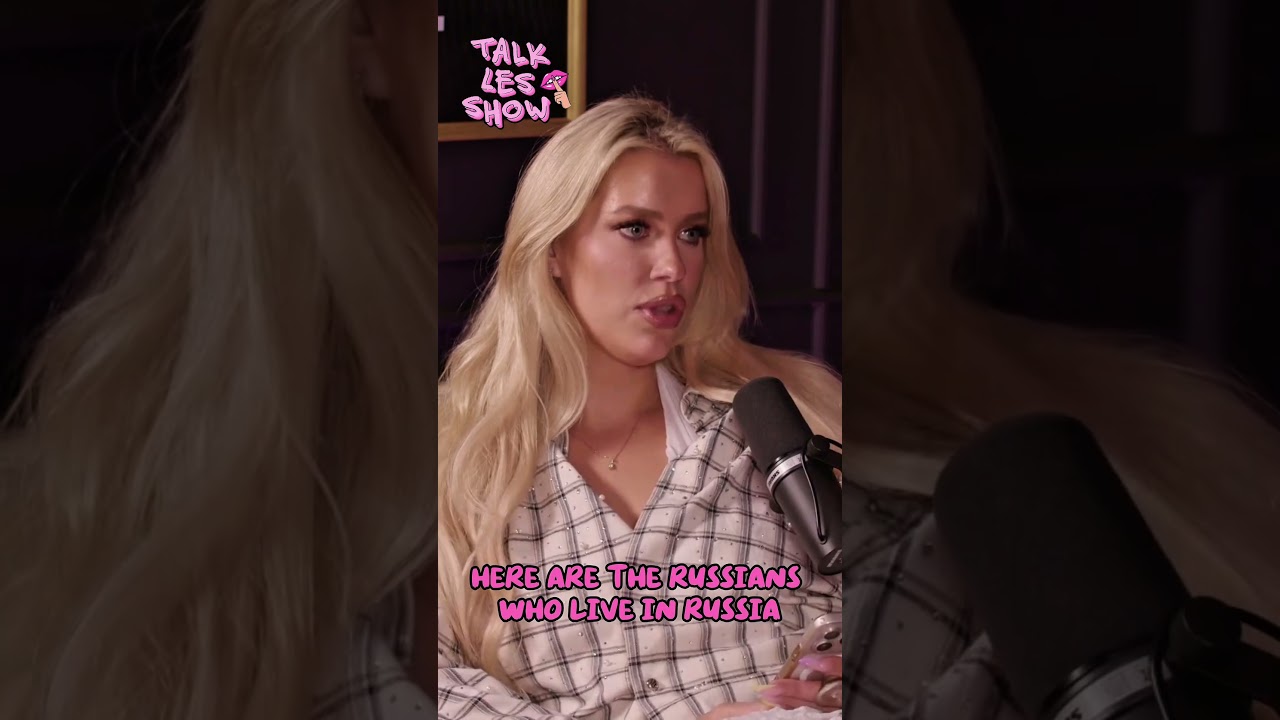
Born and raised in Russia by this incredible woman ❤️ full episode is about to drop on all platforms