Adam Berk teaches founders to validate risky assumptions through experiments: problem discovery, customer-solution fit, then growth. His first step for any founder is 10 customer-development interviews. He judges founders on their dedication to experimentation and how they interpret data, not on ideas alone.
Questions this video answers
Startups that have spent more than a month and more than $1,000.
Europe and North America.
10 interviews.
Chapters
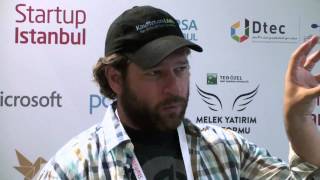
My name is Adam Burke and I teach entrepreneurs how to run experiments. Experiments to prove something, a risky part of their business model that they may or may not currently be focused on. So in stages of problem, customer solution, then proving some type of value to at least one customer, and then growth. My focus right now is on startups that have spent more than a month and more than $1,000. Not because of the money necessarily, but it shows that they're actually actively working on their startup. And I do a lot of work in Europe and North America. Yeah, the accelerators are the ones. They pick the startups for me so I don't have to go around. Part of Lean is having customers who have a problem and know they have a problem. So a lot of early stage entrepreneurs, it's fun to build stuff, it's fun to raise money, it's fun to get press, it's fun to do all these things so they don't have a problem. So by definition they're not my customer. An accelerator, on the other hand, is investing in these people so I can come in as an insurance policy and make sure that they're spending their money the right way. You can always apply to me. My application is my Twitter handle or my email address, which you can put at the bottom of the screen right here. The platform is I try to do things manually until they scale. So the platform right now is me sending you an email and asking you, who's your customer? What problem are you solving? That filters out half of the people right away. So I have a funnel as well that filters out half the people. If you're willing to answer that question. The first thing we do, no matter what stage you're at, is we have you run 10 interviews based on what your answer was to who your customer is and what problem you think they have. We'll have you run 10 customer development interviews after that. If you're at a more advanced stage and you have traction or you have some metrics that we can look at, then we'll talk more about your solution, product, market, fit and growth. But in the beginning, even if you're the biggest company in the world, I don't know any better at first, so I have to have some sort of filter. So who's your customer? What problem are you solving? Are you willing to talk to 10 people? That's my, my big application process. But that 3D pen is actually very cool. It's just a cool thing. We'll see if there's a business out of it. They will have to follow the same format in terms of finding an application. I think the judges even said that on stage. But the other thing is, I'm hard on them sometimes, but I'm an entrepreneur by heart, so it sounds like I'm just being nice. But I love all entrepreneurs, the ones who are willing to take feedback and make progress and want to change the world. There's no I don't judge ideas anymore. I judge the founders. I judge their dedication towards running experiments. I judge their interpretation. We all have to be a little bit crazy and make our own interpretation out of the data, but we also need to be a little realistic. And if they I judge their conclusion based on their premise. I judge, oh, I said I'm going to interview 10 customers, and I did. I judge the fact that this customer matches this problem. But the ideas themselves, who am I to pick.