Investing in quantifiable hypotheses (leanstartup call)
Adam Berk leads founders through experiment pitches on a Lean Startup call. Elena tests a 50-day course for $1,400 with a goal of 10 signups in 30 days. Jonathan tests whether transparency drives giving by targeting 50 people to make $2 donations. Mentors fund low-cost tests with clear metrics and tight timelines.
Chapters
Part of the price of our model.
So I apologize to bite in, but I don't see Daria, who is under Startup Booster.
She was in and she left. Okay, she's back.
Yeah. Because we're having some technical issues. It's really important that she joins the conversation because we are both two people in the Startup Booster who are doing this thing. And I would like her to also give a word and just to say a couple of words.
All right, so fair enough. We're going to Timebox this. The only. The real goal is not a normal pitch or it's not even to get live mentoring. The only goal for this call is to make it so that everyone thinks that they're clear on how much money they're getting, what they're spending it on, and what the outcome, what the experiment is. So for you, since it's been ongoing and you're the first one, and it's the first time we've ever done this, we're going to spend a couple extra minutes if we need to. But the format in the future is basically instead of on Shark Tank, where they're pitching their idea and their business model and the market size and their competition and why, and they're trying to convince people to invest in their vision. You're not trying to convince us of anything. You're trying to say, this is clear. This is our metric. This is how much money we need. This is when we're going to run the experiment. So it sounds to me like the action that we've agreed upon is getting people to pay a discounted price for the course. And again, if some of you are catching up, just try to follow along. Maybe in the future we'll add cheat sheets. I was thinking about doing a document in real time, like what their experiment is proposed to look like and what we give feedback on. Let's just try to follow along and then we'll answer questions about the program itself at the end of this call. And then the future ones, they might be an hour long and a little bit more structured. Do we all agree that the action, the primary action we're testing is the initial payment for the course at this discounted rate of fourteen hundred dollars? And if not, why not?
So we decided to design the expense experiment around the sales funnel and the marketing strategies, because you and Boris, both of you gave the comment that maybe we might be testing. You know, we should have started with that, not to improve the quality of the course so that we get more people who start their company, and later on we get the Revenue from them. So you kind of said a couple of times and hinted that we should be testing the paid version. So we kind of flipped the coin because actually we need both. Right. On the one hand, we need the people who are graduating from the program and who are like, if they entered for free, we are getting the percentage from their company, so the equity. And on the other hand, we need the cash, so to say. Right. So that we can develop and advertise. Thus, we would also like to focus on the paid program as well. And today.
Yeah, I let you go a little longer than normal, only because I keep saying you're going first. So everyone's always going to have the same. This is exactly why we're focused. We know there's always going to be a catch 22. There's always going to be multiple dependencies. Through all of our mentor sessions, we always have the same exact conversation. So we're going to put you on the spot. What do you. You can test everything, and you can even test everything with our money, but you just can't do it simultaneously. So you can pick the order. The order might be wrong, but for the purposes of this call, we want to get people really in the habit. There was even a guy yesterday and he might be on the call, and forgive me if I'm talking about you behind your back. He's sending us his logo, he's sending us our. His domain name. There's a lot of places for that, you know, in the startup world and at accelerators and. But we're. If we're going to be able to make this work, we have a very idealistic thing that, you know, the first time you ask for money, we are open to everyone in the world. There's no one else that's doing anything like that. But in order to make that work, we have to say no to a lot of stuff. And it's all the extra stuff. I might be wrong, I might be crazy, I might be rude, but this is the model that we're going with for the next couple months. So do you want to test retention of the free students or do you want to test paid students up front? Either one of them are testable hypotheses. We have Daria on the phone now, so you guys can talk to each other for 30 seconds, but we're gonna move on to the next person.
Yeah, I think.
I wasn't.
I wasn't actually gonna do it. I realized that might be a good idea that, you know, if you. If, like. Yeah, so we're gonna look for a. What's the metric?
Okay, so should I just stop the call right now and talk to Daria or. So what's the plan?
I think we came into the call thinking that it was testing.
Paid.
Yes. The thing is that Daria is just writing me by Skype. She's saying something, but we cannot hear her. So she's having technical problems and she can hear us. So she's writing, but we cannot hear her and we don't see her. And she's.
So.
She is also. So. Yeah, just a second. So she is also writing that we would like to test the sales funnel and the paid customers.
Okay, so $1,400 seems to be. And we can. I actually personally like your idea of testing all three channels. I think people are looking to always see which one is better. So at some point, I actually will fund that experiment just for personal. So you can. You can count on that coming. But now let's just test if people are going to sign up for your 50 day course for $1,400. Is that true?
Yes, if. Let's test.
Okay, so what's the minimum success rate if we have this call again in a month, how many people do you believe will pay $1,400? We'll get into how you acquire them offline, but let's just commit to a metric. So how many people do you believe will pay fourteen hundred dollars? So, Boris, I think we're either testing a price point. Well, we have a price point, so, yes, I'm going to ask them again. I think it's the only thing that we. Yeah, that's what I was going to. Whether you guys like it or not, Boris and I are sort of mostly on the same. He calls me on my shit sometimes, but we're on the same page. So I didn't know if you want to say it on the record, but you don't have to tell us how much. But how many people have paid you anything? Whether they've started a course or finished it or started a business. How many people have paid you anything related to coaching in the last year?
For now, we have two paid customers and the rest were the rest. That's why we wanted to test the first thing before. The rest were those who came for free.
Good.
But equity percentage, of course.
Totally understood. And there's nothing wrong with that. Okay, so how many. How many can you grow? Two to how many in the next 30 days, given a paid marketing budget even.
We would like to test the three channels, and I think there should be at least 10 people.
Okay, so $1,500 is the cost of the experiment. You'll acquire them through like a landing page sort of situation that we can share with the group after. But just for the purpose of this call. That'll be the medium. Right. You're not going to use phone or an in person booth or something. You're going to acquire them basically through the Internet.
Yes, we will design the landing page exactly. For the campaign. We have redesigned the website today, so we will also add one more landing page for that and we will channel it via Facebook, LinkedIn and also Twitter.
Okay, so we have the account set up for Facebook. People have taken advantage of that so far and I haven't even. Some of them have gone longer than they needed to, but I haven't been stingy on that. You have $500 already. So I would spend that on the, on the LinkedIn ads. You can handle that yourself. And then we'll, we'll talk about the third channel. Startups tend not to be the richest. Yeah, but then that's your problem, not their problem. Boris and I have dealt with this our. Ourselves, you know, and that's. Why do you think I'm giving you guys money rather than. Why do you think my model pivoted giving money rather, rather than asking startups for money? So. So, yeah, I mean, those are just, those are just facts. On the other hand, though, you know, I remember people always complain about money, money, money, but I spent my first $5,000 on an asshole designer. You know, that was really awesome, that it looked really cool, but there was absolutely no value. So that's sort of why. It's not because I'm a sadist or a masochist or whatever. The one that is likes other people's pain, not their own. But it's because I have had a lot of these lessons and I don't feel sorry for, you know, sort of pushing people the way I wish I was pushed. So, yeah. All right, awesome. So, yeah, we might start. You. The only thing that I'll. And I'll say it out loud in front of everyone, instead of having you spend $500 on each one at once, I might have you spend $300 on each one at once and see what the results are. And if you're clearly wasting money on one, I am going to cut that one off. But other than that, you've basically been approved for this experiment. I think it's a good one. I think it's good for the community. And then, yes, at some point we are going to test that you're, you know, that you can't just, you know, acquire customers for fifteen hundred dollars. You should be able to. It's that they are going through their lesson and they're getting value of it. But I think this is a good experiment. I think we, I think this was good for the community. I think this was a good first, first example for the, for the call. I know, I see Josh on here. Are you, is that good? I know you. And also we're always going to deal with like, oh, my co founder is here, or I don't want to do it on Facebook. But if we didn't do all the work that we did together on Facebook, this would have taken two hours and everyone would have been totally lost. So we, that's why we funded you a little bit up front. You've been, you know, pretty cooperative with this stuff. It's not easy. It's always, the investor always wants to give less and the first, you know, the entrepreneur always thinks they're entitled to more. $20. I don't know what that means. We gave you more than 20 bucks. But maybe I missed something else. All right, so, all right, we're kicking you out of here. We're going to try to make that things always go longer than they're supposed to. $1,500, 30 days at least. 10 new signups, obviously. Just the math there. You know, Boris and I were talking about this on another call yesterday. You know, that's, that's an acquisition cost of $150. I don't know if you planned on it being that way or if you're just pulling numbers out, but I always am happy at least when people say numbers. So I'm not going to get, I won't get annoying over the numbers. But. And a high acquisition cost is okay because, you know, it's, it's a fifteen hundred dollar ticket item.
So yes, I calculated approximately the way it works. I use some statistics of the people who used to do it. Therefore, we estimate that it should be like this.
Awesome. Okay. So I think. Yeah. All right. So I think Boris and Dari are the ones talking. I think.
Yeah. I cannot just talk to you simultaneously and focus on the chat. So we will drop you the link to the landing page in a couple of days. And as we have some of the money already. So you mentioned that we need to pay from that amount to LinkedIn and you will be doing.
Yeah, I'll add you to the Facebook account. The only other thing. And this actually Is pretty straightforward in the form. You have to start within seven days. So this push, people always think, oh, I need a month. Timing is another thing that this program is trying to isolate, identify. Maybe the tenth thing. Boris is going to make fun of me. That we're experimenting with, but it's not helpful for us. If you just take the money and you're like, not that you're stealing it, but. And this is for all teams, not you guys. If you don't start the experiment even because you think you have a good reason, then it's not beneficial for this program. So seven days is reasonable for the. I think you already have the landing page.
We just need to design one. But it took us basically a couple of hours to remake the whole website. So we are quite quick there.
Good. And that's also why we have the Facebook in our account. It's not something someone's like, oh, you're just trying to get likes. No, because we learned that someone said, okay, they're all ready, and they're finally ready to give a. To run an ad, and their account needs five more days to get approved. Or they weren't. You know, they don't know how to set up Facebook ads. So we've thought about most of this. We're always open to learning. But a lot of stuff, you guys have to trust us on the first experiment. I would say trust us the first time. Challenge us the second time. You're done. Kicking you out.
Okay, bye.
Bye.
You can get one more team. Damien. Let's see if Damien's on the call. Damian ran a really cool. Oh, nice. All right, this is working out nicely. Is Fjordor actually here too? Theodore is here with him. That's even awesomer. Damian, I owe you like, 800 bucks, huh? This is a bad business model. I'm in already. We can't hear you or see you. We'll give him about a minute. Otherwise, we'll sort of just give him the details. No, we can't hear you. Pull your headphones in and out. Next time, everyone. If you're just listening, obviously doesn't matter. But next time, if you know you're one of the people that's pitching, test your stuff beforehand. But this is a freebie. Call this this week. All right, everyone, give him another minute. Otherwise, I think I saw who was doing the beacons in Seattle. We'll give him a shot next. If he's still. Who's my beacon guy? Is that Jonathan? Right? Is he on the call? Jonathan, We can see you can't hear You. Can you hear us, Damian? All right, Josh. All right, Damian. So we challenged Damian to actually get people. He had a landing page. Wasn't really an experiment, but we were having some fun over the holidays. I told him I'd give him 50 bucks for everyone that not only opened an email, but actually clicked his value proposition. So I wanted to hear a little bit more about. It's in French, so I wanted to hear a little bit more about what it actually said and that it didn't say click here, because Adam's gonna give me $50 if you do. But other than that, I think the experiment was pretty. Pretty impressive. It's a food delivery service, which we are seeing some in the States, but all around the world. So I kind of want to hear how he's innovating and what's different about it. But he got the clicks. I think he got 16 clicks. So I owe him 800 bucks, and that's equity free. I knew he'd get some. I wasn't rooting for zero, but I thought it would be. I thought I'd end up owing him about three to four hundred bucks. So it was close. So now I'm going to try to get him introduced to Manuel Rosso, one of the great food startup Lean mentor guys in our circles, and I want him to start delivering this stuff. So the next experiment that we are going to get equity for is going to be in terms of what he needs to sort of maybe do 25 successful deliveries in a month or something like that. Boris, if you can, Damian, can you type the exact value proposition that got them to click in the message box? Josh, you and. You and Jonathan get ready. We'll spend five more minutes, and then the people that stick around on the call, we can sort of open it up to, like, what the fuck is this program really, really all about? All right, Damian, just type it right here, if you don't mind. What did the actual. In English. What did. Why did they click that button? What were they expecting? I know what you were expecting. 50 bucks. What were they expecting? Why did they click that button? All right, he's not tight. All right, let's see. We're going to hold you accountable to this back in the Facebook group, but, yeah, I thought that was a great experience, and it wasn't just like a stupid experiment. I think you learned something. I learned something, and I also. Okay, so I understand the general value proposition. What were they expecting? Were they expecting. If they clicked that, were they getting their first order? Were they gonna see what was on the menu. Were they just gonna learn more? What were they clicking? And while he's typing, Josh and Jonathan jump on. Nice. Wow. This fucking thing works. This format's pretty good too. My next. My goal next time is if we get, like, more than 100 people on the call, we'll give a random person a thousand dollars. But as long as they actually have a testable. All right, so learn more. So that's again, you locked in the money. That would be the lowest. The very minimum, I would have wanted you to say. But I would have done the same thing if someone was offering me $50 a click. We'll run one more that sort of says instead of learning more, like place your first order free delivery. You still have to pay for the items, but we'll waive the delivery charge or we'll make you a lifetime member or we'll upgrade or we'll give you a faster delivery or we'll. Something that is a little bit. People love loss leaders and people love. Like, we're losing some people, right? At two people. People really have tight schedules on Friday. All right, let's get. So, yeah, so that's the only thing I want to. I want to tidy up. But this was a fun experiment, so you. You earned it. Yep, exactly. You don't even really need your producers. That's another thing that I think is good for the call. It's kind of one of these random lean startup debates. I would. I would. That's a classic. Do things that don't scale. I would just go buy it, you know, at the. At the farmer's. Market yourself and deliver it. This is going to be a good segue into Jonathan's. You know, we like to see teams. It's not mandatory yet. We may hard code it into the program, but your second experiment might be something that doesn't scale by definition. I don't think that that's your riskiest assumption is finding it might be your riskiest assumption to scale. And that's why I wanted you talking to that other guy, Schellenbach. So I want you actually doing that in front of everyone on Facebook. I introduced you guys. That might be. Yeah, there he is. Is that him? Oh, look at that.
Show.
Show. Yeah. So that might be a risky assumption for scale, but it's not going to be. Okay. Sorry, we're sort of all over the place, but. All right. Jonathan and Josh. Hey. Excellent. Yes, sir. Hey, everyone. So Jonathan's. Jonathan's gonna tell everyone, and then we'll end. This is definitely compressed time for three Full pitches. I think we're close, just like we were with Elena, obviously. And I want. I definitely want to hear Boris jumping in so that I'm not the guy that always says, do this without tech. I think your value proposition of giving to people, I think the unique part of the value proposition that you're saying they will give because specifically because they know where the funds are going versus that it's easy to give by pressing a button. I think those are related, but I think they're definitely. I think those are definitely two different value propositions. I think it may have to be easy. But the thing that I was going to lean on you, and I was sort of talking to Josh behind your back to sort of guide you, because the other part of my. One of the 10 experiments that I'm testing simultaneously, even though you guys aren't allowed to, is that the mentors can really help scale this program now that we are writing checks and people are showing up on these calls. So I think your metrics have been clear from day one. I think they've been pretty closely tied to the specific value proposition. There was a little bit of leeway in there. Like, were they doing it because you're a good salesperson? Were they doing it because you were there? Were they doing it because they trusted you more than just someone else and they've always wanted to give money? But then when you take yourself out of the equation, that goes away. The greatest thing about good experiments that don't scale is that when you take the not scalable part out, it doesn't collapse. It's just replaced by something more scalable, if that makes sense. So the cause and effect doesn't change. It just maybe some sort of pricing element changes. I don't know if I'm explaining it.
Well, but I think this might be one where it's gonna have, like.
Yes, good for you. Thank you for holding me to that, Jonathan. What are you trying to test and what are you trying to accomplish?
So our interviews, I identified this sort of pain where people want to help people in need on the street when they see him, but they can't for kind of a lack of clarity as to if giving cash will actually help the person. And a lot of the times are stuck without cash in the first place.
So.
I also think those are also two very different problems. But we won't get too much into the nitty gritty here, sir.
Sure.
So our experiment is that we can get 50 people to start giving $2 a week through our platform if we simply can provide a guarantee or provide a system where that money is used effectively, where you can be sure that it's actually going to help that person in some sort of concrete, tangible manner, such as getting a storage locker or getting transportation.
Gotcha.
And I remember the project. And where are these people? Is it just like a random person on the street?
The givers are the recipients. The recipients. We will find them through nonprofit shelters in downtown Seattle. So in like the urban core. So they'll be, you know, on a given street corner or highway exit, some of them are staying outside of stores, like a grocery store, just anywhere of high foot traffic. Or they might be on the margins, like, you know, behind the bus stop, behind the fence, in the tent.
Okay. And so where. Based on the experience. So this is a relatively, relatively higher fidelity experiment. Where did the hypothesis come from? Like, did you. What did you do interviews with people who are already giving? And this is the question that came up. Like, they're not sure. That's what it sounds like to me. Right. I'm just reverse engineering what you're doing.
Sure. Yeah. Well, I mean, I just started off with interviewing a ton of tech employees downtown. So people who work at Amazon, people who work at Microsoft, tableau, Adobe, just people who are commuting into the city on a daily basis, experience frustration where you have these young professionals who want to help, don't know how, end up ignoring, or it's just kind of a frustrating encounter for them. And obviously it's frustrating for the person in need too, because these sort of issues of trust are preventing them from getting the resources they need to advance in their life.
So the frustration is with.
Could you clarify?
Sure. I mean, I mean, it's on both ends, but we're focusing right now on the giver and the fact, like, I mean, just statistics show that 90% of U.S. households are giving on average $1,600 to charity a year. So it's. I mean, clearly people want to give, but for most of the people that I interviewed, they're not able to give at that rate in this situation that I think one of the things that they said was like, I prefer to give directly to a person and see the effects that my money has. But in this situation, I can't. I'd rather give to an individual than.
Well, the solution, you know, there could be not making it easier, not even knowing this, but being able to sort of keep in touch with the person or monitor. Not just that you're guaranteeing the fundamentals, but that they're actually seeing Something, and I don't want to use the word pen pal, but again, the solutions are your. Are your, you know, are on you. Some people, and I hate being callous with important social issues, but like, some people, unfortunately, may not want. And they don't want it. Like, they don't want to deal with that, you know, burden. You know, it sounds horrible, but they just may not, you know. So some people, like, buy away that guilt and like, I gave it. I don't have room for this in my life. Better or worse. Yeah. So, yeah, there's. There are a lot of parts of this experiment that's sort of. I feel like we're almost being easier on you than we were on Elena. Because it's easy. She's just, she's just another consultant like us. So it's easy for us to be hard on her and you're, you know, helping, you know, people in need.
But we're testing to see if we can get 50 people to give $2.
Okay, so the $2, we're trying to.
Get two $52 givers in eight weeks time. So by week eight, after the launch of our prototype, we will have 50 people giving $2 a week to.
All right, and giving $2 a week means they've agreed. And this is a big thing. This is what I was talking to Josh about. They're agreeing to give to. This is sort of where when you were talking about beacons and I was like, well, they still have to do something first, right? They have to enable Apple pay in their phone so that it happens automatically. So they're basically willing to opt in. No $2.
They're not pay.
They're just making.
Sorry, are they opting in for $2 for the year automatically?
No, this is like single transactions A$2.
So that's a retention metric. Afterward, all you're at all you want to see is a. Fifteen people will give you $2 once.
I mean, we want like, let's say over the course of a month, we want to see them give us $2.
$2.
$2 or.
Yeah, I think I kind of see where maybe. Adam, you're going. I would simplify the donation part. I mean, I don't think you're testing donation. Like getting into recurring donation is more complicated.
It's not recurring in single transactions or.
I would just. I would, I would consider making the, the hurdle really low because it sounds like your hypothesis is really about testing whether people care about that being able to follow up or being. Or by transparency or however you want to Call it. So I wouldn't. I would make the financial side of it. I think it's okay to make it really easy for them and really. Yeah. Make it just dot. Make it just $2 period.
Maybe.
Unless people don't feel like it's enough.
I'm interested in like active, like ongoing monthly active users versus like one off transactions. Like someone downloads the app, feels compelled to give once and then just forgets about it.
I think that's a problem. That's. That's.
Sure, yeah, I think that's fair.
I mean, I see. I totally get it. I get the logic. But I think it's not a problem. That's.
That.
That's not your critical problem by this minute.
Based on the one thing, one thing.
We talked about on the Facebook group, Jonathan, and you, you mentioned this is one thing you wanted to test was the lack of clarity of use of funds. So is there a way that we could just say, you know, if just for this first experiment, if we're not looking at the recurring, we just say 50 people at $2. And you're just very clear about. You mentioned the locker. I don't know if $2 is enough to get somebody a locker, but let's say it was a lot of the times the same thing with Damian. And I don't like, I'm not making a joke of this particular experiment, but it will be because that's the kind of stuff that I will fund. That has nothing to do with really. I like people running good experiments whether they're social good or not. So if I was willing to give Damien 50 bucks just on an email click, let's assume the solution is possible. So whether it's the technology part and the beacons and we have people literally running over the streets of Seattle doing it manually or if it's. Yes, if we, if he. If he's wanting to prove that they want to see the locker. The locker is not the risky assumption is all my. Is all. My point is. So we'll take that offline. I am going to have to bail in a little bit because I do have a 2:30 meeting and it's not where I am right now. And I feel like I owe some of you an explanation as to where this program's going. But can I throw just one thing.
For like 20 seconds? Just, just for the metric, I would just ask for also a metric that's a percentage or ratio. Right. So it's not just an absolute number. Like we're going to approach this many people and out of them 50 are going to, they just, I think it's just going to make more sense.
Normally, I think for the first experiment a net number is enough just to get started. But I agree with Boris here with giving to charity. It makes a huge difference if you, you just get a team and you want to win this experiment and you get a team of volunteers to sort of canvas the entire city of Seattle versus if you do it and you keep track of how many people said yes and how many people said so. I agree, we will. It might not be right on this call because I have to run a second, but I'm going to give you some money. Whether it's for the locker or it's not going to be for the technology for this first experiment, but it'll either be for the locker or just for, for the experiment. I don't know, but it'll. And it'll be a decent amount, five hundred or a thousand bucks. But I agree with Boris, we have to tighten up the metrics and I also want to tighten up the intent. I really want to do a good job of differentiating ease of use versus result. So I think we've at least agreed on this call that it's what we're what, what we're testing and we may be wrong. We may find that it's ease of giving and beacons and ease of tracking and all that stuff. But for now, the hypothesis is that they're going to give to you versus the Red Cross because you're doing a better job, however you're doing it, of telling them in a non intrusive way, hey, your money's going to the right place and it's being used. And it actually, maybe it's just one alert once in a month that sends a picture of the guy, you know, with, with his locker or getting a job or something, I don't know. And again, that's above my pay grade. But I think, I think the metric is clear. I don't want to see eight weeks. So obviously I'm just going to cut it in half. And this is the easiest thing that I do to people. It's, it's helpful. It's not just to save me money, it's also saves you time. All these experiments that are eight months, you know, sometimes people argue well, you know, they ramp up. So it's like I get my final, you know, but usually that's bullshit. So they'll still be ramping up between week one and week four if your thesis is true. So the only thing I'd say is whatever you can do in eight weeks, you do in four. If you're doing it great, I'm going to extend it by definition. Why not? But if it's not working, it just means that we're going to know faster. That's probably my only feedback.
Simplify the metrics. Get a ratio in terms of conversions and then how the. The time the palace.
Yeah. And then the fourth thing I think is. Yeah, just really tighten up that they're. If we mess it up a little bit. This isn't a huge investment at first, but I really want to know that they're giving because they care about tracking and they're not giving because they. Because you're the best option that week that they have been feeling bad and they kind of are care about the problem, but they're having like there's, there's certain times, maybe you're asking at Christmas and I want to just make sure that the cause and effect is as good as it can. It's not going to be perfect on the first experiment, but I want to make sure that it's at least reasonable. That's it. But with Josh working with you, I have no doubt that it will be. And now that we're doing these kind of calls and everyone understands that the Facebook stuff, like I do kind of want you thinking it out loud and putting it in front of this group. Obviously you're not worried. This isn't a huge like business. You're not worried that people are gonna steal your idea. You'd be happy if I'm assuming if the homeless problem is solved. So, yeah, I'm gonna keep pushing the same way. But yeah, we will fund this as well. So three for three people got funded on this call. So on that note, I don't have to explain. I don't have to explain shit on this call about the rest of the program. I'm sort of joking. Let's do the same call next week. The other thing is too. And this is sort of what I was going to say at the end anyway, I'm not trying to. Other than Boris, of course. I'm not trying to get any like fancy, high paid, you know, brand name mentors. Boris is the only one, you know, he's the, he's the fanciest mentor in the world. The rest of this is going to be once someone goes through their first experiment and understands like why we're asking for an action, why we're cutting the time in half, why we want the value proposition directly related to the action. And not like, oh, here's free pizza in exchange for the action. Oh, that proved that people really want to, you know, get food delivered to their house. Or I guess food is a bad exam. So I want you. You guys are going to become the mentors. And the other thing that you're accepting when you accept our money is that instead of me being the annoying guy on Facebook, I'm not asking us to take over your life. But you are going to be. Obviously, we've seen an influx of certain people asking for money, and we're not going to, like, assume that it's spam. We're gonna. We're gonna at least entertain the first request of every single person that does, you know, at least that first interview or five interviews. So everyone in the Facebook group has at least done one. One or five. And dropping the barrier, not for funding, but for at least getting into the group. So anyone that's in there, I'm putting a few more things in place because this has real money's involved, so they have to sort of have a real, you know, social profile. But. But we're gonna take seriously, even if it seems like, oh, fund me to, like, you know, pay my mortgage or something, you know, if it's an experiment and they have a real profile, we're gonna assume that everyone is acting in good faith. Obviously, people are gonna try to take advantage of us when we offer free money. But I'm relying on the people that got funding and are in the program and are getting involved to at least entertain that first conversation with people. And if you really. If you really don't know, like, Josh and I have done this, he kind of looks like, I don't know about this person. They might just be trying to scam us. Then you'll probably. Then you'll send it to me, like, direct message. But the goal of this program, obviously, VCs, there's a reason why they can't say yes to everyone. And there's totally legitimate. But. And we're not just going to give people free money in this program. But if they do the interviews and they construct a hypothesis and they're willing to test it, and they have a somewhat. They don't even have to have a trustable profile online, but they have anything but a Twitter egg. I threw that in as one of the rules recently. We're going to try to take a chance on them until it's no longer sustainable. But the hypothesis is that the default is yes, where are there funds? The default is no, but it's not free. It comes with hypothesis. Again, same thing I just said. All right, I really gotta run. This was. This was good. Three real testable hypotheses. If there's anyone there. Looks like there's eight people. I think we're five of them, so I guess it's not that many other people. I see. Ben is one of them, so he sort of knows what's going on. And I guess Steve is one of them, too, so, yeah, I guess there's not that many random people.
I got to go.
Thank you. Thanks, Adam.
Talk to you on email.
More from Adam
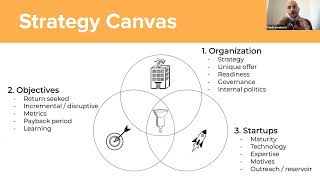
Paolo Lombardi & Adam Berk | How To Nail Your Startup Engagement Program 14 March, 2023
Brad Feld from Techstars answers the inevitable "funding" question from the audience.
Preview! Talking Startup Program Design w Bernhard from the World Food Programme Innovation Accel