#MILVALCHAL - DEMO (lish) DAY | Learnings and results from leanstartup experiments
A group mentoring call (led by Adam Berk with Josh and others) reviewing multiple lean startup experiments. Key cases in this chunk: Andreas (a beauty-salon SaaS) argues active daily usage predicts payment after a two-month trial; mentors push for a shorter paid trigger (15 days) and a phone/discount experiment. Benjamin Conard proposes a fair-trade dark-chocolate snack and plans a $500 Facebook ad expecting ~200 clicks and ~50 email signups; mentors advise selling early, in-person sampling, and immediate paid orders. Ben Block presents a B2B platform for tracking employee volunteer programs (targeting mid-size companies); mentors focus on clarifying the core problem (HR can't measure ROI of volunteer programs), testing demos via LinkedIn ads, and pursuing concierge MVPs/LOIs.
Chapters
Everybody became a paying customer. So I'm pretty much sure that they will become.
Well, so it sounds to me. So it's, first of all, how many people actually signed up for free trials or how many, how many clicks did you get versus the people that actually signed up? How many signed up for a free trial?
Six.
Okay.
I know it, I'm saying it's a waste of money. I find it more targeting.
How do you know that until they start paying? Well, because if you have those six and they all six convert into paying clients, how much is that worth to you?
No, listen, you know, I have this application for beauty salons. Anybody can sign up, but if they don't use it, if they don't use it every day, this means that they will not pay after the two month period. What I have found these almost three years that I have this application is that when they started using it every day of the week for about 15 days, for two weeks, they never stop. And they will start paying after two months. Since they don't stop using it, they will pay.
So you got the six people, right?
Yes, every day.
So.
Yes.
All right, so I happen to agree with Josh. It's, it's the, the 6 over 10,000 seems like a stupid number and it probably is, but that's, but that's irrelevant. And that's sort of some of the stuff we're trying to talk to the other team about. You're sort of like picking the wrong things and the wrong lenses. So if you're, if you got six, if you got two customers for $300, it doesn't really matter that you pay for 10,000 impressions or that your conversion rate was awful. If you, this, this, the, I've been calling it a greased watermelon. The greased watermelon part is that they haven't paid you yet. You're saying that based on, you know, historical information, they're going to pay. But assuming you got two new customers for a hundred and for $300 in ads and they really do pay you and their lifetime value is more than $150, then it's not a waste of money. The group is going to hold you accountable next week. I don't think, I still don't think you need a two month trial period. I think you're still scared to move it to a month. If, if you're, or let me tell.
You, I know this. I'm sorry. I know that they will for the first one that has been using for more than almost a month now. Yeah. More than a month. She will be paying. I'm definitely sure because I called her too, and I'm certain she will be paying.
All right, so I'm gonna, I'm gonna make this one quick and then we'll let Josh and Ben go more mentoring on the next one. If you're sure that if they use it after 15 days they'll pay, then your new. Even if it's just experimental and it's just for this group, then you have to do some sort of experiment where you charge them after 15 days, not after two months. You just have to. That's. Maybe it's just for the ones that you know, maybe you create a separate funnel and it's only for the ones that I'm funding, you know, and your, your other clients are yours to do it as you please. But if you're getting, if you're positive that pay after 15 days, I'll give you the floor for 30 seconds. But I can't hear. I can't even think of an argument why they need to go two months. All of the things that we do are about speed, are about learning or about logic and making numbers make sense. So before he goes, Ben, can you think of a reason?
Well, just as long as they're, if they're using it every day, then they're familiarizing themselves with, with it and they seem to be happy. So.
But he's saying it's not even just a, an onboarding thing. He's saying he literally has evidence that everyone, that 100% of people who use it, you know, 90%, you know, engagement rate pay. So he's counting as a paid user. So I, I hope that's, I'm not saying it's not true, but if it's true, then they don't need the 16th day for this experiment. That's all I'm saying. But there's only two months.
If I make it 15 days, they're going to be there.
How do you know?
I mean, how do you know?
How do you know?
How do I know? Because imagine you have a person who doesn't have a clue about computers. Usually beauty salon owners are, you know, middle aged women from 35 to 50. They don't have a clue, but they're.
Using it every single day. I don't buy it. Found your ad. They clicked through on Facebook, found your ad, converted, are using it every day.
You may well be right, Andreas, but you're making assumptions that I'm not hearing unless there's something you're not telling us. I'm not hearing the evidence to show that they wouldn't pay. And so until you have that, why not try it? Which is what Adam's saying, but I agree.
Yeah, why not try it? Exactly.
No, no, no, wait a second, wait a second. It's a different thing. They wouldn't pay. Those who are dedicated, they would pay. But if you make the period, the figure 15 days, then they might not even try.
Fine.
That's what I'm talking about.
That's the most reasonable thing you've said on the call. So the public facing trial stands at two months. But when you see a lot of this lean startup stuff is about reacting to the evidence and the behavior behind the scenes. And when you start to see metrics, a lot of this stuff has changed in the last five years. We can, we can see what our users do. It's a little bit creepy in, you know, 1984ish, but you should then have a trigger that when the person logs in that 15 day, you just call them on the phone and say, here's a discount. You know, if you sign up today, same thing. We start to build the startup booster team. Your conversion rate on Those, when the CEO calls them personally after 15 days, gives them a discount. Your conversion rate should really be 80, 90, 100% on those. And so, sorry, the good news is that you have a very clear, you have a very clear experiment for two weeks, for next two weeks. But the bad news is it's my hypothesis.
So.
I can do this. I can call them and tell them, okay, you have a discount if you don't wait for the two month period and pay me now.
Right.
I can do this, but I'm not going to change the website saying two months period.
Sounds like a compromise to me. So you don't have to.
Yeah, I can do that.
All right, so of the six people, two of them have already used it every day.
Every day.
All right, so get one of them to pay by next call.
Yeah.
All right.
All right, Arvin, jump in. Andreas, you're always a good sport. I owe you a beer. Goodbye.
Goodbye.
Okay.
All right, Arvine, last one and then we'll go back to the startup booster, folks. Well, he had a great experiment, great learnings. All right. I blogged a little. I just, I cut and pasted his Facebook comments and I posted it right on my, my blog. So I might, I might have to promote if anyone has questions about his experiment. He has some great learnings. He's doing some stuff with, with rechargeable batteries, renewable energy for rickshaw drivers in India. I mean, it's really great stuff. He was talking to customers. He was learning things. It was not just pure lean, you know, cus Dev, but it was observation stuff. I think he's doing a great job. I wish that we could get him on the call and he was here. It wasn't like one of those ones where we know it's never gonna work. All right, maybe he had to jump off.
There were a couple other people on the chat that wanted it, wanted a shot if you wanted to take that 10 minutes to do that.
We definitely have a couple of Josh's folks, so they have first dibs. The Bernadem. Is he here? He gets. He actually gets. He gets the floor if he's here. If not, let's also just take a minute to focus on mentors on him, see if we can get him funded. Still not sure exactly what he's doing, but I know that it's. The effort is there and he's actually going by the book, so. All right, so let's, let's keep, let's keep respect to his experiment. We'll see where that ends up. But let's get a couple more Josh's folks. So Josh, you're. You're on.
Okay, cool. Hey, Benjamin Conard, if you want to go ahead and take a seat, just click that open seat button. Hop on in. Still there. Cool.
All right, cool. Hey, guys.
So Benjamin. Benjamin and I have been workshopping an experiment around. Around his startup. So I will. Benjamin, why don't you do give us just the one or two sentence value proposition of what you're doing. Run through the experiment as we structured it, what you'd like to do, and then I'll shut up for a few and let Adam and Ben chime in since they don't have the back or they haven't had the conversations we've had. So we'll want to hear their input from an open endeavor. Go ahead.
Sure.
Okay.
So my team and I are starting a fair trade chocolate company that pairs antioxidant rich dark chocolate with today's hottest sweet superfoods in a convenient, simple snack form. So we'll be targeting both health conscious and socially conscious consumers. And the experiment that we would like to run is running around a $500 Facebook advertisement to display our product offering, ideally to a demographic who is already health and socially conscious, likely women from the age of 18 to 35. But we would look more into that demographic as we receive data on who is clicking on Our advertisements. And we would expect that if we run a $500 advertisement, we would receive 200 clicks on the ad, which would bring them to our website and potentially 50 signups.
And they were sign up for what?
For our email list to be notified when we go live?
Nope.
I was gonna be easier on you for cus. Deving, you know, it's a known problem. So you don't. I still want you to custom. It's. It's new, but it's still food and it's even health food. And I'm. I'm totally on board. It sounds actually really good. I might be a customer. So I was gonna go easier on you with Cust. You don't necessarily have to prove that they have a problem.
Sorry.
We got fucking phones, we got dogs, we got. That's got crying babies.
Hold on.
Ben, go teach him something in the next 30.
Okay, well, I wanted to know where you were going with that, but you expect. What you said is 200 clicks and 50 signups, but there's a problem with that.
Adam, I'm back.
You're back.
Well, the first thing I was gonna say, if you're. If you're selling something, this is not like a service where it's. But you know, let us know when you launch. If they want the bar, the chocolate bar, they're gonna. They gotta buy it. That's your. That's your metric. They gotta click buy now. Order now.
It's not like a. Yeah, how much is a chocolate bar? It's.
It would actually be a pouch of chocolate drops.
Okay, okay. And how much?
Probably around between four and six dollars.
And how quick could you have that produced in two. Then what's your capacity there?
Right now?
Yes, you could immediately.
Oh, no, I could not. No, I was asking if you meant right now.
Well, I'm asking, what if I click buy right now? What's the timeline for you to be able to. Even if I just click pre order, how quick could you have that?
To me, it would be in the next few months. We are meeting with a pilot production facility in the next couple of weeks.
And can you make any of them in a non scale? I know you're relatively new to the group, but I also know you're coming through Josh and he knows ropes and I know you're sort of, you know, watching on the sidelines and you, you're in the trill Val child. So if you, in a non scalable way, could you make 10 of these? Could you make five? Make one?
Yes.
So then there's your experiment, I'll waive some of the cost. Dev, you don't need to go around the streets and be like, do you like chocolate? For other people listening, there's still a lot of stuff around segmentation that you could learn by going to Whole Foods. So I still kind of want you to talk to 10 people, but I'm not going to mandate it since you're coming on the call through Josh.
I do that as part of, part of our work. So I'll make sure that he does.
Good. All right. But the experiment, yeah, you want to know price, you want to know what? If they're willing to order, they got to be willing to order a chocolate bar for somewhere between four and ten dollars. At some point you can be testing suppliers and coffee shops and, and Whole Foods, stuff like that. There's a coffee shop, I mean that, you know, it's $9 chocolate bar, but the coffee is fair trade, so the chocolate's fair trade. I mean there, there, there is a market for this stuff. Yeah, but no, no way are we going to let you off the hook with a, you know, tell us, give us your email address if you're maybe interested in chocolate in six months. The epitome of what we're trying to avoid. We want to go faster. We want to get even if it's not the answer we're looking for, we want that answer faster.
Sure.
And two very good opportunities to learn about speed and non scalable. And if you, and if you get the demand through the roof, you're going to find how much easier it is, you know, to get a vendor to get distribution, to get people to invest in infrastructure faster because they're going to be, because you're going to have evidence to show them that this is a real. Nobody wants like, you know, and again I have to find better ways of saying but nobody gives a shit. Like if you 150email like the startups now, the scale startups now like a hundred million you like Twitter is going down the drain because they don't have a billion user. Like nobody cares about a thousand email addresses or even 10,000 or even a hundred thousand or you need like millions of active users or you just need people you know.
Can I jump in real quick, Adam? Yeah. So I would also for me, when it comes to a chocolate bar, really it comes down to simply paying customers. If you're going to be trying to do a Facebook ad trying to find people like Adam was saying that just simply like chocolate or maybe it's more aligned with the values, which you see a lot more of. I mean, now fair trade chocolate is pretty much a standard, and it's what I buy. The challenge that I think you're going to have, or I think maybe even the path that I would choose is getting chocolate in people's hands right now. And, like, as fast as you can. I mean, yes, you need to get your. You need to start creating basically a customer base. And I personally would think that going online would be kind of backwards. Like, you want to build a customer base by talking to people at Whole Foods or wherever and then sending them to your website and then getting them to order a case of pouches. Just because chocolate is something you have to feel and taste and know that it's better than. I mean, at my local tiny little grocery stores around the corner, there's 30 different kinds of chocolates that I can choose from. I'm in Montreal, and so I think maybe there's a chocolate obsession here, but I see that's happening throughout the U.S. i was just listening to another podcast with Seth Godin and Tim Ferriss, and he was pitching two of his favorite, you know, fair cherry chocolates. So you got some stiff competition. I would. I would focus on, you know, your local people that can test it right now or try it right now.
Yeah, I couldn't agree more. And I'm guilty of this, too. Like, this. This Facebook money. It's like the only thing that people can spend our money on is. Is Facebook ads. So that's where they sort of get. And it is. There is some value of. It forces. It forces a hand like we saw with the startup coaching team. So it is a lot easier to track. And then I can see, like, oh, if you just go to Whole Foods. I don't. You could sort of lie to me about how many people you talk to or. And you wouldn't be lying, but you'd be exaggerating. Oh, it was slow that day. Oh, you know, the. But. But Ben's right. I mean, selling chocolate on the Internet until you're a known brand. I was going to say the same thing.
Go.
We don't. We don't push doing anything illegally, especially with, like, food, health and health. Health and. But it doesn't seem like a regulated thing. Just make sure they're. Make sure it's clean and sanitized and go, go, go. Sell 10. Get one. Get one sample or something. You just got to go in person and make one sale and then five sales and then 10 at a specific price, and you got to Talk to these people and you got to get the reaction. Yeah, it's not an online marketing thing. Well, you can still, you know, on the side if you want to. And if you have those kind of skills, I definitely wouldn't let you pay a design, a web designer to go build your brand. But if you have those kind of skills, there's no, there's no reason why you couldn't. Like, you could start to see it with good photography. And I'm always pushing the opposite of design. Like, but this with food, it needs to be a Chris, you know, perfectly designed, perfectly photographed. At least that's my hypothesis. Maybe you could get away with less, but I'm always pushing less. In this case, you need to, like, really convince me why I'm buying this chocolate bar or tell a story. Who's the farmer? You know, who's the farmer? Why, like, why am I buying this from you? There's a, There's. I agree with Ben. There's a market by me, not even just the coffee shop. They literally, I think, have 45 different flavors of. And not just flavor. Each. Each one has the 10 different flavors, but there's 10 different brands. There's literally a hundred different choices. And it's not just chocolate or, you know, fair trade. There's all fair trade. It's all organic. It's all this dark chocolate is a new thing. I know it's healthy. I'm on board with the product. But you got to prove that they'll buy it, that they'll buy it from you, that you can build the brand, that they'll buy it at the price. All right. But I think this was helpful.
Thank you.
And it's the kind of stuff we want to be talking about going forward. So as always, Josh, thanks for bringing him in. I think you got one more guy.
Ben Block, if you want to take a seat.
And Adam and Josh and everyone else. I need to jump. So sorry. I had till 2 o' clock, my time, but I'm afraid I have to sign off.
No, I mean, I don't think we're gonna go much longer. I was putting these on for half an hour. I think going forward longer than that now. I think an hour every other week is probably going to be where we. Where we rest. We'll get more and we'll get better and better at. I think it sort of worked where I was able to go down the line and say, okay, this was the. This, this was the hypothesis. What happened? So maybe to really get a seat going forward, there'll be a little stiffer competition where you. You know, in the beginning, I just wanted bodies to show up, but now it might be. If you want to get. We'll keep giving you feedback in Facebook, but if you want to see it on this call, maybe there's a bounty if you don't show up first of all. So maybe to pay 100 bucks if you RSVP and don't show up. But you need to have stated a very testable hypothesis and you need to have results. Ben, thanks. Always. This is awesome.
Cool. Thank you. All right, good luck, everyone. Talk to you soon.
All right, Ben Block. Now.
We got a lot of bends.
Yeah, I know.
There are. There are too many.
It's hard to keep track of. Sorry.
Before you guys start, are there any other. I like to do is. I used to do this in my offline workshops too. Either Bob or someone else part of this community. The only way this is going to scale is not just the money. It's with you guys helping each other out. Does Bob, you want to take a mentor seat or someone else? Even if it's just. Even if we've never met you before, if you want to take a mentor seat, whoever takes it first. Okay, never mind. If someone wants to take the mentor seat, we'll open it up. Otherwise, Josh, you try to tease everything out of him, and I'll object or help out only when absolutely necessary.
Sounds good. Well, yeah. Ben, I want to have you just do two quick things. I'm kind of same thing that Benjamin did in one or two sentences. Give us your main value proposition. And then I know when we last left off we were workshopping that experiment and I think we're getting close. I just want you to zero in on, you know, you had several different things that you would want to test around messaging. Let's try to zero in on the one that you think is most critical to test right now. Sure.
So I can't resist. But then I'm really going to shut up. Start with the problem you're solving instead of with. With the other one. With chocolate. It was actually the first time where the. The value proposition actually made more sense than the problem we were solving. But. But just for repetition and for muscle memory, we're going to always start with either the problem we're solving and then. Then I like where you're going with the experiment. And then I'm really going to shut up.
Okay. So I kind of have two user segments, so Josh is pretty familiar with the idea, but I kind of have a business Platform and then sort of public facing network, individual segments. So Josh, I was hoping to kind of get your thoughts on what the best experiment. I've got a pretty clear idea what I could do for both of them. So from the corporate side, which is basically our revenue stream in the short term, and appealing to me in that sense, we make it quicker and easier for companies with social responsibility programs to engage their staff in those programs, measure the outcomes and share them publicly. So we've got a web based platform that allows them to do that kind of using social networking tools and gamification tools and that kind of thing to achieve that objective. And then kind of parallel to that, we've got this individual sort of LinkedIn for social good idea that people can get involved, find ways to volunteer, get kind of participate in their community that works for their schedule, their interests, their skills. Then again, kind of like the company does track what they've accomplished, share that. The dream is people have a goes around profile like they have a LinkedIn profile. So when you're job hunting or out in the community, people can see what you've done and you can see what you've done. So those are kind of our two segments, the individual user and the business user. I think the experiments I've toyed with for each are online advertising and one Facebook would make more sense to me from an individual perspective, but I was thinking maybe LinkedIn ads for the business side.
Let's isolate the business side. And what is the. You talked about the solution that you have, what is the problem that they face? What is their pain point right now? Because I know you've talked to some businesses, so what are the pains that they express to you around this?
Sure. So what I've heard fairly frequently is especially in a particular size of company, the more I've talked to, the more I found that the really huge companies, like the 10,000 plus employee companies have basically their comments to me back have been, yeah, we like what you're doing, you do some things we don't. But we're too entrenched with kind of the internal tools we've crafted. But in like the 200 to say 5,000 employee company size, they've typically adopted volunteer or employee volunteer programs, but they don't have any real metrics, metrics around that. So they're sort of guesstimating how many hours they're generating. And they've also commented that they have challenges on informing their staff of those programs and engaging them in them. So for example, many companies will give a grant to a charity if you volunteer a certain number of hours with that charity. But they've said we don't have the participation in that that we know we should because people just don't know about it, don't track their own hours, don't know when they qualify or what to do next. And we can do kind of answer all of that within goes around.
So just restate in one sentence what's the problem that they face? I think I get it.
Your furrowed brow tells me I did.
Not answer your question in one sentence. Tell me what is the problem that.
They have these HR problem is understanding the return on investment of their employee volunteer programs.
Okay, perfect. Love it. Good stuff. And then so in terms of. Yeah, yeah, nice. In terms of the ad, the action you would want them to take, is there a free trial or what's the.
Like a business to business platform? It doesn't seem to be particularly self serve. So we're asking. The outcome I would want is to request a demo.
Got it. Perfect. Okay, so then let's go ahead and put that. And I think you're right. I think LinkedIn is the place to go if we're trying to connect with these businesses like that. So what are your thoughts in terms of a metric? Let's put a number. If we get so many clicks, how many demos will you get out of that?
Yeah, I don't have a really good feel for what my conversion rate is going to be yet. Like I could guess tell you that I would like to get 25 demo requests but like right now I've just been doing like slow direct contact with people and the response rate has actually been pretty high. Like I think I sent 10 out this morning and I got one back already asking to talk next week, so. And then probably, I'd say we're probably getting 10% response rate, so.
And these are cold. They don't know you.
They're cold. Yeah, it's like using that LinkedIn InMail.
Oh, okay. Yeah. So I think then Ben and Adam, I'll let you chime in now but I think we've isolated. Okay.
Spontaneous delivery.
I think we've isolated the problem and I agree. I think the corporate model from everything we've discussed and the interviews you've had is the one we want to test. I think what you and I need to do now offline and then get back with the group next week is figure out what that number looks like in terms of how many clicks are LinkedIn AD and then how many conversions off of that and Then get that, get that budget. And that's essentially where I think we take it. What about you, Adam?
Yeah, I think a lot of times we're slowing people down, but it's for a reason. And if you're already getting the demo conversions, we're also trying to maximize learning. I don't know that you're going to learn a lot more. I would maybe even go the other way and see if you can cobble together a demo and maybe maybe track. Maybe track the people. And this is where we get into the concierge MVP kind of thing. Maybe take one client, take their money and actually see, you know, before you build the whole site, can you actually deliver or you can you. Maybe there's a step in between a demo and a delivery, but maybe you can get them to sign an LOI for what would be a per license. Like would you charge a license?
Like how would you charge variable to how big the company is?
Yeah, it sounds scary. And the people, you know, it's easier for me to say, you know, in the comfort of my own home and behind a blab wall and the people out there doing it, but that's the next move. I don't think you're gonna. I, I agree that the standard for most people, if I'd be, I'd be thrilled to say, oh, just pick a number and keep, keep testing a conversion rate for, for a free trial. I think you're doing the exact right things. I think you're in good hands. Josh has gotten you. I agree with the segmentation. You finally got the value proposition and the problem, you know, kind of distilled and what. I don't know if it's correct, but it's correct in structure. But if you're getting cold, if you're getting already responses from cold inmails, you're onto something. But people are like, even Andreas is scared to like, you know, make them pay, you know, in 15 days. I think, I think you gotta prove the next sort of somewhere, somewhere the next step.
Kind of my sticking point right now is I'm trying to find the ideal, I guess company size. I think I've burnt like selling to large companies is like slow and it's taking me sometimes like four months to get to a. We can't afford it or, or can we look at it next quarter? And I just waited quarter to get. Let's wait till next quarter. So I've been wondering if maybe I should be targeting smaller like Josh and I talked a bit about maybe the startup market or the Tech sector that kind of moves a little faster and gets this stuff a little faster than, you know, large 10,000 plus companies. But I don't know if you have any thoughts on that.
I like pivoting your customer segment if, if you've learned, you know, if you've actively learned that they have the problem more. I get nervous when someone chases down, you know, corporate and then they just get tired of waiting for the cycles and then they just arbitrarily say, well, this is dumb. Startups move faster. Therefore I'm just going to sell to this person when they have totally different products.
I guess I don't want to suggest that. I've just got an impatient with it. Like the patience is a challenge at times. But the large companies I've talked to, like Intuit, ea, Electronic Arts, Enbridge is a Canadian pipeline company. Like these 10,000 plus companies, they'll give me the time of day. But where I've ended up falling off the rails with them is they are very entrenched with what they're doing now. So the segment, I basically shrunk the company size that I'm trying to target in response to that, that like I was referencing earlier, hopefully the theory is they, they're big enough to have the programs, but small enough or young enough not to have developed anything to measure or manage them yet.
Yeah. So the bigger ones are they have, they have the problem but it's being solved and therefore they don't really need you. So yeah, I think you're. So let's, let's, let's at least do a formal, let's at least look at numbers because they always change when someone else is looking at them. You know, it's 10%. I'm not saying again that you're, that you're counting is off, but it's always like, and I'm the same way, like if I have to then report, you know, if you have to report to this group in two weeks, let's look at what a fresh round of numbers looks like and then we'll make a decision. So I think the new segment makes sense. Let's continue with the. You have a website already, right?
Yep.
Yeah, we can start. Part of the thing that we're starting to do is try to try to get you some traffic. Not just spam it out there, but targeted traffic organically also. So we've been testing that with Deanna. We'll do the same for you. Just as a bonus, I could probably get you to talk to someone at Pearson again. That's in your original customer segment, that's probably too slow, but just so you can. Just so you can. So I can. I can learn something too, from what you're doing. All right, so. But. But I don't want you to go back to that segment. I think let's focus on this segment. I. I think. How many interviews have you done with the new segment? Like just one on one, Maybe five.
Like, there's that. The tough part is a little bit not to give you an excuse, but it takes. It's a little bit challenging to drill down to the right person in these companies and get them on the phone and that. So my interview process has been a little bit slow. But. But once you get to them. And Josh, you've been talking a bit about the sharing, the why. The why gets them on your side. And even the nos I've gotten have been, hey, call me and I'll give you input. Or, you know, it doesn't mean we won't look at this in a couple years, but I need to find a segment that's ready to go sooner, I think.
And that's one thing, Ben, you and I have been talking about together on a Skype call to run through LinkedIn some strategies, and I think we really need to do that because I have some strategies that I think will work really well for you to isolate that and to get those conversations going so we can do that offline. That'll be. That'll be really helpful for getting these numbers.
Okay.
And I've said it. I'll push back a little bit. And I've said, like, if people really have the problem, they'll. They'll respond. And I think even in this case, specifically, like, some of the people that you're trying to contact are sort of the underdogs at their company anyway. Like, no one. Yeah, no one even in their own companies, listening to them, you know, because they have other shit to do. So I think it's even stronger, a better case for you, but the expectation's higher because it gives you less of an excuse. Because I think these people actually are looking for ways to, like, make it.
Fun or like something that they overlook sometimes. Yeah, that's a good point.
So, yeah, I think that has a little bit more pressure to you, actually, and takes away some of your excuse. But I also think that it shows something on your side. Like those people, they. They want the people, their company to listen that I don't think it's. Shouldn't be as hard for you to find these people and Even get them on the phone. It's not like, it's not like, like some, like, and I'm not saying CEOs are better, but like, it's not like some, some hot shot that you're trying to, like, sell them a million dollar thing that, like, like, I'm not articulating. I think these people. All right, cool. So Josh is going to work with you on the exact hypothesis and getting that logged down. I think we have some really good stuff. Obviously, for an hour and a half into this call, you know, I think we're on the right track. Let's keep the. Let's get another very, very specific hypothesis that the girls are going to test in two weeks and report back. And we want. The whole community is going to hold them accountable, and we're not just picking on them. Andreas is getting. At least. The whole. The whole community is going to hold Andreas accountable for one of those people paying within two weeks. And this is not a huge metric. So for the girls, we're going to do the same thing with them. I don't care what it is, but I want to keep Josh on the line. And Ben, you can stay on as a mentor.
All right, Dario, and real quick, I'm sorry about this, but I left my charger somewhere and I might die off here in just a few minutes. Sorry about that.
You have three minutes or you think you have 10?
Probably about three. I'm at 5%.
All right, go get it. Well, it'll probably take her a couple minutes to get back.
Yeah, I'm not going to be able to unless there's any way I can get in on my phone. I don't. I don't have my office by accident.
Andreas, you don't need more money to get those two people, but if you get one of them to pay, then, yes, I will pay for more. And again, I'm not paying. It's not free money. You guys. You guys owe me. You guys owe me. Equity in all of your companies are you're going to pay back the next round of entrepreneurs in this program, but yes, Andreas, you don't need more money to get one of those two people to pay. You just need to say, hello, Andreas, I know that you've been using my product for 15 days straight. The trial period is coming up at the end of two months. It's $2,000, but if you pay now, it's 4, $500. If everything you said is true, that should be the easiest phone call that's ever made. All right, I'm gonna be just as tough on the girls asking. I know. I know you're not. I'm just saying it. We've got other people listening as well. All right, Daria, here's your chance. We gone back and forth with this team for a while. All right, Jump on. Take a. Take a seat. It says open seat. You should be able to get in. Oh, no. This is the problem we had with you last time. Okay, so write your hive and everyone else if you want to drop off. We're going to do this every two weeks. There's a Facebook group. Most of the people here are not random. They're already in the community. It's called the Mill Val Chow. We are funding people to do cus dev and to run experiments. Yeah, I don't think there's that many people that are still listening, so. All right, Daria, what's. What are you gonna. What's that? What's a thing that we can hold you accountable? That's as specific as one of Constantino. Look, search for Milvel Chow on Facebook or Twitter. You'll find it will add you and you can follow this channel for the next couple call, and then we'll definitely get you in. All right, Daria, something as specific as one of two people will pay $489. Let's start. It doesn't need to be right, but let's see you write something. What. What are we holding you accountable for? In. And. All right, you can do better than that. There's no numbers. There's not. It's been. We're not getting frustrated with you, but.
Yeah. How many. How many clicks do you want off the advertisement and how many. How many people will convert? Will sign up. Yeah, but how many will sign up for the webinar?
Well, the other problem is that 2 to 3 from 100 won't pay. So unless you change something, because we already have 800, and that would mean that 16 to 24 people would pay and zero did. So either something we need. We either need to hear what's different that 2 to 3 would pay out of a hundred.
Well, I think. I think one thing, one thing, if I can chime in, that could be different is it might get to that credibility piece. If you're getting someone on a webinar, I can see how you could test whether or not it would be better to do that as opposed to. Yeah, as opposed to the landing page. If someone hits a cold landing page versus spends an hour with you. I think the person who spends an hour with you Potentially could be more likely to pay, but that's maybe what you're testing.
Okay, so that's the test. So they're. So they're doing. They're Josh. In Europe and not for social good. Okay, so that's the experiment. So how many people. We've been saying one thing at a time, but what's the two part funnel? How many people do. It's exactly. Josh, experiment. Tell us how many people are gonna. How many people are gonna sign up for their free webinar? How many people are gonna take it? You need to do it. You need to hold it within by next Thursday. Otherwise we're really just spinning our wheels. So how many people will sign up for the webinar by next Thursday? How many people will take the webinar by next Thursday? Well, because we even want to know the sales numbers. We don't want to keep going slow. Let's see the numbers. Nope, now. Or we're gonna cut you off of the ads. How many. We need three numbers from you before you go. How many people are gonna join the webinar by next Thursday? How many people are gonna sign up? How many people are gonna show up? And how many people of those will pay within a week after the webinar? We need those three numbers. I'll even be on YouTube as a bad guy. The funds get. It's like when I cut off my 15 year old daughter from her allowance. Three numbers.
There we go.
Thousand three hundred to sign up. How many will show up for the webinar? 100 to join the webinar and two of three will pay. How much are they going to pay? The same. Fourteen hundred dollars for the same class. Same 1400. Okay, now we have an experiment. Your funds are. Although they're not. All right, I don't know what the two parts are, but we'll take that offline. All right.
I don't know if this is against the spirit of the experiment, but the only thing I would say is 100. 1,000 to click with 300 to sign up. You're talking about a 30% conversion rate. You might want to think about lowering that a little bit.
It doesn't fit her model. So I agree with you, but let's. At least we have. I agree with you, but at least now it's more than just me, you know, now, now we're really starting to get. Starting to get numbers and other people and if I have.
Yeah, we'd all love that. All right.
On that note, we're just going to do a quick close and just hang up. Later, everyone.
Peace. Bye.
More from Adam
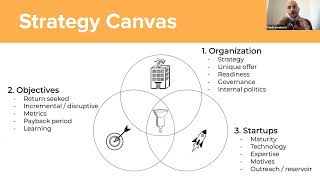
Paolo Lombardi & Adam Berk | How To Nail Your Startup Engagement Program 14 March, 2023
Brad Feld from Techstars answers the inevitable "funding" question from the audience.
Preview! Talking Startup Program Design w Bernhard from the World Food Programme Innovation Accel