Talking about talking to customers with Brant Cooper and Adam Berk
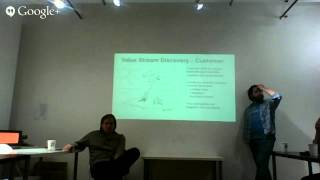
A live YouTube session (Adam Berk hosting; Brant Cooper speaker) about customer development and lean startup methods. Brant presents a seven-step value-stream funnel (Aware → Intrigued → Trusting → Convinced → Hopeful → Satisfied → Passion) and demonstrates using examples (YouTube, marketplaces, music app, beauty products, campus marketplace, food-delivery aggregator). The session emphasizes defining narrow customer segments (traits + behaviors), stating a clear utility promise and aspirational message, selecting measurable metrics per funnel stage, iterating via experiments (manual/concierge MVPs), and designing tactics to shorten the hopeful gap and drive satisfaction → passion.
Chapters
I think once you're good. The only thing was, that was the.
Only problem last time. Once I sign off. All right, I think we're live. I think that's all I have to do. I don't know if anyone's there yet. Have you ever done one of these.
Google hangouts, an on air, like, live broadcast thing? Not as I'm pretending, but I do a lean lunch once or twice a month, which is like, live interview with corporate innovators.
For the angle I might. Is this distracting if I put this.
In front of you.
First time?
Welcome, guys.
Come on in. We push people to get out of their comfort zone and do things that are unpolished. So it's an excuse to. I feel like I'm like the Truman show guy, right?
Like.
I don't see that sign here. Not nearly as crossing there.
Forget it. It's not. Doesn't matter.
Doing it anyway. Adam, it's for you, man.
Boom.
Follow that guy. We're actually putting this online, so if you guys. Here's the link that you can retweet if you feel like broadcasting this and sharing the value you guys are about to acquire with the people in your network.
I think we have, like, we might have, like, five or ten countries.
So it's.
It's kind of cool for me to see there's like, literally, like, 10 countries. If this works, there'll be like, 10 different countries on. On the call. So that's kind of cool.
That's awesome.
The other thing we might.
Well, let's do that.
And if the people back don't mind, let's bring it in like friends rather than just.
I'll do it.
One last call.
Oh, I think we have someone online.
First viewer.
Say hello.
The first viewer. I don't think I thought we could see them, but I think they can only see us.
How do you know someone's watching?
Up to 2.
Think we'll hit a million, probably. What? Tell Google Hangouts what the problem is, Jason.
All right.
Since we did tell this specific guy, we wait for him, and then as soon as he grabbed.
All right, Come on in. Have a seat.
All right.
Ready?
I think we are.
Thing says live. I think we're ready. Right. So how many people actually sign up for this? And how many people just, like, said, wow, that sounds cool. I'll come on in. Right. Mostly the ladder.
Serendipity.
Yeah. So people familiar with Lean startup? Very much so. Wow, that's pretty good. And are we all startup entrepreneurs here?
No.
What is everybody else?
Yes.
Yes. So Halfway, maybe some point. So these are my books, wrote the first book that actually talked about lean startup stuff. So if you want to get sort of a high level view of what is a lean startup, you can look at this skinny little blue book. Eric Reese came out with the lean startup in 2011. His is really the. If people are interested. But this is both from the lead entrepreneur as well as the lean brand. Basically it's a framework that I developed to try to help entrepreneurs think through the business model. So there's all sorts of tools out there. Lean canvas, business model, canvas maps, this maps, there are all sorts of these, canvas canvi that. It's a great way to document what you're thinking. But how do you actually get this shit out of your head? So what do we mean when we're talking about assumptions? So it stands like they're talking about like, oh, you got all these assumptions around your ideas, but what does it even mean? What are the assumptions that are inherent in whatever startup idea we're working on? Basically the idea is to separate out what's known versus what's unknown. And by known, I mean transactions that have happened in the marketplace. So if you can look at your competitor and they've done something that you're thinking about doing that is in the known bucket. But if there's no analogies or nothing has happened recently in the marketplace around what you're doing, it's unknown. And it really wasn't that long ago. Back when I was working in startups in the 90s and 2000s, you simply executed regardless of whether it was unknown or not. And really the idea then was that you could convince these rich people to give you millions of dollars to go develop an idea regardless of whether it had any merit or not. Those days were over. In order to make investment, in order to succeed, really, you have to prove your business model. You have to prove that you're de risking your business so investors will put into it. And even if you go the bootstrap route, the idea is how quickly can I figure out what's going to be viable in the marketplace before I run out of money versus taking sort of one shot. That's really the central premise around Lean Startup. And so I've developed these frameworks and there's other people that have frameworks and tools and all that stuff is great. But really if you sort of just digest in your heart of hearts that you're going to admit to what you don't truly know versus what you think you know and that you understand that the customer is really the source of the truth. And that doesn't mean that you just go ask your customers what they want and do what they say. That's not what I mean. But the fact that the customers are the ones that are going to sign up or pay means that that's where the truth is. And the third is, how can I use data to help me make decisions? It's not that data will make decisions for me, but data needs to help make a decision. So I don't know everything that I think I know. Customers are the source of the truth. Data is my friend. Okay? So from that, I developed this framework called the Value Stream discovery tool, which allows us to expose the assumptions or at least come up with the assumptions that define our business model. And so what I wanted to do, other than what some other people do, I want to look at a funnel from the customer's perspective. So automatically, what this requires is for you to get a little bit of empathy about your customers. What is the problem that they really have? What's a day in a life that.
You'Re going to affect with your products or services?
And so the seven steps in my model, all models are wrong. Some are useful. Hopefully this is useful. Some may have more steps, some have fewer steps. But generally, seven steps a customer goes through. From first becoming aware to become passionate. So first aware, they first hear you. Intrigued. This person is talking to me. I'm interested in what they're talking about. Trusting. Okay, Now I know they've got a product I'm interested in. Is this company somebody that I want to do business with? Convinced.
Okay.
Something has gotten me over the top. It's beyond the rational. It's not just saving me time or saving me money, but now they have actually taken the credit card out of my wallet. I've signed a purchase order. Something has got me convinced, hopeful. This is the period of time between once I've been convinced and the first time I try to receive the value that was promised to me. This is like this timing gap where somebody's going, did I make the right decision? Am I? Did I? I'm kind of nervous, right? You need to shrink that time as short as possible so people are achieving the value that you promise them as quickly as possible. Satisfied, you delivered the promise. It's not an aspirational promise. It's a utility promise. You promise, I will solve this problem with my product. Customers are only satisfied if you solve a problem. You can't over promise. You can't under promise because nobody cares if you over promise you never achieve it. You'll never get to the point of satisfaction. Passion is this crazy extra step that you must do to be a wildly successful company. You can actually get somewhat successful with satisfied, you can grow. Maybe it's a lifestyle business, you can get some money. Passion is what makes you a big company. Passion gets you to the point of, you know, acquisition or lots of money or whatever it is that drives you. And the reason is because passion makes people put new customers into the top of your marketing funnel over at Aware without you spending a dime on marketing. So marketing does not create buzz. Marketing amplifies the buzz that your product creates. And so you actually, you need to do a little bit of marketing in order to get tranches of users that you test some of the stuff against, but you're not ready to go big.
Are you saying that's the most valuable to identify the product and. Because that seems like it would be earlier on.
Right.
So this is the order that the customer interacts with your business. It's not the order of how you optimize your business. So, great question, and we'll get to that. But first, I kind of want people to understand the framework. So I got sort of a. Well, this is a big. Actually, this is a big wall poster that you use to document what's actually working or what you need to experiment on with each step. And so if you're a solo startup entrepreneur, you're probably focusing on just one of these. If you actually has a. You have a team, you're dividing and conquering. People could be working on different aspects of the value stream at the same time. So just wanted to show you that, but it's probably not relevant right here. So I wanted to go through an example to hopefully solidify some of these ideas. And So I chose YouTube. So when YouTube first started in 2005, people actually weren't doing a ton of video sharing on the Internet. And the first way that maybe they discovered YouTube was because they were googling cats and a cat video came up. And so the business activity that the YouTube guys did at very start was uploaded a ton of videos and then tagging those videos and making them optimized for search. So this would be a business activity. My hypothesis is that in order for my customers to become aware, I need to rank really high in SEO. That's one option. But to start off, we actually want to start with one option for my ideal customer for my market segment. What are they doing? Searching a lot on Google. Okay, I need to appear in their Search results, I can hypothesize what the user behavior will be if they achieve the state of awareness they're going to click on the video. Now I know what to measure. So your dashboard, when you're in this phase of the business is I'm measuring people that are clicking on videos from Google or Bing or whatever it is that you're tackling.
Right.
Second step. Intrigue. You intrigue is this utility promise that I mentioned that you're making. You're telling somebody, I am solving a problem with my product. Sometimes it's not really a problem. It can be described maybe as a passion. So in this case, the business activity is simply your messaging. Hey, you can upload and share videos, right? So I know that eventually what I'm going to have to build is the capability to upload and share videos, not all of the other features that I can build. But what is the two or three features that I must build in order to deliver on a promise I've made to my customer? Okay, so guess what? I know how to measure that now. I know how to measure whether people have reached the treatment state. Because my hypothesis is if they give a shit about the promise I've just made, they are now going to watch five videos a week. So some of this stuff takes time. The measurement over time is super important, though, because what you're trying to develop are people that come back. And so the classic vanity metric is simply how many people click on a video. Take that 100 and times it by 52, because you've been in business for a year and 100 people clicked on a video once per week for 52 weeks. Now you're like, oh, wow, check it out, I've got 520,000 or whatever. And it doesn't tell you that anybody's been engaged with your product. So it's a vanity metric. So what we're trying to do is we want to put a time on some of these metrics so that it indicates every person that comes in is engaged with my product or in this case, is intrigued by my product. Please stop me if I'm going too fast or if you have questions or challenges or whatever. The next step is trusting again. So how am I going to measure that people actually trust the company that's delivering this product? I'm not sure trusting is actually a big issue for YouTube, but for the sake of defining the stream, I wanted to include really could be, will I make my video public right? Who's actually coming? And visiting sites is it, you know, people that are looking for a date? Is it looking people looking for porn? Is it people that are trying to break into, you know, find out more about me to steal my identity? I'm not sure about this website. I don't know. So there's some safety aspect there that you as a business have to overcome. It could be testimonials, it could be that you're messaging people that they really need to make it public. And what YouTube did was showed a wide variety of different videos that other people are uploading and sharing. That makes you feel safe that this is a community that I can share my video with and nothing's going to go wrong. I can measure that. People have achieved that state because they've actually finished the upload and in order to share it, they have to now click on I want to create an account. Notice that they did put create an account first because that actually creates friction towards achieving the value that you're promising them. So it was actually kind of a clever little hack. So this text straight is convinced. So, you know the person sitting there going, okay, man, I just uploaded my video, I've created my account, and now I'm going to say, boom, here's like, I'm sharing it. I've now put myself out there. It seems so obvious now that really, it wasn't 10 years ago I uploaded this video. There's a big wild west of the Internet out there. Holy crap. I just put my. What is. What if my mom finds it? You know, it was kind of scary, but.
So.
Again, you come up with the specific behavior you expect to see to get people to move from convinced to the next step. So this comes to that hopeful state that I was talking about. You've got to get them beyond that fear of, oh, I gotta take it down. The person is just sitting there refreshing the page to see who's actually viewed the video, to see if anybody's rated it, to see if anybody's added a comment to it. So as a business, you're actually out there promoting that person's video in order to get the first views, the first thumbs up, the first shares, that makes this person believe that they've just achieved the promise, which is that they can upload and share videos without their personal life crumbling. So again, you're actually tracking in a cohort. So all these people that have signed up in this particular range, you're tracking how many times their video has been shared and also probably how many times that individual shares other people's video because it's part of a Community need them to act both ways. Satisfy basically is they got some of their feedback, they've got, they actually shared it, some of their friends watched it, they got a lot of lulz L U L Z. Now they're going to say, okay, a satisfy user is somebody that comes back once a week and love, uploads a new video and makes it public. So again, it's not that they have to come and do something once because in order for my company to succeed, I need my satisfied customer to come back again. So you have to find a metric that pertains to the activity, the interaction with specific functionality over some time period. And this is going to be what you decide is your satisfaction metric is going to be the biggest key to your startup potentially for the first three years of your existence. Plus, because it's hard, you're actually changing people's behavior to interact with your product on a regular basis. And so I can't stress how important it is that you just figure out what that metric is and that you're iterating on a product until you get that metric. And it's really important that you put a stake in the ground that says satisfied customers will upload a new video and share it once a week. Because if you measure against that, then it becomes an actual metric. Either the metric's wrong, they're actually sharing a video only once every two weeks. Okay, we need to improve that. But that's okay. We actually are getting the return visitors. So I'm buy that one out of two weeks is okay, or it's once and they never come back.
Okay.
That was either the wrong market segment, so it really wasn't people that are trying to share their cat videos or there's something wrong with the product. These people were using Internet Explorer and the video upload link broke or something. Right. But if you're not achieving the metric that you've put as the stake in the ground, there's action that you can take about it. If you don't take that step and people are like coming and you're looking at these web logs and all of these analytics and you're saying, oh, I'm getting 10,000 hits and I'm getting, you know, 400 uploads and I'm getting, you knowSight, 10 people seem to be coming back. It's all over the map. You don't know what is the, you don't know what is the indication that you're actually making progress. And so people talk about data all the time, but really it's not that you can do all data, it's that you define what the data is at each one of these steps that allows you to measure whether you're making progress. And the other thing that entrepreneurs do all the time is they think that more features and more eyeballs is actually what leads to success. And if you think about it in terms of engagement metric, you can see that that's wrong. If you're measuring that people's satisfaction is because they interact with these three or four features or however many features are required to achieve the value, then by adding more features to that waters down, it's like less clicks per those features that people are going to get. You're actually going away from what is that key metric. And if you have more eyeballs and and they're all doing something other than those three or four features, again you're going away from what you've defined as being engagement. So it's really hard for entrepreneurs to get their arms around it. But what you need to do is focus on a narrow market segment and prove that you can do this for one freaking person and then for five people and then for 10 and then for 100.
Right.
Entrepreneurs all the time. I ask them what is, what's the number one thing you need? I need a thousand customers. How many do you have? Zero. You don't need a thousand. You need one. You literally have to start with one. It's crazy. I work with huge corporations and it's the same problem. They've already got a million customers. I'm telling you that they've got to go do this innovation. They gotta find one customer that gives a shit. I'm like, I got a million. I find one that gives a shit about your new idea. 1. So then you get to this passion. What's crazy about passion is that it's often something other than the product. So yes, some people design user experience that is so mind blowing that people love the company, love the product. But more often than not, it's something other than the product. It could be content marketing, it could be selling, it could be customer service, it could be packaging. Right? So there's a company called Naga that disrupted the household cleaning industry by putting soap in great these amazing containers so that people wanted to put their soap on top of the sink instead of under the sink. Disrupted the market. Something other than soap. Right. Come on. HubSpot HubSpot Mason Content marketing platform Nobody ever is passionate about a content marketing platform. Right? Their content marketing themselves teaches small medium sized businesses how to be better entrepreneurs. If you're an entrepreneur and you read all their content and put into practice their content and you become a better business person and your company grows and you become a better partner or you become a better dad, you get to take your family on vacation. Those type of things that make you feel that you've had an impact on your life. You attribute part of that to this content marketing platform and that's why you're passionate about it. I was helping an entrepreneur up in Toronto building a music app on an iPad, and he tells me that this iPad is going to make it so your kids practice their music more. That's the promise. Utility promise. Right. There's nothing aspirational about that. Your kid will practice music more if you give them this iPad. My teenage daughter does singing lessons, guitar lessons, and I'm thinking, that's pretty cool. She never practices. I like that idea. I asked him, why are you doing it? Why are you building it? He's like, to save parents money, I spend money. How's that saving me money? Why are you doing it? Why are you passionate about building this product? It's like, I'm a musician. Yeah, that sounds interesting. So as a musician, why are you building that product? Because I want kids to love music.
Yeah. Ding, ding.
That's why I give my kid music lessons. I want them to love music. Right. So the utility, this is what my product will do. The aspiration is because I'm a musician and a startup founder, you, parent and me, we're going to go on this journey and we're going to hopefully get your kids to love music. Can't promise that, but that's the journey that we're going to go on. So that journey is this aspirational part where you have to add to your intrigued message. The promise and the aspiration. What is the impact that your startup is going to have on people's lives? And this is not different in the business world. If you're selling B2B, people are making decisions to buy your product on irrational emotion as much as on the return on investment that you're promising them.
Right.
You're going to make that purchaser a hero because they've saved the company a ton of money, or you've made the CEO look good, or you save the network from being hacked. There's all sorts of reasons why people inside businesses make decisions, and a lot of it has to do with the impact that it's going to have on their life inside that business. And so you really want to be able to combine the utility promise plus this aspiration. And that's what forms the cornerstone of your messaging. And in order to achieve satisfying passion, you have to be able to achieve those things. And the passion part is really, it's kind of not fair again, because part of it's out of your control, part of it is in the control of your customer. And if they never achieve that impact, they'll never have the passion. And that's why you see businesses working as hard as they can to try to achieve that aspirational partner. So in the YouTube, it's that this person, I'm going to measure how many times their video is shared with at least 10 friends. And hopefully that those friends that come also sign up and also upload and also share a video. And that's what's known as the viral vision. Yeah.
So going back to the slide, previous one. Yeah. So you know, initial startups, you have to focus on that user group and grow there. So in this mep, it looks like.
There are like two private users, the.
Ones that upload creators and the second viewers, like the passive ones. Which one do you think you should focus on first? Who was the initial user?
The people that were willing to upload videos. And I'll show you why in just a second. Why? I think that. Yeah, just curious. In your opinion, how would you measure passion? I would say I definitely see your point about how important that is. How do you measure passion for things that may not necessarily have some social aspect to it?
Right.
So if I'm not able to share something with friends. Yep, it's a great question. Yeah. So in the B2B world, we would look at that. Customers are willing to go on record with a press release or a testimonial or a case study. Because businesses typically don't do that. People use Net promoter score, which is. There's something there. Right. There's Sean Ellis must have score, there's you try to make an offline non social product have a social aspect to it. So you see these offline campaigns where they're trying to get people to take a photograph, selfies with them in the product and upload it for some sort of a social media campaign. So people are trying to use social media in a way even for offline products to indicate that people are passionate about it. So a lot of it is just creativity. But to me, that's a great use of social media. Instead of just the typical trying to get number of Facebook likes and all of these type of vanity metrics is how can you use it to measure passion?
Yep.
So.
April 28, 2005, what do you notice about this YouTube's opening? What do you notice about it?
Amazing design.
Great, great design, right? The colors are a little bit off on this projector, but look really hard. And tell me, did you know this about YouTube?
Huh?
She's got answers. It's a dating site. Upload your video. I am a male seeking everyone between 18 and 45. YouTube started off as a dating site with video. With video. So what goal was that?
What was your goal putting a video on?
Well, because you would choose who you like based upon a video instead of based upon. It's a pretty good idea.
I think.
It's like amazing. You can find us on the way back machine, which is a great way actually to learn about how companies evolve. And you can see all sorts of things about, like my last book, the Lean Brand. People always like to talk about how important the logo is. Go find one of your most favorite brands and go look at their first stab at a logo, like Facebook, even a great example, the Facebook, right? It was like, people don't spend your early money on logos. It doesn't matter. But anyway, what's amazing to me is how quickly they iterated trying to find the message that was going to work. And so every month they changed the message. And so I don't have actually the exact message here, but basically By May of 05, they had said.
You know.
Share your personal videos with our community. So it wasn't exactly dating, but it was also sort of this feeling that it was, you know, sort of this closed community. It's a safe place. You can do whatever you want with your videos and share it by June 2005. But this is the place. Like you're creating a bunch of videos with your 2005 flip phone. Pretty horrible videos, right? Need a place to store them. And so this is actually why I think they were concentrating on people that were creating videos. So they're really. Adopters are not people that were watching videos. They're really adopters of people that are creating videos and they're trying to find that right message for what are people going to do with the videos that they're taking with their footprints? I don't know this for a fact. This is speculation based on looking at the Wayback Machine. But so then by December 2005, to me, this is like, oh, you broadcast yourself. So this is the difference between the utility and the aspiration. Suddenly they're saying, oh, wait a second, you can become a star. You've got hidden talents and not only are you going to share it with your friends, you're actually going to share it with the whole fricking world. Right? And this is so their tagline, watch and share your videos worldwide. And I don't know, I got the name wrong when I was talking about this earlier today, but does anybody remember? You guys may be too young, but there was this guy that did the traveled all over the world and took funny videos of him dancing in all these different countries. Like where the hell was Matt? Or something like that.
Right.
Remember that?
So YouTube was right in this time frame was that was their inspiration for this. They actually had a video of the month contest. And the whole idea was to get more people to do stuff like Matt was doing. Become famous by doing something goofy or simply, you know, upload a cat video. It's one or the other. But so it's interesting to me they found it here. It's sort of this aspirational. It's both a utility, you can upload and share videos but it's also, you know what, you might be dumb things, they can't promise that but it lasted for five years. And what's interesting is that now they've dropped it because now it's really around. It's almost more like traditional media where they're trying to get traditional media companies to put their videos out there and they're almost turning people into consumers again instead of producers, which I think is kind of interesting. So in terms of the order that you're going to tackle this stuff in, start here. So you have to understand who your customer segment is, the promise that you're making, which I guess you could argue that you're starting here, but you have to understand what the promise is that you're making and then you're iterating on your product until you achieve the satisfaction, until you achieve the promise. So a minimum viable product is what's the minimum features I need to build to fulfill the promise I've made. After that maybe then you're working on the passionate stuff. How do I get people so in love with my brand? Right. So since it's not just the product, it could be all of these other aspects in your business model. How do I get them so in love with my whole brand that they're willing to share or pay high margins or show me off. I knew this whole other shtick about my American Express card. I'm passionate about my platinum American Express card. It showed off because you know, I have this self esteem problems after satisfied. Then you've Got. Okay. You need to optimize people converting and then you optimize what? The funnel is the path that these high value customers are going through to be convinced. And the very last minute you give a shit. Entrepreneurs think which they believe if they add more features and more eyeballs, they're going to solve their problem of lack of engagement. And it's really almost exactly the opposite of that. It's fewer focused features on the right eyeballs that are going to determine whether you find that product market.
So.
Want me to jump in?
Yes.
Speaking of going the wrong way, is there an image that sort of depicts that perfectly made by a monster or a robot or something?
Which image are you thinking of? Inverted.
Inverted funnel.
Yeah. You know, I've seen somebody come on your book. Yeah, it was in my book. The right. So that's the. That's the upside down funnel when you're like shoving them in because that's where they're passionate. Is that right?
Yeah. Which I think every entrepreneur makes that decision. So again, doing it the opposite way. So counterintuitive. But it's the exact thing that Sam and I were talking. I was waiting for the right time. Sam and I were talking before you started. Favorite nerdy startup image. Because it shows exactly, you know, myself included, what kind of extended. You wrong where I just wanted more eyeballs.
So if you want to do this on your own, the way I recommend it is you actually start with passion and work backwards. Because if you start with aware, there's a million ways to make a customer aware. What you want to do is imagine who is your most ideal customer and imagine that they're passionate. Well, how did they get there? What was the path that they took? And I actually have a mad lib. Does everybody know what a mad lib is? So I actually have an ad lib that helps you write a letter from your most passionate customer about why they're passionate and how they. This whole journey about how they first became aware all the way to becoming passionate. But I thought what we do today and actually do something that is almost workshoppy is how do you posit, how do you hypothesize who you think your most ideal customer is? And Adam has actually got some rules about that. He's got words that you're not allowed to use. And what I want you to do though, is describe who that customer is, give them three unique traits and three unique behaviors that are. Right, related, relevant to the market that you're in. Right. So I want it narrowly focused as possible and then I want you to tell me what is the promise that you're making to those people? And you should really be able to start say I, you know, Adam, I promised you that I'll come and deliver an amazing value stream discovery presentation. I say I probably can't promise amazing, but.
I'm already satisfied. I don't know how passionate yet I'm satisfied.
And so you want to help people too? Yeah. So we'll walk around and help people. And I don't actually have any papers.
So here's what I would do.
Yes.
This is the exercise.
Thank you.
I want everyone, including the people at home. I'll jump in front of the screen a second. I want you to. If you want to promote the brands involved, including the alley, you can tweet it out or if you don't really feel comfortable, just email it to yourself. This is not to fill our funnel. It's to stamp it as a moment in time. So when we go back and correct it, you can have some comparison about.
What you thought now.
And then in five minutes, we'll just sort of give you general feedback how the two look in comparison with one another. So I would take five minutes. Either email it yourself if you want to keep it private, or tweet it.
Out.
Mention Grant in the alley for hosting us and say, this is my, this is the customer. Maybe might be two tweets for the promise, but take five minutes or so, sort of like a little half time and then we'll. Then we'll do them out loud. We'll spend 20 minutes going around the room saying out loud, seeing if we can actually help you refine them and maybe set up either a customer development experimentally run or I think it might be interesting. It'll take more time, but I think we can get this guy through and maybe one or two other people. Maybe we'll go through the eight different metrics and if this were your customer, what the eight things they would be measuring in real time. I don't want to put you on the slide to think about it. We're not doing it for 20 people, but maybe for one or two. But for right now, the simple exercise. Email yourself the customer and the promise.
You'Re making or treatment. If you don't have one, tune your neighbor and see if you want to work on one together.
That.
Rain, you must say.
Saming pretty.
Pal.
Sam.
Here.
Sa.
One.
Yes, good question. I'm a big believer in, like the knowledge of the commons, so brother Ninja is getting the benefit of his brilliant answer. We'll segue back into what, what this custom segments were, what the trade's behaviors, what this should look like. He'll answer. Then you'll pitch what you think yours is, and then we'll go around the room from there. So kind of just do that.
So the question came up about when you're trying to figure out who your customer is, what's a market segment? And so, you know, classically, we define market segments around things like demographics, or if you're selling businesses that are firmographics or it's industry vertical or it's a product type. And so these are ways of classifying people, but it's not a way of actually segmenting who you should be going after with your product. And so I want you to think of a market segment as being people who share the same pain or passion and speak the same language. And by speak the same language, I mean they would actually refer to each other for products that address that pain of passion. And so the example that we use in quote, we've got the fake Grimlock, who's this dinosaur Persona that did all of our artwork, and he did this one where, okay, if you're manufacturing a square half, then you're trying to sell the blockheads, not people with circular heads, right? So it doesn't matter what the age or demographic it is. They have the same problem. And so the other thing that I mentioned is that Meetup is my little hack, meetup.com because people are already organizing themselves around things that they're passionate about or maybe problems that they're trying to solve. And it doesn't matter what their demographics are. What matters there is that they're all there trying to solve that problem or to address that pain. The other example is the apparel company out of San Francisco called Beta Brands. And so they make one of their own products is they make pants for people who bike to work. See, you fold up the cuffs and they're reflective. There's a little flag you can pull out of the back. It's reflective. So it's more safe to bike to work. Demographics are. It's for people who bike to work. So it's just an example of, you know, thinking about your market segment in those terms. Why would people come together around a pain or passion? And then you can think about when you're going after your aware. Right. You can use that to figure out where you're going to find them. Well, where do they congregate in mass? Right. Is there an online forum that they hang out? Do they go to these meetups. Do they go to the same trade show? Do they, are they influenced by the same bloggers or the same magazine writers? So you can go and influence them by reaching the blogger. So think about. That's the way speak about marketing.
All right, what time is it?
8:30.
I got some friendly faces in the room that can hold me accountable for timing. So it's 8:30 right now.
8:30 I'm dead.
All right, by 8:50 we'll be done. We will go around the room and do the basic exercise of telling us what who the customer is and the promise. You're needing to have gentle feedback. But I think there's enough cheerleaders out there and I think what we're saying, the customers are true.
It's the truth.
That is really valuable. So I think that's our job. So take that step. Resources. So we're not just be like yeah, that's awesome, you're awesome for being entrepreneurs. But sometimes you give some very honest feedback. That's how I reconcile those two things. So we'll spend 20 minutes doing that. As soon as I stop talking soon we can keep going. And then at the end we might try to go through the whole stream with one or two companies and actually find your actual metrics that you might based on your actual customer segment which I think could be, really could get out of hand and it could be a disaster. But it could, but it could be interesting.
We'll count that at 10 or 15.
Minutes too and we'll be out of here around 9 o'.
Clock.
That's the plan. These two, without further ado, who's your customer, who you're on a desert island with and what are you promising?
Okay, well just, I wasn't exactly sure what you were asking for, so I think this is not going to be good. But so this is the startup I'm working at. They already have customers. They make $15,000 a month in revenue. And so what they're doing is they're selling beauty products to women in Nigeria and Africa in general. And so because it's a very underserved market and so the way I look at it in terms of the unique traits, they're women who are into sharing or consuming and sharing social fashion on social media. They're English speaking and westernized and then.
But they're in Africa. Yes.
So they speak English and they're into, I mean they still follow like if Kim Kardashian wears something then they all.
Want to buy it.
No, that's an interesting, that's A great trade, Westernized I think speaks volumes. That's fine.
And then in terms of the three behaviors I have, consuming social media, sharing social media and then willing to order online because a lot of people aren't.
Willing to do that.
Okay, I think that's that one. What do you got to say? Shut up, I'm being film and it's women.
No, I, I think it's, I actually. Yeah, that's great.
I think willing to order online is looking into the future.
Okay.
You always want to focus on like actual behavioral things rather than aspirational because everybody has a like the future version.
That you have in your mind yourself.
Is not necessarily grounded in good evidence or like going back to truth based on investor.
But it's like from the customer development expert right there. When you're doing customer development, you're not trying to get users to predict what their behavior will be. Right. You are actually trying to run experiments where you can measure what their behavior is.
And here's why. Here's a very short rip on lean and pivoting. I'll get it all out in one vomit. Because the ideal solution might be a pop up shop in Africa, right? So if you're already wedged to the.
Fact that they have to buy it.
Online, that's the thing that you're going to be so focused on. There could be this huge demand and this huge potential passion. But if you're so convinced that it has to be like it's on our thing, you could be missing opportunities of the ideal solution. That's sort of why you bring them all the way back, really understand the customer, the problem, the problem.
And I would even argue that even if they, if you're confident that they will bottom online, there's still value to go doing the pop up because you end up learning all sorts of these other things that are obstacles to buying you never knew about because you've done the whole thing online to begin with.
Most people or everybody knows payment on delivery. So they get the goods, they see it and they okay, cash.
So what's the promise that you're making?
I didn't actually maybe just, you know, we'll provide you the thing that you want.
I get sick.
So that's an easy answer for me to push things.
I mean I think for these people, they're, they're, you know, consuming. They're consuming, you know, social media and just being in general and they see it's aspirational. They see these people in America and they say I want to look like this person Right.
So that's the aspirational part.
Yeah.
And then we're providing them what they want because in that area they're providing them.
The promise is really that I'm going to provide you. I mean is it quality? Are you providing the quality or not?
Well, it's quality because there's a problem with fake things.
Right.
We only sell real things.
Okay.
So we're providing you. So that's part of the problem. We're providing you real cosmetics and then I don't know how to phrase it, but your aspirational part is it's so that you can, you know, look beautiful from a western perspective or whatever it is that aspiration part. Yeah. And it's amazing. This is just a segue but my ex wife and her sister traveled to. This is back actually before we got married, back to. They were in Cambodia in the early 90s and there's this amazing photograph of them in a nightclub and Daniela and her sister are putting makeup on and in the, in the back reflected in the mirror is this Cambodian prostitute who is like watching everything that she's doing because she's going to emulate. Sorry, that. That is now it's live.
It's not. A lot more we can't take back. So normally we push you very hard and we all stand here very awkwardly until you said something because I have a self imposed 8:50 deadline. Yeah, we will pass on you if you think of something. Yeah, send it to us. We'll be happy to help.
So we actually team up together. We don't have a startup but we thought about maybe having a client in the desert island and what are the traits and behavior and what proposition will give them?
So.
One of the traits that we said would be great is to have somebody that's daring to try new things also. I mean that will be our ideal class term progressive. Looking for new things and looking for.
Crazy new ways to get off the island.
Maybe that's why you want the conservative.
Keeps trying to build a raft and we just got to have friendly so.
We can get along. We also said as behavior we want them to be brand ambassador. Like you know, the island or whatever our brand give us feedback. Like I think it's important to have customers that are willing to give us forthright and honest feedback. So if we're doing something wrong to kind of get that from them, directly.
From them versus seeing it on a.
Review or seeing that on site. And I remember what the third one was.
I don't know.
But our proposition for them will be to show them how to have fun in the island. If we can't get out any will have a great time here.
Okay, so I like that. I think that when it comes to the behaviors that we're looking for, we want it to be related to having fun on the island. And so your ideal customer is going to be somebody that is looking for fun.
Right.
So, yes, you would wish them to give feedback and all those type of things, but really they're going to get feedback if you deliver on this fun. And so some of the things you might look for in behavior is that they're, you know, they're actually off trying to have fun by themselves. They're on the other side of the island doing cartwheels or doing something crazy that indicates that, boy, they're really looking for some time. So that might be an example. You want it to be related to the product that you're actually trying to sell.
Yeah.
And I think the thing we did wrong is that we did the trades before doing the proposition.
The other thing is there's sort of no such thing as doing something wrong, because in the real world, what you would do is you write down those traits or write down those behaviors, and then you go out into the real world and you go and try to test them. And then you would go, oh, well, that doesn't make any sense. And then you change it and then you have it. Right. So even by simply writing it down and taking a stab at it, it's the right way to do it because you have to get out in the world and learn anyway. So the thing is, if you don't put something down, then when you go out in the world, you don't know whether you're finding the right thing or not. So by putting a stake in the ground, again, it's sort of that thing to measure against that allows you to. To know whether you're actually learning something valuable or not.
One last thing you said was like looking to get off the island. If anybody's ever looking for something, it's awesome validation that there's some sort of unmet need and a goal that they're.
Currently seeking to achieve.
So other than. Yeah, so if people are looking for something great time. It's like it's way better to have people that are currently looking for something than feel satisfied on it. So that's ethical.
Yeah, I was just throwing a lot, like the feedback part not to get into the faster horses debate, but it's going to come organically. You're not looking for people just to give you feedback. You want it to come organically even if they're disappointed. If they were aspirational and you kind of disappointed them. It's okay to be polarizing. There's like one better than better to have, you know, one. One definite and nine no's than 10 babies.
Right. So you want them to love you or hate.
It's okay to be polarizing. I'm not sure who gets credit for that.
Yeah, a lot of people say so.
Yeah.
You don't just want to look for like crowdsourcing. The solution is your job as the entrepreneur. People ask a lot how you balance this like formula, gluten, startup signs when.
They have a bunch of.
And that's. To me, the solution is your job. But there's something they still need to be looking for something like that. You're not just looking for people to give you feedback. You're looking to give them a reason.
To give you feedback.
And I love the fact.
All right, So the what is a.
Music teaching tool that's based on courses and modules. It's highly specialized, incorporates events and offline workshops, has a strong nod to culture. And the who is in this case.
It could be many.
Is creative music maker that loves production and technology.
Music. Say that again.
A creative music maker. So a producer or someone who makes.
Music that loves production and technology. So this is, you know, heavily specialized in technology.
They love the tools. They love the tools. They love the process.
Yes. Okay.
Okay.
So I'm doing the trades and the behaviors.
Yep. Okay.
So the trades are super passionate about music production and.
And performance.
Very knowledgeable about audio production and they're driven by creativity and play the behaviors. I just wanted to rewrote these. So they interact with cutting edge music education products. They DJ publicly and they contribute content around music production.
That's cool. I like the DJ part that actually went from that's a lot of people to. And I actually like that we want to go narrow. It doesn't mean that you won't go after the other market segments. The non PJs that are still fulfill some of those other characteristics. Like that's who. That's. You want to go that narrow in order to discover that value prop. So I really like that part of it.
We were thinking about the passionate artworks.
Right.
So here's where this exercise comes full circle. What promise are we making to that person who DJs? Yeah, you led with the product and that sort of.
Yeah, no, exactly. The thing is, if you can describe the product and not describe the promise you're like, you're out in the ether. You have to be able to describe the promise and then pare back all of those features that you have in mind in that product that you described to solve the one promise that you can describe. If you can't describe the promise, you're nowhere.
So imagine a landing page or one shot. What are you telling? You got the dj, you got the person, you have the. What was the first attempt?
Attention.
Aware.
You're aware now. You have 10 djs aware. You have a dj complex, live dj conference. There's everyone on the island. What's the promise?
Don't go.
Don't tell them about your product.
You can do this.
I promise you will get this.
What do they get?
So we're sorry, we're describing the promise, not the product for you, right?
Yes, but it's a promise. You're making them. I promise, dj.
I promise that you will learn cutting edge music production skills at McCordon Price.
No, it's all right. What do. You'll be awesome. Your fans will love you. Wait a second. That's the aspiration. So first I wanted the utility promise. You can't. Sorry, right. You can't promise that because. Because why? Somebody tell me why you can't promise that?
Like, they like to suck, right?
They can be a sucky DJ and still be satisfied with the product and they're going to be sitting around and going, nobody gets me.
So.
Right, so. So that was. That was.
We could maybe contain something like it's the most cutting edge or it's the newest.
It's worth.
It's about you.
Only if they just care so much about being versed, you know what I mean?
So I think that the aspirational part is important, but that's why that intrigue has those two components, the utility promise and then the aspiration. And the aspiration really is so you can become all that you can be. You can't really promise them that they'll achieve it, but what you can promise them is that we're going to teach you these cutting edge techniques so that you can actually take your creativity to the next level or whatever. But the promise has to be about them, not about you. Yeah, we also looked at the behaviors.
And sort of applied what would be more aspirational into that ideal target framework, because they are already there. Again, maybe that's not solving in terms of.
Yeah, no, I mean, I think that when you then get down into that value stream, the product has to be the minimum viable product is the minimum number of features in order to fulfill that promise. But then you also have to think about, well, what else do I have to do in order to get that aspiration? And in this example, it could be, for example, you know, content marketing or which could be videos. Is this how you actually get that sound that you're looking for? Or here's the business part of being a kick ass dj, right? Because I know you're an artist, but you actually have to think about the business side of it. So there's this whole content marketing strategy that you could come up with that is above and beyond the product itself that helps the DJ succeed. And that's when they're going to become passionate.
We're iterating a timeline.
My light bulbs are going off.
This is why we have Internet and email and Twitter timeline. We're going to keep it firm. We'll go till nine for the, for these and then if you want to stay after, then we'll go to the big exercise. And I don't want to get into how aspirational utility can test the value proposition and test true intent and which.
One we should use first.
But we'll get to that later.
That's my answer. No. All right.
Hi, I'm Nicole. I don't have a startup and I'm not part of one, but I attach myself to my neighbor and hey, startup.
So the name of my company is Plumber Fashion. We help aspiring fashion designers start their clothing line and grow their business. So we've been in operation for about one and a half years and me and Chloe came up with some of the unique traits of some of our customers.
Yes. So as far as what I've gathered from just talking to him, the ideal person is extremely creative, constantly designing, also really busy with everything else they're doing and actually designing. They're young, but not in essence, not necessarily in age, but young in their business, maybe probably most likely still very unsuccessful with getting their designs to a consumer. So, and behavior wise, I think three things we thought of are one, they're constantly designing and maybe even are a little bit unfocused with their designs and jumping from different ideas because they are so creative. They are taking risks and trying new things. And tied to that is the fact that they're trying to self promote and they have in the past sought out ways to self promote and promote their designs. And I think the promise is.
The.
Promise we are giving them is we will help you start your falling line.
And grow your business.
We will save your time, save you money and save Some sweat.
Okay, so what is your. So I think the customer description is awesome. I can actually picture the person. And it's a real person.
Right.
So when you're doing these type of segmentation, you actually want to be able to describe a real person. If you were a bigger company, you would name that person so that you could go and talk to the engineer and say, we are making this for Debbie, who's this designer.
Right.
I mean, you would actually name the person so that everybody's focused on what do I need to build to make Debbie success?
The.
Promise seems a little bit buzzwordy to me. So I actually still don't know what it is that you're going to do. So what is the specific thing that you're going to. So you said to help start. So are you. Are you filing their license to do business in New York?
No, we help them outsource their design designs for you services. Import can help them sell their products.
In marketing and E commerce. Right, so now you're getting specific. So that's good. So you say it again slowly, more slowly.
We help them. We produce their. We produce their stuff overseas. Import and help them sell their product through marketing.
So they're already selling overseas? They're just starting out?
No, no, we have manufacturers overseas. We have partnership or going. Yes, in essence, we have contractors over there. So we basically outsource it over there, sell their product.
Okay, so what do you mean by helping them sell their product?
We do marketing. We have photographers, videographers, bloggers.
We take care of them. Okay, so you're offering both marketing services and selling services. So what is it that they give you? They just give you the design and you do everything else.
They give the design and they do need to have the money. Yeah, that's a big component.
The design and the money.
Yes.
Yeah. Right. Okay.
They're buying something. Okay, so. Okay, that's cool. I get that. Pick one.
That would just be my standard responses. There are two different rounds.
Case.
Make sure they want. Make sure. Pick one and understand that that's the prompt.
Okay.
Right.
So.
So instead of, you know, sourcing the manufacturing, doing the marketing and the selling, is there a component that you can make them satisfy or faster without doing all three of those things, or do you have to go out of the gate supplying all three of those?
Yes, we will have to go out of the way and do all three of this because that is the business aspect of it. And the designers that we're working with, they're mostly creative and they have no clue how to outsource, how to do business like marketing. They just want to focus on one thing, which is design.
But you already do this now.
Yeah.
So you already have all three of.
These things set up.
Okay.
Because I was saying if you were just thinking, I have to do all these and I'm going to set this all up, I'd say don't do that.
Yeah.
The thing is that this is our competitive advantage and this sets us apart and it saves them a lot of. That's why I say time, money and hassle.
Right.
Designers love it.
Right.
Okay, cool.
I had that debate with my co founder for three years and I used to say all doing all three different things is the competitive advantage. It's usually not. Maybe in your case, it rarely is. I promise to sort of punch back a little bit and I would still focus on. I bet you one of those things is a bigger problem or you're better at it or you want to do it more. I still think they're two totally different value propositions.
You may be.
You know, Amazon is everything for everyone in drones and delivery of these silk books. I'm really good at it. That's probably my biggest lesson learned as actually being able to be much career. I literally had that debate in three years.
I honestly, I also think, you know, I saved you time, money, and what's the lesson you take. It's one of those things that you say really fast. It sounds great, but I don't think that that's how people make purchasing decisions. I mean, it's kind of what everybody claims. And so I think that there's. There's a more concrete utility in there that's actually going to get people interested and then satisfied. And you haven't even. Your next big thing is going to be passion.
And we were going to try not to go back just to the pure, nerdy, lean customer development aspect, even though that's what our aspirational promise was for the workshop. But in this game, I would go back. I would. I would challenge you to talk to 25 designers and do pure staff and understand their problems and pain. Points, honey.
I'm here in New York City working with. Yeah, it's all our email brand.
I kind of get his idea and I think that his club is more saying to them that they can just focus on creativity. That's the idea. Just look at. Just focus on your credit.
That's a stronger message. Just saying that. Focusing on saving time, money.
My esteemed colleague here has brought to my attention that it is now 8:57, which I can't believe how fast time is flying. But for no other reason than time, we're gonna. I love this conversation.
I can stay here all night.
So after nine, if you choose to stay here, I'll be here. But just to get everyone through.
It'S.
You guys in the back who can help me moderate this thing.
Mother. It's so intriguing. For the conversation, you make a game.
Time decision to inter iteration plan.
I added more. Added more. We'll save you for the end and then we'll see if that transitions into.
So all four of us working together.
Oh.
I always feel bad.
So okay, my. I haven't started anything yet, but it's an idea that I have. So for me, my customer, it's like the cosmetic customer company. So we will be selling like ra. African products for like, for people who are interested in doing policy kind of. I don't know. I'll tell you. Okay, so my customer are people who care about aesthetics, but they want to use organic products for that are not dangerous for this, for the skin. So my customer is like people man who's like has this holistic kind of point of view who's interested in doing things herself. So she will just go and create her own soap or body lotion. So we provide the product to create that. So my promise is that we will provide organic and refined products and teach you how to use it to attend your beauty objectives. So we'll share with you the African journey secrets.
Okay, so is it. Is it people that actually have a sensitivity or is it purely just out of sort of their philosophy, their aesthetics?
Yeah, I think it's kind of both. Some people are interested, you know, in doing stuff, but they don't know where to get the product.
Right.
So.
So you're giving them this turnkey solution for them to be able to know how to do it the themselves.
Yeah.
And they can also then trust you for delivering products so they don't have to worry about sourcing.
Exactly.
Okay, what is the. What's the aspirational element if you had to add that?
Oh, for me, it's just for them, for them it would be being able to be or feel beautiful or have a healthy skin without harming, you know, like have a beauty, beautiful skin without harming your skin with the chemicals.
Right.
Yeah.
But at the same time, being. Being green. Being like.
Yeah, green. Yeah.
Okay, cool. Writing aspiration might have to be around being like a maker.
Yes.
Because I think the other parts are more.
Would they want to share it with somebody else?
For example, we have this product that we have never. It's called. It's called. Actually they use it in so many cosmetic products. Let me just.
You know the bad counsel.
No, it's not.
She Butter. Thank you.
You.
Yeah, so she. You can do so many things like that.
You can use it like as a body lash.
You can put it on your bas.
Yeah.
Know we get it.
Actually we were thinking about something else. Are these people.
Right.
Because they want to make it.
Yeah.
Do they actually want to make it for other people as well or is.
It just for them?
Okay.
Yeah, just for you. Like you want to add it to your body lashes have your.
There's maybe a bigger opportunity though to do. If you actually find people that are that way that also want to. What makes them passionate. It's not simply that they're. They feel beautiful themselves but that they actually get to share what they've made with other people. It's almost like a foodie. A netsy for.
Yeah, it's like foodies. Right.
People who want to make food but they don't also invite their friends because. So that's sort of like this interesting thing that actually might be this aspirational part of it beyond. Beyond just how they feel about themselves.
Also just co opting the makers. Movement plus beauty.
Right.
I think that that's. Yeah, I think that's what he was getting at. I agree. Are we still gonna skip?
Yeah, we'll skip them and do them and then we'll come back to it or just redeem themselves. All right.
So we kind of ganged up over here. So they're getting all in one shot. We have a startup called Wonk Wall.
It started.
It's a buy and sell now.
Yeah, we're in development right now.
Very soon. Yeah, hopefully. Why are you.
Hell yeah.
It's a buying and selling app for college students.
I'm sorry, what? Cedar. Who wants to buy call ups? Oh, I do. That's the whole reason why I started this. Guys, guys.
So we were just talking to her as well as a person just sitting next to us and I wanted to make sure. Which part you wanted to talk? Yeah, whether you talk about the. Give them a name. Okay.
So.
So we'll start off with the unique traits. So our ideal customer would be. Look, I won't give a name. Would be a freshman and marketing major who is super busy with classes, is a hoarder. So loves to have stuff and doesn't have a car. Some of the behaviors would be to not pay attention in class and go on the iPhone, looking to buy stuff on Etsy or Amazon or whatever it is that they want and also walk around with a selfie stick.
And also.
Into clubs and all sorts of campus. And the promise we're making to them is to be able to find out what's being sold around you from your peers as well as sell your stuff on campus safely and easily. So let's certify it this way. I'm Irene. I just moved to New York for my master's in nyu. I have only two weeks to get my life in order. I need furniture for my home, I need a friend to share the rent and I need those books. But with the subsidized, I'm about to burnout and one of my other four comes to Massachusetts. Just go to the one pool and get your life in order.
Clearly you're a marketing major, So let's boil down that, let's boil down that promise a little bit. So the promise is that you've got both, you've got a two sided marketplace. So you've actually got a promise for both the buyer and the seller.
Correct.
Right. But you've narrowed it down to pretty much a college campus. And so your buyer is somebody who's perhaps new to town, who actually did their life in order. Right. So you're gonna give them access to pretty much hopefully inexpensive furniture, books and, Or hopefully wealthy friends. So the, the trick is I think just thinking ahead is that the seller is selling in June and the buyer is buying in September.
But.
I think the logistics side is for the, is for the startup to figure and to solve that problem almost internally. My issue is you told the customer for the seller and then the person was the buyer. And so I have like a whack, a mole slide where it's like you.
Can defend an argument for unique variables.
In business model but when you put them all together that's going to explode. And I guess that's really what you're saying. So they need to all go to get to the store and needs to.
Be appealing and the promise needs to be appealing to the seller and then.
A different story needs to be appealing to the buyer and then it's your job to make it work as a business.
The most important feature with, I think you forgot to add this, it's geolocated.
Nobody gives a shit really about that.
Is Joe, people that know what that means is care. I mean as a consumer, as a buyer or a seller, you don't care. These you're located, you care that you're Actually going to find buyers and sellers. So that's sort of a. That's a technical feature.
One other thing too, just other times, marketplaces, people think that simply by building a marketplace, they're solving a problem. But when customers go to a marketplace, they're going because they have a specific need in mind. And in order for a marketplace as.
A company to succeed, you need an.
Element of critical mass.
So in order to so slowly traverse your way towards that critical mass, you're better off focusing on a vertical at a time. So textbooks, okay. And then you can, I know, like, it's always valuable to like fake one side first. Oftentimes the less risky side, which is the. Not the people selling.
People always want to make money and.
Give it something you don't need, but the risky size that people will pay. So you can take literally take listings off Amazon, copy it there, set the price of what Amazon is, and then have people buy it through your site. And then when you start to foster a community based around a specific need, you know, they have people.
I mean, it sounds my answer for your point. It's focusing in on what's the. What's the biggest need, Especially based upon the point in time might even matter. What's the biggest need. The other thing is, what's beautiful about marketplaces is that the concierge and VP works perfectly. So you should actually be able to validate your business model without writing a line of code. And especially with something like Craigslist where people are posting their needs and their things to sell already. But you should be able to find, even just for this woman, you should be able to know exactly what textbooks that she needs. You should be able to go find them so she doesn't have to. And you go and find them and then you go, look, I got all the books that you need. And you do the transaction right there. And now you've proven, at least in one transaction that you can find a buyer and a seller. Marketplace does not create a market. Marketplace actually is serving a market that essentially already exist, but it's inefficient.
My final pun of the night. It's a textbook tack to do this. Like, I think the most underutilized thing in start, like, there's so many things.
That, like when one person says this.
Works, but it doesn't really work for the next person. This thing works over and over and over again. If you separate both sides and you get through this whole funnel independently, you cannot go. You might not have. It might lead you to. Might not definitely lead you to success. That is an absolute right strategy.
Or not only that, but it's like what I argue in my book the Lean Entrepreneur is that by doing it by hand several times you will learn so much else what you could put into your platform that you never would have thought of. And the moment you automate it first, you never learn those things. And so by actually doing things in person, and this includes marketing and selling, if you do that in person first, you've now figured out what part of that process that I just went through can I automate and that actually determines what you build rather than oh, this is the problem and I'm going to go build a solution for it.
All right, quickly tell us and then if anyone wants to stick around. Next shot.
So I'm working on a food startup platform to consolidate and aggregate different food delivery services with a theme of health consciousness. So while all of you meet Michelle. Michelle has three unique traits.
She's a very normal girl, but she's.
Very open minded, she's relatively health conscious and she strongly values her time. And this is reflected in her three behaviors of one. She generally has prior obligations that prevent them from taking hours out to cook a meal to be really healthy to fulfill her need to be healthy. These obligations should be like hanging out with friends, work, other things like that. They do have an effort to exercise at least semi regularly and I find semi regularly as twice a week going to the gym, golf or run, yoga, anything like that. And they do make enough money to afford conveniences in the sense that their finance situation is not dire enough that you know, if you're like poverty, you're having other press issues to worry about. Yeah, exactly.
You're going to be balanced.
And the promise I made is that I promise to optimize their time in life through a platform that recommends a healthy health conscious delivery meal regularly so they don't have to get paralyzed in decision making process. Since you know the space of food delivery is growing and it's getting saturated along the way to summon new players entering or what I do not comment is that the ME will be excellent since that is on the part of the providers which could be multitude of services. Since my platform is service agnostic.
What does service agnostic mean?
We don't cater to a specific service. Right. We just saying like we don't want you to think about which service you want to order from. We would say like here's a salmon salad, here's quinoa and chicken.
What do you want?
Don't think about the service so we don't really care which service we're promoting. We just care about providing our customer with an experience that's much simpler than going on seamless, looking for the right type of meal, or going to these new health conscious. Who starts.
Yeah, that last part actually kind of confused me. So what are you specifically recommending? Give me an example. Give me a use case.
User case. Okay.
This person you just described, Michelle.
Michelle's like relatively health conscious. Right. So every night we consolidate.
Not every night you need a use case. Yeah.
Okay. Get home from work. Okay. Tomorrow she gets an email in the afternoon about dinner. There's five options from a random assortment of different delivery services. Right. And she just chooses out of those spots. She doesn't need to go to a specific service. She's not going to go to one service, look what they have. Go to the next service, look what they have. She just looks at our newsletter that comes to you and she's like, I want this today. Let's say we offer her and we'll curate it to a form that it won't just be all salmon, salad or anything, it'll be like one salad, maybe one vegetarian dish, one vegan dish, and like one meat. And currently we're in the process of developing a machine learning algorithm based on what they cook each time to know what to not offer again. For example, she just never cooks a pork dish like while we offer to her down the road in the future.
See, what you're telling me though is that whoever delivers that food is not what you're providing.
No, we're not eating any delivery ourselves.
Yeah, it's interesting. The promise of not being like the last example, the promise of not being bored is different than the promise of I'm so overwhelmed by the 50 different, you know, delivery services that I need you to self navigate that for me. Those are incredibly different promises, which we.
Do, incredibly different products. Plus if the, if you're, if the, based upon this market segment, if the promises that you're giving her, recommendations for food, if you send her crappy food, someone can put that into the promise.
Which is essentially kind of what you.
Did, the way you laid it out there. But also, you know, the person only orders from you once if they get food that's actually not healthy or doesn't taste good. So I don't understand the part of your business model at all that doesn't curate the quality of the food that's showing up.
We do curate a quality food and then we choose which the five dishes to present to Michelle and I guess fundamentally what Ashton was saying of easier decision making process rather than anything else like fundamentally that is.
That's where you start. Control down.
But I mean the five type of dishes could be a pepperoni pizza and the quality of the pepperoni pizza is going to vary widely.
It would never be a pepperoni pizza because we wouldn't. That wouldn't be within one of the things we recommend.
But the pepperoni pizza might be healthier.
Than.
The salad that you've ordered from Joe Blow's salad house down the street. I mean that so that the thing is that to me that I don't think people that are health conscious make decisions on what they're going to eat based upon the name of the dish. They base it upon a bunch of different factors that go into the reputation and the quality of the food that's being delivered. And to me that was the part Even if I don't know, I'm trying to even separate it out. But I would absolutely never be a customer to that with. Do you have sort of a viable business in there but the moment you sort of tell people that you're not choosing who's delivering the dish.
No, he's choosing. He's not taking responsibility for it.
Yeah but that's actually the exact opposite of the trend of marketplace.
He knows where it's coming. He's not just standing there and say.
But it's the exact opposite. It's the exact opposite of the trend in the marketplace. The trend in the marketplace is, is that you're going to do whatever it takes to ensure. Whatever it takes to ensure that people trust. Trust you. And if you violate the trust then nobody's coming back. And so if you don't take responsibility for the quality of the food that comes in.
This is actually interesting. I dealt with this last night. Not the health part but seamless. Whatever the restaurant based up I believe seat is not the restaurant. Now I don't really have a choice. I'm sort of locked in which I wish you that in that scenario. But I'm getting if someone else popped up where they took responsibility every time I was in ordinary. The reason I'm not calling the restaurant I don't want to do it. You're in the marketplace. You're a charity. For me it's a little bit of signal like that. But yeah, I I want.
The classic Internet marketplace. 1.0 is legion. I want food and pair you up with somebody that brings you food. Internet Marketplace 1 didn't work. You could actually make some Money selling leads. So, oh, all the people that were searching for this type of food, I sell that lead. Hopefully you can close the Transaction. Internet Marketplace 2.0. I'm going to do whatever I can to protect the experience of the people that are buying the service. That means I'm curating the deliverer of the service. And the reason why the deliverer of the service wants to be on my platform is because I've got a captured list of people that trust me. And I'm going to do other things that you don't want to do. I'm going to market for you, I'm going to schedule delivery for you. I'm going to take payments for you. I'm going to do all these things that you think of as a complete drag when it comes to delivering food. I'm going to handle all that for you. So you want to be on my platform, but also I'm delivering you this highly passionate group of people that love what you're delivering. But the bottom line is my business does not exist if I do not protect the experience of the people that are buying the service. That's job number one. Restaurant fails in providing a good service, they're kicked out of the platform. On the user side, I've got. I want that list to get as big as possible. On the service side, it's a velvet road. The only way you get on my platform is by delivering quality service to my customers. I'm really super highly skeptical that you can actually build a marketplace that doesn't protect the end user experience. But I guess I can say that's my opinion. It's just an assumption, I think.
No, I think it's a good. Another good segue. All right, we're officially done.
You're watching.
We're unofficially done.
What does that even mean, you're unofficially done?
If you.
I think we.
Let's see if we can knock that in five minutes or less.
Yeah, I think we should do it. You want to start?
I'm actually start from aware. That's not one of things. And then they'll be able to see more clearly how to reverse it. But I think you have a classic. How are you. How are you going to make people aware?
Well, so what's the. What's the name of your Persona that you described?
Michelle, if you need to leave off. Thank you for coming.
32Nd grace period for people to not disrespectful.
I'm gonna go to bathroom.
All right.
So how does Michelle first find out about this service?
We've Been tweeting at different people online and just going to different events and just talking to people at health lunch place, like, two kitchen, stuff like that.
So it's sort of guerilla marketing.
Yeah, very, very. Like, on the ground.
So a thousand people get their landing page.
Right.
So what's the promise you're making to Michelle?
You have a hard time deciding what to eat tonight, but you want to be health conscious. Like, here's five options. You don't have to go through, like, 3,500.
Okay, so right up front, here are the five options you can choose from. What does she do that indicates that. Yep, she's interested.
She chooses one.
Okay, so she clicks on one of the options.
How many people? Let's. How many people? How many. How many people need to click on one option out of a thousand for you to be convinced to go to the next level?
How many people need to click.
What percentage of people that land on your website are clicking on one of the food options?
Start with 100. You got 100. Highly targeted, health conscious. You're dreaming. Desert eye on people. 100 of them, they're targeted. You know, you believe in this equality. You bought 100 rents from shady Media. How many of them get at least the first. The next step in the funnel?
Well, realistically, one order, like, three times a week.
We'll get it.
We'll get it. How many people click on the first order or the first?
How many out of those hundred? It doesn't matter.
I have no idea.
Like, but I want you to choose. Like, if you were gonna build this dashboard, you have to choose a number, and it doesn't matter if you're right or wrong.
One third.
Great. So 33. Okay. The reason why you have to choose is because then when you measure it and you don't get 33, you sit there and you think, why did I not get 33? If it was three, you would go, Something's wrong. If it was 77, you'd go, Holy crap, I'm onto something. If it was 33, you would go.
What if it's 25?
Yeah. So you would have to make that decision.
Yeah.
So, you guys, let's ask the question, though. If you had 100 people target people, and you got 25 people that click to the next step, would you think early on in your business that that was a good enough number?
Well, if we said the benchmark 33, I'd be like, okay, I felt sure. But I still don't know whether that's because I said the benchmark wrong or.
Because it could be because you said the benchmark.
Right.
So I wanted to know. This is like the art of being an entrepreneur. You're early on, you're not optimizing, you're going, oh, shit, I took this landing page up, I sent 100 people there, 25 clicked on one of those meals. What's your gut reaction?
We can move to the next step and see what happens.
Exactly right. I agree with you. I'd be going like, okay.
And the funny thing is, if you do that exercise, Boris, is my little numbers. 99% would recommend the same reasonable range and agree with you. And if you start, you start like eliminating outliers. And everyone in this room would say somewhere between 15 and, you know, yeah, it's about the right number. And it doesn't matter because it's either going to be zero or it's going to be. And in the middle, the chances of that happening are slim to begin with and the chances of you disagreeing with your gut are even less likely. So great, 33 people.
But three months from now, actually, when you've already figured out all this other kind of stuff, you're going to go back and that's your benchmark. And then you're going to go, you're going to run a test and you're going to get four and you're going, but I got 25 the first time, something's wrong. You're going to work until you get back out of 25. Or you're going to optimize it. You're going to go from 25 to 30. And because you've already figured all this stuff out, it's going to make you a lot more run.
Plus it's even more valuable because like you said, you'll find, oh, there was 25 friends of yours, or you got featured on some random Reddit food thing.
And then you can never duplicate it again.
And that's where your path as a customer thing comes up. It's incredibly important. Another one of my favorite, other than.
The two sided market stuff, that is incredible.
It's so difficult, almost nobody does it. And it's the easiest exercise in the world. Just fucking pick a number and you're just do it.
But the other thing that's important about it, entrepreneurs often don't think about it, is that you need to be instrumenting this stuff from the beginning because that's the only way you can measure. All right, so your person is intrigued. She's chosen one of the deals, she clicked on it, now she's getting to trust and she's all like going, okay, so this business is just giving me this idea. Kind of like the idea, but who is this company? Why should I trust that this is going to work for me? As a matter of fact, you just told me that you're not even going to vet the food. So I'm all like, we are vending the food.
It's a curation process.
Curation meaning what though we choose what they see?
Like we are choosing options that Michelle specifically sees.
No, but you're not. That's not curating. You're curating the type of meal but not the quality of the food that I'm getting.
But we're choosing.
Let's assume that he did.
I've already changed his visit upon.
I don't even know if we changed your. But I think we're close. Assuming that you are curating source, what's the next step? How many people? The 33, I'll give you. I'll maybe figure out the rest of them. But for this one, let's say they're.
They're purchasing at this point in trusting, actually, they probably have to. They probably have to create an account or at least they have to provide some information because they want their address.
This is delivery. All right, so they're at least entering their real address. Correct. Okay.
Postmark, post office, API, actually. Anyway. All right, so we won't belabor the point.
So how many people are entering their address? Once they are pretty comfortable that they're in the move where it looks good, looks healthy, they kind of leave you with the.
We'll figure out tomorrow out of the 33% half.
Okay, so 16%, 15 people. So 20 people are now just about to buy.
Right.
Enter their end. So what gets them over the top?
I think they're entering the address like they've seen the food. Right. They've seen the dish. And then they enter address they're going to buy. I would say that those 20 people will actually purchase like 100% out of, not out of the 20.
Do you have to tell them anything in addition, like free delivery or time or money back guarantee or.
All those are will be provided by the different delivery services themselves.
Do you show it to them?
Yes.
Right. So maybe it's. Maybe that's what gets them convinced is that the delivery, the restaurant itself or the company itself is now giving you this feeling of safety that if you buy, you're not going to get completely ripped off.
Yeah, that's all shown before they check out.
Of course, this is what we're trying to do is get them to check out. Right, Right. That's what convince is. They're buying. And what you're measuring probably here based upon this is that they actually push the buy button.
How many people buy out of the 100 that originally started?
Yep. Okay. Well, you've gone 33 got through. Intrigued. Half of 33 got through trusting. So you're down to about 15 out of those 116.
I don't want to really go out convinced. Could even be a free meal for the credit card download. Your real address, right?
No, it could be right. But convince in the end is purchased in this scenario. There's no doubt about it. Convince means purchase.
Cool.
And it's the money. Yes.
Yep.
Boom, boom.
So that's 15 people. Okay. So hopefully it is this period between.
When they just ordered enough food.
Food has worked for. I'm so glad I did this. Yeah.
Okay. So like, they're. They bought already. They're waiting for the food, and they're like, I hope it's good. And then I guess they get the food and then they have a meal and they're either satisfied or not, I think satisfied.
Wait a second.
Let's.
Let's stick with vocal first. So what are some. Some of the things that. That you think you might need to do as a business to get them through this horrible period of hopeful?
Well, it should be order confirmation, right? Like, oh, you just order or just.
We do this. Confirmation is good, right?
Like, we make sure so they know we receive orders and not waiting differently. And part of order confirmation will be eta.
Like, we're eta.
Great.
That's exactly what I was thinking. So that's awesome.
So they'll go arriving around 35 minutes. 45 minutes. And then they're. Okay, let's. 8 o' clock. Right now they're looking like, all right, you should be here around 8:45. So now they know how long they're waiting, which has. When we said better waiting experience. And they're like, okay, like, they're training for food and hopefully arrives at 8:45.
Right.
So that's how narrow.
But what we. The.
Would there be a different metric? Probably not. Right?
Well, it's one of those metrics that would be pretty hard to measure because you couldn't instrument it. I actually think that the real end of hopeful is when they take their first bite. Or it could be when they take the package off.
Well, you can measure, like, if you.
Get phone calls from, say, like, for. You can sort of Measure the anti of it. So sort of the hopeful.
You can run a takeaway test and see how many people call in. If you don't promise 30 minutes, you.
Can see how many people. You could do a social media campaign, though, where you said get $10 off or $5 off your next order. If the moment you take your first bite from your first order, you tweet.
Well, that would almost prove satisfaction.
So I don't think it is.
It would buy.
Cause he already knows what satisfaction is. He was about to say it.
What's satisfying, satisfied is they got the food, they make the meal, and they're like, I will. Like, they like it. They enjoy that experience. They're like, I didn't have to spend that much effort ordering and I got. I got a good satisfaction.
So how do they express. How do they express it?
They would go. They would go back order again.
Right. So they're ordering it actually two to.
Three times a week.
Two to three times a week. That's your measurement of satisfaction. Right. If you don't get that, then either.
The metrics wrong or there's something wrong with it. Right. And if you're already down to. So what's the number? So we start with 20. You're already down to.
It's out of 100, though.
It should be high.
Yeah, I'll say like 15. 75%.
Yeah, I agree. It should be that high.
Okay.
Because you don't want half the people to be satisfied.
Right?
Yeah. So.
Million dollar question.
Passionate. Passionate will be them sharing it. Like, they've recommending it. Them sharing it.
Right.
Like, I was introduced to them through services due to financial on Facebook.
How do you measure it? How do you get them to want to share it?
I agree.
That's how you measure it.
How do I get them want to share it? Yeah, if they had a great experience, if they had.
If you delivered a promise, you delivered the meal that you said that you would. They liked it. They liked it. Okay.
They're satisfied. They're satisfied, but they're not passionate yet. Because, like, they got what they got what they promised.
There's no.
There's no extra incentive. So maybe like, do you tweet out.
When you actually get the pizza that you ordered? I love the pizza that I ordered.
I keep it.
Sorry.
He was saying before, it's the holy grail start.
You can still be satisfied. You can make.
You can. Like, all right, I get it. And the problem with startups is that that's only like half or a quarter.
Of the way there that's the difference between a lifestyle business and a startup, right? So the pizzeria, you could be like, come on, you're not that passionate about. You're never passionate about Domino's, but you still order it. And so then it's like, all right, well, that's great, but I'm not going to tweet about that. I just ordered a Domino's pizza. What actually gets you passionate?
There's some sort of incentive between, like.
You know, that's how you want it to be organic. So think of like a method soap example or something. Just above and beyond just makes it so fucking awesome that they, like, that's how. And there's nothing wrong with making people satisfied. So don't be wrong. It's totally fine.
You actually don't necessarily have the answer now, so I understand that this is the tough thing. So how does Zappos do customer service?
Right?
And it's not just over the top customer service. They do things like randomly upgrade people to overnight shipping. You're a woman, you buy a pair of shoes, I gotta wait a whole week, and then, God, are they gonna fit? Are they gonna look good? Then they show up the next day, you're like, oh, my God, that's so freaking awesome.
Yeah, Free dessert if you're three times a week.
Free dessert.
Healthy dessert.
Saint D. What's that?
Singing telegram.
Singing telegram. No, there's actually some great examples of.
These stories about the people that grew your food. You know, like, shit like that. It could be, you know, people do.
Funny marketing on their packaging that makes people passionate. I mean, it's really crazy out of the box stuff. It's really. It's up to your creativity to sort of get people to this level. Big brands. Do I donate 10% of my products to a charity? Reducing your carbon footprint. I mean, think about all these different ways that people are trying to create loyalty out of commodities or the simplest.
Way, but the hardest as well.
Just be so good.
Yeah, this is the best experience. This is exactly what it was like. Satisfied with the homeless. Exactly what it was, nothing more. There was no gimmicky shit. A lot of us eating nice.
For every meal that you buy, I donate a meal to the homeless.
What about, like, positioning it against the competitor? So in this case, I'm thinking seamless, which has a lot of all this satisfaction stuff.
Seamless basically achieves 99% of the time.
And then the difference here is the health conscious.
Yeah, I guess I think that that is in the promise as opposed to the passion.
But Then to me, when I think, when I become passionate, I think like Uber for example.
Like I don't know when, but a.
Couple months ago I, you know, started using Uber all the time and I was so impressed with, you know, how easy it was and how it got me from point A to point B, which is the same thing that a cab can do, but it's so different and just done so perfectly well.
See, I'm going to argue that I'm trying to interrupt it. I'm going to argue that Uber is one of those companies that their experience is so over the top that it actually induces passion, but it's the experience of the product, of what happens. And so yes, maybe there's something here, but just because the product is self conscious, that's what got people intrigued from the beginning. So you're just fulfilling that promise. So to me it's gotta be something.
This might be the last thing I said, hold on, I can't do that promise. But like Uber, it's like you order a car and it shows up on time and everything it should be and you're satisfied. That doesn't necessarily mean you're 30, 50 billion dollar company. It's a time when you're in a Snowstorm and there's 500 people waiting behind you, or you're at a concert and you walk outside and there's two hour cab line and you press a button and someone's there in five seconds and it's the same person.
That's four or five times.
Potatoes.
Can I just mention one thing? I think the part about getting free.
Dessert, I think that's great.
But passion for me is really driven when the customer feels empowered. Right? So I mean, I think it could be potentially as simple as a random customer gets phone call or text from a real life person just asking about their experience and they feel empowered that they, they can tell you sometimes it's a combination of all of those things. It really depends on the business and it probably doesn't even stay static over time. It actually has to change.
How do you change with that? Your business grows, like if their passion changes, right? Like if your business goes from 1001000 to 100,000 users, does it mean what does a passion user change along with it?
It can, I mean there's no definitive rule. I mean, I don't know that Zappos really changed except that the thing is that you become, this is where brand starts coming into play because people are then sort of expecting, you know, sort of the reputation precedes the company. So people are even going into the relationship already feeling good about themselves and good about the brand. And so it kind of ends up being this different experience. But it's satisfaction. The crazy thing about. Yeah, well, the crazy thing about today's world is that you can kill passion in it in minutes. Right. You can say, well, you know, ugly people shouldn't wear my. Right. So it's. It does. I think it changes over time. But again, it depends on the product. It depends on the competitors.
Right.
So you've got a competitor that comes and copies everything that you do. And then. So what is it that you're going to do now that differentiates yourself?
Like the McDonald's commercial and Super Bowl? You order Big Mac and be satisfied. Who saw the.
Big Mac stuff?
No, we saw the big Mac, the McDonald's commercial.
We're folks on the left charge.
I love that.
So actually, people were paying with love, so they had to call up their mom and tell them that they loved them. And that's how they got a hamburger. Oh, yeah. Or they were doing a dance or they were doing something.
Yeah.
So it was really getting people out of their comfort zone.
So they do that as a life or just commercial.
No, they didn't really.
Yeah, but that's what I like, you know. Yes. It's getting on this sort of creative, fun conversation. But I think that's a really important point. It does change, and you do have to sort of stay fresh and you can have this as the satisfaction to have the passion.
Yeah.
You do need to read about 10, grow it.
You need to figure it out.
It's different.
Sometimes it's the same, for example, for this, but for this company, it's different. That's the hard part.
It's the.
That's the magic of startups. That's the magic of, like, entrepreneurship.
Well, thank you all for coming out.
I don't think.
More from Adam
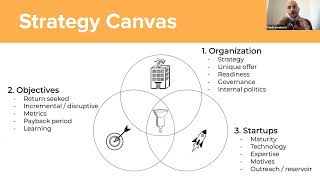
Paolo Lombardi & Adam Berk | How To Nail Your Startup Engagement Program 14 March, 2023

Brad Feld from Techstars answers the inevitable "funding" question from the audience.

Preview! Talking Startup Program Design w Bernhard from the World Food Programme Innovation Accel