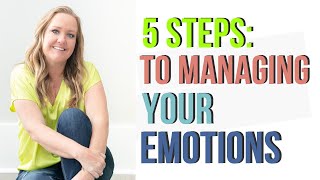
Danielle Jhiani, an anxiety and OCD recovery coach, walks through five concrete steps to manage emotions when anxiety and OCD flare up. The video gives you a framework you can actually use instead of fighting what you're feeling.
Chapters
Welcome back. My name is Danielle Thornton Gianni. I'm an anxiety and OCD recovery coach, helping people overcome anxiety and OCD just like I have, so you can have an amazing life and happy, healthy relationships. I want to talk today about emotions and how we better manage the emotions that we have when we are triggered. The first thing to remember here is understanding that emotions are not facts. In fact, when you are very emotional, you can pretty much guarantee that your inner self stuff is being triggered. There's probably some over emotion or overreaction there. Now if someone were passed away, if somebody broke up with us, of course there's nothing bad about your emotions. We don't want to judge them, we don't want to push them away. But we do want to recognize that when we're in an emotional state, we are being controlled somewhat by these emotions. But emotions are not facts. Emotions come and emotions go. They're triggered by past events, they're triggered by hormones, they're triggered by stress. There's many reasons why we have different emotions, but we can learn how to manage through our emotions so that they don't come on so strong, they don't overtake our behavior, and we can actually use them as a tool. In fact, whenever you're triggered by something, this is a sign that this is an area that you may need to work on and become healthier in. I want to give you five steps on how to better manage your emotions. The first one is to allow your emotions to be there and recognize them. Name them. I am feeling sad right now. I'm feeling anxious. You might also be feeling frustrated. You can feel a combination of emotions. Allow yourself to recognize and name them without judging them or feeling like you shouldn't have them. Number two, recognize the thoughts that are coming with those emotions. There are thoughts underneath that are creating that emotion. So maybe you're blaming somebody right now. Maybe you're blaming yourself. Maybe you're afraid that something is going to continue to happen or that you're going to make a mistake. There's a million different options here. But recognizing the thoughts underneath the emotions that are creating them is going to help you understand what your perspective is and where these emotions are coming from. Then I want you to recognize where the distorted thinking is in those thoughts. So if the thought is, I'm never going to get better, this is never going to change, or I'm always going to struggle with this thing, or things are never going to look the way that I want them to, recognize that black and white thinking. I want you to Recognize when you're telling the future, when you have no idea what the future really holds. Recognize when there's a lot of blame in your thinking process. When we can recognize the distorted thinking that we have, then we can recognize where our thoughts can be unhealthy and creating some of these emotions that we didn't realize it was creating in the first place. When we can see them more rationally or in a more balanced way, or recognizing where we're creating meaning where there doesn't need to be any meaning, then that can calm the emotion down around what's actually happening. Number four is to recognize your unhealthy patterns. Maybe you had an argument with somebody and your initial reaction is to blame. But knowing your patterns and understanding how you contribute to the problem can be really helpful to see that situation from a more balanced standpoint. Here's somebody who's really anxious and and you tend to allow that anxiety to cause you to behave in certain ways. Maybe you have OCD and your compulsive behaviors are affecting those relationships. Maybe you're more avoidant and you tend to shut down, which causes your partner to seek more certainty and reassurance from you, where if they had more security and communication from you, they wouldn't need to do that. We always want to understand our own patterns and how we contribute to the situation so that we can also see if there's something that we need to do that we can control to help with the situation versus always blaming somebody else. Number five, if you tend to under communicate or under share, I want you to communicate to this person what's going on for you, what you're feeling, what you're experiencing without blaming. You're coming from a standpoint of what's going on for you and what you're thinking. If you're someone who over communicates, you need to pull back and stop over sharing. Recognizing the changes that we need to make, the way that we can contribute to this relationship in a healthier way is really going to help. Some people don't communicate enough. Some people, especially with anxiety, we can over communicate. So it's finding a balance in a healthy place there. Knowing what our patterns are and what we can do to help contribute to a happy, healthy relationship, whether that's romantic, friendship or otherwise. And as you use these steps, your perception is going to shift. Your part in the relationship is going to become healthier, which may or may not help that other person be able to show up in a healthier way. We have to learn to manage our emotions, our emotions should never take over our behavior. If we're not able to manage the emotions and therefore manage our behavior, this is a problem. It is our responsibility to manage what's going on. It's not somebody else's responsibility to fix this for us. Other people in relationships can contribute in an unhealthy way and then it's our responsibility to communicate our needs and our boundaries in those situations. And if we're not over exaggerating things or have high expectations due to anxiety. Sometimes with anxiety we don't have enough expectations because we're afraid to speak up. We're afraid to ask for our needs to be met or to set boundaries because we don't want to rock the boat. So knowing where you fall on that spectrum in this individual situation is going to be key. Comment and tell me if this was helpful. Like subscribe, tell me. Tell me what you think so I know if this video is helping you. You can get better with all of these things. It takes knowledge and time and practice. We're here for you if you want help and we'll talk to you very soon.