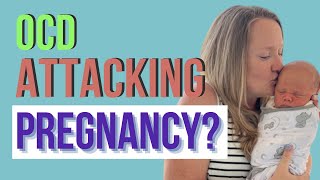
Danielle Jhiani, an anxiety coach seven and a half months pregnant via IVF, explains why pregnancy and parenthood trigger OCD and anxiety. She offers four tools: recognize anxious thoughts as normal, sit with them without judgment, don't feed them attention, and get professional help if needed. Managing your anxiety now reduces the risk of passing anxious habits to your kids.
Chapters
Welcome back. My name is Danielle Thornton Gianni. I'm an anxiety and OCD coach, helping people overcome anxiety and OCD from their lives for good, just like I have. So you can have an amazing life and happy health, healthy relationships. First, we're going to talk about how pregnancy and becoming a parent, whether you're a man or a woman, can affect anxiety and ocd. And then I'm going to give you four tips on how to keep anxiety and OCD from attaching to either pregnancy or becoming a parent. So OCD wants two things. You've probably heard me say this before. It wants certainty and perfection. And when I say perfection, I mean it wants things to look a certain way. So when life changes in some way, like getting pregnant, whether you got pregnant on purpose or not, there's a lot of change that comes with being pregnant and becoming a parent. And when change is present, there's uncertainty and there's imperfection. And the way that it might change life, it can be scary, it can be uncertain. I am currently seven and a half months pregnant, and I've wanted to be a mother my whole life. My husband and I did ivf, and getting pregnant was something that we both really, really wanted. But it still caused a little bit of uncertainty and anxiety in my life and maybe my husband a little bit, because things are about to change. I am in my 40s, and I have been able to do whatever I want whenever I want for a long time. So becoming a mother, that is all going to change. And while I'm super excited to be a mother, I'm a little nervous about those changes. That's okay. It's healthy, it's normal. Even if we want to become pregnant now, if you don't want to become pregnant, those anxieties might be even stronger. Thinking about the changes that's going to happen in your life, in your job, in your relationship, having a baby changes life completely. And so when change happens, it can cause our anxieties and our fear to come up to the surface, because there's a lot of uncertainty there now. OCD doesn't have to attach to things. I remember being worried about getting pregnant because I'd heard so many stories about OCD and anxiety getting bad when people got pregnant or became a mother. I was worried about that. It didn't happen for me. And I know the reason why it didn't happen for me is because I had the tools and I'd overcome my ocd. I knew what to do when I have a fear or a doubt or a worry so that OCD doesn't attach, so that my anxiety doesn't spiral with pregnancy. There's a lot of new responsibility, right? Everything that I do right now, being pregnant is not just affecting me, but it's affecting the baby. So there's responsibility while you're pregnant. And then, of course, the big responsibility comes when the baby comes. So there's often a lot of fears of, am I going to be a good mother? Am I going to be able to keep him alive? Am I going to be able to protect him like I need to? All the thoughts and fears that come with raising a child and the challenges that happen in life for all of us. Just as being human, a lot of people are afraid of the genetic factor, the fact that if the mother or father has anxiety or ocd, there's a chance that the child could develop OCD or anxiety. What I want you to know is when you have overcome this, the chances of that happening are a lot less. So the more you can overcome your anxiety and ocd, and I have programs for this, if you need them, then your baby is less likely to have that. There may be a genetic factor, but a lot of it is learned behavior. And it's about what kids learn to do, what they learn to be afraid of, and how they learn to respond mentally and physically. But even more so, it's about what they don't learn to do, the coping mechanisms that they don't learn from a parent who hasn't learned it yet. So what I want you to know, if this is a fear for you, going through one of our programs, you can overcome OCD and anxiety and the chances of your child developing that are drastically, drastically less. Our thoughts, our feelings affect our hormones. Our hormones affect our thoughts and feelings. Our stress, what we eat, all of it affects all of it. So when you have a good foundation, it's possible that that helps manage the hormones that are happening and fluctuating. Everything that you do mentally and physically affects your body as much as your body affects everything else.
When you have good habits mentally and physically, you're less likely to experience those highs and lows of the hormones. Now, if you are a father and you're about to have a baby but you're not actually pregnant, you're going to experience ups and downs, too. You're going to be experiencing the anxiety and the unknowns and the stress. So it isn't just the mother that experiences those things, but the father as well. And the solutions are the same. Learning how to manage those thoughts and those feelings and uncertainties that are coming with the future. So let's talk about four tips to managing anxiety and OCD if you're pregnant or becoming a parent. Number one is understanding that your anxieties are normal. Don't judge those feelings. They're very normal. Everybody has them. You may get more anxious thoughts if you tend to lean anxious or you have ocd, but that's okay. It's all about how you're reacting that will allow these thoughts to calm down and return to a more normal level. Number two is when you do start to feel anxious, allow it. Don't judge it. Let it be there. When you judge your feelings, you're just adding more shame on top of something that really doesn't need judgment. And then number three is to not give it some much attention so you can allow a thought and feeling to come, but then refocus your attention somewhere else. If something was actually happening to the baby, then that would be a reason to be anxious, right? That would be a reason to act on that anxiety. But that anxiety isn't really attached to anything real, meaning nothing really dangerous is happening. So fear isn't in line with the reality. So that's when we want to choose not to get these feelings attention. Go do something, anything. Focus your day on who you want to be and when you notice that feeling, just remind yourself you can be here. I'm anxious, but I'm going to go do this thing instead. And you'll find that those feelings fade and shift a lot quicker. And number four is getting help if you're unable to do this on your own. I myself tried to overcome so many things on my own. For a long time I struggled with finding the right help. But eventually, once I found the right help and support and tools, things changed. My life changed drastically. I was able to manage my thoughts, my anxieties, my ocd, and these things don't bother me anymore. If I do have an uncertainty in life, if I do have an anxious feeling, I'm able to shift out of it pretty quickly because I know how I used to respond. That made it worse. I learned how to respond to make it better. I hope this video was helpful for you. Please comment, like subscribe and congratulations to all of you who are either pregnant or becoming parents. It's going to be an amazing journey. It's going to have ups and it's going to have downs like everything else in life. But it's amazing time and we want to work through those anxieties and fears so that we can enjoy it as much as possible. We'll talk to you very soon.