Tiffany's Recovery Story
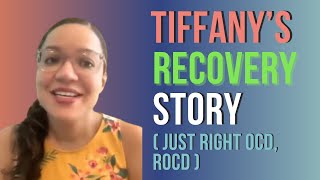
Tiffany struggled with rumination and relationship anxiety after a breakup, then discovered she had OCD. She switched from CBT to ERP (exposure and response prevention) through Danielle Jhiani's group and a coach, which helped her accept intrusive thoughts instead of fighting them. Within months, her anxiety dropped and compulsions faded.
Chapters
Foreign.
Thank you for joining me and sharing your story. Why don't you tell people a little bit about your journey, where you were before we started working together with your ocd.
Sure. So I.
Last year ended a relationship and I was in a really low place because it was the first time where I realized for sure that there were many recurring themes in my relationships in the way I handle my thoughts. And I.
I was spending all my time ruminating, but I didn't know what ruminating was. I just.
Felt like I was always in my head and I felt constant pressure that was really self inflicted. But.
I kept thinking and analyzing my life. I kept analyzing the breakup, I kept analyzing my life choices, I kept analyzing my decisions. I couldn't make decisions. And I was having a really hard time just staying present in the moment. And so I went to Facebook groups because obviously the world was shut down because of COVID And I searched for anxiety forums because I have a history of anxiety. And I thought I just needed help with anxiety because my anxiety was at 100%. And I found your group and I joined your Facebook group. And I was really intrigued by people who were sharing their experiences and feelings that I had. And I was so desperate to get out of my mind that I scheduled a consultation with you. And that was the first time where I realized and was educated on OCD and started to learn that.
You know, whether whatever terms you use for anything. I think in mental health.
Spending so much time in your head can be ocd and not a lot of people know about ocd. And just using.
What I learned from you in OCD and in ERP and using all of that, I found really helpful for my anxiety. I found your group, I set up a consultation with you, and I think I joined your class. That was the first thing I did. I joined her class and I was like, oh, this is like super interesting. And I was really desperate to try something new because I'd been in therapy for a really long time for like 12 years. And.
Actually during COVID.
I met two new virtual therapists. And this is when I think I knew I needed to try something new. Both therapists kept telling me the same thing that I heard over and over again, which was, you just have to get out your head. You just have to stop thinking. You just have to like reframe your thoughts. That's this.
That's this one of the CB techniques that most CBT specialists will have you do. It's reframe the thoughts.
Right?
But that's where CBT is. Makes OCD worse a lot of times. Is that what happened with you?
Yeah. I think that CBT was helpful for, like, understanding self esteem and understanding the theory of things, but, like, day in and day out, like, living life.
I don't think CBT gives you, like, the tools, especially if you have ocd, to really, like, manage and.
Accept. I feel like CBT is a lot of, like, work. Like, you have to think about things differently, and you have to kind of, like, constantly F things, and.
You know, you're doing just that. You're fixing things forever, and then it becomes compulsive.
When you have ocd, a lot of.
Times, learn about ERP and that. Like, I think it was the first time where I was like, oh, okay, I just have to, like, accept this. And I just had never heard of that before. Like, I always felt like I was broken or, like, I can't think right or I can't get life right. And ERP was all about all these things. Just accept them and stop fighting it and stop. And that was kind of like, you know, the beginning of that journey, which was really different and cool.
Yeah. So what would you say to someone who's trying to work on accepting their thoughts or their fears without getting that extra guidance? What would you say to them?
Yeah, I would say you really. I would say, honestly, you really need a coach. You need. You need to have a mentor. Because it really feels like. I don't mean to be dramatic, but it kind of feels like you're in a boxing ring sometimes. Like, you have these thoughts and you want to fight them, and they're there and they're scary. And.
I was really scared to start ERP I didn't think I could do it. I felt like if I had thoughts, they were real, and I didn't want to accept things. I was really, really scared to stop my compulsions. I'll be honest, all of my compulsions, compulsions in general, they give you relief, and they make you feel okay, and they get you through the day, and then you kind of are living the same, you know, misery the next day. And so I just was really scared of letting go of things that helped me get through the day. And so I think it was really helpful to have you. Danielle, just kind of.
I think I even told you I was scared one of my first sessions. And you just. You have to do it. You have to get out the cycle. And it felt like you were, you know, like, my coach in the ring. Just, like, I have to do the work, of course, but, like, I Needed you there. I don't think I could have done it. Also, I didn't even know what the heck I was doing, to be honest. Like, I think it took me a while to figure out, understand erp, Understand my mind, understand the process.
Questions come up, right? Like, you don't really know all your compulsions. You don't understand the cycle.
Yeah, exactly. And people think, okay, I just need to accept these thoughts, or, I just need to stop the compulsions that I'm aware of. The problem being is there's compulsions people aren't aware of. Right.
And then.
It'S. It's hard without someone helping you through the process. So, yeah, I'm glad that you pointed that out because that's so true.
And I think it's good to also have somebody who's not you because, like, you have your own biases and you have your own. You need to be accountable because if not, you'll, like, slip into your habits. It's like, you know, starting to work out. I don't like to work out. So I'm just going to say it's like, starting to work out. Especially if you don't like to work out, because it's like you need somebody to kind of like, okay, this is how you make it work for you, and this is how you fit this into your life and how you challenge yourself. And your journey is different from somebody else's journey. And it's so easy to compare. Even in these forums. Sometimes it's like, am I really like, this person? And it's like, don't ask that question because you're not. So you need to have your own personal kind of journey set up for you.
Yeah. And where would you say you're at now compared to where you were?
I am in a really great place.
I. Last December was when I started. I was really. I felt really alone and defeated, and I felt like there was no hope.
I felt like I was going to be single forever. But also I had anxiety that was, like, really intense. Like, my heart was always, like, pounding.
And then now I feel a lot more confident.
I feel like the beginning of ERP was really difficult. And I think I even emailed you once, and I was like, this is really hard. Am I supposed to feel like this? And then you kind of go through it and you're like, you know, I'm pretty, like, awesome for having, like, pushed myself. So my anxiety has gone down significantly. My compulsions have gone down significantly. I have a better relationship with my boss. That was the first thing that I saw because I wasn't ruminating all day. So I had more time to be awesome at work. And I truly feel like the last two months I've been really awesome at work. And before that I was like, I don't know, I might lose this job. I don't know. But it's really freed up.
My mind to focus on things that truly bring me joy.
Yeah. And I know that hopefully you're okay with me sharing this, and if not, I will cut it out. But I know that you struggle with different forms of ocd. Right. So the relationship OCD and like the general just Right. And kind of symmetry type themes and, you know, real perfectionism. So how was it with working with all of the different themes with me and tackling all of those at the same time?
Yeah, I think it was really helpful to understand my different themes from the beginning because there was a lot of crossover.
And it's important to understand that OCD has many different forms. And even if you're working on one form, it's like this big bully that will come back from another door that you just weren't looking at. And I think for me, it was really helpful to kind of see, okay, I have relationship ocd, but this particular scenario trigger is very perfectionism. I'm expecting my partner to be perfect for an example.
Or, you know, even at work. I need to be perfect at work, and then therefore, I'm worthy of a relationship or things like that. There was a lot of, like, back and forth, and I think working on all of those exposures together.
Kind of helped me, like, slay, slay it, you know, take down the monster, you know, a bunch of different kind of slashes at a time, if you will.
Yeah, yeah. Because if we weren't working on the counting and the lists and the just right type things, and it just would have trickled over that way and compulsions would have still been happening. And so. Yeah. Well, what would you tell people who are thinking about reaching out to get help, who aren't sure, who may not be sure if they want to invest in it? What would you say to them?
Scheduling a consultation with you, with anyone. Right. Is not a commitment. Right. You need to have information. You need to get the right information so you can make the. Make the best decision for yourself. But it's like that phrase, like, if you keep doing what you've always done, you're always going to get what you've always gotten. And I think.
I guess my suggestion would be to try something new, to try a new course. Maybe you don't think you have ocd? Do you really know? Who knows? You kind of have to kind of make that step to make a journey to find clarification for what's right for you. I also think it's important for people to not be afraid to try something new. And actually, I would also like to add it's really hard to find an OCD coach. And I think the fact that you provide a lot of options where there's a course and there's coaching and, you know, when you find someone like you or like anyone that has a lot of different options, it's really easier to, like, customize the journey for you.
I don't know. I just feel like life is short, too. Like, why be so miserable when there are resources to help you? You know, this is like 2021. We have the Internet. We have, you know, a community of people, and we're all doing this together. And there's, you know, really no need to be afraid or not make that jump anymore.
Yeah, absolutely. Well, thank you so much for sharing your story. I know that it will help so many people.
Just understand what the process is like, know that they can't get that they can get better. It will give them a lot of hope. So thank you for sharing.
Of course. Thank you. Danielle.
Sam.










