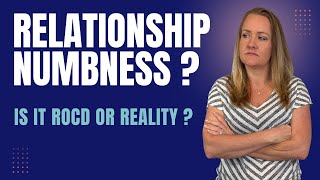
Danielle Jhiani explains why relationship OCD causes emotional numbness: rumination and mental fatigue make you misread neutral moments as failure. Three steps help: acknowledge the numbness, accept the discomfort, and refocus on life by engaging your senses.
Questions this video answers
Danielle Jhiani (My OCD Coach).
Path to Love.
Chapters
Hey, everyone. Danielle here from my OCD coach. Today we're tackling a really common experience for so many of you struggling with rocd. And that's the distress that comes from feeling numb or a lack of feelings in your relationship. And make sure you're subscribed to this channel for more free recovery advice. You know that feeling, right? You're with your partner, maybe you're doing something you used to enjoy together, or you're sitting there and nothing. You feel flat, empty, like the emotions just aren't there. And then almost immediately, your brain, that sneaky little thing, jumps in with, oh my gosh, this means there's something wrong, that I don't love them. This means it's over. It means I'm broken. And that thought, that numbness, it sends you spiraling, doesn't it? It creates this intense distress, this panic, because you're terrified. It's a sign that your relationship is fundamentally wrong or that you're fundamentally broken. You're tired of missing out while everybody else seems to be living freely and feeling all the feels. Listen, I get it. In my own journey with ocd, there were times I felt so detached that I generally questioned everything. I hyper focused on my feelings a lot. It's easy to misinterpret those feelings as meaningful, as undeniable proof that something is wrong. But I need you to know, as someone who's been in the recovery stage for years, it's not. And letting your feelings be your guide to reality is making things worse. So why does this numbness happen? Well, when you're constantly ruminating about, worst case scenario, how could you possibly feel good? And when you're analyzing and constantly seeking certainty about your feelings, your brain gets exhausted. Think of it like this. Your brain is like a muscle. And when you've been overworking it with all of that obsessive thinking, when a muscle gets overworked, it fatigues, right? Sometimes your emotional system just goes, you know what? I'm out. I'm too tired to feel anything right now. It's not a sign of a lack of love. It's a sign of an overtaxed system. Additionally, it's not normal to feel in love or have positive feelings in your relationship all the time. Most of life and relationships is quite neutral, with highs and lows sprinkled in from time to time. So what do you do when you feel this numbness and the distress that comes with it? The key here is to respond to the distress, not the numbness itself, because the numbness is often a symptom or a very normal thing. It's not the core problem. Here's what you can do in these moments while you're learning recovery tools. Number one Acknowledge the numbness. Don't analyze it. When that numb feeling pops up, simply notice it. Okay, I'm feeling numb. That's okay. Don't immediately jump to what does this mean? Is this a sign? Just observe it and let it go. Number two Accept the discomfort. The distress comes from your resistance to the numbness and the meaning your brain attaches to it. Instead of fighting discomfort, allow it to be there. Expose yourself to it. Number three Refocus on your life. This is one of the most critical parts. Instead of engaging with the thoughts or feelings, gently redirect your attention back to what you were doing. Engage your senses. Be present. This is how you stop feeding ocd exactly what it wants, your attention and energy. The more you do this, the less your brain is going to give you intrusive thoughts and needs certainty about all kinds of topics because you're training it not to engage. You are not broken. Your relationship is not doomed because you feel numb. Sometimes this is common and it's only distressing because you're choosing to give it meaning. A symptom of rocd. You can learn to change with awareness and practice. Handle fear, doubt, discomfort and guilt without spiraling. Then you stop sabotaging your relationships with perfection or testing them for reassurance. That's when joy becomes accessible again. That's when love creeps back in and it feels safer, more secure, and more fulfilling. This is the path to the recovery stage. If this video resonated with you, if you've experienced this distressing numbness, comment below. Let me know your thoughts, your experiences. You're not alone in this. And if you're ready to dive deeper to truly master your relationship OCD and learn to love without fear, then check out my program the Path to Love. You can find the link in the description below.