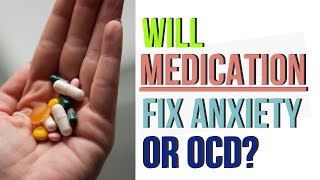
Danielle Jhiani explains that medication alone won't fix anxiety or OCD. It can reduce symptoms, but lasting recovery requires changing how you respond to fear-based thoughts: facing discomfort, reducing avoidance, and practicing new responses like breathing and approaching feared situations.
Chapters
Foreign.
Welcome back. My name is Danielle Thornton Gianni. I am an anxiety and OCD recovery coach, helping people fully recover from anxiety avoidance and OCD for life so you can have happy relationships, a great life. Today I want to talk about medication and anxiety and ocd. A lot of people ask me if medication will help get rid of anxiety or OCD permanently and the answer is typically no. Medication alone isn't going to get rid of it. Now, medication can be very helpful for a lot of people. Everybody's different in how well and which one works, so talk to your doctor about that. But typically medication isn't going to be the thing that fixes this for you. What is going to help is learning to respond to these thoughts and feelings that you're having that is causing either the discomfort, the anxiety or the compulsions. The reason being is that your brain is in a fear response and if you have anxiety, your brain is an anxiety response. If you have ocd, it's a much more heightened anxiety response and the compulsions that you're doing is making it worse. You can retrain your brain out of this. You can learn to calm your nervous system down, and for some people, things like deep breathing and relaxation can be very helpful. But once you get to a certain point of anxiety or even ocd, that isn't going to be enough. You need to learn what to do and how to respond to these fear based thoughts and situations. Because what you're typically doing is avoiding and running away, which is actually making it worse. Think about it this way. When your brain gives you a message that something is wrong or something is scary, when you respond to that message with yep, it is, I'm going to avoid, or you respond with a lot of worry and rumination and trying to get out of that situation, you're actually teaching your brain that, yep, that thing is scary and I can't handle it. And your brain's anxiety response is reinforced and it gets worse when you get the same thought, feeling or real life situation and you respond differently. When you respond with thank you for that thought, but I'm not going to let this scare me. I'm going to do it anyway. I'm going to move towards it and build comfort. These different types of responses are actually going to tell your brain that this is okay, I can handle this. You may not feel like you can right away, but you actually can. And over time, when you respond differently, you're telling your brain that this isn't something that it needs to continue to warn you about. And what happens is the more you do this, the less your brain brings up that topic, the calmer your anxiety response is and whether you're dealing with anxiety or ocd, eventually this goes away. Now if you're dealing with a lot of avoidance, that's one of the worst things that you can do with something uncomfortable. It just reinforces the discomfort. The more you start facing that thing that's causing discomfort, whether that discomfort feels like anxiety or it just feels like a general discomfort that your brain gives you an excuse to run away from, you have to start responding differently. Again, medication can help with some of these negative thoughts and feelings, but it isn't going to be the solution. The combination of them both can be really helpful, but what's most important is learning to respond differently. I hope this was helpful. Please comment below if this made sense to you. Like subscribe for more videos like this and we will talk to you very soon.