Why Nobody Hires Junior Designers Anymore (It’s Not AI)
Dan Mall says juniors get hired through the "side door": proving reliability on unglamorous tasks like email or operations before touching design work. He rounded business-card corners at his first job to earn trust. Founders should hire juniors to handle draining work immediately, not wait for the perfect moment.
Chapters
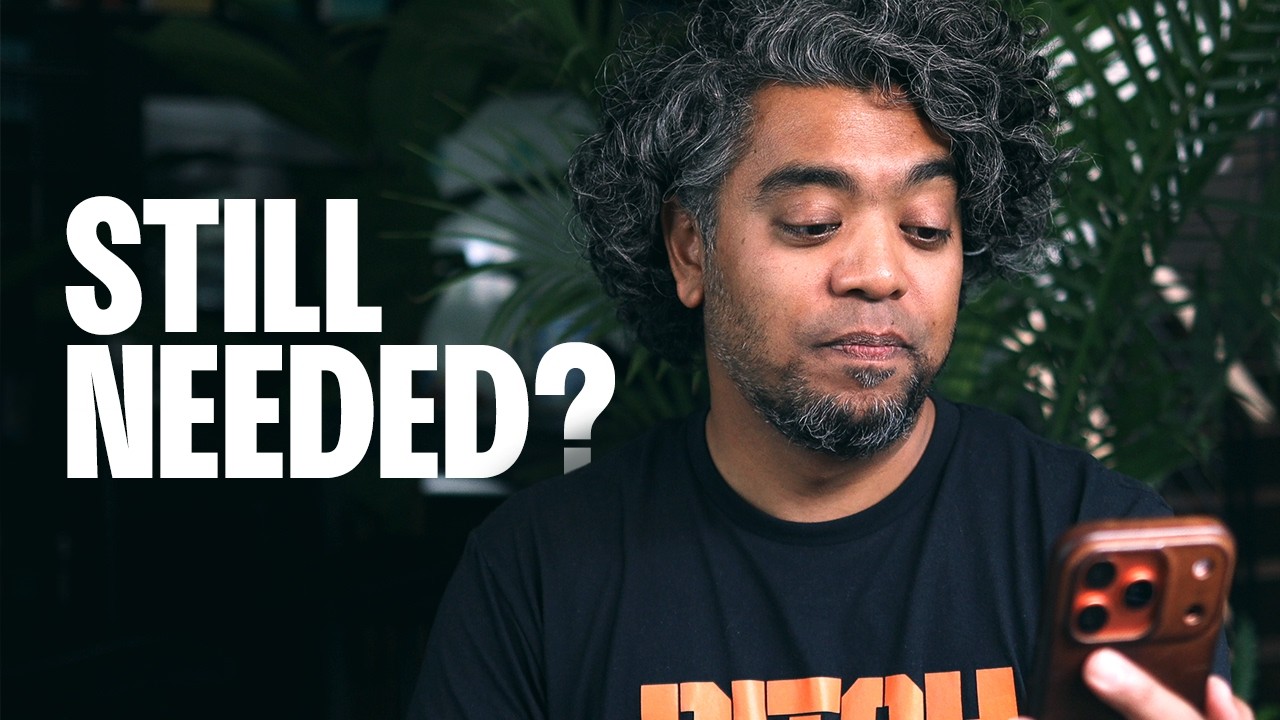
A junior designer just DM'd me and asked if people like them are still needed in this industry. That's something that only you or I as agency owners and design founders can answer. And the honest answer that we keep giving them is that they're not needed because we're not hiring them. But we're missing a massive opportunity. Here's a DM from a designer trying to break in. They think the door is closed. I ran a design agency for 10 years, and at our peak, we had 700 contractors and freelancers in our network. Over the next couple of minutes, I'm going to answer this person honestly, and then I'm going to tell you why the first person that you and I should hire should be doing the work that you hate the most. Here's what they sent. I love the creative aspect that comes with designing a digital experience. I know it goes beyond the design and development, and I love when we can make things fun, useful, and memorable. Right now, from my POV, and I am still an outsider, the future looks so bleak. Unachievable. I know I'm not the first nor the last person to be scared and demotivated, but I guess I wanted to ask a professional. Are new people breaking in simply not needed anymore? Is there something AI won't be able to automate? Can I even climb that wall from where I am? If you could spare some minutes, I'd really love to know how to hold on and what to hold on to, how to excel in my crazy, and how to reach people that need me. Many, many thanks for your time. I hate that people have to send messages like this. We live in arguably one of the most prosperous times ever in history, and people are still feeling bleak and miserable and don't know if they have a future in the things that they're trying to have a future in. If you're the person that's feeling bleak and like there's no hope, let me be the first to tell you, there is totally hope, and the design industry needs a lot of new people. To be here. Now, that doesn't mean that it's without work. It might take a ton of work, and the door that you want to walk through might not actually be the front door. In order to get a design job, you might have to start by not doing design. That's how a lot of people came up. You might have to cut JPEGs, you might have to write emails, you might have to water plants, get coffee, make copies. I know these are things that we see in movies as like the unglorified intern does this stuff, But that's sometimes how you get a job. And I don't think that that has changed much today. Even though the type of thing may have changed, you might have to start pretty low on the org chart and work your way up. Let me tell you about my first design job. I was in design school. I was a junior at the time, so 2 years away from graduating. And I applied for every internship I could. I really wanted a job. I wanted to work in design. I wanted to apply all the stuff that I was learning in school. So I applied for every job that I could. And And I got a call back from this one place. It was about 30 minutes away from where I lived, so I had to take the train there because I didn't have a car at the time. I went in there for an interview and they said, "We would like to offer you a position. It's part time, so we'd want you to come in two days a week." And I said, "All right, that's great. What's the pay?" And they said, "It's unpaid. We can't pay you." Like, "All right, that's fine. I just want the experience." I asked them to pay for my train ticket, and somehow they agreed to pay. For my train ticket there, but not my train ticket back. I don't understand what that deal was. But anyway, I was like, I'm happy to pay my way back. At least I get a job where I could learn. Okay, so I start on my first day. The name of the place was called TMX Interactive. And at the time, they had just rebranded from TMX Interactive to TMX Communications. And so part of their rebrand, their logo was the letters TMX, and it was in a very sturdy sans-serif font. And the rebrand was actually softening it a bit and rounded the corners on the letters TMX. So my first job when I got there was everyone had business cards and they didn't want to pay to reprint business cards, but they all wanted rounded corner business cards to match the new rounded logo. So my job, as well as the other intern that they had hired there too— I don't know if she got her train ticket paid either— But our jobs were to round, manually round everyone's business cards. So, we were just punching round corners manually on thousands of business cards to match the new rebrand. That was my first design job. And you know what? The way that I approached it was, I'm going to be the best corner rounder that anyone here has ever seen. And I punched so many rounded corners. on these business cards until one day, I guess I did a good enough job at rounding corners, maybe better than the other intern, and then one day, one of the animators said, hey, want to give me a hand on this animation? And I was pumped. So I approached that corner-rounding business card job as if it was the job that I already wanted because I wanted to show up to basically say, whatever job you put me on, I'm gonna apply that level of effort and enthusiasm even though I didn't really like it but I was gonna do my best so that when I got called up to help with the animation, they knew that I was already gonna put that same level where if I was doing it on the really tough task, maybe I would do even better on the more important task. And then when that animator went on vacation, then he basically said, would you like to take over this project while I'm on vacation? Which I was thrilled to do. I didn't have the skills to be able to do that, so I still needed a lot of help, but I showed at least I had the work ethic to be able to do that. That's the proof that people who hire you need from you. They need to know that even if you're punching business cards or rounding corners or writing emails or watering plants or getting coffee or whatever it is, that you're gonna do it to the best of your ability and you can be trustworthy with whatever the job is, not just trustworthy when it comes to making comps or animating or doing motion design or doing branding or whatever, even if that's the thing that you really wanna do. It's your job to do as much as you can To get to the door. It's probably not the front door, it's probably gonna be the side door. What's not your job though is to open that door for you. This is a two-sided problem and juniors can't be the only one responsible for making this happen. In order to get new people into this industry, agency owners and design founders have to be the other side of that equation. We have to open the door for other people. And allow me to try and convince you That, that's actually helpful for everyone involved. One of the things that I see agency owners and design founders do way too much is take every job onto themselves, literally stressing themselves out, killing themselves to do every job out there for no reason. There are 2 sides of this problem and one solves the other. If you are an agency owner or a design founder who's doing way too much, there are a bunch of people out there who who really want to do that work for you. There are a bunch of people out there who can do that job for you. Part of your role is to figure out what jobs they can do so you don't have to do all of those things. There are 2 books that have really influenced my thinking on this and I suggest that you at least skim them if not read them in their entirety. The first one is called The Big Leap by Gay Hendricks and in this book, Gay Hendricks talks about the 4 zones that you go through in terms of your work and how you want to optimize for things that are in your zone of genius As opposed to the other zones like your zone of competence or your zone of excellence. The other book is called Buy Back Your Time by Dan Martell, and in this it talks about finding the combination of things that both make you money and light you up. You want to optimize for those things, and most design agency owners or design founders don't know what makes the money and lights them up, so they just end up doing all of the things, especially in early stages. If you can identify those things, then you can identify the places where someone else can help you out. So I've been building the time tracker of my dreams. I've used a time tracker for many, many years, and one of the things I don't like about all the time trackers out there that I've seen is that they don't help me figure out where I should be spending more time and less time. So I built something, it's called MAUI, and I just want to show you one piece of it. This is the quadrant section, and there's 2 axes here. On the vertical axis, it's makes me a lot of money to makes me no money. And then on the horizontal axis, it's no fun to so fun. And so this allows me to figure out where to plot the energy and plot the great things that I want to keep doing and also the stuff that I don't want to keep doing. So let's look at how these things lay out on these quadrants. Over here is the zone of genius stuff, which is stuff that makes me a lot of money and is really fun. I don't want to give this stuff up. I want to do this stuff as much as possible. Then over here is stuff that makes me a lot of money but is no fun, and this is the stuff that I really want to delegate. Over here is the zone of incompetence, which is it's not fun and it doesn't make me any money, so I just want this off my plate completely. And then over here is stuff that is fun but doesn't make me money, which generally ends up being hobbies. If I were to hire someone, I would not hire someone to do this stuff. I love one-on-one coaching. I love doing it. It's fun for me and it makes me a lot of money. So I'm not going to hire somebody to do that. Group coaching. I'm not going to hire someone to do that, at least not right away. Client design work, even though I do very little of it, it makes me a lot of money and it's fun when I do it. So I'm not going to hire someone to do that. Now, for somebody who client design work is in one of these other quadrants, that's actually a good person that you should pitch to take them— take this stuff away from them. All right, let's go down here. These are the things that I am most likely to hire for right now. I hate doing email. I hate checking it. I hate replying to it. I hate writing it. I have tried to automate this as much as I can. And so email is a thing that I just want off my plate. If somebody offered to do email for me, I would be like, done. That's why I have an executive assistant, because that's a person who handles all of my email and messaging. So this is gone. Ops and admin, a thing that I want off my plate. Now, this is stuff that's really tough for somebody to let go of, right? As you see here, these are things that I need to delegate, but they are the hardest to let go of. Because they make a lot of money. So it's hard to trust someone and do this. Look at the big thing on my list, YouTube. If some rando just said to me, hey, I'll take your YouTube stuff away from you, I don't trust them to do it. You know why? Because it has a lot of risk. It makes me a lot of money, even though it's not fun. It makes me a lot of money. And so I'm hesitant to delegate this. If you are good at YouTube, though, if you send me some proof, if you send me how it actually reduces my risk, I'm still going to make a lot of money. and I don't have to do that, that's a really good pitch to someone like me. This is— it's in my zone of excellence. I can do it. I can do it well, but it's not really, really fun for me. So I would like to not do this, but I would still like to have it happen for my business. So senior people, owners, founders, people who are running their own design businesses or agencies, this is the stuff that you have to identify for yourself, and you have to identify the ability to let these things go and open the door for people to be able to do these things for you. You don't want to do social media work but it's got to happen for your agency or for your company? Outsource it. Let someone take this over for you. Be receptive to the idea that somebody's going to come in and say, I can do this work for you. Or designing programs and offers is on my list. Design, newsletter and email marketing, sales, right? Like customer support. All these— the customer support probably should be in one of these zones too. So like All of these kinds of things are the things that juniors should be applying for if you want to get your foot in the door. And also seniors have to be open to saying, okay, I'll trust someone to do this if they have a good pitch, if they make a good offer to me for how they're going to take this stuff off my plate in a way that reduces my risk, does not create additional risk for me because that person is really good at the thing. They've done YouTube before or they've done sales before or they have some experience doing it. Not just willingness. Not just, oh, I'm eager and I'm hungry and I'm ready to do this and I'm ready to learn. That requires work of the founder and the founder's trying to let go of work. So those things don't work as a pitch. But if you can spend the time to get, get at YouTube on your own and then pitch yourself to people who need YouTube help, that's awesome. Those are great offers for people. Founders are usually more receptive to that. And juniors, this is the work that gets you maybe the client design work that you want to get, but you have to come through one of these doors in order to get to This place. When I ran my design agency, the first hire that I made within the first 7 days was an executive assistant, and she worked with me for the next 10 years after that. It was the thing that I needed the most help with. It's the one that I wanted to get off my plate the most so that I could do the stuff that I really enjoyed doing that made the most money for the agency. The second hire that I made within the first month was a producer because that was the next thing that I needed off my plate to be able to free me up to deliver the things that we needed to deliver for our clients. It wasn't until a year later, I think, that I hired the first designer. So to the design agency owner or the founder that's watching this, here's the thing to do next. Write down a list of all the things that you have to do in your business that drain you, and then pick one thing that you can hire a junior person for this month. It helps them and it helps you. It's a win-win scenario. To the junior designer that sent this message, You are needed. To the design founders and agency owners watching, we have to go find them.