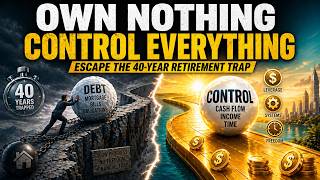
The speaker argues the 30-year retirement plan is dead because wages stagnated while housing, college, and healthcare costs exploded. He introduces the "Owns Principle": own nothing directly, control assets through trusts and holding companies. A case study shows Marcus and Priya Chen generating $5,000 monthly passive income in 36 months using seven financial levers optimized together.
Chapters
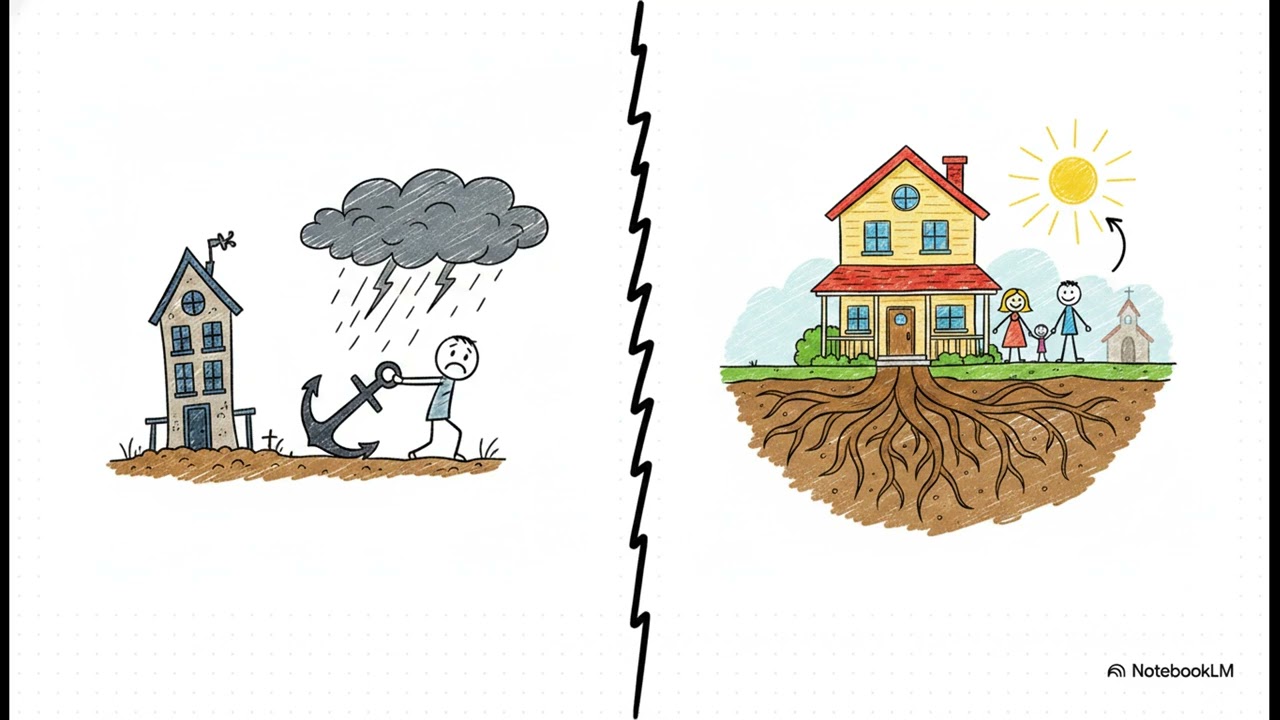
You ever feel like you're doing everything you're supposed to with your money? You know, you're maxing out the 401, you bought the house, you've got the good job, but you still feel like you're on a treadmill? Like that finish line for financial freedom just keeps getting pushed further and further away? Well, if that sounds familiar, you're definitely not alone. And the reason for that feeling? It might not be you. It might be the plan itself. So this quote, it captures this terrifying moment of truth for a guy named Marcus Chen. He's a total professional, successful, checking all the boxes. But one day, he's looking at his own benefit statement, and this— this sense of dread just washes over him. The numbers looked good on paper, but when he really did the math for the future he wanted, it just wasn't adding up. He realized the path he was on wasn't actually leading to the destination he'd been promised. And look at this— this shows that Marcus's fear wasn't just some vague feeling. It's a cold, hard, mathematical reality. I mean, look at this insane divergence. Since 1980, the costs for the big things in life—housing, college, healthcare—they've gone completely parabolic. Meanwhile, wages? They've basically flatlined. The rules of the game have totally changed. And this is so, so important to understand. If you feel like you're struggling to get ahead, it is not a personal failure. Let me say that again. You are not failing the plan. The 30-year retirement plan, which was designed for an economy that doesn't even exist anymore— that plan is failing you. And once you really see that, you're finally free to build a new one. So what does a new plan even look like? Well, it starts with a pretty fundamental shift in thinking. It's a philosophy that the wealthy have been using for generations, really. It's all about moving from being just a consumer to becoming an owner. And this is the absolute core of it all. It's called the "Owns Principle." Now, it sounds completely backward, right? Own nothing, control everything. But think about it. The wealthiest people in the world, they don't have their personal names on the deeds to their homes or their businesses. No way! Instead, they use structures—things like trusts and holding companies—to control all those assets. It's a total game-changer. And this chart just illustrates the difference perfectly. Over there on the left, that's the default path. You're basically renting your life from institutions—banks, your employer, the government. But on the right, that's the path of control. That's where you are the one at the controls, making the decisions about your assets, your money, and your future. Okay, so a new philosophy is great and all, but how do you actually make it happen? How do you turn this big idea into a real-life plan that changes your life, not in 30 years, but in, say, 5? So, how do you do it? Well, the engine for all this change is built around these 7 levers. Just think of them as the 7 key areas of your financial life: cash flow, debts, income, you see the list. A traditional plan might tell you to just focus on saving and investing, but this new approach? It's about optimizing all 7 of these, all at the same time, to create this incredible, unstoppable compounding effect. And this quote right here, this is everything. Pulling just one lever, like focusing only on your savings rate, gives you slow, steady, linear progress. It's fine. But pulling all 7 of these levers together, that's where you get that explosion of progress. That's the compounding effect that makes a 5-year timeline not just some marketing gimmick but an actual mathematical outcome. But you don't just pull these levers randomly. No, there's a very clear sequence to it, designed to build momentum. You start by optimizing your cash flow and your taxes—basically creating fuel for the fire. Then, You use that new fuel to just obliterate your debt. And from that strong foundation, you build your income and investing engines, which ultimately accelerates you toward freedom with passive income. Okay, let's put it all together now. What does this journey actually look like, month by month, year by year? This is the complete roadmap. This is what turns a cool concept into a concrete, achievable quest. So this 60-month journey, it's broken down into 4 clear phases. You start by building a rock-solid foundation, then you move into what they call what we call "debt detonation." Sounds cool, right? After that, it's all about building your income engine, which leads you right into the final stage—the freedom phase. That's where everything you've built starts to compound like crazy. And the big question is, does this actually work? Well, let's check back in with our friend Marcus. By the end of year 3, just 36 months into this plan, he and his wife Priya were generating $5,000 a month. In passive income. That's enough to completely change your relationship with your job, isn't it? So, what is the actual destination here? What's the point of this whole 5-year quest? It's not just about hitting some magic number in a bank account. It's about reaching this profound milestone—a work-optional life. It's about flipping the power dynamic between you and your career. This, this right here is the true prize. I mean, a huge bank account is one thing, but reclaiming your time, taking back control over your own identity separate from your job title, having real genuine choices about how you spend every single day— now that is true wealth. And all of this leads to maybe the most important question of all: once you actually get there, once you've built a life where your job is truly optional, then what? What do you do with all that freedom? What purpose are you going to pursue? What will you build next? And ultimately, that's what this entire framework is for. It gives you the tools, it gives you the sequence, and it gives you the plan. The rest of it, that's the execution. That's on you. It's really just a powerful, direct invitation: go build the life.