In this explainer, the host uses a vivid glass‑tower metaphor to illustrate three distinct career‑and‑wealth pathways: a descending escalator that most people unknowingly ride, a quiet set of stairs that require deliberate, self‑paced effort, and a guarded elevator that represents early time‑buying and privileged advancement. The narrative walks through life stages (floors) from childhood to mid‑life, showing how most people exhaust themselves on the escalator, while those who switch to the stairs gather mentor clues that eventually unlock the elevator’s 7‑digit code. The core lesson is that time, not money, is the most valuable asset; buying back time early through passive‑income systems—specifically the “Only Once” framework and the “5‑Year Wealth Plan”—creates an upward‑moving escalator that lifts you instead of fighting you. The host urges viewers to recognize the trap, adopt the stair path, and use the provided tools to secure a smoother climb toward the summit, where different outcomes (life jackets, boats, luxury cruise ships) await based on the chosen path.
Chapters
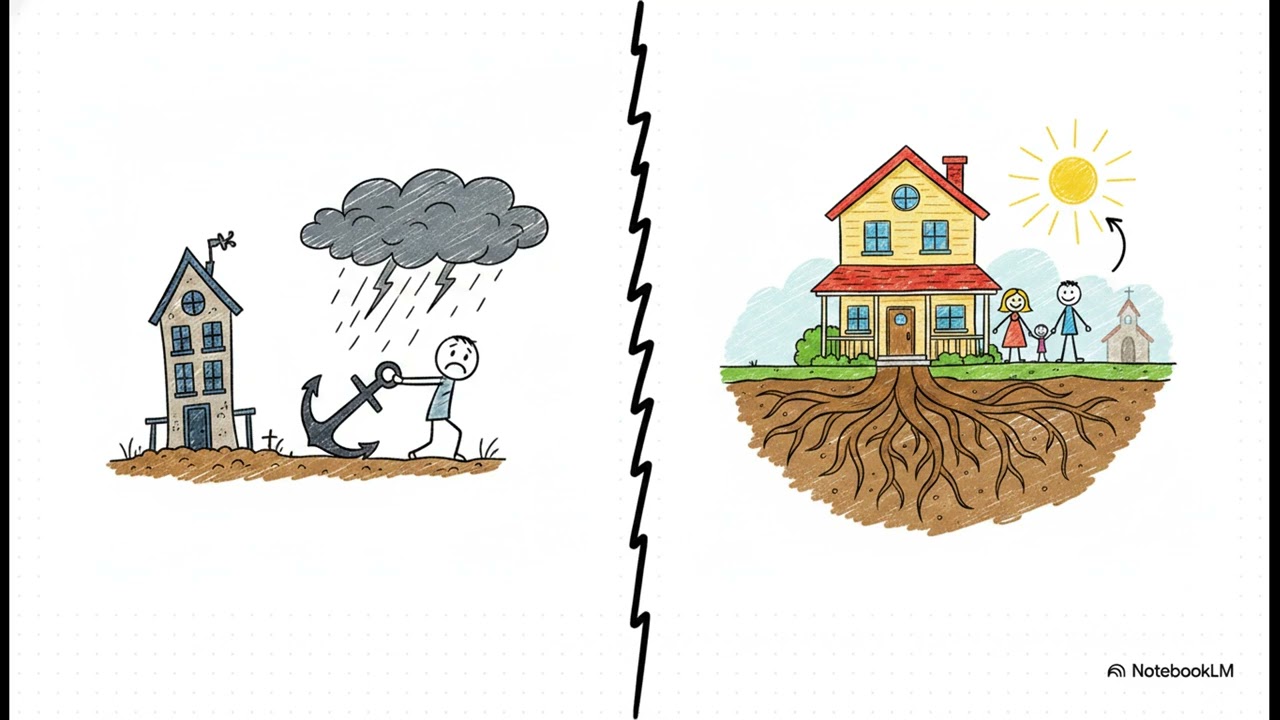
Hey everyone, welcome to This Explainer! Today, we're unpacking a really fascinating concept called "The Long Climb: Decoding the Escalator, the Stairs, and the Hidden Elevator." Let's just dive right in, shall we? So, picture this: as a young professional, I spent years feeling just completely exhausted by the daily grind. I was entirely unaware of the system I was actually in. And then, a mentor handed me a map that literally changed how I view my life and my future. It all started with a pretty wild question: Did you know we're all trapped in a glass tower? Seriously. Imagine a massive, glass-walled building, with absolutely no visible top. Every single person ever born is somewhere inside this thing. And we're all trying to reach the exact same destination—this open-air observation deck at the very summit, where a beautiful coastline is just waiting for us. Complete with a boat reserved for everyone who actually makes it there. It's a striking metaphor, right? But how do we get up there? Well, that's exactly where the journey diverges, and honestly, where so many of us get stuck. My mentor's map actually revealed 3 completely distinct paths up this tower. First off, you've got the escalator. It's brightly lit, roaring with movement, and just absolutely packed with people. I mean, I used to think this was the only path 'cause, well, everyone I knew was on it. But there's a massive catch. These escalators are actually moving down. To climb, you literally have to walk up against the descending steps. Then, right in the middle, we have the stairs. They're quiet, they're plain, and the steps don't move at all. You climb entirely at your own pace. And finally, over on the right, is the elevator. Sleek, glassy, and occupied by just a handful of people who seem to just glide upward. No sweating, no pushing. So, let's look at how this builds from the very beginning of our lives. Okay, so we all start on floor 1. This is essentially age zero. Everyone has bottomless energy here. Kids are just running up the descending escalators, laughing, having fun with it. And the kids in the elevator? They're there too, but their parents actually handed them maps to the building. Meanwhile, on the escalator, we didn't even know maps existed. By the teen years—let's call that floor 2—we're bigger. The escalator friction is still basically invisible to us because, you know, we're strong and the music is loud. But then We hit floor 3. The college years. This is where the illusion finally cracks. The fun gets this harder edge to it. You start to see some really tired faces on the escalator. A few people step off to the quiet stairs just to catch their breath. The resistance of the real world is finally, truly felt. So, here's the absolutely crucial point: most people are walking up a descending escalator. This was the hard-hitting realization I had as a young adult. I mean, why does the daily grind feel so incredibly exhausting? Why does it feel like if you stop hustling for even a second, you're losing ground? Well, it's because the system you're walking on is actively moving against you. You literally have to move faster than the steps just to stay in the exact same place. If you've ever felt that strange gravity-like resistance in your career or your finances, yeah, this is exactly what's happening. You're definitely not imagining it. When I finally realized the escalator was rigged, I remember feeling this intense mix of awe and Honestly, a lot of frustration. I crossed the floor to check out that sleek elevator, and man, it is heavily guarded. First, there's a scanner. It checks your background, and if it doesn't turn green, you have to pay this massive fee just to even approach it. Second, if you somehow get past that, there's a keypad requiring a 7-digit code. And that's a code only taught to those kids with the maps back on floor 1. And third, the lockout. If you guess wrong 3 times, the whole thing shuts down. it feels completely impossible. Most people look at these locks, get super discouraged, and walk right back over to the crowded escalator. But, you know, here is where the story gets incredibly encouraging. The system isn't closed off forever. It just requires looking in a totally different place. For those brave enough to commit to the quiet, unmoving stairs in the middle, something kinda magical happens. You see, you aren't fighting a descending escalator anymore, so you actually have the energy to look around. And you start finding clues—a note tucked in the railing, a book left on a step, maybe a scrap of paper with 3 of those 7 digits. These are all clues left behind by mentors, by people who took the elevator earlier and genuinely want to help the stair climbers figure it out. And this is exactly what my mentor did for me. They left a trail. And those clues eventually lead us to Floor 5, the magic floor. This happens right around age 40, and the divergence here is just massive. On the escalator, that youthful energy? It's gone. Exhaustion turns into surrender, and people actually start stepping off because they just can't outrun those steps anymore. But on the stairs? Those dedicated climbers finally piece together the 7-digit code from all the clues they've been gathering. They walk over to the elevator, punch in the numbers, and— the doors slide open. Early planning and persistent learning finally pay off. They get to step inside. I gotta tell you, when you finally step into that elevator, you experience a profound shock. And then, this wave of authentic relief. You look around at the other passengers, the ones who've been in there since Floor 1, and you realize— they aren't some different species. They aren't superhuman. They look exactly like you, just without the physical toll of a 40-year grind. Why? Because they didn't have to outrun a descending escalator. They just rode. They simply had a better, intentional system. It's a huge breakthrough moment. The world didn't suddenly decide to reward you. You just finally unlocked the right system. And this perfectly illustrates the absolute most powerful lesson my mentor ever taught me: the most expensive thing in the building was never money, it was time. The people in the elevator figure this out super early. They step off at intermediate floors not because they have to, but simply because they can. They've spent decades buying back their time. We get so caught up fighting the downward pull of the escalator just to earn money that we completely forget the entire point of the climb is actually to own our time. Alright, let's transport ourselves near the summit now. For the escalator riders, this is where true fear sets in. They are physically exhausted. If a market crash hits, that escalator speeds up, and they slide backward years in a single afternoon. They are incredibly vulnerable. But contrast that with the stair and elevator passengers. The stair climbers? They are now architects, building family businesses on staircases wide enough for their whole family. Keeping their kids off the escalator entirely. And the elevator passengers are already stepping off, just enjoying the view. Why? Because they built their own stairs. Finally, the building opens up. The summit. You step out onto this gorgeous coastline with a warm wind. And exactly as promised, there's a vessel waiting for you. On the left, the exhausted escalator riders are handed life jackets and little life rafts. In the middle, the stair climbers find these great seaworthy boats, family yachts and sailboats. And way over on the right, The elevator passengers are boarding luxury cruise ships with full crews and glass railings. It is a breathtaking destination for sure, but your experience of it is entirely dictated by exactly how you chose to climb the tower. And here is why all of this matters so much, why planning early is absolutely crucial. Because everyone hits a storm eventually, without exception. Life will throw a storm at you. The escalator survivors are out there in the freezing water facing the storm in a life jacket, And sadly, most do not recover. The stair climbers handle it in a real boat. Sure, it gets battered a bit, but they stay afloat. But the elevator passengers? They see the storm coming weeks in advance. Because of their intentional planning, they can just sail right around it safely. To them, a crisis is literally just weather. So what do we do? How do we fix this if we're currently stuck? Well, my mentor showed me the ultimate game-changing alternative: passive income. It's really simple. It is just an escalator moving in the same direction you are. It carries you instead of fighting you. Now, if you still love the rhythm of working, you totally don't have to quit entirely. But you absolutely must build an escalator on the other side of the floor that lifts you up automatically so you aren't just reliant on outrunning those descending steps forever. Which brings us right to the tools left behind by the mentors—the literal cheat codes for anyone currently feeling stuck in that glass tower. Systems like "Only Once" and the "5-Year Wealth Plan." Now, these aren't just vague concepts; they are the actual maps designed to pull you off the descending escalator. They teach you that elusive 7-digit code. They hand over the blueprint for intentional life planning so that you can navigate those inevitable storms from the deck of a sturdy ship rather than, you know, treading water in a life jacket. Which leaves us with the ultimate question. It's the very same challenge my mentor posed to me when I finally understood this map. How long will you wait to get off the escalator? Will you step off and claim your time while you still have the energy to actually enjoy the summit? Look, the steps are moving against you right now, but you have the map. You know the stairs are there, and you know the elevator code can be learned. It's time to take control of your climb. Start building your stairs today. Thank you so much for joining me for this explainer. I really hope it helps you navigate your own long climb.