High-Performance Workplaces: Leadership Lessons with Steve Vamos
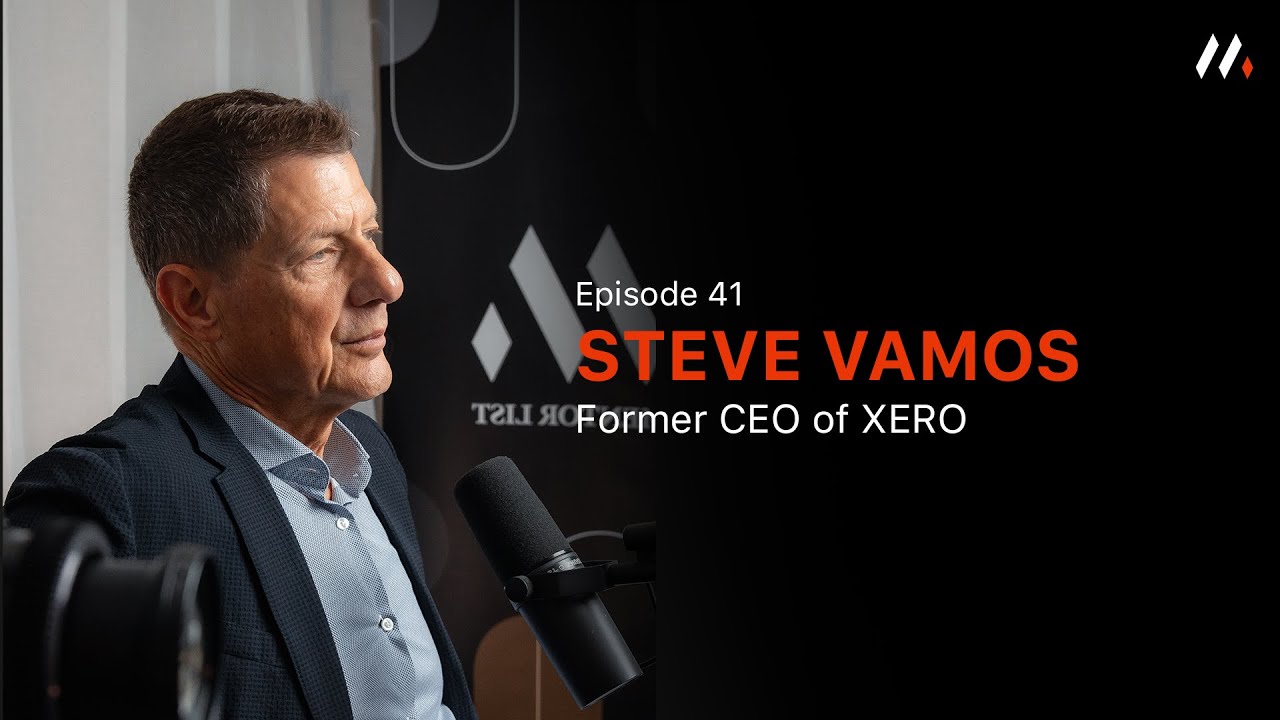
Steve Vamos, former CEO of Xero and veteran of Microsoft and Apple, breaks down what makes workplaces perform. He argues people leadership drives change, outlines an eight-point framework for great teams, and shares tactics for tough conversations and feedback. Most performance gaps are behavioral and fixable through clarity and alignment.
Chapters
The thing that would, I think, comes down to or manifests most in the middle of all of this, when you're trying to change things, is your people leaders. And I believe that people leadership is critical, 'cause people leaders translate strategic intent or change intent into the actions of their people. And so what I do think organizations miss out on is that capability to really move and bring people on the journey. When they appoint people to be people leaders that are not good at it, or aren't planning to get good at it, or don't want to do it. You know, like, don't tolerate people leaders who aren't good people leaders in your organization. Put them back doing what they're really good at.
All right, Steve Vamos, welcome to The Mentor List.
Thanks for having me, Dave. Good to be here.
Well, it's fantastic to, uh, to have you in the studio. I know we had some hay fever or some challenges getting in, but you've, uh, you've risen to the occasion. And thank you for, um, yeah, toughing through it. And I'll try and be kind, and we can stop for a water break and as we need.
Thanks, mate.
But in true form, in shifts and shocks, you've arrived today from Sydney.
Made it.
So for those that aren't sort of across Steve's background, former CEO at, well, wait for this, Xero, Microsoft, 9MSN, Apple, and some of the top exec jobs in at IBM. So if I think back, you know, in the recent future around companies that have really excelled, you know, Steve was sort of at one point running or part of the senior leaderships in all of those businesses. So a bit of a software flavor there, which we'll get into as well. And Steve, you're also now in more of a portfolio career. I think you were heading that way and you got sort of approached around the Xero role. And I think you're now in an NED phase again. Some of the NED roles you've had, Fletcher Building, Telstra, Divi Parking, David Jones, Medibank. I probably missed about half of them, Steve, but I think you sort of get the feel for who we've got in the room. And Steve's also recently written his own leadership book, which I'd encourage you to get, and we'll get that into the notes through Shifts and Shocks. Um, but Steve, I wanted to start, uh, maybe I was doing a little bit of research, um, and recently you've put something up on LinkedIn which was an Olympic coach, um, basically reframing something for, uh, one of his— what'd you call it— students or athletes?
Yeah, young athlete.
Yeah, so maybe we can start there because it sort of sets the scene around, uh, what we're going to talk about today.
Yeah, it was a video where, um, a coach was, was talking about what success or winning really was in the face of a young kid who was competing early in their career and not doing particularly well. And it just was powerful in the sense that winning, as defined by this coach, was being better every day or doing something to get better every day by virtue of, you know, constant improvement. And I think that resonated for me because at the end of the day, you can have your eye on the big prize and the ultimate view of what success or aspiration is. But it's really only through having a commitment to improving how you do things every day that you're going to get there. And I don't think there's enough focus on that in the way we talk about leadership and teams and change. We need to really start to drill in more to this is all about how. The why and the what's important, But it's the how that gets you there.
And, um, so talking about the how, and we're sort of talking, uh, you know, before we got going today about, you know, being too corporate, not enough corporate, um, you know, I joined this company because it wasn't corporate. Maybe we could just start there because that is the sort of form of, um, you know, I guess a mindset example. I mean, what's your perspective on sort of a statement like, uh, we're becoming too corporate, or, um, You know, we used to just do things, it used to be a lot easier or a lot less, I don't know, governance checks, balances, all these things that you would expect from a large corporate. I mean, you've worked in all shapes and sizes businesses and advised, maybe just to get your view on that.
Yeah, look, I really strongly believe that operational discipline is relevant to a startup all the way through to big companies. And the way that operational discipline manifests itself varies as you go through that phase of growth. And so in a startup company, you get to a point where you hopefully hit success and you start to scale bigger and there are more people. The more people you add, the more complexity. And so in order to have operational discipline, it moves away from having, let's say, a group of tightly connected, clear and aligned people in a in a small office to having hundreds of people who are there to serve the organization's ultimate agenda and purpose. During that time, you have to start to implement, in a journey, you have to start to implement who does what and how they do it. And sometimes that leads to frustration for people, particularly those that were there in the early days. Like I used to get often at Xero that Zero's not what it used to be or the way it used to be. And sometimes that was positive and often it was negative because it used to be freewheeling and people could do what they did. And I used to make no apologies for the fact that now, given where we are in our journey, we need to be more disciplined in order to make sure everybody's pulling together in the same direction as best as possible. What I don't think is great is unnecessary bureaucracy or things that organizations implement that impact negatively on performance. And I think that whilst you develop your, you know, corporatize and develop your processes, at the same time you need to have a really strong muscle to question how that's going and how could things be better. What's the negative impact of some of the things you've implemented and be open to changing those. So Often when it comes out just as a straight, oh, the company's not the way it used to be, or, oh, now we're too corporate, I go, hang on a minute, let's get underneath the covers here. What's the problem? What are you not being able to do that you want to be able to do? And sometimes it might be, oh, I used to be able to go and spend money wherever I thought I should. Well, fine, but now that the organization's where it is, we have to value our resources and align our resources with much more discipline than we used to. So that's how I make sense of it.
I can sort of sense a theme. It's, I mean, we sort of started at the Olympic coach and it's this incremental against a baseline, which is your own score. And then you're sort of talking about, it's not incremental, but becoming better operational discipline, different levels of operational discipline, which I guess is incrementally better. brought in. Just, just from a workplace perspective, um, you know, what, what makes a great workplace? Or alternatively, why are some, you know, not great? If I look at where you've come out of, um, I mean, these are talent factories. I mean, if you take IBM for an example, I could reel off, you know, 5, 10 different names of people that are either current CEOs or have gone on to be CEOs like, like yourself. I mean, um, what sort of What makes these workplaces so great or not great?
Look, it's a really interesting question, Dave, because there's so many angles to it. So there's leadership, there's teamwork, there's change, there's aspiration. What I've tried to do in my book is to kind of break it down to 8 really important things. I mean, 3 of them are about who are the people. that you're working with. Are they open-minded or closed-minded? Are they willing to embrace change or are they resistant? A lot of frustration in workplaces over bosses who stifle change and often change for the better. Are you working with people who are self-aware and understand the effect of their actions on others? And do they care about people? If you can tick those 3 boxes, or at least get a reasonable score on those 3 boxes, You're working with or for good people.
But just on that, Steve, say, right, it's all about getting the right people in. None of that is on a CV. You know, I worked here, did this, did this number. These are all humanistic.
So you didn't ask me how to hire people. You asked me what makes for a good workplace. And the question is, how do you interview for that? How do you build a culture for that? And the truth is, this is, it's a constant thing. But you know what? Bad bosses lose good people. So that happens. But then beyond that, we can come back and talk a bit more about this. But then it's about the work that gets done. It's the, what is the actions that are taken and the words that are spoken. And great workplaces and teams have clarity, clarity of purpose and priorities. And it may not be perfect. It never will be. But there's some attention to this. Let's be clear about why we're here and what we're trying to do.
Yeah.
They're aligned. You don't have people in the same team working against each other or fighting over resources because there hasn't been a process to allocate them well enough to priorities. And there's a really good sense of review around how are we going, how's the organization, how's the team performing, how are the team individuals performing. But also how the team is performing is really important in terms of how they work together. And so then you get to the last bit, which is really central. It comes down to the quality of conversations.
Right.
And the choices that people make in the team. Where are we going to invest our resources? Where are we not? Are we willing to face into difficult conversations and difference of opinion and resolve it rather than Ignore it. So those are the dimensions for me. If you can tick all those things and say, yeah, we're pretty good at these, you're probably in a good team.
So if I was to probably paraphrase that incorrectly, but to summarize, there's a lot of— there's a lot in that. So we, so we've got clarity, which is probably a podcast in itself. Yeah. And then we've got this, how are we going? So there's sort of accountability and cadence and checking in. Then we're kind of moving into a behavioral type scenario where it's quality of conversations, which is kind of a mindset, how you're coming and being. And then difficult conversations, which, I mean, I'm an expert at avoiding all sorts of confrontation. And naturally my default is to just avoid that like the plague, which gives me a lot of issues as a leader, no doubt. But maybe if we jump into the— and does that summarize or—
Yeah, look, I would say there's, in terms of what a team does, there's about clarity as best you can get it.
Yep.
Aligning around that, reviewing performance, and then continuing the cycle. The cycle is like a sailing boat tacking back and forward because you're never 100% clear and never 100% aligned as a result. So It's about how quickly do you go through the process of, you know, and how effectively do you go through the process of lining up behind what you're trying to accomplish, but then reviewing it and adapting. That's why hard conversations and choices are so important because in resolving your purpose, you might have to have a hard conversation with people about ruling out certain things they think we should be doing.
Yeah.
In having a conversation about alignment, you have to make choices. Choices between, do I give resources here or do I give resources there? And then performance, talking honestly about how people are performing, how the business is performing, that can often get washed over. So the best way to look at this is that you're right, you're onto the right thing, that the conversations and the choices reflect the people. And it is actually where the people or human element really plays out. It's in the quality of the conversations people have and the quality of the choices that they make.
It reminds me of a quote, the quality of your life is a direct correlation with the quality of questions you ask yourself. And I can see this playing into this. So just on clarity, You know, I look at some of the fantastic brands that you've had the pleasure of leading, and I think about the luxury, and maybe this is my naive external view, but a luxury of, you know, 9MSN came in, had a relatively clear mandate. Microsoft, you know, it was a huge growth mandate with some pretty key products. Xero, again, big growth strategy, and now it's, you know, over into the US. I think the CEO is now based over in the US, which is—
Yes.
Suggests that, you know, a great New Zealand Aussie business is now, you know, killing it overseas. And that doesn't happen a lot for Australian businesses, which sometimes don't go over to the States, which is such a great market. Sorry, I'm sort of get— I'll get to my question. So I mean, those brands or companies have had a very clear direction. Is that part of the design of what the business is, or is that The leadership or a combination? I mean, being part of that, you know, how did— what's the secret sauce on that clarity?
Look, those experiences I've had and the experiences of those companies whilst I've been involved really have shaped my thinking. So clarity comes from observing a guy like Steve Jobs come back to Apple in crisis and cut 75% of the product line to focus on the core proposition. Being the Macintosh, and that really was fundamental to saving the company. So clarity and focus in the way Steve Jobs made decisions and choices and his conviction around doing fewer things better was a great lesson for me. Alignment is from my Microsoft experience. Microsoft is very, very good at making sure that people all over the world are doing work which supports the strategic change the company wants to make. And that connection from the top intention to the life and the work of an individual at the workplace is the alignment challenge. And a lot of organizations don't do that as well as they could because we don't spend enough time on it and we don't have enough discipline on it. So that's why, again, that's a key feature of what I've written. So they're examples of You know, done well or done badly.
Yep.
You know, they, they have been the ingredients to success for organizations that I've worked with.
And coming back to sort of where you finished off the summary before, it was around difficult, well, difficult conversations, but this concept of difficult conversations and tough decisions. And you mentioned the Steve Jobs example there, and then that's bringing clarity and focus. And I was sort of doing a little bit of homework last night reading the last you know, the summary of your book, which is the last 2 and a half pages, and difficult conversations, tough decisions, I was actually underlining it comes up 4 times. So it's obviously super important. And the hardest, the thing that I think, I mean, maybe it's just me, but naturally my default behavior would be to avoid a difficult conversation or a tough decision, which is an issue. How do you face into that? Obviously you're not avoiding it.
Well, look, words are all we have, Dave. That's the thing that people have to realize. We can't change things. in any way without a written or a spoken word. And that's why, you know, people being fluffy in the way they communicate is so damaging to a change initiative. I know sometimes you've got to be careful what you say, so people get fluffy, but, but it's really all about how you communicate. So I, I believe that there's a kind way to say the harshest things if you take the time. You know, I had an experience where I was working on the driveway of a liquor store, St. Ives Liquorland, And I was mopping the floor and Joe Pritchard, the manager, came up, tapped me on the shoulder and I turned around. He was a big tall guy, so I looked up at him and he goes, Steve-O, you're a good bloke, but you don't know how to mop a floor. So he grabbed the mop, you know, wrung it out and started mopping the floor and showing me what he was— how to do it. And then he looked at me and goes, you get it? And I said, yep. He handed me the mop back, patted me on the back and said, away you go, son.
Hmm.
And I thought, what a lovely way to tell someone they're doing a rotten job. So if you don't tell people and don't face into telling people honestly what you think of what they're doing, how can they ever improve? It's what we rob others of by virtue of not facing into those conversations. 3 things. Make sure before you launch into a difficult conversation that you understand the context of the person you're talking to. And give context for it. You know, why you're concerned, why there's an issue. Ask tons of questions. Really try and get as much background as you possibly can. Then remember to take care of that person. I mean, this is not easy for anyone to hear these messages. So you've got to demonstrate empathy and care for that person the way you communicate with them. And then I'd say have courage. It's not going to be easy and never will be and shouldn't be in a way. These hard conversations shouldn't be easy. They wouldn't be hard if they were easy. So you get it becomes easier by doing it more often and facing into it. So it's just so important, and I wish I guess what you read in the book is just my, I guess, expression of how difficult it is for me still. You know, particularly in personal things. You know, personal life is the ground for really hard conversations. Your work life, let's face it. You know, work is work. It's a small part of it, relatively. I shouldn't say small part, but it isn't life. It's a part of life. And, you know, we really do owe it to each other to speak our truth and to take the time to give people feedback in a positive way, or at least as in the most empathetic and human way.
And just, um, you know, I love to go, go deep, but on certain things, and this is probably one. Um, and I agree, you know, this transcends the work life, personal life, um, relationships. Difficult conversations sounds like it's— it makes sense. It's the gateway into change or a better existence. Um, now I've talked my way out of, uh, remembering my question, but it was a— sorry, it's around, um, so difficult conversations. You're sort of framing it up that there's a you've got a certainty of, uh, of what the decision is. Um, so you've— so Steve Jobs, for example, for example, is one example you gave there. He was certain that, you know, slimming it down to whatever products was the way.
Yeah.
You know, in that scenario, something was done for him to create certainty that that was the way. And then there was a tough decision, you know, which would have had the context. How do you get so—
Yeah.
You know, do you have a way or any tips around how you get so clear on what needs to be the path forward and therefore it makes sense to have a fair, honest, difficult conversation?
Well, at the end of the day, you've got to, in things that are complex or difficult, you've got to spend time understanding the situation so that if you do get to a conclusion of a conversation, you can explain it. So let me give you an example. At Xero, there was an acquisition that every member of my team thought was a good one to do. Actually, one person didn't, to be fair. One person said we shouldn't do it, everyone else said we should.
Yeah.
We took it to the board, the board said, yep, if you want to do this, you can do this. And it was tormenting me. It's tormenting me because I wasn't sure I was on board, and I wasn't sure I was on board because we had so much going on that, um, I thought adding this other stream of work was going to be detrimental. So it was my own sort of mini let's focus moment. And the easy path would've been to go ahead and do it and make most people happy. But in the end I said, I can't do this. And so I got 'em all in the room and I said, listen, I appreciate you, work you've done is phenomenal on this. I can see tremendous merit, but when it comes down to the crunch, I can't support this. I'm not going forward. because of the distraction or potential distraction to everything else we're doing. Now, they were disappointed and upset, but they understood why I said no. And we moved forward like it was okay. So conversations and hard choices and decisions you make are often the source of difficult conversations. The choice between bad and better is another way to look at it. You're not usually choosing between good and bad. Anyone could do that.
And just around, um, so maybe more broadly, decision-making, because it sounds like you have zero indecision. You're either yes, no, which creates clarity in itself, or you're looking at me like maybe that's not the Coraline skill.
You think you're vacillating Vamos, mate? Be careful with that one.
Um, okay, so, um, I mean, if you are— yeah, because indecision, I've sort of— I was chatting with one of our group chairs, uh, recently, and he was talking about, you know, if you don't If someone comes to you for an answer and you don't say yes or no and you just say, oh, I'm not sure, then they leave and they sort of think, oh, maybe it's a yes. And so this activity keeps happening to the point where it reappears later. He's like, if I was a yes/no at the start or very clear, then I could have avoided all of that whatever motion, work, activity, and then it's come back. So, I don't know, is this a skill again that you sort of learn or pick up or how do you say, how do you not say yes or no but still keep clarity?
Oh, it's very situational, right? So this is an interesting area because some, I'm not sure I'd react the same way to every one of these that comes up. It depends. So let me give you a good one that, okay, someone comes to me and says, I'm going to change the organization structure. I want to go down and do some work on the org structure. and I want to change the model and the way we operate to this.
Yeah.
If I've had experience with that model and it didn't work for me, I will say I would not do that. But you're the boss of this function, so you have every right to go away, do the work and review it and come back and have a chat with me. But I want you to know where I stand on it. I'm not a fan.
Yeah.
Okay. This is what you would have to convince me of. If it's something I really don't care about, I'll say, well, you go do the work, do what you want, I'll back you 100%.
Yeah.
So are you sure this is worth your time and the team's time? Is this really what you want to do? And if the person concerned's got conviction, I'll say, okay, away you go. So it really comes down to you don't really want people to make the same mistakes you've made. But if it's something they're going to do that you really say is a no as a CEO or a chair or whatever, I think you've got to say the no.
know. Yeah.
Like if you really, if it's really gonna come down to that and you're certain, you're doing the wrong thing by having people go off and do the work if you have that conviction. Because at the end of the day, you're in a leadership role to make decisions. You have the authority. I would just say certainty's a very dangerous state of mind. So I always try and stay open because, and by the way, just because something didn't work for me, the reason why I'd allow people to keep going The situation I faced was different, different people, different time. So I think that I always say there was one guy I worked with that I used to really enjoy, David Leckie, when he was Channel 9 CEO. And David and I would talk often about the media industry and digital versus traditional media.
Yeah.
And he was always a good—
I've been doing that one.
He was a good student of the digital media and interested, and he certainly taught me a lot. And he'd say, Steve, I'm often wrong but never in doubt.
Right, I like that. It's a great line. And maybe I'll just ask one more question on this and then we'll sort of get into— I think you've laid a great framework around what can make a workplace pretty great and then what happens when we need to change it all. We'll get to that. But next question is just, I'm not sure at what point But looking at these businesses, there are some smart, uh, individuals working in these tech companies. I mean, you know, almost rocket science type, um, uh, intellect. Um, you know, as the CEO, you're not necessarily the smartest person in the room. And I guess at some point or in your executive journey, you have not been the SME there, but you're getting more and more responsibility to make even bigger and bigger decisions on probably something that you're even further removed from a subject matter expertise. Maybe just if you can share, I know we're sort of, I'm asking similar questions in the same way, but I don't know, what was that like from a sort of mindset shift? How did you go about being able to make what you thought was the right decision given the complexity of, you know, Xero might be a, there might be a software engineering decision that's coming up because it fundamentally changes. I'm not sure what the examples are, but they would have been pretty— Yeah, out of the depth for a leader, a general leader. Not that you're a general leader, but it's a long question, Steve. But yeah, look, I hope you get the gist.
No, I do get the gist. Look, there's, first of all, there's a lot of what these super smart people know and talk about that you can be intimidated by. But I do think that you have every right, no matter what level of the company you are, to ask them to explain it to you in the best and most simple terms possible because I've often found that complex things are made complex for unnecessary reasons. So I would never let something happening that I didn't understand scare me. I'd rather face into it. I think that's really— and so I would have one-on-one sessions with technology people at Xero to teach me, you know, everything, you know, and anything. I'd say And look, the whole data AI evolution was kicking on. And so our data team, Kendra Vance, who ran our data team then, would spend time with me and members of her team would spend time with me educating me. And the CTO of the company, Mark Reese, at the time used to really like the fact that I would try and learn and understand.
Yep.
But I had people like them to advise and make decisions on technology. And all I had to do was validate the business sense in that decision. And their job is to communicate the business sense in it. So at the end of the day, everything comes down to what are you going to do? So good ideas, there's a commodity, they're a commodity. Ideas are a commodity, good execution isn't. And so you've got to work your way through those things and come down to, well, what are we going to do? And does that make sense? And what will it take? So don't be afraid of the unknown. It's pursue it and understand it better and you'll make sense of it more often than not.
No, and as a Xero customer, yeah, I can see that that's played out because it's always been, you know, simple, beautiful, you know, for accounting package. You wouldn't think you'd be saying that 10 years ago. But you could see it was always driven for the customer, whether it's auto invoice follow-ups, things that you know are important for businesses of that size. Fantastic. Okay, so thank you for indulging me, Steve.
That's all right.
I went deep there. So we've sort of talked about what makes, what's the makeup of what is a good place to work or a high-performing company. So let's say now there's something happened and we need to change it all. So what would you look for or what sort of process, how would you sort of navigate and what would you look for around about to embark on a change that's either external or wherever it's come from forcing it?
So Dave, we can be pretty efficient on this because what we've talked about is what makes for a great team. And to me, a great team is one that's changeable. that can change with the times. So those factors of mindset, self-awareness, care for people, along with clarity, alignment, performance review, and then the stuff we talked about around conversations. That is key not just to a great team, but it is key to effective change. So if your mindset is against change, change is going to be hard. If your mindset is open to change, So, and that's a very, very human thing. So the thing that would, I think, comes down to or manifests most in the middle of all of this when you're trying to change things is your people leaders.
Right.
And I believe that people leadership is critical because people leaders translate strategic intent or change intent into the actions of their people. And so what I do think organizations miss out on is that capability to really move and bring people on the journey when they appoint people to be people leaders that are not good at it or aren't planning to get good at it or don't want to do it. You know, like, don't tolerate people leaders who aren't good people leaders in your organization. Put them back doing what they're really good at.
Yeah.
You know, so I think that if you said to me what's going to lead to the most effective change of an organizational team, it's going to be the attitude, the mindset, and the capability of the leader to engage their people in what's necessary to allow that change to happen.
And where that might be, you know, not where you want it to be, what might you look at? You know, what have you seen work in the past? around building that capability or getting the right individuals into these people leader roles?
Well, there's 2 things here. One is on the people side of it, it's feedback, like demanding people leaders get feedback, safe, creating safety in that feedback process. A good process I use as a people leader, I've done this with my team on several occasions, leave the room, Get someone to facilitate a conversation with your team around what you want to do more of and do less of. Come back to the room after that's completed and have that facilitator report to you on what the team believes.
Yep.
And then have a conversation. I've had profound feedback in those meetings of things I just did not even realize. So feedback is the engine of us all changing and getting better at what we do. The problem is feedback is not flowing in organizations as fast as it needs to or as in the volume it should. So I really think that implementing discipline over how your people leaders get feedback and improve as people leaders, and that you believe being a great people leader is a priority for them, And I would be uncompromising, not uncompromising in the moment. So if there's someone who's still learning and developing, that's fine. But if it's someone who says, I don't really like people leadership and I haven't been good at it for years, why are they there? So nothing I say is intended to be black and white. But the point is, well, I guess what is black and white is don't allow persistently bad people leaders to stay in their roles. So that's one aspect. The other is the discipline in an organization to connect the job objectives of individuals with the strategic change that's important. What can happen is you have this intention to create change, but it's competing with the day-to-day reality of the organization.
Yes.
It's only if the executive leadership team acts like a team not a United Nations of functions, not sitting there as representatives of different functions. They are actually a team who are prepared to sacrifice for each other, collaborate deeply, and prioritize that collaboration on the change agenda above all else. Unless you have that, then you're off to a tough start because you've got to roll that through the organization within functions, but with good strong connection between each function. So I find alignment can be a weak link. And I find that the lack of focus on people leadership adds to that weak link or is the other part of it. So they're the things I would recommend any board, CEO, executive, make sure you've got a really good discipline around how you break down strategic intent to action. that is aligned to the roles of people throughout the organization where they should be, and make sure you value people leadership and don't make excuses for poor people leaders.
And so something you mentioned there, Steve, is around job objectives, and maybe just a tie back to what we're talking about before around sort of clarity and alignment. Where do you sort of sit on job objectives or, you know, job descriptions? You know, does it need to be defined to the nth degree? You've sort of mentioned scenarios there where you're, you know, a lot of, a lot of sort of comments are, you know, I'm at capacity and now there's a change program which you want me to do this above my day job, which I'm already overworked. And, um, you know, that's it, that's a mindset. Um, you know, how do you think an instrument like it— is it a good tool that can be used, tweaked? Where do you sort of sit on it?
Well, it's the 2 things I just talked about really. It's the people leader that you work for Yep. And then it's the process by which that people leader is connected into the executive team to prioritize. So if I'm asking you, if I say, Dave, I need you now to make sure you do the following actions on this new change initiative that is part of our strategy. If you say, Steve, I don't have the resources to do that, then I'm your manager. If I'm your manager, I've got to say, okay, let's have a look at that. What would you need? What could we stop? What will we stop in order to make capacity available? And then it's the people leader's, I guess, capability that comes to play because the people leader has to go back up and say, you know what, we don't have the resources to do this. So, and this is why, this is why I've had a look. This is why we can't without additional resource.
Yeah.
And then it goes up the chain. The trouble is Traditionally, executive teams rain down all this stuff and half of it never gets done and they don't even know that it never got done. It's folklore in organizations where change initiatives that come and go and people say, oh, we'll just wait till the next lot arrive.
And it comes up sort of in many masterminds around what is an effective way to sort of communicate through those layers, through the people leaders, How do you get direct access to the frontline? But maybe just from your perspective, how do you get us— you've run very large sort of businesses with many thousands of employees and not all based in the same spot. How do you get a sense around how your people leaders are performing? What sort of—
what do you look for? So what I really believe is important, going back to the question about job objectives, how important are they? And I think expectations have to be clear as a minimum. So if you can make sure that everyone who works with you is clear about their expectations of them, that's great. The reason why some of the other additional, uh, the additional things are important is if you can't describe a job, how can you describe what I need to do to be promoted in it?
Hmm.
What do I need to do to know I'm ready for the next step up? And what does that look like? So talent development rather than immediate performance management relies on that stuff. So I do believe in the HR processes. And look, you can go crazy with these things. And so I always say, make sure it's practical. Like when I was at Microsoft, we went from nothing to a very complex capability, what do they call them? Capability matrix. for each role.
Right.
And I said, holy, holy cow, guys, we, we had nothing and now I've got this thing that's so complicated. So you've got to go for something that's going to be practical and useful on that front. So with expectations, make being a good people leader a core expectation of your people leaders and make sure that their bosses rate them on that based on feedback from their people and their own observations. And then I do think that we've got to get back to— I know there was this big trend away from performance reviews and scores. I do think performance reviews should be done because if you don't, feedback doesn't happen. You can't assume people are going to get regular feedback. So you do need formalized quarterly, half-yearly, annually, whatever works. Something's got to be there that says, this is my conclusion about how you're performing. It doesn't have to have 15 scores. It can be You know, you met requirements, you know, met expectations. Nothing wrong with the met expectations. Exceeded expectations and maybe didn't meet expectations. You keep it simple, then you say, well, what didn't meet expectations? You talk about that and hopefully the person gets better.
Yeah.
And I know we don't like to rate people, you know, that they didn't meet expectations, but it's not a punishment. You know, there's People who are not meeting expectations, they're just early in role developing. You just gotta destigmatize these things.
Well, that's right. And I think the cadence sometimes is an annual performance review. And if you look at athletes, they're getting it in a weekly cycle and that drives high performance. So, I mean, would you think, is your view that the more feedback, the higher the performance? that simple?
Look, in terms of cadence of feedback, the more regular the better. Formalized reviews, I think every 6 months is fine. But a lot of managers, because they're afraid of difficult conversations, won't have that upfront quick conversation in the moment. It's the best time to give someone feedback is not long after whatever happens happens. So the other thing is tremors rather than earthquakes. If you are giving someone regular feedback that something is a concern, you don't have to get to 6 months and go, you're a disaster. You say, hey, this area we've been talking about consistently still needs work.
Yeah, I like that. Tremors, not earthquakes, which just sort of suggests, it sort of comes back. We've sort of started with this Incremental, you know, day-by-day improvements, going back to sort of the Olympic coach, and you've sort of built it in here from a feedback perspective. And even, you know, the example you gave around getting a facilitator to work with your team to then provide some feedback with you out of the room. I mean, that's in some ways a way of getting feedback and having a difficult conversation for the better of your own leadership and performance. So very strong themes coming through here, Steve. We're just sort of running to time, but was there any questions that maybe I didn't ask? And this is your opportunity to answer your own question if you like, or maybe a closing remark.
Yeah, look, I'd say that, you know, look, it's been great because we have touched on the things I really feel passionate about and hopefully can help people. I would say that there's a question that you should get every team in your organization to ask in some formalized way. Although it doesn't have to be formalized, and that you and your leadership group or team should ask. And the question is, out of 10, how well do we rate how we are performing as a team relative to what's possible with what we have today, the resources we have today? This is the, the how can we be better at how we do what we do? Because You know, good people who are watching this, I would expect, are working in pretty good organisations. I reckon most of them will rate 6 or 7 out of 10. And the interesting thing about that question is I've asked it of many, many people. When I've asked it, I've found that 8 out of 10 or better, most people, in fact, only 35% of people have ever experienced a team they rated 8 out of 10 or better, which is scary, which is that people don't often get a chance to work on great teams. And by the way, those teams that rate themselves 8 out of 10 or better invariably have a focus on being a great team. They have formal processes and discipline to review progress, improve their individual and collective relationships, and they also faced challenges together and got through them.
Yeah.
That's, that's important. 6 or 7 out of 10 or even lower, the question then is not the score, it's what's the one thing we need to do to improve that score. And you collate that and you pick one, the one that you all agree is the one that needs work. The interesting thing about that one thing is is that 8 out of 10 times has nothing to do with the industry you're in. Nothing. And this is not me kind of driving it that way. That's how it shapes up. And then 9 out of 10 of those things are within the team's current control that could be fixed.
So probably behavioral type.
It's how we work together. We're not clear, we're not aligned, we're not having real conversations. Sometimes it is sensitive because it might be a people-related issue. But even if it is, you can still make progress despite that if you have the conversation in a way that identifies the how. See, the nice thing is that this question doesn't start with, what can my boss do better? Or who on the team needs to do better? You start talking about, you play the ball, not the man. Right.
Right.
It's a good way to play the ball. So it can lead to a healthy conversation with someone about how they improve performance. It can also lead to a tough situation where you've got a boss who rejects it. And in that case, you persist, you try and influence their management. And if it doesn't go anywhere, then you've got to choose as to whether you suffer through working on a team that's not going to be a great team or whether you leave, do something else.
And I imagine this would, so these scores and knowing that you've potentially used it in the past, what's the correlation? So if you're getting this right, if you're at—
You're just getting better. Like I used to track this at zero. I'd report to the board on how our team felt about our performance. And it never, by the way, it was not always up, up, up because sometimes there was more clarity than there were others like during COVID Yeah. We had to sort of hold back spending and, you know, people thought they had approval to do stuff that we had to take back. So it didn't help. Yeah. So it just gives you a sense of the mood for the group. But also you want a trend, you know, and if you live in the world of 6s and 7s, it's, it's not so much the score. It's, it's, it's what are we doing to get better every day? And I always say, There's really 3 things that you can do to be great at change. One is observe yourself in action. Observe yourself as an actor in the play. That's kind of like me right now thinking, am I been talking too long? You know, am I not addressing the question? Would people be getting bored? So it's looking at me as I'm speaking, as observing me. Second is do something every day to make how your team works together better. And this is not just the leader, this is every member of the team. Do something every day to make how you work together better. And finally, face into the difficult conversations. They're the 3 messages I would give anybody about what change looks like if it's great.
Awesome. Well, thanks, Steve. You sort of brought it home there around applying this at the team level. Which is absolutely obvious and makes, you know, when we talk about the models that we talked about at the start around clarity, you know, performance and having these difficult conversations, you've sort of elevated it to, well, how are we doing that and working on that as a team, which is fantastic and just, yeah, really brings it home. So thank you, Steve. We're going to move into Some shorter answers now, or shorter questions anyway. So favorite quote, is there one that's sort of stuck with you that you wouldn't mind sharing?
I think I already used it. It's ideas are a commodity, good execution is not. And it's really that you can find ideas of things to do, new ways everywhere, but who's actually gonna take action?
Nice, very focusing that one. Just gives clarity as well if you're applying that. Fantastic. Next one, advice for your younger self.
It's really work with people you can learn from and trust. And I was really fortunate to have the first 14 years of my career at IBM where I worked for people leaders that were great at teaching me, developing me, and I could trust them.
Yeah, yeah, it's interesting to see. I mean, you've sort of come through full-time employment type scenarios, you know, and that it might be different for someone that's leaving university at the moment who We're sort of moving into this contingent type workforce where not going into a company for, you know, an extended period, even, even sort of 18 months, 2 years now, is seen as, you know, a good stint in a company. And so there's a lot of movement. Um, it's true.
I think, I think that's really true, and it's a real challenge for younger people coming into the workforce. But I do think that you just need to find some people around you that know more than you, have more experience, that can really help you on your way, because that is what a good people leader is for a first-time or a new employee. It's someone who really helps you on your way. So it doesn't necessarily have to be your manager at work, it can be other people. But, um, you know, in the work context, if you're not working with people you can learn from and trust, boy, that's not sustainable, is it? No.
Great advice. All right, thanks, Steve. Last one is, I usually ask, you know, book, a favorite book or you're recommending a book. Now I know you've written a book recently. Maybe you could tell us about that. What was sort of the motivation for that?
Yeah, look, I would recommend my book in the sense that what I've tried to do is to take what I've learned over 40 years, but not just the what, it's the how I've gone about things. how I have a difficult conversation, how I do a career planning conversation with someone, how I get a team aligned, how I find clarity in situations that aren't. So I think that's something unique about the book is that it really does go beyond the why and the what and go to the how. And also it's centered around change, which is the central theme. That said, I do think that over the years, the books that have been the most valuable to me have been books like those from the Table Group and Patrick Lencioni, Five Dysfunctions of a Team and The Advantage. Again, because they offer practical pathways. Yep.
Great. And we'll be sure to put a link up in the show notes to get yourself a copy. So Steve, now we're moving into rapid-fire questions. So I'll effectively ask you as many questions as I can within 60 seconds. I'm just looking for my stopwatch. All right, here we go. Ready to roll?
You bet.
Okay. IBM or Microsoft?
Microsoft.
Apple or Microsoft?
Microsoft.
Australia or New Zealand?
Australia when I'm here, New Zealand when I'm there.
NED or executive?
Executive.
Xero or SAP?
Xero.
Startup or global corp?
Both.
USA or Asia for business?
USA.
Building teams or leading change?
Building teams.
Top-down or bottom-up leadership?
Need both.
People change or tech change?
People are the change.
Risk taker or cautious leader?
Cautious risk taker.
People first or product first?
People first.
Exciting or overwhelming change?
Exciting.
That's easy. Remote work or office work?
Both.
Hands-on or visionary?
Hands-on.
In-person teams or virtual teams?
Both.
Startup or corporate?
Probably prefer corporate.
Done. Very nice. Thank you, Steve.
No worries, mate.
Thank you. Well, thank you for your time today and thank you for coming down from Sydney and braving this, yeah, the hay fever this morning.
Yeah, sorry, this will be the only time you'll be hearing me like this, but thanks for having me and thanks for the opportunity. I appreciate the great work you guys are doing. I mean, Anything we can do to spread the message, you know, this is what it's all about, isn't it?
I mean, absolutely.
Leadership is the beginning, the middle, and the end of it all at the end of the day.
Thank you, Steve. All right.
Thanks, Dave.
Thanks for listening.
Good to be with you.
More from David

2026 National Networking Event | Melbourne Grand Prix Featuring Guest Speaker, Molly Taylor



HR Connect Leadership Series | Peitta Dyball on culture, strategy & the evolving HR landscape

HR Connect Leadership Series | Elevating HR through community and mentorship





Uncover Neurodiversity: Empowering Hidden Strengths in Society and the Workplace w. Dr. Shae Wissell
