Leveraging organisational design | Jamie Pride
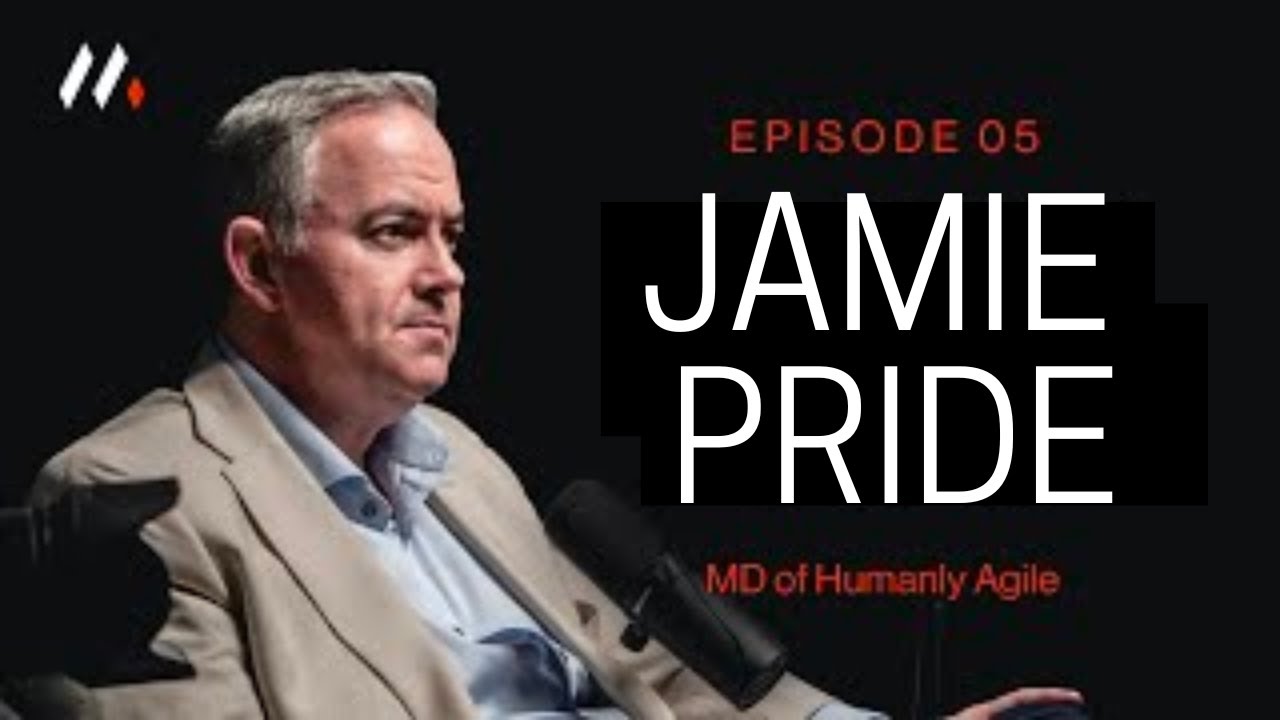
In this podcast interview, Jamie Pride discusses his passion for organisational design as a product‑centric, iterative practice that bridges strategy and execution. He argues that 95% of strategy implementations fail because organisations are mis‑aligned, and emphasizes purpose, mastery and autonomy as core motivators. Pride advocates small‑scale, experimental redesigns over periodic, large‑scale reorgs, moving decision‑making closer to the work. He highlights the role of the C‑suite (CEO, COO, CSO) in leading org‑design, not HR, and outlines a process that starts with strategy, identifies required capabilities, and then defines operating model elements before tackling structure. The conversation shifts to the impact of AI and automation, describing three waves of digital disruption and the upcoming third wave driven by generative AI. Pride predicts new executive roles (Chief AI Officer, Chief Data Officer), the importance of data assets, and the emergence of personal, corporate, and public AI layers. He warns of massive workforce displacement, the need for societal and regulatory responses, and advises leaders to conduct scenario planning, build strategic optionality, and adopt a horizon‑based portfolio approach. The interview also touches on Pride’s personal influences, favourite quotes, books, hobbies, and advice for younger selves, underscoring his belief that work should be purposeful and fulfilling rather than merely a source of human capital.
Chapters
For me, I would say my passion is to help organisations create workplaces where their people can thrive. My perspective is to probably treat your organisation as a product. I think if you worry, you die twice, you know, once in imagination and once in reality. I think we need to optimise for purpose.
Hi, Dave here. I hope you're enjoying the show. Thank you for tuning in. If you like what you're hearing, you want to become part of the conversation, please just click the show note link and we'll connect there. Bye. Welcome to the show today, Jamie Pryde. It's fantastic to have you here in the studio. I know you've just flown in and you're looking fresh and ready for a great chat here today. It's great to be back in your stomping ground of Richmond here and to have a reason to, uh, to get you here. So thanks for coming on the show.
That's right, my pleasure.
And I know you're a podcast enthusiast yourself, so we'll try and run a tight ship today and impress you in that way.
No judgment.
But look, just wanted to sort of open up the conversation, you know, sort of thematic and theme around sort of organisational design. So I might sort of let you bring that to life.
Yeah, so look, I mean, I think the thing that I've been focusing most of my attention on over the past sort of decade has been really around, I guess, the field of organisation design. For me, I would say my passion is to help organizations create workplaces where their people can thrive. And for me, organization design is really where all the action is. So if we think about organizations and the development of their strategy, that's really interesting. If we look at strategy implementation, that's where most of the wheels come off and we've got about 95% of strategy implementations fail in some form or another. And so for me, this kind of bridge that links strategy design to strategy execution, often called strategy activation, really is about aligning your organization to your strategic intent. And so for me, that's really the most important element of really making sure that organizations can be successful. But more importantly, it's about, I think, creating workplaces where people can be happy. and really sort of fulfill their potential. So whilst there's an absolute commercial driver around making sure that organizations are successful, I've also got a real personal interest in making sure that work is fun and enjoyable for people.
Yeah.
And I'm a big believer in this idea of sort of purpose, mastery, and autonomy, and really sort of that Daniel Pink view of the world that came out in his book Drive. So for me, organization design is something that I've really been sort of honing my craft around That's interesting.
I've never really thought of org design as part of sort of the employee value proposition, but it just triggered sort of a memory what you said there. I was having a ride-along in a telco call center, and I remember the employee experience of dealing with sort of 7 different systems, which I guess is fundamentally the org design that they're running with in the playbook. But yeah, interesting to come through with that org design lens. I mean, maybe if we could just maybe talk through, obviously we've just been through this reinvention or the hybrid workplace and now we're sort of coming back to a new normal, maybe through the lens of workplace design, could you sort of talk through that?
Yeah, I mean, look, I think we've seen a number of trends emerge both prior to the pandemic but also sort of through and post the pandemic where We've had organisations wanting to be, quote unquote, more agile, either through design or necessity. I think there was a movement prior to the pandemic where organisations saw that by reconfiguring themselves in different ways, they could be more competitive in the market. They could look at being potentially more innovative. During the pandemic, there was a necessity to do that. And so this idea of, dispersed and diverse workforces certainly came to the fore. And we as leaders needed to manage people that weren't necessarily in the same place as us. And that placed a real, I think, test on a lot of leaders in terms of how they built culture in remote environments. What I think a lot of organizations saw was some of the huge advantages in running, I guess, less conventional organizations during the pandemic. I know when I spoke to a number of really large international businesses, they saw huge benefits in both decentralized decision-making, both in employee engagement and overall sort of innovation through their organizations. And so post that pandemic, a lot of organizations sat down and said, how do we galvanize some some of those benefits post-pandemic. And now we're sort of into a different sort of age of automation. But I think the value proposition still holds true, right? Which is that I think Demi had a quote, which is, a bad system will beat a good person every time. And we often, when I'm speaking to executives, they say, I say, you know what's keeping you awake at night? And they're like, And I'm like, is it really? Is it really talent? Yes, we've got challenges attracting talent, but I would say that the reason why we feel that it needs to be a talent problem as a CEO is that great talent often helps smooth over some of our organizational deficiencies.
Yep.
But what that does do is that it has a corresponding negative impact on the individual. And so we've got really highly talented individuals being frustrated by the organizational systems that they sit in. And as a result, they typically get frustrated and leave. And so I think organizations that focus on understanding how it's a design problem and can they design systems that deliver value to their customers and also to their employees, and don't overly rely on talent necessarily to bridge those gaps ultimately result in a situation where, you know, they're faster, they're typically more innovative, and their people are happier. They have much easier times in attracting and retaining talent. And so there's a corresponding flow to talent, but talent isn't the answer.
Mm-hmm.
I think I've said that, you know, the war for talent isn't a battle you wanna win. Because it's never-ending. Talent ultimately is finite, but you need to create an organisational system and design that is gonna allow that talent to flourish or whatever talent you have access to.
Yeah, so that's quite interesting as well, but how do you go about identifying those pain points and then sort of reducing the friction for employees?
Yeah, so it's a great question. I think there's a number of schools of thought. My perspective is, to probably treat your organisation as a product, which is a slightly kind of different out-there view. But often we think about organisation, when I speak to general employees or leaders, I talk about organisational transformation and eyes roll like, not another reorg, right? And I think we've all been there with the perpetual reorganisation. A new leader comes and the first thing they do is change their leadership team. We're all going to do a reorg. We're going to go from a matrix to a geographical organisation, to productized, and I guess that carousel of perpetual reorgs continues. I would advocate a different way, which is more around sort of the— more, I guess, inclined with the school of agile, which is to move those decisions closer to where the work is actually completed. And we often start our engagements with, very small teams, typically the executive team, and sort of say, what is currently inhibiting you from doing your best work? Because we could come in and be overly prescriptive, but what we'd rather do is to create an environment of experimentation. So sort of bringing some of my startup and entrepreneurial experience to bear and say, okay, well, we don't need a big bang reorg every 6 months. How about we just find 1 or 2 points of friction That could be incentives, it could be rewards, it could be some of the ways that we use to work. It could be the way we make decisions, how power's distributed in an organization, whatever it ends up being. And let's just run a really small experiment and see if we can unblock that particular inhibitor. And so I sort of start to think about sort of product release cycles. So if you think about sort of Acme Corp 1.0, Well then what are we gonna do in our 1.1 release? What are we gonna do in our 1.2 release? What does ACME 1.3 look like? And so we kind of get into this continuous cycle of organizational transformation rather than big bang. So we ingrain that, I guess that reflection, that built-in quality to kind of say, okay, what's not working? What is working and what do we wanna change? That kind of concept. And starting small from the core leadership team and moving out rather than these wholesale transformations, which I think often frustrate everybody involved.
Yeah, they often sort of fizzle out, don't they? I mean, longevity's not there.
Yeah, I mean, they fizzle out or ultimately everybody loses their mind. But I've been on the receiving end of plenty of those over the course of my career, and it's certainly something we don't advocate with our organisations. We'd rather them to have a level of, inherent DNA that allows them to be able to constantly reinvent themselves, but not in an overly disruptive way, right? It's just seen as a continuous improvement mechanism rather than continuous reorgs.
Yeah, that's really interesting perspective, Jamie, because yeah, you're right, org design does get maybe labeled as not another reorg and the actual redesign of process that you mentioned, you sort of mentioned around bringing the decisions closer sort of to the action. What models have you seen? Who's sort of exemplary in this? Like, is this the McDonald's model that then, you know, because I don't think McDonald's had the issue of finding the war for talent because is it getting that process and role down to such a— Who's sort of leading in this space? And are you working with anyone, maybe anonymizing them, but what sort of things do you see working well here?
Yeah, so look, I mean, I think that's a great example. So let's look at the spectrum. So on one end of the spectrum, you've got something like McDonald's where that is a design system that prescribes all of the ways of working. And that design system can, accommodate the employees that work in that system in a way that makes it very scalable, right? So that's very much a heavy skewed to the design and system side. On the other hand, you've got bespoke athletic team where each player is hand selected and we've got some clarity of roles and responsibilities, but it's very much a talent-centric—
Yes.
Kind of system on the other side, which is we want to have And our competitive advantage is star players, whereas McDonald's, their competitive advantage is their systems.
Yep.
And there is a spectrum in between where ultimately we want high levels of talent inside our organization. But if that is the only differentiator that you have, then you're gonna be in a constant scramble and you're going to be constantly looking to have to pay more. to try and attract and retain the best possible talent. I'm not saying that is a bad thing, but often it means that we're underinvested in our processes, we're underinvested in our technology, we're underinvested in the things that actually make it pleasant or unpleasant to work inside an organization. I'm sure everybody's had the frustration at the, it takes me 7 managers to get an approval for a $400 training course, for example.
Yeah.
So that's the first thing. I think it's to understand where on the spectrum do you lie and what is your competitive advantage? Who's doing it well? I think that firstly, I think there's a pattern of the organisations that do it well and they're typically led and driven by a change in behaviour in the C-suite.
Mm-hmm.
So we, and I predominantly work with chief executive officers, so it's mainly a function led by CEO, COO. Fundamentally not HR. So whilst we are talking about people, we're really talking about aligning organizations to strategic intent, and it's very much around making sure that your strategy is activated as effectively as possible. And really, that's the purview of the most senior commercial leaders in the business— the CEO, COO, maybe the Chief Strategy Officer. The CHRO is a very important important participant in that conversation. But organizations that outsource this kind of work exclusively to their people and culture functions are typically diminishing the importance of this work. And so we want that collaborative environment in the C-suite. But this is not an HR-led people transformation. It's really about how do we embed our strategy and align it with the organization? So companies that think about it that way, so companies that look at it and say, you know what, the CEO is gonna lead this transformation and they see that it's critical to the accomplishment of their strategy, those organizations typically win. And organizations that I think believe that they can decentralize decision-making and have large levels of trust in their workforces as well tend to do better. But there's a variety of organizations across the globe and we've seen this happening, I guess, even since the '70s and '80s with self-managed teams and we've seen Spotify and Agile. I don't think there's any one specific organization necessarily. And I hate to talk about Agile to be really honest because I think it's got a bad rap. Agile, typically conjures up, you know, a lot of bad imagery for a lot of executives. It's all about sort of, you know, guilds and scrums and a whole lot of sort of inaccessible language. I like to think more about, you know, ways of working and organizational capabilities.
But that, I mean, you said you don't want to talk about Agile, but now I've got a question about it.
I've got it in my company name even.
But I mean, that was really about sort of disrupting that sort of, is it the permafrost, is that layer of management that couldn't be sort of penetrated and sort of working across teams so you could really disrupt that traditional hierarchical ways of working?
It is, I mean, it is really around sort of self-managed teams at the building block. The building block of organizational agility is making sure that you've decentralized decision-making to a point where teams can deliver value on a continuous basis. And that requires a lot of other things to happen inside an organization before that can be successful. Agile teams alone without a supporting management structure ultimately fail. Agile isn't the answer to everything either. There are a lot of other things that need to happen inside an organization around incentives and rewards and spans and layers and a bunch of other things that drive whether or not organizations will be successful with agility.
If CEO or C-suite's listening in and they're thinking, well, where do I start? How do I go about being prepared for this? How do you start at this or how do you get prepared for org design as a part of life?
Yeah, so I think it's got to start with the strategy first and foremost. And when we work with an organization, we would typically be downstream of some kind of strategy development work. So there's often a trigger that means that the organization needs to refresh or review its strategy or potentially even throw it out and build a new one. And there are a series of positive triggers that drive that strategy change. It could be the organization's entering into a new market, they've made some M&A That means that they've acquired a new business, or alternatively, they want to drive a new product to market. Those positive triggers typically mean a review of strategy. There are negative triggers as well. So they may be seeing increased competition from a new market entrant. It could be a startup. They could have slowed down in their ability to get product to market from an innovation standpoint, or they may have competitive pressures generally just in terms of poor execution or or slow uptake of product in market. Irrespective of whether it's a positive or negative trigger, typically starts with the strategy and understanding next, like, what organisational capabilities do we need to execute on that strategy? So we'll typically then look at organisational capabilities. One of the things I think that we have to deal with, and I think not a lot of people really consider, is that organisations have had often 10 or 15 or 20 years of organizational transformation work done on them. And there is often a lot of what I would call organizational debt. So there's sort of detritus, like layer upon layer upon layer of subsequent organizational redesigns that have happened. And you're like, why does that team exist over there? Or why have we got 75 of this particular kind of resource? And often if you go back and try and figure that out, it's as a result of, you know, 2, 3, 4 reorgs that has happened. And, you know, ultimately we would suggest organisations, sometimes it's good to kind of take a fresh look entirely of the organisation and say, okay, well, what capabilities are we gonna need now? But more importantly, over the next 3 to 5 years in order to be able to execute on our strategy. Over the past couple of years, that's been, okay, well, How do we potentially look at enabling our leaders to be able to build culture and to lead teams remotely? But with the rise of automation driven out of sort of the next wave of AI, what we're seeing is that those organizations need to predict a different set of capabilities, a set of capabilities around data, a set of capabilities around being able to connect with other organisations and datasets. And so we've seen sort of AI drive a different set of capabilities. And then we typically look at probably 4 or 5 aspects of the organisation, doing some scenario planning with those executives, not necessarily to predict the future, but to potentially envisage, say, 2 or 3 possible versions of the future. And more importantly, understand what needs to be true for us to believe that we're living one of those possible futures.
Yeah.
So what would be the early leading indicators to suggest that this possible future is coming true? Mostly we see that there's commonalities between the things that an organization needs to do across those 3 potential scenarios. And so they are no regret decisions that an organization can make, and we're trying to create optionality strategic optionality in the business for the senior leadership team so that they're not painted into any particular design until the future is a little bit clearer for them. That's sort of our general approach. Then depending on their specific needs, we may focus on ways of working. We may focus on— the interesting thing is that a lot of people think organizational design is structure. And we do almost no work with structure. I mean, structure comes last in an organization design piece of work usually. We're more understanding around sort of what are the critical roles? How do you incent and reward people? How is power distributed? How are decisions made? What are decision rights? What are the key strategic operating model elements? So there's a number of things that we look at before we even consider structure.
Yeah.
So most people think org design, they think We would say sticks and boxes. We very rarely work with sticks and boxes.
Is that a different approach or different focus areas if you're working on, say, you know, you've been through ASX-listed businesses versus, you know, businesses that are months old that you're sort of helping support? Or, you know, is it different with a high-growth business versus an industry or businesses in, you know, single-digit decline? Is it?
No, I mean, the process is is pretty consistent regardless of sort of the nature of the business. However, depending on the size and scale, you may just start at a department or a division rather than tackling the whole organization. We've been brought in to look specifically at just product teams, right?
Mm-hmm.
So we will work in technology companies and rather than doing an org design across the entire business, we will look potentially just at product management, product development, and really get that engine firing first before getting our focus or looking at our focus progressively outside of that particular function. So it's custom to each organisation, but the process is pretty similar, which is understand what the strategy is, understand what capabilities you need, and then ultimately understand really where the major operating units need to— need to lie in order to kind of achieve those outcomes.
Great. Sorry, Alex, I'm just taking a bit long. Just one more follow-up there. You mentioned sort of, you know, going through that strategy and looking at sort of 4 or 5 different aspects around scenario planning. You know, maybe we can talk about some of the big e-commerce platforms and maybe some potential disruption like the Facebooks and Apples of the world. Like, how do you sort of see, obviously, their success? Is that, what's your sort of summary on that part of the market?
Yeah, I mean, look, I think it's, we're sort of in the third big wave of automation, I would say, in the business world right now. I would say, we saw a huge, wave, I don't know, I'm dating myself now, probably about 20 years ago with the rise of sort of e-commerce and the first wave of internet businesses.
Oh, realestate.com's a good example, which you're leading. Yeah, absolutely.
That's sort of Web 1.0. And then we saw that second wave where we saw digital disruption. So traditional publishers, we saw the rise of the, or the demise of the classifieds business and the rise of the real estate the Seek, the Cars, and you know, you've got the eBays and the Amazons in that kind of e-commerce world and that kind of generation 2 businesses. I think we're now seeing a 3rd wave of disruption and each successive wave has come harder and faster. And so I think that the thing that surprised me the most is that during that 2nd wave of disruption when I was leading REA, but also, or realestate.com.au, the Australian part of REA, And when I was also focusing on other digital businesses, it just surprised me at how traditional businesses ignored the transformation, but how obvious it was that it was coming. So, you know, you could see that traditional print businesses were not gonna survive, but most of those businesses were just in absolute denial. The recording industry, as an example, was just in complete denial that there was gonna be digital music and that they thought they were gonna hang on to CDs forever. And they spent, as most people know, they spent a lot of time and money fighting Napster and digital downloads and piracy. The motion picture industry went down a similar path. And now today, we live in a world where nobody would even blink twice about Apple Music and/or now Spotify and Netflix and Stan.
Right.
And I don't know how many streaming services I have to have at this point in time.
time. Subscriptions.
Streaming has become insane. But nobody would think about going and buying a DVD right now. I mean, I'm sure they still sell them somewhere. But it was really obvious, I think, when I was sitting there in that sort of time about that sort of transformation. But the businesses that were incumbent were either in denial or felt that they were unassailable. I think Clayton Christensen has written a book, it's sort of pretty iconic, which is called The Innovator's Dilemma, which talks a lot about sort of digital disruption. We're now facing another realm of another wave of digital disruption where we're facing unprecedented levels of automation through the advent of AI. And I feel that's going to have a huge impact on the workplace and workforce transformation. And so the winners that we saw in the past, in that last wave weren't necessarily the traditional incumbents. So we've now got businesses like Netflix and we've got businesses like Apple and to a certain degree the Facebooks and the Amazons, et cetera, were the winners of that war. And I think that the lesson is that in this next wave, which is coming faster, harder and I think will have far more ramifications than the previous wave, there will be new winners and new losers. And so organisations that prepare themselves for this wave of automation and that steer into it rather than away from it, you know, a colleague of mine used to say steer into the iceberg, right? Like it's much better to kind of disrupt yourself. I don't know if we want to use Titanic references, but you know, you might want to disrupt yourself rather than— wait to be disrupted. So first movers I think will win. We'll go through another internet-style gold rush where there will be some early stars that potentially fade out. But I think we're bracing ourselves for some pretty radical organisational disruption.
Yeah, I mean, you've briefly touched on it, Jamie, but how do companies, or how should companies prepare themselves for this third wave that's coming down the pipe?
Yeah, so look, I think each industry is gonna be affected differently and some more so than others, but If I was in the C-suite of an organization right now, I'd be doing a couple of things. So the first thing I'd be doing would be some scenario planning, trying to understand what are the possible futures. So which part of our businesses are exposed to threats from AI or automation? I'm going to say automation, right? But automation predominantly driven by AI. What parts are exposed? What potential new participants may come into our our ecosystem. You know, if we saw in the last wave, there were new market entrants. So it isn't necessarily your traditional competitors who might come into the field. So if I look at an example, let's take law. Law right now is probably an industry that's hugely under threat from AI. Now we've seen some really, you know, poor examples of people using GPT to try and run legal cases, et cetera. But generally, AI will revolutionize the legal profession and not necessarily to the benefit of existing legal firms. And who's to say that Microsoft can't start offering legal services? Who's to say that Amazon can't with their own legal AI? Now I'm not saying that either of those organizations are doing that, but I think you've got to consider not just your traditional competitors, but now this technology potentially democratizes expertise. And so, you know, you may see non-traditional competitors come into the marketplace. Your traditional competitors for sure, but your clients may necessarily be either self-serving or become a competitor to you. So I'd be looking at scenarios first and foremost, both from a negative standpoint, because like, you know, the world might be ending, but also from a positive standpoint. So how can we use this potentially to enter into new markets and to potentially compete on an unequal basis in other areas. And so really looking at both the positive and negative scenarios associated with the impact of that automation on your business. And it's not just a productivity improvement, it also can drive, you know, potential innovation, product innovation, but it democratises expertise.
Yeah.
That's the first thing I'd be doing. The second thing I'd be doing is to look at my organization design and understand whether it's fit for purpose. So in a highly automated environment, what roles will be impacted? What will be the critical roles? What do I need? What don't I need? How do I structure myself to take most benefit from the automation driven by AI? And then lastly, do I need to add new roles? So I think we're seeing the rise of the Chief AI Officer in organizations. Both to understand those and drive those impacts on those programs, but also I think to potentially run a thread through the CIO, the CTO, the CDO. But I think most importantly, it's trying to understand what our data assets are inside an organisation and the rise of the Chief Data Officer beyond privacy and consent. So most Chief Data Officers have been very much driven by, in Europe, GDPR and making sure that the data is secure and that, you know, the privacy is maintained. But in an environment where large language models and other forms of AI exist, we can assume that on a long enough timeline, all organizations will have access to that technology. And so what becomes a competitive differentiator are the datasets that you have available, both to train those models but also to run those models against. And so your ability to know where your data is, to be able to harvest and to contain and to add to and augment that data will be really central to whether or not you can be competitive, but also to be able to access external datasets, client datasets, so on and so forth. So I think a Chief AI Officer working in conjunction with a Chief Data Officer will be core to the strategy, but as a bit of a mind blow, As somebody sort of said to me the other day, does the Chief AI Officer even need to be a human?
That's right.
And that's frightening, but actually probably a possibility where we see, I think, in the next 5 to 6 years, I think you're gonna see 3 layers of AI. You're going to see personal AI that'll be on your device working as your digital agent. I think organizations will have their own AI or AIs that provide them with decision support systems, potentially provide them with insight. Those AIs will get progressively smarter and may even have a seat at the C-suite, which is, I think, really interesting. And whether or not your corporate AI is providing you with information formally or informally, I think it will be an interesting time for governance and we start to see the ethical implications of that, but also regulation. What will that mean? And then we're going to see public AIs and client AIs, and there's going to be potentially, let's assume the ATO has its own AI, both in terms of delivering government services. The government may actually be potentially an innovator and may come out and disrupt markets as well, right? I mean, I can see an environment where We have continuous auditing as an example. Like, why do we need to audit just at one point in time? And why do we need to audit a subset of transactions? We could be auditing all transactions all the time. We don't need to go through an annual audit. We could be continuously audited. And that audit could be conducted potentially by the ATO even, right?
Yeah.
So I think there's a variety of potential futures that organisations need to consider. Hard to predict what those futures will be, although you can definitely believe that there is going to be a huge amount of productivity impact into the workforce. And that's good, I think, in the short term for knowledge workers. In the long term, I actually don't think it's good for knowledge workers. I think knowledge workers are going to be hit pretty hard by that increase in productivity because I think that ultimately there'll be a requirement for less knowledge workers. And I don't think those people will be redeployed into other parts of the organization, unfortunately. But I think that as an organizational leader, I would want to be creating as much headroom and strategic optionality as possible, right? Whether that means looking at giving myself the most organizational flexibility, appointing some of these critical roles, looking at our capability sets, Potentially creating a futures fund that allows us to innovate and to deploy capital out of Horizon 1 activities or traditional activities into Horizon 2 and Horizon 3 activities. But saving for a rainy day, and I think it's about to start raining.
Hey everyone, thanks so much for tuning in. If you're loving this podcast, please give us a 5-star review. That's quite interesting. I mean, obviously that's going to be a bit of a societal issue. What do you do with all these knowledge workers?
But it's going to be a huge societal issue.
Absolutely. But I mean, looking at it from a company's point of view, what sort of skills are they going to be looking for in their next hires?
Yeah, so I think, you know, look, the topic du jour right now is that we all need prompt engineers because we're going to need prompting. I actually think people aren't thinking big enough. I feel that like everybody looks at AI through the lens of GPT and large language models, but I think that's just the beginning in terms of sort of overall organizational capability set. I think clearly you're going to need data scientists. We know that already, and the importance of data has, I think, been increasing over the past 10 years anyway. And FMCG businesses and QSR businesses and people who deal with a lot of consumer data already realize that. So those businesses have a really amazing understanding of their data. But I think increasingly, not just data scientists, but people who can drive the technology around connectivity and integration. So I just came back from the US and a lot of venture capital is being deployed into understanding how to connect models. So if you think about an environment where we're looking at model-to-model connectivity, either through API or webhooks, but People who've got that skill set and ability to understand how to build and connect or drive connectivity between large-scale models, I think will be in huge demand.
So what's that like as an example? Is that getting a consulting practice to then hook on their AI to our corporate corporations' AI? Is that sort of—
Potentially you'll see corporations connect their AIs when they collaborate. I think you'll connect with government as well. And I think that even generally, I've seen even today, there are companies today that use multiple models to deliver the outcome, right? So everybody believes that GPT-4 is the only model in existence, but there are many, many, many AI models that already exist. And so being able to interface with those models for your own usage, so that you can draw upon them, but also interconnectivity generally between organizations I think will be critical.
Yeah.
And I think the last one though is I still feel that we need creative thinkers inside our organizations, at least in the short term. On a long enough timeframe, the human brain is just fundamentally a computer. And I got to hear Geoffrey Hinton speak speak in Canada recently. And, uh, Geoffrey Hinton is considered the godfather, one of the godfathers of AI. He's been researching AI for more than 30 years, and he's just recently left Google so that he can speak freely with regards to AI. And he was, he was asked a question on stage, which is, you know, what, what parts of, you know, humanity are special, you know, that like AI will never be able to simulate? And he said nothing. Like, ultimately, if you think about a large neural network, given enough processing power and energy, there will be artificial general intelligence. I think that's inevitable. And what happens after that, I think it's open for further debate.
Because if I just sort of pause for maybe think maybe 6, 12 months ago, maybe the advice to People coming through school, what do you wanna do? It's like, well, you probably wanna get into that creative type of role or knowledge expertise. And now that's just all off the table.
Well, I think I was speaking with a colleague in San Francisco recently and we were talking and joking a bit like if you use a laptop for work, you're kind of screwed. You're a knowledge worker. But if you use a screwdriver for work, you're probably okay. And so I think, I think the last sort of fallback position until Elon Musk and Tesla create an autonomous robot that's cheap and effective, which will—
Boston Dynamics.
Which will be, or Boston Dynamics, I mean, which will be there, but are professions that ultimately require physicality, right? And if you had have asked me 2 years ago what were the 3 bastions that AI wouldn't get into, I would've said STEM. I would've said the creative arts. And I would've said anything that requires empathy, sort of healthcare, right? I think STEM's in big trouble.
Yeah.
Well, actually not big trouble. I think STEM's gonna be hugely enhanced by the use of AI. STEM is probably one of the fields that is most susceptible to AI because, you know, the ability for an AI to see patterns and to crunch data in the human genome, for example, that, you know, researchers have taken, you know, would take hundreds of years to do, you know, an AI can do in minutes. And so that's going to greatly enhance mankind or, you know, humanity from a from a health outcome standpoint. But I think there are gonna be long-term impacts in just sort of how many scientists you need, so on and so forth. If you had have asked me around creativity, I went, there's no way AI's gonna get into art, right?
Yeah.
Well, just go and see DALL-E or Midjourney. One might argue that those parts of, is that real creativity? But let me tell you, AI is doing a pretty good job of creating music and art at the moment. And then lastly, empathy-based professions. Well, we're starting to see the rise of chatbots that mimic humankind. I heard a rumor, I haven't necessarily verified this, but there are currently organizations that are using AI-generated voice to make calls to clients to sell them things. And it doesn't sound like a machine and it's able to hold a 2-way conversation and the humans on the other side can't tell the difference.
Oh my God.
Right, and so it won't be long. And I think people are already using sort of AI-driven mental health, for example, and there are ethical questions around some of those things. But yeah, I mean, I still want somebody to hold my hand when I'm sick in hospital, right? But I don't know, maybe that'll be a metal hand at one point. I'm not sure.
With the mind blowing.
Appropriate heat sensors and everything else. Yeah.
Oh my gosh.
Well, I guess in the creative arts you've got the issues with patenting and sort of intellectual property and stuff at the moment. Obviously the writers' strike and all that.
You do, you do. But I think that's just a short-term challenge. I mean, ultimately we've already started to see that AI can be listed as an inventor of a patent.
Right?
We've seen that in Australia even. So ultimately, is it a tool? Can you separate out art from the artist? I mean, we end up in a big philosophical discussion about human pain and the human condition. But Elon Musk is building rockets to get off the planet for a reason, I reckon.
To space, he'll be taking AI with him though.
Maybe he's going to go without AI. I'm not sure.
Wow, okay. Oh, Jamie, I think you've blown our mind with sort of where things are heading. It's actually really, really exciting. And yeah, thanks. Obviously you've been traveling around and doing a lot of work in this space. So I guess AI is a huge disruptor of the strategy, and you've sort of explained how that is the leading part of sort of a good org design practice. So maybe sort of with that sort of future picture painted, just bringing it back to now around org design and where we are with AI and people are starting to get involved in it, is there obvious areas within your organizational design that you've seen that that is where you go straight away, that's where your competitive advantage is? It's obviously not in sort of maybe where it used to be around creative areas or Is there something that's untouchable in a company's DNA, in their org structure that isn't impacted by AI or is obviously enhanced by it? Where do they, where's the initial focus that you think and advice to look at?
Yeah, so look, I mean, I know I've painted a little bit of a bleak picture, but I'm actually really excited. I think we enter into a really interesting period of time where I feel like we're back at the early days of the internet again, right? Where anybody can win. And we've got asymmetry potentially where again the small can outcompete the large. And so the playing field gets leveled again and everybody gets another go potentially at being really, really competitive. So from my standpoint, organisations that embrace this and put this at the forefront of their strategy and workforce transformation is just going to be critical to that. So for me, those organisations will be the winners or will certainly have a better chance of winning. There will be another strategy where people just sort of retreat and yield out their existing businesses. And we see that in every successive phase.
Yeah.
Not sure if we're, you know, we see too many BlackBerrys around anymore. You know, not sure if we see any Tower Records around anymore or Virgin Records or any of those kind of things. So, you know, all of those businesses, you know, they hold out. I think the last Blockbuster store just closed. They held out for a while. However, you know, you'll get that typical sort of distribution curve where the early adopters kind of get in Some of them win, some of them lose, but there are going to be dominant players who establish themselves. I think a lot of those dominant players you will have never even heard of. And so I think that's an exciting time. I think as leaders, I think it really is an interesting intersection, or certainly the timing is great because we've just come through, I think, an interesting crisis of leadership in terms of how do we lead during a pandemic. And so a lot of the things that organizations did to set themselves up to be successful during and post the pandemic can also support them during this wave of automation and disruption as well. And so increasing trust inside your organizations, decentralizing decision-making, all of those things that support organizational agility means that now facing into this new challenge, leaders can reap the benefits of those organizational transformations in developing these new strategies. So for me, I think it's still very much around looking at that sort of McKinsey 3 Horizon model of saying, okay, well, we've got parts of our business which are Horizon 1. What's the threat? What's an opportunity in that business? I'm really interested in horizon 2. I think a lot of those opportunities are starting to solidify and we're starting to see, I think, the benefits that AI is going to immediately deliver into businesses. The ones that I think we don't really fully understand are those horizon 3 opportunities, like people who are making really big long bets that may potentially completely disrupt markets. Yeah. I think organisations need to take that kind of nuanced approach of what does their portfolio look like. All organisations and all industries are going to be exposed differently, and even inside individual organisations, aspects of their business are going to be exposed differently. But I think it's about approaching with an open mind, and I think being aggressive. I think this is not a time to be passive with respect to your strategy. This is a time to really kind of, you know, to use a cliché, but get onto the front foot and start making the changes because we kind of think about a 5 to 10 year planning horizon for the impacts.
Yeah.
But you need to be sowing the seeds and making the change now in 1 to 3. So unfortunately, if you wait the 5 to 10 years, you will really feel the pain. So you kind of need to look at what you think's gonna happen over 5 to 10 years, and that's really the time horizon I think we wanna look at to understand actually the proper disruptive impacts of some of the technology and go, okay, what do we need to do now immediately? And what do we need to do over the next 3 years to give us as much strategic optionality and as much of a platform for success so that as those potential futures come on, Fantastic.
Thank you, Jamie. Alex, do you have any—
I mean, no, you've again blown my mind in terms of what could be possible and what is going to be coming down the pipe at us.
I threw it to you because I'm always stealing the questions. We've had a few. Well, thanks, Jamie. And I imagine this is something I know you sort of engage with corporations and take them through this process. You sort of talked about having that 5 to 10 year view. Is this sort of, I guess, if we had someone like you coming into the organisation, do you bring those views around what's happening in 5 to 10 years? Because I think just the conversation is like, well, what the hell is happening in the next 3 months, 3 years? you know, 10 years, how do we get that sort of view and, yeah, like, how—
I guess doubling down on that as well, yeah, how do companies know what's out there? Like, what's a good way to—
Yeah, I mean, look, we, um, I don't think anybody can predict the future, and certainly, um, I don't know if we know everything there is to know, but I think one of the advantages that we can help deliver is really to be a provocateur and to challenge and to ask questions. We're constantly challenging ourselves, right? I mean, even thinking about the fact that some of these roles even need to be human is a really interesting new reframe. I think the value that we can bring to an organization is, yes, some external perspective and to put some pressure on parts of the business and say, well, is that really true?
Right.
You feel that this is not going to impact you? Well, have you thought about the fact that There's a huge democratization of expertise now. And what actually is your core value proposition and how will that evolve in the environment where potentially some of your proprietary expertise is really no longer valued and how will you replace that? So from that standpoint, I think we can bring some external perspective and certainly I think if you take the planning horizon out far enough, you start to kind of see how more broad the impacts are going to be. And I think you need to because at the moment everybody just thinks, okay, well, it's ChatGPT and it's good enough, it isn't great. No, that's not the point, right? The point is that for a large number of knowledge workers in businesses, their role will be replaced by automation.
Yep. Yeah, it's interesting. I mean, we've just sort of gone through this wave, you were mentioning waves before, but basically around looking at low-cost markets, whether it's engineering, accounting, sort of heading, sending those types of roles to maybe India and then other types of roles into China or just different sort of geographies with different cost structures. How do you see AI, which is low cost?
Yeah, most of those roles will go to AI. And the counterargument to this, I think, which is worthwhile discussing, is, but there's always been automation, right?
Yeah.
And that there were once blacksmiths who put horseshoes on, but when the car came, those people were redeployed.
True.
I think this is different. So we've typically seen, and we always have seen innovation and automation in the workplace. And that is a good thing, and it has been a huge benefit to humanity on a number of different fronts, both social and economic. But in this case, I don't think we're prepared for the size and the scale of that impact in terms of how many roles and how quickly, and our ability to redeploy those roles I think is much less than it was because in previous realms of disruption, substantial new roles were created as a result of that automation. But I don't see that in this instance. So, you know, this idea that AI creates more roles, I'm not sure, right? Like, yes, okay, well, it creates prompt engineers. Yeah, for now until prompting is done by AI. Right? We're already getting AI to write prompts. So yes, and there's a small number of people who are actually doing the research into developing new AI, but AI is starting to program itself, right?
Mm-hmm.
So we get to a situation where I'm not as positive as I was in previous waves of disruption that AI or this level of disruption automation creates enough roles to offset the roles that it makes redundant. And so that becomes, to your point, a societal issue, right? Which is, it may not be an issue that can be solved by the business world, right? It may be something that our governments and broader society, we need to ask ourselves, right? In terms of, you know, what do we want to do? What do we want to regulate? What is ethical? Should we even be doing this? I mean, to a certain stage, it's too late. The toothpaste is well and truly out of the tube. And anybody who isn't, it's sort of like an arms race now. You can't say, well, we're going to stop. But most of the people who are developing AI are begging to be regulated.
Yeah.
Which, if anybody hasn't picked up on that, that's an interesting indicator that the leaders of most AI companies are saying, please, please, please regulate us.
Yeah.
And governments frankly don't even understand TikTok, right? Let alone understanding some of this technology, right? So we need to really, really level up, you know, our societal organizations to be able to deal with, I think, what's gonna happen over the next 3 to maybe 5 years.
Yeah.
Other than just, yeah, mass unemployment for one.
Yeah, yeah. And that's—
Unless you've got the screwdriver in hand. Tradies win again.
Yep, yep, it's a matter of time, right?
All right, well, yeah, Jamie, thank you so much for the conversation. Alex, I'll throw to you for closing question and we'll head into short form.
Well, just probably sort of leading on from what you said sort of before, do you see a point where all companies will invest in their own unique sort of generative AI program? Is that how you're viewing it?
Probably even more than that. I mean, I think generative AI is just one aspect, but absolutely. I think maybe, you know, on a, you know, you end up, there are a number of dystopian futures, there are a number of really, you know, positive futures. But yeah, I mean, you will definitely see, you know, we've already got really large data sets inside organizations, you know, harnessing that data set and really the first wave will be really advanced decision support systems. But yeah, for sure, generative AI, will be central to corporations. One may say that corporations may turn into just AIs.
Right.
If you read William Gibson's view of the world, who wrote Neuromancer and coined the term cyberspace, he's a believer that's what it'll be. But I think we're way off of that. We're a bit far away from the sentient corporate AI that runs a major bank for now. I think we've got probably a couple of generations before somebody has to face into that, and I think regulators will probably have something to say about it.
Yeah, no doubt. Thanks, Jamie. I think we might be moving on to our 5 and 5, if that's all right.
Sounds good.
Yeah. So Jamie, these next set of questions, you know, they're fairly short, but they come with a bit of an explanation from you, you know, why choose the answer. But fairly short, we'll kick off. You've dropped a couple today, but what's your favorite quote?
My favorite quote is, apart from death, all failure is psychological. And it comes from a US Army manual and I thought it was quite funny. But yeah, that's my— I've got many favorite quotes, but that's one that comes to mind.
You can always drop another if you want.
I feel like probably my favorite philosopher is Marcus Aurelius, but I think Seneca said, I think if you worry, you die twice, once in imagination and once in reality. I think that's a pretty good quote as well.
I think both point towards that resilience you need as an entrepreneur as well.
Absolutely.
Fantastic.
Thank you.
Is there a book that's had a huge impact on your life?
Yeah, so Meditations by Marcus Aurelius, absolutely for sure. I think Stoicism generally. From a philosophical standpoint, like traditional Stoicism, has been really central actually to my entrepreneurial career and to my business career generally. So I'd say Marcus Aurelius' Meditations would be something that I just continuously read. It's an interesting book because he was one of the, considered one of the great emperors of Rome and ultimately wrote those books for himself.
Yeah.
It was just his general diary. They're pretty hard to read. The Obstacle Is the Way by Ryan Holiday is a nice, I guess, gateway to Stoicism.
Yeah.
And, you know, I think that kind of changed my perspective on adversity and, you know, that certainly some failure happens for you, not to you generally. And I think that's sort of an important Definitely.
That's fascinating.
And obviously Unicorn Tears by David Lewis.
Well, my own book. I mean, clearly, I mean, my mum's still trying to get rid of them, you know. So at this point, stay tuned for the next one.
Yes, I hear that's going.
Exciting. Is there any hobbies that we might not know about you?
Look, I actually consider myself a little bit more creative than probably most people give me credit for. But like, I was a musician for a very, very long time. But I've got an absolute fascination with mid-century modern design. Okay. So yeah, really sort of that, like that 1950s, 1960s mid-century modern aesthetic. Yeah.
What's your favorite piece?
There's an Italian designer called Ico Parisi who makes really great bar carts. So Mad Men style bar carts. And a very close friend of mine bought me one as a gift once. So yeah, I'm a big fan.
Very good friend, good present.
Yeah, very good friend, very good present.
Excellent. If you had to mentor your younger self, what advice would you give?
Probably 3 things. I mean, if I go back in time and talk to my 20-year-old self as example, I'd say start investing in your health and wealth now. You know, I think that, you know, the magic of compounding interest and both physically as well as financially. It took me a long time to discover the benefits of that, right? And that's something that sort of that discipline equals freedom philosophy.
Yeah.
Which, you know, I've been really fascinated with. I mean, Jocko Willink, the former Navy SEAL, obviously wrote the book, And for me, that's probably something that's really, really resonated with me. You know, discipline equals freedom. You know, if you're highly disciplined around your exercise and your health, you will ultimately have freedom from a health standpoint. And the same is true for financial health. I'd also say buy Apple stock if I went back to my old self, buy crypto.
Yeah.
I'm not sure, but take more risks, I would say. I started out my corporate journey quite conservatively, treading a traditional path. I always wanted to be a CEO and I kept treading that path until I achieved that goal and then was not very happy. And I wish I had have come to that conclusion sooner.
Yeah, yeah, that makes sense. Well, is there anything you'd like to leave our listeners with that perhaps you feel that we haven't touched on today?
No, I mean, I think we've covered a lot. I would sometimes— this, you know, when I talk about this topic, you know, people roll their eyes. For me, I think probably twofold. I mean, as a leader, I think this is where the action is. You know, I think that, you know, leaders are responsible to be the custodians of the organizations that they lead for a period of time, and those organizations typically outlast them. I think we've got an obligation to create working environments where people are fulfilled, right? You spend a lot of time at work, and I think part of my mission and purpose has been driven by the fact that I think I've hated every job that I've had, right? Or they've hated me, I'm not sure. Well, you know, ask my former bosses, I guess. Hence probably why I ended up being an entrepreneur.
Yeah.
And I guess a bit of a, I guess a bit of a maverick. But for me, I don't think that work needs to be miserable. Right? I think we spend a lot of our time, even probably more so at work than we do with our significant others or doing our hobbies.
Yeah.
And so for me as a leader, I think, yes, we've got an obligation to deliver to our shareholders and to deliver value, but I hate the word human capital, right? I feel that we can have both. We can, serve our shareholders and we can deliver value to the owners of our company. And that is not incompatible with creating workplaces that people actually wanna be in, right?
Yeah.
And I think that there's this, fundamentally as humans, I think the meaning of life is actually not happiness, it's usefulness. We wanna have a purpose. We want to feel that we've contributed something to the world. A lot of people have had very unhappy lives but have led very fulfilling lives, right? And a lot of people are optimizing for happiness. I think we need to optimize for purpose.
Yeah.
And they're different, right? The Greeks say eudaimonia. I think for me that's sort of really important. So that's sort of where I wanna leave. I mean, my mission is to create workplaces where people can thrive. And when they do that, then there's a corresponding impact. to the owners and leaders of the organization. And for me, that's, you know, that's, that's not a bad legacy.
Yeah, that's fantastic. Now, you obviously found your purpose by being sort of miserable in other roles.
I found my purpose by getting fired, I think, most of the time. I mean, it's the universe telling me something, you know. And I don't know, I think you've got to have that optimistic view of the world, right? Which is everything happens for a reason to a certain degree. And I think that is the Marcus Aurelius quote, right? Which is, the obstacle is the way. And often it's through pushing back against something that we often grow the most. And so for me, some of that adversity is how you build that kind of resilience muscle. And yeah, I've certainly learned a lot, I guess, over the past 10 years in terms of how I've grown as an individual and also what I want to do with the rest of my life.
Yeah, that's fantastic.
That is, yeah, I think we'll leave the listeners with that quote, the obstacle is the way, and that's the provoker, provoke, what's the word? Provocate?
Provocation.
Provocation that you were sort of mentioning before as part of your process when you're looking at sort of org design. And thank you for taking us through the lens of org design. I'd never really thought of that as a way to look at what is the next disruption, where is the strategy going, How does that affect the org design? And as you say, it's not about, as you'd see, the conversation was not about the FTE reduction or the structure of the business. It was very much future focus and very exciting, I think. But yeah, thank you for your time today and I'll let Alex close it off.
Well, likewise. I mean, I think before this conversation, org design to me meant sticks and boxes. So it's fantastic to actually unpack that.
Yeah, definitely not sticks and boxes.
No, absolutely reducing those pain points. Yeah, fantastic. So Jamie, these questions, it's just, you know, whatever comes to the front of your head or top of your head first, just shout it out.
Will do.
Rapid fire, here we go. Netflix or YouTube?
YouTube.
Cats or dogs?
Definitely cats.
Calls or texts?
Say that again?
Texts or calls?
What's calls? Oh, calls, calls. Sorry, I apologize.
That's a British accent.
Text.
Excellent. Beach or snow?
Beach.
Dining out or home cooking?
Mmm, dining out.
Passenger or driver?
Driver.
Tea or coffee?
Coffee.
TV or book?
TV.
Beer or wine?
Wine.
Chocolate in the fridge or pantry?
Chocolate in the fridge.
Pineapple on pizza, yes or no?
Absolutely yes.
Excellent. Electric or petrol?
Electric.
Cash or card?
Card.
PC or Mac?
Mac.
HubSpot or Salesforce?
Salesforce.
Domain.com or realestate.com?
Realestate.com.
Still or sparkling?
Sparkling.
Entrée or dessert?
Entrée.
Sleep-in or early riser?
I'm an early riser.
Coke or Pepsi?
Coke.
Walk or run?
Run.
Staycation or adventure?
Staycation. Boom.
Perfect.
Thank you very much.
Nice work. Do we catch him off guard there?
Is that a timer?
Yeah, sorry, we are. I forgot to fill you in on that part. Time it for a minute and Alex is trying to get PBs and smash as many questions as possible.
Right, okay.
Did he get a PB?
No.
We got there almost. I think we're equal to the last one.
Did you have another one?
I was going to say something like unicorns or leprechauns.
Unicorns.
You wrote the book on the crying unicorn.
Unicorn too. So thanks very much for your time today, Jamie. It's been a pleasure.
Yeah, my pleasure.
Thank you. And for those listening in, if you want to take this conversation with Jamie directly, just come through the Mentorless team and we'll connect you guys. But thank you, Jamie, and look forward to getting you in front of our CEOs and executives more so over this next year.
My pleasure. Thanks.
Hey, this is Alex. If you enjoyed the content so far and you want us to do more, if you want to hear more, click the subscribe button. It allows us to bring on more guests in the future.
Thanks.
More from David

2026 National Networking Event | Melbourne Grand Prix Featuring Guest Speaker, Molly Taylor



HR Connect Leadership Series | Peitta Dyball on culture, strategy & the evolving HR landscape

HR Connect Leadership Series | Elevating HR through community and mentorship





Uncover Neurodiversity: Empowering Hidden Strengths in Society and the Workplace w. Dr. Shae Wissell
