Mastering High-Stakes Decision Making: Insights from Sal Perna
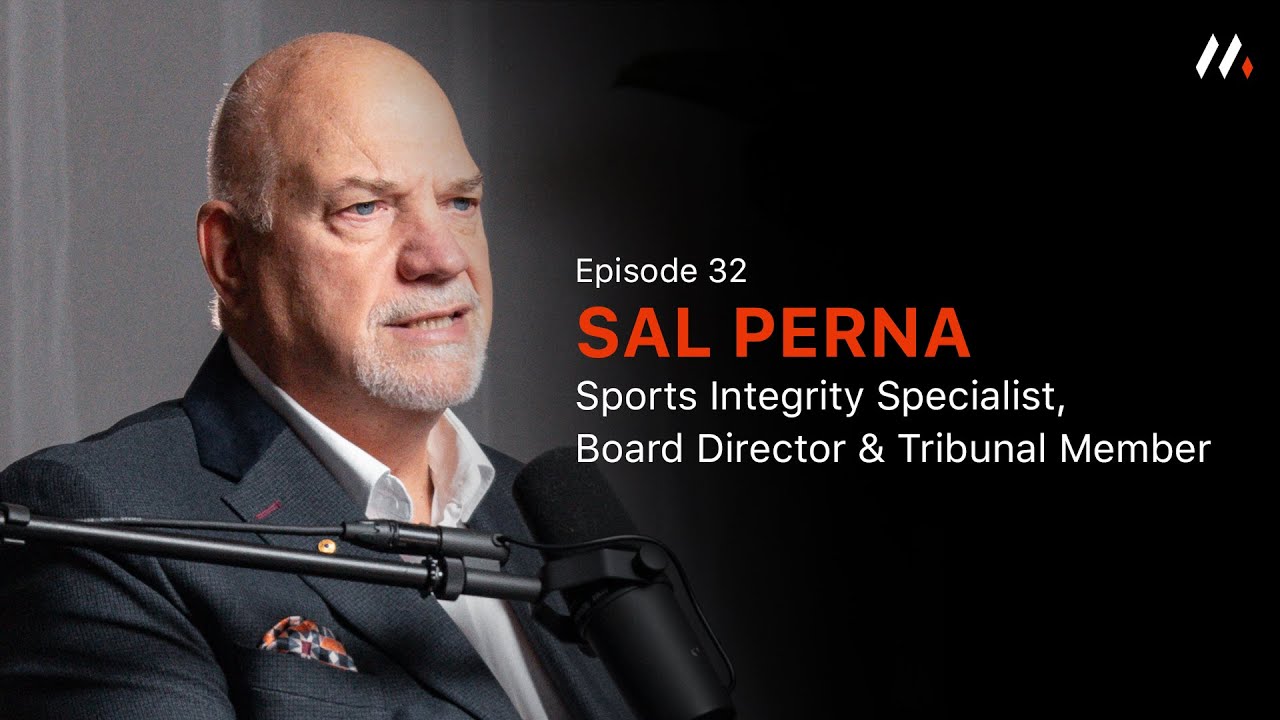
Sal Perna, a former police detective now advising on sports integrity and corporate governance, argues that gut instinct built through years of mistakes often beats textbook evidence in high-stakes decisions. He's served on tribunals for the AFL, Tennis Australia, and WADA, and stresses that accountability, diverse opinions, and protecting your character matter more than the leadership style you choose.
Chapters
So gut feel's telling me one thing, evidence, if you like, is telling me another. I should have gone with gut feel. So that's kind of what I've learned over the years. Your gut feel is something that's— it's not tangible, it's hard to describe, it may not have a scientific background to it, an evidentiary background to it, but because it's kind of something that you've learned and something you're comfortable with, something you're confident with, it's probably a lot more important than the other stuff.
Sal Purna, welcome to The Mentor List.
Thanks, David. Thanks for having me.
And it's great to have you in the studio here. I'm really excited for today's conversation. So High-stakes decision-making under pressure. There's, there's our theme, there's our, our tagline. And I couldn't think of anyone better to sort of jump in and maybe just bring out a few examples in your career. You know, knowing that you're on various different tribunals or acting in sort of, I guess, a, an unbiased voice of reason, whether it's anti-doping tribunals, International Tennis Australia, I mean, we can go on. National Basketball League. There's a lot of sporting codes, authorities, businesses that are calling on you for the voice of reason. So obviously you make good decisions. So what's the secret, Sal? What's the secret to a good decision or good decision-making?
I don't know if there's a, there's a secret, but I think experience is a key part of that. The, the more mistakes you make The more times that you're exposed to situations where you have to make a decision, the better you get at it. You know, I can remember doing some early management training about, you know, this is how you make a decision. You look at the alternatives and you look at the consequences of each and you weigh them up and all of that. Well, I think that's great in theory, but you need the experience. And I think I was lucky in having policing as my first professional role because you're making decisions every second of every day. You know, do I stop the traffic for this accident? Do I respond to this call or to this other call? Do I arrest someone? Do I charge someone? To the most extreme points about whether you take your gun out of your holster, et cetera. But The sporting world, the seriousness of the decisions aren't to be trivialised either because you're making decisions about athletes and whether or not they're going to be able to take part in some event and you've got the power to disqualify or suspend or whatever. So I think with experience comes that recognising what the impact's going to be of your decision. And then concentrating on that effect, um, rather than thinking about, well, what's all the options and what's the consequences of each one and weighing them up and, and whatever. So, um, you know, it's a long-winded answer.
No, no, I think experience— I think we can maybe jump back into a few things that you mentioned. There's sort of experiences about, you know, making mistakes, and you mentioned earlier in your career you're in sort of law enforcement. Which is actually, I think of, and this might be naive of me, but isn't that like a breeding ground where you can't make mistakes? So, you know, you arrive to the crime scene and then you're, say there's a conviction and now you're in the lawyer, what am I trying to say, in the court.
Yeah.
Being questioned by the hottest barrister. Like just room for error there. Like, you know, having, making mistakes Yeah, I'm, I'm not sure I'm asking a question there. I'm trying to understand the dynamic.
And, and that's right, it is. The scrutiny never, never ends. It starts from the minute you arrive at a case right through to when it's finished, the court process. And that could be appeals, and it could also be scrutiny by media or by the public or by the government. So what you might think is just turning up at a scene of a crime could go on for for years. And just to give you an example, one of the cases that I was involved in, we had an off-duty police officer who was involved in a scuffle at a social club, and as a result of the scuffle, a guy that he punched died.
Right.
Now, the pressure and the scrutiny was about whether we were going to charge the off-duty police officer or not. And then the pressure's coming in from all angles. It's coming in from the family of the victim, the deceased. You know, you're going to charge this guy or not. He's killed our father, husband, etc. From the police, well, he's an off-duty member. He knows what he's doing. It was an accident. And then you've got media and then you've got hierarchy and you've got a whole range of pressures coming from different points. And the decision you've got to make is, will I charge or will I not charge? will it stand up, won't it stand up, will I put a brief in or won't I. And you've got a fair degree of influence, although ultimately the Director of Public Prosecutions is going to make that call.
Yeah.
But you've got to kind of put all of those pressures aside and be true to yourself about what am I going to be able to live with down the track. And if I succumb to those pressures just to appease a person, a group, a part of society, will I be happy with that? And that's one of the things that I've found over the years, that you've really got to be true to yourself because ultimately you own your character, your personality, your reputation, etc., no one else.
And so, I mean, I imagine you've got, you know, we're sort of talking hypothetical here, so feel free to jump into examples, but, you know, intuition, You talked about sort of experience. The more mistakes you make, the more intuition you have. Intuition's fine, but it doesn't leave a— it doesn't say, okay, so how did you make this decision? I just used my intuition, you know, 40-plus years of experience in these sorts of cases. This is how it lands. It sounds like you need to have evidence and things that sort of sit behind that decision. So I just wondered— Yeah, when does that sort of start coming in? Is the intuition led first, or is it more about, well, I've got more evidence or persuasion to sort of, you know, say that that was the right decision? Or am I just overcomplicating things as usual?
Yeah, I don't— I've never really thought about what comes first because evidence obviously takes you down a particular path. And from a, a law enforcement aspect, or even a sporting aspect, it will lead you to a conclusion about whether there's been a breach of a rule or a crime being committed, and whether there's enough there to, to prosecute. So we'll take— but your intuition comes in in various stages of that, because you've also got to interpret things like what's the evidence actually telling you. It may not be that obvious. But more importantly, how you judge people, because you're always assessing the person that you're speaking to. So whether it's a witness, whether it's the suspect, whether it's a victim, and making a judgment on do you believe what they're saying, do you trust what they're saying. And it's kind of— we do it all the time. Like, our friendships are based on that.
Mm-hmm.
You know, we make decisions on people all the time, whether they're colleagues or whether they're friends or whether they're neighbours or whether they're family or whatever. And, you know, I think you've got to give way to that thing called gut feel on what it's— what message are you getting from the person. So say, for example, I can remember early in my corporate life getting invited to dinner parties. And I always felt, oh no, I should be going to this because it's the right thing to do. It's a social aspect.
Yeah.
Building a relationship. And I didn't want to go. I didn't particularly like the person or persons.
Yeah.
They're going to be there. But I went there because the decision-making was about, is it the right thing to do? Yes. Could it build my relationship with people? Will it help my career? Will it help with cooperation? All the answers are there, but my gut feel was telling me, you know, it's a waste of time. Why would you go? You're not going to have fun. You're not going to enjoy the night. It's hours you'll never get back. All of those sorts of things. And some of the people are draining, you know, the oxygen thief kind of situation you get where someone's just negative all at night or all the time that you're talking to them. So gut feel's telling me one thing, evidence, if you like, is telling me another. I should have gone with gut feel. So that's kind of what I've learned over the years. Your gut feel is something that's— it's not tangible, it's hard to describe, it may not have a scientific background to it, an evidentiary background to it, but because it's kind of something that you've learned and something you're comfortable with, something you're confident with, it's probably a lot more important than the other stuff.
Yeah, fantastic. Well, thanks for sharing. And I hear that quite often in some of our mastermind sessions about how we're sort of conditioned to suppress our intuition or expressing feelings. And then later on, as we start developing, getting more confident, more experienced, it can shine through in a really sort of effective way.
And you can see that too. You can see that from chairs and CEOs who've got a really good intuition, a really good gut feel. They listen to to what the board are telling them or senior management are telling them. They've got all the documents in front of them that point to a certain direction, the recommendations.
Yeah.
But then you watch how they operate and then the questions they ask are so incisive and then they give their judgment based on what they feel about it. And a lot of times it's contrary to the recommendation they've been given. And that, I think that makes a good CEO or makes a good chair. Now you're accountable for it. Because, you know, as we say, the buck stops there.
Yeah.
But they rely on that. If there's something smells or there's a— there's something not quite right, and whether that's because of experience or their dealings with people or their life circumstances, you know, I think a lot of people who have had tough lives, working lives, have had to grow in circumstances where it wasn't easy They're the people that I would turn to and get opinions and judgments on rather than someone who's perhaps got great qualifications or, yeah, you know, terrific academic past or whatever.
And, um, just in terms of maybe we break down decisions again with, um, I mean, you've been in a lot of high-pressure decisions or high-stakes decisions. I mean, um, you know, chairman of Crime Stoppers Victoria, for example. You're at the top of a business that's all about high stakes, and the pressure not to get it wrong must be, you know, enormous. How do you sort of, taking a decision sort of, you know, back to its basics, how does the impact of high pressure come in, or these stakeholders that you know there's going to be backlash or challenge with either way? How does that sort of factor in, or how do you navigate through that?
Yeah, and there's a lot of, a lot of responses to that. One is, I think that you've got to accept that the ultimate accountability rests with you, because depending on what decision that you make, you may have to justify that in some sort of a forum. You know, the corporate world is full of oversight bodies. You know, ACCCs and human rights commissions and, you know, media is an oversight body, the general public.
There's—
you're under scrutiny a myriad of ways, but the first thing you've got to do is accept that whatever you do may be subject to it, and perhaps on the, you know, err on the side of caution, accept that it will happen. So are you in a position to be able to justify, defend if you need to, the decision you make? Because what I've seen in, in some management positions is people are so reluctant to accept that that's their responsibility. They're collegiate in their approach, collaborative, trying to get a team answer to it, but failing to recognise that ultimately they're the ones that are going to be standing up. In, in, in policing, it's easy to understand that because ultimately you stand up in a witness box to justify what you did under the most severe scrutiny. As you say, the best barristers are cross-examining you, you've got a jury listening to you, you've got a Supreme Court judge that, that's there adjudicating.
Yeah.
You know, you, you understand that that's the scrutiny you're under. In the corporate world, sometimes you try to be so embracing and so engaging that you forget this rests with me. I've got to ultimately make the decision on this. So that's the first thing.
Yeah.
The second thing, if you have the time, engage with others, get other opinions, work out the pros and cons if you have that time. Now, that's not a scenario that you often get, but I mean, I'm fascinated by what people say about about that. I know myself, because at the age I'm at, it's taken a lot— long time to sort of work out a lot of things. One of the things I realise is if I'm dwelling on a complex issue and I'm not sure exactly which way I'll go and I have the time, when I hit the shower in the morning, it kind of dawns on me. I've had a night's sleep, I've taken the problem out of my head. I wake up in the morning, it just seems that much clearer. I've got mates that go for a walk or a jog or hit a golf ball, and they say that's the moment when they leave the problem, leave the situation aside, do whatever they're doing, they're more relaxed, they're in an environment where it's not stressful, and bang, the solution comes. So everybody's got kind of like a trigger point of when to do that, but I think that needs to follow the time that you've had different opinions because you may miss something. We're not— none of us are perfect that we're going to have every side of every story in front of us and then be able to make a decision.
Yep. And yeah, what you're saying certainly resonates, especially it's almost like an influential leadership role, the Australian sort of corporate landscape versus maybe an American one, which is very much a A decision top-down style of management. So we are very much get everybody on board and then make a decision, which I imagine slows down decision-making just by its nature in trying to do that in this collegial kind of manner.
Yeah, well, you remember they used to teach us that there were only 3 types of leadership: autocratic, democratic, and situational. And it was almost like This is the definitive approach to leadership. And when you reflect back, or when I reflect back on that, I can see that the situational leadership is really the key. Because you can't adopt another type of leadership that's going to fit every situation.
Mm-hm.
Being autocratic in every situation is not going to work. Being democratic is not going to work. And that's something I think is evident in people management. If you are a leader of people, they will look to you hoping that you've got the confidence and the competence to make the decisions. They will be— that's what you're paid for. That's where the buck stops. Not with them, with you as their supervisor, their manager, their CEO. whatever the, the role that, that you have. So you, you can be autocratic and take charge when you need to be. In certain circumstances, you obviously have to do that. You can be democratic and approach it from a team perspective, but it's going to vary with every situation you're in. And that's why I kind of look back and think it would have been great if they spent more time On the situational part, looking at what are the situations and, and what are the different approaches rather than here's the textbook, only 3 types of leadership.
I mean, yeah, and what a great— not training ground, but what a great environment to start building situational leadership than being in the police force. I couldn't think of the varied situations you would have applying similarities of, or Maybe there's like a kit bag depending on the circumstance. And I imagine, you know, sometimes even black and white letter of the law didn't make sense in the context of whatever it was that you were experiencing.
Yeah, because you can be— you can be trained to a certain extent. So for example, if you said to me, what are the sources of evidence, or what are the first things you do at a crime scene, I can reel those off.
Yeah.
You know, what's the definition of an investigation? I can reel that off. All of those sorts of things, they're kind of textbook type stuff, but they're really only the basis. It's what you do. So for example, we get told if you're going to tell a family that a family member has died, usually car accidents— as a, as a young uniformed copper, you tend to do that a fair bit. You have to knock on someone's door and tell a family that their loved one has been in a car accident. And it's usually somewhere else. It's happened somewhere else in the state. They've rung your police station and said, can you go and do a death message to this family?
Yeah.
So textbook stuff tells you, you know, be empathetic, think about your approach, have the full facts, blah, blah, blah, blah, blah. But when you get— you knock on that door, And you see the face of a mother or a father and you're about to tell them that their son or daughter has been killed.
Yeah.
That textbook stuff doesn't exist. It's not there. It's not in your head. It's gone. You are now confronted with human beings and emotions and frailties and a whole range of things that aren't textbook.
Yeah.
And you've got to deal with that. And you've— you don't have the time to do some of the stuff that you're taught, like go and get a neighbour or a friend or another family member to come and sit in and help and all that stuff.
That—
you can't do that. You don't know what you're walking into. You can't knock on the door and go, oh, are you strong-willed?
Are you really—
you know, you— have you got any close friends? Are you close with the neighbours? Have you got a brother or sister we could ring to come over while we tell you what we need? You can't do that stuff. But it's stuff that they teach you to have in the back of your mind. So you're dealing with life, you're dealing with people. So you have to adapt to the circumstances and your gut feel again, your judgment, your intuition on what you say and how you say it just kicks in.
Yeah.
And hopefully over a period of time it gets better. But unfortunately, young cops are young cops, inexperienced or young by age, doing stuff that is better handled by someone more experienced.
Yeah, I can imagine. Well, thank you for sharing that. God, I can't imagine a situation that, yeah, would be so varied and so difficult and at the ultimate extreme. Um, so just maybe taking decision-making, just sort of conscious that you've had you know, various tribunal roles, um, and even, you know, some of the, some of the boards in which you're chairing or you're a part of from a director perspective, lots of decisions that are bigger than you. And by the main, when I say bigger than you, they're a board decision or they're a decision by the tribunal. So you are one part of a decision-making group. Um, it'd be great to get your perspective around how, how have you found yourself to be effective in helping a group that you're a part of, or a board, work to an effective decision? Or, you know, if you're really big on going with option A and there's a bit of a divide, how do you, how do you, how do you ensure the best decision's made in a timely manner?
Yeah, that's what they used to call the $64 question, isn't it? Um, my first experience with, um, tribunals was with the VFL Tribunal, or AFL Victoria as it's called. And that was sitting in a room hearing cases of charges against players and adjudicating on whether or not they had breached the rules and what sort of penalty should be associated with it. So they were generally 3 of us, usually one legal background person who was the, the chair of the tribunal, and 2 of us sitting with them.
Video evidence, or is this before?
Later on.
Okay.
I did that for 19 years.
Wow.
So the initial part of that, no video.
Yep.
It was an umpire coming in, or more than one umpire in some cases, giving evidence, right? Uh, then you would bring in the other player if there was another player involved. And that, you know, that was usually cases of striking or charging or whatever. That was next to useless because particularly in that era, players never gave evidence against other players.
Right, player's code.
Yeah, it was a player's code. You know, they'd have this amnesia.
Yeah.
Or couldn't explain why they've got a black eye you know, that they got on Saturday, where they clearly got it from the impact of the charge that you're looking at. And then the player that's charged who would never admit that they did anything wrong. So generally you were relying on the umpire and nothing else. And then you would have disparaging viewpoints. whether you trusted the umpire's view, whether they could have been inaccurate, was it really a fist or an open hand, or all of those sorts of things. But I think, and that similarly applies to other boards, other situations that involve whether or not, you know, do you sack an employee, do you suspend them, do you fine them, do you demote them, all of those, all of those sorts of things.
Yeah.
The disparity of view always comes in. I think the first thing about that is not to lock horns with someone else, because then it becomes 2 individuals, and the one with the most persuasive argument and the one with the most loudest voice tends to get the vote, right? And that's a bad situation to be in, because having a louder voice, a more passionate view about something, doesn't mean that you're you're necessarily right. So I think that the— not the clue, but the way to approach that is make sure that you get everybody's opinion. Because you know what it's like in a meeting. You might have someone who's very quiet but probably got the best point to make.
Yeah.
And have they had an opportunity to say something, or has it been dominated by someone else, or by 2 people who've locked horns and no one else gets a say? And then again, ultimately it comes to the chair or to the majority, whatever situation you happen to be in, to make that decision and then take the accountability for that decision. And even like, even today, I, I still, if I have a dissenting view from others, I will say I don't agree, but I will go with the consensus. But I want it recorded that I don't support the decision. And again, that's probably going back to your early question about being true to yourself.
Yeah.
And that happens, I mean, all the time. You don't realize it. And I think this is digressing a little bit, but in the corporate world, you can sell your soul. You know, you can be offered a job that's a lot more money that you don't necessarily want, but you're going to go and take it because of the money. You kind of almost prostituted yourself. You've sold yourself.
Yeah.
To do that. And when I look back on that, a lot of people who have done that have been very unhappy because they knew that that wasn't what they wanted, but because of the altruistic situation, they took it.
Yeah, and it's generally, I mean, speaking on behalf of our sort of membership base, it's typically not the biggest factor around why you would make a move. I guess, you know, once that part's done in the negotiation into the role, the reason for staying or not staying is not generally related to what the weekly or monthly salary is. It is a component. It was interesting in COVID, we're doing a bit of survey, we're working with PwC to get some insights around, you know, what was driving employees' willingness to stay, leadership's willingness to stay. And, um, yeah, remuneration actually came up a bit higher as people were going after more certainty in a time where things were— but usually sits, yeah, around that third or fourth part. And interesting, which I'm sure you would have seen in, in police force and any other various roles, and even in the sporting code, is, uh, was just the relationship with their teammates was sort of number one.
Absolutely.
Um, so sorry, I'm going on a tangent there. So what was the decision to sort of move into, you know, how do you become a member of all these different tribunals across different codes? Are you getting a reputation for good decision-making? Like, how do you shine in this type of environment to then get all these different opportunities?
Um, a lot of luck. Right time, right place, and accompanied by a lot of hard work. So, um, policing was 20 years, and I left for a couple of reasons. One was that I hadn't spent much time at home because of the roles that I had, and I had 2 young kids, and I was at that stage where I needed to invest more time on them. But then also because I worked really hard and I was lucky, I got promoted very quickly and got to a commission level. And I knew that it would be less operational. And it was around that time I started to realise the sorts of things that turned me on. And one of them is being challenged and being stretched. And I knew that was going to be less and less as I went up the ladder because it's going to be more administrative. So those 2 decisions led me going into the corporate world, which is, uh, was a completely new ballpark. It was just, uh, like, what the hell's industrial relations?
Hmm.
I've never had to deal with unions as a, as a cop. You just do what you need to do. If you need to arrest someone, you arrest them. You don't worry about whether you've can go onto a building site or whether you might cause union issues, you just do it.
Yeah.
And I'm in an environment where this concept all of a sudden becomes really, really big, and the authority and the delegation of authority that you have in policing doesn't exist any longer. So then it becomes about respect and competence and understanding the business and understanding the people. And because I went to Australia Post and, and did a reasonable job with the, the group that I was running there, Telstra asked me to go and do the same for theirs. So those groups were security, investigation, crisis management, incident management, protection of the business kind of roles. So one naturally could be transferred to another corporate, basically.
Yeah.
And it was at that point I had a probably a bit of an epiphany. I lost both my parents within months, and it kind of made me sit and navel-gaze. You know, have you had those moments where you think, well, what, what am I going to do for my life, my professional career? And one of the things was, well, I just keep working for another employer. And there was at that stage, because I'd been in that corporate investigation security type role, there were specific specialist roles in other organisations that were being tasked with that kind of integrity role. And most, most of the big businesses in Australia had a corporate investigation, corporate security, head of integrity type role. So I knew I could probably move around, but I thought, that's not stretching me. Comes back to that You know, it's just, it's going to be another organisation, but essentially doing the same sort of stuff.
Yeah.
So I started a consultancy, and I started using all the things that I'd learned through policing and through the 15 years in, in the corporate side and consulting to organisations. And that might have been about issues that they had, investigations that they wanted suspicions about senior management, but it also went into things like selection, recruitment, team building, because I kind of had developed a bit of a people focus as well. So in policing, I was running the detective training school, so training and development became a key part of my background as well. And I did that for a few years and 3 years actually. And towards the end of that, I was asked by Tennis Australia to help them with an anti-corruption program. There were some murmurs coming from overseas about players involved in manipulation of matches, and Tennis Australia had the Open coming up and they wanted to put something in place so they could be confident that those sorts of things wouldn't mar the event. And that was my exposure to sport.
Right.
So prior to that, I'd done what, you know, most people do, you know, as a householder and as a father and whatever, and been involved in local footy clubs and tennis clubs and other stuff. But this was the professional side. So I had to work out quickly what corruption was in sport, what crime and corruption looks like in sport. And I started looking at other sports. So I went, had a look at the American football, basketball, baseball situation. I had a look at the AFL, British Horse Racing Authority, Racing Victoria, and a few others to see, well, what do they consider crime and corruption, integrity in their sport, and what are they doing about it? And with all of that, I put together a program for Tennis Australia that was used for the 2 Australian Opens. And it was about that time that things were happening in the AFL with players getting involved in different stuff. So I put a paper together for the AFL about what integrity might look like in football. And I guess it was the timing because at that time there were some issues at Racing Victoria. that had been publicised widely in the media. They had a CEO that was betting under an assumed name.
Right.
And they had a notorious criminal family, one of whom had bought a racehorse while they were in prison. And the government said, what's going on in racing? They appointed a county court judge to do a review. And one of his recommendations was you need an independent oversight.
Yeah.
Let the bodies do their integrity stuff. And this is Racing Victoria that does thoroughbred, greyhound racing, and harness racing. Let them do their stuff. Let them have their integrity teams, but have an independent oversight role that looks at what they're doing. Is it right? Setting standards, doing reviews, investigating, etc., etc. So they created a brand new, what they call the Racing Integrity Commissioner role. And because of the background I had, that, you know, understood what investigating was, understood what tribunals were, what standards were, um, what integrity was, what manipulation was, had a quasi-legal kind of knowledge, all of those sorts of things, it just seemed to fit.
Yeah.
So they asked me whether I'd do that, and I did that for 11 years. And that's during that time that tennis created an independent integrity board. And that's the time where the NBL had an advisory board that I went on, but that, that wasn't an integrity-related one. It was a very clever advisory board that would look at anything basically that the chair wanted to look at, whether it was fan engagement or merchandising or whatever, TV rights or anything like that. And other things like Crime Stoppers and other things came in, in, into that period of time as well.
Wow. So it's sort of, it's kind of sounds like it's evolved and it, you said a bit of luck and a bit of perfect timing. It certainly sounds like that.
Absolutely.
You were obviously very prepared for, you know, luck and the timing of it. So, um, yeah, it still goes back to the—
I like a challenge. I need to be stretched. When I finished the, the racing integrity role, um, 3 years ago, I felt like it's time to semi-retire, but I'd keep busy, right? So initially I became a Justice of the Peace. And then a marriage celebrant. Stayed doing the work I did on the tennis board, but then a position came up on WADA's ethics, independent ethics board, and I thought that'd be really interesting.
What's WADA? Sorry.
WADA, the World Anti-Doping Authority.
Right, okay.
Yeah, so they're the ones that oversee anti-doping in all major sports around the world. And then most recently, a couple of months ago, the South Australian government needed someone to monitor the implementation of recommendations that came out of a review in greyhound racing.
Right.
So I'm doing that at the moment. So kind of one led to the other. I thought I was going to kind of lay in a hammock and play golf and whatever and realise that's not exactly for me.
You can always do that later. That's, uh, I find it fascinating with, um, yeah, I guess WADA's remit and the whole concept of, um, blood doping. And, um, yeah, it was a topic that, um, I mean, I wouldn't— I would not know how you would, how you would track or catch someone that's effectively using good versions of their own blood to make them more effective. Um, yeah, that's, uh, I mean, it must be untraceable if it's your own blood.
It's really difficult, but they've got a thing called biological passports now that is taking a sample of your blood longitudinally, if you like. So over a long period of time and having a look at all the characteristics of it, whether they change or not. So that's one indication. And WADA kind of sets standards for all the world anti-doping bodies to put into place.
Yeah.
And it's getting smarter, better. Once it used to just be blood or urine. Now it's hair, the biological passports as well. So they're looking at ways— and kind of the standards they set recognise that there are some substances that you should never take. illicit stuff like cocaine and other things. But there's some stuff that you shouldn't take during performance.
Right.
Things that might speed up your repair of your muscles or increase your stamina or whatever, because that's unfair. And that's really what a body like that's about, making sport fair so that any athlete that's competing knows that they're competing under the same circumstances that every other athlete is competing. And that applies for animals as well, horse racing, dog racing, or whatever. Everyone wants an even playing field.
Well, that's right. And that's effectively what it's about, because everybody's looking for an edge, whether they're the athlete that's looking for, you know, to run faster or whatever it is. And then the edge around some of the crime and corruption, how do we exploit what is, you know, needs to be seen to be an even playing field. So I imagine following the money in some of those examples would have highlighted, you know, where some of the focus was. And it sounds like it did if someone's buying a horse out of prison, which is, uh, unbelievable.
Yeah, that, um, that's a really good, really good point because years ago the only sport you could bet on was horse and dog racing, right? That's it. And those sports were created for people to be able to bet. No other sport. Now you could bet on any other sport.
Yeah.
And not only can you bet on outcomes, but you can bet on aspects of that event. So you might be betting on whether a cricketer hits a boundary in a particular over. or even less innocuous, whether that player wears a short sleeve or a long sleeve jumper that day.
Wow.
Because there's betting markets that will offer those sorts of things. The other aspect that's come into it, apart from every sport now having betting associated with it to any aspect of that event, is the fact that you can bet on somebody or something to lose.
Right.
Because you've got these things called betting exchanges where they bring 2 account holders together and you bet against each other. One says they're going to win, one says they're going to lose. That means if you can influence a person or a team to lose, which is easier than trying to get them to win, you can still make money out of it. So there's lots of challenges there because of the money part of it. And that's Essentially through the wagering.
So effectively, there's more, more, more ways to gamble on sports means there's more ways to get up to mischief, basically. Yeah, absolutely.
I mean, take, take it, say, take darts. How do you know when a player throws that dart it's a bad shot or it's deliberate?
Do you have the answer? Because I certainly don't.
You probably can't. Wow.
Okay.
How do you know when a football team sets up a particular player to kick the first goal? Would they have normally passed it? Would they have had a shot? So some of it is really, really difficult, and you're relying on experts, form analysts, performance analysts, betting analysts, a whole range of people who are watching characteristics of the player, the weather, the surface, the previous performance, to try to help the integrity units in those sports work out, is this something we should be looking at or not? But most of those things, and particularly that example of, am I having a bad day, Or am I deliberately underperforming is really, really difficult.
Yeah, I imagine. Gosh. Okay, well, you mentioned you like— what was it? You like to be challenged and stretched. So I think you found your calling there, that's for sure. Okay, so we're just going to move into some short answer questions now, Sal. But just before I do, knowing that you're on your way in here today and you're probably hoping that Dave asked me a certain question, was there a something that maybe in summary that could sort of summarise this, or is there a topic that you thought, actually, I think the listeners would benefit from maybe just talking about this area for a bit?
There's a couple of things I thought about when I knew I was coming in for this. One, I think I've made clear about being true to yourself. I think that you should jealously guard your character, your reputation. I think that's critical.
And just on that, do you have a better definition of yourself now to when you were—
Yeah.
Yeah.
Yeah. And it comes with age. I think it comes with experience. And that's life experience as well as professional experience. And knowing, as I said before, what it is that turns you on. Like, I never set out to have a sports integrity expertise. But I realise how much I love sport and I realise how important integrity is to anything, to our lives, to anything. You know, policing will embed that in you and it's kind of that passion about justice.
Yeah.
Like most of us have it whether we recognise it or not. Like, who loves being in a queue? when someone jumps in in front of you? No one. You know, that sense of injustice, we've all got it to varying levels. Hopefully it doesn't lead to road rage, which it does in some cases.
It's illegal in Japan to jump a queue and you can be prosecuted.
I'm not surprised. That was one. The other one was to kind of learn from situations where you think you're disadvantaged or your predominant feeling is negativity. Now, the reason I mention that, and I'll explain, is because I was thinking, you know, the first time I went to work in the homicide squad, we had— and this was my very first case— Process was, if you're a new detective in homicide, you don't do what they call the brief. You don't put the case together for court for at least 6 months.
Yeah.
You kind of— it's kind of an unwritten apprenticeship. You go to all the cases, you do all the investigations with others who ultimately put this brief, this case together, and you're involved in everything, but you've got to learn, and you're not permitted to actually do that for the 6 months, which as a young detective, frustrating, frustrates the hell out of you. You go, well, I know what I'm doing and I can do this. You can't. So my first case was the body of a baby found in a tip in a country town. And my role as the apprentice, if you like, was to go to the postmortem. I had to be there when the child was examined by a pathologist. And that— I won't go into the graphics of what that involves, but it's examining the body internally and externally for signs that will help us with the case. And I hated that because, yes, it's a baby. I haven't done one before. This is my first murder. And instead of being there at the scene doing the stuff that I wanted to do, I'm sent away to go to a base hospital and watch a post-mortem examination.
Hmm.
The negativity was the main emotion I felt. After I got there and the pathologist knew that it was my first one, he went to great pains to explain to me what was going on. And one of the things he did was he took the child's lungs and put them in a bowl. And the bowl had water in it. And he explained to me that if the lungs floated, it meant there was oxygen in the lungs. If the lungs didn't float, meant there was no oxygen in the lungs. And that would be evidence that the child breathed. And that was important because if the child was stillborn, it would be a completely different investigation than if it was killed. But he knew that that was going to be important to me and to the case to know that particular thing. So I came away and years later reflected on that and thought about that. That was a learning experience, not a negative thing. Go and do that, it's menial or whatever. And that's what I've learned over a period of time, that every situation you're in might feel negative, might look negative, might feel like you're being ostracised or penalised or whatever, but use the opportunity as a learning experience. And that was a— that was one of the other things that I thought about. The other— the third one is a quote that I saw attributed to Dame Margot Fonteyn, the famous ballerina, and I wrote it down so I I wouldn't get this wrong, but she said, the one important thing I have learned over the years is the difference between taking one's work seriously and taking oneself seriously. The first is imperative, the second is disastrous. And it kind of stuck with me because being in high-pressure roles as most of the people that you deal with are, you've got to find a balance on how you approach your work versus yourself. And I think everything to do with work, 100% professional, but don't take yourself seriously. Recognize you can have a laugh. Find the people that are important to you that you can share your feelings, emotions, and whatever with, find that there's another part of you that you can be yourself, that you can trust people, and don't waste your time with people that you don't want to be with.
Yeah.
Or spend time with. And I think that balance about taking yourself seriously and your work seriously is critical for mental health and physical health. We used to de-stress by just drinking copious amounts of alcohol after a case.
Yeah.
But it wasn't the alcohol. The alcohol was a kind of, you know, it was conducive to saying what you wanted to because you're much more— your guard was dropped. But it was about the people that you were doing it with and how you could share and relate and whatever. That was almost like trauma debriefing at its very, very Very basic. So if you've got friends like that, might be family members you can sit with and just talk about your day without going into details or, you know, releasing confidential or sensitive information, what a great way to be to get that balance.
Yeah, and what great advice. I mean, just hearing about your first case at work, and obviously I think you mentioned 20 years in the force, so that the things that you would have seen and dealt with And having a bit of a mantra or quote like that where, you know, it would be difficult to go and have a laugh with some friends after you've just experienced, you know, something in that general vicinity like the example you gave before. So that's great advice around actively working on that. And yeah, also looking at who you socially surround yourself with also for those influences. Well, fantastic. Thank you. You've beaten me to the quote I was going to ask you for. I've got another one. Oh, you do? Okay.
That's not my favorite.
Good job. Good job. I like it.
Stuck to it. My background's all integrity.
Yep.
So my quote that I knew you were going to ask me for wasn't the De Margot Fonteyn one, but one attributed to a guy called Edmund Burke. And he said, the only thing necessary for the triumph of evil is for good men to do nothing. And I really, really like that. Because it kind of fits into the Crime Stoppers and whistleblower type environments where if you know something's being done that's not right, do something about it. And that may be as simple as passing information on or confiding in someone.
Yep.
Because unfortunately, I think there's still a bit of a culture about what people call informing. But if it's done with the right intention, it's got a dual effect. One is that it hopefully will expose someone who's doing something wrong and make them accountable. The other thing is it gets it off your chest. And there'd be a lot of people carrying a lot of stuff around of what they've heard, seen, or whatever. And that could be as basic as how people are treated in the workplace. You know, stand up, say something. You can do it in a myriad of ways. It doesn't necessarily identify you. But I kind of, I just like that quote 'cause it kind of works to the core of everything that I've basically been involved in.
Absolutely. And one of the things that comes up fairly often in our Mastermind groups is this concept of, you know, what you walk past you condone, sort of relating back to a company's sort of corporate culture. And yeah, so it's very similar to sort of, your quote there from Edmund Burke around what you, yeah, what you basically, what you don't take action on sort of thrives or triumphs in the words of that quote. So thank you for sharing.
Could I share the books too?
Yeah, absolutely.
Because I saw in there that you said, you're just guessing the questions.
This is, that was my next one. So favorite book.
So management related, 3 really basic books. The Six Thinking Hats, which is de Bono.
Yep.
And I love that because it brings in the understanding of lateral thinking, creative thinking, and I like the actual hats.
Yep.
To have them there and pass them around a table when you're brainstorming stuff.
Are you a blue hat, just out of interest?
I vary.
Okay.
Yeah, I'm generally red because a lot of my stuff's emotional.
Right.
based, but I'm also white because I'm very positive.
Yeah.
So I, I like that book. It just stuck in my mind. Who Moved My Cheese was, was another one that was a popular one years ago, and that's really about thinking about things again more laterally and, and not being caught in a rut. Because if you keep doing what you've always done, you'll get what you've always got, you know, that, that kind That kind of saying was another one. And The One Minute Manager. Oh, that's great. Which I think is a basic, but they're not the ones, the ones I would recommend to anyone I'm mentoring or who getting out into professional careers or whatever. But I would say to them, read biographies and autobiographies. The lives of people are much more significant in learnings Because if you've got a good biography or autobiography, you get people exposing their vulnerabilities, telling you what mistakes they've made, what they've done in their lives and picking at it. And it can be, you know, Long Walk to Freedom about Mandela, or it could be The Rise and Rise of Kerry Packer, or some of those that are really significant and high profile. Or it could be something like Breadwinner, which is one of my favourites, which is Tom O'Toole, the Beechworth Baker.
Yeah.
And how he built that business up. And, you know, his is about an illiterate guy. I think he started out as a butcher and then ended up running a multi-million dollar business.
Yeah.
All of those books give you little things that you can take on board and add to your own life or use as lessons to your own life. So they're the, they're the kind of books I'd say. And it doesn't matter who it is, you know.
Yeah.
It could be Billy Thorpe or Barbra Streisand. It doesn't matter. There's something to be learned from everybody. And that, you know, I always tell young people that that's what they should do with all of their bosses. Look at all of their bosses, pluck the good stuff that you see and add it to your repertoire. And, you know, when you take little bits of everything, you're going to end up in a good space.
Yeah, and I'm sensing a theme here. So with the books you've recommended, You know, when we started talking, we're talking— you're talking about, you know, try and effectively get perspective of others, but think from their perspective and what they're going through. Back to the tribunals, you're getting into the head of the umpire, the head of the players, so you're understanding what they're saying but also have their context. And so it's great to see, you know, 6 Thinking Hats, which are all about different ways of thinking. And you're even displaying that now with your red and a white and a blue hat. So it's sort of saying saying you're ambidextrous and you can put one on, not ambidextrous, that'd be left and right-handed, but you know what I mean with your thinking. And then, yeah, Who Moved My Cheese? Another example. So we'll get those books with links up on the website. But now we're gonna move into 60 seconds of as many questions I can ask you as possible.
Okay.
I'm gonna set my timer and it's basically a, Option A or option B. That's, that's the general rule. Okay. Um, but you know, some, some guests like to pick both, but, uh, we'll see how you go.
Okay.
Um, okay, let's get 60 seconds running on here. All right, ready to roll?
Yep.
Cool, cool. Fieldwork or boardroom?
Fieldwork.
Immediate action, careful deliberation?
Immediate action.
Crisis negotiation or strategic planning?
Crisis negotiation.
Decision-making under stress or under scrutiny?
Under stress.
Ethical dilemma or tactical challenge?
Tactical challenge.
High-stakes situations or everyday management?
High stakes.
Policing or corporate leadership?
Policing.
On-call emergencies or scheduled meetings?
On-call.
Just us. Team coordination or solo decision-making?
What was the first one?
Team coordination or solo decision-making?
Team.
Reporting crimes or addressing intense issues?
Uh, addressing the issues.
Spontaneous decisions or pre-planned strategies?
Spontaneous.
Field experience or corporate experience?
Field.
Sports ethics or business ethics?
Sport.
Team leadership or individual performance?
Team.
Quick fixes or long-term solutions?
Long-term.
Immediate intervention or thorough investigation?
I've got to go with the investigation.
Public accountability or private discretion?
Public.
Crisis management or performance metrics?
Crisis.
Law enforcement or sports management?
Oh, sports management.
There we go. So, Sal, thank you very much for being so generous with your, um, experience today. I know we sort of— I kept bringing you back into decision-making. We could have gone many different areas, um, here, and it's fantastic to be able to share, you know, perspectives of what's happening on tribunals, what's happening at the board level. I mean, you've just saved us doing a police role for 20 years because you've given us all the insights. But what a remarkable sort of collection of accomplishments. And it does give you a certain skill set, which is fantastic that you're, you're not on the golf course, you're still out there and yeah, doing some amazing things. So thank you for your time today.
Thanks, Dave. Thanks for having me. Thanks, Al.
More from David

2026 National Networking Event | Melbourne Grand Prix Featuring Guest Speaker, Molly Taylor



HR Connect Leadership Series | Peitta Dyball on culture, strategy & the evolving HR landscape

HR Connect Leadership Series | Elevating HR through community and mentorship





Uncover Neurodiversity: Empowering Hidden Strengths in Society and the Workplace w. Dr. Shae Wissell
