Redefining Customer Experience: Louise Eyres on Mastering a Customer-Centric Strategy
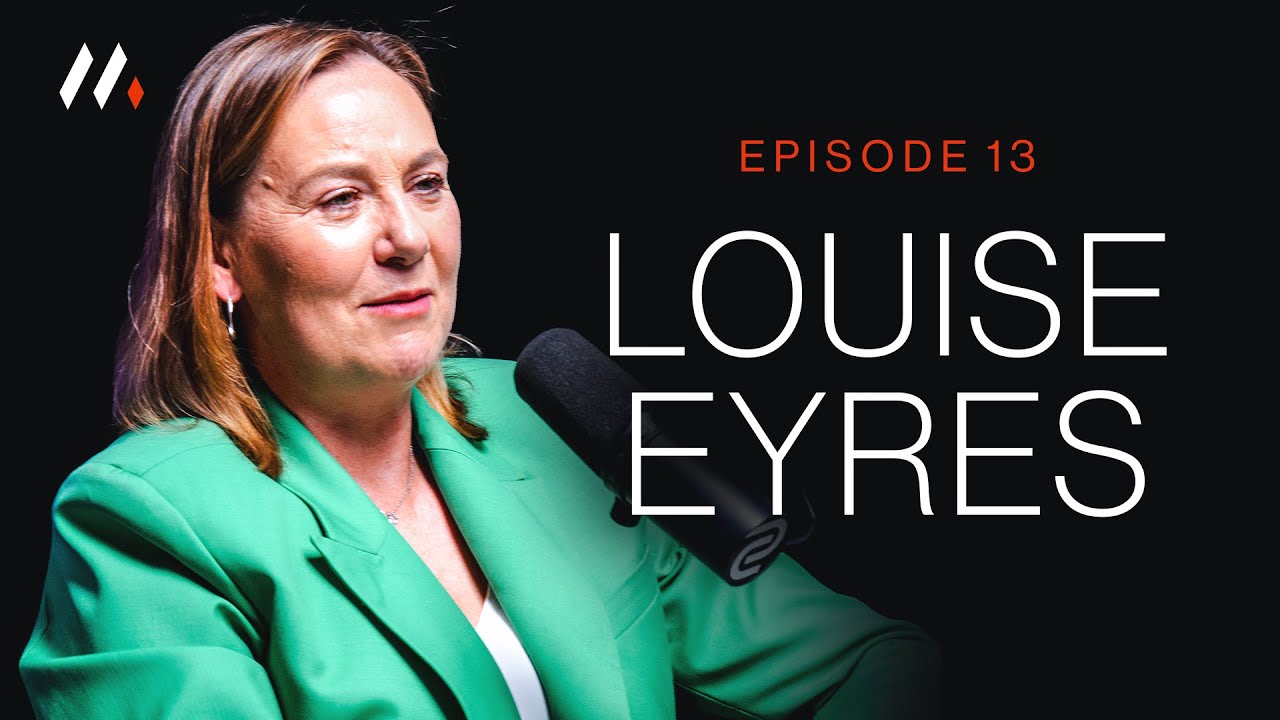
In this podcast, host Alex interviews senior marketing executive and former CMO Louise Eyres about the evolution and practice of customer strategy across multiple industries. Louise defines customer strategy as achieving a 360‑degree view of the customer by understanding both the person and their situation. She contrasts early, demographic‑only approaches with modern, customer‑centric design, citing the ANZ "More Convenient Banking" transformation as a turning point. She shares practical frameworks she uses – a one‑page customer‑strategy canvas, classic 2×2 portfolio matrices, and data‑visualisation dashboards – and explains how weekly "customer meetings" embed insight across marketing, product, finance and IT. The conversation covers the blend of qualitative research, quantitative analytics, and usability testing to validate assumptions, and the importance of metrics that span the funnel from brand awareness to activation and lifetime value. Louise discusses leadership behaviours needed to champion the customer, including curiosity, acting as a conductor of cross‑functional teams, and influencing boards, illustrated by the rapid VicSport pivot after the Commonwealth Games cancellation. She also highlights brand‑building case studies such as Sport Australia’s "Find Your 30" campaign, BHP’s rebrand, and Vanguard’s financial‑literacy initiatives. Throughout, she stresses that customer strategy is business strategy, must be shared organization‑wide, and adapts to contexts from start‑ups to large listed firms, with resource constraints shaping execution. The interview concludes with personal reflections on books, quotes, and future aspirations toward advisory and board roles.
Chapters
It really takes a leader who is customer-oriented and puts the customer at the centre. So the service model of banking just didn't fit with modern Australia anymore. Customer strategy can take months in terms of research, the Monday morning customer meetings. You have to keep refining, like you can't take your eye off the ball. It's often for many in marketing, but probably across many disciplines, you're always balancing that short and long term.
What's the most important aspect of the customer strategy? Today on the show, we have Louise Ayres. Louise has held senior executive and chief marketing officer roles in market leaders of the resources, financial service, asset management, and sport industries. She's a non-executive director and an advisor on marketing, brand, and customer strategy. Today we're going to be talking about all things customer. So Louise, welcome to the podcast.
Yeah, thank you, Alex. Great to be here.
On a beautiful spring day.
Yeah, it's a perfect Melbourne one. It's probably going to rain anytime soon.
No doubt. No doubt. So Louise, we're going to dive right in. And I know today that you wanted to talk about consumer strategy, really. Would you mind sort of defining that for us as it stands in your mind?
Yeah, absolutely. Yeah, thanks, Alex. I'm really passionate about customer strategy. So it's great to have this chance to have a conversation and delve a little bit deeper into it. And to me, customer strategy is really that ability to understand your customers at the deepest possible level. So it's how do you get to that full 360-degree view of your customers? And sort of the frame of reference I try and always hold true to is understanding your customers as the person they are and the situation they're in. So if you can understand those 2 dimensions, that really gives you the strong sense of customer strategy and really see that We do our greatest work as marketers and as business leaders if we have customer strategy at the center, because that allows us to all be anchored and then we can be creative off with a real springboard from that really strong focus on customer.
Yeah, no, I can imagine that's pretty crucial. But just in terms of the evolution of understanding the customer, I mean, that's been quite a ride over the last 10 years.
Yeah, the last 10 or 15 years when you think about customer strategy and that evolution, and I certainly look back and see what I called customer strategy 15 years ago, you almost look back and cringe because it was just so demographic-based.
Mm-hmm.
And when we think about that time, we were really driving our customer strategy by a very one-dimensional perspective when you think about it. So we were saying, male, female, are you married or not? Do you have children or not? Do you live at home or not? And we really categorize people that all 30-year-olds look like this, all 40-year-olds look like this. And it was really probably a couple of events that for me really showed me that that was just such a limiting dimension in that evolution, just focusing on demographics. And one that comes to mind was a presentation that Mark Ritson did quite a few years ago, and he had 2 profiles up about, and it was demographically based, of 2 individuals.
Yeah.
About their age, about their sort of life circumstances. But then when he revealed it, I think one was an Australian cricketer and one was a Kardashian. And it just showed just how crazy it was to build from that. So I think as we evolved from that demographic base, then we started to really almost flip the paradigm and think about how are we building offers and services for our customers rather than pushing products to customers. And I think that's been one of the pivotal shifts in actually how we drive customer strategy. And if I think back on the more convenient banking work at ANZ, Yeah. that was when customer strategy really changed for me. and really evolved into a new way of understanding our customers.
I can imagine, yeah. And has it been sort of underlying that shift in understanding and sort of, or further understanding I should say, about customers as opposed to the 2 broad buckets of sort of, you know, the demographic segmentation? What's really allowed that to happen in the industry? What's been driving that?
I think it is that sense of really putting the customer at the centre. And if I use the More Convenient Banking platform and time at ANZ as a pivot point for me in thinking about customer strategy under Brian Hart. So it really takes a leader who is customer-oriented and puts the customer at the centre. And during that time, we recognised that for our customers, there were more and more people who were working longer hours, dual-working households, So the service model of banking just didn't fit with modern Australia anymore. So when we looked back and thought, what services do we deliver to our customers? That's when we really started this convenience play. And so we were developing services for them. And so that's when we looked at 24/7 call centres, branches open on Saturdays, more ATMs. than any other bank. And really then starting even our internal processes. So we would start every Monday with a customer meeting.
Yeah.
Going through what launched on the weekends, how did it perform, what do we need to change? And so it was really from that element of understanding your customer and then actually putting operations, customer service, building offers That really drove the change.
Yeah, no doubt. That's amazing. I mean, Brian talks a lot about care being one of his 5 Cs, doesn't he? So I guess that brings it home in terms of understanding.
And hopefully customer will be in there. And still people today say, you know, the Brian Hart's way of understanding customer brand and marketing, absolutely taking it back to as simple as possible. And then as I say, making sure that we are there for our customers, not pushing a product to them.
Yeah, no, absolutely. I think that's, yeah, it's really interesting, obviously change in mindset, yeah, that has had to go along with that.
Yeah, absolutely.
Do you have a framework or sort of a model that you look to when you're sort of thinking about the customer first and, you know, building things for them?
Yeah, there's a couple of frameworks that are in my toolkit that I use and I've used across different industries and different sectors as well, 'cause I think there are some aspects of customer that are just fundamental business principles and they don't really change regarding of whether you're in resources, financial services, sport, health. So a couple that are really my go-to is one is really articulating a customer strategy on a page.
Mm.
And being able to articulate kind of the who, why, what, when, how of your customer. So really, who are you going after? Who's your target?
Yeah.
What are their pain points? How and why would they purchase from you? How are you going to measure? So really having that concise customer strategy on a page. Another framework is a go-to, is a real, is the classic 2x2 matrix. I think we use them for a lot of things, but I've certainly used them when I'm looking at customer strategy in a portfolio business. So when you have the classic emerging, growth, mature, and perhaps exiting, you can actually use the 2x2 to take a look at your portfolio really as a pipeline and to be able to see, well, I've gotta protect my core, my core customer base. It could even be for geography. So at ANZ, you know, we had mature markets, but then actually seeing, well, where's the innovation coming from that I need to invest? Where's my high growth? So I think the power of the 2x2 and possibly a third one, which is not really a framework, but actually around data visualization.
Okay.
And data visualization is certainly something, particularly over the last couple of years that I've used a lot in customer strategy to be able to see how the customer is coming through the funnel or the pipeline and the customer journey. And data visualization really helps bring that to life.
Yeah, and I guess that's sort of crucially internally as well, that data visualization in terms of driving your customer agenda.
Absolutely, why didn't I have stolen one of Brian's principles? And really in my last CMO role, we started every Monday with the customer meeting. We would go through what the data was telling us around the customer from a number of different dimensions and So really the power of Tableau and actually being able to bring the whole team. So that's when it wasn't just about me as CMO understanding the customer, but it was important for the whole marketing and customer team, regardless of your role, to understand how we're performing and how the customer strategy is coming to life.
Yeah, absolutely. And creating that vision in terms of what you want it to look like, I guess.
Yeah. And a shared vision for everyone.
Yeah. Yeah, that's fantastic. I mean, you've probably sort of mentioned a few aspects of this, but in your view, what's the most important aspect of the customer strategy?
Well, I think the aspect is that it can be shared across the organization and that it's focused. So I think in most of the roles and where I've seen us be able to do our most creative, the most impactful work, and that impact is It's market share growth, it's revenue, it might be launching new brands into new markets, but where you can be really focused on the customer in that sense of the persona, as I mentioned, the person that they are and the situation they're in. If you can galvanize the whole organization, your colleagues at the executive table, your own team to be talking in terms of the customer, in that way, I think that's one of the absolutely critical success measures. You have to bring everyone in the organization with you as you embark on a customer strategy. You can't do it alone.
Yeah, yeah, that's powerful. And you mentioned as well that the, I guess the, you have frameworks which sort of crossed industry. Would you say that the sort of the customer strategy also sort of crosses all industries? At that stage and are there industries that are better at it than others potentially in your view?
I'm not sure if it's industries and we always have to like even put ourselves back in the frame as customers because I think it's often interesting when you're leading a customer function or a customer strategy. Sometimes it's as though customers are some being out there, whereas actually what would I want if I am the target segment and how would I bring that through? But I think the principles are largely the same of really understanding the customer at that deepest level, but then the elements might be the resources that are available to you and how you connect with that customer. So I've worked in very large organizations where perhaps we have had resources available to us, but then also even now working with startups, some scale-ups, The principles are largely the same, but they're just restricted more by the resources at their disposal. So that just means you have to be more focused. Perhaps your media channels are more word of mouth, more influence, which just means that your customer strategy has to be even tighter, that you really know that every dollar, every moment with scarce financial and people resource. that you're putting it behind the target and the vision of your startup or your scale-up.
Yeah, it's going in the right direction. Yeah, I mean, you've actually covered my next question, which was, how does it differ in terms of the strategy through the different elements of business or timescales, startup to scale-up to growth and everything else?
Yes, well, I think the principles really do stay that same. And as I mentioned, it's then how you connect with the customer that would be different. So that's That connection around if you're clear on your brand strategy. So some startups I'm working with is about the brand strategy and just those fundamental principles, but then how do you connect with the customer? So yes, maybe you can't do the mass television, you're not gonna be taking out corporate sponsorships, but it's actually then what do you have at your disposal so you can bring your service, your offer to the target customer?
Yeah. Yeah, that makes great sense. Thank you. Shifting gears slightly here, how important would you say brand identity is in creating that?
Oh, incredibly important. And it's possibly a chicken and egg because I think Professor Scott Galloway often talks that brand identity starts with the customer. Actually, I think I would agree, but I would say that that is the case that the big brand strategy programs and rebrands that I've worked on, you have a need to have that very clear customer focus to know who you're creating the brand for. Because brands really are a promise.
Yeah.
It's a promise of what you're going to deliver. It's a promise of the experience, but who are you delivering that promise for? So whether it was the BHP and Billiton merger brand, very clear on the customers there. ANZ going into Asia.
Yeah.
You know, the amount of work we did understanding the opportunity, the target customer to build that brand.
Yeah.
And Sport Australia and Vanguard would be the same as well.
Cool.
So I think really strong, long-lasting, brands really start with that core customer strategy. And if we think about the ANZ brand now, it's sort of 12 years from when we launched the new identity. BHP's still using the same orange.
Yeah.
From the big Australian blue more than 20 years later. So if you do the strategy work upfront, then I think the brand legacy can really Live much longer.
Yeah. And that's 2 really powerful examples, I think. So congrats with that success. But how long do you reckon the strategy part has to play in the process if you were to draw a timeline of execution and everything? How much time are you investing in the strategy?
Yeah. And it depends on how big a shift it is. And I think you're certainly talking months when you have the chance, if you're doing a new shift, So sometimes in my career we've been taking a brand from B2B to a direct-to-consumer. So the brand itself may be in market and it's known, but actually you're trying to reposition it. Or organizations where there's been a reputation issue and needing to reposition. So customer strategy can take months in terms of research and you're slowly getting it tighter and tighter and tighter before launch. But then it really doesn't stop. And a bit like I mentioned, the Monday morning customer meetings, you have to keep refining. Like who, a couple of years ago, would've— did we know what TikTok was and that that would be a key platform? So whilst the strategy might not change, actually how you're connecting keeps evolving. And I think you can't take your eye off the ball. And I would say that possibly some of the reputation issues issues that we're seeing with some of the big brands at the moment is when the priority around customer strategy has slipped down the organization priority list for other priorities and then invariably it can really trip you up.
Yeah, and what sort of metrics would you use in your meetings to talk about, talk about the customer, the customer meeting? What would be sort of the key metrics for you in terms of importance?
Yes, we endeavor to work our way either through the funnel or the journey. It depends on if you're a vertical or a horizontal, But looking at the impact around brand and awareness at the start, so you'll have brand measures to say, is our brand known? But more specifically, is it known amongst our target customer? So we want the brand to have engagement and connection with the customer that we're going after.
Yeah.
Then looking at consideration measures. So yes, people know you, but are they considering you in that purchase decision? Are you making it into the top 2 or 3? Then we work down into conversion and join. In financial services, even once you've got a customer, they've joined, are they activating that account?
Yeah.
Are they investing in that account? Are they deepening their relationship with you? So really all the way through the funnel, you need to have measures because there could be one part of the customer journey that's really not performing at the optimum from the customer experience perspective, that will be causing frustration to your customers, your clients. So we keep measuring really at quite a holistic level all the way through.
Yeah, I mean, it sounds like you're obviously using a lot of data for those decisions, but do you also believe in sort of qualitative research as well?
Yeah, definitely the combination, because some things you can't articulate, but then you can test it with data. So I think having a phenomenal, as I have been really fortunate in my last couple of roles, a phenomenal customer insights and analytics team embedded within marketing has been just a cornerstone of our decisions. And you can then test really the qualitative and the quant.
Yeah.
Because in qual groups, people will say something that this is how I intend to behave, but then the data will show you Did they actually behave in that way?
Yeah.
But one of the evolutions is we're also now using far more usability testing in our customer experience and design. So we can, you know, put together a digital pathway or a digital experience and have customers walk through it and see if they can perform specific tasks. Like, can you open an account easily? Can you find the information that you need and we can watch that. So that's probably a mixture of qual and quant as you're watching behavior, but you're also getting the data behind the behavior.
Oh, that's really useful. Yeah. Thank you. Yeah, I was going to say, just in terms of the skill sets you need as a leader, given that the industry has changed quite a lot, I guess the customer strategy angle has changed in the last 15 to 10 years, your team must be evolving at a sort of similar pace and the skills needed must also evolve. But how do you adapt to that as a leader?
Yes, and that's definitely one of those evolutions. When I think of what did a head of marketing, CMO, look like 10 years ago versus the disciplines in their remit now is incredible, but it's also very exciting to be a part of. So a couple of things that I try and hold myself to, and I think If you're calling yourself a customer strategy leader or a customer center leader, it's definitely leadership that you have to do, not say.
Okay.
You can't proclaim to be a customer strategy leader and then not be out visiting customers, being part of those research groups, being part of experience design. So you really have to walk the talk if you're going to be a customer strategy leader. But a couple of other things I try and really test myself on and hold myself to is, It's about being curious. I think you have to be really curious, not only about your customer and wanting to understand them more deeply, but how do they connect with other categories, with other brands? How are they prioritizing other services over yours? Why are they buying? So coming at it with quite a curious mindset.
Yeah.
I think definitely collaboration across executive team, collaboration across your partners at the executive team and board because you can't do it without IT, finance, product and sales. You can't deliver to your customer without having all of that come together. And then as the leader of the marketing or customer function, we talk about being the conductor. And I think you have to get used to a leader, as a leader, being the conductor and not the expert in the instruments. So in teams that I've led, we've got disciplines of brand experience, customer experience. I mentioned insights and analytics, phenomenal performance marketing teams, content, media relations. There is no way I can be an expert in those.
Right.
But what I have to do is look and see how can I be that conductor and really enable all the teams to be the best that they can be in service of that one strategic direction.
Yeah, no, again, that's extraordinary. And you're quite right, you can't be an expert in everything.
No, and I always apologize and tell them, I know I'm gonna ask you a really simple question, but, and even on the insights and analytics, the tools that are coming through there, The role of the leader is more to ask the business question and the customer question, and then your teams will know the most phenomenal way that you can find that outcome, deliver and execute in a way that no one leader can be across all sort of 20 disciplines that could possibly be in the team.
No doubt. I mean, you talked about being a curious and collaborative leader. as well, obviously, in getting the most out of your team. Is that the same skills necessary in sort of managing up, for example, to your CEO, to your board? Like, how does that work?
Yes, I think being curious as to what they need. So as I share with some that, you know, time in government also taught me really how to understand from the stakeholder perspective. So I think in working with exec teams, CEO, board, and chair, what are their questions? You know, what's keeping them awake at night from the perspective of how we're delivering the strategy? And then how can I bring that and bring the customer strategy and mindset to solve the business or the organizational questions that are on their mind? And an example there would be even the rebranding internally of one of my teams that I had as performance marketing. And said, look, let's just think of it as digital sales. So rather than thinking about performance marketing and it's a black box and driven by martech, it's actually the team that drives sales through digital platforms using different software, different tools. So actually reframing some of these emerging technologies and skill sets. enables then other team members, CEOs, chairs say, okay, digital sales, I can kind of understand that in the context of what we're trying to achieve rather than a performance marketing team.
Yeah, that makes sense. We're jumping around a bit now, but I guess, yeah, that sort of sparks another conversation we had earlier about sort of using digital platforms and bringing sort of new products to market really. And I guess My question is, how does that bringing a new product to market differ from sort of just changing an existing one and sort of rebranding?
Yeah, I've been fortunate to bring some new products to market in the last couple of years and pure-play digital products and services and businesses. And so this new landscape of customer strategy really does allow you to co-create the product and service with the customer all the way through, because if you know who your target customer is, And you're building a digital platform, you can be bringing that customer in to be testing design, testing language. You can test the pathways as we talked about, you know, can the target customer complete a task all the way through? What do they need to see? Do they want more images, more video? And you can also create different pathways for each style of customer. which I think is a phenomenal ability that we have now to say, rather than opening a bank branch or a sales team that's quite fixed in many ways in terms of its service and proposition, actually to create a digital experience from scratch and to be able to have the customer identify and say, I'm a sophisticated user. Okay, we'll create this pathway for you.
Mm.
I'm emergent, or actually I'm just a beginner. Okay, well, here's the pathway that you need that might have more coaching, more education. Yeah, that's incredible to be able to do that when you're bringing new products and services to market now that we weren't able to do sort of 5 to 6 years ago.
Yeah, it's extraordinary. And that whole feeling of sort of it being personalized and tailored to your own desires or needs.
Yeah. And not feeling then embarrassed. So it's like, would you like a little bit more help? Okay, well, perhaps we'll have more tools and calculators, more education, or if you are saying, no, I've got this, I just want to get through as fast as possible, just get me to the checkout or to confirm the sale. Well, then you can make that just a very smooth and speedy exit. And you see that now with express checkouts for products that you use often. It's like, no, don't need any more information. Just let me get my purchase quickly.
Exactly. way in and get out. Yeah, that's fun. And again, we talked about obviously being curious about the customer, your board, I guess, and that applies to sort of all stakeholders that you deal with as well, to an extent. There must have been an interesting issue with sort of the pivot of the Commonwealth Games. Yeah. Can you give us some context there and talk us through how you then went about dealing with the change?
Yes, that's a great question, and it really emphasises that aspect that customer strategy is pertinent, whether you're sitting on the board with the executive team or you're within the team. So with VicSport, we just had our customer strategy day. We'd redefined, reset our metrics, and really had a compelling strategy, which we were calling Toward 26. Then all of a sudden, we had a Victorian government decision and really did have to make that pivot as an exec team, as a board. What's the voice of our customers? How are we going to deliver to them? How are we gonna represent them into government, into those conversations, and then do a reset? So that's almost the perfect example where you develop a customer strategy, you've got the measures, you've got the targets, it's aligned to your vision, and then all of a sudden something happens. So you have to go back, regroup, recollect the voice of the customer, And say, right, this is now, what does Toward 26 look like when there's not the Commonwealth Games as the anchor point, but actually we create a different vision for what we're going to deliver for sport and physical activity in Victoria.
Okay, yeah. And there must have been sort of a lot of consultation necessary at that stage and—
And very fast consultation. So I think it was really how to group as a board, so led by a chair with the executive team and CEO, And actually doing it very quickly because knowing that we had to gather, and it's the collaboration as well, gather the perspectives of so many diverse parts of the sector, regional and metro, pull it together and put it forward in a submission to say, okay, this is what it could look like as a take 2.
Yeah, exactly. And I guess there wasn't necessarily a contingency plan in place for that.
No, this was definitely—
This was definitely done on the fly.
This was definitely a surprise. I think I will remember where I was when I saw the text message that the Commonwealth Games weren't going ahead. So it was unexpected, but I guess that also just shows how you have to be prepared for anything that's unexpected from a customer perspective. And it might be reputation, it might be something that comes out. And as you say, talking to, from a board perspective, even now in superannuation, Mm-hmm. it's very clearly articulated around members' best financial interest. You have to make decisions in the best interest of your customer. In the aged care sector, now they're bringing in consumer advisory boards to absolutely put the customer at the centre of aged care decision-making. So it's at the executive and it's at the board. You have to put the customer absolutely at the centre.
Hi everyone, a short interruption here. If you're enjoying the podcast, Please click the follow or subscribe button and leave us a review. Our goal is to interview the best business leaders and to share their lived experience, and that really helps us do that. Now back to the episode. Yeah, it's funny, for a sector like aged care, you would have thought the customer would be front and centre. It's, you know, people dealing with their sort of, you know, ageing relatives.
And yeah, it's vulnerable communities. But I think we've seen in the Royal Commission into aged care that As we talked about earlier, some of the times with organizations, it's not out of intent, but you lose focus on who the customer is. You put other aspects of the organization first, and then really it becomes suboptimal for the customer. So these are almost processes, procedures, and sometimes it's regulation to ensure the customer absolutely comes first.
Yeah, absolutely. Do you believe in sort of that the regulation is sort of the forefront of driving that change, or do you think it should come from sort of the companies themselves?
Well, I think there's a should and then there's a could, but I think in combination. So embracing, you know, in the superannuation context that I'm familiar with, you know, members' best financial interest is something that just you can keep it at front of mind and say, is this decision that we're making in our members' best financial decision? Yes, it is. Okay, let's proceed. So it really does hold you to account whether we should need it or not, but it's actually just another reinforcing mechanism, I think, to do the best work that we can.
Absolutely. And that obviously just manifests itself back into the culture of the organization anyway.
Absolutely. And it gives you a language and it gives you a language that you can talk about that the customers first. It helps with the culture so that then in organizations, are we saying, is this in our customer, our client, the consumer's best interests? It empowers then members across the organization regardless of role or rank to be able to say, actually, this is not in the customer's interest, so I'm going to challenge this and feel enabled to.
Yeah, absolutely. Have you ever, You don't have to name any names, but if you ever found yourself in a situation where you are defending the customer versus the interests of a company, for example?
Oh, absolutely. And there's times when, you know, making even in the more convenient banking, and certainly I didn't have to defend under Brian, but some of those operational decisions were significant in cost. But then you put in the customer experience the brand, the customer retention. But there are definitely times when you can look at a decision from a pure, what's this going to cost this quarter, this half?
Right.
Without taking really that customer lifetime value into consideration. And it's often for many in marketing, but probably across many disciplines, you're always balancing that short and long term. So what's the decisions we need to make for this quarter? But we don't wanna do anything that's going to negatively impact or impede our ability for our long-term strategy.
Yeah, absolutely. And has that changed? Have you found that that changes at all with dealing with different sizes of organisations? You have some that obviously, you know, listed companies have to report every quarter and then obviously some startups that sort of, you know, don't have to report to sort of the public markets. How does that differ at all across those two?
Yeah, it's a little bit of a different dynamic and even mutuals. So I've had, Exposure now. So it's almost different ownership structures.
Yeah.
So I think if you look at it from the startup scale-up, largely you're dealing with a founder, maybe 2 founders. So actually what are they needing and bringing through with that sort of founder's mindset? But then in the context of a mutual, it's still very much the customer or the member is your shareholder, your owner. So bringing that mindset and then yes, ASX listed with quarterly reporting does bring a different dynamic. But in most instances that I've been across, still the customer is first even in that sort of dynamic of having to report the financials because a strong, healthy customer pipeline, if the revenue is coming through, if your reputation's strong, that will deliver you positive results.
Yeah.
Even quarter on quarter.
Yeah, strong, strong positive net benefit.
Absolutely.
I'm quite curious in terms of what it takes in your mind to really launch a new product and build a brand and build an audience and everything. Would you mind talking us through that process?
Yes, well, I've been fortunate to be able to create new brands for a number of incredible organizations and really enable the strategy to be achieved through that. But if I use an example at the Australian Sports Commission, so building a new brand and launching it in government and as part of a government agency—
Right.
Is a different dynamic and bring through, but the principles are still largely the same. So when I joined the Sports Commission, it was largely, you could refer to it as largely a B2B organisation. So its role was really to support national and state sporting organisations, high performance with the AIS campus, and really traverse from elite athletes through to the national sporting organisations that it supports. But we had this incredible opportunity with a changed mandate to actually say, what would it look like if we went directly into the community and engaged with Australians to get Australians more active?
Yeah.
So I think we all remember the Life Be In It and the Norm campaigns, but actually from a sport and physical activity and health perspective, if we don't get Australians moving, if we don't get ourselves more active, we are not going to have that pipeline of athletes. We're not going to have children coming through playing sport, engaging, being fit and healthy. So really with that strategic mandate, then we set about saying, well, How do we make the Australian Sports Commission more engaging and more able to connect into the community? And that's when we developed the SportAUS brand.
Okay.
To actually say SportAUS is something that people can really relate to.
Yeah.
And bring that through. But also then the campaigns, the independent. And it's actually funny, we are talking about this one 'cause my daughter in her university class up in Queensland 2 weeks ago said, Mum, they showed the Sport Australia campaign as part of their university class several years on.
How good is that?
That was pretty good. I don't think she said my mum was involved in that. I think she just sat there quietly. But off the back of Sport Aus, we built the Move It Aus platform and then the campaign of Find Your 30. So again, this was understanding From the customer point of view, if we could just get more Australians to move for 30 minutes a day, the health benefits are incredible.
Absolutely.
And so this notion of find your 30, and then even within the organization, making it acceptable to say, I'm just going to find my 30, I'm just going for a walk, give me a minute, or walking meetings, but actually building that brand, absolutely then came from the customer insight, what we were trying to achieve, and then really clear targets, not only about repositioning the Sports Commission as Sport Australia, but these saying, are we actually getting more Australians moving more often? And we were able to measure and track that and then see, are more Australians moving 30 minutes a day?
That's amazing. Do you have the stats to mind? Like, is it something that you can—
I don't have it to mind, but it definitely exceeded, in the first year. And the beauty of that was also around the collaboration, because then with that behaviour-based campaign, it wasn't just about Sport Australia driving Find Your 30, but we were encouraging other sports to say, what's Find Your 30 in tennis, in football, in soccer, in netball?
Yeah.
In the ads we created, we put all the different sports in it. So they had assets to use. So it's really almost the first start of building an ecosystem before we would use that term in the digital space, but actually saying, here's a platform, here's an idea, or open source.
Right.
It was really an open source campaign to say then actually across the sports community, please come and use these assets and make it Yeah.
So you were reaching out to the other sporting sort of bodies and saying, yeah, this is the path.
Absolutely. And some of that co-creation, we set up a group called the Marketing 12. And so we had the CMOs or the heads of marketing of 12 sports across the country. We would meet regularly and see, okay, what do you need? How do we make Move It Oz and Find Your 30 work for your sport? what might be the versions that can be relevant for who your customers are. And actually be able to modify the proposition, modify the offering based on what different sports needed.
Okay, and were you sort of doing, were you helping in the background as well, helping them sort of better understand their sort of their customers, their athletes?
Yes, and through, and utilising the data that was already there. So at the Sports Commission, phenomenal data under the banner of AusPlay.
Right.
Which is national data on sport and physical activity, but actually then working to understand that data at a deeper level and then using it for these really interesting creative purposes to say, okay, where, which sports are moving the most? Where's the trajectory? Where are we seeing, are the girls dropping out of sport, boys dropping out of sport? And then what initiatives can we put in place Yeah. To really make it more appealing. Why are they dropping out? And how do we make sport and physical activity more accessible for all?
Yeah, that's really powerful. I mean, you sound immensely proud of that and I think you should be, but is there any other sort of campaigns or rebrandings that you have which sit sort of as high as that or higher in your mind? What are you particularly proud of that you've achieved?
Well, we've talked about the more convenient banking in the ANZ context and I think that was really proud because it actually drove then the business outcomes. So we did move market share, we did move revenue. I think the most recent work with Vanguard has been phenomenal because it actually has a real impact. If we can get more Australians saving, investing for their future, it can have a real difference in families, which I think is one of those powers of financial services. Recognising that more and more Australians do need to almost self-fund their retirement, that then if you can give people the tools, the confidence to really lean in and make those decisions themselves, you can really change people's lives knowing that they've got that little bit of a nest egg there that you might have helped create.
Yeah, absolutely. Between sort of, you know, better health and living longer and, you know, better savings and enjoying your Your time.
And having education and awareness and making it accessible. I think that's the exciting part now with content and digital is you don't have to know it all, but actually you can learn. And how can we help and guide whether you've got a couple of dollars to start a kids' savings account? It's very tough times now, but it might be something that then In the next 12 to 18 months, okay, you might not be able to start a kid savings account now, but in 18 months' time it might be more accessible. At least you know the tools and how to go about that when the time's right for you.
Yeah, it's really powerful. It just seems you've been across some sort of real, as you say, to use your words, a real impact sort of place, I'd say.
Yeah, and changing the course of different organisations where the The customer strategy is really driving the business strategy and that's exciting.
Hugely exciting and very powerful to the bestment of the business and the consumer at the end of the day, the customer.
Benefit of the customer and really energizing for everyone who works on it because you can see the impact you're making. And I think that's the beauty now when with customer experience and what you're creating, you can see where you make changes. It absolutely makes a difference to the customer.
Yeah, I think, I mean, before this conversation, obviously we all appreciate the customer is the most, or the consumer is the most important part of driving sales and everything else. But I guess naively hadn't really put it in the forefront of the business strategy and then have the language and the culture that aligns with that as well and the business processes.
So yeah, I definitely think customer strategy is business strategy. I think you can have a great business strategy, but if you don't understand your customer, If you don't put them absolutely at the centre of your decision-making, whether you're an executive or on the board, the customer understanding must come first.
Absolutely. Yeah, that's really powerful. Thanks, Louise.
My pleasure.
So I think we've done our time. We can keep going. I mean, that was really fascinating and I think it was a really good way to end on that powerful, bring it all back together. So thank you. Louise, if you don't mind, I think we're going to bring it forward to our shorter answer segment. So again, these are shorter answers, but the why I think is really interesting as to your explanation. So feel free to expand, if you will.
Perfect.
Yeah. Louise, do you have a favorite quote?
I have a favorite intent that there's a couple of quotes that really sum it up and really the intent around that life is a marathon and not a sprint. And I think looking back, both in terms of what we've talked about now around brand and marketing, but more importantly, even in life, to take that marathon view. And I sum that up with Jack Bogle, the founder of Vanguard, talks about staying the course. And I think staying the course can have so many benefits, both in your In your professional and your personal life.
Yeah. Is that in terms of sort of building resilience or just sort of pushing through, I guess, the sort of the non-expert segment of the work?
Yeah, pushing through some of those big changes that we've talked about, moving organizations in a completely different direction. You absolutely have to stay the course. Don't give up. How do you keep your teams focused on the outcome and staying the course? But then also there's elements of different chapters in your careers. So how do you know perhaps when that chapter's finished and then you move to another chapter or another challenge?
Yeah, that's probably a good segue actually, if you don't mind me asking, how have you known when sort of the time is for a new chapter to start?
It's when there's that challenge isn't there. So invariably people say you have 2 or 3 transformations in you and your career, and I think I've done it like 4 or 5. But it's really then when the business strategy changes. And then for me, it's either then my skills or my intent isn't needed for that next chapter or for a short period of time. So you might have made the pivot, you've landed in the new space, and it's ready to pass the baton to someone else.
Yeah, yeah. That's really interesting as well. It's about not being challenged anymore. And yeah.
Yes. And seeing yourself being challenged in the business strategy.
Yeah, that's interesting. I guess this also speaks to what you were saying earlier in terms of constantly learning, constantly growing.
Yeah, being curious. Love it.
Thank you. Louise, what's your favourite book? Or is there a book that's had a really big impact on you, either professionally or personally?
There's a couple of books that come to mind. I love biographies and autobiographies of business leaders. So that's my guilty pleasure. So 2 that stick out to mind, more recent ones. One was Bob Iger's Ride of a Lifetime.
Yeah.
He'll have to do a second one now that he's gone back to Disney. But I really enjoyed that book. and also Sachin Adela's hit Refresh. So again, 2 autobiographies that really delved into their careers, but themselves as leaders that I found really impactful. And a 3rd, quite a different one was Brené Brown's Atlas of the Heart.
Okay.
And that was more because it was given to me by one of my team members. So both the thought and the intent of the gift and then really enjoyed reading that and seeing those different dimensions of leadership.
Yeah, that's really powerful. Do you have a key takeaway from what you can choose one or 3 of those books?
I think it's the authentic leadership. And so I think now when you write your autobiography, I'm sure you put it all in a very positive light so you don't actually have the writer of a of the people you led. But I think it's that authentic leadership and actually being genuine and that the person that people see in the office or the workplace is the person who is at home. And I think, you know, across each of those 3 leaders, you would say that you have a strong sense of who they are, both as a person and as a leader.
Yeah, that's really interesting. It's so funny. I mean, we've had a few guests on this podcast now, and that is a theme that comes up every time.
It's incredible.
Yeah.
It's a common— we have to write a book about it.
Yeah, that authenticity. Yeah, exactly. Louise, do you have a passion or a hobby that we might not have guessed about you?
Probably not that you might not have guessed. I am trying to do the cliché and getting back into golf, which I think my husband just wants me to do so he can go and play golf. But that's something to the point about the challenge. I do like playing golf and Because you hit a good shot and then you hit a whole lot of not good shots, but then you can keep challenging yourself that, okay, the next one, or it feels within reach that you could be a good golfer.
Always.
At some point in time.
Yeah, you got to stay the course, right? Yes.
Yeah, stay on the course.
Exactly. Brilliant. So Louise, what's next on your bucket list?
Next on my bucket list is making that change and a bit of the pivot as we've talked about from the business strategy. So really moving now from pure-play executive roles into broader advisory and governance board roles. So I think the bucket list now is to have breadth.
Yes.
And almost for all the aspects that we've talked about, how do you apply customer strategy, brand strategy into really different contexts? So I'm really looking forward to working with different organizations at different stages of growth in different capacities. And then also on the personal side, doing a bit more travel now post-COVID and going to places that I haven't been before.
Do you have a shortlist of places and destinations?
I do. I do have a couple, particularly even in the more Eastern European markets and really going to places that certainly are unfamiliar where you can really immerse yourself in different cultures. And I say countries that I haven't been to. So there's a few on the list.
Yeah. You take the family as well?
Maybe the husband, not the kids.
Fair enough. And is there a way of preparing yourself or have you prepared yourself for this? You're talking about the transition in terms of more sort of board roles and executive roles, non-executive roles, sorry. What's the process you've gone through to help better prepare you for that?
I think it's knowing when you're ready from the roles that you have and looking at the transferable skills. So I think part of the preparedness is saying, okay, whilst most of my roles in the past decade have been Chief Marketing Officer roles, what actually was it about them that sat behind it? So it was about organizational transformation, it was about significant pivots into new markets and it's actually getting the skills. So rather than having the job title and the label, it's actually what are the skills that I bring and the experiences and being prepared not to be identified by a role, but by identified by the experiences and frameworks and knowledge that you can bring.
Absolutely. It's very powerful. You tell a very good story around them as well.
I'll have to go back to listen to the podcast.
Louise, if you could mentor your younger self, what advice would you give?
Well, my younger self wanted to be a 60 Minutes reporter. I thought I could be Yana Vint or something like that. So I would tell my younger self that you are not going to be a 60 Minutes reporter. reporter. But I think the element of if someone gives you an opportunity, say yes.
Yeah.
I've heard others talk about that and that's certainly been true for me. More than a decade with BHP, more than a decade of incredible roles with ANZ and other incredible experiences since then with phenomenal brands. So I think if someone sees something in you and they say you should go for this, Or you'd be great for this, say yes and embrace it.
Embrace it and figure out how to do it down the line.
Exactly. And maybe become a 60 Minutes reporter later.
Yeah, that's something you can come back to.
Yes.
So Louise, I think we're going to move on to the rapid-fire part of the day.
Okay, I'm ready.
Short shift questions. Yeah, just please, just whatever comes first to mind, that's what we want. So these are going to be either or.
Okay.
And I'll set the clock. So we're ready. So it's as many as we can get through in a minute.
Okay, perfect.
Here we go. All right. Start you off with an easy one. You ready?
Okay, let's do it, Alex.
Government or business?
Business.
Marketing or sales?
Marketing.
Startup or high growth?
High growth.
Camping in the woods or glamping?
Definitely glamping.
Entrepreneurship or corporate leadership?
Corporate leadership.
Data-driven decisions or intuition-led choices?
Data-driven decisions.
Focus on revenue or customer satisfaction?
Oh, customer satisfaction. That'll lead to revenue.
Excellent. Marketing through social media or traditional channels?
Through social.
Netflix or YouTube?
Netflix.
Phone calls or texts?
Text.
Beach or snow?
Beach.
Dining out or home cooking?
Dining out, definitely.
Passenger or driver?
Well, sometimes I combine both. Passenger.
Electric or petrol?
Electric.
Cash or card?
Card.
PC or Mac?
Mac now.
Still or sparkling?
Sparkling.
Entrée or dessert?
Entrée.
TV or book?
Book.
Walk or run?
Definitely walk.
I think that's all. Excellent work. Thanks so much, Louise.
My pleasure.
That was interesting. I wasn't expecting the active management.
I know, and I wasn't at all. My whole portfolio is passive, so that's just going to— maybe you have to edit that one out. I was just suddenly thinking of like active lifestyle and I was like, no, my whole ETF is about passive. What am I doing? Anyway.
It's always funny how these things surprise people, first to mind.
Yeah, you think about ETFs and yeah.
Exactly.
Yeah, everyone at Vanguard's going to be like, what the hell?
That's all right, you can explain that away. Yeah. I mean, we're probably going to wrap up now, but I guess my last question to you is, is there anything that you'd like to share with our listeners that perhaps we haven't touched on today? Or is there any other sort of story you'd like to share?
No, I think it's been a great conversation and really just the power of customer brand and marketing. And for everyone listening, you know, open to partnerships across the board, but also within your organization, just, you know, be curious and see what great work you can do across different disciplines. The Mentalist group is a phenomenal group across all those technology, finance, legal operations. So just see what incredible collaboration you can do across your executive and board teams.
Thanks, Louise. Yeah, that definitely is powerful. Yeah, curious and collaborative.
Yep, go the Cs.
Exactly. Thank you so much for your time today. Really, it's been a real pleasure having you on.
Yeah, thank you, Alex. Really enjoyed it. Thanks for inviting me.
More from David

2026 National Networking Event | Melbourne Grand Prix Featuring Guest Speaker, Molly Taylor



HR Connect Leadership Series | Peitta Dyball on culture, strategy & the evolving HR landscape

HR Connect Leadership Series | Elevating HR through community and mentorship





Uncover Neurodiversity: Empowering Hidden Strengths in Society and the Workplace w. Dr. Shae Wissell
