Shaping the Future: Leveraging AI and Design for Business Transformation With Gerald Marion
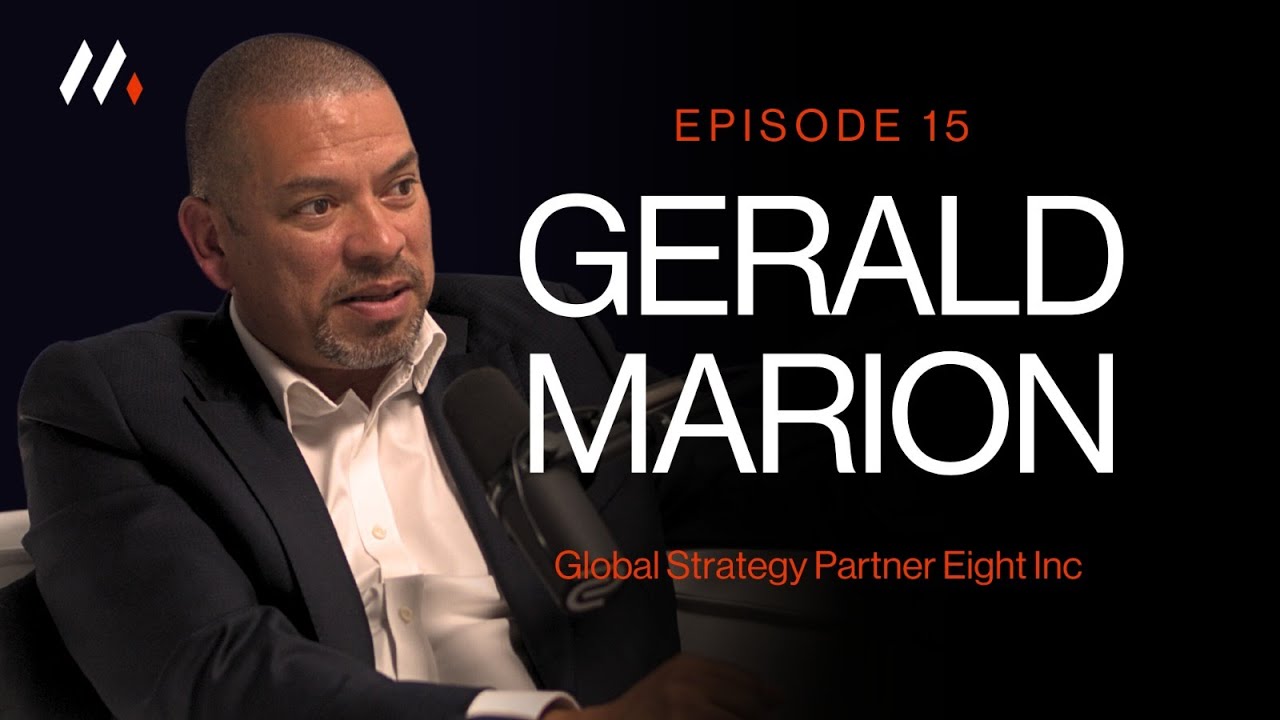
Gerald Marion, Global Strategy Partner at Eight Inc., discusses a three-part growth framework combining big-picture thinking with incremental progress, and introduces Return on Experience (ROE) as a business metric. He uses Saudi Arabia's NEOM project and Australia's fossil-fuel transition as examples of how AI and design drive competitive advantage in the experience economy.
Chapters
AI is able to do what we humans are able to do, which is to communicate through language and stories. So the question for us going forward is how do we continue to tell the right stories and make sure that technologies like AI are not actually telling the wrong stories that could start a war?
Yes.
The work we're currently doing is really about how do we create a competitive advantage harnessing AI, harnessing the different technology, harnessing the different trends, They are not the outcome. They are enablers or the ingredients into a bigger purpose.
That sounds a lot more holistic than I'm taught in business school.
Experience is holistic.
Hi, my name's Alex Smith. Welcome to the Mentor List podcast. Today we're speaking with Gerald Marion. Gerald's the global strategy partner at Eight Inc., and he's going to be talking about growth in the experience economy. I hope you enjoy. So Gerald, welcome to the podcast.
Thank you, Alex.
Yeah, thank you so much for taking the time to be with us today.
It's a pleasure.
Thank you. Excellent. Well, I'm very excited that you're here, and we've been speaking off camera a little about, uh, well, your expertise in terms of growth in an experience economy and, and what that means and looks like. I was hoping that you could So dive straight in and maybe define it for us.
With pleasure, Alex. So first of all, thank you for the opportunity of talking about this topic of growth and the experience economy, because I think a lot of what we hear is about not growth, it's about the fear, fear of inflation, fear of recession. But we should be talking about more and more about how do we grow in the experience economy. But where I look at it is through freelancers. One is this notion of think big versus incremental think.
Sure.
All right. So we'll expand on that a little bit. Second thing is the duality of growth. Run and change, run and transform. How do you run today and transform and change? And then the third one is the return on experience. And I will expand a little bit more on what return on experience means. But let me go back to the first one, which is think big versus incremental thinking, right? When you're thinking incrementally, all you get is small outcomes. But think big, it means that you're looking at things from a bigger perspective. And, and what— when you think big, what you see is you're creating more opportunities, you're attracting more talent. And a simple example is what I see happening in the Middle East.
Okay.
At the moment in the Middle East, you have a sort of renaissance which is happening where people are thinking really, really big, and you see big projects and big programs. And those big projects and programs are attracting talents from everywhere around the world, and those talents are here to create something much bigger than a small project, and that is creating great opportunities. And I think that's what I mean by thinking big is I look back at Australia where I live and work and have my family is what does think big will look like in Australia?
Excellent. Could you give us an example of sort of the Middle East think big project?
Yeah, look, there's I think for example of Saudi Arabia, and I. Look at Neom, yes, the new world city that we are creating and are quite—it's really, really interesting of how they are turning the desert into a place where they are reimagining life and civilization in a different way by integrating modern technologies. And we're thinking about sustainability, and we are thinking about mobility. We're thinking about healthcare, but in a very integrated way. How do we take that thinking back into Australia? How do we think of Australia as a fossil fuel? economy.
Yes.
How do we think what's the nation look like beyond a fossil fuel economy?
Absolutely. And I guess, you know, people like Saudi Arabia, they have the benefit of large sovereign wealth funds and things like that, which can, which can help invest in the future. How do you see it going forward for Australia, for example?
Yeah, well, Australia has been a lucky country, right? So we, we didn't have recessions when others had. We do have actually some of the same fundamentals. We export with fossil fuel economy exporting what the world needs. So we're still building wealth.
Yeah.
Um, so we could be using that wealth and repurposing it to such a way that we think about what does Australia look like once a fossil fuel economy is phasing out. So how do we sustain and how do we think about the world in a decarbonized economy? So I think we could do it. Do we have the ambition to get there?
Absolutely. Yeah. And there are abundant resources available in Australia which are, which are clean and green. Yeah, I guess it's the, the political will necessary and the—
And the ambition. Yeah, I think, I think it starts with asking the questions. I mean, one, one of those countries asks, how do you redesign a country in a post-fossil fuel world? I think we should be asking the same question about Australia. How do we redesign this beautiful nation that has got everything And when you think, Alex, about decarbonization, which we are all pursuing, and you think about AI, which we are all talking about and investing, when you combine decarbonization and AI, you should be thinking what is business model 2.0? And that will open up the thinking and the imagination to do something really different and better for Australia.
Yeah, I mean, that's, that's very interesting as well. I guess on the face of it, AI can at least help reduce carbon footprint and sort of energy usage and things like that.
Yeah.
Although I was reading as well that AI itself will be a big power drain.
So, and I understand they are working on that. And I think like any new innovation takes some time to work out what's the equilibrium. But it's true that at the beginning it's a— it might be an accelerator of, of the things we don't want, but they are all, all the big tech are working on how do you make it more sustainable.
So yeah. So coming back to the Business Model 2.0.
Yeah.
Could you expand on that a little?
Yeah. And I think Business Model 2.0 is very important. Because today we, we look at— and that's what I call the second part of the conversation— is that duality of mindset.
Right.
And the duality of growth. So you still need to optimize and run the business of today.
Yes.
Right. But as we understand, if you think decarbonization, you think about AI, you think of the geopolitics in which we live, you also need to be transforming the business models in which you invest and you operate. So what has become important for business leaders is to make sure that when they are allocating resources, whether it's at a country level or at a business level. But not all resources are being allocated to the business of today. Yes, you need some to optimize and probably most to optimize and run the current model as effectively and efficiently as possible. And that's how you use AI and decarbonization in a certain way. But what we know is that, for example, when we talk about AI, we know that AI is actually going to create new business models. When the internet came, it created new business models with the internet. Now we got generative AI.
Yes.
It's going to create new business models. And when you think about decarbonization and, and AI together, it means that we need to start thinking, how do we deliver the right human outcomes? How do we allocate resources differently to be able to still deliver the outcomes? but in a very different way from what we've done today.
Excellent.
And, and that means we need to think about how we create and imagine those new models.
That makes sense. And do you feel like this should be driven by businesses in Australia, or should this be sort of a public policy issue?
Um, it's a very good question, Alex. I think you need both. I think if you let the private enterprise do what they do best, there are some organizations who understand the power of innovation and are already going there. the new models. There are those who are doing nothing.
Yes.
And then there are those who are experimenting with a new world but are not yet putting their full energy into it. So, what I would say therefore is the government has to set the framework by which we need to go into the new models. And I think they are doing some of it, but at the end of the day, they also need to let private enterprise allocate those resources in a smart way to create those new models. So I think it's going to be partnership of both.
Absolutely.
And we're going to see where we get.
When it comes to sort of the government working with businesses, do you feel like— is there a white paper already that you're aware of being published? Is this something that they're taking— the government's taking seriously in Australia, or is this something that you're sort of proposing should happen soon?
In what sense? In terms of a collaboration?
Collaboration, and I guess the incentives. the word I was looking for, in terms of businesses.
Yeah, I think in the energy sector, you see the government is putting different types of incentives in place. I think at the moment, if you step back from Australia, you see that the US is really seeking to reconstruct its business model. You see a lot of investment leaving different parts of the world going to the US because they are redefining what the future should look like. Will they get there? I'm sure they will get there. Why? Because China is also doing the same thing.
Yes.
I think these— what is interesting is to watch countries like the US and China basically reshape the world order using AI and quantum computing.
Yes.
2 technologies that will reshape the world in which we work. What does that mean is for Australia is we're a smaller nation, and the question is, do we get caught between the two, or how do we reshape our business model to get there? And that means that governments and, and organizations, we need to collaborate much, much smarter. Yeah, because government by itself is not big enough. Companies by themselves are not big enough.
Yeah.
Partnership between government and private sector and the enterprise is important.
Definitely.
But we need to have a master plan of where we are heading. And I think that going back to that Business 2.0, yeah, or growth in the experience economy, we haven't defined a master plan on how we want to grow an experience economy.
No.
And that if I bring it back to enterprises, how many enterprises have got an experience master plan that define how they're going to grow an experience economy? Yeah, very few.
Yeah, I can imagine. And especially when people are talking about AI sort of removing a lot of jobs from the workplace, we're talking now about the creation. You'd think government would be jumping all over this as to avoid that societal issue.
Well, this is where— this is a very interesting topic, Alex, because— and I think going back to growth expense economy and how does AI play a role, I'm a great fan. There's a great book called AI Superpowers by Dr. Kai-Fu Lee.
Okay.
He looks at the US and the Chinese— China economy.
Yeah.
In AI. What I quite like is how he defines that there are 4 types of AI. So there's the internet AI, there is the business AI, there's perception AI, and then there's autonomous AI. We've been talking about AI from a technology, generative AI, and then we're very tactical in our conversations and there's a big hype and then we drop. But what I quite like with the approach of Dr. Kai-Fu Lee is that when he talks about internet AI, business AI, perception AI, and autonomous AI, he's giving a framework of reference that we should be looking at the system.
Yes.
And how these different parts come together.
Okay.
And that will create a master plan for a new business model, for new opportunities.
Yeah.
And I think that's going back to the duality of growth. Whilst you're optimizing and operating the business of today, whilst you are harnessing the technology of today or AI today, you also need to be thinking the combination of those 4 different types of AI, what new models, right, is going to emerge. And I think that's where the value will be.
Looking at the different models in the US, the Middle East, and China, what lessons can Australia take from those different—
Yeah, it's a very good question, actually, Alex. I mean, the US is clearly setting a pathway for a different model, and we've put in quite a fair bit of resources to go after it. China, the China economy is also doing the same thing, right? The Middle East is also committing to new models. So Australia by itself has to figure out how does it play into this broader context, how do we harness our strengths, and how do we bring those strengths together So being clear about where we play, okay, what are our strengths, but also how are we going to collaborate in this new broader ecosystem? Because by itself, we— by ourselves, we won't be able to thrive. But we got great, great skills. We got— yes, we got minerals that everyone will need. That's sort of a given. But should we be bringing back manufacturing into Australia? How do we harness the power of advanced manufacturing? How do we harness the power of AI? But also I think about we got beautiful nature and if we think about health as a new wealth, yes, the question is how do we, we got beautiful nature around in Australia, how do we become a place where people be healing with nature around to help them heal better.
Excellent. And obviously you talk a lot as well about the need to be ambitious now. Obviously, yeah, in those areas as well as others, I'm sure.
Yeah, I think it's a time to thinking big. It's not a time to thinking small. I think, yes, we got problems like everyone. Should we keep focusing on those problems or should we have a bigger master plan Should we have a bigger vision of where we need to be? And then how do we harness all the skills, resources, collaboration networks we have to get there? Because as a window, do we become a fast follower or do we become a laggard? And I would prefer Australia to be a fast follower.
Yeah, I think we all would. Absolutely. What timeframe do you have on that ambition and that plan? Ideally?
Yeah, well, I think it would be great to have a plan by 2030 where we would like to be. What is interesting, Alex, is the more you dig into what's changing around us. So today we're focusing so much on AI, but quantum computing, when people expect it should be around 2030, will change every AI code that we will have written over the next 2 to 5 years.
It's going to be a real step change.
Step change, right? So therefore, the question is, as you're focusing today on what's happening today and you're trying to harness those technologies and you allocate resources to create better models. What happens if fundamentally the way you do it change in the next 4 to 8 years?
Yeah.
Then you got to be adaptable. And I think that goes back to that point about the dual mindset or the duality of growth. Yeah. We should not be thinking short term. We should be thinking big, long term, and just be adaptable and ready.
I think coming on to that second point, that's, that's a great sort of segue, I think, if you don't mind. As a business leader, you obviously have to have a very particular mindset now and obviously a very adaptable one coming forward. So how do you see that going forward in terms of skills? And are we developing that in our workforce currently?
Yeah, I think, I think as we were talking a few minutes ago, indeed, 60% of the jobs that exist today didn't exist in 1940.
Yes.
Right. So when the internet came, we saw a lot of incremental improvement, but we also saw a lot of new business models emerge. Right. Airbnb, Amazon, the platform business model. We need to assume that and we need to prepare for it, that AI and generative AI, decarbonization are going to require different skills. Different business models, therefore different ways of doing things. And so in the world today, you got those who are aware of it and are actively preparing for it. You got those who are aware it's happening but don't know what to do. And then you have those, and a lot of people, who don't know what's happening.
Yeah.
And are not preparing for it. And so I think we have a responsibility as business leaders to know that those who know what's happening and are preparing for it, we should accelerate the preparation. Yeah, those who know it's happening but don't know what to do, that's why the partnership with the education sector is super important so that we can upskill and reskill people as fast as we can. Yeah, and for the majority of people who don't know what's happening and are not preparing for it, if we don't help them transition, we're going to have a big problem.
Definitely. Yeah. I mean, potentially for our listeners who either don't know about or just dipping their toe in the water with regards to AI, is there any resources or ways that you'd recommend being able to upskill? Yeah, self-improve.
Well, I can only say what I've been doing, which is I am reading a lot. So about those topics, AI Superpowers, Dr. Kai-Fu Lee offers a different perspective from DeepMind or the US model, I think it's important to read both perspectives, the US and the Chinese perspective, because it's important for us to frame our— as Australians, to frame our own perspective on both sides and work out how do we play. The second thing is there's a lot of training programs which are now being offered by Google, AWS, go for AWS training. I'm thinking about a Google training. I think it's just train.
Yeah.
And just start playing with it. I got young kids and they are playing with generative AI.
Right.
I think there's a generation that will grow up as a gen— generation AI.
Definitely.
And I think it's forcing you to— forcing all of us to sort of get used to what are they playing with. Yeah. But it goes back to the most fundamental skill. Be curious, right? Be willing to learn, because what's ahead of us will force us to reshape who we are and how we do business.
Absolutely. No, I think that's, that's great advice and, you know, lifelong skill. Yeah. But it's interesting as well because so before we started the podcast, you had You're talking as well about the, the school you're helping build with, with Eight Inc., your company. And obviously you're preparing children now for the future. Is there any more skills that you're encouraging other than being curious and adaptable?
Yeah, look, I think, I mean, the education system will have to change.
Sure.
And, and when we're looking at the education system is I think it's obviously being adaptable to where we are, being a good problem solver.
Yes.
So there is no shortage of problems to solve in the world. But how do you harness new technologies such as generative AI, but the other AI components, right? Not just generative AI to actually combine it with good design.
Yeah.
Because the technology by itself doesn't solve a problem.
No.
You need to combine good design. And that's why the work with A-Team is interesting to me, is that when you look at what are the human outcomes you're looking for— education, health, transport— and you think about how do you apply good design— design is not just how you make it look like, but it's also how does it work.
Yeah.
And that's the other part. And where does technology play a role into it? So the problem solvers, but be curious, but also be super creative, right? We are all creative humans. We go to primary, uh, we go to primary school, we play with 20 crayons, got different colors. Interestingly, we leave school and/or university and all we know is how to use one pen. So we narrow our mind from multiple things to how do you do one thing.
Yeah.
And so I think now it's the opportunity to say, let's not— let's, let's actually keep opening the mind to new things.
Yeah.
Because this is now the world of opportunities, not a world where you just need to do smart things or smaller things one way.
Yeah, that's interesting. I feel like you've encapsulated that yourself with your career moves and your, you know, the different industries that you've worked in. and the different companies?
I think it's Steve Jobs who said, when you look, it's hard to connect the dots unless when you look backwards. What has been clear is that I've been given the privilege and opportunities to do different things. Yeah, that has enabled me to learn different things. And I think as I look at the world ahead, I'm glad I'm not doing what I was doing a year or two ago, right? I'm glad I'm actually preparing for what's coming. Yeah. And I'm glad I'm being given the privilege to keep learning, but also to keep in some of the work as we're talking in educational health.
Yeah.
How can we create the platform of a system that will help others?
Yes.
Go on that journey because it's I think it's a time for greater collaboration rather than just doing our own things. It's how do we as humans collaborate to help the others transition through the hurdles that are ahead of us.
Yeah, that is— it's resonating with me, that comment. Would you mind expanding into a little bit more in terms of what design means to you and how that interlays with health, for example, or with education?
I'm not a designer.
Sure.
But I work with great designers, and I have that privilege of working with a company called Eight Inc. and a colleague called Tim Kobe.
Yes.
Some of the great designers of human experiences. Tim has been working with me when I was at Bupa on the future of healthcare. Okay. In the past, we worked on the future of education, and we continue to look at education and healthcare as 2 important foundations of our society.
Yeah.
And so when we look at design, we think about the experience and we talk about the return on experience. The return on experience is an important component. Why is it an important component? It's because we, we don't wake up in the morning thinking, how is my health insurance or how is my car or how is my gas going? We think about I need to do things in life, right? And I want to experience life as best as I can during the time I have, because we all have a use-by date. So as we go through life and as we experience life, the question for businesses is how can they become relevant into the life of humans?
Okay.
And to be relevant in the life of humans is not just about pushing a product. Yes, a lot of businesses have pushed product and services and become successful, but the companies that are succeeding and outperforming others are those who really understand the human outcomes that matters to each of us as human, because that allowed the buildup of a relationship. Yes, rather than a transaction. So design plays a critical role in shaping those human experiences that matters to you and I. And that's, for example, that when you consume that experience, there will be a cost.
Yes.
The incurred costs that you will incur in consuming that service will be a pain to you.
Yeah.
Right, it's a pain point. However, the perceived value that you get from that experience will be a benefit to you.
Yes.
So if a perceived value is greater than the incurred cost, then your return on experience is higher. If your return on experience is higher, you become a promoter of experience and you will bring more people for the experience.
Yeah.
And that creates a successful business model.
Definitely. Yeah.
The primary purpose of any business is a happy paying customer.
Yeah.
And I go back to fundamental. Why do we— business exists is to have a happy paying customer. And so if you, if your purpose is to make sure by using design, good design, you're designing experiences where the perceived value is greater than the incurred cost, then the return on expense is higher. Yeah, it's when the perceived value is lower than the incurred cost, then you got a lower return on expense. And unfortunately, many businesses just focus on allocating product and services. Yeah, and hope that there's more people happy than unhappy.
Yes.
And then, and then they hope to sustain that business. But businesses that outperform their competitors really focus on designing human experiences that matters and therefore make sure that perceived value is greater than the incurred cost.
That's interesting. And it sounds to me as if it sort of goes beyond just adding value to customers, but you're talking about a positive experience as well. Emotion, I should, I should say.
The emotion is critical.
Yeah.
People remember how they feel, and we're always talking about how they felt.
Right.
And people won't remember a product. No, because a product can easily be replaced. So my advice, and, and I would say that, and that's what the work we do is how do we design human experiences that delight humans? and make sure that we want to come back for it. How did Apple create irrational loyalty around an ecosystem? Yeah, that brings real loyalty. I mean, I'm an Apple fan. I tried to use a Samsung watch. It didn't work with the ecosystem.
I was going to say, you're outside.
Yeah. So, so I had to go back to the Apple Watch or a different watch that worked in the ecosystem. And so the moment you design a unique experience an ecosystem play, you give a reason to your customers to stay with you.
Definitely.
And that's return on experience.
Yeah, that's pretty powerful. So tapping into that human emotion and the psychology therein, I think.
And, and, and that is why the work we're currently doing is really about how do we create a competitive advantage?
Yeah.
Harnessing AI, harnessing the different technology, harnessing the different trends. But we are not the outcome. We are enablers of the ingredients into a bigger purpose.
That sounds a lot more holistic than I'm taught in business school.
Experience is holistic, and that's the first principle we, we think about. And that's definitely how I approach business problems, whether it was at Bupa when I was at Bupa, where we were looking at how do we create a holistic experience for our members?
Sure.
When talking about education, how do we create a better education system which is holistic, but involves not just the kid, but the parents and the community?
Yeah, that's powerful. I guess that means also you're, you're listening to a lot of different voices, a lot of different expertise in sort of coming to this, this idea.
Yeah.
What would be the— go on. Yeah, I was going to ask what would be sort of the key fields of expertise that you want to elicit?
Well, I think, I think from— you, you can't ignore the technology from an expertise perspective. And I feel uncomfortable when I deep dive into AI at first because it was a different language, it was a different way of doing things. But I mean, you got to deep dive into it, you got to throw yourself into it. And as uncomfortable as it is, What you know is your brain is going to learn new things, and then you move and say— then you ask yourself, okay, I've learned something new, but then how do I combine it with something else?
Yeah.
This year I've been immersing myself into the world of design more than I've been in the past. Why I'm immersing myself in the world of design is because to look at how does designers basically think when you combine it a technological person with a designer, the technological person gets excited by the technology, the designer gets excited by the outcomes.
Hmm.
Combine the two and you've succeeded in combining the two, then you start getting something which is even bigger and better. Then you bring the business person who is going to look at, all right, now how do I, how do I market it? How do I make it real for humans and create value for both the organization and the customers? So I think, I think what is interesting is we are increasingly going to have access to more expertise. The trick would be how— the art would be how do you combine those expertise?
Yes.
How do you get out of your comfort zone? How do you be ready for those new things coming? But how do you leave some space for the new things as well? So quantum computing will change AI.
Yeah.
So do we train for AI and then retrain for quantum computing? Yes. But how do you allow space for this to happen is, is important.
Hey everyone, thanks so much for tuning in. If you're loving this podcast, please give us a 5-star review. I guess amongst all this, I'm quite curious, is there someone that you've— you look up to in terms of someone who's encouraged you or inspired you on this journey of lifelong learning and design?
Or— it's a good question. There are many people that inspired me. I think I've been inspired by my parents. Dad is an educator, mom has been in the business world, so I got the benefit of both. They're still there. They've given us that eagerness to keep learning.
Yes.
And trying new things. So they are fundamental in that journey. I work with great people. All my life. I had good people and people who I didn't like. The people who didn't like probably taught me better lessons, as they do. But it would— there's a long list of people, but everyone had brought me something. And I must say, as a father with 4 kids, I'm learning from the kids at the moment.
That's excellent. Now, that's really interesting.
Thank you.
Thank you. Just quickly as well on that topic of— you spoke a little bit about a book that you're currently reading and that's helping with the AI. Do you have any other like favorite recommendations for books or books that have inspired you?
Yeah, look, I'm reading a lot at the moment, which is I think I got 5 books that I'm jumping from one to the other. But there's 2 books that are really shaping my thinking at the moment. There's Obviously, The AI Superpowers by Dr. Kai-Fu Lee. That book is really looking at the duality between the US and China and how they're approaching AI. And that in his book, he talks about the importance of understanding that we're not— there's no endgame here.
Yeah.
There is a series of games and therefore you got to be ready for what's coming. Um, I did buy a second book called AI 2041, which is fast forward in 2041, one of the potential scenarios across 10 different stories. Um, what, what I like with it is he's not focusing on the technology, he's focusing on outcomes, right? Experiences. What could it look like? How could society could look like? And I think it's important we have those points of references as we look at the world in, in, in different ways. But there's a book called The Way of the SEAL.
A SEAL?
SEAL being the Army SEAL soldier by Mark Divine, which is about how do you train your mindset to face what's coming. And the reason I read this book is because you can get focus on the business of today.
Yeah.
And it's important, but the world ahead is a series of missions and there's a lot of uncertainty. So you talk about the principle of VUCA. It's a very volatile world. It's very uncertain.
It's—
there's a lot of complexity and there's a lot of ambiguity.
Right.
So how do you train your mind to face that world, the VUCA world, which is very volatile, very uncertain, very complex, a lot of ambiguity. How do you, how do you keep the course, still doing what you have to do, still delivering on the business outcomes of today? But then how do you make good decisions given what's ahead of you?
That sounds like very valuable reading.
I recommend the 3 books.
Excellent. Thank you. I guess coming back to what you were talking about in terms of the customer experience being sort of sacrosanct and should be at the front of everyone's or every business leader's mind and the outcomes. On the flip side of, on the flip side of that, how should business leaders go about dealing with their own staff, for example? Yeah.
The reason I was talking about return on experience is the focus on humans.
Okay.
Humans are customers and people. So the same principle you apply to the retail experience from a human perspective should be applied to the humans and the people. Because you can't have great customer experiences without great human experiences.
Yeah.
Your people, if they're not happy, they're not going to deliver the great customer experiences you expect or want. So you really got to apply the same principles to both customers and humans being people.
Talking about the customer experience, I assume, as you mentioned earlier, the holy grail is to get to that personalization and that unique customization of experience. How does that play out?
Yeah, well, we're all unique. And if you listen to the marketers, I respect them dearly. They all promise that we will have unique experiences, but very few organizations have been able to deliver a truly unique experience. And that's because as humans, when we get presented options, we make decisions that are hard to anticipate.
Okay.
So therefore, I'm not a great fan of going out and saying to someone, we're going to deliver personalization for you. I'm more of those who think that we will enable you to have a better augmented personal experience. At the end of the day, you as a customer, as a human, will make your own choices of what is truly personal.
Mm-hmm.
My job is to give you the ingredients in the right context so that you can play with those ingredients and create the true personal experience that you want for yourself.
Right.
And what I would do though is using the data that you share with me in a, in a, in a relevant way to start understanding what are the things that you like so that I can better serve you better options and replicate it. Yeah. So, so that is where I think personalization will be more realistic. Having said that, if you look at personalization in the domain of healthcare.
Okay.
Um, and we call it precision medicine.
Yes.
Where you and I have unique genetics, and so that the medication and the care and the experience that you're looking would have to be increasingly more personal to you.
Yeah.
And so the only way we get there, and that's how I think where generative AI or AI more broadly, yeah, is going to help us get closer to what I would call precision medicine. Because the more we capture data, the more we are able to codify that data in context, the more we are able to be more preventative in our approach to healthcare. But the more preventative we become, the more precise we can become. And by understanding your unique genetics component, we would be able to start working on how do we tailor medication?
Yeah.
How do we tailor treatments? How do we tailor care?
Yeah.
To your unique context and needs so that we can help someone live longer, healthier, happier lives.
Yeah, that's exceptional. I'm very excited about that potential.
It is, it is, it is the Holy Grail. And that's, that I think is where personalization becomes interesting where you, you understand the humans, the person. Yeah, based on their genetic profiling.
It's funny, I mean, I did, I did one of those sort of genetic tests about a year ago now, and it was interesting. So it came back with a whole list of sort of, you know, things that I actually don't respond with me, or maybe I should encourage, you know, be encouraged to do more of or ingest, you know, more vitamin C or whatever it happened to be. So yeah, no, I could definitely see that working. But I guess in terms of scalability when it comes to for example, drugs or medicines to the person. Do you see that as being a barrier, or is just in terms of the individual level of production, like, how would that—
Yeah, I think it's, it's a, it's an area which is growing. It's an area where we're all looking at getting to. I look forward to the time when medications, care, wellness would actually be tailored to human profiles.
Yeah.
at scale.
Yeah.
Because I think that's where we'll make a big difference.
Yeah.
I may share that my brother is a scientist, he's working on diabetes.
Yeah.
And he's found a way of helping the body reboot itself in the case when you have insulin resistance, which is the root cause of type 2 diabetes. Um, the ability to— this is about how do you cure diabetes.
Wow.
And so, um, by understanding the genetic profiling of individual and by using AI in that process, we are looking at how do they create the right treatments that would be unique to your unique profile, my profile, or someone else's profile.
Yeah.
Um, They're not yet there. We are working on that journey. But I think if you if you look at that type of thinking, you go there will be a time where your genetic profiling, all the data that you collected about yourself, will be put in context where the treatment that we'll be developing or society will be developing would be useful to. You. Because today when you take a medication, it's a bit of a gamble. Sure, we hope it works for you. Yeah, a lot of people get hospitalized because they didn't react well to the treatment. That's a— that's how we do medicine today. So it's a trial and error, and we hope it works. And some people work, some people won't work. But increasingly, as we use and harness the technology and as we design the experiences So if I go back to your genetic test experience, you got a lot of data about yourself and probably you didn't know what to do with it.
Spot on.
And you might have felt a bit fearful of certain things that it was revealing. And this is where good design will be important, which is how do you design the experience where the results are presented to you in the way that you can consume it?
Yes.
You don't feel anxious about it. It's meaningful. And you can do something about it.
Yeah.
And and so that's where design combined with technology, which is then enabling that personalization of experience and outcome, combined with big scalable platform of data that will enable to understand how do you fit in a population health profile.
Yeah.
Would become interesting. I think we have been talking about it. I think the technological advancement we are heading to will help us. get closer to that vision.
That's interesting. Coming back to the genetic test, for me, it was fascinating to see the chronological age versus your genetic age, for example, and sort of how you sort of adjust that and all the lifestyle choices you make, which is coming back to that preventative.
And that was exactly what we were developing around the future of healthcare previously, because we wanted to— the current healthcare system generated a lot of anxiety. For humans, you got the test. You were curious about the test. You got the results, but you don't know what to do with it. More importantly, it will reveal to you things you will think anxious about because the difference between your age, genetic age, and versus your real age. And you go, well, if there's a gap, how do I close that gap? This is where we you we need to use design more in a smarter way to actually design the experience that will make sure that. You feel empowered, yes, to make the right decision based on the information provided to you. You feel connected to an ecosystem that can help you achieve those outcomes, and you feel loved and valued because love in the sense that we as humans, we respond to emotions, yeah, and valued in the sense that someone is working with you through that journey. Not you being presented with a set of data and then not knowing what to do with it and putting it into a drawer or talking about it in different contexts. So how do we make it meaningful? Yeah, useful value, a value experience.
I guess that comes back to what you were talking about earlier as well, with, you know, communication being a key, a key skill. And I guess the art of storytelling, because that's very emotional in terms of—
Super important.
Yeah.
As a human, Since we were born, we learned stories. As in our evolution, we were good storytellers. From the cave to the field to the classroom of today, we get motivated by good stories. So going forward, we're going to have to tell better stories.
Yeah.
And, and storytelling would become even more important. because, uh, what AI is doing, it's, it's breaking the code of language, right?
Right.
So AI is now being used. AI is able to do what we, we humans are able to do, which is to communicate through language and stories. So the question for us going forward is how do we continue to tell the right stories, the relevant stories, the stories that are factual and make sure that technologies like AI are not actually telling the wrong stories that could start a war. Yes, it could lead to wrong outcomes. The storytelling is, is what brings us together as humans, and storytelling going forward will become even more important in expressing who we are, what we do, How can we help people grow?
Yeah, that's powerful. How would you go about improving the the art of storytelling in individual?
Yeah, well, I think I think going back to allowing people to express themselves. Stories everyone tells different story. I listen to my kids. Each of them tell a may face a similar situation, but each of them will tell a story in a different way, their own ways. Doesn't mean that one story is better than the other. It means that the human brain, depending on who you are, will process information in a certain way and tell a different story. The question is, how do we amplify those stories? How do we enable kids, adults to tell those stories better so that we can relate to it. Yeah, um, we have gone through a process. We are telling stories through PowerPoint spreadsheets and, um, Word documents. So we've narrowed the human mind to 5, 10 pages or 200 pages of stories which no one reads and understands.
Or enjoys.
Um, to, um, people connect when something is meaningful, when people is immersive, they can touch it. I think for me, the best— you can read a board paper and you see all numbers and words which mean something, or as a board member, you can go on the ground, look out for yourself what's going on, and then see how people are really living and feeling. And when you go, well, are resources being allocated in the right way? The papers tell me something, the reality on the ground is different.
Yeah.
And so, I think the art of storytelling increasingly is not just about telling a story, but it's also verifying a story. It's seeing whether the story itself is real or unreal.
Absolutely. Yeah, I heard that there are university courses in the US now which almost specialize in this for the first time.
Yeah, and storytelling is not PR.
No.
I make that point because sometimes when you are in a business context and people you say to people around you, what is our story? How do we tell the story better?
Yeah.
Sometimes there's a view that storytelling is PR or is, how would I say, it's marketing. No, storytelling is, the true art of storytelling is telling something in an authentic way that people outside of your organization can hear, connect with, and say, I'm committed to it. And, um, and, and so, um, you're right to say they are now in schools, they're training, they're now educational programs that are going back to how do we tell good stories. Yeah, for the sense that we need to bring people back together.
Absolutely. And I think part of that course would be as well, um, judging for yourself, you know, if the story you hear is, is likely to be you know, valid, if it's like to be true, and to fact-check sources.
Yeah, your sources. You, you look at, um, your, your values you are bringing. Um, I mean, increasingly we live in an environment, especially as we talk about the experience economy, we are experiencing a lot of information. We are all competing for attention.
Yeah.
time and attention. The time we spend and the attention we dedicate to something. Yeah, we're not— if you, if you capture the time of someone, you capture their attention, then you capture their market share or market value.
Right.
Right. So that the value of the time, the value of that attention can translate into business.
Definitely.
And, and so that's why the art of storytelling becomes super important and needs to be far more sophisticated than it's— it has been, which is how do you tell the right story that will enable people to commit their time?
Yeah.
And therefore will dedicate their attention to it enough for you to create value for them. And I think that's where the sophistication becomes, which is you can push a product in the experience economy, but someone's attention is not there and someone is not giving time to it. Definitely the best product without the right story.
Yeah.
Doesn't captivate someone.
True.
The right story with the wrong product creates deception.
Yes.
But the right product with the right story creates a competitive edge.
Yeah. Hopefully goes on to create that positive emotion.
Spot on.
That's funny. Gerald, you, you spoke about values earlier. Can you expand on your own personal values?
Yeah, my personal values. It's a good question. Look, how would I say that? My values are very driven by human emotions. So I genuinely believe in the trust that is important in every human relationship. The values of legacy. I mean, we all have been given an opportunity. And so make sure that during that time that you use your time well.
Yeah.
The resources you have well. Don't waste it.
Yeah.
And then when you look back, you look at what you left, what you're leaving behind. And so those values of, of being responsible with what you have Because there's a lot of poverty in the world and few of us got given certain opportunities. And so how do we use those opportunities to create more opportunities for others? I think it's critical.
Yeah.
So therefore trust, helping others, and then being clear about, how would I say that? When one day your time has arrived and you look back, have you created good things?
Yes.
Is the sum of good things bigger than the sum of missed opportunities? Or some people would do bad things, but let's say that the values is more about how you create a better place ultimately.
Absolutely.
We're all passing.
You want to leave it better than you found it.
And fundamentally, I came, I got trained into a partnership model before. We were always taught that you will be handed, you will be invited into the partnership, you will be given a stick. And when you got given that stick, you need to pass it to someone else when you leave. And when you pass that stick, it needs to be much better. than what you receive it. And you need to make sure that person you're passing the stick, the person also knows that he or she will need to pass it to someone else.
Yeah.
And make sure that it's in better shape. And I think that fundamentally is what keeps me going, which is how do we make sure we're building something? If it's broken, how do we fix it, make it better?
Yeah.
hand it over to someone else, but not hold it back, because we all, we're all being given something for a period of time.
Absolutely. That's powerful. Thank you for sharing that, Gerald.
Pleasure.
It's interesting, you, you at the beginning as well, you were speaking about the need for cooperation between humans internationally, but there also seems to be this trend where everyone's sort of coming back and sort of inwardly facing, uh, sort of globalization is being wound down. It's all about sort of, you know, onshoring. Um, obviously there are people are very politically divided. Like, where do you see that going in Australia?
Um, look, I, I think, I think it's not a bad thing that we pull back certain things with the idea that we're— it allowed us to then think, how do we design it in a better way? I think there's a saying that to have a sunrise, you need a sunset.
Yes.
So let's say that we are probably having a sunset on a type of globalization model that has benefited us for a period of time. But today, we're all faced with climate change. All of us. So it's not one place is going to be better than the other. And it's probably the model of globalization we had so far has been driving that problem.
Yeah.
So that we start pulling back a bit in order to rethink how we do it in a more sustainable way so that we can have another sunrise is, is not a bad thing.
Yeah.
So therefore, I look at it— I don't look at what's happening right now as a problem. I look at it as a point in time in our history. We are having to rethink how we do things. The fundamental principles that have sustained our society and economic prosperity.
Yeah.
is being challenged.
Definitely.
And so we need to understand it's okay if we pull back a bit with a view of designing something very different.
The global, the global model 2.0.
But what does that, what does that 2.0 look like? Because we still have too many people living in poverty. We still have— we work We, we are exploiting too much, too many resources in not a sustainable way. We need to create a different model. Um, how do we create that model?
Yeah.
How do we create space and time to think about that model?
Yeah, that's absolutely— I guess education is a key part of that.
Education, uh, transportation.
Yes.
Um, how do we extract resources? Heating, energy, agriculture. I mean, Australia is big on agriculture. I mean, we got to rethink.
Yeah, I feel like you've joined the circle there. So the reallocation of resources and everything else.
And that's— that is— I mean, that's what you do as a business leader. You are— you have a limited set of resources that you need to allocate to different parts of a business. And so if you're running the country, you have limited resources that you need to allocate to different parts of the economy.
Yeah.
And so how do you make those choices? How do you make those trade-offs? Strategy is about choices. What are those choices we are making? And, and yes, allocation of resources become one of the smartest ways. Do we allocate everything to today's model when we know there's new models emerging? Yeah, that would be irresponsible.
Definitely. So Gerald, are you ready to go for the rapid-fire part of the interview?
Ready.
Excellent. Here we go. Cats or dogs?
Dogs.
Netflix or YouTube?
Netflix.
Beach or snow?
Beach.
Cash or card?
Card.
PC or Mac?
Mac.
Tea or coffee?
Ah, coffee.
TV or book?
Book.
Beer or wine?
Wine.
City or country?
Country.
Pineapple on pizza, yes or no?
No.
Walk or run?
Walk.
Decarbonization or habitat protection?
Habitat protection.
Summer or winter?
Summer.
Morning exercise or evening workout?
Morning.
Dancing or singing?
Uh, definitely dancing.
Watching sport or playing sport?
Playing.
Board games or video games?
Board games.
Innovation or optimization?
Innovation.
Thought you'd say that. Entrepreneurship or corporate leadership?
Corporate leadership.
Risk taker or risk averse?
Taker.
Traditional office or remote work?
Both.
Public speaking or written communication?
Both.
Long-term planning or agile adaption?
Agile.
In-house development or outsourcing?
In-house.
And I think that's it for the minute. Thank you very much. That was interesting.
Thanks, Alex.
That was great. Gerald, before we go, is there anything else that you feel we've missed out on that you'd like to touch on?
Look, Alex, it's been a wonderful conversation, and thank you. Thank you for that time. I think reflecting on where we are, we are at the end of a year. So Christmas is here. People would go out and think about what do we do next year and, and going forward, how do we make sure people think big, be bold? And, and this favorite sentence of mine, which is wait and see is to wait and die.
Right.
So let's not wait and see. I think it's how do you wait and make things happen? Yes, that would be great.
That's fantastic.
Thank you.
I guess the last question from me, if you could go back to your 12-year-old self, what advice would you give yourself?
Go for it.
That's it. Thank you so much for being on the podcast, Gerald. It's been a pleasure.
Thank you, Alex. Thank you to our mentors.
Hey, this is Alex. If you enjoyed the content so far and you want us to do more, If you want to hear more, click the subscribe button. It allows us to bring on more guests in the future. Thanks.
Thanks.
More from David

2026 National Networking Event | Melbourne Grand Prix Featuring Guest Speaker, Molly Taylor



HR Connect Leadership Series | Peitta Dyball on culture, strategy & the evolving HR landscape

HR Connect Leadership Series | Elevating HR through community and mentorship





Uncover Neurodiversity: Empowering Hidden Strengths in Society and the Workplace w. Dr. Shae Wissell
