Thriving in a Global Career: Insights from Michele Hardeman's International Journey
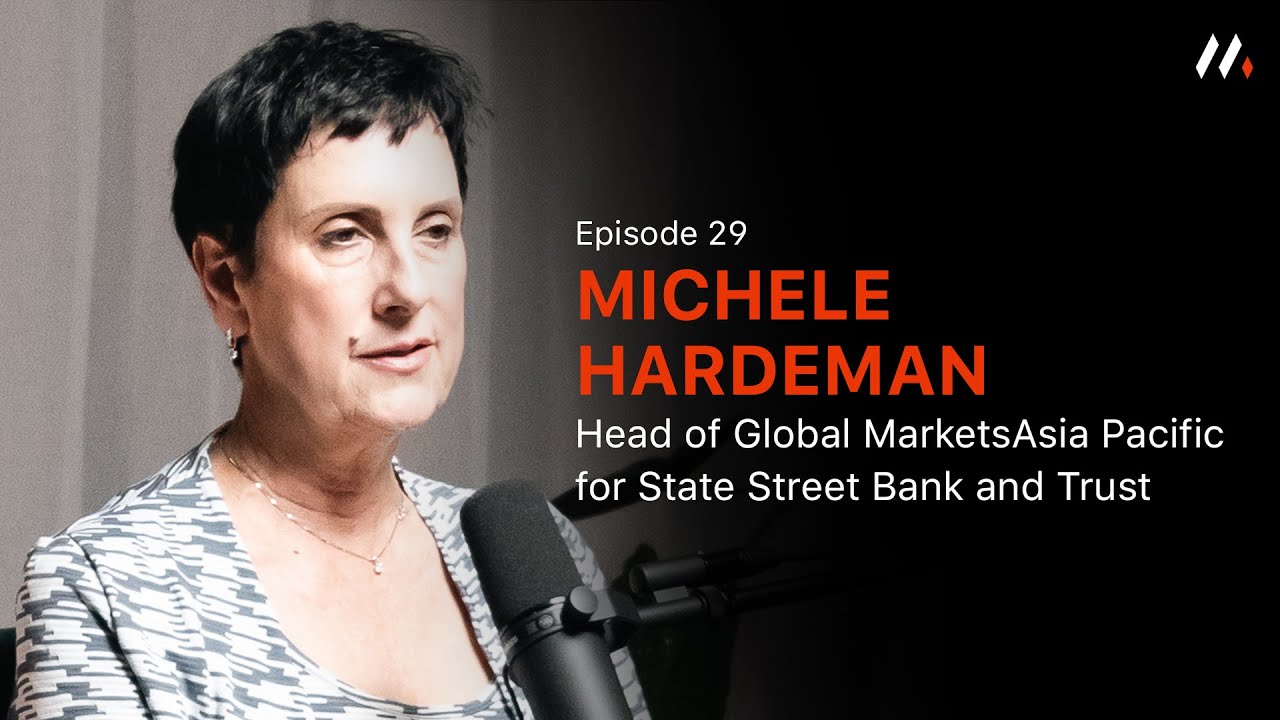
Michele Hardeman, a State Street finance executive, worked across Sydney, Boston, and Hong Kong. She built platforms like FX Connect to cut client errors, navigated Dodd-Frank and CFTC rules, and learned that cultural gaps persist even when people speak the same language. Her leadership rule: solve the problem before you hunt the guilty.
Chapters
You know, obviously, in Mark's business, you know, people get paid. The bonus structure is fairly— not transparent, but, you know, if you make money, you get paid. I mean, I tried to introduce like more of a framework of, you know, this is one of your goals, maybe your primary goal, but then I want to think about what sort of team player you are, what sort of time did you spend mentoring, how did you intersect with the customers, were you customer-friendly? It's like, you might have made a lot of money, but every time you made a price, customers got agitated, they had to over-negotiate. Like, were you being You know, so I think you've got to make sure that if you're going to have open transparency, that you have a number of metrics, not just one or two, and that you're actually very clear about what those metrics are.
Okay, Michelle Hardiman, welcome to The Mentor List.
Thank you very much for having me. I'm looking forward to speaking to you.
Well, it's, it's great to have you in the studio, and thank you for coming down from Sydney. I know you're in town over the weekend, but it's great to have you here in the studio. And thank you, call out to our group chair John Miko, for introducing us. So today's theme is around sort of taking your career global, and I couldn't think of a better case study than to sort of step through some of your experiences as and learnings, but not just sort of picking up and going, but also how do you be effective in these different environments, different cultures. And so that's sort of just to preface where we're gonna go today. So you've started off in Perth, you learn a bit at university, you've ended up in Sydney doing foreign exchange. Somehow then you're selling foreign exchange in Boston, rounded out with a little bit of being responsible for Asia-Pac being based in Hong Kong. Now you're back in Sydney, it's fantastic, so we can catch you before the next global adventure. But just from your perspective, were there any moments sort of looking back where you thought, you know, now with the benefit of hindsight, that, oh, that was really effective in that, or that was really difficult in that cultural climate? Any sort of examples you might be able to just jump into that we can share? And we can jump around the career a little bit, but— Yeah, I might throw that one at you first, Michelle.
I think when I first got to Boston, you know, I was running the North, the Americas basically. So Canada, South America, and America for State Street Bank and Trust. So not Global Advisors, which is the asset management arm, but the bank itself. So I was running the foreign exchange teams there. And so, you know, you move to head office and State Street, you know, is one of the biggest banks in the US or in the world. It's a, you know, the largest custodian in the world. So it's really a significant institution. And then trying to work your way around sort of the corridors as to who does what and how do you sort of influence and move things along quickly when you've got a big change in the regulatory framework that we're operating under. So I think that was one of the major challenges. And I probably, when I reflect on that, it would have been better to have really understood the dynamics within the sort of head office structure better before I had got there. And then, you know, you're so busy moving so that then when you hit the ground, you really hit the ground running. The other thing that I did notice you know, and I think we talked a little bit about this when we were chatting the other day, is that you have to really appreciate that when you move somewhere like the US or even the UK or other countries, you have a common language, you have English as a common language. But that doesn't mean to say because your language is common that people have the same perspective that we have in Australia. And so I think understanding that, you know, that it's nuanced, but it does, but it does matter when you're sort of navigating and trying to affect sort of movement and change around the business that you're operating in.
Yeah, it reminds me of a funny story actually, and I'm not sure why I'm bringing it up because it's not really related, but my wife and I were in Paris on holiday and there was an American tourist that asked us to take a photo and we were conversing with him in English and he said, are you Australian? And we're like, yes. He's like, your English is so good.
I'm like, okay, thank you.
So being in Australia, so you've come out of Sydney, which I guess is a bit of a satellite State Street location. It'd be good to maybe understand how, when you say one of the largest institutions or businesses in the world, can we get a scale of size? Like I think of CommBank as a big business when I'm thinking locally. Maybe just give us some—
Well, State Street has employee workforce of, you know, in excess of 40,000. I think it's about 45,000. And it is a very wholesale institution. So they really only deal with wholesale customers. So they're primarily a custodian, they're an asset manager. Obviously State Street Global Advisors is one of the largest asset managers in the world as well, not as big as BlackRock these days, but originally, you know, they were the originator of the ETF. And so—
Oh, all right.
For a long time they were the sort of the primary force in that market, then obviously others have taken that product and evolved it. So actually very innovative organisation, particularly also very innovative around technology. So, you know, it has has a large footprint in the trading markets, so created a platform called FX Connect and then acquired a platform called Caronex. So there's only a handful of, you know, peer-to-peer or peer-to-bank platforms that operate around the world, and State Street really developed and owns 2 of those. And so—
Yeah.
There's really only probably another 3 or 4 similar type of product. So, you know, very innovative and sort of really foundational, uh, in terms of how they think about their customers and saying, well, what our customers need to manage their, their, you know, their work span and their life cycle of their trades, etc., in an efficient fashion.
Yeah, it's, it's typically, um, you know, a business of that size, and the word innovation sometimes is a, is a challenge with, um, you know, it's— I mean, it's obviously got a lot of history being a bank that size and dating back to Boston. But how did you— you said it was innovative. Is that, um, by design, or was that something that was acquired, or a bit of a combination of things?
Um, well, in the markets business, which is where, you know, I've spent all of my career until recently, I think that it's very focused on a life cycle of a customer. So if you've got a big wholesale customer, you're always looking to create efficiencies for a customer and make sure that they understand that you've got services that will allow them to minimise their error rate primarily. So if you imagine back in the day a large fund, so think of any fund in your mind, I'm just— pick anyone.
Yeah.
And when they execute, they execute on behalf of maybe 1,000 customers, for example, or they might execute across 30 different currencies, they might be buying equities in, you know, sort of a basket of countries. So when they In the old days when they used to do that, they used to ring up and say, okay, I've got to buy, you know, €100 million, or I have to sell, you know, $50 million against, you know, the yen, and then I have to split it by 1,000 different parcels so that they all get allocated to the right customer. Because it's not just one block omnibus account, these are a series of mandates that we have and that we manage money for. So then to go to a customer and say, okay, We've effectively created an electronic spreadsheet for you. So you can send us these files, it comes up with a net amount, so it's not like you're paying spreads across buys and sells. So it sends it to the banks in an aggregate fashion. So when we first developed that, it was a State Street only platform, and this is what we— what's known as FX Connect. And then we sat down and had this enormous internal debate about whether this should become a multi-bank platform. And, you know, there was initially a huge resistance to that, you know, in this, in the business, because people said, well, this is a unique proposition. It proved to be the right decision. So essentially it became a multi-bank platform. So this is in terms of how you grow your business, and when you're, even when you're launching international businesses, looking around the globe and saying, how do I effectively improve the, uh, the efficiency of our customers and also reduce the error rate? So then everything would come electronically, and State Street actually made a decision to do all the basic integration for free for all their customers, and then all the other banks around the world have taken this platform. So customers will say, well, I don't want to trade with, you know, Bank of America unless I have this platform because there's too much paperwork, there's so much error rate. Like, you know, we'd be sat there at night, 9 o'clock at night, inputting trades, and not very accurately, to be honest.
Yeah.
So anyhow, it's about how you innovate based on your customers' demands. And then we extended beyond that. We said, okay, how do you settle these trades? So how do you manage these trades? So you basically go through a framework of only managing by exception. So trades where you don't agree, you look at why you don't agree and then manage by exception. And then you automate the settlement by having sort of standard SWIFT instructions. So it became a big back office platform as well as a front office platform. And then, you know, then you start to tack on transaction cost analysis at the back of it. So it's sort of more about looking at your customer base. I think anyone establishing a business is saying, what's going to make my customer more efficient and reduce their costs, reduce their error rate? And then is it worthwhile implementing and creating a product around that? So, you know, I think it's, uh, it's to their credit that they actually spent the time and money doing it, and it's been very successful.
Yeah, fantastic. Um, great, great example of where you've ended up being quite quite effective. So, so when you, when you mentioned, you know, if you were doing it again, you might sort of put some more thought or time into the local, uh, how the local, I think, head office was running.
Yes, the structure.
Maybe if you could elaborate on, on that. If someone's looking at moving into a new head office or a new geographical region, what sort of advice might you have to share?
Well, I think that it's not so much about your customers and your business because you tend to know that very well. It's about how your control functions and your organizational structure fits together. So, there's all sorts of different ways of thinking about, you know, your risk functions, how they intersect with legal, how they intersect with onboarding. And then, you know, when I moved to the US, Dodd-Frank was just— had just been— was about to be implemented.
Right.
So, there was a lead time. You know, we obviously had the regulators involved. The CFTC were actively pursuing banks that weren't implementing in the right way. And had the right culture. So there's a lot of sort of overlaying pressures that you needed to consider, and you had departments that were all involved in implementing all of this new regulation. So understanding how they all hung together to move through that, and then navigating those requirements on customers, often customers that were international customers. So the big flaw with some of those regulations that they applied to the financial institutions only Right. Not to the customers. And so then, so then you're going out to Asian, large Asian customers, for example, that trade on a 24-hour basis, saying that when you trade into the US, we are bound to have this information from you. And so these are, these are the contracts that you need to sign, and there's all sorts of clauses and things. So understanding the nuance between legal risk compliance and how all that worked together to meet all these obligations and then help translate that to customers was, was a monumental learning curve. And so if I'd had a better, a clearer understanding, I would have— I could have done things a bit more quickly. Not that it didn't happen quickly in the end, but it would have made my life a little bit easier, I think.
Yeah, gotcha. And, um, so having these sort of— or having the remit for, you know, layout large, very large sales functions, you know, typically Sales as a role is usually a fairly male-dominated kind of pocket in a business. Did you find— how did you find that? And if you did, how did you navigate being a new female to town and, you know, trying to establish yourself? How did you—
So I was— I mean, I was responsible for all the customers and the sales staff. So, you know, at that stage I was not on the desk as it were. You know, but I'd obviously spent many years on the desk, and there are more women involved now. Certainly when I started, there wasn't. I think that in a trading environment, and I guess people, people have all watched The Wolf of Wall Street and various other things, I think, I think it's changed a lot. I still think there's, there's more work to be done, particularly in some countries. Some countries are better than others.
Mm-hmm.
Some countries are more aware of, of and culture and what's acceptable and what's not. But I think for me, I made a decision that I had to be authentic. I had to be who I am. And, you know, for women, I would always say, you know, that ultimately you cannot be one of the boys. It just doesn't play well and it won't, you know, it's just, you just have to be who you are.
Mm-hmm.
And I always took the stance that I would work hard to make sure that my customers and our customers really had value. We added value to their process. And so customers will then reward you with loyalty, with business. And so then you're going to be more successful. So if you're who you are, you work hard, you apply yourself, you ignore the, the stuff around you that's not, um, not relevant and not necessarily politically correct, particularly in the early days, and you'll end up end up in a better place. But authenticity, I think, is really super important.
Yeah, yeah. And you mentioned, you know, being in the mass markets business for majority of your career. Have you seen that change significantly? I know you've mentioned some sort of platform innovations, but in terms of the customer behaviour, are we becoming more—
Oh no, definitely. I think people are definitely— I mean, it's a bit You know, like when you go from Australia to the US, for example. So, you know, you would be taking customers out for dinner in Australia. So you'd work your full day and then you meet customers for a drink maybe at 6 o'clock. And I'm sure this probably still goes on. And then, you know, you probably go out for dinner, sit down for dinner at 7:30, 8 o'clock, you get home at 11 o'clock and, you know, you're back up the next day. In the US particularly, people will very rarely go out late.
Right.
You know, they'll have dinner at 6 o'clock at night and be finished by 8, 8:30. And in the public institutions, And most funds these days will not accept any entertainment at all. So, you know, you really have to live and die by your product and how hard you work.
Yeah.
And so there's been definitely a shift in terms of people being seen to be above board and rewarding business, you know, for the effort you put into helping people be more effective at their business rather than, you know, this sort of old school relationship building. I think there's a place for that for sure, but I think you can do it in a different context rather than, you know, in the old days, Mark, it's a lot of, you know, down the pub and, and sort of catching up, and that's not very inclusive generally, those sorts of environments. So I do think it's changing. Yeah, not always, not all countries have changed, but you're certainly seeing a bit more of a drift.
Well, I guess if you're— if you talk about when you initially landed in Boston, you're talking about how You know, you'd ring up and you'd get the spread, and then I don't know if there's a negotiation in that. So you're sort of working with a relationship negotiation versus now it's a spreadsheet and it's a bit more transactional.
Oh, I think, uh, no, I think there's always a negotiation involved when you're dealing in a direct market, and there's always a two-way price. There's a price where you buy and your price where you sell, and banks will make a market liquidity. And that's an unusual thing about the foreign exchange market. There's you know, customers will generally ask for a 2-way price, and if they deliver an electronic file, they can also ask for a 2-way price and then declare their side. So it's a super competitive market, so there's always room for negotiation. But I do think that people are much more aware of, of pricing and, and, you know, and then looking at transaction cost analysis and saying, well, compared to benchmarks and the implementation of benchmarks Now, how am I going to be successful in looking after my customers? So, you know, I think that's all about, you know, sort of ensuring that your process is efficient.
Yep. And just sort of being so close to foreign exchange in particular, did you find that was typically a lead indicator of things to come in a country, or, you know, could you see through the numbers to say, okay, well, something's going to happen, or there's a trend, or Or was that—
I think it goes back to, you know, the thing I love about markets. So in the end, I was actually running securities lending, which is a lending business in Asia. I was running the platform business, the ones I've just spoken about. I was running the foreign exchange business, the transition management business, which is, you know, helping people move from one portfolio to the next and do that in a way where they're not going to be impacted negatively by the flow that they've sort of generated. You know, so you sort of had to touch on markets, but you also touched on culture. Even when I was first starting out, you know, you were always interested in what was happening in different countries. So you understood when there were elections coming up, you know, who the candidates for the elections were, what the outcome was going to be like, what the policies were going to be like. So you're much more global in your outlook just by the fact of the job that you do. And then you look at the currencies and the impact that, that, that, you know, these types of news, what the central banks are likely to do. Are the central banks conservative? You know, such as Japan, you know, do they move very easily on rates? Absolutely not. Are they more likely to move in Europe, you know, particularly? And then how does that influence markets and how does that generate flow? So definitely, definitely, I mean, it's such an interest— it's really, it's an interesting job without doubt, and it really broadens your perspective across the geopolitical spectrum, markets perspective, and the financial environment that everyone sort of functions in.
Yeah, I mean, it doesn't get much more macro than that sort of as a perspective and view, seeing what's sort of influencing in your business. And I mean, now we've got a fresh use case and I didn't prep you on this one, but with the US, you know, coming into an election, there's been some sort of talk around, you know, if Trump's back in, then the markets will soar. Is that something, is there some truth to that or is there?
Like, um, well, I guess you look at the under— you look at their underlying policies. And so you say, look, you know, if Trump gets back in, will markets soar? Well, people think that, um, there's going to be 2 sides to that sword. Firstly, I mean, these are opinions, I guess, but firstly, you know, Trump has made it clear that he's going to provide people with enormous companies and, and high net worth individuals with enormous tax incentives.
Yeah.
And, and so then people say, well, that will be good for the share market because then people's profitability will go up. So that's the first side of that coin. But the other side of that coin is that, you know, he's, uh, from a geopolitical perspective, he has made it clear that he will, uh, he'll walk America back from any support, particularly of NATO. And so then what does that do to markets? That does create volatility, it creates nervousness. you know, it's hard to see how the markets will respond. It depends on how, how fast he comes out with comments. You know, he's always, always sort of a claim that Putin is misunderstood. And so that, you know, the support for Ukraine and then the impact that that has, you know, in terms of, you know, global food security. I mean, Ukraine, I'm not sure what the stat is, but they are a significant producer of global wheat supply, for example.
Mm-hmm.
So, You know, so the implications from a sort of global perspective in terms of, you know, what that does for, you know, supply chain, food security, oil, um, you know, initially you might have a move in that direction, but, you know, I think the jury's going to be out really.
Yep, yep. Um, and just sort of from your perspective, knowing that you would have been through, you know, many different elections and have, have this sort of macro view, In some of our Mastermind groups towards the end of last year, we came up with this conclusion that the only thing, the most unprecedented thing was the word, use of the word unprecedented. Seemed to be a fire or a flood, a COVID outbreak or whatever it was. It was just one after the other, after the other, after the other.
It's exhausting.
But has that always been what's been going on? But our, you know, is there always something that's You can't walk it all.
I think there always is. I think that's absolutely a true statement. But I think there was a long and extended period of progression toward a middle centrist perspective of the world. So if you think about, we obviously had the global financial crisis, but there was quite a fast recovery from that in the scheme of things. And the reason there was a fast recovery from that was that politicians, central bankers came together globally. So they all worked together in a way that was unprecedented to your point of view. What we have now, I think, is a polarisation. So, you know, in the past, if you think about the US, you know, people would vote for, say, one of the Bushes, for example, or they'd vote for Clinton or Obama. They're sort of more centrist, you know, like you can sort of see why people might pick— a Bush versus, you know, Gore or someone on the, on the different side. But, but the variation between them was not that large. Now you are, you're seeing the far right in all countries much more extreme, very anti-immigration, very insular in terms of how they're structuring their economic policies, the increase in tariffs that people are imposing. And this goes like in France, you've got, you know, Marine Le Pen, you've got, you know, in obviously Mexico, you've had big shifts there, a lot of Latin American countries. So, so, so people that are standing for election, there's very— they're much more far right than they used to be. And so, so I think that's what's different and that's why it's becoming much more unsettled. So before you had like a more— the world was becoming much more global. There was, you know, the push of globalization. People were moving goods and services around fairly freely, producing and sort of finding, you know, so the least amount of friction in terms of cost of goods production. Now that's going to— all bets are off. I mean, Australia is very well placed, I think. Having said that, I think we don't manufacture enough. And I think that there probably is a sense that we should be doing more in terms of basic manufacture. But we are our own food bowl. And I think, I think we really underestimate how beneficial that is in the long run.
Well, that's a good, that's a good point because we are the lucky country. And I'd be interested in your perspective being based multiple years in the US and also in Hong Kong. And each year, I don't know who it is, but we get this, this list and we're like, you know, the most expensive city to live in, in Sydney. Melbourne are generally, you know, within the top 6 or so. So do you, have you noticed that moving away and then also coming back that, you know, cost of living is noticeably more expensive here in Australia versus, you know, when you went over to Boston or even Hong Kong or?
Hong Kong is pretty expensive.
Right.
I think the answer is yes and no. I think if you look at the US, and I don't have the numbers in front of me, but if you look at the last 15, 20 years, you look at sort of the average, you know, average earnings that people have, there has been a general drift upwards, but it's all at the upper income bracket. The average earnings at the lower income brackets, you know, the sort of the bottom 50% of people, has stayed the same.
Yeah.
So I think that it's the wealth disparity is really, has changed significantly. In Australia, like, you know, in America, the average sort of, you know, grocery worker, for example, at, you know, Trader Joe's, they're normally getting paid $7 or $8 an hour.
Mm-hmm.
And you see a lot of people in their 70s often working in those places part-time. And part of the reason for that is that they get health insurance. In Australia, you know, like if you work in a bar or somewhere like that, you know, you sort of— you're getting paid $20 an hour or $25 an hour. In America, people can't believe It's like, you know, you work in a bar, you get paid this much. You know, if we're there, they rely on the tips.
Yes.
So, you know, you go out for dinner there and you pay your, you pay your, you know, your dinner bill. But of course, then, you know, if you pay less than 25% tip, you're going to get run out of town. So if you look at your bill, you think, well, it's not that expensive compared to Australia, but by the time you add the tip, it is quite expensive. So, so the answer is definitely I've noticed it's more expensive here, and I think the cost of housing is obviously gone up a lot and proportion of money people in Australia spend on housing is very high. But, but I think it's a bit relative to what your basic earning potential is as well.
Okay. That's very interesting to get your perspective. Thank you for sharing that. And just maybe some of the other subtle differences just before we move into um, sort of, you know, how you've been effective in, in these different areas. So, I mean, in the US, is it one week a year holiday?
Is that, is that right? Depends on where you work.
Okay.
Um, I think, uh, the average employee is, is 2 weeks, right? Uh, big institutions like State Street, we always— everyone had 4 weeks minimum. And depending on which country you were, they have different rules and laws, but we definitely had a 4-week minimum. In China, you know, State Street, we had a sort of big team of people working out of Hangzhou, fabulous city and fabulous people. And that's a very big tech centre, you know, you've got Alibaba's there and Tencent is there and various other sort of big Chinese companies. And they have the, you know, the 996 rule there.
What's the 996?
People work 9 in the morning till 9 at night. 6 days a week. And if you're a manager, you do 997. So you work 9 in the morning till 9 at night, 7 days a week. So someone like State Street that gives people extended leave relative to— and they only get 1 week leave a year.
Hmm.
And that's why Chinese New Year in China is such a big thing, because it's an extended public holiday. And so then people will try and put their 1 week leave a year into that so they can travel back to see their family because often people will have moved to work. So, you know, there's some— someone like the US institutions that have a sort of bigger annual leave quotient is considered like a— and we don't have 996 obviously, or 997. We have the sort of, you know, 9 to 5. And I guess people probably work a little bit around that fringe, but we actually expect people just to work sort of normal working week.
Yeah.
So it's different.
And how do you sort of manage that going from I guess, you know, a Sydney team now being sort of into a Boston team, into a Hong Kong team, I mean, different norms obviously around just work hours as one example. Um, what was your sort of approach to maybe picking up the subtle differences and then being, I guess, effective as a leader in those different locations?
It's very— it's, it's different to say, like, it's difficult to say. I mean, I think there are standards. I mean, in the US, for example, Most of the women would come back to work after having a baby after 3 months.
Right.
That's very standard. And I think that companies are now offering, you know, extended maternity leave, and we've certainly sort of moved down that path. Whereas in Australia, I think you can have 12 months off, and I can't remember what the standard is, but is it, you know, 6 months paid? I think they're talking about 6 months paid. The government is now adjusting. That's unheard of in the US. in the US, unheard of. So, you know, and in Asia, similarly unheard of, you know. So I think that there are different sort of, you know, employment laws that you come across. So I think, you know, if I was saying to someone sort of looking at working in another location, understand what the employment laws are, what the social norms are, and whether you can impact and make change on that. You know, I spent a bit of time making sure that we had the right, you know, facilities for women that come back to work. in terms of, you know, having a place to go and, you know, express milk, you know, when they come back to work after 3 months and they're still breastfeeding. I mean, there's all sorts of challenges around that. I mean, it's just, you know, that they don't have to go and hover in a bathroom to do that. You know, you have to have the right sort of environment where people can feel comfortable. So, you know, I think you do need to understand employment law when you go somewhere and what's standard and what's not. Don't accept that that's necessarily— particularly when you're familiar with sort of corporate policy— whether there's some change that you can affect that will provide a better working life balance for people that work for you.
Yeah, and we've sort of naturally gone into it, but is there— was there other considerations that, you know, went into lifting and shifting yourself and, you know, possibly the family, um, that you might share with, with the listeners around— or some things that wish you did consider? Or because it does sound like a rosy sort of picture. You get to go to all these different places.
It's rosy. It's rosy until you get the tax bill.
Well, maybe that's another consideration.
Tax is very complicated. I would highly recommend that when you— and we certainly had our bad experiences there. But, you know, when you go somewhere, there's the way that Australia looks at your assets and then there's the way that the country that you go to looks at your assets. And so that, you know, that distinction is often lost on people. And so, you know, if you're in the US, for example, and your company will probably provide you some equal— some equalization, but if you just go there as a, as a, as a citizen, there's no tax treaty, for example, on what they call 401, and we would call superannuation.
Right.
So they treat that as, in US dollar terms, as an asset, and they will tax you on the movement of that asset. over the course of the year. So let's say in US dollar terms, at the beginning of the year it was worth 1. By the end of the year, in US dollar terms, your assets have gone up and the currency has depreciated. And so that now in US dollar terms, your asset's worth 1.5. They will tax you on the 0.5, even though you may not have realized that. There's no gain, like it's locked away for years. So you have a terrible— that's just—
Each year?
Each year.
Okay.
Each year. So that's an example. It's just, but there are many of those examples.
And is that going in as a deduction into the super fund then?
Oh no, no, no. That's it. That's a bill.
Like, that's getting taxed over here and then an eventual sale that won't be offset against the— okay. Wow.
Yeah. So there's just as an example. Yeah. We took our son, we left our daughter behind when we moved to the US and we were originally only going for 2 years, ended up staying for 7 and then moved to Hong Kong.
Yeah.
So for him, he went at the age of 13 reluctantly, and it was a fabulous experience for him as a, as a, as a man. I'm sure he looked back now and said, look, it was really terrific. But, you know, he had to go into a different schooling system. So for example, in the maths curriculum there, they do algebra one year, and they do— like, whereas we tend to do a little bit of algebra one year, the next year, the next year. They do everything in, in blocks of, you know, so maths are all done, or math as they call it, all done in sort of discrete blocks. And so if you miss one year, you don't do algebra, then you do trigonometry the next year or whatever. So whereas we tend to do like a little bit of everything every year, and at the end you hopefully know everything.
Yeah.
The other thing is, is that everything is imperial there. So, you know, he's come from a completely metric system to you know, feet and inches and pounds. And he's like, I have no idea what these people are talking about. And US history, like, you know, they don't have any— you know, US history is a big thing. Like, he really has to know all the US presidents, like, you know, all those sorts of things. And so it's really an exercise in being nimble, intellectually nimble. And, you know, we just had to say, look, you're just going to have to make the most of it. And, you know, we'll dust off our memory banks and see if we can help you remember what all these things are. And, you know, He did. He worked it out. He thrived. It was, you know, not insurmountable, but initially it was fairly daunting, I think.
Well, obviously, yeah, it worked out if it was a 2-year turn to 4 and then 7 years spent in Hong Kong on the way back.
And then we sent him home because he got into university back here. He couldn't believe his bad fortune.
Well, fantastic. Well, just before we move into sort of the short answer part of the segment, was there any questions that I haven't asked that you thought, gee, Dave, I was ready to to answer that one, or maybe any sort of closing remarks on sort of, you know, having a global career and being effective in other cultures and businesses?
I think culture is very important. I think, you know, as I sort of said earlier, just because you speak a common language, say in the US, don't, uh, don't think that, uh, that you are common. I would be— I'd be really encouraged people to listen. We did a training course, and a lot of people don't take, you know, State Street said, look, you know, when you go there, we've got an orientation course that, uh, that we often will suggest to people if you want to have, then, you know. And most people say, no, I'm fine, thanks, I've watched a lot of US TV, I'm good to go. And I, because we had our son with us, I thought, well, maybe we'll learn something and it might be useful for him, particularly as a 13-year-old. And one of the things that the gentleman said to us was, when you're in the office, please don't mention the television stations that you watch, particularly if you watch NPR. And, you know, NPR is sort of like an SBS, ABC sort of television. I said, oh, why is that? He said, because then people will think you're left wing. So, so that was just an example of, you know, the points of difference. You know, you know, I think that you need to listen to how people intersect. I mean, religion is, is a fairly sensitive topic, particularly in the US, you know.
Yeah.
If you look at the numbers, 70% of people in the US go to church each week.
Wow.
In Australia, it's, you know, it's in the 30% don't. And but, but they may go more frequently than that. So it is a fairly common— so you need to be aware that it's not as non-secular as, you know, we tend to be very non-secular here.
Yes.
You know, I think I mentioned the other day I was in a meeting with our legal team and, uh, and, uh, you know, I said to the gentleman, like, you know, Jim, you've got this dark mark on your forehead. And he said, oh no, Michelle, it's Lent. I've been to church this morning. Now, you know, you know, I have friends that are Catholic. They'll certainly go to church for Lent and various other things. But it would be very uncommon in Australia to see people turn up to the office and leave it on all day. And when you looked around the office, there was quite a bit of that, you know, in the office.
Yeah.
So you sort of realise that, you know, faith is very important. to, to in America in particular.
Yeah.
And so to be, to be a bit more aware of it. And then when you go to Asia, Asia is very, you know, you have to, you have to really, as a manager, you have to be thinking very carefully about how culturally effective you are. Make sure you don't cluster. You know, I think that if you watch sort of executives travel around Asia or travel from the US into Asia, people with common interests like, you know, common language, common culture, well, you know, oh, let's go for a quick drink after work. But you've got serious Asian colleagues who are very senior who probably don't do that as a matter of course. You have to find ways to make sure that you're inclusive because it's very, very easy to be exclusive. And so you sort of think, oh, it's on my time, I'll just catch up with them, catch up on news from home. But it does create a culture of people's like, oh, it's all the, you know, all the white sort of managers hang together and I don't have the same opportunity to connect. So I do think you've got to be very aware of inclusivity and create a framework for including that.
Yeah.
And sponsoring people and making sure that you invite people. And, you know, lunches are often a big thing in Asia. Like people go out for yum cha together and, you know, have lunch and they'll, you know, you have tea. And so then say, okay, we're not going to do drinks, let's all go for lunch and make sure you include other senior people with you or junior people, you know, if that's depending on what your objective is. I was always very active in having skip meetings. And then I was always very active in walking the aisles and sitting down and taking a coffee and sitting down with my more junior staff. And initially it was just like it absolutely freaked them out. It was like, oh my God, they would sit there like, I don't know what to say to her. And, you know, and then after a while it became— and so then when problems were coming up, people would come and knock at the door a little bit more, a little bit more readily. And then I think part of that inclusivity and diversity is understanding how different cultures respond when there's a problem.
Right.
So it is culturally different when there's a problem or even when you're planning out and strategizing and implementing something new. You know, in India, often you'll say to our Indian colleagues, you know, and you have an inkling that because a lot of processing centers are in India and this is not a reflection on them personally, it's just it's a cultural thing.
Yeah.
They're working hard, they want to, and they want to fix problems and they want to do it, you know, quietly and unobtrusively and off they go. And you have a niggle like, oh, just something doesn't feel right. You say, is everything okay? Yeah, no, no, it's perfect. It's perfect. And no, no, no, it's good. You know, a few hiccups here and there, but we've worked it out. And then all of a sudden, like it really goes bad. And then they say, oh, it's really gone bad because they just don't want to give you bad news.
Yeah.
So you have to be conscious. So for me, once I'd had that happen once, I was constantly saying, like really digging into the details saying, okay, where are we at this stage? Not to be inquisitive, but just to give people a vehicle and forum for saying, oh, actually we are off path here and try and catch it earlier. And then the other thing that I implemented in APAC in particular was to use the term we. I did a couple of very significant initiatives going into China. And I relied very heavily on a couple of people that I had identified as really fantastic local employees who had good skills, personal skills, but good relationships with a couple of the regulators that I needed to intersect with. There's no point me going in and being the one because they're always polite and they— and I of course would do those meetings as a sign of respect, but to get the work done I had to trust that the right conversations and the right path would be taken. And we'd sort of plan it out before this particular person did all the meetings. But then you always have to get to the point where at the end of each meeting I'd say, okay, I just want everyone to stop for a minute. Because there's people that will come to these meetings and say nothing, particularly on Zoom. And so I'm just going to run around the room. I just want to get your impression about where we might go wrong. So we've got this plan, I think it's the right plan. I can see that we've got a couple of maybe gaps here, but where do we think we are gonna go wrong? 'Cause anyone like got any sort of thought that, you know, Michelle, you're missing something or you haven't thought about this or you haven't thought about how, you know, who's gonna navigate the subcustodian to make sure the payments go through in a way that's unusual and who's gonna make sure that it happens. So, you know, it's like a quorum, go around the room. And so then every so often things would pop up. people say, well, you know, from an ops perspective, you know, you haven't got this messaging right, I don't think, or you've not contemplated— like, there's different steps you need to contemplate. So I think make sure that you really create a space where people can actually give you feedback and actually listen to it. Don't— Australians tend to be sort of roll over things a lot and like, oh, she'll be right. You know, it won't be right.
Yeah.
It won't be right when you're not doing something that's major and there's money spent, and, and there's regulations involved and regulators involved. So yeah.
Oh wow, thank you for sharing. Um, and yeah, yeah, I've certainly, um, encountered, uh, when you're sort of talking about, yeah, not wanting to get bad news from— um, we had a contractor in, um, Bangalore, and, um, yeah, very similar. So you had to ask the questions in different ways.
And it's not that they're being difficult or, or subversive at all, it's just like culturally they don't want to give you bad news. So You've got to make sure that you create the framework where they can give you bad news if it's required.
Yeah, and as you say, listen and act on that. It's like, yeah, a gift. Um, okay, so into the short, short answers. So is there a favorite quote that you've, um, that sort of stuck with you that you'd be open to sharing?
When I first started in Boston, uh, we had a sort of a lunch, a lunch and learn. A few senior people were invited to meet with Ron O'Hanley. And Ron at that time was running State Street Global Advisors, which is the asset management arm of State Street. And someone asked him the question, and as you know, in an American crowd, people will always ask these sorts of questions, you know, oh, what is it, Ron, that's made you most successful? And I'll always remember his answer because it really stuck with me. And I really— and I use this quote all the time in business. And the thing that Ron said was, Solve the problem before you hunt the guilty. And for me, I just— that really resonated. He said, what I found was is that— and the more senior you are, the more time— and I'm sure that, you know, your mentorless colleagues will know this— the more senior you are, the more time you spend with problems. Like, there's always something that goes wrong. Like, you're not spending your day doing like fantastic things, you know, planning and strategizing. You're trying to, but— There's always something that's going wrong in the background somewhere and that it always bubbles up to the top eventually. So what he said was is that if your first response is, oh, what idiot did that? Or whose fault was that? He said firstly the thing that happens is that people will stop coming to you when things are going wrong. And secondly, your first instinct is almost always wrong. So you run around trying to blame someone. And then no one's fixing the problem.
Yeah.
So he says, okay, let's just work through the problem. He said often when you work through the problem and the challenges, uh, then you'll work out that, you know, you're— firstly, you solve the problem, which is the objective. Secondly, that your first instincts are often wrong. And so that, you know, and collectively, generally when you've got a major problem, there's usually a series of errors that happen. It's very rarely one person does something wrong. Like, one person does something not quite right, and then the next person doesn't pick it up, and then the third person thinks that, you know, it's like Chinese whispers. And, you know, it's a sort of redundant exercise. But so I often think about that when someone comes to me and says, oh, there's something terrible's happened. So, okay, what it is, what's happened, what do we need to do to fix it, what's the impact of the problem? Let's deal with all that first, and then we'll come back to and do some sort of, you know, post-mortem to say, look, how could we have avoided this, and what's the best steps going forward. And then people will bring problems to you because, you know, you just don't want to have problems when they become massive. You want to have them when they're little problems. So anyhow, that was a quote that I always use. I always think about it.
Thank you for sharing. And sort of a continuation of where you're talking about using the word we and trying to bring out the issues. And that seems like a very safe space to be able to put them on the table. Okay, next question. What advice would you give your younger self?
I think just to back yourself and not be afraid of change and move, you know, moving from one field to the next or taking one job. I mean, I think sometimes, you know, I was offered a job in New York when my daughter was only little too, and we decided not to go. In hindsight, I regretted that. I thought I should have. And it was like, oh, well, she's so little and we're still trying to find our way. We'll take a long way from family, and I think it would have been a great opportunity for everybody.
Okay, fantastic. Thank you for sharing. Um, the last one's just around, is there a book or anything you'd recommend people sort of pick up and read, maybe one that's had an impact on yourself?
I've just finished listening to a book, actually. Well, there's, there's 2 books. I'm going to mention one. I've just— when you ask that question, I'll mention another one. I've just finished listening to Archie Roach's book, and I think it's called Tell Me Why on Audible. So he actually reads it, and I think that's really great reading to try and understand the issues that are going on at the moment around, you know, the Voice. And where he was, he was part of the Stolen Generation. All of his family were, apart from a couple of the older children, were taken from his family.
Right.
And then his journey, I mean, he's ended up, you know, seeing with Joe Namatrading and others, but his journey in that sense of family and how the First Nations people think about family and culture. And so I would highly recommend people listening to that. I think that's a really good listen. And then the other one that I've, you know, I've been listening to, I've actually read, is, you know, the Netflix book.
Oh yes.
Aaron Myers and Hastings, you know, his book. And I think that's sort of interesting because that, you know, looks and speaks to how he thinks about changing a corporate culture.
Yeah.
And I'm sure people are sort of fairly familiar with the change. He sort of says, look, you know, we can, we can look at how, you know, we run our business. I mean, I think he's got the advantage. I mean, a couple of things I'd say is that I like a few of the concepts that they present, like the up and out, like, you know, pay people a lot of money to leave your company. If you think they're average performers, get rid of them fast.
Right.
Pay them out. Don't try and manage them out. Like, you know, that whole managing people out, what a waste of time that is in terms— and that costs a huge amount of money. Pay them out, get rid of them, and then you, you know, hopefully build a cohort of high-performing individuals.
Yeah.
I think in their industry, they've got a lot of technology in that business, and I think that it's sort of, you know, there's not so many people, I don't think, from what I can see, doing sort of like fairly basic admin stuff. So it's a fairly high, top-heavy sort of industry.
Yeah.
So I think having teams of high-performing individuals, um, it makes sense in that particular environment. So I think that's very— but I do think that's right. I think you want to sort of build up the caliber of your team, so make sure that— and then, you know, otherwise you're going to have high-caliber people spending time trying to manage people out. And I think often it's just it's a waste of time, really, particularly. I think that, um, you know, they talk about how you really think about allowing people to make decisions, and so allowing managers to make decisions. And, you know, and I think their model is such that they give people regional responsibility and they say, you know, you, you know, you can make decisions about how you spend your money. So like you might have someone in South America who identifies some sort of cartoon animated show that they think is going to really fly and they feel strongly about that, well, back yourself and put your money there. So you've got your budget. And, and so I think that's, that's useful. I do think that some of the, you know, they have this sort of culture of, you know, I think it's— and I'm going to get this wrong, but transparency, like, you know, like everybody knows what everybody else gets paid. And they like this whole challenging conversation. So we are going to challenge everybody around their conversations and how they function. I don't think culturally that works in every situation. After having been in Asia, I think, you know, go to Japan, for example. You know, I had some terrific Japanese women that worked for me. They would never speak up. And so introducing Netflix culture of constant challenge for them would have been culturally very stressful. And they probably would have left, to be honest. So, so I think that, you know, there's a lot of people will talk about, you know, from a technology perspective, how this sort of whole management framework is really fantastic. And I think it's really got some absolute merit. But to think about it within cultural context, that he would argue differently for sure. He would say, no, I don't think that's, that's accurate. But, but I think it probably is. But some really— but interesting, like it's a really interesting thought progression. About how people—
So open. Yeah, yeah, yeah, yeah. So it's been thrown around a couple of times in a couple of the Mastermind sessions, you know, do you have open remuneration policies or, you know, do you have it, is it still a private thing? And I think generationally it's sort of changing. You speak to anyone that's sort of in their 25 to 35 range, they'll tell their friends what they're being paid and how much the car costs and things. Yeah, I don't see that in other generations, but it's very open anyway, so maybe it's organically sort of moving in that way.
It's hard to know, is it? Because sometimes it, uh, you know, obviously market's business, you know, people get paid, you know, the bonus structure is fairly not transparent, but, uh, you know, if you make money, you get paid, you know, generally. But, but often some of those, I mean, I tried to introduce like more of a framework of You know, this is one of your goals, maybe your primary goal, but then I want to think about what sort of team player you are. What sort of time did you spend mentoring? How did you intersect with the customers? Were you customer-friendly? Did you, did you create a nice— like, you might have made a lot of money, but every time you made a price, customers got agitated. They had to over-negotiate. Like, were you being competitive? You know, so I think you've got to make sure that if you're going to have open transparency, that you have a number of metrics Not just one or two, and that you're actually very clear about what those metrics are.
Yep, yep. And sounds like, uh, feedback from just the way you're sort of phrasing that one. Um, okay, so we're going to move into rapid fire now. I'm just going to set my watch for, uh, 60 seconds, so have a glass of water. Um, but the idea is this is just an and/or. There's no right or wrong answers. This is just going into your subconscious. So, sorry, one or the other, or A or B, not and/or. I'm confusing you already. So, you ready to go?
Yep.
Okay, let me reset this. Okay, cash or card?
Hand on the buzzer, you should say.
What's that?
Hand on the buzzer.
Hand on the buzzer. All right, so cash or card?
Card.
US dollar or Australian dollar?
As an investment? US dollar.
Australian cost of living higher or lower?
Than the, uh, than, than what?
I was gonna say, higher or lower than US?
Higher.
Being Australian in the US, advantage or disadvantage?
Oh, advantage.
Internal promotion or external move?
Oh, internal.
Work romance or strictly forbidden?
Work romance.
Take the kids or leave them home?
Take them.
Perth or Sydney?
Oh, Sydney.
CFD or cash?
Cash.
Assimilate or stand firm?
Assimilate, yeah. Yep.
Startup or corporate?
Corporate.
Emerging markets or established markets?
Established.
Stock or currency?
Stock.
Done.
Reluctantly.
I feel like I've put some tough ones there. Maybe there were a few 50/50.
Well, it depends on context, isn't it really?
And there's, yeah, there's zero context. So you've gotta apply your own. I probably should have worded you up on that. But no, I mean, I might just throw the same question out and just any sort of closing remarks and, um, just to sort of round out today's conversation. And, um, yeah, just want to say thank you for, for coming down and to— for talking with our members and listeners. And, um, really appreciate sort of being a bit of a fly on the wall in the various different pockets and locations on what must have been a fantastic company to work for, given your tenure there and given the amount of moves. It's not like you had the same job for a long time, and even geographically the same location. So yeah, I'll throw to you for sort of any closing remarks or anything I've missed.
No, thank you for having me here. I'm sure I feel like there's so many things that we haven't spoken about, but it's, um, I've just been very fortunate to have that experience and to, you know, I've made friends from all around the world and, you know, we're still in touch with them. And, you know, I just say, you know, when you go somewhere different, I would highly encourage people to take the I think when our son was coming with us, he was very, very unhappy about where we were going. He wanted to stay here and had his friends. He just got chosen, you know, a cricket team that he wanted to play in, a rep team. And I think when he, when he came with us, I said, look, you know, we're going to go somewhere. Something's going to be better and something's going to be worse.
Mm-hmm.
But mostly it's just going to be different. So let's not, sit there and say, oh, in Australia we did this, or in the US we did that. Just go with the flow, try things you haven't tried before. We took up ice hockey. You know, you're not going to get to play, you know, the same sort of rugby or things that you've been playing here. Just have a go at doing something different and really embrace the difference.
He probably loved ice hockey.
Oh, he's called the Enforcer because he actually never skated before, and so that he could never stop. So the team would give him a bit of a shove And off he would go, and then it's like, oh, stop. He'd get to the fence, he'd fall over, and then they'd turn him around and send him off again. Eventually he learnt, but—
He was taking your advice there and going with the flow.
He did, he did. It was fantastic.
Well, thank you again for your time today.
No, thanks, David.
Thank you for being so open and sort of candid with your experience, and really appreciate you sharing your perspective.
Thank you very much.
More from David

2026 National Networking Event | Melbourne Grand Prix Featuring Guest Speaker, Molly Taylor



HR Connect Leadership Series | Peitta Dyball on culture, strategy & the evolving HR landscape

HR Connect Leadership Series | Elevating HR through community and mentorship





Uncover Neurodiversity: Empowering Hidden Strengths in Society and the Workplace w. Dr. Shae Wissell
