Unveiling the Future of Startups and Venture Capital with Bede Moore
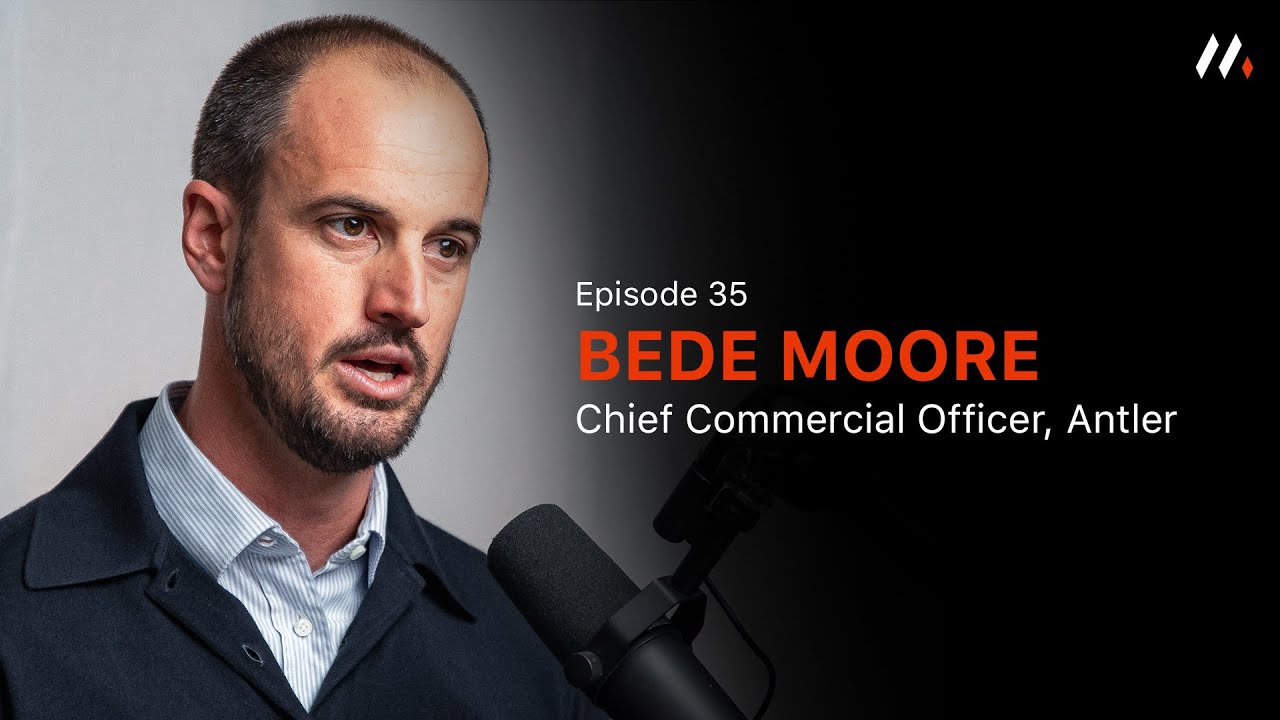
Bede Moore, a partner at Antler, explains the firm's "day-zero" investing model and how it selects founders based on raw intelligence, domain expertise, lateral thinking, and grit. Antler runs global residency programmes and structures its portfolio across 100+ pre-seed investments, supporting founders through their first 9-12 months.
Chapters
We had an investor, really wonderful guy, and he basically just said, listen, you're never— this is never going to be a big venture business because there's not really the opportunity for hockey stick growth. What a venture investor needs to see is that there is an inflection point at a certain point in the business's life cycle where effectively growth starts to ramp really, really considerably without obviously costs following on a roughly even trajectory.
All right. Well, Pete Moore, welcome to The Mentor List.
It's a real pleasure to be here. Thanks for having me. Down in Melbourne.
I know. Well, thank you for flying in and taking all the effort to get down here, and I'm glad you've arrived and on time and ready, ready to roll. So, so, Pete, I'd like to maybe start with getting straight into content as we always do. I mean, we've sort of got a bit of a theme. We're having a chat, I think that was last week, about, you know, what are we going to talk about. There's obviously a lot of areas we can go into, so I'll be interested to see where the conversation goes today. But, Pete, we did sort of land on, you know, navigating the future of startups. and Venture Visionaries. That's a tough, that's a bit of a tongue twister. But maybe if you could just, your background will sort of start sort of unfolding through the conversation, but maybe just talk us through what is the current sort of landscape of venture capital?
Let me, let's talk mostly about Australia in that regard because, you know, the firm that I work for, Antler, we're a global early-stage venture capital firm with, physical presence in 27 locations globally. So we do have a view about different markets, but it's always probably most interesting for your listeners to hear about Australia. The Australian venture capital market has evolved really substantially in the last kind of 15 years, right? If for anybody who's a little bit longer in the tooth, they'll know that there was an earlier iteration of the venture capital industry, that started in the early days of the internet and more or less fizzled out as a consequence of the dot-com bubble and failures thereafter. And there aren't really many surviving relics from that period. And then in around 2010, 2012, some of the bigger names of venture capital in Australia started. So your Blackbirds, your Airtrees, your Square Pegs, those sorts of firms.
And were they international then investing here or out of—
They were started by variously by what what you would call Australian entrepreneurs, right? I mean, they were founders in their own right. They started with, they were just founders of financial firms or venture firms.
Yeah.
You know, in the case of Square Peg, led by Paul Bassett, famous founder of Seek, Melburnian. And this was the first kind of constellation of early firms. And when I started Antler in Australia back in, at the very end of 2018, beginning of 2019. What the landscape looked like then was there were, you know, there are a number of firms including the Big 3, but a bunch of others who had raised funds and who were servicing what you might call the post— companies post or around Series A. But there were, I think, with the exception of Um, with the exception of, uh, Tidal, um, and what was, was then called Tempest, now called Folklore, there were no firms that had a really specific mandate looking at seed stage, um, seed stage, um, venture funding. And actually, right before we got started, the, the federal government had said, listen, we need to change the— we need to kind of change the regime to make it easier to raise these funds. They started what was called the ESVCLP, uh, ESVCLP regime, the Early Stage venture capital limited partnership regime, which made it much easier to raise funds. And that's been incredibly successful. I mean, it's obviously met up with a whole bunch of positive macro conditions, but now there are, gosh, and somebody's gonna ding me on the precise numbers, but let's say this, like there's, I think there were 50 registered ESV/CLP funds when we started and that's now in the hundreds, right? So there's been this extraordinary proliferation and maturation of the industry.
Which is great.
It is. No, no, no, it's fantastic news. It's fantastic news.
I mean, before, I guess, bringing the Antler concept and forming that here in Australia, you're a founder yourself and you mentioned sort of Paul Bassett. And I mean, I imagine, I mean, imagine this sort of stuff was available when you were in that seed and seed stage. You mentioned seed stage, Series A stage, might get you to sort of just share what they are because it is a bit of a different vernacular. Is that the right word?
Yeah.
Series A, B, C, like I get it, it's a sequence of funding, but there's a, in the founder community, it's sort of a live and die by these sort of terminology. And maybe, you know, talking in the corporate space, it's sort of, these are established businesses where we're trying to drive innovation and things. But maybe, yeah, talk about sort of your background and how you ended up, I guess, looking at funding these businesses that are at such early stage. And then maybe a bit of your background as to why. I mean, imagine that was there when you were doing it. That'd be fantastic.
Well, it wasn't. So I'll jump back just to provide some context. So I actually studied history. I studied Dutch colonial history, predominantly focused on Indonesia. So, that was what I was very interested in, but realized very quickly I wasn't cut out to be an academic and started my career like many lost former academics.
Where does that usually take you studying Dutch history? I'm just curious.
Academic, yeah, academia. I get that question a lot. They're like, what is that? You know, that's not a real degree. In fact, I started my career at Boston Consulting Group, a management consulting company, and they called me a non-traditional background. I think that was their euphemism. optimism for saying I had a weird degree. And anyway, so I actually started in the Melbourne office and had an amazing experience, built a lot of understanding about how to operate in business. But, you know, unlike a lot of my peers, when I got to the kind of first major promotion point, I convinced the firm to transfer me to the Jakarta office along with my then girlfriend, now wife, Um, this is still with BCG? Yeah, this is BCG. Uh, and we had been at BCG in Jakarta for a period of 4 months. Um, and we actually, um, this is before the days of InMail on LinkedIn. We both received, um, on more or less the same day, this LinkedIn friend request that just said, do you want to build the first billion-dollar tech company in Indonesia? And it's kind of that Nigerian prince story. You're like, really? Uh, is this, uh, is this a real thing? But, you know, I clicked on it and met these guys and they're like, hi, listen, we're gonna build a massive e-commerce company and we were looking for the people to run and build it. And like, you know, would you do that here? And it just seemed like such an interesting time to be doing it. And at that point in time, just for context, this is end of 2011, beginning of 2012, there were only 4 sites on the internet in Indonesia that could transact, right?
Wow.
Now one of the largest venture markets, you know, globally. So, and it was the very, very beginning.
Yep.
And so that was an externally financed company. It was a company called Lazada. We built it into the largest e-commerce company in Indonesia. It was subsequently bought out by Alibaba. That was an extraordinary story, but very much a story about inbound finance, building, bringing know-how, whatever else. My wife and I decided that we actually, or girlfriend at the time, maybe we decided that we wanted to go and build our own company and we put all of our life savings into renting a Chinese shophouse on the outskirts of Jakarta and building our own tech business. And at the time there was really, there was no funding for startups and we had to, we raised money from, you know, some high net worths and friends and family and we ran it, you know, mostly profitably. And it was a, you know, it was a, what you would call a very much a bootstrapped affair.
What were you making?
What was the product or service? So we started doing e-commerce services. So what we really wanted to do is saying, hey, like there is this revolution coming in retail and in Indonesia and we can see it coming and we've just been part of it working at Lazada. And, you know, what we really wanna go and do is we're gonna provide, you know, brands wholesalers with the capacity to have an online presence. So we'll run their website, their online marketing, we'll do their logistics, which was, again, was a successful and common business model in that period of transition as all of the big markets kind of went, transitioned into e-commerce basically.
Yep.
But we realized, and this is actually one of my, probably my first major lesson in venture, is that when we went to go out and raise institutional money. So firstly, when we talk about these rounds, let's just Let's just take a small digression to talk about that. The rounds are pre-seed, seed, Series A, B, C, and onwards and onwards until exit, right?
So what are they? So, okay, here's $50,000, your pre-seed. What does that mean?
That means, thanks Dave, I appreciate that. I will take that $50,000 and I'll chat to you about it afterwards. Yeah. What that means is, that you have, you know, looked at me as the founder and you said, geez, I think this big guy's pretty impressive. And that idea sounds feasible to me. And I'm just gonna give you, I'm gonna give you the first, I'm gonna give you the first check. I'm gonna be there right at the very start of that company. And it should be, if the investor is doing their job right, it should be very, it should be exclusively about the founder really at that point in time.
Yeah.
It's really saying, hey, I think that, You know, you're a brilliant individual. And I say that because obviously that is the practice that Antler is in. We're about day zero investing, which is investing in people at the inception of their business. Once you get to seed, you know, unsurprisingly, there's probably a couple of co-founders. There might be a couple of team members. There's probably a product there. There's probably a product there that is making revenue and there is some reliability with regards to how that product generates revenue. Okay. So that means that, you know, in a good case, you know, in Australia, you might be doing, let's say $300,000, $400,000, $500,000 of revenue. And there's some predictability. If you give me $20,000 that I can turn that into a certain type of return of revenue.
Yeah.
It's not always the case. You know, there are plenty, there are big companies out there that are pre-revenue and raise $30 million because they're making alternative meat And the size of the opportunity is such that, and the complexity of creating that product is such that, you know, you can't, you need an enormous amount of money to go ahead and do it. And so that's what a seed round can look like. But, you know, for the, to make it a simple, to make it a simple story, the version I gave is what like a, you know, a slowly growing software company might look like at the seed stage.
Yep.
By Series A, what you have is you have a clear team in place. You have, you know, pre-2022, you had about $1 million USD in revenue. You've been growing for 6 months at more than say 20% month on month. There were viable other products that could come online. And then there also starts to be this bigger consideration of, Hey, this is an asset, this company is an asset.
Yep.
And how is it going to evolve? How big is that market that it's playing in? Where is it finding users? Are there lots of them? Is it a growing market? All of these wider considerations. So that's, the Series A is this important marker point. That's where, from a financial perspective, things start to become a lot more about the asset and less about the founders. I say that only in a rebalance. So, you know, every investor will tell you that they're founder first, irrespective of if they're pre-seed through to Series A. say Series A investors, but there is a shift in focus. And historically, the Australian landscape has evolved that we've had much greater density and maturity from that post-Series A phase because it's, frankly, it's more similar type of investing to if you came out of an investment bank or a finance industry, it's something that might be a little bit more familiar to you.
Yeah.
So going back to your story, like, where were we and what was happening in Indonesia? Well, there was very little happening. There were no funds on the ground when we first started. And when we went to go and raise our seed round, we were looking to get venture firms to do it. And we changed from this e-commerce model, the e-commerce model that we had of this e-commerce services model, We had an investor, really wonderful guy, and he basically just said, listen, you're never, this is never going to be a big venture business because there's not really the opportunity for hockey stick growth. What a venture investor needs to see is that there is an inflection point at a certain point in the business's life cycle where effectively growth starts to ramp really, really considerably.
Yeah.
Without obviously costs following on a roughly even track. Trajectory.
Got it. So they looked at your business model, saw that it was probably, it's sort of a professional service, so you're growing through relationships versus, I don't know, Atlassian, which can be deployed internationally, and obviously the hockey stick is—
It's about the scalability, right? So a venture-backable business has this intense scalability about it. A services business does not. Like, essentially a service, like, it might not be a one-to-one, it might not be a one-to-one growth, but like, fundamentally, if you think about, if you think about a law firm, its growth is always constrained on the supply side by the number of smart lawyers that it can hire and train and put in place.
Yeah.
Whereas at a certain point, a software, like a software business, obviously, if, If you're Facebook and you're serving a billion or whatever it is, 2 billion users, of course, you know, the demands of your engineering team and your servers and whatever else continue to grow, but they're far outstripped in that growth by the number of users on the platform. And it's that scalability that is necessary from the perspective of a venture investor.
Got it, 'cause in my simple brain, I never really understood the excitement of going and getting money from someone else and then you've got a loan and more pressure to then grow the business. But I guess if that's gonna help you hit an inflection point and it's a scalable model, I can kind of understand that thinking.
It's probably one of the biggest misconceptions about, you know, one of the biggest misconceptions about venture is, you know, if you imagine it's obviously regard, like it's all very sexy to go and build your new startup and to get and to, than to get venture funding, right? But in truth, venture capital is this, is a very specific type of finance that is suitable to really only certain types of businesses.
Yeah.
And those certain businesses need to deliver outsized returns for those funds, for the economics of the, for the economics of those funds to make sense. And so a venture capitalist will look at, you know, like a Series A venture capitalist will look at a, a company and the valuation of that company. And they'll think, look, this needs to be able to 10x in value at least for it to be worth us even bothering to do an investment in it, right?
Yep, yep.
You know, and I mean, a simple way to think about it might be to say, well, look, you know, some of these bigger funds at the moment, right? You know, your Airtrees and your Blackbirds and stuff, those guys are starting to raise near, some of them have raised billion-dollar funds. Right? Well, they need to have a company that is worth whatever. They, they need to have a 10% holding or a 20% holding in a $10 billion company to be able to return a fund of that size back multiple times for their investors, right?
Yeah.
And so what are the types of companies that are worth $10 billion? Well, they're not law firms, they're not services companies, they're software companies, you know, predominantly. And, you know, some hardware companies and, and a few others, but That's what venture investors are out looking for.
And I mean, yeah, chosen sort of the multiples on sales of businesses that were in that scale mode. And I mean, yes, multiples I've heard of 18, things like that. Whereas if you're a prop service, maybe you're looking at a 2, 3, 4, 5.
Yeah.
So it's, that's quite interesting. So I had a question. I mean, so you've mentioned sort of pre-seed, seed, and you're sort of going away from the risk factor. So I assume if you're investing at pre-seed, there's a lot more risk for the person putting the money in. So there's probably a bigger ask on whatever the eventual potential outcome is. But you mentioned you guys are seed stage venture funding, which I find super interesting. And just knowing that you're the man responsible for, in the end, making it commercially viable, I'd be really interested in hearing whether it's a theoretical answer or maybe, you know, what you guys are doing at Antler around, because what are the stats? 1 in 5 businesses never makes it past 5 years or fails. So these are the sort of ones.
It's worse. Yeah, so it's a lot worse than that, Dave.
Yeah, how do you sort of, what's in, you know, portfolio theory and all these things, is that what's at play? Like how do you make your business model work when you're investing in such high-risk type businesses and founders who all have different ideas? And are you interested in only industries of certain things? Like, yeah, what's the secret sauce?
I, so, well, firstly, so we're actually, we're a global early stage investor, but our focus is pre-seed. And more importantly, what we say that we have defined a category called day zero investing. And day zero investing means, you know, that we incorporate the majority of entities that we end up, or our founders incorporate like in and around us, the majority of entities that we invest into.
Right.
Okay, so that's what day zero is like.
So it's even more riskier than what I was saying.
There's not even an entity when they come and start working with us. That's right. And so yes, that is, we are the most, in a sense, of course, that makes us the kind of most risk-on, institutional investor in Australia and in most markets, right? So what you are asking is also how do you get comfortable with that? And it's a little bit of the reason I never kind of finished the story of building in Indonesia, but just I'll briefly describe that and then I'll come back to say like what really attracted me to this model of Antler.
Yeah.
Like, you know, we went, And we were told, hey, like this is a services business. And we did reconstruct it as essentially an e-commerce company and that did help us raise venture. And then we had this, like we went through the ringer of talking to lots of venture firms and trying to raise money and the experience of that. And it certainly wasn't, certainly not my favorite professional experience. This is in Jakarta when you're doing this? This is in Jakarta.
So you're already sort of probably not as well networked.
That's right. Yeah, yeah, yeah. But yeah, building in a foreign country, not the easiest. And so anyway, that experience really taught me a lot about what it's like to be on the founder side and what it's like to be in constrained capital environments and what companies need to look like and what have you. And I went, you know, ultimately that company was unsuccessful. So my wife and I returned back to Australia and a few years later, I was considering my next move and I was actually talking to an old friend of mine and he happens to be the founder of Antler. And he's like, hey, like why don't you kind of, why don't you start the fund in Australia? Like, and so I said, okay, well that sounds interesting. And I flew up to Singapore and I said, okay, so what is this? And he said, look, we are gonna go around the world and in every market we are gonna look around for the best and brightest people not who are building now, but who should be building. Because there's this enormous waste of human talent.
Mm-hmm.
There are all these brilliant people who are stuck doing, you know, jobs that are frankly unproductive or are not really making material change to, you know, the economic tapestry of any particular market. And we wanna find those people and we wanna work with them and help them to build brilliant companies, right? And I thought that that's an intense, human approach to building businesses. It was also, in a sense, a very inclusive one, right? It's like about effectively democratizing access to building great companies.
Yeah.
And just a very open-minded one, like, hey, let's find great people. And on the one hand, of course, it is really risky because yes, it is not just 20, it's not 1 in 5, it's not 20% of companies that fail. It's the vast majority of companies that fail from that point of view.
Right.
So on the one hand, of course, that is just statistically very risky, but the part about it that isn't risky and doesn't feel risky is you're effectively stripping out all of the other considerations of other investors, which are about like, how's this product working? What's the, like, what are the metrics? Is this a great market? And you're focusing on a single thing and it's the person and saying, hey, is this person brilliant? And could I see them creating something enormous? And there are lots and lots of examples, unfortunately, of people that we've invested into who are that and then who get lucky with— who get unlucky with the choices that they make or the type of business that they start or the way that, you know, some sort of macroeconomic condition or what have you. But the foundation of that, I believe, is the core of any brilliant company. Like, you know, there's a reason why there is a personality cult around all of the great kind of founders. It's because they are the center and there is nothing that those companies couldn't exist without them. And Antler's focus is on finding those people in all of the different markets we work in.
So this is very interesting. So So, okay, so you're not necessarily looking at, you know, directly at or at the front or the biggest part of the decision around industry, you know, profit, maybe the scalability of the concept and idea, but it's about the person. So if I reverse engineered that, so for me, is it nature? Is it learnt? Is it the things that you're looking for? Are these intrinsic traits? Are they— Is there a certain age demographic that typically would be more likely to have the next unicorn? Like, what are some of the, what are you looking for? Yeah, that's right. I mean, not to stereotype, but are there obvious things that are like, oh yes, tick that box, or are there boxes that get ticked?
Yeah, so I run our data team which is something that we've only been building for the last year and a bit. And obviously the holy grail for us is to come up with the 7-point questionnaire that we can just put out to everybody and be like, yep, this one's a winner. Regrettably, it doesn't look like that. And the past research, I mean, again, if you were to take this kind of like humanist view about it, the research actually really, it's kind of lovely. It's like, hey, how old do you need to be to create a billion-dollar company? And the answer is any age, right?
Yeah.
It starts to drop off past like 55 or something, but effectively at any age you can create a billion-dollar company.
Right.
If when you're talking about these monster systems firms, they do have a tendency of being founded by people in their 20s, but if you strip them out, right? Like if you strip out the kind of Magnificent 7 or whatever it is, you know, and include a long tail of other companies that you would be very happy to have founded and sold.
Yeah.
Doesn't matter, doesn't matter what your age is, right? There's also, with regards to background, not a whole ton of evidence. Again, I like, these are not studies that I've done, this is just stuff that I've read. I have heard, and I really, really do wanna test this, 'cause I find this one a bit of a fascinating one. I have heard that one of the few statistics or features that is common amongst great founders is that they started a business before the age of 16. And, you know, if you think about it, it's like, okay, well, that's a kind of a cultural, it's a, you know, it says something about who they are. They personally are a real, they're very entrepreneurial, right? I don't know whether it's a lemonade stand or fixing, you know, computers for everybody around the block.
Maybe implies a, Parental influence potentially.
Also potentially, right? But the things that, you know, the things that there are kind of probably 4 traits that we commonly see and look out for. And as I said, the big thing is to be sufficiently open-minded to see these and to watch them evolve. And so the way that, The way that our model works is that we go out, we're constantly looking for people all around the world to come and work with us. People come in and they apply. So in 2023, about 120,000 people globally applied to work with Antler. And we bring those, we bring a small selection of them in to come work with us for a couple of months.
As in workers come in as a— Funded?
In a resident, no, they come in as part of a residency. So, you know, in our offices, we've got offices in Sydney and Brisbane and Melbourne and then, you know, 24 other locations globally. And we work with those people for a couple of months. And the purpose of doing that is to watch them, you know, very often find a co-founder or otherwise to work on the formulation of what business it is that they're gonna build. And, you know, and I've said, obviously we're very focused on people, but like if you come to me and say, hey, My name's, I'm Jim and I wanna build Australia's top law practice. Like we're not gonna, you do need to be a credible venture, you need to be a venture-backable business for us to wanna work with you.
Yeah.
But putting that aside for now, when we look at, when we look for founders, there are 4 things that regularly come up that matter, right? Number one is raw intelligence. Probably my most highly valued company at the moment was run by the Irish maths champion. And that's a kind of a, I've got one of my other top companies, a guy did a joint degree in electrical engineering and finance at MIT. You need to have a, you need to be incredibly intelligent to run a big company. Yes.
So that's with formal qualifications or is it?
Not necessarily in formal qualification, you know, and again, like, you've got to— this, if you think about it, it's just, it's very easy to fall into the trap of going, well, okay, well then let's only troll for people from, from these universities or from those places.
Yeah.
And you instantly— yes, you increase the density, uh, right, of likelihood, but you don't necessarily— you're not going to catch everybody. And, and a big part of What we want to do is make sure that we are open-minded and looking for everyone. The second thing that is an associated point, so I'd say it's kind of like intelligence and then that intelligence is the raw intelligence and then the domain expertise. So founders working within a domain that they that they know well, again, according to our data, have a much higher likelihood of raising money more quickly. Now, again, we need to see that longitudinally to be able to say that's a certainty. And if we, and anybody with an encyclopedic knowledge of global venture investing would be able to list a ton of companies that work against that stat, right?
Yeah.
Like Travis Kalanick was certainly not a guy who knew a lot about ground transport, before he started Uber. But there is, again, we see a strong correlation there.
So if I'm gonna create a new business, you know, producing hydrofoils, you'd want me to be someone that's surfed and knows tides and has been around boats and—
Right.
Yeah.
Or, you know, or have the math or like have the math background or like, you know, again, you know, it's not that you can be, it can be adjacencies. There are are obviously adjacencies that work. But yeah, no, like, you know, I mean, a simple one to think about is, hey, you're coming up and you're building an insurance company. We're going to build a challenger insurance company, um, which involves you writing product, writing insurance product that is novel. Well, gosh, you better have written a lot of insurance product before if you're going to do that well.
Gotcha.
And that needs to be in the founding team. Um, another, then another one is, um, is kind of like the, what I like, lateral thinking, just the ability to just kind of come at problems with fresh eyes. And that's why our residencies are particularly important. I'll give you an example, probably my favorite example. I don't always talk about this, but we, I'll change his name, but we had one of my favorite entrepreneurs, let's call him Rajiv, one of our first cohort. You know, you can imagine we've got all these new people coming in It's the first time we're running it and we're just, we're having this big reception and he comes over to us and he's like, hey guys, great to be here. And we're like, hey Rajiv, good to see you. He's like, listen, I need your time. And we're like, well, it's the beginning. Like, can you see this is a cocktail thing? Like, you know? And he's like, no, no, I just need 5 minutes. And we're like, okay. And he pulls us to the side table and he pulls his laptop open and he goes, hey listen, I've got a spreadsheet here. and I've stack ranked every single person in, in the, in the residency based on their abilities. And I just want you guys to work through it with me and make sure that I got this right. Um, and it sounds kind of crazy, and that's because most founders are kind of crazy. Um, but it is that sort of like detail and strategic thinking that makes him a fantastic founder. And just the like that you would be, to be on top of things is, and he runs one of our, or jointly runs one of our top companies. A similar thing, so like I look for tidbits like that. I'll give you a similar example. And I think this feature is hard to spot, but particularly important is the ability, a great operator or particularly a great founder will be able to internalize what appears to be an external, or what appears to be an external problem. Okay? So we had this amazing, we've got an amazing portfolio company here in Melbourne called Sapient. And the founders, it was right during COVID and the founders weren't sure really what they wanted to do. So this is already gonna go against my domain expertise 'cause these guys definitely were not working in male fertility, before they started. Um, but one of them went to a, uh, one of them went to a family gathering, um, and, uh, his uncle was complaining incessantly about the fact that he spent $100,000 on IVF treatment only to find out subsequently that he was infertile. Um, and, and, uh, and Ash was like, God, what's the, you know, what's, why is that? Why, why is it? And it turned out that, and remains the case, that actually male fertility, very hard to get tested. unless you want to go— unless you go into a lab. And a lot of people are very reluctant to go into a lab to do, to get fertility testing. And the reason they can't do that is they can't get a sample to remain stable outside, like outside the clinic, right? They need to test it very quickly. And then, and then he was working with a, with a guy who had studied pharmacology and they were like, surely we could just create a state, like a stabilizing, a stabilizing agent that would mean that we could do this.
Yeah, absolutely.
Right? So they took this problem that nobody had solved that was effectively having a massive implication on people's lives. And they were like, well, we'll fix that part. Let's fix that part. And then we will change this industry. And that's exactly what they did.
Wow.
And then the last one, sorry, I know this is a bit long, but it's the grit and tenacity. It's just grit and tenacity. You know, we have a, my favorite one on this is we have a lady called Vandana. She applied 9 times to come and work with us. We kept declining her. Then she was like, just let me have a phone call with you. She had a phone call with the head of recruiting. The head of recruiting was like, I can't tell this lady, I can't say no to her. She just keeps applying. And I was like, oh, just put her on the phone to me, I'll speak to her. And she called me up and I was like, hi, Ivana, it was really lovely to chat to you. And she's like, oh, hi, David, I really wanna come and work with you guys. And I was like, I know that, I'm sorry, we've kind of made the decision. She's like, well, I'm just going to keep applying until you let me in. And, um, you know, and she's, uh, it's amazing, you know, she just, and, and what's interesting about that is you take that slice of a way the person acts and you go, okay, can I see that replicated in the way that they act each and every, in each and every instance that they are? And when you start seeing that behavior, replicated, you say, well, look, this doesn't tell you that this person is definitely gonna be able to create an amazing business, but this is a foundational behavior to creating a massive business. And those are the sorts of things we're looking for.
Fantastic. Well, there's the 4 things and they're not necessarily things you're born with. Raw intelligence, domain expertise, lateral thinking, grit and tenacity. It's actually one of the things on executives' radar at the moment is, you know, if you've got an upbringing that's quite comfortable, grit and tenacity or the urgency to really, without the struggle that can, to develop grit and tenacity or the desire to really sort of go above and beyond may not be there organically. So. Yeah, just, I find that last one interesting. And absolutely, I mean, if you're a founder and you're willing to go on that journey and be paid next to nothing for many years and take the risk, then that's fantastic. Well, thank you for sharing that. And so anyone listening in can start sort of honing in on those 4 areas and get their application. I mentioned 120,000 people you mentioned worldwide. Yeah, there must be some Obviously, if you focus on those 4 things, you might be able to stand out. And unless you're like, was it Vunka that kept applying with her grit and tenacity? So, Pete, I had another question. So let's assume that the 4 things that you're looking for, you've found them, you've got your cohort. We're still in sort of risky business because maybe there's something that's not formed. Maybe coming back to the commercials and, you know, how maybe how you can sleep at night. With so many, I guess, investments or partnerships, whatever it is that you call them across the board, how do you manage a portfolio that is inherently, you know, at a singular level, very risky?
Yeah, that's a good question. Yeah, so Antler is the world's most active investor. We've now, We've made over 1,000, I mean, we've made many more than that, but publicly we've made 1,000 investments now. And we are, I think it's PitchBook that rates us as the world's most active firm. And corollary of being very active is you have a big portfolio. And so we do have a lot of, and what we're finding is, Our value proposition, our commitment to the people who work with us is, hey, we're a day zero investor, but we wanna work with you throughout the lifecycle of your company. We wanna be there from day zero through to exit. And so firstly, that influences how we've structured our firm and our fund structure. So, you know, our early stage funds, Mm-hmm. like what you have here in Australia or in the US or a South Southeast Asia or what have you. These vehicles now are pre-seed through Series A vehicles. They are there really to help you through, you know, this particularly like the founder-led part of the company. And again, I don't wanna suggest that it's not founder-led later, but like that where—
Yeah.
Really it's, you know, putting things together with sticky tape to make them work kind of territory. You know, that's the, That's the part, right? So that, so yes, that still means that you have a pretty active, large number of companies that you're handling. What we have found is that that first 9 months after an Antler investor, 9 to 12 months is really the critical period to setting the foundations for a company to be successful. And so—
First 9 to 12 months after the investment from Antler.
Investment from Antler.
Pre-seed.
Yeah, exactly. After the pre-seed. Look, there is some, yeah, yeah. Just, it's probably better to call it the antler investment because you will have investors regularly, particularly in Australia, we will have where it's a much less mature venture capital environment still and a more challenging venture capital environment or finance environment. You will have funds or individuals that come in subsequently who still call that pre-seed.
Yeah. Yeah.
But so the first 9 to 12 months are really what matter. And so we work incredibly, that's the period of intense, work with all of the newer investments to try and set them up on the, to get them on the right setting. And realistically, there are kind of 2 parts to that, plus a third. The 2 main parts are, hey, what is your capital strategy? How are you gonna raise money for this business? Because it's absolutely essential and it will realistically or most likely drive whether or not you can be successful. Um, you know, and, uh, and then the second part of that is what's the go-to-market for this business? How are you going to get a product in front of users quickly to start providing you with information about whether or not there is demand for the, the products that you want to sell?
Yeah.
And then the plus 3 is helping them with the numerous other things that will naturally come up in that period that, you know, and which differs from company to company. Hey, I need to, you know, I need to, we need to hire an engineering lead and we don't have any technical skills. Or hey, you know, we're having problems with, you know, our Google advertising performance. performance, like why is that the case or whatever it might be, right?
So they get that whole infrastructure to sort of lean on and support, which I guess, yeah, that 9 to 12 critical months would certainly help. And so, yeah, and I guess you mentioned there sort of what is the cap strategy. So these sort of companies are sort of leading with a cap strategy. So obviously it's gonna be a scalable product that, and then they're aware of the inflection point and you're helping to guide 'em to basically an exponentially, a business that could potentially exponentially, oh my God, that's a lot of growth.
Growth.
Growth.
Yes, yes. You're looking, well, in that early period, what you're looking for them to be able to do is go out, right? If you think about a go-to-market, it's saying, okay, well, what's the problem that you're trying to solve?
Yeah.
How are you solving it and who are you solving it for and how do you find that person, right? And it's kind of the funny thing about, I mean, I find in a lot of business, it's not the concepts that are complex. They're not intellectually complex concepts to grasp.
But what they're trying to do, the product or the service or—
It's, well, no, it's distilling down what that actually means for them to do and like the different, you know, tactics that they can employ in order to determine the answers to that. It's like, you know, oh hey, like actually it turns out I shouldn't be going to the chief revenue officer. Like chief revenue officers are not really interested in this. This is a FinOps thing. And so we need to be going into businesses that have a FinOps department. Well, to have a FinOps department, you need to have at least $3 million in revenue. Here are the identifying signals of a firm or a company that looks like that. How do we get a list now of those ones? How do we get into it? Like, what's the best way to speak to them? Do we speak to them through a content strategy? Do we speak to them?
Yeah.
Right? All of these, it's just this kind of working gradually through all of those different things to kind of land on. And again, if you wanna get to, you know, what's a good seed stage company look like? It's like I can turn up and I go, hey, we sell into FinOps, we sell into FinOps leaders who are running companies where there is more than $3 million in revenue, where they've got cloud spend of, you know, in excess of $250,000.
Yeah.
I made those numbers up, they probably don't stack up, right? But like the point being that they have a really clear idea of, This is the customer, it's who we sell to, this is how we get them on board, this is, this is our conversion rate of getting them on board. It's kind of getting to the point where it becomes a little bit more, um, uh, mechanistic or calculable how successful the company will be.
Yeah, and, um, you mentioned, uh, so we're sort of having a chat last week and, um, I've only probably scratched the surface in terms of areas we could have gone, but one thing you did mention in the VC space more broadly, this concept of power law, which I'd never come across. So maybe if you can share how that works or if you've seen it work or, yeah, it'd be interesting to tease out that concept. Yep.
So power law is the concept that in venture investing, the returns that you earn from your top asset will be larger than the sum of N2 through infinity, like whatever the additional number of them is, right?
Yeah.
And I think this is actually very easy for people to conceive of because probably most, I mean, maybe I'm being very presumptuous here, but I suspect most of your listeners would know early Blackbird Fund, invests in 3 exceptional Australian companies, Canva, SafetyCulture, and CultureAmp. Now plainly, Canva is, you know, one of the world's largest privately owned software companies, and the returns that would come from having, like, you know, assuming that you had relatively equal investments in each of those companies, Yeah. the returns that come from that are larger than what will come from both SafetyCulture and CultureAmp and all of the other companies that were created within that fund.
Yeah.
It's that simple. Now that influences, again, that's the big consideration when you, if you are a founder and you are trying to go out there and raise venture capital, what the venture capitalist is praying is that you are the next Canva, right? And that you can't, you're not just a, billion-dollar company, you're not just a $10 billion company, you might be a $40 billion company or a $70 billion company, right? That's because essentially whatever that largest asset in the fund is, that is really what will define the success of that firm.
And is there a number? So like Blackbird, there's 3 amazing investments, but They're obviously within a portfolio.
I don't know that, by the way. This is like, that's me looking publicly at what the situation, I mean, but again, it elucidates the point. Like, it's like most Australians can look at that and go, yeah, okay, that makes sense.
Yeah. Yep. And is there a sort of, you know, getting into the model a little bit here, but, you know, like with stock investing, you've sort of, you know, there's a bit of a rule around you need more than 7 and then you've got a bit of diverse, Diversity and then your diversification incrementally reduces with 12 or more or something. I'm trying to go back to a seminar I once came at. I mean, with an early stage venture fund, is there such a thing as early stage venture funds? So you only got a million seed, then you'd only, yeah, am I overcomplicating the thing or?
No, no, no, you're right. No, no. So yeah, we think, I mean, like, you can, you could easily get mired in just like the complexity of a decision at every point. But in principle, what Antler is trying, what Antler is interested in doing is saying, hey, we wanna look at as many people as we possibly can. We wanna work with as many people as we possibly can, but we hope that our selectivity increases over time, right?
Yeah.
In other words, that we have more people to choose from and work with fewer of them. You know, it's, so that's the first point. And the second thing is, well, you know, when you come and work with us, what we know is, hey, we need to have you working with a cohort of, you know, larger than, more than 60 people. Like there needs to be in that residency more than 60 people for the kind of all of the positive— interactions to work. So, you know, between 60 and 80 in your direct, you know, some of that, we have a lot of funds that are across multiple geographies. And so, but within each kind of core group, it's roughly the right amount.
Yeah. Is there a bit of a peer effect there where they're rising?
Yeah, yeah. No, no, absolutely. I mean, there is, but I mean, that's the, again, like if you, you know, if you're thinking about going and building a business, Why would you opt to do that in any other format than say, okay, well, I can go into a room where there's 60 other people who are doing that at the same time and have that as a peer group, have that as a pressure group. I think it's a very kind of fecund environment.
Sounds better than the garage.
Yeah, that's right. Exactly. And so, and yeah, Yes. So our, you know, we typically, our early stage funds, again, this has changed a bit with the way that they're constructed, but they make about 100 of these early stage, of these pre-seed investments. So it's pretty heavily diversified.
Yeah. Great. So yeah, I mean, so thank you, Bee, for sharing. It's kind of like, so whilst they are, there's risk around it not working, there's obviously risk around it you know, except working exceptionally well. Um, so it's— I guess I was probably maybe coming at risk from, oh God, maybe a fear perspective. So you've helped broaden my perspective and sort of looking at those 4 traits. So you're getting the best people in, which is, you know, giving you a really good cohort of maybe 60 to 80 people. You're obviously getting the right environment around them to, you know, accelerate things like, um, that are not specific to that business, whether it was Google Ads, those types of things, and really setting it up for the best chance. I mean, Yeah, I don't know how you got this job, B, but it sounds really fun.
You know, it is. It's a lot of fun. And you're right, like there's a lot of risk there and it's very easy to think and spend a lot of time talking about the risk because every day, of course, you're confronted with a lot of, you're confronted with bad news. Like people are like, God, I don't know how I'm gonna do this. I'm running out of money. But you're also every day confronted with these stories of people doing Extraordinary things and just scratching your head and being, wow, I can't believe that they, you know, that they managed to pull this off. Right. So, and I'll just, I'll come back to like the guys at Sapien. Guys at Sapien had just invented this fixing, this fixing formula that allowed them to take, the men to take samples in the home. Right.
Yeah.
Unbelievable. How'd you do that? And they wanted to go start testing it. And just then the Victorian government closed everybody into their homes for COVID.
Oh, okay.
And we're like, oh, how, like, that's so unlucky, like, that you were right on the cusp of being able to do this and offer this service. And now, you know, government regulations come in. And they were like, and then a few days later they called us up and they were like, hey guys, we've worked our way around it. And we were like, what? And they were like, yeah, we're Uber drivers now. 'Cause as an Uber driver, you can drive anywhere in the city. So now we can drive around and pick up samples as Uber drivers. Just Uber it to the lab. It's just lateral thinking. You're just like, yes, so clever that you found a way around things.
I imagine that model in COVID was probably the only model.
Yeah, right.
You can't go into the— maybe you could have gone into the lab, Yeah, but yeah, God, it was a sad time.
But it's just like, you know, you hear that, you go, wow. And so it's like, obviously as a fund manager, I have to pore over the kind of the hard data and I'll look at things, but it's, and you know, you have good, you know, we're in the midst of a very, very good quarter, very lot of super positive news for us. And it's great to be that, but we have certainly had quarters in recent times that have been horrid. And you just, you have to understand that particularly early stage investing is, it's nonlinear. You cannot count people out. You know, one of the entrepreneurs I've talked about today, and I won't say who they were, but like one of the entrepreneurs, you know, we were in the process, we were chatting to them, or we called them to be like, hey, listen, like I'm gonna have to register, I'm gonna have to say that we are like writing this offer. 'Cause I just don't think that you're gonna get there. And they were like, I just closed $600,000. And we're just like, how did you do that? Like, where did that come from? Like outta nowhere. So, you know, there's a lot of these very like positive and exciting human stories that I do love about this job.
Fantastic. All right, thanks, Peter. I think I could definitely sort of pepper you with questions all day, but I know we've gotta get you to a luncheon shortly down the road. But just a couple of more maybe short answer questions. And before I jump into that, I know you've had a bit of time thinking on the plane. You probably sort of had an idea about a question I might ask. Was there anything I didn't ask you today that you thought actually, or maybe it's a closing remark where you think maybe I'll just share this comment?
I just, I think that the thing I would say about building companies is it's a very, I'm not gonna say it's an addictive thing, thing. But I want— the thing that I commonly notice is that people even who, who come and do it with us and who aren't successful, one of the most regular things that we hear is, um, that's just changed my perspective on, on working and like what I'm going to do and how I want to spend my time. Like, I just, you know, lots, particularly people who've come, you know, been whatever, 5, 6, 7, 8 years in corporate, and they just go that like, I just, I can't work the same way again. Like, that was so, so cool. And like, that's always a lovely thing to hear. It's a very, very hard life being a founder. Building companies is, you know, it can be very lonely and you wake up early. And I remember that, you know, obviously starting Antler in Australia, it's the same thing. We were starting our own business and—
Yeah.
It was very, very intense, but it's exhilarating. And there's not a lot of other things out there Couldn't agree more with that comment, Pete.
All right, so I know you were struggling with this one around a quote, but how did you land in your mind? Are you gonna share the quote or are you—
I don't, honestly, I don't. It's really interesting. Is this a problem that I don't have a favorite quote? There is a good quote that I like, which is, you know, fall in love with the problem and not the solution, which is, I can't, I forget his name, but it's from one of the Waze co-founders.
Yeah.
And I say it a lot to early stage founders and very, and particularly, sorry for these people, but particularly to engineers. Like engineers love to get really psyched about stuff that they can build and how beautiful it will be.
Yeah.
And really what matters is, hey, do you love the problem that you were solving? Because if you can think about the problem, and again, I go back to Sapien, like they thought the problem was how do we test more men for fertility to have them lead better lives? That was what enabled them to think laterally around, well, we have to bring The solution to the home.
Awesome. Yeah, no, it brings that lateral thinking to life for sure. Well, thanks for sharing. I know you were sort of on the edge where you were gonna go with that one.
Thank God.
So I guess maybe this would be an interesting answer to how, well, interesting to see how you answer this knowing that, you know, your younger self has had both a successful and a business that didn't commercially work. And now you've sort of been involved in many, different investments, but what advice would you have for your younger self?
I thought about this. This is a good one. You know, it leads to a lot of soul searching, this question, on the plane. I think actually, you know, keep adventuring. You know, I am really, really glad that I chose a nonlinear path in my career. Like, I, you know, I've really kind of built most of the things I've ended up doing. And, you know, some of those have been successes and some of them certainly haven't. And I don't know what that's going to mean over the course of, you know, like, you'll look back and see whether or not that was an intelligent set of maneuvers. But I think it makes for a much better life experience. And I've had a great time so far.
Cool. And just last sort of short answer question, any Any books or things that you think, you know, in light of this conversation that either you found useful or you've seen other founders found useful or just a book you'd recommend?
I don't read business books as a point of principle. Like Rise and Fall of Great Powers by Paul Kennedy, if anybody wants to understand how empires rise and fall, one of the great texts. I recently read Germinal, by Émile Zola, a book that he wrote in 1873. It's really one of the most— it's just an incredibly, incredibly intense story about coal miners in the north of France in the 1870s.
So, you've sort of— that's not the Dutch colonial history, that's the— It's in the genre.
Yeah, getting a bit of— I can't read anything that's not history, basically.
Oh good, well it always repeats itself in certain different ways. All right, now we're gonna hop into basically 60 seconds where I'm gonna ask you as many questions as I possibly can to tap into your psyche.
Wow.
Ready to roll?
Scary.
Yeah, okay. Unicorns or rising stars?
Unicorns.
Global domination or hometown hero?
Global domination.
Big data or gut feeling?
Depends on the stage of the business.
High stakes or safe bets?
High stakes.
Rocket speed growth or steady climb?
Rocket speed growth.
Tech wizards or people magicians?
Oh, don't know what that means.
I don't know either.
Bamboozled.
Pass. Crunching numbers or reading minds?
Crunching numbers.
Worldwide network or local squad?
Depends on the context.
Founder's flair or team synergy?
Founder flair.
Big wins, steady gains?
Big wins.
Epic success stories, cautionary tales?
Epic success stories.
Data geekery or intuitive mastery?
Commercial nous.
Shiny new startup or rising treasure? These are getting a bit cryptic.
Rising, rising, rising. If I tell you anything else, my LPs will kill me. Rising treasure.
All right. And the last one, which is play into— it's an easy setup for you. Play it safe or go big?
Go big. There we go. I think that was very obvious. That's pretty clear, that thing.
Oh, I had 3 more left, so we'll have to save them for the next recording. But thank you for your time today, Ben. It was certainly a A super interesting topic. And yeah, like I said before, I don't know how you got this job, but, um, I mean, what an interesting sort of place to work in. And, um, yeah, thanks for being so open and honest. And, um, sorry if I dug deep in certain areas, but I just found it super fascinating. And, um, thanks for the conversation.
My pleasure. Thanks for having me. Really was good fun.
More from David

2026 National Networking Event | Melbourne Grand Prix Featuring Guest Speaker, Molly Taylor



HR Connect Leadership Series | Peitta Dyball on culture, strategy & the evolving HR landscape

HR Connect Leadership Series | Elevating HR through community and mentorship





Uncover Neurodiversity: Empowering Hidden Strengths in Society and the Workplace w. Dr. Shae Wissell
