David Boyle at Audience Strategies for Chapman 23rd January 2023

David Boyle explains how data and AI are reshaping entertainment marketing, moving beyond recommendation engines to strategic decisions about which products to make and where to sell them. He walks through audience segmentation for BBC Earth and David Guetta, then uses ChatGPT live to generate audience segments and distribution ideas for a Mario movie, arguing AI can accelerate ideation if humans verify the facts.
Chapters
So it's nine o' clock there, is it?
Yes, 9pm yeah.
Thank you for. Thank you for taking the time at night. I appreciate it.
I'm very much looking forward to it.
I am. I'm about two chapters into your book right now.
Excellent. Excellent. Well, we'll be covering some of the highlights today, so that will save you some time.
I'll read it anyway.
Let's see, we've got nine.
I think we're going to wait on a couple more. We're going to wait a couple because we've got 16 or 17 students in the class, so I think people are just finding their way to Zoom. We haven't done class on Zoom this semester. It's been all in person. So I think some people are just kind of finding their way through what we haven't done in a year and a half.
Well, I wish this could be in person. Sorry, everyone.
We'll get you out here again sometime.
Sounds good.
Or maybe we should have a class field trip to London. That would be a better option. Got 10. Let's give it about two or three minutes. Just because I know it's a little, little tricky the first time back on Zoom.
No problems. In the meantime, everybody who is here, I mentioned it in the chat as well, but please make good use of the chat during this. Like comments, high fives, insults, like questions, honestly, all the way through. The more the merrier, the more interactive it can be, the better. And since we're not in person, I can't look at your face. Then type away, please.
And on top of all of that, you might remember that from back in our Covid days at Chapman, you might remember that under reactions there's an option raise hand. So if you wanted to be able to speak up or ask if instead of using chat, you wanted to use voice, you can use that raise hand option. And you know, David or I will notice it, please.
Dave. Nice.
Where were you last, David? Was what you. Were you on the east coast last or were you international elsewhere or what?
Yeah, I was east coast until recently and then London for a few weeks and then back to the east coast again.
Yep. Any work trips coming up?
I'm looking forward to Ibiza at the end of April. Yeah, for the dance music conference, I bet, I bet. And some dancing.
All right. We are just about at maybe missing one or two. So that's not, you know, I think we're just about.
Around.
Around the class size at this point. So, guys, I just want to introduce you all. This is David Boyle. David is Very modest. So I have to brag for him. Just so you know, I didn't bring him in out of nowhere. David has been the. The head of insights and analytics at, well, probably half of the entertainment firms that a number of you were hoping to work for at some point. He's EMI Music, HarperCollins, BBC Studios, Masterclass, and then a stint of course, out of entertainment at Harrods, the big, the super luxury retailer in London, and knows somebody at just about everywhere. So he's, you know, he really is exactly the right person to talk to in this course about how data and analytics and of course now AI, artificial intelligence are changing entertainment. But also just recently, you know, he picked up on the trend or picked up on that. You know, the fact that I guess I don't know when your first time using chat GPT, but like GPT3 was okay, but I don't know when your first time using Chat GPT was. But you, very quickly I saw you, like, this is an inflection point. This is a game changer. All of our lives are going to be changed. And so he very quickly wrote a book, co authored a book called Prompt, which I believe is about how to use prompting with these types of models to get the best results or the most use out of it, rather than just a fun toy or being surprised by, oh my gosh, it can do this. David immediately sat down to figure out, well, how do we do our jobs better with this? And wrote an entire book on it. So that's my intro for David. Perfect. Oh, sorry, one last thing. In case you didn't notice, I am recording this one. David requested a recording because he loves doing this kind of thing for students in classes and second, for anybody who hasn't had a chance to see it. So I just want you to know that, you know, this is being recorded, but it will basically be for, I believe. Is that right, David? Or for Chapman students, largely.
Yeah, yeah, we won't share it with anybody. I certainly won't share it with anybody outside of this group, certainly.
Okay, great. Cool.
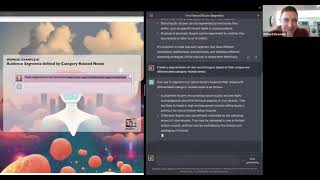
Well, hi everyone. Look, thank you so much for having me. I'm very much looking forward to this. As I said before, please, please, please use the chat all the way through. There's no such thing as a stupid question. Criticisms are awesome as well, and flattery will get you everywhere. So please make the most of it. So today's talk is broadly titled Unlocking the Power of Data and Technology in the Entertainment Industries. So I want to tell you what I mean by that, what I mean by power, where I think the power is, how it has been unlocked so far and what the future holds like. My advice to you, if you're interested in unlocking the power of data in these industries going forward. So bit of retrospective, some modern lessons and some advice for the future, I hope. And Brett's already done a great introduction to me. I work with a small team of people and between us we've worked almost everywhere and in almost every industry where you see a star meal. One of my colleagues ran the Insight team as, as Brett said, all the rest of the logos on this page we've worked really closely with over the years. So we've seen entertainment from so many different angles. Music, television, books, film, video games, we've seen every angle and we've been using, trying to use data to grow those industries for nearly two decades now. Just kind of scary to see. And Brett's been by my side for quite a lot of that. I'm going to broadly characterize those time periods into three chunks, I think, and then two, like transitional phases. So when I first started in entertainment anyway, it was about 2010 and awful lot of decisions are being made proudly with gut instinct only. Data had obviously been around for decades already and data wasn't new. But entertainment was proud to make gut instinct based decisions. On almost all of the big calls up until 2010, it was common to hear like crowd bragging about gut instinct and active denial of the role of data and all these kind of weird things that I don't think we get anymore. And so I would say phase one of the transition into using data and technology, let's say phase one is using data in most or many business decisions, but in what I would call a very tactical way. And I'll show you what I mean by that in a minute. And I'm going to argue that we're now transitioning in what I would call phase two of the macro use of data in the entertainment industries. And that's about using data to drive strategic decisions. Strategic guidance instead of tactical optimization. This is my like bold claim I want to justify and bring to life for you today. And if I succeed, you'll look through this lens in future. You'll see analytics and you'll ask yourself, is that tactical optimization or is that strategic guidance? And you'll ask yourselves, how can I go from tactical optimization through to strategic guidance? And that's my wish at the end of this. And I think we've seen one phase happen already and we're now about to see the second so let me give you some examples of data in action in entertainment, the first couple of ones that Brett knows very well, because I'm showing you some of Brett's work, the companies I was at. And so really awesome, exciting stuff. Like at the BBC, we took the essence of a TV show, the genome of a TV show, all the metadata we could find for a TV show, and use that to describe and predict the aspects of a show that would resonate with any given country. So in this case in Italy, aspects of fear or technology or law or action in a TV show made it resonate much more strongly with Italian audiences. Themes of British romance, British people and culture and British notions of business did not resonate in Italy. And so that's something not to optimize for the Italian market. And when you're selling TV shows made in Britain from the BBC, when you're selling them all around the world, this tool which Brett came up with was incredibly, incredibly powerful. And we could use it, for example, to get the right price. When we were selling a TV show to Netflix Italy or to an or Italian broadcaster, we would know that how much demand there would be for a show and we could press it accordingly. It was really awesome, really, really nice analytical work, really powerful and we were really proud of the impact it had. There's one example, another example from back in the day looking in the music industry, we would say 2012, ages ago, right? We were looking at social media signals, Facebook or search and the run up to the release of an album. And we were saying, how much demand is this album before we even release it? And we were using that in really nice ways. We were using that to say, shall we invest more to grow demand before the album launches or should we back off or delay the launch maybe? And so monitoring these digital trends was really powerful and helped us to predict what was going to happen with sales and then adapt marketing as a result. Again, awesome analytics stuff we are really proud of. Just a couple of examples. Now, looking back at those examples and looking back at a lot of the work we did through the lens of 2023, I'm going to call a lot of what we did Tactical Operational Optimization. I'm going to show you what lives on the right hand side of this diagram in a minute. The strategic decisions. I'm going to say an awful lot of the analytics we are involved in or that was going on in entertainment at that time was somewhat tactical in nature. So recommendation engines or personalizing experiences for individual users of platforms, really awesome, cool analytics, great math. But Ultimately, somewhat tactical in the optimization. Is a piece of marketing effective? Can I target an advert? How much demand is there for an album before launch, let's say? Or how can I optimize operational decisions like pricing a piece of content for the Italian market? Brilliant work, great maths. But looking back on it, I'm going to claim that was all used to be largely tactical. And what I've been excited about for a long time and what I think is getting a lot more traction is taking those same tools, the same analysis, the same data and using it to be way more strategic. So maybe like bigger picture pricing optimization across a portfolio of products, or which IP shall I partner with or work with? Which countries and how big could that country be for you? How much effort should I put into marketing in this particular country? Which customers can I target? Which audiences? These are all examples of strategic decisions I'm arguing from my experience, from common sense and from other people's perspectives aggregated together is that if you focus on tactical optimization, that's really good and 1 or 10% benefit to the organization, that's an awful lot of money. Some of those things that Brett worked on made tens of millions of dollars a year alone. Amazing, but 1 to 10% of revenue in that ballpark. Whereas when we can guide an organization, when we can truly shape the direction it goes in, on the right hand side, the strategic decisions, that's where you start to get significant multiples like 20% or 100% benefit, you can really grow an organization. So one of the arguments throughout here is going to be let's focus on strategy. I'm going to show you that ChatGPT in particular really helps with that later on. But I'm going to show you an example of what I mean bring it to life, which contains a number of lessons as well. Let's look just first at tactical operational optimization, because optimization has a really positive viewpoint in organizations. Ah, analytical optimization. Tactical optimization, great. It's seen as a thing A B testing, experimenting. But let's say you've got a whole number of different ideas you could implement, maybe like movie marketing strategies or business strategies or products that you might invent. Let's say you've got a whole long list of possible ideas. And the problem with optimization is you don't know which ones are going to work and which ones aren't. So you take an idea, let's say we start with idea25 and we dive in and it performs not very well. So we do a bit of a B testing, a bit of Optimization, a bit of tactical optimization. And we explore to the left, we find a little maxima, we explore to the right, we find another maxima, and there we end. We say, right, we've optimized this idea as much as we can. That's great. Maybe we start with another idea, idea 18. Again, we do a little bit of a B testing to the left and to the right until the direction changes. And we say, huh, we found a better maxima. Idea 18 outperforms idea 25. Great, we've won. My argument is that tactical A B testing and these types of things will not ever or very unlikely to help you to find the most fruitful zones of exploration. And here, like Idea seven would be a much better place to start because if you test around idea 7, you can find a much bigger maximum, you can find a much better outcome. And my argument, my experience tells me that to find those rich pools of opportunity where you develop the best marketing strategies or the best products or the best movies or anything like that, what you need to do is to use data, use analytics, use technology. Not to optimize from an algorithmic point of view like a B testing, but instead to give leadership, teams, creatives, heads of studios, heads of labels, to give them insights, learnings about the world that they can carry around in their heads and use day to day to make decisions, give them facts and insights that drive decision making, help them to obsess over something around idea 7. Over there, there's going to be a fruitful area, idea, come up with ideas, make it work, but show them the direction to go in, show them where the pools of opportunity are, show them the insights that will lead them to the best business decisions. And so whilst algorithmic optimization, a B testing, like that type of thing, is incredibly mathematically satisfying and from a data science point of view is a really fun exercise, coming up with insights that leadership or decision makers can carry around in their heads is a much bigger opportunity pointing them in the right direction. It's a bit harder though. So let me give you one tip, one suggestion, one example that I'm obsessed by and I think is generally applicable to any industry, any topic that you take with a little bit of creativity. And that's the idea that if you obsess over audiences and if you segment audiences into meaningful groups, then you set strategy and give people insights they can carry around in their head, you can change the direction that organizations or movies or artists go in. So I'm going to talk to you a little bit about the audience segments, show you how powerful they are, how they work. And then in a minute, we'll use ChatGPT to shortcut that and then. And fast forward this process. Okay, so let me show you a really simple example of segments in action. This is for BBC Earth natural history documentaries, which we worked on. And if you take the audience who are interested in BBC Earth and you cluster them according to the. This is using Twitter data according to the different things they follow, you see a really nice pattern. There's a bunch of people who follow BBC Earth, but what else do they follow? They follow sustainability and environmental issues. Great. So why do they care about BBC Earth? For sustainability and the environmental angles. Great. How about you meet their needs, focus on sustainability and environmental angles. Easy, right? What else? Well, down the bottom you got this big group. What do they follow on Twitter? Well, they follow news and information sites. Great. How could we meet their needs with BBC Earth? Well, how about we focus on the latest news and information to do with the natural world? And so what I think is interesting is for every different audience segment you have here, it's really easy to see why they love BBC Earth. And it's really easy to pick one or two or three or four and to decide that you want to target them and to know what it is you should do with BBC Earth content in order to meet their needs. It feels to me like a really good example. Yeah, that's totally a helpful map of my audience. I can absolutely see which territories on that map I might want to go after with my brand. And given the name of the territory, I can totally easily see how I might adapt my marketing or my content or my production to meet their needs. So I think that's a really simple, really nice example. Let me give you one of my favorite examples from the music industry. So I worked with this chap, David Guetta, many, many moons ago. At the time we call him a French dj. Of course, now he's like a global pop star. So how did he become a global pop star from being a French dj? Well, when I met him, he'd already had tremendous success. He'd already had a huge period of growth, but growth was flattening. He wasn't reaching big new audiences at the time. The question was, where will the next phase of growth come from? And what we did, no surprise, given the BBC Earth example, was to take his audience globally, break it down into segments, and then decide which segments to target. And in his case, there were segments had names like Nighthawks or pop idols or casuals, perhaps not quite as powerful. As the BBC Earth names. But let me, let me try and explain them to you. The casual and the pop idol audience were the audiences he needed to reach if he was going to grow. He already had the Nighthawk audience. That's the clubbing, electronic music, bars and nighttime audience. Like he already had them. If you're into electronic music and nightclubs and bars, you. You knew who David get it was, that's fine. At that point, if you were a pop idol, like a mainstream pop music fan, or if you were a casual, like kind of into music love like the radio, but not much beyond it, you had no idea who he was. So what he did was to create music partnerships, songs and marketing that really worked for the pop idol and the casual audience really went after them hard and in David's case, maintaining that Nighthawk audience. So here's an example where, like the first track, the first disc on the album was really aimed at the pop idol and the casuals, but the second disc was electronic music, no vocals or almost no vocals, really designed to shore up and maintain that Nighthawk audience. So simple stuff. But what we're able to do is to keep the Nighthawk audience, not lose them, not alienate them, keep meeting their needs, but also meet the needs of pop idols and casuals. Hence, now he's a much bigger artist and much more globally appreciated outside of the Nighthawk world. Mainstream pop idols and casual people have heard of him. Yay, it worked. There's a good lesson there. Well, one lesson would be focus on the audience. And I think that's a good general lesson I'm going to urge you to follow. Second lesson would be segment your audience. Always break them down into meaningful groups. And the third lesson would be, once you've got different groups, decide which audiences are you for now. In his case, that was Nighthawk. Which audiences are next in your conquering of the world? In his case, that was pop idol and casual. And which audiences are you not for? Don't worry about them. Don't be distracted by them. Don't try and target them. Don't worry about alienating them. Is that in his case it was 2, 4, 6, 8 different audiences. I'm not going to worry about them yet. Maybe tomorrow, but not now. And that level of clarity, focus on audiences, segment them into now, next and not that is a really important, generally applicable rule I would urge you to embrace for everything you do. And so now I am going to talk through how AI comes into play in this world, like what role that will play and how that will Change everything again and make everything I've just said a lot easier to implement and act on. Of course, I'm going to talk a little bit about some of what went into the book. So everything up until then, everything up until now is pre book, right? That's pre AI having a meaningful role in the world. What we did when we first discovered ChatGPT, so the days after it came out, I was playing with it and I realized it could do some things that I do. They could do them quicker than I could and it could do them on any topic in the world. And so what my co author and I did was to go through all the things we do in our jobs, all the things we've done for 20 years in different brands, and push Chat GPT specifically to try to do those things or as much of those things as it could. And so the book is essentially, how do you get use ChatGPT to do everything I've just said? And I want to show you some examples of that in action. But first we'll just talk through the breadth of things that ChatGPT can help with and, and therefore the kind of things I think entertainment analysts should be doing. Chapter one, no surprise from what I've been talking about so far, obsess over audiences and markets and get a foundational understand of the world that you're launching your product or your brand into. Chapter one's all about that. Chapter two, as we did with David Guetta, right? Select a target market, like pick an audience or maybe more than one, who you're going to target. We'll work out how to do that. Chapter three, once you've picked an audience, okay, how do I go to market with that audience? How do I target them? Marketing, product, all those things. And then chapter four, because maybe existing products and marketing aren't enough. Chapter four, big picture innovation. But this is basically the flow we go through on every project and every client, every organization. There's loads of different ways you can do each of these things. The book goes through those in detail. It's a pretty good summary of lots of tools and techniques that are useful in industry. But right now we're going to look at a real example and we're going to use Chat GPT, assuming it will play along nicely for us and we will try and market a movie together. Okay, so I googled for like hot movies coming out in 2023 and I scrolled down the list. Apparently there's a Mario movie coming out in April, which sounds pretty good to me. So why don't we try and try and market this Mario movie? So let me try and share this screen instead. There we go. So what we're going to do, the same way as this is covered in the book, is we're going to type some prompts into Chat GPT and this isn't working. Hold on a second. PowerPoint's broken Google Slides more precisely, but give me one sec to fix that. Broke it. One sec.
This is the part of things I'm actually really looking because everything up till now, I've been there with you for this stuff. This is the part of the stuff, this is the stuff you've been doing that I'm excited to see that I haven't. I haven't seen yet.
Excellent, excellent. Right, Okay. I think I fixed Chrome, so let's try this now. Okay, so here we go. So we've got ChatGPT on the right hand side and on the left there's a couple of prompts I'm going to use, then we'll freestyle a little bit. Right. So, yeah, I've told you how I think about it. Right, so let's use Chat GPT to work out how to market this Mario movie, shall we? Right. First thing we're going to do, I was going to just dive straight in, but that's not what we should do. The first thing we should do is ask Chat GPT how to market this movie. But we should also tell it who we are and what our point of view in the world is, give it some guidance. So here's what I'm going to do. I'm going to say to Chat GPT I'm interested in marketing strategies, not tactics, as I believe the strategic guidance is more impactful than tactical optimization. That's my briefing. That's who I am. That's my point of view on the world. Then what are 10 strategic decisions I should make to help me market a movie? And let's just throw that in to Chat GPT. Yeah. Knew that wasn't going to work. Technology. Goodness me. All right, it's working now, so let me just set my screen up again. Dear me. It's trying to have two windows alongside each other. It does not normally cause a problem, but. Right, okay, try again. Let's put that in. So I'm interested in marketing a movie strategically. What are 10 strategic decisions I should make? Let's just see what it says. 10 strategy decisions I should make to help me market a movie. Come on. Come on. They're typical. Never work with animals.
Exponential growth of use of this technology, it's been getting slower and slower because they're having trouble handling the server loads.
And I'm desperate to pay for the professional version which is now available. It will not let me because it's rolling out slowly. I'm like, roll it out to me. Yeah.
Okay.
Right. So almost no bias of what ChatGPT does other than focusing on strategic rather than tactical. Other than that, no bias. What's it said? Number one, define the target audience. Thank you. Yes. I'm proof correct in my theory. Define the target audience. Next, set strategic marketing goals. Okay, interesting. Number three, I didn't know what it was going to say here, by the way. Number three, develop a unique selling proposition. Okay. Number four, choose the right distribution channels. Number five, brand. Right. Okay. I'm most excited that it did start with audiences is the key. So now let's take this idea of audiences. We'll just pick one thing to start with. So now we're going to use this prompt. My job is marketing the following movie. And all I did was just paste in literally what was in that other website to describe Mario. Didn't edit it. I didn't even read it. My job is marketing the following movie. Paste in the Mario description. And this is my prompt to what I would like it to do in response to defining the target audience. So create a segmentation of the movie's potential audience based on their unique and differentiated movie. Movie watching related needs doesn't have to make sense. ChatGPT will work it out. The needs should be deep and underlying. Not based on demographics, not based on movie genres. I want audience segments that are movie related needs based. Give each segment a catchy title and a unique emoji and explain each through their motivations to watch this movie. Yeah, there's a lot going on in that prompt there. So you have to trust me that that's all useful and you'll have to experiment in other ways of doing it. You can come up with something better. I know you can. It's also very easy to come up with something worse. So let's try that prompt. What would have taken weeks of like ideation sessions and brainstorming and research and surveys and all sorts of things. What would have taken weeks will now take seconds, thanks to Chat GPT. Let's see if it. Well, but let's see if it's any good, shall we? First segment, Nostalgia Seekers. This segment is composed of individuals who grew up playing Super Mario Brothers and a strong sense of nostalgia for the character in the world. Yes, that's me. Excellent. They want to watch their childhood here on the big screen. Number two, families with kids. Yes, that's also me. This segment is families of young children. Fun and entertaining family outing that appeals to both parents and children. Okay, great. I can make sense of that segment. That feels real to me. And useful. Number three, adventure enthusiasts. Number four, comedy fans. And I'm sure it will keep going. You get the idea. If you write the right prompt, you get mostly useful segments out that are mostly relatable and mostly damn useful to sit down and have marketing planning sessions with to really set the strategy behind how you would market this movie. Kind of awesome.
Oops.
I pressed Escape and canceled it before I finished. Which might be better because it's going so slowly. But, yeah, now I've broken it again. You see.
It'S doing a pretty good job with the emojis, too.
Yeah, I absolutely love the emojis. Reload. I love the emojis. Right.
I want to throw. While you're reloading, I want to throw something out there. My experimentation with this, too, that's worth mentioning here, is that right now where it is, Chat GPT definitely isn't always right. Stuff comes out sometimes that doesn't necessarily make sense or that isn't the best answer. But that's. I think the point I'm taking from what you're saying, David, is it would have taken a lot of brainstorming for human minds to even come up with these ideas and then evaluate them. Chat GPT did it in 20 seconds and now you can evaluate each one of them.
Yeah, in my experience, with the right prompt. And so that's the bottom section here that I've highlighted with the right prompt. Like if it. What I really should have done is say, come up with 10 segments. I like 10. But let's say you come up with 10 of the right prompt. My experience, let's say half of them are going to be really, really good. Like, it would have taken a week of brainstorming, which, you know, a lot of stress. Stress to come up with. Probably two or three of them need a bit of a kick. Something nice about it. But using strategic expertise and experience doesn't feel quite right to me. So give them a nug, give some feedback and iterate. And then probably two or three of them, you're like, nah, I see where you've come from there. Thank you. But I'm not. That's not useful to me. Let me get rid of them. So you're absolutely right. You cannot take the list of 10 and just run with them. Also, probably there's one or two that you've got in your mind that are not there. You need to add them on. But yeah, absolutely I can. I've done this so many times in real life. In the old examples, weeks seems easy, but weeks of ideation and then like paralysis because, oh, we need data before we can do anything. So waiting for the surveys to come back. Weeks and weeks and weeks. Whereas now, if I was marketing a movie now, I would do this. I'd do what we're doing right now and I would go into the. The very first kickoff of the marketing meeting and you'd have a strategy which is really good. And then you can spend the whole marketing process optimizing and refining the strategy. But instead of coming up with it, you're weeks and weeks ahead of where you were before. We'll reflect on that again in a minute. So yeah, pretty, pretty good when you. When you get the prompts right. Okay, so we've got a bunch of segments now. Let's go back and remind ourselves what we were supposed to be doing. So set. So defining the target audience. We've done that. We've got five options. We surely should pick one, but we'll do that in a minute. What else could. What could we do next? Setting. Developing a unique selling proposition. I like this idea. A complete, clear and compelling message that differentiate your movie from others in its genre. So why don't we ask Chat GPT to do that for each segment. Come up with. It's going to paste in what it told me a minute ago. Come up with a unique selling proposition. A clear and compelling message that differentiates movie from others in its general. There you go. How about that? We'll just get his own instructions back and I don't know what's going to happen, but it should do a pretty good job. This is incredible strategic thinking happening here. Audience needs and grouping audience needs and behaviors. Reasons why they would want to watch the movie. How might I position my movie to each of these different audiences? This is an incredible amount of strategic thinking which again would take weeks to happen in the real world. Let's see the nostalgics revive your childhood memories and experience the iconic world of Super Mario. Never before on the big screen. That's kind of cheesy writing. I would not use that in marketing. But the essence might be right and you have to just creatively reword it and reposition it. The adventure seekers join Mario on an epic adventure through a fantastical world. And it brings to life some of the worlds like Mushroom Kingdom. This is pretty good strategic thinking. Let me give you another example. What else could we do? Distribution channels. I wonder how that would be.
David, you have to interject for a second. You know, even though some of these are a little cheesy and, you know, you. I. I don't. I'm not a copywriter, right. And even I think I could do a little bit better with some time than these. But one of the things is, I bet a lot of you have this when you're writing reports for class or whatever. You know, writer's block, like, getting the hardest thing to do is getting started, right? Like, opening up word is a big deal, right. And then getting those, other than your name, getting those first words down are kind of a big deal. And I'm already using ChatGPT just to get me over the hump. Because as soon as I see these on the screen and start thinking, why, oh, these are cheesy and I can do better, that's now my brain's moving, you know, and so, because it's got me in the right zone and in the right space and I'm thinking, what is it I don't like about this? And I can improve it as opposed to staring at a blank page. And I find this incredibly good tool to get over that first hurdle of writer's block.
Absolutely. And yeah, and people use the word writing. And people. It's a language model, writing language. And people talk about ability to write, cheesy writing. So that's what gets attention. I don't think of it as a language model. I don't think of it as writing. I think of it as an ideas model and it's generating ideas. So I use it as a tool to help me think. What we're doing here, I think is less about for me, is less about writing and it's more about thinking. Like, think through audience needs. Help me think through how to market a movie. Help me think through how to position the movie. It's a thinking tool. It's an ideas tool for me. So in my mind, it's not language. In my mind, I'm querying a database of related ideas and I'm extracting and sorting and playing with those ideas. That's a whole different way of thinking about it as a thinking in an ideas tool. We'll run one more example on the movie and then, then I think we'll elaborate and give you some lessons and we'll kind of wrap this up. But I quite like the idea of brand partnerships for A movie. Although I noticed it wasn't on the list of 10 things that suggested we should do. We'll do it anyway because we're smart and we can outwit the machine. So for each segment, come up with potential brand partnerships. Which categories and brands would make the most sense to help the movie reach that intended segment? And I've tried this in other situations. It comes up with really quite creative ways to do partnerships. Again, these are the things that take weeks and weeks to think through in the real world. But you can go to the very first meeting as the most junior intern at the movie studio. You can now go to the very first meeting with a fully fleshed out strategy in your back pocket. That's absolutely bonkers. Absolutely. There's no way you could have done that before. No way. It doesn't have to be right because as Brett said, it will shape the thinking and it'll help you get to the rounds and much quicker. So nostalgics, nostalgia themed products and clothing and collectibles. Partner with Nintendo. Yeah, thanks for that. Very good. Funko. Yeah. Pop culture collectibles. Great. Yeah. Hot Topic clothing accessories store. A couple of nice, nice potential brand partners there. Awesome. The Adventure Seekers. Who would you partner with there? Oh, Columbia Sportswear and GoPro and REI. Interesting. Something that could actually make sense. You could position that. Well, I'm for that. The family friendly crowd. Who would you partner with? Lego. Disney. Mattel. All right. Knee Disney might not be up for it because studio conflicts, but Lego might. Mattel. My. And you're making me think this is good. Gaming fans. No surprise. So anyway, I think you get the idea. You can use this not just to help you strategically think about how to do the marketing and some of the things we talked about earlier, but right from our very first query, you can use it to help you think through how to do marketing in the first place. And this is really just the tip of the iceberg. Everything we did there was the absolute tip of the iceberg. So write a letter to investors pitching the movie. Right. Write me a marketing plan for the Movie. Write me 10 social media posts. We did the brand partnerships 1. Write a report summarizing the key marketing strategies for this movie. Help me develop a research discussion guide so I can go quantitatively test these ideas out in the real world. So yeah, so many, almost unlimited number of ways that you can use this now after playing.
Yeah, two things. One is again, you know where the way I think of this as especially that last question is such a great question to ask it because when you're looking for opportunities for brand partnerships or something, the truth is most of those companies are companies that all of us know and we have them in our minds and we even kind of, other than one or two, we even kind know what it is they do, what they identify with most of us for, for many of them anyway. But we're all stuck with kind of like a bias towards salience. When we're trying to come up with creative stuff, what comes into our mind is the stuff that's most salient, the stuff that we remember, the stuff that we've most been recently experienced. So the moment chatgpt mentions, you know, Hot Topic, I think, oh wow, that is, you know, if I were trying to, if I were thinking about the nostalgic segment, interested in Super Mario, so many Hot Topic T shirts are about nostalgia. You know, the classically trained T shirt that has the, you know, eight bit Nintendo Classic controller on like so much of that. I would not have made that connection. Not because I can't, but because it's just not salient for me or it would have taken me weeks before that hit my brain versus the moment I saw. You know, ChatGPT doesn't suffer from salience bias, it's just going through all of its information for every one of your queries. So it comes up with ideas that you could have had, but you probably wouldn't have or you wouldn't have for weeks before you know, and it comes up with them instantly. The second is, Christy had a question in chat that I thought was interesting and worth bringing up the whole 2021 issue.
Yeah, great, great point. Sorry I missed that. I told you all to put questions in and missed them. Yeah, because Nintendo World just opened. Is that why it didn't mention it? Yes. So yeah, its data cuts off late 2021 and so asking it for knowledge of the world after 2021 is not going to work at all. So yeah, that's one limitation. There are many others as well. In general, I would be very careful about asking it for facts because if you back it into a corner, it will come up with facts that match your request, even if it has none available. I'll let you work out how it does that. So asking it for facts is something I would generally not do. But asking it for ideas, like it's an idea like how might I market a movie? It's an idea which segments might exist, it's an idea which brand partners might just their ideas, their good uses. Facts are not. And yeah, to your point, as well. You know, this is one movie and one set of questions. Of course, it can handle any movie and any set of questions. So we could easily ask it instead to think about French brand partnership deals where I have no idea what the French market looks like and which brand marketing partners there might be that are uniquely French. ChatGPT should be able to give us a French list of brands and the French list of activities. It might take some. Oh, okay. It's Ubisoft French. Like, it might be, it might not be.
I didn't know Ubisoft was French. I'll have to look that up.
Yeah, I mean, see, again, facts are not a good use. So do not trust the facts, but the principles are. Okay, who are the French video game companies? Great. And then here, French outdoor brand. Yeah, I mean, some of these are definitely French. So, yeah. And you could ask it to go back to the audience segments. You could, say, come up with audience segments that are uniquely French. And maybe there's something unique about French culture which creates a different audience segment, a different set of audience behaviors and needs that you didn't know about. So another way of doing that would be, for example, like compare and contrast cinema watching in the US versus France. You know, so there's unlimited number of applications of this technology. I would argue, in summary, that this is an incredibly solid base from which you can either shortcut or, like, fast forward the kind of market research and strategic work that would otherwise have happened. So maybe you can replace it, because you know what? Maybe this is good enough to do marketing for the Mario movie. Like maybe it is. And I would seriously entertain the possibility that this is good enough to base the movie marketing on. Ubisoft is French. Yay. Did not know that. So I would think there's a serious case to be made that this is good enough. You don't need to do market research for some business problems. And that's someone who makes a living doing market research saying that. That's bonkers to even question that. But certainly you can shortcut. Certainly you can fast forward. And certainly the most junior intern in the building with my book can go to the CEO and get their attention. A client of mine, I won't name names, but they work in the world of theme parks. And they were interested in a roller coaster, in partnering with a certain brand, which also won't name a certain TV show, famous TV show. And so I use this to come up with some ideas for what the roller coaster might do and the themes it might include. Sent it to them. They sent it to their chief executive who'd just given a big talk the whole office about how we need to use AI in our business and we need to be a ed and had no idea what it means. And this relatively junior person took the work from the AI and she said thank you David. I got so many brownie points from the CEO by being the first person to show him how AI could actually help. So this enables everybody to go to the CEO. Unbelievable. So shortcut or fast forward market research. That's a better use of marketers time. Whether you're the head of marketing or a junior. Internet is a better use of your time steering and navigating this than it is sat next to a whiteboard. Doing ideation or doing the old things you would have been doing elevates you elevates all of your roles. And I believe, I hope that this means that more high quality audience strategy work what we've talked about, more high quality audience strategy work will happen for more brands. Like maybe that would have happened for Mario anyway. Slower and maybe less good actually. But would it have happened for Mario in France? Probably not. Would it have happened for this next movie down on the lip on the roster? Probably not. Would it happen to all the independent movies to get produced this year? No, definitely not. So they all now with for just $20 after buying my book, they all now can have that same level of work. That's absolutely unbelievable. Unbelievable. So these are three headlines I think are going to be caused by AI. The watch out or the important thing to understand is that is where it sits alongside human judgment. This is how I would think of it at the bottom of the pyramid where you're just starting out on a project which is like what's the brief? What's the movie I'm working on? Or what am I trying to do? Marketing. What prompt am I trying to write? Like that's you. They can't tell you what to work on. You've got to decide and you've got to decide how. You know, I started off by saying hey, I want to be really strategic, not tactical. This is me saying hey, I'm me and I'm working on this and here's how I want to do it. That's you, that's all human. Next, all the way up until you get near the top of the decision making pyramid all the way up and AI is your friend. It can right at the start it can be a huge help telling you like how to think about your work, all the options, all the segments. But then as you get higher and higher up this decision making pyramid towards the ultimate decision, towards the big answer, towards the business decisions that are being made. So it becomes more and more important for you to do what we were saying, which is to remove the facts that seem dubious, tidy up the writing to make it make sense for your boss. Add anything else that's missing and there's loads of stuff missing. Add it in, think about that and then ultimately own the answer. And the only person that can own the answer is a human. That's creativity and strategic judgment and experience, that kind of thing. So humans at the bottom. Humans at the top. And as you get closer to the top. So yeah, AI can help you enormously, but it ultimately falls on you. So that is how I would think about AI. I think it's. Somebody described it to me as an electric bike for the brain and I really think it is. You still have to pedal, you still have to decide where you're going. But you know those hills that were insurmountable before. Easy now, easy. As long as you're pedaling alongside and you make it stop at lights and all these things. Right. Still needs guidance.
You mentioned something in there that actually fits into exactly where we left off. Class and Thursday, you guys, On Thursday, we were talking about how all these upstream creators in, across the entertainment industries, how they've gained so much access and bargaining. All these technologies have made it easier for them to not necessarily need big labels or big studios or David. We talked about crowdfunding and cheaper use of production facilities and cheaper cameras. And we talked about how there's been a renaissance of new products coming to the market because big content aren't the gatekeepers anymore. And this is like a revolutionary example of that, is that everything that was on here, maybe a big studio which is paying 200, 300, 400, $500,000 a year to people to come up with. Yeah, exactly. To people like David to come up with. They, they might have done that for Mario, but the point is that now if you want to go out there and make a movie, you have access to pretty damn good quality marketing without having to pay. Like, think about all of those again, if all of those things would have happened, but you would have had to have your movie at a big studio paying people like David four or five hundred thousand dollars a year. Right? But now these ideas are free to you. You still have to make some use of them. You still have to be careful. You have to, have to use good judgment. But those ideas and those connections, they're free to you, that's exactly an example of the long tail processes we were discussing on Thursday.
And yeah, and I'm telling you, as somebody who's been paid exactly that amount of money to do exactly that, that I, that they should not pay me that amount of money to do that anymore. They should pay me that amount of money. They should pay that Money to do 10 times the number of movies in 10 times the number of territories and a tenth of the speed. They absolutely should pay me the same. But they should expect vastly more because the days of doing it the way I used to do it in the old world, which was November of last year, the ways I used to do the old word are now dead. And if you're not doing it this way, you're slow or lazy or something else. I don't know. So I think this is the biggest revolution in the world. I'm saying that as somebody who's potentially going to lose an awful lot of money and an awful lot of clients as a result of saying this out loud. So I am not incentivized to say this, and I believe it's true. And so I'm sharing it with you. I just want to wrap. And then I think we've hopefully got some. Yeah, oh, we've got a minute or two for discussion. So I started by saying, look, in the old days, when I started out, when I first got Brett's help in this world, people were proud of gut instinct, made decisions. Those days died. Data is everywhere. That's not acceptable anymore as the, as. As the primary mode of decision making. But I'm going to tell you that the flood of data into entertainment was largely about tactical optimization, which is relatively tinkering with business models. And don't get it wrong, I've watched Brett make tens of millions of dollars doing exactly that kind of work for organizations. So really important. But if only we could affect the strategy. That's where the big numbers are. And I showed you my key advice there, which is audiences, segments and audience strategy. That's what I believe is really the big thing. And then I just showed you how you don't need me anymore. You can just buy my book for 25 and use chat GPT to do all the work for you. There you go. And so, yeah, if you're talking about the evolution events of analytics and entertainment, that is a pretty good summary of where I think we are and what the future holds and advice for you all. So that was useful.
Should we open it up for some questions just before you get out of here.
Yeah, I'd love that. And Hector asked, do you think ChatGPT would serve as a complement in market research or complementary take over the role? Yeah, I mean, I think that that pyramid still holds for me. So you're crazy if you replace a human with AI. You're also crazy if you don't augment humans with AI. And so, yeah, AI and in our. For our planning horizons, the next few years, for our planning horizons, that pyramid will be absolutely true. I will bet you that it is. And so the only interesting question is, how do you augment everybody with AI to make them faster, more comprehensive and better able to communicate their work, thanks to adding emojis everywhere to people. So it doesn't worry me in terms of what should happen, what people actually do. I don't know, maybe they go crazy. But the answer is no. Have great humans who are empowered by AI more fast, better, and get better. That's the answer. I bet my life on it.
So let's hold on, let's take that. Let me push back on you a little bit there because earlier though, you did so you are defending that we will still have a human at the top, but you also earlier said they should continue paying you what they do, but to work 10 times faster on 10 times as many movies, which means we only need one tenth of the Davids in the world, right? So is it perhaps we need the humans, but we don't need as many humans?
Well, that's a very good question. I don't know the answer to that, but my gut is this vastly more work that needs doing than is currently done. There's vastly more movies to market than get marketed properly. There's vastly more countries. You know, companies do like a US marketing plan and maybe a UK one. That's it. No, now there's 30 more countries. So my gut is that the budgets will stay about the same and that more work will happen and everyone will be busier. The intern will be more powerful than they used to be, but the juniors will be more powerful and the seniors will be vastly more powerful because I'll control a movie empire instead of the three I used to be, you know, so my gut is that everybody levels up, that everyone's got a job, everyone's happy. In fact, everyone's happier because they're doing more strategic, more elevated work. My gut is that. And if you don't use AI, you're so slow, you're so uncomprehensive, you're so limited in your scope and you're so Poorly able to communicate relative to people using AI that you're out of a job. So my gut would be, as long as you augment yourself and empower yourself, there's plenty of work to go around and we're all happy. But I worry about people who don't do this.
You don't want to be the only guy in baseball not on steroids. Kind of a half a joke, but yeah.
Yeah. An awkward joke, but very, very true.
Yeah. And without the negative connotation.
I think so. Yeah. Yeah. So I'm not worried about that is the answer. And I think there's an infinite amount of work available. It wasn't cost effective to do it before, but it is now.
Z has a question.
Ah, great. Yes. Not sure if this involves any proprietary info. I'm curious where you get the data needed to identify, verify segments and run analysis. Great. Yes. So in the old world there are three basic methods of segmentation. Free data sets. So you could use survey data, where you do a lot of that. You could use like transaction data. If you have Netflix and you know who's watching what, you could segment that and you can use social data. Who's following this movie and what else are they following? So with the BBC Earth example, we saw social data being used and for David Guetta we saw research data being used. We didn't show a transaction data, but there are three basic versions of that. The social data is the quickest and the easiest because it works for basically everything. It's instantly available. Very, very low cost. Audience is the platform I would use for that audience, but yeah, you'd usually do it with one of those. Now what I think is interesting is that here we've used no data, just ChatGPT, which is trained on vast amounts of data on attitudes and needs and wants and conversations and reviews of movies. So it's trained on kind of weird set of data, but like a lot of data about how people interact with movies. Now we've used a prompt that we're careful of, but we don't know what data it had and we can't validate whether those segments are any good or not. That's not what we used to do. We used to be very careful about creating the segments and showing how we got from data to segments. Not anymore. Prompt segments. I don't know if they're right or not, but they're damn useful and they feel really true. Most of them with a bit of editing. So I wonder is for many movies or many brands or many countries, like is the Chat GPT version good enough to base a marketing strategy on. And honestly, my experience is that it is with the right expertise and human judgment to pick the right segments, write the right prompt, and to know how to use them and how not to use them with the right expert. I think you can skip doing a lot of that old research that I spent my whole career doing. That's to be decided and to be proven. And it might take a long time for the industry to catch up on that thinking, but I'm telling you, it feels good enough to me.
I suspect my opinion right now is that probably if you were to go out there and get all of the social data and then you were to bring in some data scientists and have them do a bunch of really good, take many stabs at the clustering until it all converges and starts to feel right, and then you brought in somebody who understood the variables that went into that and sort of put some names on those clusters or something. And it might be better than what ChatGPT produced. But what I just suggested, you and I both know having done this would cost hundreds of thousands of dollars of time at a BBC or at a. At a Disney versus chat GPT. It was 30 seconds to come up with something. Let's say it's 60% as good. It was free.
Yeah.
Yep.
Honestly, I cannot tell you how much of a game changer I think this technology is. And, yeah, it arrived in the world in early December, late November, and I looked my colleague Richard in the eye and after a few days and said, this changes everything. Right? He's like, yep. Like, therefore, we should stop what we're doing and just spend time on this, shouldn't we? Working out how to get good at it. He's like, yep, we cleared our calendar for two and a half weeks, which is a lot of clear calendars. And we just obsessed over how to use this. I think that's. And then we generously shared it with the world for just $25. I think that everybody should do that full stop. Like, everybody should stop their life, clear a day or two or a week and just say, how can this help me to be better at the things I'm doing? And I think everybody would learn different lessons and would reap the rewards. I think it is that important. I really do.
This is true for all of you. Let's ignore your careers for a second. To the degree that some classes are allowing this or don't have policies on this yet, this is true for you as students. There was recently an article by a Wharton professor saying he actually did something very similar to why he gave his exam to ChatGPT and graded what came back. And he said it was about a B or a B minus. Right. And that was without any. That was literally just chatgpt. No human in. No human in the loop. Right. And then ongoing from that, you know, since you're not really just here to pay for an education, you're here to learn to, you know, go perform better in your careers, you know, no matter what it. There's. It's hard to think of a lot of careers where this wouldn't have value or use to you, especially in the business world.
Yeah. And we'll send this presentation around as well. And. And of course, you should definitely buy the book, but they are essentially what you need, which is a guide to how to use it. What are the questions I should ask? How do I word those questions? And that's really what you need. And then you can use. Your brain power, can be spent innovating or come up with better prompts instead, or thinking of things I've forgotten or missed in between or that kind of thing. But, yeah, that will get you a hell of a lot of the way. This presentation and all that will get you a hell of a lot of the way there. So learn from class and from school. Learn how to think, what to think about, where to spend your time, and then use CHAT GPT to help you to get there as quickly as possible. But you still need that strategic guidance, which for me is like, what questions do I want to ask? And what does a good answer look like versus a bad answer? That critical thinking. You need all that. So, yeah, education and learning are incredibly important. They're just changing. Is it possible to have a discount code for the book? Yes, it absolutely is. Thank you for asking. I will send you one.
After.
I'll send you the presentation and the discount code after this. Thank you for asking.
Anybody else have any questions for David or questions about this in general? It's all super new. Oh, Hector, please.
So this is my biggest concern, kind of just because a little bit about my background is that my undergrad was in film. And so kind of like the mentality that we were raised on was, you know, the script itself, the production itself all came from the human mind. It's all, again, human. There's. Because there's emotion behind it, there's emotion behind art. And with ChatGPT, literally, one of the first things I asked it to do was to type out a commercial for me and like, the same humor as, like the Sopranos, Seth Rogen, even at one point. And while some of it was AI generated and it was apparent, other times it was very terrifyingly accurate. And so my question for you is that in the entertainment world, especially in the film world, will we see this new revolution where screenwriters kind of, you know, where screenwriters end up losing kind of like their authenticity because they have chat, GPT, typing out commercials? Or like, how sustaining is the current model, like the traditional model that we have right now, you know, how trying to piece the words together. But like, how. How will this impact the creativity behind the human mind when it comes to creating film and television and commercial work?
It's a great question. So I'm left. I'm inspired by this one quote from a book that I can't put my hands on now, which, which was that there's no formula for success. If there was a formula, it would stop working because everyone would copy it and it obviously would not lead to success anymore. And so if it can produce great copywriting, let's say it can produce great copywriting right now, okay, then, then, then that will stop working because it will be so common and they'll. And how do we break through? How we break through is some nutcase with incredible human creativity coming up with a totally fresh way to do copywriting. And then, then that person will make millions, trade models probably in the new world, and then go on. The same with movies and the same with audience segments and everything else. So I, I do not worry about that at all. I think we constantly need human in my pyramid, human judgment and creativity to edit the segments, remove segments and refine them. You know, add stuff that's missing, critical. Without it, you would fail. And the same for copywriting, the same for everything else. So. Doesn't worry me in the slightest. There's an artist, a friend sent me a link to this visual artist who was incredibly annoyed that her style was copied by, was, was, was learned by the. One of the visual AIs and was widely adopted by people as a, as a prompt. She was incredibly annoyed about that. I thought that was absolutely ridiculous, personally. And that she should celebrate the fact that her art is wanted by the world and she should find a way to monetize the fact that she is the hottest prompt out there. And if she can't find a way to monetize that incredible attention that AI has brought her work, then I give in. But I think great screenwriters, great writers, great audience segmentation experts are going to be helped and Empowered and leveraged by this. And. Yeah, I don't worry about that at all.
What I hear you saying, you know, the implicit in what you're saying is that if you think that, you know, we're going to use this and we're still going to need all these people and these human skills, but we're all going to be better at it. What I hear you saying is like kind of a renaissance in the quality of products and the quality of matching products through marketing and the quality of reaching audiences. What I hear you saying is everything's just going to get better for us as consumers with every. With. With the same number of people using this to do their jobs, even better.
Yeah, I really believe that. I really believe that. Yeah.
And, you know, there are, you know, there are, There are people on the other side of this argument who are, who are worried that this. Who. There's definitely, you know, there's definitely articles coming out right now that, like, this is going to displace so many jobs that won't be replaced. You know, that like, like, that's. It's still kind of a debate on the public scene.
Absolutely. And then all I can tell, obviously, I don't know what the future holds. And all I can tell you is my experience, which is, if you rewind, it's 20 years of wrestling with the role of technology and data in decision making. If you look back, everything we did together led to this day. It wasn't quite as AI powered, but it was data and technology injecting into business decisions. And the same lesson has always been true, which is a human makes the strategic decisions. Humans guide the analytics. Maybe the variables are used in a regression in the old days, or the words are used in a prompt in the modern world, but humans guide that, even decide what problems to tackle in which order and what decisions make sense and what don't. Always has been, always will be for the near future. So it doesn't worry me at all. I just saw. Christy, if your hand up. Yeah. I was just wondering, because you're so.
Experienced in this field, were you ever.
Gonna do like a TED Talk or like a podcast for yourself maybe? Oh, that's kind of you. Yeah. To kind of express, like, everything that you've learned or like things that you might think will be, like, innovative, like in the future and things like that. That's really kind of you to even suggest that. Yeah, I would love to do that kind of thing, but I really hate self promotion, so it's very awkward for me with having my name on a book and then having to tell people about it because I just want to sit behind a keyboard and play with data all day, every day. I don't want to talk to anybody or be on a stage. But reluctantly that does. Is required if you want to have impact in the world. So yeah, I'd be really curious about that. That reluctantly curious about that. Yeah, I have strong. You know, Brett and I, we spent 20 years wrestling with this exact topic. The chat GPT is no different in a sense. It's different in magnitude, but not in nature. And so yeah, I have very strong views about how this has and can impact my work. Obviously with the book, obviously I've put the time into working out like how much can it replace me, where and how. Like I've done that work and my conclusion is absolutely firm. Human at the top, human at the bottom, AI powered in the middle. And other people are welcome to form different views and I look forward to that and I read them, but it doesn't change on.
This is an interesting idea, like short form podcast maybe releasing little tidbits of wisdom each week or two or something. That's an interesting idea.
Yeah, we should do it together with the class of questions and debates and discussions from the class and have me or other experts in and interview interviewers and form your interviews. That'd be fun. Count me in.
That would be cool. If any of you guys are interested in that, you know, send me an email and we'll. We'll talk it through.
Count me in. Yep. Cool.
Anyone else?
I was going to say, if you got any more questions, please shout. If not, and then what you think, like I've unlimited attention and interest in this. So feel free after class to get in touch, message me or LinkedIn or whatever and challenge me or ask other questions or ask you in a month how this has changed. So I'm really. Yeah, really. I really mean it and I count us all to be friends now and you should absolutely feel free to follow up.
Great. Guys, can you give a silent, silent applause. Thank you for your time, David. I know it's late there. I really appreciate you spending the time to come talk to me, to everyone about this.
It was lots of fun. I really appreciate the questions were really great. Keep them coming. And I hope this is, I hope this is useful, the best advice I've got. So hope it's useful.
Cool. All right, I'll see you later, David, very much. You guys stick around for a second.
All right, bye. Thanks again.
All right, so given this, I think this is a good break time and I know zoom is exhausting, so let's take the full 15 minutes, let's come back at 2:30 and I'll see you on here at 230, okay?
More from David




How Can ChatGPT & AI Help You Make Your Business Better? - Guest: Marketing Strategist, David Boyle

youBEAT Cafè - Prompt for Artists / AI Revolution / ChatGPT with David Boyle (Audience Strategies)

Now that's Significant - Ep 52 - Reimagining the Future of Marketing with AI - David Boyle