youBEAT Cafè - Prompt for Artists / AI Revolution / ChatGPT with David Boyle (Audience Strategies)

A recorded youBEAT Café interview where hosts Rudencio and Gregorio speak with David Boyle (Audience Strategies) about ChatGPT and AI for musicians. Boyle describes ChatGPT as a powerful, free assistant useful across marketing and creative tasks, gives concrete examples (chord progressions, DJ set planning, biographies), discusses the Prompt for Musicians ebook (free resource), and touches on GPT-4 features and copyright/ethical concerns. The conversation urges artists and professionals to learn prompt-writing and adopt AI as an amplifier of human strengths rather than a replacement.
Chapters
Here we are with another episode of the UBIT Cafe today. I'm Rudencio from the UBIT team and with Gregorio Today we are honored to host a special guest for this episode and we are going to talk about especially of AI artificial intelligence and the Chat GPT that is not topic in this week's about especially some kind of business and also the businesses related to the music industry.
Yeah, I'm really, really excited because this is a really cool topic, really cool guest. So I think we can start.
Yeah and I know that you tried this tool for work and we can for sure discuss with David Boyle today. This is a special guest that we are really honored to have some professional expressed different opinions on it. And in these weeks I really talk I really thought about a quote that I found in the veld by dead mouse and Christ, James, that is. Is it real or is it a dream? Can you believe in machines? Hi David, welcome to the UBIT Cafe.
Hi David, Very good to see you both.
For us too, we are honored to have you and I really would like to introduce you as one of the most experienced professional I met in person because we met last year at International Music Summit and you've got several position and roles in the industry but now you got your own company that is Audience Strategies and in this week's Audience Strategies with your mate colleague Richard Bowman, you worked a lot on artificial intelligence. Gregorio is in the field and he tried the tool and we are ready to introduce what is it? What Chat GPT and obviously a quick overview of in the chatbots and open AI.
Great.
Yeah. So we would like to start with, you know when you have to describe to a person or some people that usually don't know what's AI, what's chatbot or you even doesn't even know what ChatGPT is, even if it's really, you know, really famous. In the last, in last weeks I want to ask to you how would you Describe what is ChatGPT, what is the chatbot and how can be useful in the everyday work?
Great question. Yeah. So I think if the phrase artificial intelligence is quite useful actually think of Chat GPT as exactly that. Think of it as an artificial intelligence. Unfortunately you can only communicate with this artificial intelligence by typing commands into a chat window. Okay. But it's still an artificial intelligence. Now how intelligent is it? Well, let's first ask what does it know? And it's read the Internet and quite a lot of books that that are on the Internet, quite a lot of scientific papers that are on the Internet. Wikipedia, which is on the Internet, reviews of clubs, festivals, artists, labels which are on the Internet. And so it's read the Internet, which means it knows quite a lot of stuff about our world, about thoughts and feelings and hopes and dreams and aspirations, about artists and music and rhythm and, and how to write music. And it knows all these things because they're on the Internet and it's read the Internet and, and it happens to be very good answering questions or doing things you ask it to do. So my passion is marketing and whether it's understanding audiences or understanding trends, you can ask it and it will do a good job of telling you the answer. If your passion is songwriting or, or making music, then it's pretty good at that as well. You can ask for help and advice and support.
I really would like also to ask you because that's what you worked on last week. And we are proud also to say that we are with lots of other supporters in this like FM association for Electronic Music or the BPI or Label Radar that we. That we also hosted in these UBIT Cafe. And UBIT is proud to be a supporter of this prompt. That's the way we can communicate with this chat especially you worked with this and you also gave us the opportunity and I really would like to invite our audience to download it for free. The ebook about the prompts, the instructions for the musicians. Please David, explain more about what you've done with this prompt with Richard, because I wrote, I wrote the book these these Days and I really appreciate it.
Yeah, thank you for your help and support in the book, by the way. So yeah, we wrote the original book which was prompt. It was designed for marketing professionals. That's what we do every single day. And that's very helpful and is out there. But we wanted something that artists or labels, mostly artists, could use. We want to help artists. And those artists that do embrace the use of this AI will be quicker and better and clearer in all their thinking and communication. They'll have more time to spend on their art or they'll be more likely to. To make money off their art. So we want more artists to embrace this AI and that's why we came to you for the book. And like you say, the BPI association for Electronic Music and so many other partners who nudged or helped or challenged or inspired us to write the book and put it out there. And so we would like as many artists as possible to embrace this technology. And this is a practical guide to help them to know where do I start and how do I do it. And I've spoken to quite a lot of artists writing the book about this and world famous artists as well. And it's really fun when the conversation starts negatively. It's really fun when they start by saying, yeah, it's not for me. Or when they start by saying, yeah, I've played with it and I didn't find it very useful. I just get this big smile on my face and I pull out my phone and I say, let me show you something. And by the end of that conversation they, oh my God, I can't believe this. Like, how do I, you know, so that's the potential. Every artist should feel that way and hopefully the book will help more of them to get that feeling.
We thought that it's pretty interesting, especially for independent artists that need to develop their career.
Yeah. And I think this, it's a bit like having a, a staff member, an assistant by your side. That's a good way to think about it. An assistant. Right. So they're not going to tell you what to do. Assistant's not going to do your work for you. But a great assistant will make your life so much easier in every way. But the difference is this assistant doesn't just help with scheduling or emails. This assistant can help with songwriting, it can help with writing a pitch to a label. It can help with writing your biography, it can help you researching lyrics or themes for your music. It can help with absolutely everything you do. So this is the most powerful assistant you'll ever have. And it's also completely free. I mean, this is mind blowing.
Yeah. And also what I want to add is we're talking about music business, we're talking about artists and music. But what I would like to say to every listener of the Vit Cafe is even if you're, you're not in the music business, you're not an artist. Try to use ChatGPT because anyone can use that and could be really helpful in your everyday job during your work, writing an email. So even if it's not your main topic, your main job, you're not working in the music business. You should try ChatGPT. You should try this type of AI models because they're really, really useful and it can be a game changing in some way of your everyday work and life.
I really would like to get this bowl because I followed so much this topic on LinkedIn and I know that David too, and I found out so funny and especially what you shared, David, that so many professionals was scared to be replaced by these kind of Tools and so many other tools, because now other kind of tools, not especially chatbots, are going released. But it was so funny because this book is the proof that without the correct communication by the human side, you can't have the Correct reach by ChatGPT or probably some others or all others tools made with this technology. You have some examples, David, about it?
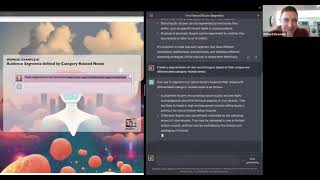
Yeah. First of all, like, think of it like an assistant, right? And an assistant is only as good as the questions that you ask and the encouragement you give and the, and the brief that you give. If you don't tell the assistant what you want to achieve, if you don't tell it how you want to be in the world, any assistant can't help you. So, yes, you have to do some work to be clear on those things. But in order for it to be useful, I think it's a bit like an amplifier for your capabilities. And so if you're very good at songwriting, it can help you amplify that. If you can't write a song for your life, it's not going to fix that for you. You got to put some work in and then it will amplify any capabilities you've got. But be careful not to amplify your weaknesses, amplify your strengths. So, yeah, I mean, if you put, if you put terrible prompts in, you get terrible responses out. We often start our training sess by, by putting in a prompt that looks good but is terrible. We're very passionate about understanding audiences and segmenting audiences. And if you just say to chat GPT segment the audience for electronic music, it won't do that. It will tell you how to segment the audience and it's easy to say, huh, well, that's not what I want. This is useless. But if you slightly reword the prompt to explain what it is you're trying to do, it will do an incredible job of segmenting the audience. A job that frankly would have cost 10,000 pounds to achieve just a couple of months ago in the old world. So incredible when you know how to use it, terrible when you don't. And luckily we've worked together on a book to help people overcome that barrier.
Do you really think that in the future there might be the possibility to have a job based on, you know, asking the right questions to AI models? Do you think there will be in like a company, a person that has a job?
Yeah, I do think that will. Yeah, it's a good question. I do think that will be a job. I think it's important that everybody develops that skill. First of all though, so we're, we're writing a book for chief executives of large corporations and telling them how they need to personally use this. We've talked about up and coming indie musicians, so maybe that's two ends of the spectrum. Spectrum. So everybody needs to work out how to do this themselves. It's like in this sense it's a bit like Googling. You would never ask your assistant to do your Googling for you, just work out how to Google. And this is much more powerful. But you shouldn't outsource it, you should learn how to do it yourself. So that's the first golden rule. But yeah, absolutely. In a corporation, having somebody who's an expert, who can go and help the chief executive get it to do what they want, who can, can help the interns to do what they want, to help the marketing teams and help the legal teams, somebody with that skill could really level up a whole organization very, very, very quickly. So, yeah, definitely, yeah.
David, I would like to ask you because I saw that after this release of the book, you also asked on music a space, some specific lessons for artists and could you explain more about these or some experience you already got with some artists so that someone that is looking, that is watching us could be interested and I really would like to understand more too.
Yeah, absolutely. And many of those examples are in the book itself actually as well. So the book contains good examples that are from the real world, although we slightly changed them a little bit to not reveal individual artists secrets. But so yeah, Paul Nolan, who's electronic music producer I really love and respect, he sent me some great examples by WhatsApp when he was exploring chord progressions, producing some music and trying to get some more ideas for how to continue with chord progressions or think about adjacent chord progressions or complementary chord progressions. And he sent me these screenshots from ChatGPT where I had done that for him. I had to say, Paul, I have no idea. Is this garbage or is this good? I don't know what a chord progression is. And he sent me a message back saying, no, it's amazing. Okay, cool. You're telling me I know marketing, I don't know chords. So that was one great example. There was a promoter, a gig, an awesome gig I went to in London and, and he was telling me during the show that his, he and his mates have been joking around with, with planning DJ sets using it. And I said, sure, tell me how does that work? And they shared the prompts that they were using and I put them in the book as well. It's pretty good at telling you how to sequence a DJ set and which parts of a track to mix into which parts. It knows that for quite a lot of tracks. It's very helpful narrative, as it turns out. Plus, on the marketing side, there's great examples around writing your rewriting your biography or maybe writing your biography. And we show that even if you give it very little information about yourself, it can still create quite an exciting biography. And I think quite a lot of artists are in that position. They can kind of describe themselves and kind of describe their positioning, but it's not a very beautiful story. Right. Throw that into ChatGPT and out you get a beautiful story that will sell you to an audience. So many great examples. Yeah.
And this is. I mean, it's game changing. But what I want to ask is we have seen different technologies in the last years that were called disruptive game changing for the music business, for the artists, but just to name a few. I mean, NFTs, blockchain, cryptocurrencies, but in reality those kind of technologies affected the market in a way, but not as much as we were expecting at the start. I want your opinion on this kind of AI models on ChatGPT. Do you think this is going to be game changing and why?
Yeah, for context, I was very involved in those other technologies as well. I've been very involved in Metaverse and Metaverse companies. I was very involved with a large number of NFT companies. So I've seen those trends from the inside and I've been excited about them as well. I have to say this is nothing like those trends whatsoever is to me by far the most exciting technology that has ever happened in my lifetime, by far. And I've seen the invention of the Internet and the distribution of smartphones, the invention of social media. I've seen all those things. Why am I saying that? Well, first, this can help with anything that you do. Any thinking, task or communicating task it can help with. That's not true of the others. They're limited in scope. This is free and instantly accessible to everybody with an Internet connection. That's. I should look this up. But it must be 6 billion people or so. 6 billion people can access this for free right now and do these things. That's never happened before with the technology. IPhone was great. It did not reach the 6 billionth person. It still has not and never will actually, because they're accessing with an Android. So other technologies take a long time to roll out. There's Loads of friction and loads of barriers. They're only for the wealthy to start with and then they slowly, you know, get democratized. This is instantly available to the whole of humanity. Unbelievable. And like nothing else we've seen in our lifetimes.
Yeah, it's incredible.
Especially because when they released the free version of the GPT3, they reached a million users faster than other huge platforms. I was thinking for example, about TikTok, that was the smashing record before, but was just like in three months and chat GPT just, I don't know, in three or three weeks or one month. But it was a new record that was representative of the beginning. But David, I know that you made other books for branding for other different fields, but are you still working on something new? Because that we are going to talk quickly, but what I'm going to ask you is about this new evolution, the GPT4 that he announced today or yesterday, I don't remember because the things are going so fast. But I, I really would like to ask you what the difference is, what we can expect from this evolution. I know that probably this will be with paid subscription, but I wrote that the grow of the, the level of this tool is a still better than the 3 one.
Yeah, I think the most important thing is that the free one is transformational to your life, full stop. And there are competitors to the free one as well. Google have their version, Meta have their version, there are other competitors. The Chinese one was released yesterday, maybe, you know, so there are. So let's say there will always be a free version which is transformational to your life, full stop. That's amazing. Okay, beyond that, will the, will there be paid versions which are more sophisticated? Yes, there always will be. I think, by the way, they'll always roll out to the free users ultimately as well. The cost of them is so low per query that I think they'll always make it available. And you've got this wonderful competition with everybody, Google and Meta and Apple will do theirs and so there'll always be a free version. It'll always be great. I really wouldn't worry about that. But yes, GPT4 is quite exciting. First it allows you to take a photo and instead of having to type a question in, you can take a photo. So imagine sketching some lyrics, or imagine sketching a chord progression, or imagine sketching anything to do with your art or your music or your business and take a photo of the sketch and ask it to, I don't know, elaborate or expand or analyze or critique or describe or anything you Want. That's incredible. It can take a lot more text as input. So in the old one you were limited to 3,000 words or so of input text. So you could easily paste a song or two or three or four in and ask it to analyze them. Now you can potentially paste a whole songbook in and ask it to analyze that. So it just provides much more depth to its analysis. And supposedly the new one is more creative as well, so it's better tuned for creative tasks like songwriting or music writing, for example. But the other one was pretty good anyway with the right prompts. And so that's a marginal benefit, but an important one. So I think the tech will keep improving and they will always be free. But again, by far the biggest thing here is go from not using it to using it. That will change your life and then everything else is an improvement based on that.
And what's really cool is that I'm always wondering, this is game changing and this is free. So imagine what a company like Meta Google can have on the private side. Maybe something even bigger really cool can do. You know, image generation, we saw Dall? E Mini a few months ago, or maybe even audio generation. You can generate music, not just a chord. So it's really cool to think what's, what's going on and what can we, what could we see in the future?
And they are still debating about copyright for audio generation.
Copyright in a second, for sure. I was going to mention like one of the exciting things I think that the companies have now and that is available to the public now, but not, not quite in a way that's useful but, but will be free soon. And that's imagine if you had a private repository of all your personal thoughts and notes. So let's say you're a songwriter and let's say you have a Google Drive folder with all of your rough voice memos and like rough recordings and outtakes and, and all of your notes and ideas for lyrics and songs. Like Imagine, you had that, and imagine that was wired up to this system so when you had a new idea it could say, yeah, actually that's a bit like what you were doing the other day. But if you took that and that and you combine that together and then that would do that. Or it could write new material in the style of your existing material because it would deeply understand everything you'd thought and felt and then and hummed into your voice recorder on the subway. That would be an incredible asset to a songwriter or an artist, just the same way it would to a marketing Professional with marketing documents or you know, or an architect with architectural drawings. So that's incredible. It's available now but it's a bit rough and ready and I think that'll be easy to use very, very soon. But on the copyright front. Yeah, I think there's a big challenge here which is where there is an image generating AI that's trained on images or a text generating AI that's trained on text or whether it's a song music production AI that's generated on music. They're trained on human creativity and it feels right to me to compensate the people who trained it for their creativity that's being reused in the model. Never mind whether they should be in there or not. Never mind whether you have the right to remove your work from the training set or not. At minimum it feels like the ethical thing to do to say thank you Beatles, your lyrics helped train this model. A share of the revenue from this model should go back to the Beatles for writing those songs and helping with the training set. And that feels true for every artist or every person who's generated original work that's in the training set. That's a complicated thing to do. Yeah, it's not happening now.
No.
Yeah. I found out so interesting these example of AI tool for, I don't know, mixing your drafts or your ideas. I found out something similar on Soundtrap. That's an online job by Spotify that has got some AI integrated. It's so cool because for example they suggest in a library of more than around 25,000 loops or sounds the best or the best for the trained model couples of strings with that kick and snare or that beat. Definitely it could be so interesting for develop more ideas and. But it's really, really a hard field to touch for now because there is a lot of other stuff of copyright to manage before I think.
Yeah. Also my strong advice to anybody is take what's already available that's widely available and I would start with chat, GPT and, and work out how it can be a meaningful part of your life now, today because that will always exist and it will always get better. Once you've worked that out then you can try these new tools and new areas that are maybe working, maybe not maybe maybe halfway there. But that's all a lot of work to learn. But this one is transformative today. So don't waste time changing your life by either getting yourself an extra day a week through efficiency savings to go write music or being able to write more music in the time you've got because you just work every hour but don't waste your time from changing your life with what's available today. Then you can worry about trying to find and work out all these cool new things.
Even if in the future we have an AI model for example, that can generate from zero an entire song. The. The goal shouldn't be for an artist to use that to make a song, but to use that to, you know, like the model. Teach you something more, maybe something you didn't think about. So use that to have, you know, the spark to write something new on your own, helped by the technology. That's the really cool goal to me.
Yeah, exactly. And very well put. So I work in marketing and audience analysis and trends and I ask it for help like all day, every day. Sometimes it writes something that's great and I can just use it. That's very rare and it's only for really simple examples. Sometimes it writes whole things for me and I take one idea out of it. Damn. In paragraph three there's that thing. I never would have thought that that's brilliant and I'll just take that one idea and throw everything else away. Sometimes it does nothing and that's fine as well. So yeah, it's about the human judgment at the end of the day that says not just what am I trying to get out of it but it gives me back an answer. Which bits of that do I want to use or want to be inspired by? Want to be challenged by? Very important.
Yeah, yeah, yeah, definitely David. We started these cafe with a quote by the belt or by that mouse and Chris James that say is it real or is it a dream? Can you believe in machines? Definitely our answer is yes, we can say it. And we really would like to renew our invite to our audience to download the prompt for musicians that is free. You can find it down in the description and read it use it for any kind of necessities. We are also ready to thank David to be our guest today and we also know that his report time these weeks some are already released Follow also David and audiences strategies on all platforms for any kind of news and updates of AI or audio or a wider range of data, numbers, stuff that can help you. And what can we say for close Gregory, you say something?
Oh I am. I'm. I mean it's. It's really, really really cool topic. We had a really good guest like I should add the same thing I said at the start of the of this call. So even if we talked about business and artists marketing the idea at the start of this conversation is always the same try to use this time this type of tools get more experience because as David is teaching us the prompt and the experience and how you write what you're asking to the models is the goal because you have to with the right method and so try it every day and let us know let us know if it changes your your everyday work or life.
Yeah fun.
Share examples with us where it works where it doesn't work. If it doesn't work we'll help you fix it. If it works share examples we'll put them in the book and update it and you can help lots of other artists with your great examples. So tell us how it works for you. Thank you.
Thanks David to has been our guest. We are we are really happy to have you and can't wait to see you again to talk on other several topics.
Can't wait. Thank you sir Love to see you.
And thanks to everyone who is watching us and see you in the next UBIT Cafe.
More from David




How Can ChatGPT & AI Help You Make Your Business Better? - Guest: Marketing Strategist, David Boyle

Now that's Significant - Ep 52 - Reimagining the Future of Marketing with AI - David Boyle