Now that's Significant - Ep 52 - Reimagining the Future of Marketing with AI - David Boyle

David Boyle, co-author of Prompt, explains how ChatGPT is changing marketing and market research. He walks through practical uses: faster audience segmentation, ideation, brand partnerships. The catch: ChatGPT's training data stops in late 2021, it makes up plausible-sounding answers, and you need human judgment to validate anything it produces.
Chapters
Now that Significant, the Market Research Podcast. Hi, everyone. Welcome to another episode of now that Significant, a market research podcast dedicated to exploring the latest trends and insights in the world of market research. This is your host, Michael Howard. Today we're excited to be joined by David Boyle, co author of the upcoming book Prompt, which explores the power of artificial intelligence and human expertise in the field of marketing. Thanks for joining us today, David.
Thanks for having me. I'm really looking forward to this.
You're welcome. So, David, what's the most significant thing you're going to share with us today?
Well, I'm going to share that after 20 years of trying to embrace new technologies and trying to get the world to embrace new technologies in the way that they do market research and brand building, the most remarkable thing happened in late November, early December, which is something came along that's completely revolutionary and has changed absolutely everything I do. And I'm going to try and argue that it should change absolutely everything that you all do as well. So let's give that a shot, shall we?
Okay, it sounds good. So what is this revolutionary thing?
Please tell us. Well, it's the weirdest thing, I tell you. It's a chat bot. The idea that I'm here on this show talking about revolution, it's a chat bot, sounds bizarre, but this is a very powerful chat bot and it turns out it can help you with almost everything you do. So it's called Chat GPT. And you can ask it a question, it'll give you an answer, and it can do that on almost any topic and almost any stage of the market research or brand building process. And we spent a good while trying to push it to its limits in as many places in that process as we can. And yeah, it turns out it's pretty helpful in most of them for sure.
Now, chatbots have been around and they've been a promised land for at least 10 years in the business world. What makes this one different?
That's a very good question. Someone's described it as the first very good one. So it might be that, which is they've been around and they've been pretty good, but this one's very good. It's capable of talking about almost any topic there is. So it's weirdly broad. It feels very much like it understands your question and very much like it gives you an answer that fits with your expectations of the kind of thing you're looking for. That's unusual for a chatbot. That's partly down to its incredible training. It's very, very Quick, but also it's free, and so anybody in the world can log on to that website and just instantly use it for all these things. I think lots of those things have never been the case before, and they certainly haven't been the case before altogether in the same chatbot. So a lot of things, really.
Our listeners may not actually know this, but I've been responsible or part of the process of bringing to market some of the earlier editions of Chatbots. And you would have an Excel spreadsheet with hundreds or thousands of questions and potential answers and huge, big conversation trees that you have to try and map out and allow for. And it was so time consuming. And the experience that a lot of people had was, yeah, not great.
Let's just say that I bet this one, this chatbot we're talking about today, couldn't have existed if people like you hadn't done the hard work to train chatbots and to work out what works, what doesn't, and how they work before. So we're standing on the shoulders of giants to have this conversation today, for sure.
Yes, sure. So let's look at your book prompt. Can you tell us a bit about this, why you wrote it, and what readers can expect to learn?
Yeah, well, it started off as a. I won't say selfish, but a very inwardly focused project. So Richard and I, my co author, we've worked together for about 15 years, again doing audience understanding and brand building off the back of audience understanding. We've worked in television, book publishing, the music industry, luxury goods, all sorts of things. And so this new chatbot came out, chatgpt, and we played with it a little bit and we started writing poems, explain quantum physics in the style of Snoop Dogg or things like that, you know, then pretty quickly said, oh, we could maybe use this for work. We tried to use it for different things we were working on at work, and it turned out to be pretty helpful. And so after a few days of pushing it to, you know, as far as we could in lots of areas, remember speaking to Richard and just saying, look, am I crazy or does this feel like it actually can help us do everything that we do? And he said, no, no, you're not crazy. And I said, well, if I'm right, then if we're right on this, we should stop everything we're doing and just really work this out. I mean, if this has the potential to literally change how we do our jobs, after 20 years of being quite good at it, that's remarkable. We should stop what we're doing. And so we did and we went through everything we do in our brand building process, from understanding audience needs through to audience segments and targeting audiences and positioning and building innovations off the back of it, everything. And we just said, how can, can CHAT GPT be helpful? And if so, how? We pushed and tried and iterated and worked it out. And after this is all pretty quick, after a few days we said, this is remarkable, we should write this down and share it with other people, shouldn't we? And that turned into the book. So the book is a practical Gu, our 20 years of brand building expertise written down. But Also how can ChatGPT help you with each of those steps? So, yeah, it's as much process as it is chatgpt. And yeah, we hope it's very helpful.
Sure. So in the book you, as we've heard you discuss the power of ChatGPT, an AI tool that can help marketers generate ideas, content, streamline market research, and also analyze larger volumes of data. Can you share some of the real world examples that you. No. ChatGPT has been used successfully or can imagine what it can and its impact on business.
Yeah. So so many examples from our clients over the last few weeks and let's not forget it's only been weeks since this has been out.
But.
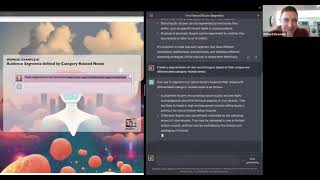
So one client was coming up with a brand partnership for a major TV piece of ip, I won't name it. And they wanted to understand this IP better, understand how it could be integrated into their activities, into their brand better. And ChatGPT helped them all along the way. So tell me about the key elements of this TV ip. Tell me about the key characters, list them all for me. Tell me about the key plot points. Okay. And here's my business. Let me describe my business to you. Okay, great. Now think about how could all of these elements from the IP be integrated back? What are all the ways that might happen? It's remarkable, completely remarkable. So in just a few hours of messing around and iteration and playing, it was like they'd had two or three weeks worth of research and analysis and deep thinking. And so that's an incredible way to short circuit or fast forward the process that would have happened anyway. Another example, a bit closer to home with audience research. I was helping on a planning the marketing for a UK tour for a household name dj. Everyone in the UK would know the name of this DJ if I said it out loud. And. And they wanted to really understand the audience segments, to really work out how to position this tour. And ChatGPT is very good at understanding the audience needs and motivations for audiences and then how they might apply to this night out that was planned. And so we've got these rich audience segments and these clear opportunities to position the event differently for each of those audiences. It's quite remarkable. Would have taken weeks of research in the old world. It's a very, very good solution that's almost instantly available in the new world. Remarkable.
So Chat GPT is not live yet, is it? It's still in a beta mode. So what will it mean once it does become live once it. Because it's about a year old data at the moment, isn't it? So do you know of the plans for when that does all go online or will it be part of like chat GPT 2.0?
Yeah, that's a really good question. So at the moment, Chat GPT is trained on data up until about late 2021. So the one reason you shouldn't use ChatGPT, and in fact I think the only reason is to ask it for modern or new data. There are solutions to that later we'll talk about that. But yeah, it's old right now by late 2021. But by the way, it's still great for anything to do with underlying human needs and motivations which don't really change. So it's not a barrier. ChatGPT, yeah, it's in some kind of a trial beta like research mode. What they're doing is trying to work out how to release a chatbot that's useful and helpful, that doesn't split off in tangents. And as you see, because Bing released a version of the chatbot, different version, trained differently, Bing released that, and it did go off on tangents and did misbehave itself. And so we see in that example the value of containing it and training it and testing it before we release it to the public. I think what will happen, nobody knows, but I think it will remain free because there's too much pressure on it, there's too many people using it to charge for it as a standard product and there's too much competition. Google have a version, the Chinese organizations have a version, there's all sorts of other versions in development. One puts it behind a paywall, someone else will release theirs free. So I think it doesn't really matter that we're talking about Chat GPT here as well. I think we're talking about any sufficiently advanced AI chatbot, of which there will soon be very, very many. So I think it's free. Assume it'll be free forever. If not someone Else will release one that's just as good, that's free and focus our efforts on how can we use it. Like what use cases are there? That's the book. And how do we make it, how do we work it and use it to be as useful as possible to us?
No, sure. And the whole idea of training is absolutely key, isn't it? Because the more data sets it has to train off to bounce itself off, the better and more concise answers or representative answers, I guess as well. And I mean we've been told the next version of CHAT BT as well is going to have an even larger data points as well. How, how much x, how many extra data points? Like trillions or whatnot?
Yeah, it's a, it's something like thousands or tens of thousands of times bigger. I mean, it's unimaginably larger is the answer. And to go back to your point on training, I think, yeah, there's two types of training essentially there's the data it's loaded with, we talked about that briefly, is basically the Internet up until late 2021. Think of it as though it's read that. But the other part of training which we've touched on a little as well, is that the human training. So they paid hundreds of people to ask it questions and give it feedback on its answers in order for it to learn how to respond. What a good response was what humans like, what humans don't like. And so both of those things contribute to what makes it very, very special relative to other chatbots.
That's great. So that's a very good segue. So one of the biggest challeng we have with AI is finding that right balance between computation, automation and human humanity. How does prompt address this challenge and what are your tips for businesses looking to strike that balance?
It's a really good question. Our strong experience from many, many hours of trying to use this in real world examples is as follows. First, it absolutely requires a human to start any task that might sound obvious, but thinking, hey, I need to use ChatGPT, I need to use it for this problem. I'm going to articulate the problem in this way. I'm going to ask for this kind of solution or give this kind of guidance, like that's all human judgment and expertise that will never go away or not for the foreseeable future. And actually there's quite a lot of skill and expert and creativity required there. For example, one of the clients I mentioned earlier said that they've been using ChatGPT to try to do the thing we talked about, but they weren't able to make it do quite what I was able to make it do. Right. I think because I was describing the category slightly differently, describing the audience slightly differently, describing the needs that I was looking for slightly differently. These things matter. So the skill and expertise in just starting your ChatGPT task, second, once it gives you some output, you almost never accept what it gives you. There's skill and expertise. In what way do I like it? What way do I not like it? How is that appropriate? How is it not appropriate? What do I want to keep and iterate? How do I want to iterate? What do I want to remove, what do I want to edit or reword? Like, that's all skill and judgment as well. And then finally, once you get to the end of the chat GPT process, you get a block of text that you like, you almost always still want to then take some stuff out, add some stuff in and reword it. And so there's an incredible amount of human judgment and expertise involved, even if you're deeply using ChatGPT. And so I use it all day, every day, and I use it for most tasks. I'm still incredibly proud of the output that I deliver. It's still my output. I started it, I edited it, iterated it, I judged it to be publishable and, and edited it to make it. So it's still my work. I just was aided in a big way by ChatGPT. Just as many of us are aided every single day by interns or juniors or team members. It's no different. ChatGPT is like a team member, so your skills and expertise are not in danger. You just need to work out how to use it to be as helpful to you as possible.
That's true. And I remember having this conversation. It was actually part of a conference I went to a few years back on. It was around law and who's responsible for decisions or outputs, etc. And ultimately a human still needs to sign off and press, publish, go to market with whatever is arises from AI. So the onus is still on people to ensure that the work is theirs, et cetera, but also then that those humans still also get the upside from it as well. So there's, there's risk and there's reward.
Yeah. And I think, you know, it's not okay in the old world to take work from a junior or an intern or a staff member, claim it as yours, publish it, and then blame them if it's not good enough. None of that's okay, right. The same logic applies to Chat GPT. Like, it's just, it's the same. It's take ownership of your work and. Yeah, and sign it off and make sure it's useful and good. And if it's not good, if it doesn't work out well, don't blame Chat GPT, blame yourself for it's your judgment.
So another area that marketers and market researchers need to be aware of concerning AI is something called explainability. So being able to show how a consumer or a user, to show a consumer or user how the AI arrived at its answer or output. So how is explainability going to impact market researchers and their use of tools like ChatGPT?
That's another great question, but I think the simple answer is that it doesn't do that. It can't do that. If you take qualitative research or quantitative research and you follow that respondent's answer through, you quality check it, you analyze it, you interpret it and you write a report, support, you can do exactly as you said. You know exactly where that conclusion came from. You've seen the chain of evidence that gets you there. And you can swear, hand on heart, that's a true fact, that to the best of your knowledge, given your, you know, auditable experience there, that's not possible in ChatGPT. And so it means ChatGPT can't be used in the same way. Now, ChatGPT can be used to come up with audience segments and audience insights and, and trends and solutions to problems. It can be just the same way research can. Except Chat GPT, you have to treat it as a hypothesis to be tested in the real world or validated using your industry expertise, but you can't claim it to be a fact. In fact, very specifically, Chat GPT is trying to say things it thinks you want to hear. And so if it doesn't have any knowledge on a certain subject, it will, it will give you plausible knowledge that it's created from scratch. That's not very good, is it? So there's a wonderful flowchart that was doing the rounds on Twitter that said, it starts by saying, am I okay to use ChatGPT for this task? And the first node is like, does it have to be true? And if it doesn't, then it's no problem at all. Go for it. Chat GPT is great if it does have to be true. Okay, but shall I use Chat GPT or not? Are you the question, are you skilled enough to judge or fact check what it tells you? If you are that's absolutely fine, you go for it, you use CHAT GPT. That's where we're, that's where my work is. If you're not, if you're not willing to do the work, to fact check it or judge it yourself, given your expertise and take ownership of it, then you should not be using ChatGPT. So yeah, there are, there are a lot of flaws. That's definitely one of them.
Yes, there's a lot of information. Some people will call it myth, some people won't add on the Internet these days and we're always having to judge that with what anyone's opinion sees anyway. So it's no different really to, to real life, isn't it?
I think even if you start by assuming that it's false and, and saying, okay, we'll only use it for hypothesis, only use it to just generate hypothesis, that's still revolutionary and give you a real world example here as well. Last week we went into the first meeting with a client on a project and we took to that meeting a totally plausible set of audience segments plus a totally plausible set of actions the client should do differently depending which segment they targeted. And that was brought in tremendous clarity to the problem and to the opportunities and to the type of project. Are we going to use that? No, because we don't know it's true. We're going to do some research with audiences that we can validate and understand, but that research will be quicker and better because we've had that hypothesis so well fleshed out and likely to be very true at the very first meeting. That would normally have taken weeks of whiteboarding and hypothesis to get to that stage. So we've knocked weeks off the project. I think it's better and it's also, it's clearer, it's brilliantly written and brought to life and we never would have done that originally, so better, quicker and clearer. And that's. Even if we don't think it's true, it's remarkable.
What is going to be quite fascinating is when you have these big enterprise businesses, like the top 10 companies in the world for instance, combining their data sets with a ChatGPT or similar, because you've got the plethora of data from ChatGPT, but then you've got the real world data from these businesses as well and combining those there, you could have some really fascinating outcomes come of it.
Yeah, I think one, one future for market research is certainly this. Instead of delivering a PowerPoint at the end of the project with recommendations, which I very proudly do we deliver to the client, not just the. We deliver the client the PowerPoint in a different format, so that is readable by an AI. Because if we look back at our segment profile slides and our graphs, they're not very readable to an AI. They're like sentences. So we'll deliver the PowerPoint in different formats so that the client can take bits, put it into the AI and elaborate on it, expand on it, reword on it, and then, you know, iterate on it. So that'll be one difference. Secondly, we'll take all of the documents created during the project, all the hypotheses and interim reports and appendices and all that stuff, and we'll dump it into an AI that's for that client specifically. And they'll be able to ask free text questions of that repository of data. So the client's got a question about how do I do? What insights did this project yield around Instagram marketing? Well, how do they answer it now? Well, if they're lucky, they know where the PowerPoint stored. If they're really lucky, they know which appendix that table lives in. Or maybe it didn't make the final presentation. Maybe it was in the earlier version. Was that in version three or version two? I can't remember. It doesn't matter. In the future, they can just say, what do you know about Instagram? And it will check the data tables, it will check the segments, it will check the appendices for version three that was then removed. And it will give you a really coherent, thoughtful answer immediately on all the insights that were generated. That's going to multiply the way the usefulness of Insight projects by hundreds of times, Hundreds and hundreds of times. So, yeah, definitely proprietary versions of this are going to be incredible. Some of that you can see right now those things exist, like right now, today. It's just that there are a lot of different people offering them. Quality is a little bit varied and it takes a little bit of experimentation before you can find one that really works. But it's definitely possible today. Remarkable.
That's right. And I think before people get too concerned as well, you essentially sandbox this as well. You're bringing part of GPT into it, but it's not necessarily going to expose your data to the rest of the world.
Absolutely, yeah. There's lots and lots of versions that do that. Not the main one. Don't use chat GPT in that way unless you want to risk your data going into the public. But no, there's lots of private versions that are available that do exactly that.
Yeah, that's right. So, as a co author of Prompt, what did you learn during the writing process and what insights did you gain into the future of marketing as you're exploring AI?
That's a great question. Yeah, I think we learned a lot about ourselves in doing this. Like, we learned a lot about assumptions that we've taken for granted all this time about how we do something. So let's take audience segments for a start. Like, we're passionate about the power of segmentation of audiences in order to understand the potential for a brand and how a brand should grow. Absolutely passionate about it. And amongst our team, we've got phrases like audience strategy or even audience segments or, or consumer needs. Like these phrases are. We, we couldn't define them if we tried because they're just so ingrained in our, in our way of being. When we type them into Chat GPT, not all of them gave the results we expected. So we're like, huh, we're not being as clear as we could be about these things we thought we were being very clear on. And so what we've learned to do in writing the book is craft prompts that explain what it is that we want in very clear language so that ChatGPT can reply to it. So I think it's helped us be clearer about our, our language and our work and our, our process. So even if Chat GPT died tomorrow, we'd be in a better place already. I think, similarly, from a, like a process point of view or kind of conclusions point of view, if we look back at some of the old projects we did last year, go to the summary presentation and try and find something that we can copy into Chat GPT to elaborate and expand on, we can't find it. It's not, it's not written down as clearly as we thought it might have been because you had to be in the room and listen in order to get the full story. So now we present our work in a way that's much clearer, much better written out in longhand so that chatgpt can take it and expand on it. So I think we're clearer and more focused on our process than we ever were before. Also, I think we learned a lot about marketing terms, phrases, technologies and processes as well. And so in the old world, if you didn't understand a piece of marketing tech or a process or a phrase in the right way and you could look it up, right, but maybe you've got some confusing definitions, alternate versions, and it, you know, whereas with Chat GPT you can ask it a question about some process or methodology that you're vaguely familiar with and suddenly get a very clear, very well explained answer. So I feel like we're learning a lot anyway. Again, even if ChatGPT goes away, we've got all that learning. So for the future of marketing. Well, I think it's the easiest it has ever been to for any brand to ask and understand audience needs. It's the easiest ever been for any brand to think about. Given that audience need, what might I do differently and come up with ideas to activate on audience insights? So my big hope, the hope of the book is that just more brands in more countries around the world get audience insight to power them and deliver better results as, as a result and make the world a better place. More brands that meet consumer needs. So more people doing smarter work quicker.
And clearer magic and less jargon as well.
Yeah, less bad sentences and clunky grammar and like weird jargon. No, things will be clearly explained and easily explainable. And if someone says something you don't understand, you just paste into ChatGPT and say what do you think this person meant by this? I'll explain it to you in simple English. Absolutely. Magic.
Nice. Okay, so as if we're looking ahead now, someone that worked in extensively in the music industry, book publishing, television, how do you see AI changing the creative industries in the future?
That's very interesting, I think. Well, first I think it allows more people to, to be more creative and so that's incredible as an impact it will have on the world. I think it doesn't enable you to be creative when you weren't before. I think it amplifies existing capabilities. If you've got some creativity in you will amplify that and make you a little bit more creative. If you've got no creativity in you and you try to use it for creative writing, you're amplifying noise and you're just weakness. That's a bit of a problem. But assuming everybody's got a little bit of creativity in them, then I think it'll enable them to be bigger and bolder and more creative in what they do. So we're going to see vastly more creative output. That's first and foremost. Second, I think though, people who are at the top of their game right now who embrace ChatGPT and similar technologies will be much more powerful in the future. They'll be able to work on many more projects, many more ideas. Whether you use it to take all the admin side of your, of your work away and deal with HR reviews and, and pictures to studios or whatever it is to free you up to be creative, or whether you use it to help you on the creative side by using sparks, throwing sparks of ideas into ChatGPT and having it elaborate and think them through for you. So whether you use it for creativity or not, either way you're going to end up being a lot more capable, a lot more powerful, you'll have a lot bigger impact as a result of using this tool, or you'll spend more time on the beach in the time that you've saved by using ChatGPT. That's entirely up to you. So I think vastly more creativity and super empowering to existing creatives, but also super empowering to people who have some creativity but haven't been able to kind of express it or get it out on paper or bring it to life in a way that got people to pay attention to them. For example, I think I'm not creative at all, but there's definitely something inside of me. And so my little sparks of weird ideas for stories or analogies or writing, I can throw them into ChatGPT, iterate on them, play with them, noodle on them, and turn them into something that's pretty good right now. I never would have done that before because it was far too much work. I didn't have the right skills or capabilities. So there's an example of more output. Whether the world wants it or not, it's getting it.
That's right. Just on the subject of creativity, I know that a lot of professional photographers, for instance, were initially quite concerned about the rise of Digital cameras or DSLRs, even phone cameras as well, with the technology they have to shoot amazing photos. So while everyone's got a phone they can take photos with in their pockets, not everyone has that craft framing to set up and everything, like capturing the right light, et cetera. So there's, there's use for the amateur and there's definitely upside for the professional as well.
I like the photography example. Most people's camera rolls are full of garbage. Right. So there's an example of definitely amplifying noise. Yeah, that's right.
So finally, what advice would you give to businesses looking to leverage AI in their marketing efforts? And what do you think are some of the most exciting trends or developments to watch out for in the years to come?
Yeah, my first piece of very, very simple advice is forget everything else other than chatgpt. I. E. Like, pick one thing that's very, very good and has the potential to change everything for how you work and get very, very good at it. It's as simple as that. So I would say to people who ask me about the future or ask me about technologies A, B and C, I say to them, I'm happy to have those conversations. But if you're having those conversations instead of saving yourself one day a week and being more productive in your four days a week with through Chat GPT, then that's a very bad use of your time. And here's one thing that's transformative right now to everybody in your organization and if you aren't working out how to use it to the best of your abilities, then I have questions. And within that, my advice is pick one thing that you struggle with or don't enjoy about your work right now and work out how to use Chat GPT to be very, very good or to be very, very helpful to you in that one thing. Like get really good at using it for one thing. Then you'll work out this other thing and this other thing, this other thing. So instead of going broad, like go deep on one tool and the same thing, go deep on one use case to get started. Maybe it's performance reviews, maybe it's proposals for a client, maybe it's like summary presentations or ideation sessions, doesn' there's plenty of examples in prompt. If you want a list of ideas where it could be useful to you, just pick one, get really good at it, and then everything will flow from there. You'll learn general lessons that you can apply to every other AI when they come along. So that's my very, very strong, very, very simple advice for what they should do next. I think the future is inspiring and very scary. I think it's inspiring because just as Chat GPT has done to thinking and communicating, so all the AI image generators have done, but not yet to mass scale for images. Wait till video reaches mass scale as well, and then audio. And then every form of media Suddenly has an AI doing the same thing to that as ChatGPT has done to thinking and to communicating. That is an incredibly inspiring world. Incredibly inspiring world and also very challenging because the junior team straight out of college in some foreign country with those tools can now challenge what used to be Hollywood's exclusive ability to deliver. So if you're not at the forefront or a fast follower in those technologies, I really, really, really, really worry about everyone else has either got their one day a week on the beach because they've saved their time on ChatGPT and you don't. Your team are working five days a week or they're doing 20% more than you are and 20% clearer and 20% better. And so I really worry if you're not embracing it, how do you embrace it? With this myriad of changes that are coming up, refer to my first suggestion, which is pick one AI and then within that one use case, get really good at it and you'll learn lessons that will be useful for image and video and sound and all these things when they come along. So get stuck in right now and be both inspired and be very afraid of the future that's coming.
Well, I think that, and that's one of the bigger challenges that we are going to have moving forward is discernment. So knowing what is right and wrong, and we talked about it in the podcast as well, and that's where market researchers have always been involved. So we've always been trying to discern what is right, what is representative of the population, et cetera. So a good part for us to play in this moving forward, no doubt.
Yeah, 100%. I don't see any, I don't see any professions that are going away as a result of this. Absolutely not. I just see every, every profession is going to be better, quicker and clearer as a result, or people who embrace AI within that profession will be. And those that don't won't be. So. No, market research is as important and as critical and as valued as it ever was. It's just that we can do a lot more on a lot more brands and a lot more countries. We can do it quicker and cheaper and better. And that's just crazy. Yes.
Okay, so if I can summarize what we've discussed today, the power of AI in marketing and how tools like Chat GPT can help businesses generate ideas, content, streamline market research, segmentation, analyze data, et cetera. We've also explored the importance of finding the right balance between automation and human creativity. We discussed explainability and what that might mean for market researchers and the use of AI tools. Just being mindful of that as well and how it's used. David, you shared with us some insights into what you've learned as part of writing the book as well. You gave us some insight into your career as well through music, what not, also looked at what's coming in the future as well. So the similar kinds of disruption that we're likely to see in, in video, in audio and image, etc. As well. So we do have a very interesting, exciting, slightly scary world ahead of us, but it is there to be embraced. And there's definitely reward as well as the risk there for us as well. So last thoughts that you wanted to leave with us, David, and perhaps where we might be able to find a copy of Prompt.
Yeah, I would just reiterate that this is no replacement for you. This is a superpower that makes work not just better, quicker and clearer, but also a lot more fun than it used to be. And so I would encourage you to get stuck in and work out how to make it that how to feel in your life that it has the same impact that it's having in my life. If you're struggling with that in any way, please don't hesitate to reach out. You can reach out Inquiries Prompt mba. That's the same website you can find the book at. Yeah. Any questions like, hey, David, I don't agree with you on this. I found it to be unhelpful in this area. I can't make it do this thing. Please feel free to reach out. I'd love the challenge of trying, trying to change your mind or to work out how it can solve your problem for you. It'd be fun.
Nice. Okay, so thank you so much for joining us today, David.
Thanks so much. It's been fun.
It has indeed. Thanks for sharing your expertise and insights as well. So look forward to having a read through your book.
Let me know how you get on Cheers.
And thanks to listeners out there as well. Do check out Prompt when it is released and feel free to subscribe to our podcast as well for more episodes like this. Thank you for listening too. Now that's significant.
More from David




How Can ChatGPT & AI Help You Make Your Business Better? - Guest: Marketing Strategist, David Boyle

youBEAT Cafè - Prompt for Artists / AI Revolution / ChatGPT with David Boyle (Audience Strategies)