PROMPT webinar 19th Jan 2023 David for LA

David Boyle walks through ChatGPT for marketing and product work with live examples: segmenting pulp fiction readers, building a subscription pitch, brainstorming startups. He shows how to refine prompts iteratively and edit the output yourself, then covers his seven-R framework for evaluating what AI actually gives you.
Chapters
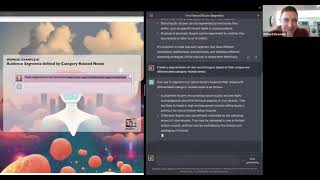
Hi, everyone. Welcome, welcome. We've got a small group tonight, so I'm hoping that you're going to be doubly engaged in the chat. Please open the chat window and say hi to start with, tell us where you're from, something interesting about yourself, maybe. And as we go through, please add questions, comments, feedback. We're gonna have some fun with ChatGPT tonight or this morning, depending on your time zone. And the more interactive you make it, the more feedback you give, the better. My goal is to take about half an hour to walk through the book super briefly, give you a bit of an overview, but mostly just work through some really practical examples of ChatGPT in action. We're going to put it through its paces. We're going to hope it stays live and actually works for us during this session. If not, we've got a backup plan. Don't worry. We're going to have some fun and we're going to learn some things about how it works, how we can use it, how we can get the most out of it. Then we're going to reflect on some lessons we've learned during this process and then we're going to open it up and go in any direction you want, really. We'll explore some prompts that you're interested in, some business challenges you're interested in. We'll take it wherever you want it to go. So let's get started, shall we? Today, it's just me, Richard could not be with us. If you came here to meet Richard, then please try another webinar. We'll do more of these. We'll do them regularly. Also, let us know if you want more or different versions or us to explore different topics. Okay, let's get started. We're going to start by looking at the gender. Who are we and why did we write this book? Like, what is this book about then? Practical, practical case studies, just like the book. Real examples to show you how it works in real time. Then reflection. What did we learn? What are the lessons? And how do we go from here? Right, go away. Well, Richard and I have been lucky to work in a lot of big global brands. We ran insight teams, quite a few of them. Little yellow stars. Yes, there's quite a large number on there between Richard, me and some of the rest of our team, mostly media and entertainment, but there's a lot of consumer goods in there. There's a lot of luxury and retail. So what we're saying here is that we've seen the world from inside quite a lot of different Brands. And we know the kind of challenges that, the kind of stresses, the kind of activities that brands are working on. And that's the foundation of what we used for prompt, really what we did. It started very selfishly. What we did was to start by thinking about all the things that we used to do in brands, all the things that help us to understand audiences and build plans to grow brands. And we just went through piece by piece and said, how can ChatGPT be as helpful as possible in these areas? And it was a roller coaster of a first week of messing around with it, because area after area, test after test, we found ways that it could be really, really helpful. And it was only after about a week of pretty intense testing and pushing of ChatGPT, we said, look, we should write this all down, right? Yeah. We should share this with everyone, right? Yeah. And we should drop what we're doing to make that happen over the next couple of weeks. Because the earlier we help people with this, the better. Right. So we canceled just about everything on our schedule for two weeks and just spent all day, every day putting ChatGPT through its paces, documenting where it worked, where it didn't, and what the lessons were. So the book, yeah, started off as a very selfish attempt to use CHAT GPT to help us to do our jobs and ended with what I think will be hopefully an impactful way of helping you all to make a difference to the brands that you're working with. So that's where it came from. Practical guide to help us and then a practical guide to help all of you. And the book structure into four main chapters. Then there's like loads of appendices of really cool stuff that we didn't want to ruin the narrative with. Chapter one, where it all starts for us in our philosophy, which is understanding audiences and audience needs and the markets and the foundational work that starts there. Chapter two, selecting a target market. We mean picking an audience that you're going to target. And then chapter three, how do I target them? What's my go to market strategy? Products, prices, promotions, propositions. How do I target that audience? Successfully recognizing that just adapting your business as usual in a go to market strategy chapter three is sometimes not enough. We've got chapter four, which is bigger picture innovations. We're going to look at some of those today as well. So that's a pretty good end to end process for working out how to build a brand or grow a brand. And within each of those chapters there's clearly lots of different subsections. So within audience and markets. Within chapter one, there's loads of different ways and methods and tools and frameworks you can use to solve that problem. Within chapter two, we look at audience segments, but also how do we get to audience segments using reviews and get the value out of them? How do we use ChatGPT for open ended survey responses to understand and target audiences? So within each chapter, as I say, loads of different ways of achieving that overall goal. So that's roughly the structure of the book. Today. What we're going to do is just look at three of these examples in some detail. We're going to have some fun working through them in detail. We're going to look at audience segments because for us it's the most important, the most valuable, the most foundational piece of work there is. If you're going to build a brand, get clear on your audience and we'll show you what we mean by audience segments, how they work for us. Then we're going to take something from chapter three. We're going to look at positioning a business idea based on those audience segments and we'll look at how Chat GPT can help us to do that. Chapter four, then we'll steal a part of that. We'll still startup ideas and we'll try and build some startup ideas that match the positioning we came up with for the audience that we came up with. So we're going to kind of go end to end, but with three big examples that we'll work through. So let's hope ChatGPT is in the mood to work for us today. And let's get started, shall we? There we go. I'll put Chat GPT on the screen on the right hand side, just a separate browser window. That's a straight up browser window with Chat GPT in it. And we're going to start, as I say, understanding audience segments. For us, if you're understanding audiences in any way at all, the best method is segments. But segments can mean quite a lot of different things. So we're going to eventually end up talking about category related needs as a framework for understanding audiences. We'll get to that, don't worry. But that's what example one is going to be. And the slides here on screen are going to match the format of the book. The format of the book is there's a prompt in the first section of the table. And then in the book what we would do is to put the reply from ChatGPT in the second row of the table. But today we'll do that live. So we're not going, going to use that today. And what we're going to do. Last time we did a webinar, we used vinyl records as the category we were looking at. The last thing I did before this webinar was sit quietly in the pub around the corner and read a book that I'm deeply in love with, which is just like crime, pulp fiction, just trash. Like crime novels. I picked one up at the airport a few weeks ago, obsessed by it. Now I'm reading like the whole set of them. And I thought just before I, as I said in the webinar, I thought, why don't we explore that? I don't know how it's going to work, but sure. So why don't we try and explore the world of pulp fiction crime novels? Let's see how that goes, shall we? And we'll start with the simplest prompt we possibly could, which is to just say segment. And then the thing we want to segment the market we want to segment and I don't know, let's just see how it works, shall we? So what we can do is you can do all the way through prompt is just copy the prompt out, paste it into chat GPT, push, go. Let's see what happens. Segment pulp fiction crime novel readers. Let's see. Ah, it is not possible to segment a specific group of people based on the type of crime novel they read. As it's a personal preference. There's not enough data available. That's brilliant. Well, did I choose the tough example or do we just not have quite the right poem prompt? Luckily we prepared for this in the other example anyway. And so if a really simple prompt doesn't work, if ChatGPT refuses to do something that you want it to do, there's always a way around it. It'll often apologize, I'm sorry, I can't do that. Then what it will often do is give you some, some kind of clues, but however, like, oh, there are some ways that you could go about doing this. Anyway, we're not going to dwell too much on that. Let's go straight on to our second prompt, which is a more detailed version, a more rigorous version, which will hopefully get ChatGPT to give us an answer. So in our more rigorous version, we say create a segmentation of pulp fiction crime novel readers based on their unique and differentiated category related needs. So ChatGPT understands this phrase. Category related needs is needs that are related to the category, the pop fiction novel category, not necessarily directly, but related to the category. It's not the needs that Drive someone to engage with that category. So I don't know what's going to happen here. Like I say, let's try that one, see what happens here. Ah, so you can do this task then. Chat GPT. You just are a bit shy on the first outing. Let's see what happened. It's come up with segment one, Hard Boiled detective segment. These readers are drawn to crime novels that feature gritty, no nonsense detectives as the main character. Interesting urban environments, corrupt police officers. I certainly know some books like that. All right, that could be me. Segment two, cozy mystery. Oh, that sounds nice. These readers prefer a more light hearted and less graphic approach to crime fiction. Well, the first one I picked up was the Stephen King story which was very sweet. No crime at all and I really enjoyed that. So. Okay, I get that. Could be me as well. Yeah, there's a procedural segment, historical segment, espionage segment. Okay, neat. Pretty good. You know what I'm going to do though? I'm going to give it some more feedback. I'm going to. I'm going to say, well let's see what the next one is. Yeah, you know, we'll just go on to the next one because I'm worried that some of these are still like genre related. It kind of relates to the underlying needs of the audience. Right. Like kind of. But they're a bit rooted in the genres of the of books. So here's another prompt and this is the. What you'll have to do frequently is challenge the results you get and reprompt asking for more clarity or more specificity. So this time create a segmentation of pulp fiction crime novel readers. Same based on their unique and differentiated category related needs. Same this time the needs should be deep and underlying, not based on demographics and I'm going to say and not based on book genres. Let's see what happens. Give each and we're going to ask that to enhance the output this time as well. So give each segment a catchy and unique emoji and explain each through their motivations to buy and a unique reading moment that defines their week. So we're asking for a lot more this time, a lot more rigor, a lot more structure and a lot more polish on the output. You know what I'm actually going to do as well? I'm going to start a brand new chat in chat GPT. You can do that up here at the top. And within each chat it remembers all the things it's done before and sometimes it gets stuck in a loop. So I'm worried that we might not be able to shake it out of these book genre related categories if we keep going in that same chat. So let's just start a new chat, fresh chat. No biases from the previous conversation, no learning from it, but also no biases from it. Let's see what happens with this new prompt. Well, we've stumped it where it's just very, very busy now. Hopefully something will happen. Here we go. Thrill seekers. All right, so that's a little bit more like a need and less like a genre. Maybe like I'm my need is like a thrill. It's not mine, but sure Motivation to buy these readers are looking for fast paced, adrenaline pumping story with plenty of action and suspense. They want to be at the edge of their seat and feel a sense of danger as they read. Unique reading moment. These readers may read their pulp fiction crime novels late at night when the house is quiet and they can fully immerse themselves in the story. Particularly suspenseful chapter while sitting on the edge of the bed, heart racing. I like that. That's not me. I would not sleep after that. But sure, I get that. That might be a type of person Number two. Mystery lovers Motivation to buy these readers are more interested in the puzzle solving aspect. Aha. Neat. Unique reading moment. Daily commute. Trying to solve the puzzle before they get to their destination. Nice. I like that. All right, cool. This is working. It's definitely the best set we've had. Right? Character connoisseurs number three. I'm not going to read the rest of them. You can read this yourself, but you get the idea. By adding to the prompt, by enhancing the prompt, by being clearer, what we want and what we don't want, we've been able to get something that's pretty useful. I worked in book publishing. I would say that actually you could sit down with this set of segments and have a really nice debate for each author about which segments they're targeting. For an author about which segments he wants to target with their next book, Is it different from the last one? And therefore how should it be different? You can imagine marketing being different, everything being different. So I think we've got a really good foundational set of insights. Hypotheses about insights. Not insights themselves, but ones that we could use. What we want to do in the real world is go test these. We'd want to challenge them in research to see if people really have these views and behave these ways. We'd want to understand how big each segment was. Like how many people identify with each of these different and we probably want to run chat GPT a few more times with different questions so that we could check whether there's any more that we want to add on. Maybe there's a fifth and a sixth that are really good. Maybe we'll want to get rid of number four because it's not quite right and we'll add some other other ones in. So lots more to do. Don't get me wrong, this is not the final answer, but what a great step towards the answer. And again, we took a while to get there. Today you can just copy this prompt or all the prompts from the book and get straight there in any category you want. So let's go on to the second of the examples we're going to work through today together. This time we're going to take one of these segments and we're going to try and target them with a proposition. So something like this. How would a pulp fiction crime novel subscription service meet each segment's needs? These books, you know, there's hundreds of them in this set. I have to buy them all individually. I don't want to go on Amazon and work out which ones I bought, which ones I haven't. I just want a subscription service. Right. Huh. What type of subscription service? How might I build one? Let's have a look. So we're just going to put that prompt in. How would pulp fiction crime novel subscription service? And we're going to ask it how it would meet each segment's needs. So let's see what it does when we ask that. Thrill Seekers, the subscription service could offer a selection of the most action packed and suspensible books. Right. Okay, makes sense. They could offer exclusive content such as author interviews behind the scenes, maybe. Not sure that is totally focused on that segment's needs. But fine. Could offer a thriller of the month. Yeah. All right. It doesn't feel like brain surgery, but not completely wrong. Mystery lovers. Selection of the most intricately plotted and well written mysteries. Sure. They could offer exclusive Q A making of and sneak peeks. Yeah. All right. Mystery of the month. Fine. Sounds the same as the Thrill Seeker one, but with a different genre. Character connoisseurs. Yeah. In depth character analysis. Yeah, that would be obviously really helpful for that segment. So that feels like a really nice targeted, targeted one. So fine. Like I think it's a pretty good selection of interesting things to do, but I don't know if you're going to want to build a business like that of any of those. So you know what we're going to do before we get onto the next prompt. Actually, I'm just going to try that one again. But I'm going to ask for more specificity. How would it meet each segment's needs? And I'm just going to tell it what I wanted to do. Please make sure each service is designed type designed to meet that segment specific and differentiated needs. I can't cannot type and talk at the same time. All right, let's. Let's just see if we can get better examples. More focused on the segments. They feel a bit generic to me. Thrill seekers. Action packed personalized recommendations. Behind the scenes. Look at the writing process of the month discussion forum where they share their thoughts and ideas. Fine. I'd say not great. Mystery lovers recommendation. Yeah, I don't know. I think it's getting a bit better. If I was doing this seriously, I'd write a harsher piece of feedback and ask it to be even more focused on each segment. And I would ask it to explain for each recommendation why that's so uniquely related back to that segment's needs. So if we weren't trying to get through this webinar, I'd push that one again. But you get the idea. Don't accept the first answer. Sometimes don't accept the second answer. Re prompt, give feedback and you'll get what you want. So we could get what we want there. But let's move on to the next step anyway. Come up with five ways that a pulp fiction crime novel service could be positioned to meet the needs of. And let's just pick one segment that we really like. Like who do we really like? Quite like mystery lovers. So let's put mystery lovers in here. I think that's a fun one. And then let's ask ChatGPT just to focus on mystery lovers and just ideate like five different ways positions to meet the unique. And there we go. See how that works. Right. Five ideas for mystery Lovers. One. Solve the Mystery. Subscription service could position itself as the ultimate destination for mystery lovers. Yeah, makes sense. Looking to test their detective skills. A selection of the most intricately plotted and well written mystery novels and provide readers with exclusive content. Yeah, fine. Think like a detective. The name was better than the proposition in the first one by the way. Second one. Think like a Detective. Subscription service position itself as a way for mystery lovers to improve their critical thinking and problem solving skills. Yeah, that would go down well. I can see that one. Number three. Uncover the truth away from mystery lovers to uncover the truth and secrets. Selection of complex and intriguing novels. Yeah, different ways to position the same thing. But sure, join the investigation, be the first to know. Yeah, all right, you get the idea. If we push it harder, I think we could get better results. But we're getting pretty interesting ideas here already. One lesson you'll always have with Chat GPT is that you can't take the results and just run with them. You never can never. You always have to reword some of the brilliant ones, take some of them and just delete them because they're not very good. And then re prompt or use your brain to come up with additional ones that are missing from the set and add those back in. You're always going to have to do that and you can see exactly that here. One or two of these are really good, but you know what, need a nudge, One or two of them, probably a duplicative or not quite on target, get rid of them. I bet we're going to want to try it again and again or come up with new ideas and add them in. Then you get to the answer. But that still means you've got to the answer a lot quicker than you would have done any other method. So still a huge advantage, but never perfect. We're seeing that today. The next prompt would be to just ask the same thing again. But that trick we tried before, remember that one? Make each way highly focused on the specific needs of the segment. That's kind of what we did in that prompt. So I'm not going to do that one again. But I think you could be harder on it. I think you could be more focused, I think you could get much better results out. So let's go on to number three, shall we? Third big example for today. And then we'll reflect on the lessons we've learned. A third example is about innovating off the back of this. So create a list of three very different startup ideas that meet the needs of the Mystery Lovers segment. Subscription service is one. But let's come up with different ideas that meet the need of the Mystery Lover segment. And we've left the other prompt in here wanting pulp. Let me get that from the previous one. Just make sure we're using the same phrase as before. Wanting a pulp fiction crime novel subscription service. The startup should have a strong and compelling vision. They should use AI in some way because that's why we're here. Obviously. They should each have a cool and interesting name. The idea should be compelling enough for an investor to want to invest instantly. So let's see. We could not just come up with this service, but Come up with whole startup ideas based around it. Where are we going with this mystery AI? Mystery AI is a cutting edge pulp fiction crime novel subscription service that uses AI to personalize the reading experience for mystery lovers. AI powered recommendation systems suggest the perfect book based on each subscriber's reading history. Yes, please. Actually, preferences and mood. That would be good. Okay. What mood are you in? Right, Great. We also offer exclusive interactive mysteries. Haha. There's the AI that adapt to the reader's choice, creating a unique and personalized story for each subscriber. Boom. Vision is to create the ultimate personalized reading experience for mystery lovers. Yeah, all right. Neat. Sold. I would buy that Mystery Mind subscription service that uses AI to challenge and train the minds of mystery lovers. Nice. I see where that one's going. Number three, Mystery Realm. The subscription service that uses AI to transport mystery lovers to a new and exciting realm of mystery and suspense. Offer a selection of immersive novels, virtual reality, augmented reality experiences that bring the story to life. Nice. Okay, great. It's working. Finally. Very pretty good ideas. Would you want to invest in any of those right now? Like maybe, I suspect all of them. Need some editing? Same lessons before, bit of editing. Maybe throw one away, Maybe add a couple of extras in, run it two or three times. I think then you'd end up with a really nice set that you could work with. Really cool. I'm pleased with that. What one do we like the best? Let's go with. I think the Mystery Mind was kind of interesting. So let's say we want to dig into that idea. Let's dig in to the Mystery Mind segment. The Mystery Mind startup idea for the Mystery Lovers segment. And let's drill down that one Mystery Mind idea, which I don't know, it's not the greatest name in the world. So let's tell it. I love the Mystery Mind idea, but the name isn't cool enough. Come up with five different names for this startup idea. They should be cool, snappy, and appealing to the Mystery Lovers segment. For each name, give me an emoji. I always want emojis with my responses. Give me an emoji which relates to the name and a sample social media post that will be immediately appealing to the target segment. Let's see what happens here. Mystery Genius. All right, cool. There's our emoji sample social media post. Unlock your inner detective with Mystery Genius. Test your skills with our challenging polls and quizzes and improve your critical thinking and problem solving skills with our curated selection of the most complex and thought provoking mystery novels. Sign up now and join the ranks of the true mystery geniuses. All right, maybe a bit cheesy, but pretty good. Number two, we've got Mystery Lab. I won't read all these Mystery iq. Got some good differentiation on the emojis. I like to see you get the idea. Keep pushing it, drill down, start broad and explore. Give it feedback. Tell it what you like, what you don't like. Name's not cool enough and it will do its best to meet your needs and help you out. While that's still going, I'll show you some of the many, many ways you could go from here. So I mean there's almost unlimited ways you can go from here and the book covers so many of them. Write a letter to potential investors about my business idea. Help me develop a qual discussion guide to test this idea amongst this segment or write you some interview questions that you could use. Suggest a marketing plan for my my idea. Give me 10 catchy social media posts. Write a report summarizing some of the reviews I got for the for my early idea. Make up some reviews for the idea to see what kind of things people will say about it. List 10 types of company we should consider consider partnering with on this idea to build it or to market it or whatever it is that you want. You get the idea unlimited number of ways you can take this forward. So three examples which hopefully brought this to life a little bit. Showed you the warts and all version of ChatGPT in action. Let's take a couple of pages to look at some big conclusions. Having done this hundreds and hundreds and hundreds of times, all sorts of different areas for the book. What did we learn? Well, let's start with the three areas we expect ChatGPT to have the biggest positive impact in marketing. First is that it's an incredibly solid base from which to shortcut or fast forward market research. And so having this level of hypothesis thinking, ideation, audience understanding early in the project, like before the pitch, before the first workshop, before the idea's even been fleshed out in most people's minds. That's revolutionary. We would usually do this level of thinking ourselves, but we would usually do it over about the first two, three or four weeks of a project. Huh. Now we're doing it in hour one of the project. That's revolutionary. Fast forwards and shortcuts everything about the market research process. Unbelievably exciting. Second, that means it's a better use of marketers time. Less time waiting for the ideation to happen, less time Working on the ideation and more time being critical of it, adding to it, enhancing it, rewording it. That's a more strategic, more elevated use of marketers time. They can focus on tougher, more creative tasks and they can tackle more projects than they otherwise could have done with this kind of help. So we're not worried about it taking anyone's job. We're worried, we're excited about it elevating everybody's job. Third, as a result, we expect that more projects, more brands, more startups will have this kind of audience strategy type thinking, more rigorous, thoughtful audience first logic. And that's why we get out of bed in the morning. So that's very exciting to us. So three exciting ways we think it will make a big difference. There are watch outs though, and you saw some of them as you went through chat. GPT will often fail on its first try. We saw that first and second try earlier. That's okay. Always, frequently will. Just tell it what you want, tell it what you like, tell it what you don't and if you get stuck in a rut, start a new chat window. You'll get there. Have faith and don't be put off. Second, the data is only up until late 2021. Like for now, that will change. Don't worry about it. Nothing we've done today is date related. Almost no queries we tried to do for the book were actually date related, were constrained in any way. There's a million things you can do that aren't constrained by date, but you should just know it doesn't have recent knowledge. And so anything that's very reliant on recent knowledge, that's not a good use of ChatGPT. Underlying needs and underlying trends. Absolutely. Current, up to the minute, not so much. And third, this is true of any data set and any research methods is that cultural bias is inherent. Was it trained on a data set that's perfectly representative of all languages and cultures and backgrounds? No, because such data set does not exist. Every data set contains bias and every tool contains bias. And it's our job as users of it, not just to re edit and reposition and challenge it because we don't like the ideas it's coming up with or the wording it's using, but also because of the biases. So let's think to ourselves. Do these segments feel true in all different cultures or do we need to go back and ask it again? How would these segments change? Change if we were thinking about a different culture or a different lifestyle or a different Geography. We can do that. We could totally ask it. How would this be different in India, let's say. But that's on us to remember the bias in the results and the training set and to use our power responsibly by encouraging it and asking it and checking it for biases. So remember, that's always there. Then let's take a moment to reflect on the role of AI. And we've danced around this a little bit as we went through at the very start of a project, at the ground floor of a project, you've got the brief you're working to, and in this case, you've got the prompt you're starting with that is human led. There's only we can decide the projects we're working on, how we're going to approach them, what prompts we want to use. Using ThinkBook as a guide, of course. But then after we start the project, so you see, I begin to take a role and incredibly important role early on, helping us ideate and come up with these segments and think them all through. Incredibly important as the project gets more and more advanced, as we get more and more to the top of this pyramid. So human creativity, expertise and judgment plays much more of a role. Remember I was saying, editing, removing, adding, enhancing, that's all human judgment. Only you can decide which of these segments or business ideas make sense to take forward to the next phase of the project. Only you can decide if they're worded in the right way, positioned in the right way. So human expertise takes over again. Humans at the start, humans at the end. Incredible assist from machines as we go through, though. And finally, let's take a look at what we call the seven R's. And Richard came up with this as we were writing the book, actually, and we kind of kept adding an R as he went through. But this is basically how we think about any toolkit. And it's really nice to have a framework to go with it as well. Is it robust? Is it representative? Is it reliable? Is it repeatable? Is it relevant? Is it recent? And the most recent but most important addition, Is it responsible? And here's how we rate it. It's incredibly robust. There is so much data and so much potential for it. It can answer almost any question. That's incredible. Is it perfect? No, but it's very, very robust. It's one of its huge strengths. Is it representative? Pretty good score, actually. Again, most topics are covered and most cultures are in there if you want to inquire about them. Absolutely. It's reliable and repeatable. It mostly gives you what you want, especially if you give it feedback. And it mostly gives you stable, good answers over time. Differently worded and differently positioned. Absolutely. But it will give you what you want repeatedly, again and again and again. Is it relevant? Can be. Some of the ideas were not as relevant as others. Some of the segments not so much as others. That's okay. Again, human editing and judgment required heavily there to decide what's relevant for your brand and your moment and your budget and your vision. Recent obviously it gets a some stars knocked off there end of 2021 being the data cutoff, as I say, not too much of a problem. So we're scoring it pretty conservatively. You should know recency is not at strength point. And then is it responsible? Well, that's the question about bias, about cultural relevance and about how we use the tool. And since it's got the potential to be used in a way that doesn't reflect bias, so you just ask it for an answer and run with it. And in a way this could be irresponsible, which is, huh, I'm just going to take this and send it to my boss. I think responsibility is something we need to be remembering is our role in this. And so we gave it a very low score on that to remind us that we need to take ultimate responsibility and use this in a responsible and representative way. So I think it's worth thinking through when someone says I can't use ChatGPT or I don't know, it's rubbish. It's worth thinking, what do you mean? Is it because it's not robust or representative or reliable, et cetera, et cetera. We found this incredibly helpful for thinking about what to use it for and what not to use it for. So that brings us to the end of the workshop or the end of the bit where I'm going to do all the talking. Anyway, we talked about why we wrote the book, we talked about what's in the book and showed you some real examples. And then we talked about some lessons about how it will enhance and give us superpowers and how there are some watch outs for what it is very good at and what it's not very good at. So let me turn it over to you now. Do you have any questions or suggestions or ideas? If you do, very happy to work through them all? We've got 20 more minutes. If not, then let me say thank you so much for joining us. Hope you enjoy the book and please don't hesitate to reach out with any questions at Any time our emails in the front of the book, you can message us on the book website. The little message box there that goes straight to my phone and all day I'm messaging people and chatting to people in that as well. So however you want, please don't hesitate to reach out. Thank you. Thanks for the feedback. You're a quiet lot today. I'm guessing there's no questions. Thanks. Thanks Sam. I'm happy to just sit here for a minute, rest. You can check out if you need. Thank you. Any more questions? Thank you. Thank you. Thanks for the feedback. Have you. Okay, Jasmine, fantastic question, Jasmine, thank you. Have you seen other use cases outside of marketing that you have tried? It's such a brilliant question. Yes, yes, yes. So I don't think there's anything special about marketing in terms of why we focused on that. The only reason is because that's where we spend our days, obsessing every single day with work where we've spent 20 years obsessing. But we've got a great process. We know what state of the art is and so we're really good judges of whether this is useful or not. That's the only reason it's marketing. If I was a doctor, this book would be about using it to help you as a doctor. If I was an architect, this book would be about architecture and it would be absolutely as rich and powerful for sure. A friend of mine helps build nuclear submarines and I was chatting to him about the stresses and strains that he has in his day job and we sat in the pub around the corner and used chatgpt to come up with some insights, observations, methods and tools to help him navigate that. That's pretty far from this. Another friend was having trouble with his kid not tidying his room. So parenting is another book that could be written. And we sat again in the same pub actually and we just noodle on it like how could we. What are some methods for helping getting a 13 year old boy to tidy his room and okay, how might I go approach about that? So I'm absolutely convinced this book could exist for parenting, for dating, for architecture, for medicine, for doing your homework as a kid, for creative writing. I'm absolutely convinced. But you need a subject matter expert who knows what state of the art is to actually write it. I would not supposed to write the book on, on psychology because I'm not the expert but I absolutely am certain that book could exist. So if you think it's this exciting in marketing and the same tool is just as exciting in basically every other Field. Mind blowing. So, great question. Yes. I'm convinced this book could exist in every single field. Sam asked, what do we get from the book in addition to what you have shared here? Yeah, great question. So the, the biggest thing you'll get is really just lots of examples in every one of these areas. So, as I say, we covered three today. But the book has every single one of these areas and many examples in each. Plus, if you're interested in the practical side, there's a whole appendix which is. Which has 30 or 40 brilliant examples in it, I think, which have nothing to do with marketing at all, but they're really, really helpful. So we didn't want to plug up the main book with those examples, but we did want to share them. So they're in an appendix. And somebody actually, one of the first people who bought the book said to me, huh, example three in that appendix was worth the price of the book in itself. I'm like, all right, great. Like, that wasn't the point of the book, but sure. So, yeah, there's just tons more examples. I think there's 160 examples in the book. We've done three today. So, yeah, loads, loads more. And, and some of you are even vaguely worried about, about value in the book. Just buy it and then if you don't like it for any reason whatsoever, just ask for a refund. In the, the customer service thing, it'll come to my phone and I'll refund it straight away. That's our policy. One person has done that so far. They're very welcome to their refund. They did not give a reason. Yeah, you're very welcome. So no risk at all. If you don't love it, just get your money back. There's no stress, no stress at all. We're here. This is our job, is to help, not to take money off people. If it's not helpful, that's fine. Yeah. And then there's tons of other stuff in there about what is ChatGPT, how, like, how does it sit philosophically, and what are the conclusions about how you should use it in your role? How can it make you a better and stronger person in your role? Career advice in there as well, but the core of it is just these words, examples, and many, many more of them. Jasmine said, oh, excellent book. I've been doing the prompts to help me with my business. That's what we want to hear. That is what we want to hear. I'll give you a minute in case there are any more questions. There's still Still a few of you hanging on. So maybe, maybe you're all waiting for someone else to ask an interesting question. Oh, Sam said you heard about it from the Axios article. Oh, that's great. Thank you. That's really good to hear. Yay. That's really good to hear. Yeah. It's funny because since you're still here and no one's asked a question, I'm going to just talk. Yeah. We read the book because we wanted to share it with people, but we're not really that interested in doing marketing for ourselves. And so any help spreading the word about the book would be greatly appreciated. We feel. Felt good writing it. We felt good putting it out there and sharing it. I feel really good talking it through with you. But actually, like, marketing our own book just feels not right. I don't want to do that. It feels a bit icky. So, yeah. Will you be using this in your work? Yes. My God. And what can we do with the surveys or focus groups to make sure we're going down the right path? Oh, great question. So, yeah, actually, by the way, I literally spent all day today, my. My actual day job and all day today using chat GPT 100%. Let me tell you what I did. So first of all, I had conducted a bunch of interviews with some business leaders. Actually, I had them transcribed. It was otter AI for transcriptions. And so what I did, one by one, I put the transcription in And I asked ChatGPT to summarize it in interesting and thoughtful ways, like, tell me the 10 main challenges this person had. Tell me the 10 main strengths this person talks about for the product. So using my skills and expertise to craft the questions, but using ChatGPT to pull out relevant quotes and summarize interviews for me, I did that interview by interview, by interview. Then I put the summaries back into ChatGPT and I said, tell me what overall, what are the main themes? What do people agree on? What do they disagree on, who disagreed on what? And I put together like a 30 page report or something this morning and I was doing all the strategic steering, I think, like asking the right questions and pushing it in the right directions. But Chat GPT was doing all the hard work, all the reading and the cognitive load of remembering that data and working out what the right quotes were for which. For which answer. So by the way, that's not the kind of work I usually do because I hate reading transcripts. I really can't stand it. But that enabled me to do that work and have fun doing it. Because I had an incredible partner there by the name of ChatGPT. And then this afternoon I analyzed some survey data. So annoying, I tell you, two different people in my team, I wanted to do it for me. And both of them said they're far too busy and it was urgent. The client called and again, it's not the kind of thing I usually do is like pour over questionnaires and raw survey responses. So initially wasn't looking forward to it, but I had the best research system by my side. So what I would do is summarize, simply summarize the results for each question into simple stats. Like X percent said this, Y percent said this. Then I put those summaries into ChatGPT and said, hey, write me a narrative off the back of this. In fact, what I said was, here's the objectives for this project, here's the findings, please write me a narrative that ties back to the objectives of the project and takes into account these findings. And it did exactly that. Brilliant, brilliant job. So again, a task I don't usually do. Again, I was able to do it using strategic guidance with a great research assistant called ChatGPT. And I knocked out maybe a 20 page report on that project, which was really fun and really thoughtful. So this is all on the analytics interpretation side, but yeah, 100% using everything I did. They're just simple examples. If I was writing the survey, I would have used ChatGPT. Oh, I guess the other thing we did today was to write a proposal for another client and well, I know roughly what needs to go in the proposal. Like for this client, I think you need this and this, and we're going to focus on this and we're going to do a bit of this. And so I was able to just write that in simple note form and give ChatGPT an example of another proposal I'd written. And I said, adapt this proposal to, to, to make it look like this with these notes for what this client really needed. And it was able to write a wonderful proposal. And I said, explain in simple terms why this is so important. Add a paragraph that brings this to life, you know, so again, like I'm offering strategic guidance, like I know what it needs to say, how it needs to say it, I know where, what paragraphs of text I want, where. And ChatGPT was doing all the legwork. So I was able to write quite a long and thoughtful proposal without really taxing myself on the writing or the explanation, but just on the strategy. And it was again, really fun. So yeah, they're three tasks I would have normally been really annoyed at or stressed by or delayed. There are three tasks I got off my plate today and got done thanks to ChatGPT. So yes, can it help in my work? Practically, yeah, pretty much. Prompt is a manual for exactly how I do it. Again, we wrote it selfishly to help us with our own work, so we use that every single day. And there's. There's a few things that we've learned that are not in Prompt and so we're pushing those out as updates. I don't know when, maybe another couple of weeks, I think, because none of them feel big enough or urgent enough to bother you all with an update, but I reckon probably in a couple of weeks we'll do a new version. We'll push it out to everybody who's got the old version for free. Don't worry, will highlight what's changed, but there'll be a bunch of new stuff in there as well. But yeah, it's a very selfish book. It's my manual for how I'm going to use it and proudly and happily so. Yeah, happy to share. Thanks, Jasmine. So lovely to virtually meet you. I suspect that might be the end of the questions, so you'll get nine minutes off. It's nearly 8:00 clock here, so I'm going to pump through my book. Thank you so much, really love you. To chat with you all and share this with you all and I can't wait to hear what you do with it. Thanks, everyone. Cheers. Have a great night. Bye. Bye. There we go.
More from David




How Can ChatGPT & AI Help You Make Your Business Better? - Guest: Marketing Strategist, David Boyle

youBEAT Cafè - Prompt for Artists / AI Revolution / ChatGPT with David Boyle (Audience Strategies)

Now that's Significant - Ep 52 - Reimagining the Future of Marketing with AI - David Boyle