PROMPT webinar 13th Jan 2023 edited v2
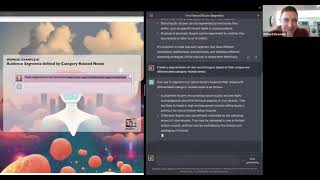
Richard and David Boyle demonstrate how to use ChatGPT for marketing work: audience segmentation, product positioning, and market research. They show practical examples and stress that human judgment matters when using AI outputs.
Chapters
So what we have for you today is a one hour webinar, our first webinar from the release of our book a prompt in December 2022. Let's move on and have a quick look at the agenda as we work through. We can do a quick introduction to myself and David. We're going to cover briefly on prompts conscious. We'll have people who've read the book in full and also people who've just recently downloaded the Taster just to come onto this session. Absolutely everybody is welcome whether you've read the book or not. And absolutely everybody is welcome whether you're a seasoned user of AI through to, maybe you've even registered with ChatGPT yet, we strongly recommend you do. But we're conscious there's many people out there who are yet to discover this amazing technology. But the real focus of this session is going to be on those practical case studies. Just as the book is such a focus on the practical use of ChatGPT within marketing, as focus of this session is going to be on those practical case studies. They're saying live tb, never work with kids and never work with animals. But we're going to extend that to whether we should work with Live ChatGPT. We're conscious the US is waking up, which always slows down things down for us Brits. So we're going to say we're going to put the live technology to the test. We're going to spend a couple of minutes thinking about the future, but really we're going to then open the floor. So as David said, we see comments coming in the chat, but keep those comments and questions going as we go through and we'll cherry pick a few to make sure we spend a bit of time at the end covering Q and A. So very brief background on Dave and myself. We've worked together in various companies, various guises over the years. By trade, I guess you'd call us client side insight professionals. We've always worked within marketing teams, always work very closely with business partners in marketing, typically laddering up to the CMO kind of marketing, but specifically within music, within tech, within retail, within products. You see some of those stars, the organizations we've worked on the left hand side there and we're so fortunate to have worked with such amazing clients and brands, many of you on the call, which is absolutely fantastic for us. So whether you see a parrot, whether you see your brand or a parallel industry on the page, or maybe you work outside of the fields that we've worked, maybe you're in financial or pharmaceutical. We think that the scalability of the case studies that are going to go through today really should apply to you. If not challenge us, ask us questions and we'd be delighted to help think through those worlds for you. But yeah, having been client side insight professionals ourselves, we now work in the consultancy field and that's what we love about working with such a range of brands across such a range of sectors and really trying to scale our learnings over 15, 20 years that we've been working. And so much of those learnings have come in the, what I like to call the sort of pre AI world. We are relying on qualitative research, quantitative research, data analytics on customer behavior. So background coming into writing, Prompt was very much the pre AI world. That's where our knowledge and expertise comes. Brand growth, the marketing handbook way, if you like, the typical way. And we're appending on what we're learning from ChatGPT. So hopefully you recognize the kind of spine as we go through. This is building on what we learn already and we really encourage you to do the same. Think not about this as being an entirely new and separate and disconnected technology, but how can you use it to enhance you, your teams and your processes as we go through. So yeah, let's jump on over to David. Tell us about, tell us about Prompt.
Yeah, so as Richard was saying, what we did is to work through our process from start to finish and just ask ourselves, how can this crazy technology help us? Can it help us with each step in the process? So how do we make it as helpful as possible? And so we were doing that work for the first about week that ChatGPT was out and it blew our mind. And then we decided that we should take all of that work and turn it into a book and share it with all of you as well. So really it's partly very selfish, like working through how can this help us? And then it's partly very generous. Of course, sharing it with the world. And our framework really is all of the things that we do to help brands every single day. To start off with, we believe that brand growth is always rooted in audiences and markets, audience needs. We'll talk about that a lot today, but that's where things start for us next. So chapter two in the book, once you've looked at the different audience needs, group them into audience segments and pick one or two or three and target them as your target market. That's the next part of brand growth for us. Chapter three of the book, then go to market strategy.
All Right.
I understand my market, my audiences. I've picked one or two or three segments to go after. How do I do that? Products, prices, all the rest. And then chapter four, because sometimes existing products and prices and promotions are not good enough. Chapter four is bigger picture innovation to meet those audience needs. Again. So this is. We are going to go through a subset of this today. This is basically the structure of the book. And within each of those sections we go through different ways to use ChatGPT. So under audiences and markets, we look at category related needs. We also look at frustrations and user stories and competitors and you get the idea. So this is a really neat summary of our process anyway, and then a really neat summary of where ChatGPT can help. So the book will guide you through each of those. But as Richard was saying, today we're going to focus on just three of these jobs that we're trying to do, just three of them in some detail at a really slow pace so that we can really understand what's happening, how to make ChatGPT as useful as possible in just those three areas.
Okay, so let's start. So audience segments, as David mentioned, we're huge advocates of segmenting audiences. We have a really specific way of doing this. So whilst of course there's a role for mass media and having everybody aware of your brand and ideally having your brand being famous amongst as broad a number of people as possible, we're conscious there's very many different lenses to segmenting audiences. You could segment them demographically and age segmentation can be useful for some categories. You might segment people by behaviors, whether they're light, medium or heavy users. We've got these really strong views though, that refined over the years, that category related needs is the phrase that we use to best understand the unique and differentiated segments within your total market. So what does that mean? So category related. So it must be linked directly to the category you're working on. So whether somebody has certain preferences broadly in their life in terms of their social life that doesn't relate to the category you're working on, that's not category related. It probably doesn't matter in terms of their segment. And then needs, I say, is the most fundamental word there. It's what's those deep psychological underlying needs that consumers have, what are they trying to achieve with your product or service? What are their jobs to be done that's going to get them through? And if you're not familiar with this term or haven't worked closely with us, it's probably most close to Psychographic or an attitudinal. Those are words that are also out there. But we like the sharpness of category related needs. Fortunately, ChatGPT works really nicely with us on this. It understands our prompt, we can train it, we can tell it what it means in a very small number of words. But we're going to work, work through an example and three specific prompts to ChatGPT just to take you through our learning process and hopefully you see parallels with your own categories, your own brands, how you might think about your customers or potential customers. So I'll just quickly explain the diagram. The table on the left. Anybody who's even flipped through our ebook will recognize this table. So we're starting with our prompt in the darker bar. So in this case we're logging in, we're taking the finding the empty prompt box and we're typing segment vinyl record buyers. That's the possibly the most simple kind of phrase we could suggest at the bottom of the box. It's blank now because we're going to do this live in the bottom of the box throughout the book. There are many, many examples, over 160 examples of doing this. And just to explain the background as well, it's not for us to say this is perfect or say this is definitely the right prompt. It's very much about us learning with you. This is such a new technology and we're really critical of it at times. We're not, we're not kind of invested supporters. We have no financial interest in ChatGPT succeeding. I'm sure there'll be other AI chatbots coming along and hitting the mainstream as ChatGPT has. So we'll come back to the end and reflect on what's good and less good about some of the worked examples we go through. But let's start really simple. So segment vinyl record buys, four words. And let's see how ChatGPT, which is streamlined on David's page there so we can see it run. So simple as this. Type in the text, hit go, and there we go. Classic I love TV examples. If we just do a quick refresh and you'll find this. And so I saw somebody mention in the, in the chat, you can't even register yet. So such high volumes. But bang, we're in quick refresh this brand new technology, we're likely to see things like this. So is it able to segment our vinyl record buyers? This is the example we're going to work through the rest of the case studies and the rest of this webinar has it done it. Well, it's not, it's told us how it can segment them. Some possible segments includes demographic segments, music preference segments, purchase behavior segments. You see the speed with which this has produced, the results, the breadth of results that it's brought to us. But it's not really giving us the answers. If you've ever worked with a segmentation. It's not giving us our segments of oh, here are our collectors, here are our audio files, here are social music listeners. It's not, it's telling us how to do it so we could do it demographic. I mentioned we could do a demographic segmentation. So this gets us to one of our kind of really early learnings about ChatGPT. We must iterate. Do not give it one prompt and either think it works or it's broken. I think what it's produced is fantastic, but it's not really answering the question we gave it. We want it to produce a segmentation of our vinyl buyers. We need to push it hard so we can go back, we can go back in stronger. And our iteration will be to ask this next prompt, which David's got on screen here. So create a segmentation of vinyl record buyers and then our build is based on their unique and differentiated category related needs. So we're just feeding it those simple words, the words added on there, unique and differentiated. We want these segments to pull apart. We want them to explain the market in as broad and rich and big variety as possible. So we've teed up, let's send away this prompt and again, we'd really encourage you to use the ebook in the same way. Run through, have a second screen on the go. Maybe copy and paste, maybe paste in the name of your category or your brand as we go through. Okay, so chatgpt again in seconds, it's underway. So it's saying one way to segment the vinyl record buyers is based on their unique differentiated category related needs. Okay, it's understood our prompt, albeit fed it back verbatim, but it's starting to give us a name. So audio files, great. So they're prioritizing the quality and they're highly knowledgeable technical collectors. No surprise to see them. Our days working at EMI Records we had a collector segment. No surprise to see them as reflected as a, as an audience of vinyl record buyers. Got our casual listeners. Maybe they're a bit behavioral. They don't really necessarily feel like a needs based audience for us. Apply some skepticism with how we think about them. We've got our nostalgics clear to See, their needs are coming through. Our music is music enthusiasts or now decorators. So they're buying from buying records for home decor. Noticing the record behind your head there, David, I think you might be in part in the decorator segment, but just wow. Like for those of you who've used the tool over the recent weeks, maybe this is no huge surprise, but this is the moment when I share this with other people. They swear they're open mouth, they cannot believe the richness, the speed that this gives. And as I said before, we are not advocates that this is the perfect answer. We don't think that this is something you could just copy and paste and throw into your marketing plan. But in getting our heads thinking about segments in the terms that are used here, the breadth that it's giving us, wow, this is brainstorming as well as somebody junior, maybe somebody at kind of manager level could do with maybe some hours of research and writing. So to have this not necessarily at the stage of oh, we're about to embark on our segments. How about this at a kickoff session. How about this before you're writing the brief for a project to be able to Brainstorm, to have ChatGPT collecting that rich information that's out there and coming back with hypotheses for us, we know it gives us a slightly different output each run. You might ask for, you might be prescriptive, you might ask it for 20 segments. You are, you might ask, and now give me three new segments. There's many ways you can use this beyond. But for such a basic, a single line of prompt, no coding, no tech skills required. We're just blown away by this. We'll come on later to talk about. We might use this in context, but hopefully for those who haven't used the tool before, just getting a vision for the richness and the depth that this can give to your marketing processes. If segmentation is the type of task that's valid and interesting to you, I think we can do better. And again, this rule of iterate, don't be satisfied, come back, make it stronger, make it richer. And many of our examples in the book will go to 3, 4, 5 lines. So here we're taking that same text again, vinyl record buyers, unique, differentiated, category related needs. And we're just laddering up the extra things we want. We want them to be deep and underlying. We want to get rid of the demographics, we want to give each a catchy title. So we've got our audio files and collectors. Maybe it can come up with slightly stronger names, maybe These names are a bit blank. Maybe music enthusiasts is a bit boring within a boardroom meeting. So let's give them slightly catchier titles, let's give them an emoji for a bit of fun and more differentiation and let's really try and humanize them. What are their motivations to buy vinyl records. Again, let's give a kind of Persona style to them by asking about their unique vinyl record moment that defines their week. So again, we can go richer, we can go deeper. Again, this is the kind of last stage of this works example. But I'm sure for yourself you can imagine what it might be to lead and train the technology to produce an output that's in the format that you want it. Again, the more vague we are, the more ChatGPT will fill the blanks and fill the gaps with what it thinks you're after. The more prescriptive and precise you can be, the stronger it can be. So let's run this one and see what we get to see if it's able to build on the previous example. Bit of a think, but we're straight in. Okay, so again, so we started with our audio files. It's thought about it and it's come back with richer names. So we start with our sound seekers prioritizing sound quality might even be the same as the audio files we saw before. But again, if you're just starting from scratch, you might choose to jump to the more prescriptive, the kind of stronger prompt to start with Vinyl hunters. They're motivated by collecting vinyl records. Maybe they are collectors of before. And it's come back with this idea of a vinyl hunter. Their moment of the week. They finally find the rare record they've been searching for and add it to their collection. Okay, brilliant. Okay, I've understood a bit more about their motivation. It's found some information that can enhance our vinyl hunters. We've got our music lovers. Yeah, maybe they were our enthusiasts before sit down with a record they've been wanting to listen to. Yeah, there's a music discovery element we maybe didn't see before. Have our nostalgics. Again, should we see our music enthusiasts coming in through yet again? Our decorators are there. We've maybe moved the needle a little.
Bit further on with these.
It's a slightly richer prompt and we're getting slightly better results. Again, to be sense checked, to be run through all those same processes that you naturally would with a workshop. But the stronger prompts that you have to start with, clearly you can shortcut to a better A richer and a more prescriptive output for what you're looking for overall in terms of then how you use that information. There's such a wide set of applications for this. If you're in the kind of hard marketing, typical qual quant process workshops before and after each stage, then definitely this would want to be one input. You probably want to curate this, rewrite this into your own kind of handwriting before taking this into any meetings. But to have this alongside as you're brainstorming, as you're coming up with those hypothesis segments would be really strong. And actually on reflection, we found we often didn't do this at that early stage. It would be at the later stage, the questionnaire writing, when it would be okay, so who are we looking for? But to have this so much earlier in the process, so accessible for all team members, we think is just mind blowing. So a quick run through iterate create the format and the output that you want, but always driven by humans in terms of what the prompts you're looking for and always curated by humans at the back end to ensure it's just what you want and then decide what you're doing afterwards. For instance, these aren't size for any project. You typically want to know the size. You'd want to know some sort of cultural relevance. Is this a global segmentation US uk. So to take this and then work out for you, your organization, your business, your team, how we then move forward once these outputs are created. Let's move on to example two.
Right, so we're going to take that audience understanding and we're now going to come up with positioning for our exciting product that we're going to build for them or our service. So we have an idea and we're going into this with an idea of a product we want to build, a service we want to build which is a vinyl subscription service. Why we're doing this work, that's why we're understanding audiences and segments here. We've got that vision going into the project Vinyl subscription service. But which segments would a vinyl subscription service really work for? Or how might it work for each segment? So here we're going to same as the previous example, we're going to start with a relatively simple prompt. How would a vinyl subscription service meet each segment's needs? We're just going to ask it to think that through for us for each segment and just, just tell us what that would look like. So vinyl subscription service would meet the needs of each segment as follows. Sound seekers for this segment as A service. A service could offer curated selection of high quality audiophile pressings, both popular and classic albums. What else is it saying? Exclusive access to rare and limited edition records. The option to upgrade to special editions or deluxe editions. That's really interesting. And we should see really different ways of doing it for each segment. So for Vinyl Hunters, for example, rare or limited edition special pressings could also offer a tracking feature to help subscribers keep track of their collection and be notified of new additions. I like that, that's fun. And then as we get down further to the segments that are even more different, we should see completely different responses for decorators. What's it going to say here? Subscription service got a curated selection of particularly visually striking artwork and packaging. Of course, exclusive access, blah, blah, blah. Okay, so some pretty good ideas. There's probably one good idea on each segment here maybe, but there's a lot more we could do and we could dig into this a lot more. So for the next prompt, what we're going to do is instead of just going through every single segment each time, we're going to just pick one and really deep dive into it. What do you think, Richard?
I quite like the Vinyl Hunters. I think they're cool. I think they're the most unique as a. Yeah, there's a bit of vagueness to the others, but they feel like easiest to encapsulate and work through in a sort of precise example. Great.
Okay, so what we'll do then, let's take the Vinyl Hunters. We'll put that Vinyl Hunters into our prompt here and we're going to now ask Chat GPT come up with five ways that a vinyl subscription service could be positioned to meet the needs of the Vinyl Hunters segment. Just go deep onto one segment until. Just help me think about different ways that we could position the service for them. Let's find out. Here are five ways that a vinyl subscription service could be positioned. Limited edition and rare records. Okay, great. Got that out of print titles, colored vinyl, exclusive access to special pressings. That would definitely be a nice option. Personalized curation, allowing subscribers to personalize their subscriptions. Yeah, makes sense. Collection tracking feature. Here we go. Yeah, and then some other membership perks. Okay, so like pretty good list of. I'm not sure I could have thought of those five as quickly as ChatGPT did, but maybe not as rich as it could. So what we're going to do now is add something else to the prompt. We're going to take the Vinyl Hunter segment again, let me copy their name and we're going to add to the prom, come up with five ways that vinyl subscription service could be positioned to meet the needs of that segment again. But this time we're going to add make each way highly focused on the specific and unique needs of the segment. Just to make sure we're not getting into generalities here, to make sure that we're really thinking about what this segment needs. So we're going to chastise ChatGPT for giving us some slightly vague responses and hopefully we'll get something that's more crisp and more focused now. Now let's have a little look Exclusivity. Yeah. Okay. That feels crisper than it did before and it's definitely really important. Curation. We've got again enough to contrast these with the previous set to see whether they are focused. Collection tracking feature Appraisal service. Oh, this one's new. Offer an appraisal service for subscribers. Collections. Oh, that's nice. I like that. That and access to experts. Oh, that is nice as well. I would not have thought of those too. Provide access to experts in the field of vinyl collecting, such as label execs. Oh, that's pretty sweet. Yeah.
Okay, good.
So we managed to take an output that was, I think, pretty good and better than what we could have come up with in that timescale. And then by adding all this extra specificity to it and slightly chastising it for giving us a. A somewhat bland answer in places you can get much crisper, much more focused results out. So don't settle for the first draft of things if they don't meet your needs.
Fantastic. So then the final chapter of the book is about innovation. So our third and final worked example, therefore is about startup ideas. Yeah, we do lots of this in the book and I think we're really pushing the technology here to start to link these potentially unrelated ideas to come up with things that already available on market. And it's a great test. Again, feeding into brainstorms. I wouldn't be printing these and running them to my CEO with the example, but I'd be applying my own creativity, learning from my own market research, whether that's what we've done here or in primary research we've done. So we're going to take vinyl subscription service idea. It's been working around the business and we want to make it tech forward. We want to inject something into the idea that's going to make it even sharper and even stronger, even more easy to penetrate in the market by being newer and more specific. So we're going to ask it for new startup ideas. We're going to stick with our Vinyl Hunters idea. So David's just pasted that in there and the build that we've got and again sharpening our works Example as we go through is that the ideas need to be injecting AI in some way. We want them to be strong and compelling in their vision. Cool and interesting name again for each. So we've got that shorthand that we can think about that idea. And again, just being really bold and possibly bordering on arrogant how we're asking the outputs to come back compelling enough that an investor will invest immediately. Just tell it what you want. This is an emotionless beast. So let's see how we get on with this. Let's load up the prompts. It's obviously remembered our Vinyl Hunters from previous prompts and that kind of staggered prompt is another thing we talk a lot about in the book is preloading it with ideas or ways of working and bringing through those ideas from one section to the next. So three ideas about startups in the vinyl subscription market to do with AI. First of all, we get our Vinyl Hunters paradise. Okay. We're using it to track and predict rare and limited edition records. Okay, bang, hitting on our Vinyl Hunters needs there. That category related needs records available before they become highly sought after, linking to their preferences. The second one, Vinyl AI. Okay, not huge creativity in the name there, but I see what's in the idea. It's curating personalized records for each subscriber, natural language processing and machine learning based on their past purchases and learning history to recommend records. So maybe something like that AI engine in Spotify that so many of us are familiar with. Collection tracking feature. Again, we've seen that a couple of times and it allows the subscriber themselves to keep track of their records. They've got shelves with hundreds and thousands of records. Maybe that's something they could log their library and use that to track it. And then finally, Vinyl Quest. Have we got new ideas here? Okay, so it's interactive gamified experience for subscribers. Okay, so definitely different from the previous two series of challenges and quests to lead subscribers on a hunt for rare and limited edition records. Sounds a bit wacky, but you can see how it hits the needs of the target. Completing challenges and find records points and badges, opportunity to complete for exclusive prize and rewards. Okay, I think it's certainly gone beyond the realms of what we're aware of is available on the market today. Maybe in Vinyl Quest it maybe there's A certain sub segment of the Vinyl Hunters. I couldn't see that one flying myself, but it's got me thinking, it's got me thinking about gamification, how maybe that as a feature might be injected into the others. Yeah, I think the first two are interesting, they certainly need work. But this idea of, yeah, analyzing your existing purchase behavior, recommending and then tracking your ideas, I quite like that second idea. As we mentioned as we went through, I think the name Vinyl AI is pretty weak and we definitely want the creators to think about that. That. But again, we see it definitely understanding the prompt, definitely being steered by the earlier prompts that we've given it and starting to give us in a format that we can engage with, a format that we can lift and edit for our own purposes. It gives us some text that we can work with. Personally, I would be 100% looking to test these ideas. I would not take any of these ideas at face value. I'd want to generate many, I'd want to curate them down to a short list. I'd want to possibly go into qual, or certainly qam, potentially back into qual, just to shape and refine for the core audience. But I've got so much stimulus here. I've got. My brain is so full of ideas and it's brought me that breadth. It's got me out of thinking about me as a consumer and it's got me thinking about the market as a consumer. Fantastic what it's done there. And in the next section of this works, example three, we're going to take that idea. I really don't like the name Vinyl AI, but I quite like the idea itself. So we're going to take this new prompt. So we love the Vonlay idea AI idea. We wanted to come up with new names again being prescriptive, cool, snappy and appealing. We want it to appeal to the Vinyl Hunters segment. We're just going to paste that in and then we can start to lean. We're conscious we do a lot of the kind of strategic marketing elements here and our backgrounds in insight and research clearly come through. But there's many tactical marketing elements that can be used through this. And as an example of that, we're going to ask it for a sample social media post. So generating text, generating language hashtags in a way that's going to target our segment is of course a strong use of this. Generative AI is producing things for us. So we've asked for new, new names for Vinyl AI. The first one is Vinyl AI. Okay, we're going to be a bit critical of that, but let's see if it can raise the bar in options two to five. So it's gone for Vinyl Vision, your personal vinyl curator. So giving us some more creative words around it. And our social media post will be unlocking the full potential of your vinyl collection with Vinyl Vision given us a couple of hashtag VinylVision, Vinyl Hunter. Come on to Vinyl Genius is the next one your Vinyl Collections AI assistant. Yeah, I get it. That's clear what that is. I might want some more creative language around it. Vinyl Navigator. Okay, the idea that it's going to understand both my collection and where my path through vinyl records might be going forwards. AI powered curation and collection tracking features. Excellent. I'd love to see those, but the words sound nice. Oh, it's a bit of a mouthful. Vinyl AI sperm. See what it's done there. Merging the AI and the iceberg. So dive into the depths of vinyl collecting with Vinyl Iceberg ultimate subscription service. Wow. Uncover hidden gems Limited edition records. Yeah, we've run this a few times in prep for the workshop. I've never seen anything like that come through. But yeah, the analogy of the iceberg linking that to the concept of a record collection. Fantastic. The mind blowing nature of this is really interesting and yeah, I just encourage you try it for yourself, see where it works for the type of work you're doing, type of task you need it to be to be doing for you. And just as we've done here, be really open and honest. It's not perfect. It's also not terrible and varies on different tasks depending on the nature of how it's, how the tool is built and its relevance to the task that you're doing. So that gets us to the end of the kind of worked examples using ChatGPT. I think the next slide in this section is just to I think we can probably kill the chat window for this just so we can see some of the some of the details. But beyond that, how do I bring my idea to market? So thinking more about those tasks, tactical areas, what do I do with my innovation? You can have it right in the marketing plan. We could write 10 more social media posts. Maybe you've done some want to do some research and it could develop your qual discussion guides. Maybe you've already launched, you've got reviews that could help summarize those reviews into themes, help you think about brand partnerships, maybe write a letter to a potential investor. I'm sure your LinkedIn feeds are flooded with examples of how you can use this, I think just building that library and I think what we've done in the book is to build that spine of the library in a kind of category agnostic way. Be obviously leaning into the categories with which we're most familiar, but encouraging you to have a play to think about the strengths and weaknesses for your particular brand, for your particular category, and learn these rules of thumb for yourself. This is six weeks old. This is not going to stay the same forever. This is not going to be the only solution available. So learning these skills, building a sixth sense for how to navigate the tool and its outputs, we just think is incredibly strong. And we're certainly not coming with the answers, but we like to think we're coming with guidance to help you develop those smart prompts and think about how it might apply in your world.
And so to reflect on this, we're going to do a couple of big conclusions here. So the first, if we think about the future of our life, our work with ChatGPT, what are we saying after having tried it out and tested it and pushed it to its limits? The first conclusion is that this is a really solid base with which to shortcut or fast forward any market research that you were any otherwise doing gets you to a really good answer almost instantly with the right prompts of course. And that's incredibly valuable for everything that we're doing. The second thing is that this is a much better use of marketers time, enabling us all to focus on tougher, more creative tasks. So if we don't have to be bogged down in the basics of what might the segments be or what might the needs be or what might the ideas be if we could instead guide made the chat GPT by pushing it in directions we want it to go in or if we can use our time to edit down chat GPT suggestions to take out the bad ones and iterate the good ones, or if we can add things that we think are missing from our creative vision and get chat GPT, add them in and work them up for us, that's a much better use of our time than doing the basics. Coming up with the first draft, coming up with the first brainstorming list. So a much better use of our time. We should all expect our time to be slightly elevated as a result of having this incredible assistant by our sides. Third, I think what this will allow will be rigorous work on many more brands. And so right now big brands get this level of thinking, this level of work medium brands sometimes do, small brands if they're very lucky. But in every organization there's tons of brands or projects or countries that just don't get this level of thinking in the old world where this is market research and human time required in order to deliver these results. So we're excited. Not just that we're fast forwarding and shortcutting market research, not just that it's a better, more strategic use of all of our time, but that also many more brands will get this level of brand and audience thinking and kind of strategic growth planning as a result of result. So three big implications that we see from this next the future of ChatGPT. And there are limitations, there are watch outs. So it's important to be really clear on them. First, it will often fail on its first try. Maybe slightly bland, maybe it won't quite understand the question because you weren't specific enough like our first example today. Or maybe it'll just get the wrong end of the stick. That's okay. So do humans by the way, frequently. And so recognizing that it's okay for it to fail and all you need to do is, as we've seen today, go back and be more specific about what it is you want. Give it feedback. No, I don't want demographic needs, I want category needs. Just as you would with any other staff member. Just give it feedback and push it and it will come back with a much better answer. A good trick there, by the way, which we didn't get into today, is if you start a fresh chat session with ChatGPT, it resets all of the context, so sometimes maybe it'll get stuck in a way of thinking in one particular chat session. Just start a new chat session. It won't bring any any knowledge over from that other session and start again and you can guide it down the path you want it to go down this time, but it will often fail. Just accept that and just keep working at it. Second, though, facts that are more recent than mid to late 2021 are not included in its data set. So you can ask it about quite a lot of brands or artists or news events that happen before that. Any if you ask it about specifics after that day, you'll get into some slightly strange territory. So it's not a good use space to ask it for current news or current facts or current truths about the world. That's not what it's for. And again, you can see that's why we're interested in underlying category related needs. They don't vary that much over time and old data sets are still really useful for them. And third, we're going to come on to this again in a minute. But bias is something we should be watching out for in everything that we do, and it's certainly something we should be watching out for here. Which data was this trained on? Is it representative enough within big countries of minority groups or issues or topics or products or brands? And certainly outside of big countries, the smaller countries and developing countries, is it representative of the wants and needs and feelings and loos and brands of those populations? Probably not. So push it as hard as you can, but be aware, just like the answers on the segments and, and the insights around audiences, just be aware that we're ultimately responsible for what we pass on in our work. And we should take into account and fix cultural biases as well as dodgy assumptions and slightly shoddy writing on occasion. That's our job, to take its output, polish it up, refine it, make sure it's representative, and then use it for the project we're working on.
Fantastic. So starting to draw to a close now and just starting to think about the future, about how we compartmentalize this fantastic technology that's come on. And yeah, please start the questions coming in the chat and I'm sure David can pick one or two to focus on in a couple of slides. Time. We've tried to think of a macro picture. There's a much more detailed worked example of this within the book. But try to think about the value chain, if you like, from marketing activities from generating a broad set of ideas or a broad set of possible strategic avenues through to ultimately proceeding with one path, with one new product, innovation with one marketing plan. And we think this simple visualization is our view on at the moment, conscious. There are others hitting in the market and this space is really coming together really nicely. But we think the briefs, the prompts, it's always this human underpinning. We're not throwing the keys to the machine, to the AI and saying you decide what's best, you have the plan. No, we are being sharper and stronger about the briefs and the prompts that we're writing as humans. The next stage though, just moving up the pyramid one level. That's where AI comes into the to its real forte. It's got breadth, it's got robustness. We'll come on to the kind of criteria with which we're judging AI in a sec, but we think that ability to generate at speed, at low cost, a huge number of possible avenues to go down. And yeah, much of my strategic academic understanding is before you Decide a strategy, decide all the possible strategies, and we think AI is phenomenally strong here. And that AI window of opportunity, that middle piece there, is where we really see AI diminishing as we move up the value chain. And by the end, it's all human. So all the creativity, all the curating those outputs from AI, we think everything leaving your inbox, that's hitting the PowerPoint slide to go into the board presentation, everything that's hitting your social media campaign, all of that absolutely should be housed by that human creativity, human expertise and human experience. Onto the next slide then. So our rules of thumb, by which we've been judging data analysis and research, whether that's qual or Quant, is our 7R's model. So thinking about robust, representative, reliable, repeatable, relevant, recent and responsible research, it sounds great. It's very hard to find the holy grail of our strength across them. We encourage you to come up with your own or steal ours, but have a think about for your business, for your processes, for your marketing tasks, asks where are the strengths of AI and where are the weaknesses? And let's show ours. So we've broadly ranked it. We think it's brilliant at being robust, both in the inputs that go into it and the outputs that it can produce. It's clear that it's been trained on such a widespread range of categories, and whilst we might be music experts, you could equally fire this at new products, new services in different fields. That robustness to have been built on such a range of information is incredibly. But we see many weaknesses in other areas and by no means is it perfect or robust, but that's where we feel its real strength is. So is it representative? Does it represent all subcultures, all niche audiences? Probably not. It's trained on the breadth of the Internet. We feel that's definitely disproportionately skewed to certain regions, to certain and demographic group. So it's good, it can certainly understand that breadth of information. It did a good job of zooming into our via record buyers, but we definitely think that weighting of the subgroups needs a lot of work and conscious that it's not giving us any sizing, it's not giving us any hard data around these groups. So applying some research on top of this will get you a more representative answer. Is it reliable? Is it giving accurate results? Most of the time, yes, as we've seen sometimes no. And definitely using this as a source of inspiration, fact checking, as you go through deciding how best this can be used, that will increase Your reliability of results because it's not perfectly reliable, reliable. Is it repeatable? So a couple of questions coming through. If I run these prompts, will I get the same answer? If I don't preload it with these prompts, will I get the same answer? No, you won't. You'll broadly get a typical field of results. Often it will be quite similar. It will never be, almost never be the same unless you ask of an incredible factual question, maybe the birth date and death date of a US President. It would, I'm sure, come back with a reliable, repeatable answer. But that's information that's easily accessible elsewhere online in terms of the sort of marketing tasks that we're asking here is broadly repeatable, but absolutely it's influenced by person to person pre prom and the exact prompt you're giving will often give a different answer. Is it relevant? Is it specific and accurate? Not necessarily. We think with good prompts that can be elevated probably to a three or a four star. And we'd like to inspire you through the book and encourage you to develop your own prompts. But in terms of the relevance of answer, it's good, but it's often not great. David mentioned the recency of the results. It is not trained on very recent information. I've seen a lot of boards working with research from before 2021, so it's not terrible. But absolutely, if you're thinking anything about trends, anything about latest market information, you shouldn't be trusting this. You should be thinking about your own research. And then finally this emerging area of responsibility, and this is the last R to be added through our years of working, is are we we ethically running this research? Are we recognizing the sources of information? Are we incentivizing participants when we run research as well as possible? And this is such a new area for ChatGPT that we feel we really need to shine a light on the responsibility here. Are we fact checking? Are we sourcing the information in a responsible way as possible? We are cautious about just how bold we can be with this and we hope to see industry bodies really come with strong views on how we should be using this. Where are the guardrails for using this type of, of technology, as well as on the technology providers themselves being transparent and careful in the information that they're sharing with us. So a bit of reflection on different ways that we might assess ChatGPT. We're working with a number of organizations to workshop these for their own brands, their own categories, their own processes. But that gets us to the end of our slides today and I hope that we've left sufficient time to take some questions and, yeah, open the floor through the chat. So I think, David, you've been having a look and yeah, I think some of them we've covered in the chat or through our talking. But yeah, and let's jump into some other questions.
There's some really good ones in there. Thanks, everyone. Please keep the questions coming. We've got another 15 minutes or so, so we'd love to get tricky, difficult, challenging questions. We'll fire up ChatGpt again if we need and we'll dig into them and try some of them out. Please give us questions and comments in the chat. In the meantime, here's one for you. I think, Richard, in terms of quantifying these segments and regionalizing them, can ChatGPT help there or how would you go about that?
Yeah, we had a little play with it. We asked it to size them and then I think we soften that with the relative sizes of them. I just steer clear of it, to be honest. I would be. I think again, it's good at the breadth, it's good at coming up with the differentiated themes and views and customer needs within the market. I really wouldn't trust it to do a sizing piece and that idea of ChatGPT and then into a quant. I think that will be a real slick journey. Just as quant research is speeding up, that idea of writing a sharper questionnaire as a result of these outputs, I think will become a lot stronger. But I certainly wouldn't be trusting the technology itself to size those segments. Again, thinking back to the black box, if you like, of where it sources information, I don't trust it, or I don't trust the Internet to have it evenly distributed, kind of weight of voice of each of the segments, in the case of the segments example we ran through. So no, I'd be thinking very cautiously and I, yeah, I don't think an example even made it into the book of doing that. So I think again, it's inspiration, it's brainstorm, but then to go into another process. So I'd personally probably steer clear of that one.
I think that's definitely the most important answer. Let me give a couple of ideas of how you might go about it, though. So first of all, you shouldn't do it, but if you wanted to, here's a couple of ideas, as Richard alluded to. I think one would be to say, rank the segments in order of biggest to smallest. Something like that. Like maybe it would be useful, but I wouldn't put too much weight on it. And the other thing we had some. Some success on, I think I made it into the book as well, was to say think carefully from the point of view of an audience in India and what audience segments might be particularly important or different in India versus the the US for example, if you ask it to think through things like that, then maybe it will come up with something useful. But again, I do want to emphasize that I think Richard's answer is the right one, which is I'm not sure I trust it. However, if you want to come up with some hypothesis and start to think that through, it probably can help a little bit.
Cool. I think, yeah. The last question, I've got to build on that, so let's cover that off. If we were to put focus group transcripts in there and ask the same prompts, could it then add some kind of sizing to the segments? So I think that's interesting. So definitely I touched on it briefly, I think in the end of example three. But focus group transcript is very good at understanding the themes of bringing those to the top. Again, whether it would size those themes, I think it could certainly. Again, there's a worked example in the book about the number of mentions of the theme or the number of mentions, whether it's positive or negative in relation to a nightclub example that we fed it some transcripts. Again, I'd be very cautious, again, knowing that focus groups, probably based on some qual research and probably relatively low sample sizes, I think it might be good at sizing those themes. But whether it's able to size those segments and extrapolate to the broader market. Again, yeah, again, I'd be cautious. I think there's definitely life in the old quantum research for a while after this tool is released.
Yeah, I don't see this replacing any of the quant research that we've done over the last few years. Say I think it would allow you to do extra projects that you wouldn't otherwise have done and that you don't need research for because a good set of hypothesis is good enough. But I don't think it replaces any of the serious pieces of work that we've done. I was going to add a technical point here about context length. For ChatGPT, you absolutely can paste in qual transcripts or transcripts of interviews or customer feedback. We cover some of that in the book. Absolutely can paste that in and ask for a summary. It's not totally clear how much memory ChatGPT has, but there's probably somewhere between 4 and 5,000 words of memory and so certainly you can't paste in more than that. But also if as the chat session goes on and on, all of that chat session is counting towards its memory. So what it's basically doing is summarizing at a higher and higher level as more and more words go into the chat. So by the time you get to the very end of a long chat, having pasted a lot in, it is remembering everything, but pretty high level to fit in its kind of 5,000 word memory. So using specifically ChatGPT for very large volumes of text is not really the answer. Aqual Interview and summarizing it works well. Lots of small pieces of customer feedback. Summarizing it works well. But large bodies of data, not in ChatGPT itself, that's okay. There's lots of other technologies based on a similar foundation which are designed for, do it for doing, doing exactly that, large bodies of text. And there's a bunch of research agencies who've adopted technologies that do that. We won't, we won't go into detail on that. We're just focused on this app on ChatGPT and yet relatively small amounts of text actually for this use case. But yeah, go find others. They're really awesome.
I'm going to jump on the back of that, David, because I think it's one for you and I think it's related. Question from Fiona. Do we know how well ChatGPT was trained using materials in languages other than English?
That's a very good question. I don't think we know is the answer. It's absolutely not clear what the base data set was that ChatGPT was trained on. However, you should just try it out in every single language and every single region around the world and it is surprisingly good. So I think it speaks quite a lot of different languages. You can query it and get responses in a lot of very different languages, which suggests it's trained on data from all of those countries as well, which means you probably can query it and understand segments in those markets and audience needs in those markets and brands in those markets as well. It also speaks not just human languages, but also programming languages. You can ask it to, to give you programming languages or, or translate from one programming language to another or one English language to another, to another human language. So yeah, a lot in there. Definitely try it out and find the limits for yourself within each country, in each region. But as Richard was saying earlier, I think if you assume it's very good in English and For large countries like America and the uk and then I'm sure that for other countries and other languages it's going to be less and less well trained with less and less documents and knowledge. But try it out and find out. It's surprisingly rich.
Great. So there's a great one here which iterating going from simple to detailed prompts is essential to allow ChatGPT to come to the best outcome. Or could you theoretically start with a detail one and get to the same endpoint? So we try to hack this. Anybody who's working through the book, I think it's in an appendix but we introduced the idea of the, I can't remember what we call it. Ultimate prompt. The ultimate prompt. That's it. So can you ladder it? I'm. I'm a market professional, marketing professional working in the uk. I want to understand my audience. So we ladder up all the essentially completing a form for all the tasks that you're trying to do and fire up this kind of macro prompt to see if we could ladder everything within one phase. For me it's good, it's 8 out of 10 to what we might get through these kind of iterative prompts. I think the advantage of the iterative prompt is that you can steer it in its direction at every step of the way. If you don't get a 10 out of 10 prompt or you don't get something you're happy with from the ultimate prompt, you don't know what level levels let you down. And I'm sure there are organizations who are working at massive scale. Maybe there are social media agencies who are producing tens of thousands of social media posts per day. I could well imagine that there are macro prompts that get iterated day and day that become this wonderful tool. It's their proprietary information, their creativity has gone into crafting the prompt. But I think for the level that we're working, the types of examples where it is this, we're working throughout the pyramid there, we're working, working with a broad number of briefs and prompts, but ultimately trying to get to a single innovation, a single marketing plan for a brand, a single advertising campaign. I much prefer the iterative process and just following the logic through step by step, tweaking it as you go and making sure that you're training ChatGPT, although in the very non technical sense of the word, training it so that when you do get to your final outputs, you know exactly the transparent path you've used to get there and that it's as sharp as you can Be at every single kind of stage of that value value chain.
Yeah, I think that the, we started with the segments. I think you could probably go straight to the last prompt there. That feels like a sensible jump. It's a relatively clear. It's not that complicated as a prompt actually. I think you could get there straight away. The reason we walked through it was to show you how you get there to the complicated prompt and the thought process that you go through. But I think you could go straight to that one. I would say a good, a very useful trick which would be good to try in an expanded version of this webinar would be to first get it to list out many of the category related needs and then to try and group them into audience segments. And that process of thinking through the raw underlying issues will help it when it comes then to jumping straight into segments. For marketing, let's say you might say list 10 important media channels and then you might say which media channels are most important for each segment. Segment. That process of having it think through the media channels first before it then refines down and picks the best one is probably very helpful. So just like a conversation with a human, like having them think through and elaborate on stuff really helps when you get to the summarization, the conclusion stage. And I was going to say as well, I think there are times when you don't want to slowly iterate through prompts because the first one might get ChatGPT stuck in a way of thinking. So let's say on segments, if you ask for a set of segments and you didn't specify category related needs, if ChatGPT gave you demographic based segments, it actually might be a little bit hard to shake its thinking and to get it to come back with a category related needs segments, it might get stuck in that rut once it's delivered one set of results. So that's where you might want to start a new chat session and just start again to get it out of its rut. So yeah, there's pros and cons. So the answer is play with it and practice. If you get stuck in a rut, you don't like, like it, give it feedback or just start a new session and dive straight in.
Yeah. Another idea that sparked my mind when you're talking there, David, is the idea of we've got two tools here. We've got a tool that's trained on information and we've got a tool that we can train on information. And that's realistically how I see this working a lot and certainly that iterative process to, yes, have ChatGPT generate some hypothesis, needs some segments, potentially some ideas. But hey, here are my transcripts, like how has this changed your knowledge? I found this new segment, I'm calling them this that ability, we do it a few times in the book, but that ability to fuse either marketing best practice or knowledge of a consumer set or a particular category to then, yeah, upload our own information, maybe ingest some reviews, some qual transcripts, maybe some quant data. I think that's, yeah, that's an exciting future. And yeah, one that needs a bit more work.
And maybe just before we wrap that, the last point there, have you trained your own model? So, yes, we've done a lot of training, our own models. We've signed up to 10 or 15 other services that do custom training on different versions of it, all sorts of other ways of accessing this type of thing other than ChatGPT. But we're not talking about any of that. We don't talk about it in the book because our philosophy and the whole point of the book is that here's one relatively simple thing that we all should work through, embrace and work out how to incorporate in our life, in our work life, family life and in our relationships as well. Here's one simple tool we all should be using. And so we're very focused on how do we make the most of this, rather than, hey, what are the 10 other things I should also have in my toolkit? Great, that's a problem for tomorrow, but nail this one. As our strong advice goes, get really good at this. And we hope that the book and the webinar and our future conversations help you to do that.
More from David




How Can ChatGPT & AI Help You Make Your Business Better? - Guest: Marketing Strategist, David Boyle

youBEAT Cafè - Prompt for Artists / AI Revolution / ChatGPT with David Boyle (Audience Strategies)

Now that's Significant - Ep 52 - Reimagining the Future of Marketing with AI - David Boyle




