David Boyle How to Really Make a Difference with Analytics 1st Nov 2021
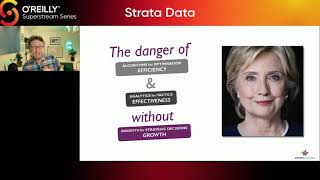
David Boyle argues that analytics should drive strategy, not just tactics. He uses David Guetta's audience segmentation and a U.S. election campaign to show how clustering audiences and asking who you're for today, who's next, and who you're not for reveals what senior leaders can actually act on.
Chapters
You're all in for a real treat. Our next speaker is David Boyle. I've gotten to know David and he's become a close friend over the last few years. He is, I would say, the most compelling voice in real world examples of using data to make wise decisions. From predictive analytics to understanding audiences. David is the expert in taking information and turning it into useful conclusions and insights, whether you're talking about customers, audiences, or the world at large. He's done work in politics. He's done work at record labels and publishers. He's even helped out some of the world's famous luxury brands. He has the best understanding I've seen of how to grow based on your audience. He also ran analytics at the BBC, for example, and Masterclass. And he now runs a band of brilliant analysts at Audience Strategies Using Data to Drive Growth for Brands. He is here to talk us through some real world analytics case studies, everything from pop stars to presidential elections. Please join me in listening to the fantastic David Boyle. Hi, David.
Hey. You are far too kind, but I'm happy to do my best. So today I'm going to reflect on some of my time working at big global entertainment companies mostly. And whenever I get called in because somebody is not happy with how the analytics team is performing or the results they're causing for the business, I think there's three big lessons that stand out to me to really make analytics for work. And so very simply, three big lessons using two interesting real world examples. And we're going to start by talking about this man. So I was lucky to work with David Guetta nearly 10 years ago in the music industry. And at the time he'd been incredibly successful. He was a superstar in France and in the rest of the world, though not so much yet. And so the question was, where is the next phase of growth coming from? Yep. That's a question that many startups and many established companies are also asking, hence the usefulness of this question. So the key to really understanding how to drive the next phase of growth was to take his audience and not see them as one big lump. Not look at averages, but to group them together into useful, different types of people. And when you take the audience, when you clustered it, segmented it into different types, some interesting themes emerged. And there were three audience types in particular that really stood out. One we called Nighthawks because they were super into electronic music as the soundtrack to their night out. One we called Pop Idols because they were super into electronic music in so much as it was a soundtrack to their life and it fit in with all the other pop music they listened to. And one who were not that into music at all. We called them Casuals, but they were kind of into David Guetta when we played the music. And when you see the audience through this lens, you can do some interesting things, make some bolder business choices and, and creative choices in this case as well, such as this album where you'll see disc one in the days of cd. Disc one contains loads of big vocal hits with famous artists. And that's really designed to get the Pop Idols and the Casuals on board, as of course it did. But you also notice you can look after your existing audience and make sure you keep talking to them. And disc two illustrates that perfectly, which is pure electronic music. No vocals, a couple of guests, but really pure club electronic music. That's to keep the Nighthawks on board. So when you look at David Guetta's audience with this extra knowledge of these audience segments, you can put things into context. All of the previous growth suddenly you can explain away by being the Nighthawks who had successfully reached, maxed out and. And had achieved all the growth he was going to achieve. Got to keep them on side, but also you've got to reach new audiences. And that was the Pop Idols and the Casuals with that one album and those two discs being just a tiny fraction of the things he did to go get Pop Idols and Casuals. So having this clarity really allows you to do things differently, gives you extra confidence. And the general lesson I take from this story and one of my three lessons for how analytics can really be powerful is to ask these three questions for any business. First, who are you for today? Who is your audience right now? And for David at that time, outside of France, it was the Nighthawks. Keep looking after them, but also do what you need to do to target the next audience. Question two, who's next? And for David at that time, outside of France, pop Idols and Casuals. And you can really do a much better job of going after them when you separate them and look at them in isolation, but equally critical because that wasn't. They weren't the only clusters that we found. Be really clear who you are not for today, at least maybe in the future. And you don't have to waste time targeting them and you don't have to average the product you put onto the market by trying to please everybody that was post music, disenchanted tastemakers, orphans, pre cash. You get the idea with lots of people. And that is how you use audience data analytics to Be much clearer who you're for and to drive growth in your business. Now let me step back from that a minute and ask. One of the things that we did there and one of the things we did was to not confuse analytics to drive efficiency or analytics to drive effectiveness, even with analytics to drive growth, which is what I think the David Gutter example is all about. Now this is a classic mistake that many businesses make. I was sat with the leadership team for one business this morning and their questions just kept coming back to how they might use analytics to do efficiency and effectiveness. And I kept trying to say, no, no, no, you, you need to use it for these things instead. So let me explain. The people's gut is always to use analytics for tactical optimization. Questions like marketing effectiveness, ad targeting kept coming up again and again today in this conversation. Even like recommendations, algorithms, what content should I recommend to somebody? These are really interesting problems, relatively easy to solve, but they're tactical, they're for efficiency. They're not going to make big differences. Let's move on to effectiveness, maybe pricing or like more interesting and larger growth hacking opportunities. These are bigger, definitely. It's maybe their effectiveness, but it's still not the biggest impact you can have. It's not what we did for David Guetta and it's not what we do for every business we work with, which is to focus on insights that drive strategic decisions and help you to grow. Questions like the David Guetta example, what types of audience am I for? Which countries should I target? Which products should I develop? These are big strategic questions and everybody's tendency is to focus on the left where algorithms, optimization or even analytics come to play. On the right hand side, it's harder. Analytics needs to drive in insights that David or people like David, senior leaders can carry around in their heads to make growth decisions. It's much less tangible, much more strategic. But the prizes, the growth is much, much bigger. So my first lesson from today is to ask those three questions, who are you for? Who's next? And who are you not for? My second lesson of the day, which I come back to again and again, is to try not to focus too much on efficiency and effectiveness, which are easy, and try and do the harder problems around finding insights that allow you to grow in big and interesting ways. Because if you're going to grow in big and interesting ways, it's going to be uncomfortable. It's not small changes, it's big changes. But David, it was a whole new audience. These are big creative leaps. And the problem is that optimization, efficiency and effectiveness are just not going to get you there. It's only these big insights about whole new audience groups, strategic recommendations like that that are going to give you what you need to make those big leaps to really find growth. Now I want to use it slightly uncomfortable example which fortunately now seems like ancient history, but tells the perfect story of where this can go wrong. But whilst looking like everything is going right. There was an election many moons ago and at the time the most data savvy, data driven, sophisticated analytical team that had ever existed in American politics were running that campaign. I mean, it was stunning. The work they did and the power they had, the data and the algorithms they had access to, unbelievable. But of course they were surprised by losing the election. So something wasn't working in the analytics if they didn't see that coming. And I've got to say I had no knowledge of what that team were up to at the time. But I do have a background in Democratic political analytics. It's, I'm pretty sure I know what happened. And that is about focusing on algorithms and analytics which are all about efficiency, like how do I get the right messages to the right people, or ad targeting, maybe effectiveness marketing, channel optimization, message optimization, things like that, but without the kind of uncomfortable big picture insights that really allow you to grow without really deeply understanding audiences. And I got to emphasize quite how data driven this campaign was. There's lots of quotes in Hillary's book about the election. I like this one. Hey, hang on. If our data or anyone else's had shown that we were in danger, we would have done everything differently. We would have gone to the states that lost us the election, didn't know we were blindsided. So what's absolutely not true is that they weren't data driven. It's absolutely not true is that they weren't smart and brilliant. I think what's true is that they weren't focusing on the difficult strategic problems, they were focusing on tactical optimization. And again, I see that problem in so many businesses these days because it's the tactical stuff that's relatively easy to do. And so I want to make sure there's lots of time for Q and A. So I'm going to just make one more important lesson that I think is critical to the whole thing. My third and final lesson. And then we'll take, hopefully you've got lots of questions. We can get into this in a little bit more. But if we reflect on both the David Guetter example, which is like understand your audience and if we reflect on the Hillary example, which is about optimization and overall audiences. One critical lesson comes from both of those as well, and that is that you should cluster, segment your audiences to really understand who the different groups are, not who you think they are by drawing subtotals or demographic groups, but who the data tells you they are by allowing audiences to cluster themselves based on having similar behaviors. And whether you do that using polling or research data, whether you do that using Twitter data or other social media data, if you can get your hands on it, or whether you do it using transaction data, as we've done recently for lots of large retailers. When you cluster your audiences, really important and really interesting audience groups emerge, and it gives you the power to relatively easily help artists or brands like David Guetta to understand which you're winning in and which are next. And I would argue that absolutely would have given Hillary Clinton and her team the power to understand again which audiences they're winning in and which audiences are turning against them. When it's lost in an average poll of the average person, it's lost when you look just by demographic groups. But if you cluster and find natural patterns, I think that would have emerged. It's like a magic wand. I can't recommend it highly enough. Never look at audiences. Always look at clusters of audiences. And my tagline for this is that we definitely, definitely should be clustering everything. So again, on reflection, after lots and lots of brands and businesses, always understand who your audience is and who's next. Always focus on strategic questions, although they're harder to do than the tactical ones, and then cluster everything. My advice.
Thank you so much, David. Always a pleasure to hear you talk about these things. I know you told me once about another musician who you sort of sat down with and said, hey, you have these other groups. In that case, I think it was Snoop Dogg. When do the artists get it and when do they say, no? I want to adhere to my sort of corporate vision or creative vision or whatever, because it does seem like you can lead the horse to water, but they're not always going to want to drink the flavors you're suggesting.
That's such a good question. I mean, I think what shouldn't be a problem, but often is, is getting them to understand where the opportunities are. And so if you do bad work or if you badly explain the work, then you'll have problems convincing them where the opportunities lie. And I've seen that in the past, but it really shouldn't be a problem. So first, like, if that's a problem, then you got to Fix it. Where I think we got to with a lot, I think of one major artist actually probably can't say the name, but like a globally famous rock band from the 60s and 70s, and we walked their manager through where the opportunities were, which audiences presented opportunities, and we were saying, therefore, to get that audience, therefore you should do this thing. And what he said I thought was brilliant, which was, okay, David, thanks. We get that that's an opportunity. We get that if we want to realize that opportunity, we should do that thing. We just don't want to do that thing. So no problems, let's move on. I just thought that was absolutely brilliant. But we shouldn't be debating where the opportunities are. We shouldn't be debating what we should do to get those opportunities. There is room for creativity in both of those, actually. We should be debating whether we want to go get those opportunities or not. And this helps that lap, that conversation to be had much more clearly.
I guess if organizations have a good sort of mission and vision and sense of their own brand, then they can prune the tree of opportunities much more quickly. I'm thinking of another pop star, Avicii, and what he did with folk music. So Vici had this whole like, you know, wake me up and hey brother. Where he showed up at the Miami Music Festival and started playing folk music. And people were like, what? But it turned out to be hugely successful. Sometimes that kind of serendipity is non obvious when you find those audiences. I guess this is sort of grist for the mill. But nobody said, hey, there's a folk audience out there that would like or the mainstream is ready for folk with an 808 in the background. It seems to me like that serendipitous process can be informed by analytics in some ways. Have you seen cases where the clusters sort of make the creative process work better?
Oh yeah. There's one fantastic example, another global electronic music artist that you would all be familiar with. I don't want to name names, but. But we sat and looked through the similar work with this artist and I made a flippant joke about one of the segments because there was something, there was a particular genre of music this one segment didn't like. I made a particular joke, hey, don't go there. They hate that genre. You know, that's my interpretation of what you should do as a result of the data. And this artist, super confident in their vision and their style, had this big smile on their face. And I said, why are you smiling? And he said, ok, I'm going to Change that. You know, I'm going to see this thing that they hate. I'm down well, going to make them love it. And I just think that is such powerful leadership. And I've worked with a lot of brands and luxury brands and others as well as lots of artists. And I think there's a tier of leadership in any business or any artist that will do that kind of thing that will say, I see the opportunity but I don't want to do it because it doesn't fit my brand or I see that and I'm going to interpret it in this way and achieve this goal with it. That is brilliant, creative leap taking. There's another tier that say, just tell me what to do because I just want to know what to do. And artists like that, and also brands like that really worry me because you're just following the crowd. Right? I think that's a big.
This isn't the name obviously, but let's say someone had said to country music, Taylor Swift, your audience hates dance music. And she'd said, I'm going to change that. It also means that you have a much bigger attack surface versus other country artists in that case, because if you're the one that can break through that, nobody else is also going to be putting out the dance music country album that year because they've all been told. So I guess there is the value of constraints that if you can win in that constrained environment, then you have a blue ocean in which to expand. I want to switch to your examples of politics here. Talk about the use of audience strategies to understand your competitor because clearly they didn't know there was this other political candidate who was very focused on growth and land grabs and what new things had happened. And in many ways the traditional role in America of the Democrats are for the working class and the Republicans are for the rich. You know, straight, white, conservative, male kind of thing had flipped in many ways. Where now you had sort of the rise of the techno, highly educated billionaire donating to Democrats and then the working class trying to find a job, seeing their communities fall apart under opioid crises and so on. There was a complete flip. And so it's not just about the common wisdom, but also about using clustering and analytics to understand where your opponents might go. Can you talk about that and the sort of flip side of understanding your own audience?
Yeah, I mean, I think the first point is that the traditional lenses through which we want to think about audiences are not nearly as powerful as we think they are. Age, income, college education or not in and of themselves, they're interesting, but not that actionable. And my point being, you said clustering audiences, far more powerful subgroups emerge that are much more actionable. It's much easier to identify trends and to see what you might do differently. So I think had they done clustering to find organic audiences that were, that were individually very like minded but different from each other, they not only would have been able to do what David Guetta did, which is to say now next and never monitor your progress, which we did for David every three months, but which you could do now in real time, monitor your progress in each cluster, message test in each cluster. But you could also do the same thing for all of the other candidates in the race. So hey, in cluster one I'm scoring X, but the other candidate is scoring Y and that make it and they're making progress. And I think you would see these trends cluster by cluster that are lost to you on both on population averages and on, on these artificial subgroups that we create like age and gender. And I think the only reason we look at age, gender and those other things is because they're easy database cuts to do. You could drag it into a report field and push go and it runs. But if only there was the ability to say cluster and then drag that into the report field, we'd be able to look at more powerful ways. So yes, your brand.
And many times when we're buying, when we're buying data, as was mentioned by an earlier speaker, those fields are the ones that are common because they're not sort of considered PII in many ways. Okay, time for one last question. And I'm being greedy here and asking all the good ones, but I'm paraphrasing some of the things I'm seeing. We used to talk about data in the, you know, define the schema, collect the information, go to the analysis. Now it's sort of collect the data, define the schema because it's emergent from, from the properties that are in the data lake and then do the analysis. And so the old model of hierarchy and categories and naming your columns up first versus the new model of labels and hashtags and what are the trending hashtags within this body of data changes the sort of thought process. And you've been doing this long enough to go from what information do I have in a record label and the knowledge they have of sales, which is just what was given to them by the channel, to what hashtags are now trending on social media and how can I find them. How has that changed analytics going from structured data to emergent analytical data?
Yeah, that's such a stew observation and radically is the answer. I guess what I would say is, well first you need to recognize this and learn from it. Definitely. But don't underestimate that first way of thinking where you, where you manually decide what's useful and what's not. What you wish you had, what you didn't wish you had. Because then creating, deciding which data to feed into the model and which not to, or maybe more technically like how to normalize some of the data fields or to make sure that certain attributes aren't over represented in the model by an abundance of data fields for which that attribute is correlated with, you know, that's incredibly, incredibly important still. So for example, we worked with a big global retailer recently and their data science team really struggled to cluster their consumer their transaction data in meaningful ways. We took a much more editorial view to which fields to include and how to group them and we relatively quickly found a quite powerful clustering solution. So I think yeah, you have to see what emerges, but you also have to edit it and curate it manually and that's. That balances the magic.
It does keep coming back to this idea that the two things are definitely related. So that's fantastic. Thank you so much for this. Always a pleasure to hear these stories and you have so many fascinating sort of stories from the trenches. So it's nice to see this stuff being concrete and maybe get a little reflected glory from all the fame out there. And the best way for people to find out more and follow you is.
Yeah, Twitter, which is my middle name, Beglen. B E G L EE N or LinkedIn is great as well.
Fantastic. Thank you so much David for being here.
More from David




How Can ChatGPT & AI Help You Make Your Business Better? - Guest: Marketing Strategist, David Boyle

youBEAT Cafè - Prompt for Artists / AI Revolution / ChatGPT with David Boyle (Audience Strategies)

Now that's Significant - Ep 52 - Reimagining the Future of Marketing with AI - David Boyle




