JYBV5185.MOV
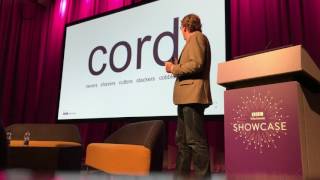
David Boyle argues the media industry is in a Cambrian Explosion of new discovery and distribution. Pokemon Go, Snapchat, and Planet Earth 2 show that big branded hits still win, but attribution and discovery are getting harder. He calls for investment in new routes to market.
Questions this video answers
February 20, 2017.
158 million daily users.
10 days.
75 years.
13 years.
Chapters
Well, good morning, everybody. I think it's my duty to welcome you all to Showcase. Thanks so much for coming. That's a round of applause for all of you for being here at 8:30 in the morning as well to look at some data. Thanks. The world is getting so much more complicated. I think I said that last year. I'll explain why I'm saying that again in a minute. It's also getting a lot more exciting, don't you think? It's been a hell of a year. There are so many fantastic things that have happened in our industry and I'll talk about some of those. So last year, I think when I talked about how scary the world was, this year, I think it's a lot more upbeat, it's a lot more exciting, but there's still an awful lot of change happening. So I'm going to start Showcase by talking a bit about what's happening in our industry, trying to explain some of the mysteries that we're seeing. If you don't see the underlying patterns and the underlying trends, even some of the exciting things that happen are somewhat of a mystery. I'm going to tell you why some of the things that have happened in the world have happened this year, so broadly. There are four themes I'm going to touch on today. Innovation and all the extreme exciting things that are happening with new business models and new opportunities for us. Complexity. All the additional business models and these different challenges are making our lives a little bit tough. Attribution. So the difficulty of consumers finding or remembering where they found great shows. And finally, super content, these amazing shows that bubble through and that make a huge difference still. So, to start with innovation, the key thing here about all this innovation, I think, are the immense opportunities that are created by it. Immense opportunities. So whilst it used to take an awful long time to build businesses, it took 75 years for the telephone to reach 50 million people. It took 13 years for the TV to reach 50 million people. It Took Pokemon Go 10 days to reach 50 million people. And for anyone who's chasing the new Pokemon they released over last week, there are some really cool ones around the arena. I'll join you afterwards. But these new businesses come out of nowhere and it's about content consumption. It's also about the way people market, the way people consume, discover and the way people share our content. It impacts us across, across all of the things we do in our business. And increasingly the lines between discovery and consumption are being blurred anyway. This is one of the trends that we're seeing and it's going to continue. For example, if you take Planet Earth 2, which was a fantastic hit in its own right, we've just announced and just launched on Friday this fantastic partnership with Snapchat. Snapchat, which came out of nowhere, 158 million daily users. Remember I talked last year about how exciting Snapchat was and the need for us to innovate in how we deliver content. The need for all of you to think about Snapchat as a marketing channel. And of course now we've done exactly that. So in the airport on Saturday, I was playing with Snapchat and up pop planet Earth 2. I was able to watch the best of series of exclusive never otherwise seen footage episodes four to six minutes each. A great way to actually consume episode by episode versions of Planet Earth 2, but also a great marketing tool to get me deeper into the show. Really fun, really interesting. And in the environment where I already was. That's a lie. I don't know how to use Snapchat. I did it just for the purposes of this. Younger people were there already and they can see. Additionally, as a result, I managed to find it though. I was pretty impressed. And this change is really going to accelerate. This is one of the important messages from today. So we know all about these digital natives. They were born into digital technology. Digital consumption is their thing. We know that they're disrupting everything about our industry. But there's four more reasons. I want to show you why that this is going to only get faster and faster. The first is the older people. That's mostly us, but there are some digital natives in the room. The older people are gradually learning how to use Snapchat, Netflix even, and other digital channels. They're shifting their behavior slowly towards the behavior of digital natives. Also, of course, you've got younger kids growing up becoming digital natives. So the pool is growing. You've obviously got the increase in connected devices. Pretty soon everybody in the world will have access to the Internet in their pocket and another huge pool of people pulling on these new digital services. You've got access to data and code. So if you're building digital services, they're pretty easy to build now the components are all there, easy to put together. That wasn't the case just a few years ago. And finally you've got what we call the digital native feedback loop. So digital natives are now becoming old enough to build their own services. So no longer are they relying on the services that we have built for them, the services that we thought they would probably like. They're Building their own based around their needs. And so this change is accelerating. This is exciting because it's tons of new opportunities to help people to discover and engage with our content. It's also somewhat scary. I think this change is going to accelerate even more, though, and I think we're at a really interesting time in this change in our industry. To really understand that, though, we have to go back about four and a half billion years to the origins of life itself. Here we are today, four and a half billion years ago. There appears the Earth, there appears life on Earth. Then not very much happens for quite a long time. I'm going to talk more about this Cambrian period in a second, you'll be pleased to know, but not very much happens. Single cellular life. It's lovely. Nothing much happens till here. The parallels, of course, being our industry with tv, where there was lots of innovation, or it felt like there was at the time, but we were, I think, approaching this point now. It's called the Cambrian period and they refer to this as the Cambrian Explosion. Almost all basic life forms that we now know appeared during this quite small window, 40 million years. And the reason it all happened here, the reason that most forms of life on Earth, basic forms, were created in this period, is because all the building blocks were there. Suddenly all the basic elements of life were already there. The environment was ripe and suddenly everything happened. Then whilst there's tons of really interesting stuff that happened here, dinosaurs were over here, they were quite cool. The basic life forms were already existing and it was innovation around those basic themes from then onwards. So step change in life on Earth and then innovation within that change afterwards. So this is the pattern for life and I think this is what we're seeing in our industry as well. So I think we're shooting now, or at the start of what we might call the Cambrian Explosion for technology in our industry of discovery, engagement, consumption and sharing, we're at the start of that. It's exciting already. I think there's going to be more to come. I think the foundations of the future of our industry will be laid in these coming years. Hopefully it won't take 40 million years for us to do that. Complexity then, tons of complexity in the market as a result of this innovation, which is largely more roots to market, whether it's discovery or consumption. So TV channels, which we used to worry about in a huge way, they're not dying at all. They're not just alive and healthy as decipher. UK media analysis companies say the role of the Linear Scheduled Program Guide is In fact, vibrant. There's tons of innovation around linear tv actually making it even more exp. Exciting and even more accessible, even to digital natives. And then consumption of media is growing in aggregate. TV is slipping a little bit. But what's being more than made up for in tablet and smartphone? Consumption of media. Consumption of media is growing. We're at a really exciting age. More and more opportunities. And while we used to worry about cord cutters, it used to be the thing that we worried about. Of course, now we know that's way too simple a story. The real world is way more complicated than that. Who heard of cord cobblers before today? Yeah, me too. There's lots of articles about it. I found it during research for this. The definition's almost not important. What's important is the story is complicated. There are lots of different routes. And the simple story we once worried about called cutting, turns out not to be the most interesting story at all. In part because people who drop linear tv, whether you're cord cutters or cord nevers, are the least satisfied with the TV they get at the end. A rich and diverse set of TV for a rich set of providers is by far the most satisfying. So, yes, you can save money by cord cutting or leaning too heavily on SVOD services, but a rounded mix of consumption makes people happier. And three ott services turned out to be the average for millennials. For the leading indicators in our industry, lots of great signs that all these new opportunities are being created. So, to touch on attribution, then. So how people find content in our world, it's an immense challenge for people because most people are nowhere near paying as much attention as we are about which channels content goes out on. How you find content in this complicated world is really. It's a real challenge to the point where I was astounded by this. The average person, there's never a good use for expanding text in a slide. This is the only time it's appropriate. The Average person spends 1.3 years looking for something to watch on TV, flipping channels, looking around. There's huge opportunities to improve attribution and discovery. And 54% of millennials say that they have show dumped. Another phrase I've not heard of is ditching a show after a couple of seasons because it's not on that service anymore or it's switched services, it's gone somewhere else. Finding shows and remembering where your shows are and keeping track of your shows as they move channels is a real challenge these days. But we know some of how we solve this problem. Research done by BBC in the UK helps us to understand how people discover and find content these days. This helps to look at three different types of audience. So first followers, then mass mainstream, then the early tech adopters. For the followers. We know these people, they're us and they're our families. Mixed genre channels and EPGs and broadcaster brands are really important to them. So that's fine. We understand that if you get closer to the early adopters, it starts to change. Single genre and audience channels, TV everywhere services start to become incredibly important. The go to place to find shows and as you get to the early tech adopters, that's where they start to lean on SVOD brands. But more interestingly, these program brands, franchise brands that we know and love and that you're going to hear a lot more about over the next couple of days and also talent as a brand. So these brands are really cutting through in their lives. They are the things that look to, hence the final topic for today, hence super content and the rise of these brands that people know and love and that they can follow comes down to a very simple, obvious point that all of you know that great stories told well, really resonate with people and I would add, marketed brilliantly as well, particularly in this age. And it's not just in tv, it's not just in our world. If you haven't read the Economist special report from last week, I urge all of you to read it. It's on our broader industries, on entertainment, and it talks about the difference between expectations in the digital world that niche content would be everywhere and everyone would personalize their consumption and the reality which is that people are going more and more to big brands, big franchises, big shows or movies or video games that they know and love. So whilst technology has given billions of people access to a vast range of entertainment, they still go mostly for big hits. It's really interesting, counterintuitive to anyone working in digital. They give a great example from the film industry. It's not our industry, but I think it's fascinating. And the point is, across all entertainment industries, if you look over time, the share of box office revenues that come from the big movies, the top 1% of films has grown and grown every single year. So the hits are getting bigger and bigger across all entertainment industries. It's really interesting. So the problem of discovery, people are going more and more for big hits and we come to one of our biggest hits, Planet Earth 2. Now this is one of my, two of my favorite headlines. The Planet Earth 2, because it did so well in some relatively unexpected ways. And more young people are watching Planet Earth 2 than X Factor. Different ways to write that headline, but the same thing. Amazing, amazing performance, great stories told and marketed brilliantly. Really cut through and they get bigger and bigger. So bigger and bigger. The most watched Natural History title in the UK in the last 15 years. I won't read all of the points on the slide. You get the idea. Unbelievable concentration around this great, great, great content. I might draw your attention and say thank you to those in the room. Because it did so well in other countries, in Germany and the Netherlands, it won its time slot and double the slot average in South Africa around the world. And of course, now it's broadcasting in the U.S. as we speak. So in a time of hard to find content and attribution problems, the big shows are bigger and bigger. And it's true in drama as well. So the same challenge exists. We're up 32% on the number of dramas globally that were launched 2016 versus 2012. A huge increase in the number of the amount of content that's available. You'll hear more about that later on. It brings us, of course, to Sherlock cutting through again in this difficult environment in these tough times, outperformed the BBC1 slot average and primetime shares by 51% and 68%. And not just that, but the most talked about drama on Twitter in the uk, which I think is fascinating, since one of the episodes was at the very start of the year, one was at the very end of the year, which was means nothing in the middle of the year, came close to. It really was the entire year. So great stories told brilliantly, really, really do cut through. No surprise when you have the story told so well. These are some of the words described that describe the show from fans of the show afterwards. So gripping, exciting, emotional, just great stories told brilliantly. So, in summary, there's a few things first, you've got to remember you can't avoid this unprecedented innovation that we're in the middle of. I think it's only going to get faster and faster. I think we're at the start of this Cambrian explosion, but all the building blocks of the future of television are going to be created, are going to be in place in the next few years. So the literal examples of services and ideas might not sustain, but the basic fundamentals of them will. So now is the time to pay attention, to support new business models, whether it's marketing or sharing or whether it's content consumption. So a period of unprecedented innovation and opportunity, which gets me very excited, leading to many, many more routes to market. This is a fantastic opportunity for everybody. We used to worry a lot about cord cutters. We used to worry a lot about cannibalization of one new route to market versus another. I think we can see that things are flourishing and there's many more opportunities for everybody. That does mean we're in a tough time when it comes to attribution to people, finding shows, following shows and continuing shows season on season. So. So we have to remember how people do that. And particularly digital savvy tech natives. It's about brands, it's about franchises, it's about big, big moments, which comes back to great stories told well but also marketed brilliantly as well. Which is why we spend so much time trying to understand these new methods and tools that consumers are using, why we spend so much time innovating. And things like the Snapchat partnership with Planet Earth 2 might look very simple and glossy on the front. On the back end, it's incredibly hard work through the whole of the content supply production process to get deals like that done. It's really hard work, but it's why we need to all invest time and effort in new opportunities like that. So my summary of all of this then would be the there really has never been a better time for great stories that are told and marketed brilliantly. Thank you very much.
More from David




How Can ChatGPT & AI Help You Make Your Business Better? - Guest: Marketing Strategist, David Boyle

youBEAT Cafè - Prompt for Artists / AI Revolution / ChatGPT with David Boyle (Audience Strategies)

Now that's Significant - Ep 52 - Reimagining the Future of Marketing with AI - David Boyle




