The Insight Team of the Future | David Boyle at TMRE (25th May '16)
David Boyle argues insight teams must stop hoarding measurement and instead partner with specialized startups through a Labs program. He points to tools like Google Trends and Paranalytics as part of building an ecosystem that embeds insight professionals earlier in business decisions, not just reporting after the fact.
Chapters
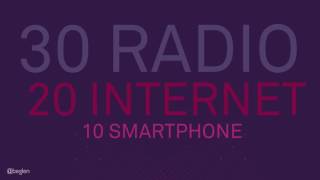
Today, David's going to talk to us about leading the Insights team of the future. So please help me give a Warm welcome to Mr. David Boyle. So I found myself working in Insight a few years ago, maybe five or six years ago. Before that, I was in analytics, data analytics, before that with corporate strategy, that kind of thing. When I dived into the world of insight, looking after an Insight team, changing an Insight team, I thought it was an immense challenge. But at the same time, it was really easy to see how to do things differently. Really easy to see the kind of tools and capabilities I could bring from other industries and other parts of the business. We had a really clear business need, a really clear business. I had a lot of fun. We achieved loads. It was great. I think since then, an awful lot has changed. Just in the last few years, an awful lot has changed. There are so many more challenges on what we do as an Insight team, and there are so many more opportunities presented by all these changes in the world that I think not only has everything changed, but everything is still changing really, really quickly. I think this is a really fun opportunity to take on my run in time to think about what some of those challenges are that we have to retool our teams to overcome and what some of those opportunities are. I think there's never been a more difficult time to do what we do. So well done to all of you. I think there's never been a more exciting time to do what we do. Hopefully we'll share a bit of both of those things as we go through the presentation. So the first note I wanted to set is about this complexity that we see in the world today. This is the first challenge that I think that we're facing, that our businesses are facing both in Insight, but also in the wider business. But I just don't think was the case a few years ago. This is the first thing we need to recognize. If you look, for example, at how people spend their time online, just the other day I was in a meeting for another organization and it was a presentation on their new website. They spent all this time and money enhancing their website. It was great. But what they didn't touch on at all is that people are now also spending their time on these things called social networks. And in terms of our presence online as a business, we kind of need to be active and present there as well. What it didn't touch on is that people are also spending quite a lot of time on these cool things called apps. If you haven't tried them, I think they're pretty exciting. People are spending lots of time there. We need strategy there as well. And it didn't touch on the fact that people are now spending tons and tons and tons and tons of time in these things called messaging apps like Snapchat or Messenger and those kind of things. So we were spending awful lot of time. We were very proud of ourselves with this new website as part of the organization we put together. We totally hadn't addressed the three other places people are spending their time. We have to do all of these things, have to be present in all of these places if our brands are to be relevant to places people spend their time. So let's do a little experiment. Who's proud of your organization's websites? Come on, lift your hand up. Getting you energized in the morning, right? Keep your hand in the air. If you're proud of your company's presence on social networks. I am. Yeah, some 50, 50 some hands went down. Keep your hand up. If you're proud of your company's role and presence in apps. I'm going 50, 50 again. Keep your hand up. If you're proud of your company's presence in messaging apps and the likes, you do have one. Hope you're running a session on that later. The world is changing. The world is getting a lot more complicated and it's hard for us to keep up. It's hard for our stakeholders to keep up. This cut in my wife sent me the other day because I've been harping on about this thing called Snapchat from the New Yorker. Looks like another case of someone over 40 trying to understand Snapchat. It's how I feel. I'm not yet over 40. That's how I feel. It's how our stakeholders feel. But it is where people are spending their time. And it's our job to help our stakeholders to understand it. It's our job to help them to be present and our brands, our product to be present in these new spaces. So overwhelming complexity that's in kind of marketing. If you look at the world of TV where I spend my time these days, that's got just as complex as, well, some of the people I work with remember a day when our job was to understand tele and these things that were computers that were sometimes connected to an Internet. It got a lot more complicated with Pay broadcasts and EPGs and PC video on demand services. And it got even more complicated with all these other innovations and other ways of consuming and engaging with content. And today, the ecosystem by which you can engage with the scale, discover, try and consume. Tele is so much more complicated than it was just a few years ago. Because it's so integrated with social web apps, it unlocks or requires us to unlock a whole new set of capabilities. Digital web analytics, cross platform analytics, these are whole new skills that in the TV world just weren't present and weren't required just a few years ago. And now the insight team, who are used to looking at things like Nielsen ratings and who are used to looking at doing things like quant research and qual research, suddenly the insights means being asked about web analytics and cross platform measurement and all these things. It's skills that we've never had to have before. Capability we've never had to have. It's an immense challenge for us. But if we don't adapt to understand measurement, analytics and user behavior in all these new places, we're not doing our job. We're continuing to do a small part of our job and we're not evolving to widerly into the organization. It's a huge challenge for us. And I'm sure the same applies in most industries. I'm sure you drew a map of how people purchase goods in retail and the changes that have happened over time. You have something similar to the increasing complexity. But it's not just that things are getting more and more complicated. It's that things are changing faster than they ever have before. It's not just you that feels a little bit behind the curve on some things. Is everybody? Because things are changing so quickly. Whilst it took 30 years for radio to reach mainstream adoption levels, it took just 20 years for the Internet to reach mainstream adoption levels, just 10 years for smartphones and just four years for these things called messaging apps. It's okay to be a little bit behind the curve on Snapchat. These things are new and big quicker than they ever have been big before. So incredibly complex world, incredibly fast changing. I don't know, but I feel the stress of this every single day. Being behind the curve on new innovations, behind the curve on helping our organization to understand how consumers are behaving and behind the curve, all the new Insight technologies and capabilities that are coming along at just this same speed. Certainly there were some immense challenges in this as well as some immense opportunities. We'll start with a downer complicated. It's getting more complicated more quickly. It's hard. But there are some opportunities this present so that we can work differently, we can build different insight teams and think differently about how to engage with the world. So the first lesson for me, which is for us as insight professionals, but also parallel version here for our businesses and their understanding of the world. The first lesson for me is to let go of a little bit of some of the things that we used to hold close to us. So measurement capabilities, research capabilities, we used to build those into our teams, we used to have that expertise on staff and we used to ourselves completely understand from questionnaire through to graph and meeting everything that happened in the middle. We used to have this immense control in the new world. We have to relinquish that control to experts outside of our organization in many cases. And we have to be comfortable with relation that control and building partnerships with experts who really understand analytics and measurement in much more detail than we possibly can. So this is a tough lesson. I find this very hard. I like to build everything myself, I like to understand the complete flow of analytics, but I can't anymore and that's hard for me. That's a big lesson for all of us. I think one way that we do that, that we encourage that and provide a safe space for that is called BBC Labs. And lots of companies have something similar. I think it's an essential ingredient to embracing this new world of analytics and data and opportunities. So it's an initiative where if you're a new and innovative technology of any kind, some of which are insight related, you can get onto this program. It will take six months and we'll have a safe space with some funding to make mistakes and to do things that don't work and to try things and break things. It's okay. And at the end of it, the company or the startup, the new technology or the analytics company will have learned some things from us as part of the partnership and we'll have learned some things from them. And hopefully we go on and improve the business by using that new methodology. I'll show you some of the companies that have gone through this program with us, the types of company we use. But again, the lesson here I think is let go of some of what you held dear, bring in trusted partners, crazy wacky trusted partners that might fail and try lots of new things. Out and in there lies immense new opportunities. I think it can be hard to wrestle with what the future looks like. It can be hard to understand what the next thing is we should be doing in our jobs. But the good news is that we don't have to invent that. Great smart people have already invented what our future will be. The next analytics tool that we'll use, the next research capability, the next Insight way of working. It's just that it's not reached mainstream adoption levels yet. So you don't have to innovate in the cutting edge of innovation. You don't have to invent new things. You just have to find smart people who've already worked out how to see if it works for you. So this is a quote I absolutely love. The future is here. It's just not evenly distributed yet. So that's great for us. And I would add, in terms of the companies we've worked with, it sometimes requires a bit of polishing and poking and prodding to make it appropriate for your business. So it's not for free, but it's there. You just have to partner with it. So again, I'll show you some of these examples. I think the theme from these examples though, is that they all use some kind of new cutting edge technology or capability, or data science capability. Just wouldn't have been possible a few years ago. They were all, in that sense, at the cutting edge, but they're not the kind of cutting edge that many would have you believe. So many would have you believe that computers and artificial intelligence will take over our jobs, our businesses, our lives. I think what we're seeing is a much narrower use of this technology. So each of these things is this future is computers and artificial intelligence helping us to be way smarter at what we do. But they're very narrow in scope, actually. And that's one lesson I've learned is find specific and clear problems that these technologies can help you to solve. And don't worry about trying to solve the bigger picture of this, because that's not where the future lies, at least not in the short term. So let me paint some examples for you and show you some of what that means in the real world. Very simple, very specific, very clear examples of how these new technologies, the future of Insight, is playing out for us at BBC Worldwide. And what we'll do is kind of contrast it with the old world. So just a few years ago, my team and research teams in TV businesses would have lent heavily on Nielsen ratings and the equivalent of that in different countries. Quant research, maybe a bit of qual research, that was probably about it in terms of their toolkit. That's the old world. We still have to do all those things. Unfortunately, we have to do lots more things now. And the future, when I have a new big business problem for Top Gear, which was launching on Sunday, who is the audience, which countries and opportunities? I still have to look at these old tools, but they're leading sources of insight. For me, the most exciting, quickest, richest places to go to answer some of those questions come from the new world these days, which is a big shock to me. So it's things like the digital startups, I'm going to show you each of these individually, but it's things like listening to all these digital social signals that are out there in the world, like Facebook posts and Twitter posts and Google search Trends and all these things, listening to that and then using very, very clever computing to tease out some messages from it. So that for me is the theme from the old world of very careful measurement to the new world of hey, this is noise. Let's hear, interpret this noise. This is where for me, all of the key insight is coming from these days, which again, is not what it's like a year ago, it's not what it was like six months ago in some years. It's constantly surprising to me. I do feel just as out of control as lots of other people doing this. This is where the future is. This is where the most exciting stuff is today for us, for example, this is something obviously everybody can do. Google search trailers that are very exciting, totally free, of course. It's the aggregation of all the searches that everybody does on different topics every day in every country, actually by hour amount. And it's remarkable the insight that you can pull from it. So, for example, Top Gear launching on Sunday, we've had promotional trailers released over the last few weeks to build interest in the show. New cast, new characters, new styles. And every time the promotion airs on TV the next day, we take a look at Google Trends data, very sophisticated research, and we're able to say in which countries did that promo have an uplift in demand? Cause an uplift in demand for the show? How big was the uplift in demand in which countries, which countries did that promo resonate in? How sustained was that impact of that promo? How much did it last? Was it a quick blip or did it really sustain? And then with not just the promo for the different characters in the promo, the different themes in the promo, we can pick up different uplifts. So we can suddenly get this incredibly rich, totally global view of our marketing impact relatively automatically and at zero budget in terms of cost of data. That's absolutely not how we were interpreting that last year. In fact, the proposal on my desk before we used this as our lead methodology was to field quant research in five to 10 countries the day after or the week after the promo launch and to analyze the results that is unbelievably more expensive, unbelievably less accurate, but that's how we would have done it if we hadn't switched to the new world. And it's richer and better and quicker and more flexible. Very simple lessons, right? But radical change in how we behave makes you feel a bit uncomfortable when you've been leaning on quant research for years. Makes to suddenly put that proposal to one side and say, I don't think we're going to do it this time. We're going to go this method. This is one of the things that we're doing. But there's a huge lesson there. And then another tool we're using is Para Analytics. So they do something similar to Google search trends in a sense, but they pull all of the different signals out there. So Wikipedia page views on the Top Gear page, people posting on Tumblr and commenting on YouTube and watching videos on Facebook, and all the different signals available for Top Gear or for all the different shows, and they swirl them all together. So first, very complex computing to gather all those signals together. Then very complex data science stir those signals together into a meaningful signal of how much demand was at the Top Gear. And day by day, country by country, they tell us if demand is going up and down, how it goes relative to other shows. So again, a bit like the Google example, but more proprietary within the TV industry and carefully crafted to better and richer. But again, the lesson is no quantum research, no column research. All these signals in the world, incredibly powerful. And telling us is demand for that show increasing, increasing, increasing. As we get towards Sunday's launch of the new season, I mentioned affiliate, which I've talked about at TMRE before, is still remarkable to me how insightful and simple this is and how simple the lesson is from it. So they look at things like Twitter following for your brand, and again, with some clever computing and some clever data science, they can get very, very insightful conclusions very quickly. So instead of saying, what are people saying about Top Gear? They take everybody who follows Top Gear and they look at all the other things that they follow on Twitter so that even if they're silent, even if they never say anything, just follow some brands, you can still understand who they are thanks to their other following, so they can give you much more richer insight than the service level. The example I love best, I'm going to use it again is BBC Earth, which is one of our brands, Natural History, Wildlife, that kind of thing. It's such a fantastic brand, so rich and so engaging, so Many different topics are covered and so many different subject matters from. You'll see that on the next page. Affinio when you launch a report quickly you can see all the different people who follow BBC Earth, in this case people who follow our BBC Earth brand on Twitter in the US and you can automatically segments them for you and then you have to label it yourself which is relatively straightforward because inside professionally have to do some work these days still. So you label segments which I've done here by looking at their behaviors and very, very quickly. And in any country for any brand you can get this amazingly rich picture of who is the audience for my brand and why do they care. So what content do I need to put out into the world to grow and engage the audience? And yet there are some people who are avid photographers and therefore some great photos and I better super serve them. Maybe I want to grow them and set targets, double that audience. I can try and I can measure it. There are some people who are fascinated by sustainability and environmental issues. Maybe they're less interested in the photos. But in terms of the topics I promote and the types of discussions I promote changes how you focus your marketing and your content. And you can see from the other names they're self explanatory. It's incredibly rich and powerful. But again, zero quant research required. Zero of the old tools used this thing called Twitter which I've been very, very dismissive of in the past as a source of insight data. But it's incredibly rich, incredibly powerful and actionable. So for another one of our brands, Doctor who's leading science fiction show that's been going for more than 50 years, we had a big planning session on this recently and we wanted to do a big segmentation, country by country, of who the audience is. And again, I had a proposal for quant research. This time I was absolutely sure that quant research wasn't going to be the lead thing. We were going to do research in lots of countries. We've done it. We do it once a year for that brand. We did a big deep dive just two years ago for that brand, especially just on that brand. We had a wealth of research. We were going to do some more. I knew all the methods and technologies to use. I was totally ready to go. We tried, I was skeptical. We tried this for Doctor who. It was so rich and so engaging. It matched so well to the research we had in our pocket. We decided to put that to one side and focus on this as our lead tool for understanding one of our lead brands. The most important brands globally, which was very uncomfortable to me. I had the budget, I had the skills and capabilities. It's one of my favorite things actually is quant research and the segmentation on the back of it. I was ready to go and I suddenly wasn't able to use my call skill, wasn't able to do the thing I was excited about. And in fact, worse than that, I had to lean on somebody in my team who's the expert on this tool and let them take the lead and come up with a segmentation that was very uncomfortable. Right. But this is the world we're in. Let go of the things you hold dear. Trust people and use new innovative data sources and computing to tease out this kind of insight for you. So from the old world to the new world is something we're really feeling and it's an immense, uncomfortable change. It's an immense change in what we do and how we spend our time. Another example is civic science. So they field quick polls on websites and they join all the data together on the back end. And for a given question, in this case Samsung phone fans versus Apple phone fans, they're able to tell you just the same kind of thing you get in quant research. The age and gender of different people who like different types of phones. But the benefit from civic science is because they've asked all these questions over the years of all these different topics, they can surface insights that you never would have got from quant research. So for example, after you scroll past the demographics, you get start to surface insights like on personal finances. So people who describe their personal finances as bad are way more likely to be fans of Samsung than Apple. And there's insights on movies and whether you watch news on the telly and political ideology, all sorts of things that you might not have thought to feel in quant research that can automatically, without any intervention, bubble to the top and come out as headline conclusions for you. So again, advanced computing and different data collection methods totally replacing actually quicker, more innovative and more actionable than the methods we used to rely on. So let go some control, deep breath. Sorry, I don't feel comfortable with it. So I'm telling you something that I don't feel feel comfortable with them trust people and trust these new data sources and it's okay to fail. We've had a better success rate on the program companies we've brought into our labs program than this poor chap has, which actually I'm slightly frustrated at because I've spent a lot of time with, I think four yeah. Four companies on our Labs program. Three of them work brilliantly. One is going to be a much longer burn. It's going to be another year or two before it really pays back, I think. But all four of them are going to work. Essentially. That's not acceptable. That's far too good a hit rate. We should have been trying other things that totally failed, but not pushing the boundaries of innovation. It's totally okay to fail. Create a safe space and allow that to happen. My big advice. And then where does this leave us, the Insight team in the future, in terms of our toolkit, our suite of capabilities that we have and provide to the business? My chief executive actually gave me some grief a year ago. Shouldn't be saying this out loud. He said, david, I've never worked in a business with as many Insight tools as you've built. It's lovely. Thanks. But I chill out a bit now and focus like, less is more. And it really struck me, it's like, oh, yeah, maybe I've gone crazy, right? Maybe I brought all these new technologies into the business and built all these new tools and maybe that's not the answer for, I don't know, for six to nine months, I really, really struggled with that. As an Insight capability, do we need a small number of things that are really, really powerful or do we need like 10 or 15 different tools? These four programs, companies from the Labs program and more, I don't know. On the Labs program, we're coming up to this year of intake of new startup. So I have told the program a few months ago, we don't want any inside applications. This year we've got these four we're working with. One of them is a really long burn. The other three are paying off, but they really need a lot more work to get them where we need to get them to. We're busy. I don't think we've got room for any more innovation. So this year on the Labs program, you focus on marketing innovation and supply chain innovation and other things. But don't worry about Insight. We'll take a year off. That was what I told the Labs programme a few months ago and I've totally changed my tune now, as you can tell, we actually need more. So do we need more or do we need less? I think we need more. I think the answer is we need more tools, more capabilities than we've ever had before and that we need to go back to our chief executives who are telling us to keep it simple and say, well, do you not want to measure Social sentiment. Because if you do, we need a tool and capability for it. Do you not want to monitor people's search trends to give you overnight performance of marketing initiatives by country? If you want that, we can do it. But it's another tool, another capability in our suite. It's another complicated factor. So my conclusion out of a year of wrestling with this is that we need more and more and more, and our life is going to get more and more complicated as a result of this. So the way I think of them is less like a toolkit of parts and more like this ecosystem of insight capabilities that actually all interrelate and work together. So while Affineo was our lead source for the Doctor who segmentation, for example, it wasn't the only thing we did. We looked at all the old quant research and there are some segments really well represented in the quant research that weren't represented in Affineo. So actually we had to pull them across to our final map. We had to cross check that with our transaction records by channel and by country. That way they were actually engaging with Doctor who. That added another dimension to it. So there are actually lots of different tools and capabilities that all work together to give us the answer for Dr. Who, for example. So it's less like, oh, you have a business problem, let me give you this tool or capability that meets your needs. And more like, let me draw on the range, the ecosystem of capabilities that help you to answer that question. That's horribly complex, isn't it? Wow, I like this picture of the ecosystem. There are some fallen trunks here. It's obviously an incredibly important part of the forest. Not too long ago now, someone's either killed it or chopped it down and we're letting it lie to one side. So there's going to be things that we've relied on heavily in our careers, methodologies and tools that were important to us that we're going to have to slay and and let lie as we move on to new technologies. That's going to be another uncomfortable part of this. So that means that as insight professionals, we're somewhat mad scientists of mixing together different tools and capabilities to answer specific business problems, which is another immense challenge for us, because that's not how we're built, that's not how our people are built and trained. We have some people who are very, very good at quant research, spent a long time doing quant research and to ask them suddenly to always think about Paranalytics and Google search trends and Affinio alongside quant Research when they go and meet their client is an immense challenge. It's a people challenge. It's a time and resources challenge. It's really tough. It's incredibly challenging. We have to mix all these different data sources together and present back the insight to the business. Not any one individual tool. Horribly challenging, as I said, and I've been a big advocate before of taking individual insight tools, distilling them down into very simple, actionable interfaces for our clients, just like in the Weather app. Immense amount of data boiled down into simple, actionable dashboard for you to make decisions on. I think we need these as part of our business. We also need as insight professionals, a very simple, easy way for people to request data from us, request insight from us. One of our teams has a really nice request form. I want information on this, show how it performed in this country. You know, please do some work. Here's my deadline. It's a very efficient way of interacting with the business. You need a bit of that as well. But if you're waiting for the form to come in, if you're waiting for the request to come in, then you're obviously too late. The business problem has already arisen and been structured and shaped without you. And you need to as inside professionals in the future. We need to be more upstream. We need to be in the meeting when the business problem is being discussed, when they decide they might need insights that we can help shape the requirement, help shape the problem and be part of creating that need. The analogy I thought of was Mission Impossible. You've got Simon Pegg, who's the nerd. He's like us, right? He's the analyst, the data guy, confusing guy. But he's out on missions with Tom Cruise. He's there riding the bike or at the front lines. He's not back in the office waiting for the phone call and saying, hey, can you help me with this annual review? No, he's like there. He's part of deciding if solutions are needed at the moment that they're needed and you can create them on the fly. And that's another immense, equal challenge. So we've got tough times ahead, I think. Immense complexity in the world around us. This huge change, more rapid change we've ever seen before, both in the businesses that we're supporting, also in our industry, the tools and capabilities that are available to us. My solution is to take a deep breath and to let go of some of the things we've held dear to us. Trust a network of experts around us, bringing new technologies in, helping us to do these things, build this ecosystem of tools and capabilities, leaning way more heavily on things like digital listening, then advanced data science to tease out messages from that, listening way more heavily on that than we have before. We've been talking about it for years. The switch has now happened, past tense. It is the lead source of insight for us now. Having those tools get really suggest answers to us to actually relatively narrow business questions that we can then join together by being embedded in our teams, making business decisions and storytelling across all these different data sets to try to bring insight to bear. I don't know about you, but that for me is both an incredible challenge. It scares me deeply, but also very exciting set of opportunities. So most difficult time we've had. I think one of the most exciting times we've had as insight professionals. Good luck with your version of that journey.
More from David




How Can ChatGPT & AI Help You Make Your Business Better? - Guest: Marketing Strategist, David Boyle

youBEAT Cafè - Prompt for Artists / AI Revolution / ChatGPT with David Boyle (Audience Strategies)

Now that's Significant - Ep 52 - Reimagining the Future of Marketing with AI - David Boyle




