Touchstone Research x PROMPT Workshop
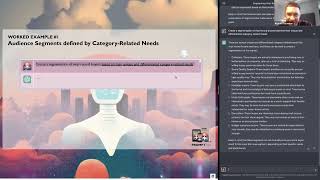
Rich and David Boyle walk through a four-step workflow for using ChatGPT in market research: understand audiences, choose segments, position offerings, and innovate. They demo with a vinyl subscription service, showing how to generate audience segments like Bargain Hunter and Audio Aficionado, then tailor products to each. ChatGPT is fast at ideation but has a knowledge cutoff around September 2021 and needs human curation.
Questions this video answers
January 19, 2023
September 2021
About a week and a bit of experimenting, plus another couple of weeks writing (total ~2–3 weeks).
Chapters
We're here for one hour, Rich and David here. We'll jump between us so there'll always be one of us keeping an eye on a chat.
Yeah.
What we want to take you through is a bit of background, who we are and how we've come to write a book about ChatGPT. I'm going to jump a bit into prompts and the chaps as a prompt because we think they give us a great structure for the practical case studies we're going to cover here. We wrote the book knowing that what's going to be most useful at this really early stage, this crest of the wave of new mainstream technology, is making it practical, getting people using it. And we're going to run through some live case studies for you today. We've got a few thoughts on our take on the future, but this, these are such early days, we're almost reviewing these by the week to see where the future might lead us. And I think the real meat of this, this hour here is this Q and A and final reflections. We'd really encourage you all to be part of this, whether it's from a completely skeptical point of view and your biggest challenge or whether it's from your front footed. Let's dive in, let's use it for as many approaches as possible. Let's share this with the team. We can't cover everything in the hour, but we'd love to set up a great discussion for you guys. I'm sure to carry on into the future. So a bit about David and myself then. We're market researchers, so we wrote a book about brand growth, but by trade we have gone through kind of classic, whether it's consultancy or research agency of learning how to do big global qual and quant research. And we've also been fortunate enough to lead insight teams at places like Unilever, EMI, Masterclass, HarperCollins. So we know your world, we love the world you operate in. When Aaron mentioned you're working with media clients, tech clients and so on, it feels like a similar world. So whilst we're trying as much possible to also help CMOs CEOs navigate this world of brand growth through AI and ChatGPT, we really hope some of this stuff resonates from a day to day working practice. And many of our case studies are actually how to do great insight which makes the brand growth jobs quicker or easier or better quality. As we go through over to David.
I can find mute. So we wrote the book, it first started off as a very selfish project which is we went through all of the things that we do every single day in our work. And we asked ourselves how or can ChatGPT help us to do those things? And if it can help, how do we work hard to make it as useful as possible to us? And we spend a week and a bit just every single day just sending each other examples. My God, it can help with this. That's crazy. No, I beat you. Look, I've made it better. Can I help with this? No, I don't think so. Hang on, here's a way it can help. And we just went through activity by activity and just found all these amazing ways it could help. And then pretty quickly we decided we were going to write that all down and share it with the rest of the industry because we just really want everybody to be a little bit better and smarter and quicker and more driven. Our industry has a long way to go still. And if we can do a little bit to help level up people and increase the reputation of our industry and increase number of brands that use audiences and audience insight, then that would make us very happy. So what started out as a very selfish project to work out how to cheat at our jobs and accelerate our own skills ended up coming, we hope will help all of you and help lots of other brands to use this great tech to put audiences at the heart of decision making. So that's what turned into the book. And the book is one thing, but we're very excited about conversations like this, so we can practically help it to be as useful as possible to you. So way more than just a book. And in terms of structure for the book, then there's four main sections. So first of all, we start off with understanding audiences, understanding markets as best we can. Second, once you've picked an audience, target that audience, decide what segment of the audience it is that you want to reach the segments that are as powerful as possible for your brand. Chapter three, you've got your target segments. Now, what do I do differently? What marketing might I do? What innovation might I do? What positioning might I do to better meet their needs? And then chapter four is how we use all of that information for bigger picture innovation, coming up with brand new ideas or brand new companies. So that's basically the kind of end to end process that we usually follow. And within each of those sections, the book goes into different types of details. Under audience and markets, we look at category related needs, which the set of language we're really passionate about for understanding audience needs. We also look at frustrations and user stories and user reviews. And how Chat GPT can practically help in all those areas. And the same for each of the other sections. There's lots of different ways in which we go about trying to help with it. And for today we thought we'd do three of these in some detail. Real practical examples will show you in action, Walts and all, and we can get critiqued and give feedback as we go through. In particular, first up, Richard's going to look at audience segments, how we identify audience needs and group them into segments and what that means and how Chat GPT can help. I'll then look at, once we've got a target audience segment, how we do positioning for a brand or a product to really meet the needs of that segment. How can ChatGPT help us there? And then Richard will pick up number three at the end, which is how do we innovate off the back of it? How do we come up with startup ideas to meet those audience needs? We're going to see ChatGPT help us with all of that whole workflow live in the session right now.
Fantastic. So I think, yeah, for all you, for your individual project, have a think about where in the, in our four chapter approach or where in that kind of value chain from stepping back and thinking about a market through to you, we've got your new idea from the client and we're taking it it out to test it. Have a think about where your project best fits and hopefully through these three really quite different worked examples, there'll be something to gain from it. And I think before we step in, I think there's a very clear world here in which ChatGPT isn't terrible and nor is it perfect. But the interesting thing for me is just how different it is at different tasks. And I think if there's one, one kind of area for inspiration here, it's to have a play. We're going to do some live sessions in a second. For those of you who haven't got access to the tool yet, we can do some live sessions. But with it, you'll see it's really good at some things, it's really great at some things, it's really bad at other things. So work out for the types of projects that you're doing, for the types of categories that you're working. What does it feel that is good or even very good at and what are the skills that you might need to place on top of that to take it, take very good or good towards great, something that's client friendly and what are the areas where it's misleading or obscure where you shouldn't even pick it up, maybe. So have a think as you go through. How might this apply to you? We'll do three very specific examples for a fixed fictional case study from our world that we love. But, yeah, have a think how this might apply and hopefully it inspires you after the session to log in and have a think about how this works for you. So our fictional case study today, we've worked a lot in music. Vinyl records are things that are very close to our hearts. So we're going to take an example from a company that we're working with. They want to release a subscription service for vinyl records. We think it's broadly a good idea, but they don't quite know quite sharply enough how they're going to understand the audience, what the particular segment to target, exactly how to bring that to life. So we're going to work that through in a live example. We're massively keen on audience segments. Some countries may do some work in audience segments, but by no means is it a prerequisite that your work. This could be a conjoint study, it could be a brand positioning and correspondence mapping study. Have a think about how these words translate into your world. We've got very specific views on how to do segmentations, just as you might have very specific views on how to do pack testing, product testing, concept testing, brand positioning testing. So we'll start really broad, which is just a single line. The book is all laid out in practical examples like this, where it's our prompt in the darker bar at the top, and then we're feeding back what ChatGPT is giving us as an example for this session, we're going to do it live. So on David's kind of black screen on the right hand side there, this is live. This is broadly unrehearsed because it gives slightly different answers each time. So let's fire up the first prompt, which is very broad. Step back. We know we're going to do a subscription service, but let's step back. Let's see how Chat GPT gets on at segmenting final record buyers. Type in the text, hit go. Takes a few seconds to think about it. I think for those of you who haven't got this far, haven't tried playing with it, I think this is often the time that the penny drops when you start to see the magic. It's live text, it's writing right back to us, it's trying to answer our question as best we can and it's coming back and saying actually you've asked us to segment record buyers, but there are probably quite a few different ways of doing it. We've got our views that a category related needs approach is the best and it's saying, hey, there's actually quite a few ways to do this. You could do it by demographics, you could do it through their music preferences, rock, hip hop, jazz and so on. You could do it by their purchase behavior, their lifestyle or yeah, online offline people who like to go into record stores and browse versus those who enjoy the rich library that you can access online. So we wanted the segmentation actually it's come back with a more of sort of marketing textbook answer. So it's not very useful for us. We get to our kind of big lesson one which is we've got to iterate, we've got to tell it exactly what we want. If we leave gaps, it will fill in the blanks and they won't necessarily fill in the blanks exactly how we want them to do it. So we've got a view that category related needs are particularly important. Demographics might be useful, behaviors might be useful, but they're just describing, they're explaining there may be somewhat historic or kind of up to now view of the world. We want to understand people's deep rooted category related needs and how they're unique and differentiated from each other. So we develop a slightly stronger prompt and again you might be working on projects time and time again, maybe different projects across the team. You might be sharing your prompts. We've got a really good prompt for helping with this type of question, this type of problem. So we've elevated our prompts and we've got a new set of text here which is create a segmentation of vinyl records. But this time it's based on their unique and differentiated category related needs. And we'll keep doing this, just coming back, underlining how we're building the prompt to make it stronger each time. So again we tear up, we pop the text into the chat feature and we hit enter and we see what.
It comes back with. Before we hit enter, I want to say that I strongly encourage everybody to give any feedback you want as you go through. So for example, if you feel passionately about demographic or purchase behavior segments, then feel free to shout and we'll try that one for you and we'll compare and contrast make sense, give feedbacks, make suggestions, critique what's happening on screen. Feel very comfortable to do that.
Cool.
In the meantime, we're happy to push on. So let's see what it comes up with.
Great. So we've gone broad and it's given us a range of answers which we weren't especially happy with, but we thought it was onto the right theme. So we come back. We've, if you like, explained this idea of category related needs. We haven't had to give loads of it. We haven't had to say by a category related need, a consumer need that's related, perhaps unmet, that's linked directly to the category that I'm talking about. So let's come back. There are several unique and differentiated category related needs. Excellent. So it's playing back the question. It's understood the term and it's come back with collectors. It's actually a specific segment we had at EMI and Universal Records when we went there. Collectors primarily interested in purchasing rare or limited limited edition vinyl records. So you're like a physical manifestation of music in the form of collecting sound quality sneakers, prioritizing sound quality. Okay, I can understand them. They feel quite different to the collectors that are more about the physical, the aesthetics of a physical vinyl and are sound quality seekers. So it seems to have understood them and they're quite different on nostalgic buyers, sentimental attachments of their format and nostalgic nostalgia of listening to music on vinyl. Okay, that sounds really cool. Music enthusiasts. So there's some sort of passion level that really passionate about music, possibly more into all kind of modes of music. But vinyl records clearly hits the mark for some of them. Are decorators interested in purchasing vinyl records for their visual appeal? Maybe they've got them on the wall. Decor conversion stars. Excellent. And then some budget conscious buyers say an element of their kind of propensity to buy. Their looking at good deals on vinyl records, maybe scouring the bargain buckets trying to find good deals. Okay, so it's done a reasonably good job. So we wanted to understand vinyl record buyers and it's just helped us understand the distribution of different needs that are in the market. Notably it hasn't sized them for us. So we definitely want to run some research on top of this, maybe some quant research just to start to size these. We'd also want to understand if these are comprehensive of all the segments in the market, say early on. We'd often conduct some qual research just to sound out all this range of needs. Talking to younger people, older people, urban people, rural people, just to get the full range. We might even be more prescriptive. Give me five more segments. You could really push and push the system just to give us more and more here and maybe there's more we could do to bring them to life. So in the last kind of worked example within this section, we're going to go a lot deeper. We're going to go beyond these, we're going to say broadly we like these, but we want more. We want to shape the format. And that's another thing you can do if you're vague with the format that you want back from ChatGPT. It will fill in the blanks and give us the answer for us. So again, just focusing on the underlying things that underlined things that we've flagged here. So we want the deep and underlying needs, not those based on demographics. So you might say budget conscious buyers are there more demographics, they're lower income. So we want to truly focus on those deep and underlying needs. We want a catchy title and a unique emoji. So these names are fine, but maybe they could be a bit stronger and see if we can push them to come back with stronger names. We want to humanize them a bit more. So think about their motivations to buy vinyl records and a unique vinyl record moment that helps define their week. So again, that kind of user story, user perspective, that's going to help humanize them. So yeah, again we can ladder up the prompt, come back with something stronger and see if the answer will do a better job of hitting the mark for exactly what we want from this first kind of first case study. Let's see where we get to with that one.
And in response to Eric's question about whether we can come up with catchy names, I've asked it to come up with super catchy names instead. So let's see if we can go above and beyond.
Okay, so we've done a few things here, we're shaping the output, but we want richer answers, we want more human elements coming through. So how's it got off to as the first start, we've got our vinyl vanguard. So an element of music enthusiasts we had before look out for new and exciting artists to discover supporting independent, lesser known musicians. Okay, what's their moment of the week? Sitting down, listening to a new record they just bought with a cup of coffee, a glass of wine, potential brand partners there fully immerse themselves in the music. Okay, so that feels a sort of rich target that I can start to think about. Again, they're not sized and I probably want to do more research to better understand them. Audio aficionado yeah, it feels like again, it's hitting on that kind of higher Enthusiasm level, remastered press and high quality vinyl. So there's a quality element that they're interested in. Their favorite moment of the week is listening at home on their high end audio system. Fully appreciating nuances of music. Nostalgia natives. They've gone beyond our nostalgia seekers I think we had before. So again it's following that alliteration through all of the answers. Sentimental attachment, fantastic, yet really clear who those guys are. Our decorators have turned into our decorators. Delight doesn't immediately scream music, so I think we might want to overwrite that one if we're gonna going to use this in some sense. But again it's that arranging the record player just display in the living room, getting compliments from their friends and family. Our bargain hunter remains. So again it may be steering a bit into that kind of demographic, kind of income or disposable income element there final moment is yeah, it's finding that hidden gem in the thrift store. So yeah, exactly what we'd imagined from before. And then the collectors club interested in those yet rare or limited edition records. So we've been through a few phases and we've got what feels like a pretty rich and pretty broad set of outputs here. We should be really clear on what we have and what we don't have. I think what we have is a broad set of inputs to inspire us to maybe help think about our own brainstorming. Maybe we run this even before we're doing the proposal or the pitch back to the client rather than when we're at questionnaire their design so we can just upload our working teams, our set of hypotheses with these, I don't think ever would I feel confident enough of these for committing them to print ever. Putting them without editing, heavy editing probably into any sort of presentation or proposal. But by iterating our prompts, by being more prescriptive with what we're looking for, it's pretty good at coming back with the breadth of themes within a market and broadly helping us navigate what is going on.
I would say usually, and I think you can see it here, maybe a third of them are brilliant and a third of them need a bit of a nudge, bit of a poke. About a third of them might need deleting and removing from the presentation. Like the maybe decorators delight. Not sure. Certainly bargain hunters. We probably wouldn't use that in the real world. So if you always think about it that way, what do I need? What's the. Can I keep anything at all? Maybe. What do I need to tweak and then what do I need to throw away? Then also after that, then what's missing? What do I add? And Richard said before you could ask for five more and five more and I bet you'd find a couple of great ones you could add to the list and then you'll end up with something that's really great.
Cool.
So we've gone through a process which might typically take months and it probably should still take months of qual looking for those missing segments in quant to size them and really validate them. You might follow a similar process, even if it's as simple as developing statements to go into a brand positioning question in a questionnaire. It might be some lifestyle profiling again to get the start of a questionnaire. It might be some kind of themes and hobbies or potential brand partnership categories to go into a questionnaire. So you can see this idea generation. The better your prompts, the better the responses will be and it's really back to your creativity about how you can use these types of tools. Jump on to works example 2 and see what we can learn about positioning.
So now we're going to work out how to position our vinyl subscription service. And we're going to start off really broad because we're going to not make a decision just yet and we're just going to ask it. How would a vinyl subscription service meet each segment's needs? In the spirit of starting with a very simple query, this prompt that doesn't require very much thinking or doesn't require any expertise, let's just see how it does on the really basic version of that. So how would a vinyl subscription service meet each segment's needs? Let's see. Vinyl Vanguard, A service would meet the needs of this segment by offering a curated selection of new and exciting artists that they might not have otherwise discovered. The service could offer exclusive limited edition pressings. That's a good idea. That would appeal to this segment's desire to support independent and lesser known musicians. Nice. Makes sense. Audio aficionados, the final subscription service could meet this segment's needs by offering remastered or high quality pressings of popular albums as well as the option to upgrade to audiophile grade vinyl for additional cost. Nice. Could also offer information about the mastering and pressing process. I like that. To appeal to this segment's interest in the technical aspects around sound quality. Awesome. I'm sold. I'm buying the first and the second of these services so far and you get the idea for each segment. It's going to do the Hard work that we otherwise would have had to do to say, hang on, what the heck could this service be if it were targeted? And I think in the real world we might do that work for one or two target segments. But would we really do that level of thinking for six different segments? Probably not. But now not only can we do that for six, we could do it for 10 or 20 or 50 or 60 if we really wanted to. And somewhere in there might be a little gem or a nugget that you never would otherwise have thought of that you can pull through. So this idea of could I have done it? Yeah, would I have done it? Definitely not. Is a big lesson when it comes to ChatGPT. But that was just our really simple version. So now we're going to go a bit deeper. Let's instead ask it to come up with five ways that a service could be positioned and let's pick one of our segments that we really want to focus on. Anybody got a segment in here that they particularly like and want us to focus on for this case study? Anybody feel at home in any of these segments?
Bargain Hunter.
Oh, interesting. Bargain Hunter it is then. Let's see what happens. That's a tough one as well, I think. So let's put Bargain Hunter in here. Underline that. Okay, so this will be interesting. Well, five ways that final subscription service can be positioned to meet the needs of a Bargain Hunter.
You stumped it.
Here we go. Budget friendly vinyl subscription. Get a deal on quality vinyl records without breaking bank. Oh, here, this is interesting because here it's really gone for like marketing positioning lines. Whereas in the previous time we asked for positioning is thinking about product features that might be well positioned for that segment. So we weren't clear which one we wanted here. And so it's really doubling down on that vinyl for less affordable subscription service for music lovers on a budget. The thrift store in your mailbox. I like it. I am going to ask it for some product features though, because I'm curious about product as well as positioning. So let me take this prompt and say with five product features that a vinyl subscription service could have to meet the needs of the Bargain Hunter segment. Let's see if it can think that through. Discounted rates for subscribers. Yeah, okay. Like old book clubs used to be use record option. Oh, interesting. Yeah. Okay. Trading program. Nice bargain bin selection. That's a good feature. Budget friendly curation. Okay. Yeah, cool. Yeah, I'd say that's a hard segment to work with. Pretty creative job both in positioning. Remember like brand Sense and a kind of product differentiation sense as well. You get the idea. Next we're going to dig in a little bit more. So let's come up with five ways that a vinyl subscription service could be positioned to meet the needs of the segment. But let's just double down and make sure that each way is really focused on the unique needs of that segment. So we're going to ask it same query. I'm going to stick with a product features version and what we're going to do is add this onto the end, make each query highly focused on the specific and unique needs of the segment and explain how this is how they are relevant. And hopefully what we'll get is maybe some different options, but certainly we'll get a lot more rigor and a lot more logic and a lot more of an explanation evidence for why they're useful. Here we go. So flexible pricing options, slightly differently worded but can choose between a monthly or annual subscription and can adjust their subscription package size to fit their budget and record buying habits. Okay, that's interesting. The feature allows a segment to choose a plan which aligns with their budget, making it more affordable. Yeah, fair enough. Weekly deals and discounts, addresses the segments need for good deals and allows them to save money while still getting access to records. There you go. So we're getting a little bit more structure, a little bit more rigor and the ideas actually should be better targeted and better thought through. The more you ask ChatGPT to justify its logic, to explain its logic and to make sure its answers are highly related to the question you ask, the more you focus on that, the better answers you get. So that's a good tip for all things, not just product and positioning.
Fantastic. I think so many times I've got to with a debrief with a client and they just want you to help them bridge that gap between the job that they're going to have to do next, which is come up with ideas and bring these ideas to market. And I think even if these aren't the best answers, I think the way that they help showcase exactly what this segment is or what the target is or what it was about that product feature that people particularly love, I think the walk in your clients shoes to do some of that brainstorming with them or for them, I think can just make presentations so much sharper at the back end.
Yeah. And I think this is also another example of the kind of thing that we absolutely could have done. But if we look back at previous projects, actually rarely do we do this level of thinking it through on behalf of the client and explaining it in that way. So I think this is unlocking a new opportunity for us to better explain how the client takes our audiences and our segments and innovates on them and the logic and the reasoning and the style they should use for it. So this is a great work beyond what you otherwise might have delivered in your role or in your company or in your specific kind of commissions.
Fantastic. Should we move on to the third area? So the third area is innovation. I think this starts to possibly go beyond market research. Definitely market research involved here in terms of testing ideas. Would I use Chat GPT to test ideas? No, it's not going to be on that. That leading front foot of explaining the potential consumer appetite for an idea in the future. What we can do though is use that approach to help us think about a segment and think about ways in which we might innovate towards them. Again, walking that walk in our clients shoes. So we want it to come up with three very different startup ideas to meet the need of the bargain hunter. Again, the rich language, strong and compelling vision. Let's push ChatGPT really hard to come up with the best answer it possibly can. It really works. We've seen in the last example we've spoken to our client team and they want us to use AI in some way. So again, just to show that you can start to shape and sharpen your ideas. Again, we've been going to be prescriptive in the format. We've got cool. An interesting name for each idea and we want an emoji. We want each idea to be compelling enough that an investor will want to invest immediately. So again, really just elevating that language to make sure it comes back with the strongest and richest answer it possibly can. Oh, are you answering the previous question there, David?
I was going to sneak it in before you did your example, but go for it. Yeah, all right. In which case the question was can it predict the demographics for a segment? So we're just going to ask it for each of the six audience segments. Can you predict the kind of demographics of people that would fit into that segment? We'll leave it worded just the way it was. I think the answer is going to be there's not a strong use case for ChatGPT, but with the right prompt it should be able to give you some guidance and give you some estimates and give you some, some logic and rationale for it. So we'll see if this works and if not we'll just Go back to Richard's query and we'll tackle this later.
We've got some more time. I was thinking either that's a difficult prompt or it's trying to remember what the six segments were higher up in the conversation.
Yeah, it should be able to remember most of what you talk about in the conversation. But the problem is, as the conversation gets longer and longer, its memory is limited and so it summarizes in its own mind the earlier parts of the conversation. It can't look them up and check from its summary in its memory. And so the conversation gets longer and longer. So the summary gets higher and higher level. So it might be struggling now. Oh, I remember there are six segments, but I can't quite remember exactly what the six were.
What if we just ask it if it can predict the demographics of the Bargain Hunter segment?
Yeah, we definitely. That would have been an easier thing for it because it definitely knows that from current, recent memory. This is actually. You can't confuse it and you can't tax it. That's not possible. So if it doesn't reply instantly, something's wrong with the system and it's not your query. Don't worry about that. There's no way to slow it down.
Are you able to cancel this out?
Oh, there it goes.
Oh, there you go. Yeah, we could have done. Yeah. So it's going to give you a caveat, which is, hey, I'm not very good at that. And there's other ways you should work out demographics. But then it's going to answer the question. Vinyl Vanguard. Younger, more affluent, highly educated individuals. Audio aficionado, middle aged individuals. So again, I'm not sure. I definitely wouldn't trust it, but for a good set of hypothesis, that's a great question. And you could be even more specific. Do you want an age or an age band? Do you want gender or not? Do you want region or country? You can specify all those things and it would have a pretty good crack at estimating them for you. After it gives you the caveat saying, I'm not very good at that. Please don't ask me that type of question. It'll do it anyway.
Yeah, it's pretty good.
And what you could do is ask it for reasons why as well and get it to justify its logic as well. Like how old are they and why. Why are you saying that? What makes you think that? And it might provide evidence and support as well. So, yeah, pretty good, I'd say. Great question. Thank you for the interruption, although, sorry, Richard, for interrupting your flow.
Brilliant so let's go with this. Let's move beyond our bargain hunters because I think we can see they're going to be budget conscious. So let's maybe go for one of the more affluent, maybe go for our audio aficionados and see whether we can understand them better and start to innovate for that particular segment.
Let's do that then.
So it's jumping straight in. We asked for three very different startup ideas. It's naming them, it's giving us our emojis. So our audio audio files.
Delight.
Final subscription service that uses AI curate a personalized selection of high quality pressings popular albums. Vision is to bring the ultimate listening experience. Sounds good. Perfect records for their specific audio setup and preference. Okay, so it's understanding their setup and giving us the right needs. Vinyl AI. Not many marks for the creativity on that name. So subscription service uses AI scour the Internet for the best deals on new and used records, delivers them to subscribers. Democratize access to high quality vinyl records, make them more affordable and accessible. So maybe an element of the budget conscious in there, maybe less so about the segment that we were talking there, I've just lost it off screen. David. Okay, and then finally the Vinyl Hunter is the idea service that uses AI to search for hard to find out of print records. Oh, that sounds really interesting. Delivers them to subscribers. The vision is to use AI to help vinyl enthusiasts find the rare and unique records that they're looking for. Make sure that no record goes unplayed. So again, it's doing a pretty good job of thinking about the different themes to an idea. Again, maybe for a research agency, your work isn't necessarily coming up with the ideas, but bolting something like, like this onto a project or using it to generate ideas that might work alongside your ideas, I think could be really interesting. Let's move on from that because we know we can be sharper and we can push it harder. So I really like the Vinyl Hunter idea. I think that's probably the strongest one in there. So let's see if we can be a bit sharper. And then almost going full circle now, going back to that kind of idea generation and using the strength of the system to be our little buddy alongside to come up with ideas. When we get that writer's block to struggling to come up with new things, can we use it again to think broader, to think harder, to put our own perceptions, our own experiences to one side and come up with different things? So taking the Vinyl Hunter idea and see if we can come up with new ideas I use this loads almost all areas of my work at the moment. Just having a window alongside and just using it to brainstorm new ideas. Of course, all filtered by me. Nothing's immediately then copy and pasted into presentations or into emails or debriefs and so on. But this idea of just riffing on an idea is something that we found really great use with here. Just slowing a bit. Here we go. It's jumping into action. So other names. Vinyl Hunter, Vinyl Quest subscription service. It's going to come back with five different names. It's coming back with our sample social media post again. Your clients might be doing this, thinking about how they're going to kind of action marketing to particular audiences, particular ideas, particular segments. Give me some hashtags there. Do we like the name Vinyl Quest for me? Yeah, it doesn't really go too much beyond Vinyl Sleuth. So that idea of detective finding those hard to find and out of print records, calling all vinyl detectives. There we go. It's captured it in the social media post. So get the idea. It's giving us a bit of creativity alongside. It's maybe not the most groundbreaking creative, but it's giving us something as a sounding board for ideas to come across and we should be really thoughtful alongside this. What is our role as a human? Definitely shaping the brief, deciding what we want the ChatGPT to do and of course sitting on top of this when we're doing the kind of desk research, type areas, understanding segments, understanding themes in the market. The tool seems really strong. It's good at ingesting a range of data, feeding it back into the exact format that we want and helping us understand how to navigate a category and as we move through the kind of value chain to those higher order tasks. And I'd say yes, naming product ideas as we're doing here. Vinyl Hunter Elite, another one, Vinyl Explorer. They're good. They're certainly adding to my list. And just as any brainstorming would do, there are good ideas and there are not so good ideas and our job is filtering them, curating them. Maybe a slight tweak here and there gets us to our really strong answer. But yeah, hopefully through these works examples you've seen that there's a range of prompts it can handle, there's a range of categories it can handle. It definitely has got a pretty good working knowledge. We saw how it understood the idea of different types of segmentation. We found it's really good at thinking through other kind of brand frameworks as well. Just completing ideas here. Vinyl Explorer and vinyl archaeologist. So it really is the creativity is back to that start that initial prompt, how well you're using it to fire up the right questions and then your curation comes at the back end. Filtering what, sharpening it wherever possible, giving it your own feeling, your own personality, your own touch. There were a few examples from segmentation through positioning through to innovation startup ideas. But yeah, as you said, really definitely strongly encourage you to get your own keys, get your own access and have a go at firing these up, knowing that there'll always be that human element on top just ending these. That's the end of the kind of worked examples now. But to be clear, there is so many opportunities to ask different questions, to have different ideas, whether it's more of a kind of marketing best practice, academic side through something more creative like coming up with more social media posts. It's great at summarizing qual data, summarizing themes of conversations, writing letters suggesting marketing plans. There's such a range of things it can do really just encourage you to perhaps use the book as navigation, but to have a play and see where the strengths and weaknesses are from your perspective.
There's a question in the chat from Karen. How do we continue to leverage or highlight our expertise when tools like this can level the playing field for experienced researchers and marketers? My first thought on that is that everything we're doing here is really as an analogy I quite like, which is that this is like an electric bicycle for the brain, which is you can go up steeper hills, maybe you still have to pedal, but it will accelerate what you otherwise would have been able to do. And everything we've done here that we can only do because We've done this 100 times and we know what prompts to use and we know what questions to ask and we know after we get the results, we know which ones need to be edited, which ones need to be deleted, and we know how many times to run it until we get a set that we're really happy with to put back in. So I would say anybody can pick up the book, for example, and get a reasonable amount of the way there. But without the right expertise to understand if a segment makes sense or not, how it should be edited, which ones work for that client in that situation, nobody with somebody who doesn't have experience doesn't really have a hope. So it'll accelerate somebody from very low experience to medium experience, but accelerate you lot from lots of experience to vastly more. And so I don't think it levels the playing field. I think it lifts everybody up by the proportion to their skill going into this. And I think my advice, our advice I think would be be incredibly proud of that. We're already the best in our game and hey, now we're faster and quicker and better as a result of having this great tool which we are masters of. We're doubly the best people to work with. So couple of slides to summarize what we learned in coming up with all these lessons of putting the brick together in this first sentence slide. Then ChatGPT is a solid base from which to shortcut some of them what we would have otherwise done in market research. But it's never, never a substitute and always needs, as you saw Richard saying throughout, I'd want to size that with quant research. I'd want to validate that. I'd want to check if there are any other needs that we've missed here that, that come out of qual. So it shortcuts or fast forward some of market research, but it doesn't ever replace it. That's our strong experience having done market research and having written the book. Second, it's a better use of marketers or market research professionals time, much better use of time. Like using this and refining the ideas it comes up with and adding to them and editing them. That's a better use of time than coming up with them in the first place. So it allows us all to focus on tougher, more creative tasks. You're going to be using your brain a lot more and just like sitting behind your desk, writing a lot less. And thirdly, like rolling out high quality work that puts audiences at the heart of strategy is going to happen a lot more as a result of this. People are going to be a lot closer to that thinking and those decisions than they ever were. But again, to point one, although fast forwards or shortcuts, some market research is not ever going to replace it. That is not a worry of ours, that by writing this book we've done ourselves out of a job. Our core job is market research. We are not worried about that at all. Second, ChatGPT often will fail on its first try. We saw that actually in our very first query from today. The query wasn't precise enough or it made assumptions we didn't want it to make. That will happen all the time. Don't get dismayed. Try and try again. Be more specific and be clearer and the prompts in the book will give you a good head start. That because they're already written to overcome, often they're our fifth or sixth or tenth draft of a prompt. So learn from us and start off where we left off. It doesn't have data past mid 2021 or so. So any brands or consumer trends that existed before that, great news. Anything that's more recent, that's not a good use case for ChatGPT, don't use it for that or that will get fixed at some point soon. And as with all data sets, all processes, cultural biases are inherent. Is it trained on data that equally represents all populations and cultures around the world? That's unlikely to be the case because no data set does that. So just be aware that it's feeding back stereotypes or biases in many situations and you can do prompts that fix that, like saying, hey, how would this, these segments be different in India than they would be in America? Or questions like that. So you can manually do a lot to overcome those biases. But as with all projects, we need to be aware, aware of that and we need to factor that in and write those prompts as well. So three big lessons and then three big watch outs that stand out to us having gone through this process.
Great. And then we've seen a few frameworks about the kind of evolution of these types of tools and how they'll integrate with human expertise. And I don't think anyone's really questioning the nature of that, but exactly how the relationship fuses together. This is our view of it, which is on the value chain of lots of ideas at the base through to one go to market strategy, one innovation towards the top of the pyramid we see absolutely that foundation layer, starting with human. We're not seeing AI initiating any of these ideas or prompts. That next level up is where AI is so good at generating that breadth of information, the breadth of ideas as we've seen today, all the time guided by humans. But absolutely when you get to that top of the pyramid, the idea that finally hits the market, the presentation that goes to the client, that's where the human creativity, the human curation absolutely trump. So we've got this window of AI in the middle, but it's a steadily decreasing role of AI as we move up the value chain. Finally, we wanted to address, I think such a hot topic which is how do I assess ChatGPT? And let's jump to the next slide. So this is our view again. We've developed our ways of working in the pre AI world and our 7Rs model is something we've worked with for years, most recently adding responsibility to the bottom as we Go along wrong. But how do we judge chatgpt? So robustness we're thinking about, is that the breadth of inputs do we have, the range of outputs that when we're working with it, representivity, Is it thinking about all those subgroups, is it weighting them correctly, is it reliable? Is it giving us the correct answers? Is it repeatable? Is it giving us the correct answers or even the same answers each time? Is it relevant? Is it talking to the points that we want it to get to? Is it recent? We've seen challenges of very recent data, but again, I've seen many boards working with information prior to 2021. And is it responsible? Is it helping us break into the black box, understand the sources of this information? Are we crediting the correct sources accurately? So on the next slide, our view of ChatGPT on the 7Rs, we think, yes, it's really broad and robust. It can handle so many inputs, it's got so much value in terms of the ability to offer insight into a brand new category, a brand new world for us. But then there are weaknesses, and they're very significant weaknesses you work through. We know it's not fully representative, we've seen it make mistakes. It doesn't give the same answers each time. The relevance can really struggle in situations where the prompt isn't quite right. You've got to elevate iterate your prompts each time. Recency is not terrible, but you should be really careful. Definitely testing latest innovations is a challenge. Trends might be a real difficulty if there are particularly dynamic things happening in the recent years. And then responsibility is the big watch out. And I think whether you steal our model or whether you develop your own model, thinking about the, maybe the subdivisions that you work with, the categories, maybe the nature of the projects that you work with, really encourage you to have a kind of working model for your ways of assessing ChatGPT. And only by playing it will you understand that this isn't something you lift off the shelf. These answers are probably very different for different groups working with it, depending on your tasks, your clients or your projects, and so on. But here's our latest way of thinking. We'd love you to steal with it. We'd love to steal it, we'd love you to test it, to challenge it. We'd love to invite that conversation and yeah, open the floor now, Aaron, I see you've come off mute, so hopefully that's either a question or a thought back to the group. But yeah, please let's have the questions going, either in the Chat or. Yeah, putting your hand up and coming off mute.
Yeah. Thank you Richard and David for going through everything here. But I just wanted to mention something to the team before we go into like Q and A. Obviously we need to be paying attention to this type of new technology, just like we've always done with the business. And we need to be looking at, at different ways we can leverage the technology and integrate it into our processes and level up our game in a responsible and ethical way and stuff. Good questions you guys have so far too I see there in the chat. But just so everybody knows, like you should be getting familiar with Chat gbt, you should be playing around with it, you should be looking into different ways we could potentially use it. But also I just want to mention that like the company is going to be rolling out like guidelines for how we feel that it would be appropriate to use something like Chat gbt and it's going to have do's and don'ts and the different scenarios and stuff like that. But you're free to get familiar with it, play around with it, see what could be good. Potential use cases, not good use cases. Obviously Richard and David have highlighted a bunch of potentially good use cases here. But I just wanted to note that we will be rolling out some guidelines on the use case and stuff like that. Just as an example, something like, hey Chat gbt, write me a blog article on online qual versus in person qual. You could do that and it's going to write a somewhat average article about that which could be a helpful starting point if we were going to put together an in depth article there and iterate on it and add in all of our touchstone stuff and edit and stuff. But say just hypothetically you were to just take, take something like that and put it on the website. You need to have attribution would need to be there. Google can also look at that type of content and view it as low quality content and flag it as being generated by AI. And that could be a potential problem down the road if you were we were to just start building out all these AI pages on the website and stuff like that. So anyhow just there'll be more to come on this. It's going to be an evolution here, but this is something that we definitely need to be aware of, be paying attention to, using it where appropriate. As Richard and David mentioned, it's not a perfect tool and there's good uses for it and bad uses for it. I just want you guys to have that context and we will be rolling out guidelines that will be helpful for everybody. So thanks guys. We can go to the Q and A now.
Great. So one of the questions from the chat was about knowledge cutoff dates. And if you were watching, I asked ChatGPT then and it actually gave a slightly vague answer. On my other screen it gave me a very clear answer, which is September 2021 is its knowledge cut off? And I think our advice here first is, first is that's not a barrier, the knowledge cutoff. Actually almost not at all during writing the book did we encounter that as any kind of a challenge because generally we're asking about underlying needs and wants and feelings and things like that. And so one of the other that will get updated, just ask it when it's knowledge cutoff is and it'll tell you and, and you'll see when it's updated. There are lots of tools though, which kind of hack modern knowledge by either trying to integrate it back in or or by scanning websites and things like that. So they're definitely possible. There's loads and loads of them. I think the easiest thing to do is just to take some content that's modern and paste it into the chat box. So what I often do is take an article on a topic I'm really interested in, just paste that into the chat box and say, say, hey, here's an article on a topic I'm really interested in. Boom. And then you can ask questions about that or maybe you paste a section of a report in or something like that. So by prompting it with not with current knowledge, you can then inquire about that current knowledge and it can extrapolate from that and reason based on that. So I think that's the easiest and most scalable way of bringing giving it current knowledge was just paste it into the box. But I think other strong advice is your time is better spent working out how to use ChatGPT with all its limitations and really mastering that, and then just waiting for it to get updated and have features and functions enhanced on it. That's a much better use of your time than trying to scrabble around with these eight or nine other tools which are modern, but they all have restrictions or problems in some way. So I really would say that's why the book is only on ChatGPT is just master this the best use of an hour or two or five or ten that you have. Don't worry about the rest. They will come. One other question was about whether there are any good market research tools that integrate ChatGPT or GPT more generally, and I would say I've not seen a large number that really stand out, although I think there are a large number. Again, I'm much more interested in how we use this free, totally available tool that can help with anything and really mastering that. So I spent all my time on that. Rather than how is this one market research company tool with one specific use case, how is that enabling using ChatGPT to help? So I bet there are hundreds of those great examples out there. I'm just saying I've not really looked at them because I think this is where we should spend our time and really master it. I don't think there's any questions that we've missed then. So unless there are any more or are any we've missed, we're waiting for.
Some more, I guess.
I have a question based on something Aaron said. Sorry, Aaron, did I interrupt? Do you guys know what he was talking about? Where Google will flag things potentially that they see that might be using tools like this just outright? Yeah, I think there's a. I don't think we know what the future holds there. And so quite a lot of speculation right now. So I saw a thing saying Google will flag it and market as low quality. Also seen a thing saying, no, we're totally cool with it as long as it's high quality, it doesn't matter where it came from. Which I think is the view that will likely prevail. If it's good, who cares how it got there? So I think it's quality is the thing you should worry about, not attribution. That said, I think if a machine can look at it and tell that it was written by a machine, then subconsciously, on some level, a human can as well. And Richard was laughing at something I wrote earlier. I wrote earlier and said to him, he said, chatgpt, right? I was like, yeah, it's good enough for me. And he's like, I can tell. So just because you can't tell doesn't mean other people can't and doesn't mean that the Internet can't. So. So you always should end up heavily rewording, personalizing it anyway. So I think that's just a good general rule. And back to what we said on the segments, I think that rule applies of what's written. You probably want. Some of it's probably great, just leave it. Some of it probably wants rewriting, some of it probably wants deleting. And there's probably some bits that you want to add in manually as well. So if you think of all those steps as being true on segments but also true on anything it writes. I think that's a good general rule of thumb. I have a question.
I typed it out but I suppose I could just ask it. Using this tool to analyze transcripts. You talked about giving it some inputs. Can you like input transcripts and say I asked eight people this question, summarize their responses across eight. What are the trends across all eight?
Yeah, I was going to show you a real example but I won't do that now.
Yeah absolutely. So yeah we've had definitely good success uploading individual transcripts or huge volumes of verbatim responses to a single question. I think your question touches on something slightly new which is yeah multiple transcripts. So presumably multiple big blocks of text from different people. Can it understand the nuances of. John said this, but Stephen said this, but Emily said this. I think if you tag the question sorry the text data going in very well. Obviously you want to stress test it and check back those keywords for exactly when and how those questions were asked. It'll definitely do a good job of the themes. It'll bring together narratives. Again you might want to question the weight of those themes and think about running your own analysis. But it's fantastic beyond just a keyword search it's fantastic for lifting those higher order themes of giving you. You a kind of greater value with a smaller number of words output from things like that. So definitely we've seen the building blocks of success. Yeah Encourage you to have a play. So we get to when you're familiar.
With the T. I think to just hop in on that. Eric is definitely don't upload any sort of client data to Chat GBT because first off their rules are like they can't. You're not supposed to be sharing any sensitive data but once that data goes in there it's like part of their data set. Now that I would not do anything like that. I think what we could do is if you wanted to play around with mock transcripts or something like that and upload it to the system to see it doesn't actually do any sort of decent job on analysis. Something like that would be fine to test it. There is specific tools and I don't know if they're using the Chat GBT or if you integrate with API whether it doesn't do. Doesn't collect that data and there's different data privacy stuff and like this is something that why I want you guys to get familiar with the tool but like certainly don't be Putting any sort of client specific data, like any sort of customer data or anything like that into this tool at this point there is a tool, I think Speak AI is like one of them, that they do the transcript analysis. I don't know if they're using like the GPT3 or whatever, but yeah, I think we just need to be careful with that. And I don't Richard or David, I don't know if you have any other points of view or if that's come up at all, but I would definitely be cautious on putting like actual client data into the tool there.
You know, it's a pretty good summary. There's another tool I put into the chat called Godly. They've told me they're adding the ability to upload multiple transcripts, they said yesterday, but it's not there yet. So coming soon. And you can load multiple transcripts in and query it with the GPT interface. Super free tool, a super simple method of doing that type of thing. I'd say on chat. The only other thing to add would be on chatgpt you've got this constraint about its memory. We talked about that. If you think of it as being about 4,000, about three and a half thousand words. Let's say you can put a transcript in probably if you wanted to and if you're happy to share it, it. But if you put multiple transcripts in, it's going to start to summarize at a higher and higher level each of those. So I did that yesterday. I got five, six different transcripts in, but I loaded one, wrote some queries about it. So effectively summarize it, then loaded another, wrote some queries about it, summarize it, then loaded another and then queried the queries, the summaries. It works pretty well, but every time you're going to lose some detail, some higher level thinking, some. So it's a good hack, but it's not a good method yet. Let's wait for tools that are deliberately designed to handle that well and that they'll come along pretty quickly. Any more questions? We can talk about this for hours. So I'm conscious of not like just talking and giving more examples, but.
Did you have any other specific questions? I know you've been like deep reviewing all the AI stuff.
No, I guess one question I did had, I had sent in the chat earlier. What kind of things should we keep in mind in terms of like legal copyright issues that could potentially be like impact the future? Our ability to use tools like this in the future?
It's A really good question. I'm sorry, I saw that earlier. I thought, oh, we'll get to that later. That's a good one for the end. And then I forgot about it. Yeah, I'm not sure is the quick answer. I'll turn to Richard and then maybe open it for discussion. I'm not sure. I think any text it generates or any ideas it generates are completely unique. They've never been seen before in the history of the world and never will be again. They're yours. Use them as you see fit it I think it's appropriate to credit internally with your team and possibly externally a client that you use chat GPT to help you, but you don't need to and they're your ideas, you can use them as much as you want. So I don't see any kind of copyright issues or challenges with this.
So we actually started those conversations with our attorney and so we have some like preliminary guidance that I'm still going through there. But. But my understanding so far is that similar to what David said. Yeah, like the one example that I mentioned, if you're going to take like content, just stick it up on the website and it's just AI there is like attribution and stuff if you're like publishing that type of stuff. But if we were to use it for say some ideation stuff and things like that and it's wrapped in with like other stuff that we're doing, it's our intellectual property is my understanding that's being finalized. So that's why I don't want to take this further than like us exploring this and everything like that for now until we roll out like the guidelines and have our attorney sign off on it. And also you wouldn't want to go marching ahead. I use the website example just like I wouldn't want to build a whole brand new website from scratch where every single page of it was generated by AI because six months from now that might be a problem because this is a, this is evolving. So anyhow we do have some, you know, we already started that conversation and with our attorneys and stuff, we do have the preliminary guidance and we'll have final guidance and our guidelines will be reviewed by legal and everything like that. So we'll roll, we'll be rolling that stuff out.
The way I think of it is that this is staff member or an advisor or a friend or a coach or a mentor or something like that. And just as if I was writing you an email and I asked for Richard's help writing it behind the scenes or I asked for my mentor's help writing it, or I. Or a copywriter's help writing it. Just as I wouldn't need to tell you that I got help writing it. It's my writing and I own it and I've sent it to you. So I think you don't need to tell anybody that ChatGPT has helped you with ideas or brainstorming or ideation or that kind of thing. Having said that, I'd feel really bad if I just took Richard's email and forwarded to you and pretended it was mine. That would feel wrong and be wrong, I think. And that's the same thing here. It'd be a bit wrong to take g chat chat GPT's output and just send it and pretend you did it. That doesn't feel right. But getting its help or getting Richard's help or getting anyone else's help, that's natural and normal. And I think that will be the normal way the world works. We'll get chat GPT's help with ideas and brainstorms and ways to word sentences or catchy headlines or appropriate emojis or whatever else it is. And I think that will just be a natural part of everything we do.
Yeah, yeah, I definitely agree with that philosophy as well. David, do we know when the GBT4 is coming out?
We don't. I don't think anybody knows anything about the Future of Chat GPT. I think there will be a 4 and it'd be infinitely better. This is the says January 9th version. I think any day now there'll be another one and just drop and nobody knows what features it will have have. So yeah, I think we should assume it will get more modern, it'll get better, there'll be an API, we'll be able to upload transcripts safely. At some point, like all those things will happen. I don't think anybody knows anything about that. There's a lot of speculation and guesswork. Yeah. So again, for everybody on the call, my strong advice is know those limitations but don't spend a second worrying about them. All those seconds are much better spent working out how to use this for your day to day work book. And then when new things come along, that's a separate challenge. Work out how to integrate it, how to use it. But we'll update the book when new things come along so you'll know when they come along.
Awesome. So yeah, guys, also just want to mention I'm going to be sending out a link to the full team to gather some feedback on ChatGPT now that you've been exposed to it more and just to get have you guys weigh in on different ways it might be able to help help. I get across different methodologies, internal processes and things like that, and then money concerns and things like that. So I'll be distributing that out to you guys and if you guys can fill it out, probably take about 10 minutes to give some responses there. Thank you, David and Richard. This has been like super informative, I think definitely opening for the team here and definitely view this as a. A tool that can add value where appropriate and where applicable. So yeah, thanks a lot guys. Any. Anything else to mention before we hop off?
I was just going to say you feel free to shoot questions, ideas, suggestions, problems that you find with running prompts in the book that don't work anymore. Keep us in the loop with how you use this and we'll keep you in the loop. Certainly we're going to update the book and we'll push that out to you. Absolutely. But feel free to just send us messages each day saying, hey, have you thought about this or. Or how can I make it do this? Just feel free to loop us in. We love that stuff for sure.
And yeah, just a reminder guys, the ebook is uploaded to box in the AI folder, so definitely recommend reading that, scanning through every all the details there. It's definitely a great book that David and Richard put together and also was written in what, three weeks or something like that, guys?
Yep, yep, it was about a week and a bit of messing around with it intensely and then we said, hang on, we we should write a book and then another couple of weeks of writing the book. So yeah, pretty quick.
Good stuff, guys.
Thanks everyone.
Great. Good to meet you all.
Can't wait to see what you do with it. Cheers.
Thank you.
Thank you.
More from David




How Can ChatGPT & AI Help You Make Your Business Better? - Guest: Marketing Strategist, David Boyle

youBEAT Cafè - Prompt for Artists / AI Revolution / ChatGPT with David Boyle (Audience Strategies)

Now that's Significant - Ep 52 - Reimagining the Future of Marketing with AI - David Boyle




