EP 266: Inside Medical Office Investing with David Hrizak
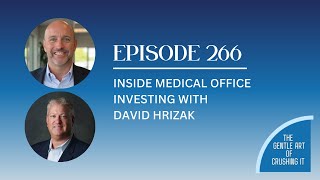
Podcast interview (EP 266) in which Randy Smith interviews David Hrizak about medical-office real estate investing and Streamlined Companies. Hrizak describes his 29-year career across multiple asset classes, why he focuses on medical-office and Class B office in the Phoenix market (stability, aging population), and Streamlined's vertically integrated model (acquisition → in-house construction → property management → legal). He outlines Fund III (a 506(c) targeting $15M equity to be leveraged into ~$40M of assets), underwriting and loan practices (community banks, 60–65% LTV, 5-year fixed with balloon, 25-year amortization), projected investor economics (8% pref, 80/20 split, ~15% IRR, 1.8–1.9x multiple on a five-year hold), tax strategies (cost segregation/bonus depreciation producing large early paper losses), examples of past full-cycle experience (2008–09 townhome project pivot) and current portfolio (≈$20M AUM across recent Phoenix deals and a Chicago medical building). He emphasizes investor access (investor days, low entry $50k for accredited investors) and due diligence advice (ask for referrals).
Chapters
Hello and thank you for joining us today on the Gentle Art of Crushing it show where we focus on learning and sharing with our listeners all there is to know about how to create success in our lives. This show stands on the shoulders of giants. Our mission is to empower and inspire our listeners to create the life of their dreams whilst having a blast in the process. Let's celebrate life together. Welcome to the show.
All right, welcome back to the Gentle Art of Crushing it podcast. My name is Randy Smith and I'll be your host today and really excited to have a local real estate investor, David Rezak with us. David is the co founder and CEO of the Streamline companies and he's also board chairman of Oakwood Creative Care. Streamline. Streamline Companies is a vertically integrated real estate firm focusing specific specifically on medical office and class B office. So I am really excited, David, to dig into that asset class or those asset class and learn a little bit more. So welcome to the show, Randy.
Thank you very much for having me. It's a pleasure to be here with you today.
Awesome. Awesome, David. Well, let's jump right in for the audience. Can you give us your perspective on the state of the market and the economy and how you think that might be impacting the passive investing space?
One word. Volatility. Right. There's nothing good that we're seeing in the news right now as far as the financial markets go, which to me creates opportunity for passive investors. Over the past couple of weeks, many, many people have lost 10 to 20 to 30% in the stock market in their mutual funds and their IRAs. Well, over that same course of time, my real estate investments have only made money. So becoming a passive investor is definitely a way to diversify yourself away from that volatility that we're all hearing about, reading about and seeing.
Are you interested in real?
About 10 months after, after we traveled the world, I decided I didn't miss the negotiation. I didn't miss the deals. I missed the purpose. I developed a new purpose in forming the streamlined companies to help others, to teach others, to help them create the wealth that I was fortunate enough to do through my career. So I've reinvigorated my company, my ideas, my philosophies as a primary motivation to help others learn about passive real estate and bring others into the success that I've had.
Love it. Love it. And so. And how long ago was that?
That was two and a half years ago now. Okay, so right, right before my 50th birthday is when I decided to make a return to the industry.
Got it. Okay. So you and I are about the same age. I'm, I'm 52. And I guess if my math serves me right, we're, we're pretty close to, to each other in that, that respect. So. All right, so you take a 10 year or a 10 month hiatus, you go. It's funny, I hear like generally high achievers, they're not the type that are going to go sit on a, on a beach with, with umbrella drinks for, for too long before they start getting antsy and want to get back and start doing something. So it sounds like you've kind of had kind of a similar path. So you come back with kind of renewed focus and this desire to really help and inspire and educate and it really teach folks like all the many benefits that you've been able to experience from real estate. So what is the structure of the business look like? What are you guys focusing on? How do you fulfill that desire to educate and inspire the passive investor?
So we're all in on medical, office and class B office buildings, primarily in Phoenix because it's such a high growth market. Our population is growing, our population is aging. There's new corporations moving in on a daily basis that has needs for ancillary services that fulfill the occupancy of these types of buildings.
Yep.
So when we relaunched the Streamlined Capital Group, we were successful in purchasing a $5 million office complex in Phoenix. It was a value add situation because we're vertically integrated. We always look for opportunities to go in there with capital improvements through our construction company, we're able to manage that in house. Any of the tenant improvements are done in house. And then throughout my 29 year career, we've developed a great property management program as well. So from acquisition to construction to asset management, everything is kept under one roof. And I also have a great partner who is our in house legal counsel as well.
Fantastic. Okay, so maybe if we can. Can you step back a little bit and talk about those years before that, you know, kind of the, the aha moment when you felt when you fell off the horse. Can you talk like what was your business and career like? Obviously there was experience around real estate, but what were you doing there?
So I started out as a broker and property manager in the suburbs of Chicago. I was selling investment properties. So I was working with a list of active investors that we were doing everything the institutional guys did not want to do. So our clients at the time, 30 years, 500,000 to $5 million. Obviously that's a different number today. But it was, it was doctors, lawyers. So I started out in that realm as a broker and then I was able to find a great partner who was in the trades and he knew everything about the trades that I didn't at the time. Not having a father figure, I didn't know how to pick up a hammer, grout, tile. I didn't know how to do those things. So I had a great partner and we started investing for our own portfolio. Typical story. Like a lot of people, we started with single family homes. We would buy one, rehab it, flip it, take the money, move it into the next project. Ultimately, we got into new construction of spec housing, which was a great time between 2002 and 2007 for us in the Chicagoland market. We did extremely well. And then ultimately went back to my roots of commercial real estate and started buying, building and investing in retail, office, industrial. I've built, owned and managed every asset class there is, with the exception of mobile home parks and storage facilities.
Wow, okay.
So my diverse career has allowed me to gain knowledge across all aspects of the real estate industry.
I love it. Very good. So you get, you kind of have the lens where you've seen across multiple asset classes and now actually multiple markets as well between Chicago and Arizona. And yeah, that has to be a unique skill set that not many have, being able to focus so much on two different geographies. So what, what brought you out to Arizona then?
Well, I originally graduated from Arizona State 31 years ago, met my future wife there, and we went to Chicago primarily because I had a job in the financial markets. I was working downtown Chicago in a beautiful high rise, one of the most iconic buildings ever as a 22 year old. But I hated the job. So that's when I got into the real estate. But after 18 years of Chicago and Illinois, Arizona called me home. The weather. The weather, the cost of living, the politics. I traded in my snowblower for assault on our margarita glasses.
There you go. There you go. I'm from the UP originally, so I understand the need to get away from the cold to get out to sunny weather.
So I love the UP I try to get there at least once a year, if not every other year because we have friends in that area from Wisconsin and Canada as well.
Yeah, yeah. Very cool, very cool. Well, let's, let's dig into medical office. I'm intrigued by that space. You know, we hear about the silver tsunami and the growing aging population and that will obviously lead to higher demand in the medical office and surrounding asset classes. So tell us A little bit about this and why you've landed. Landed there.
Well, throughout my career of owning every different class of real estate, medical office has been my most stable throughout my career. I purchased a building in 2009 in the suburban Chicago market, completely remodeled it and it's been 100% leased since 2010, since we finished the construction. Doctors are creatures of habit. They don't like to move because number one, they have a significant investment into their space. You don't get that typically with multifamily property or a retail property. If somebody grows the retail business, they need more space, they have to move out. Right. Doctors. I've gone to the same doctor for many years that I could tell they've been there for about 20 years, primarily based on the age of the fixtures within. And that's one of our key factors. When we buy a property, we love to upgrade it so that we can bring it up into today's values and ultimately increase rents and control operational expenses through that process.
So now do you end up putting in like the, you know, the patient rooms and all of the equipment or do the doctors generally. Is that their expense?
Usually each doctor is different, but typically we can amortize it into the lease, the doctor can contribute portion of it, or we can give it away as free rent as well. I've been fortunate enough to be involved with some large hospital systems with deep pockets where they wanted specific things and they were willing to pay for it. So even in my own properties that we were able to put in an X ray room through my construction company growing up on the south side of Chicago, I never thought I'd be building an X ray room and ordering lead lined walls and the bracing equipment to hold the X ray equipment from the ceiling. So it's really been a journey.
Very cool. Yeah. No, that's neat. And yeah, I would imagine. Are these triple net leases or what does that look like?
Yeah, primarily in the healthcare field, it's all triple net leases. And as soon as we buy a building, if it's not a triple net lease, we put any new tenants onto that and as renewals come up, we switch them over to our triple net lease format, passing all operational expenses back through.
Love it. I love it. Okay, so now you said Phoenix, that you're doing these projects in Phoenix. Is it Phoenix proper or is it East Valley, West Valley? All around.
All around. And because we manage every property, I don't want it to be too far away from our core area. So I have properties in downtown Phoenix. I'm negotiating on one in uptown portion of Phoenix and then we house our headquarters out of a building in the East Valley in Mesa, Arizona that we own.
Got it.
Very good.
Okay, so now I know you mentioned that you've got a project that you're either working on now or one that's coming up. Is this a project you can talk about publicly or is it something that people need to know you directly in order to get involved with it or.
No, we're a 506c fund that we have open right now, so I can talk about it till people are bored listening to me.
Well, let's do that. Let's talk a little bit about the details. So how big of a fund are we talking here? Is this 3 million? 10 million? 100 million?
15. 15 million? Yeah. So it's an odd number, right? Typically people go 20, 25 or 50. I chose 15 because it was my first fund. I've done 24 years of single asset syndications prior to this. So I wanted to kick off my first fund to raise $15 million that will be, that will be leveraged to purchase around four to six of these properties in the Phoenix market.
Okay, and will this go, will this be like a 12 month window or will it just be as long as it takes you to raise the capital?
Yeah, we, we've set it up with SEC with a 12 month expiration. So we've got it through February of 2026. Okay. However, we're off to a great start right now and hoping to get a good portion of that raised, if not fully by the end of 2025.
Fantastic. Okay, and so average size purchase on these are two to $3 million facilities.
Is what I'm telling or no, because we're taking the 15 million and leveraging it. We're at about 7 to 7 to $10 million each purchase.
Got it, Got it. That makes sense. Okay, so you're looking at potentially, yeah, 30 to $40 million in real estate with this.
40 is our goal with this fund and the equity that we're raising.
Okay, so let's talk if we can, about what type of loans do you use in this space? Is this fixed rate debt or these? It's not Fannie, Freddie. There's other types of loans in this space, right?
Correct. We deal a lot with community banks and credit unions.
Okay.
I've made my career and had my success dealing with community banks. When I can walk into a bank and talk to the CEO directly about the opportunity, you're going to get a better relationship, you're going to get a quicker response. I was turned down early in my career by all of the big banks. And from that point I vowed that I would love to work with community banks as long as possible as long as the legal lending limit is there.
Love it, love it. Okay, so you're getting, is it like 50% loan to value on these or.
No, we underwrite everything at around 60 to 65% LTV.
Okay, very good. And then let's see here. So loans are these 5, 7, 10 year loans. What do the structures look like?
Typically they're fixed rate, five year fixed with a balloon after that or an adjustable rate after that.
Okay. Okay, good. So that kind of takes a little bit of the risk, at least in the short term, off. And are they amortized over 30 years or 25. 25 year. Okay, very good. And then investors, what type of returns do you project for the fund?
The fund is designed at an 8% preferred return with an 8020 split on the profits, targeting a 15% IRR internal rate of return or about a 1.8 to 1.9 multiple on their money.
Okay, and so that's a five year.
That'S on, on a five year schedule, yes.
And is the plan to sell at 5 or refinance or what's the goal then?
I, I'm a long term holder of real estate. I love to own things for as long as I can. And the goal would be primarily to refinance, bring everybody's capital back to them, then they're in the deal with absolutely no risk and still obtaining 80% of the profits in perpetuity as long as we own the property.
Yeah, I love it, love it. Awesome. Great plan. I, I've been looking more and more towards those plans as I've become a little bit more sophisticated in my past investing because. Yeah, I just don't want to have to find another place to put that capital over and over and over again if they're flipping stuff too quickly. So.
Absolutely. And the, the primary thing as well that a lot of people don't realize are the tax advantages that come along with passive investing. So we're always doing a cost segregation report, taking advantage of any bonus depreciation that we can. Those are significant paper write offs that we will allow investors to participate in. They're obtaining these paper losses on their K1s in the early years to help offset that income that we're going to have in the future or offset any of the passive income that they currently have. A great example is in last year's fund Anybody that gave me $100,000, we were able to supply a $70,000 paper loss in year one. Now that's not a real loss. I don't want people to be concerned, oh my God, this guy's losing money. No, no, no. This is just a paper loss. And that's one of the education points of passive investing that I try to expel upon my investors as we're meeting with them. If they're, if they're new to real estate investing, they might not understand all these terms. Obviously a sophisticated investor like yourself does, but that's what I'm here for. I'm here to help educate and hold everybody's hands to help them create wealth.
Awesome. Yeah. No, I love it. We talk a lot about cost segregations on here. We've had a number of cost SEG experts kind of walk us through and of course we're all fingers crossed we're going to see the 100 accelerated depreciation coming back. But, but who knows? So well, let's, let's, if we can, we always know like the number one due diligence question is track record. So for a new investor that's coming in and talking to you, talk to us about your track record in full cycle deals in this space or something similar that, that would make sense.
Sure, sure. I have plenty of full cycle deals throughout my career and really the hardest time we ever had was in the 2008, 2009 Great Recession.
Right, sure, sure.
So that was, there was, I was involved in a deal at that point. It was a 4 million dollar brand new construction, multifamily townhome project. We, we started putting in the foundation, started building these properties and the economy just fell apart. A few months later, my business partner died. I'm left with a 50% built asset, $4 million in debt, working with a local community bank. And if it wasn't a local community bank at that time, if you remember, banks were foreclosing on properties and selling them for 10 cents on the dollar. This particular community bank CEO and owner, he was the majority owner. So Dave, we're not going to let that happen. I'm not going to let the government take my bank. I'm not let the government take your property. So we're going to work through this together. So that was a project where we had to pivot quickly. We finished the construction of the project and we rented everything out instead of putting them up for sale. The community bank, because they are who they are, they can make more of their own rules within a Certain guideline. They put me onto a very low interest rate and an amortizing loan. He said, dave, keep these rented. Let's start paying down the loan. And ultimately we both know the market's going to come back. So I finished the project. That's when I became even more adept in the construction side than I had been before, because I was thrust into it.
You had to.
Yeah, yeah, yeah. So I was working in the field with boots on, overseeing the construction during the day and getting back to my office at night to handle the administration aspect of the deal. Because it was 2008, 2009, we had to let our staff go at that time. But we pivoted, we put it on to that amortizing loan, and ultimately the bank and myself came out positive at the end of the day.
Very nice.
So it didn't work according to plan. And that's what I tell investors. Not everything is going to always work according to plan.
Right.
You have to be comfortable with the sponsor you're working with, that they know how to pivot, that they're honest, trustworthy, and they're going to be open to you in all communication.
That's awesome. Yeah. Great, great, great example. Thank you for. For walking through that. And I think it. It kind of talks to your character, it talks to your integrity that you were able to work through a very difficult situation and make your number one investor, your bank, happy. And then hopefully, if you had any other investors involved as well, that they were. They were made whole as well. So. Yeah.
And as I've grown my business since then, that CEO of the bank has become one of my greatest supporters.
I love it. I love it. Well, now, do you have other projects that you are currently managing that you've acquired over the last handful of years, or are you starting fresh again?
No, we have approximately $20 million under assets, under management right now. That's over. The two projects that we've purchased in the last two years of streamlined Capital Group being open, and then I still own, manage my medical building in the Chicago market as well.
I love it. And then the two that you bought over the last couple of years, are they performing well and kicking off distributions and investors are happy with you?
Well, one is performing better than the other, but. But we're not losing money on the other one either. The first deal we bought was a big value add. We put over a million dollars of improvements into it right away. We took an antiquated building that was 40 years old that hadn't been updated in 40 years, went in there and built spec suites, did capital improvements on the interior, new signage, new parking lot, landscaping, roof, H Vac to create a better asset. So we've increased the value of the asset through our improvements. And now that we've turned everything on to triple net leases, we have touched every lease in the building on a renewal and put the majority of tenants onto that. We lost some tenants, of course. We knew that was going to happen. But we've also gained new tenants at higher rates than the building was previously acquiring. That's our first deal. We're going to do extremely well with that. It's just taking a little bit longer than we had thought. I thought it was going to be a 24 month stabilization, but nobody thought interest rates are going to rise and the economy was going to slow down as much as it did over the last 24 months.
Yeah.
Our second project in Mesa, Arizona, we bought with some vacancy in here. We did the same thing. We call it the streamlined process. We go in there, we buy the building, we rebrand it, rename it, improve the exterior, make it a better home for these businesses. And now we're 100% leased in this building on all triple net leases.
Love it. And so now being because you were a broker back in the day, are you networked pretty well here in the Valley with other commercial brokerage? So they know when you're buying an asset that you're going to come knock in and ask them to fill it up or.
Absolutely. And they bring me the assets to purchase. So yeah, I've got a great network of brokers that I'm working with here in the Phoenix market that send me deals every day. And as any investor typically does, I look at more deals than I actually do. Right. We underwrite deals. And especially in today's economy, today's world, there's a disconnect between buyers and sellers on actual price. So it takes. Takes a while to get the right deal negotiated. But we put so much time and effort into it up front because of our vertical integration process that once we do set our minds on a deal, we know it's going to be a home run for our investors.
Love it. I love it. And then one final question before we kind of move over to the final five. I'm curious your thoughts on heavy value add, lots of tariffs going on, fluctuations in cost of goods. How do you see that impacting your business plan or do you yet see it impacting that?
So this is my personal opinion. On April 18, we'll see where it is when it comes Out. Yeah, I think the whole tariff game right now, I'm going to call it that is a negotiation to get some other things accomplished in America. I think it's going to reset the playing field for American businesses and ultimately it's part of the negotiation game for I think, getting a great tax package produced later in the year.
Okay, so I agree with you. I think, I think that's exactly what's going on. But very specifically, are you seeing cost of goods maybe year over year or going back three years to where you are today had they jumped significantly?
So interestingly enough, I've done a couple of other projects for clients as third party owners, rep. General contractor type situation. And we, we were seeing material cost explode during COVID and post Covid because of the supply chain issue. Right?
Yep, yep.
Those, those costs finally started to stabilize prior to the tariff war starting. We can call it that. We, we do talk to vendors regularly about where they see pricing going. A lot of our vendors and suppliers have good inventory in stock right now where they're able to hold pricing. And hopefully these tariff negotiations are completed sooner rather than later so they don't have to implement those tariff surcharges.
Hopefully it's just a blip on the screen and we're beyond it here before. Yeah, yeah.
My thought is by the end of the second quarter, everything's gonna be ironed out on the tariff side.
Okay. Okay.
I've been wrong though before, Randy.
You and me both, definitely.
Well, very good.
Well, before, before we kind of jump into our final five, are there questions that I should have asked or is there anything you wanted to discuss on this podcast before we we shift on to the final five?
I just want to talk a little bit about the current opportunity that's open to investors out there if they're interested in becoming passive investors. We work a lot with medical professionals, professional athletes, business owners, high net worth individuals that have a huge tax liability. So we developed streamlined investment group fund number three to help them save on taxes, build passive income and create long term wealth. The fund is designed to raise the 15 million as we spoke about previously. It has a low entry rate of only $50,000 for accredited investors only because it is a 506C. And one of the great things that we think we deliver to our investors is the opportunity to see and touch their investment. You invest in Coca Cola, you're not going to get invited to the bottling plant to see how it's done. We host investor days at all of our properties once we have it under Ownership, and they're able to kick the bricks, as we call it, see where their money is actually invested. And for some of my clients that are out of state, they've actually flown in for those days to join us on it.
Love it. I love it. I think that's, that's a great personal touch to be able to do. Like, even some of the larger operators in the space, they don't do that. In fact, if you ask them if you can go tour the property, they say no, because we don't want to. We don't want to disturb the tenants is the classic answer I hear. But I'll tell you, I just got back. I spent an entire day driving properties in Dallas on properties that I've brought capital to. And you get an entirely different perspective on what's going on at the property. If you go out there and drop in and say hi to the property managers and the folks there, it's. You can tell quite a bit, and I've said this before, like, you can tell quite a bit by talking to the employees on how that operation is actually being driven, because they're not trying to get your dollars. They're just going to tell you how it's really happening.
So 100%. And that's one of the key factors of our property management program. Day one, when we buy the property, we go into every office, every suite, introduce ourselves, say, hey, not only are the property managers, we're going to be responsive to you, but also we're the owners, so we care about you. We build that rapport. So you can walk into any of my properties, ask how the property management is, how the ownership is. I guarantee it's going to be all success stories.
I love it. I love it. David. Well, very cool. Well, this has been exciting to get to know a little bit more about medical office space here in Phoenix. I love it. I got a feeling you and I will be talking a little bit more about this in the coming months. So let's jump into the final five, though. So first question I always like to ask is, what is a good educational resource that you would suggest to the newer, newer passive investor as they're starting their education or continuing their education journey here?
Number one, mentors. Find the right mentors. I've had some great mentors in my life, including my business partner who passed away and now my new business partner, Scott Roney, who I feel brings to the table everything that my original business partner had. Talk to people, learn from people. I like going into the room being the dumbest person in the room so that I can learn. For people looking to get into passive real estate, I suggest the great foundation book of Rich Dad, Poor dad by Robert Kiyosaki. I read that 30, 33 years ago. I think the first year it came out. I forget what year it was, but that book right there helps people understand money, the meaning of money, the valuation of money. Once you understand how to understand money, you can understand how to utilize it to the best of your abilities going forward.
Love it. I love it. Yeah. The little purple book that everybody loves so much. That's great. I had my own experience with it as well. All of the purple books by Kiyosaki. So, yeah, very good. Is there a favorite book or podcast that you're currently reading or just finishing up or when you listen to.
Currently, I'm all into podcasts, so I spend a lot of time in my office so I can have a podcast on and listen. I spend a lot of time in the car. What I love about podcasts is you're learning from real people in real world situations today. How is it affecting them? How are they pivoting? How are they dealing with the situations they run into? And to me, the podcasts right now are one of the greatest ways to learn.
Great. Any particular podcasts that kind of stick out? Must listens every week?
Yeah. Yeah. Invest like a billionaire.
Okay.
Hunter Thompson's Cash Flow Connections.
Yeah.
Light Bulb Moments by Phil Fornaro. I was just on that podcast last week. It's going to be released soon. That's a smaller podcast that's just getting going in the suburban Chicago market. Love it. The Cardone zone. I mean, who doesn't love Grant Cardone and his energy, His. His marketing genius that he is. You can learn so much from that guy. A lot of it's fluff because it's Grant, right? And he's a. He's a salesman. But you can really learn a lot from Grant. And of course, ever since I discovered the gentle art of crushing it, it's become one of my favorite as well. You had to say that.
Thank you. I'll slip you the 20 after the call. Very good. All right, so we talk a lot about due diligence here. So is there kind of an extra special due diligence question that you think folks should be asking that's a little bit outside of the norm that we hear all the time?
Yeah, a lot of people are afraid to ask it, ask for referrals. If I can't produce a happy investor to speak to you, I'M not worth the deal. I'm trying to show you.
Yeah, no doubt.
So I always offer that. I hear a lot of clients, potential clients, say what didn't I ask? I said, you didn't ask for a referral. Sure, you've taken everything that I said and understood it, but why don't you hear from a real world situation and one of my current investors and how they feel about and how they enjoy working with the streamlined companies.
I love it. I love it. Great, great, great advice. I think one step further on that is to get a referral from somebody that is not given to you directly by the operator. Because every operator can find a good, A good referral.
Right.
So I like the.
And I have that as well. There's a professional athlete that I become very good friends with. He hasn't, not invested with me yet because he's doing his own thing. He's active real estate investor himself. But he said, dave, one day when I'm done being active, I will be a passive investor with you.
Even better. Yeah, even better. I love it. Awesome. All right, well, let's wrap up with a couple of fun ones here. So is there a recent bucket list item that you have checked off your list or when you're hoping to. And hopefully it's not like riding horses in Puerto Vallarta, because we don't want to. We don't want you back in the hospital. Right.
It's exciting as well. It's. It's helicopters.
Oh, very nice.
Yeah. So I've always wanted to take a ride on a helicopter. And just this past weekend, I finished my third helicopter ride this year. Now I'm not learning how to fly. I don't want to learn how to fly. Just like, just like investing. I'm going with somebody that knows more than me. Right. That I want that guy to pilot me the right way. And that's what I asked my. I asked my investors. Let me be your pilot. Right. So earlier this year, I was fortunate enough to take a ride with the Mesa Police Department helicopter.
Okay.
Then my wife and I took a helicopter ride over the island of Kauai for our 30th anniversary.
Very nice.
And just this past weekend, you can see it on my LinkedIn, we were taking a helicopter ride over the Grand Canyon.
All right, very good.
So it's different than being in a plane because you can stop midair, hover, you can make turns that you can't in a plane. You get a whole different perspective of being up in the air.
I love it. I Love it. So where is the next one? Have you got it planned yet?
Haven't figured that one out yet, but we're going to be in the planning process here soon.
Love it. Love it. All right, final question then, David. Where would you put 100 grand if you had to invest it today and you couldn't put it in your own deal?
Yeah, I put it in one of two places right now. I'm a big fan of the whole life insurance and infinite banking system. Not a lot of people know about that right now. Insurance? Why do you want insurance? Well, it creates liquidity. It grows your wealth. You can borrow against it and finance the big purchases through the wealth and cash that's being accumulated in these policies.
Yep, absolutely. I love it, too.
Secondly, I haven't found it yet, but I think the AI is an amazing creature right now. There's a lot of people battling in that space. If you can find the right one to hook into early, that's going to be a great opportunity.
I agree. I agree. I absolutely am fascinated with AI and seems like I'm finding a new tool every single day. And like you said, who's going to make it through it and be the big winners? I'm not sure yet, but there will definitely be a bunch, I'm sure.
Yeah, a lot of people are worried about AI replacing people. I see it in our business as a way to supplement and complement what we're doing.
Absolutely.
It's giving us some great insight and thoughts that we would never think of or not able to pull out of our brains as fast and as well, as good as AI can.
Yeah, I just did. I created a presentation yesterday in literally 90 seconds, and it would have taken me hours to create this thing with a free AI tool, and it looks far better than what I would have created in the first place.
So, yeah, we're. We're in the same situation right now. We've. We've hooked up with a AI coach here in the Phoenix market, and she's been invaluable in teaching us AI.
Love it. I love it. Awesome. Well, David, this has been a lot of fun. It's been good to get to know you and learn more about your business. And. And as I mentioned before, I'm sure you and I will have other conversations, but thank you so much for being on the show. This has been a lot of fun.
Randy, thank you very much. I appreciate your time. I appreciate your professionalism, and keep bringing out some great podcasts because people learn every week from those podcasts.
I love it. All right. And to the audience, as always, we want to thank you as well for joining us here today. But continue your education journey in the passive investing space. And just as important, if not more important than that, is make the decision to invest in your first or in your next passive investment. Both David and I are convinced that once you do, you will just wish that you had started that much sooner. So be sure to join us again next Thursday for another great episode. And thank you again for joining us here today. Thank you.
Thank you, Randy.
Well, there you have it, ladies and gentlemen. Another episode of the Gentle Art of Crushing It. It was an amazing episode. We know we sure learned a lot and we hope you did as well. We want to take a second and thank you so much for viewing or listening to this episode. And please just know that we only ask for one favor, and that is to make this life magnificent. Thank you and have a wonderful day.
More from David
JF 3995: Navigating Market Cycles and Scaling Passive Investment Returns ft. David Hrizak
Real Estate Investing Q&A for Women | How to Invest Safely | Titan Impact Group

How to Create Passive Income Without Burnout | Legacy Wealth Plan | Titan Impact Group
JF 4041: Tenant Credit, Triple Net Leases and Relationship Capital ft. David Hrizak
🎙️ Medical Office Real Estate Investing with David Hrizak | A Passive Wealth Strategy for Doctors