Investments with Purpose: Designing Legacy with David Hrizak
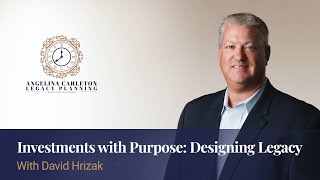
Interview with David Hrizak (CEO and co‑founder of The Streamline Companies) about purposeful, passive real estate investing and legacy design. Hrizak (29 years in real estate) explains why he focuses on medical office and suburban Class B office buildings rather than high‑rise Class A offices, recounts career setbacks (partner death, 2009 $4M personally guaranteed construction loan) and a health/sabbatical turning point (horse accident, collapsed lung in Dec 2021) that led to refocusing and launching Streamline Capital Group with partner Scott Roney (agreement Dec 2022). The conversation covers risk management, underwriting discipline, investor education, tax advantages of direct real estate ownership (cost segregation/bonus depreciation), philanthropy (Oakwood), family/legacy priorities, and investor relations practices (site visits, “kick the bricks” investor days).
Questions this video answers
8% preferred return; 80/20 split; ~18% average IRR (pre-tax).
Shook hands and kicked off Streamline Capital Group in December 2022.
www.thestreamlinecompanies.com
Oakwood Creative Care; Mesa, Arizona (50-year nonprofit).
Medical office buildings and suburban class B office buildings (targeting buildings ~20–40 years old).
What can passive investing do for your legacy? I'd like to welcome David Rezak to the Design youn Legacy podcast this lovely Friday. Welcome, David.
Thank you very much for having me. Angelina, good morning to you.
Good morning to you. It's a pleasure to host you and I believe you're joining out of Phoenix, Arizona in the United States of America.
That's correct. We had a beautiful monsoon last night. We had a lot of rain, so it's helping the desert.
Oh, that's wonderful. All right, so I would like to start with an icebreaker. I know you've been in your industry, you had shared in the icebreaker regarding 29 years, but introduce yourself if you would to the listeners and the viewers.
Absolutely. Thank you very much. Hello, everyone, my name is David Rezak. I am the CEO and co founder of the Streamline Companies. The Streamline Companies are a vertically integrated organization of three entities working together. Streamline Capital Group, helping our passive investors, Streamline Development, our licensed general contracting company, and Streamline Asset Management, our in house property management program. So that is who I am today. And we'll get into how I became that person.
Yeah, that's wonderful. And we'll also bring up your amazing grandmother that helped groom you for the professional that you are today. But I always like to kind of start with the problem in the podcast. The problem might be there is an individual and they would like to invest, but they don't know where to go, who to trust, what's good in today's landscape. So would you speak for a moment as to, you know, what they could be investing their money in and then why what you have to offer is more unique.
So many of the opportunities of investing into real estate as a passive investor are very similar. A lot of fund sponsors and administrators are offering the same type of term returns. We offer an 8% preferred return, 80, 20 on the splits, 18% average on the IRR. Well, that's fine and dandy, but which one of the thousands of sponsors do you really want to work with? You want to work with somebody that's been battle tested, that's been around for a while, that's had to navigate many cycles, and over 29 years of being in this industry, I've done that. So right now what I'm looking to do is help educate people, help them build the wealth that I was fortunate enough to do as well through my own portfolio in real estate.
Yeah. And I think one of the key points that you could probably speak into in my research for today's conversation, you've Talked about understanding multifamily and how it's good, how it's not good. Regarding when the phone calls come at 6 o' clock with the property managers, if that's the hat you want to wear. But also understanding that office property has not necessarily lost its tenants if one's not in a big city. So would you speak for a moment into the landscape? Because let's say I've got $8 million. I'm just making that up hypothetically. Okay, 80 million, whatever the number is, or one of the listeners out there. Because one of the things that happens is I think two thirds of today's affluent are self made. So they're kind of learning as they go and you can imagine they're getting pitched left and right. So speak about the landscape of what you see of, of where 2025 is and some of the myths.
So I've been fortunate enough over my 29 year career to be involved in almost every asset class there is. A real estate, single family, multifamily, retail, office, industrial. Right now we are fully vested in medical office buildings and class B office buildings. And the reason being is nobody else is talking about them right now. If you went online and searched how to invest in a cash flow passive investment, you're likely going to find a multifamily opportunity. Obviously we have a housing shortage in the country and multifamily is being developed everywhere. People have bought it a lot over the past few years, but nobody is talking about the office side. Now everybody hears bad news about office though. What you're hearing about the bad news in office is primarily, primarily the class A properties, which are your high rise buildings in New York, Chicago, San Francisco, those types of investments. What we look to invest in are the smaller buildings, the suburban type community buildings where you're going to your doctor's office or you're going to visit your insurance agent. Those smaller class B properties are highly overlooked right now as opportunities. And nobody builds class B buildings. They become class B buildings based on their age, based on their condition. So when we look for a building that's 20 to 40 years old, we look for opportunity to leave a neighborhood better than when we found it. We go in there, we improve the property, we increase the tenancy and we make it a better place than when we arrived.
Yeah, I think in one of the prior podcasts you mentioned that oftentimes these are the small business owners in the community.
Yeah. So the small businesses of America are 99% of all businesses. When you hear about office vacancy and the Return to office mandate. Those are really the large corporations of America that sent everybody home during the pandemic. Small businesses didn't have the luxury to do that because of cash flow. Cash flow is most important to a small business owner. They have to worry about making sure they have payroll, making sure they can cover expenses, and they really needed their whole team together at almost all times to compete. And a lot of the small businesses actually flourished throughout the pandemic and since.
Yeah, absolutely. I think that is the backbone of any entrepreneurial community, including what America is made out of.
Absolutely.
Yeah. I shared with you that before 2014, I had worked as a commercial real estate broker in Los Angeles, California, and medical office was a niche. And I think about how, especially since COVID how much people have become focused in. On their health, on wellness, and. And I'm also wondering about, like, where the industry is going with companies like Doctor in a Box.
Yeah, Doc in a box was my favorite phrase when I started into this asset class. And I still own a, quote, Doc in a Box building in the suburban Chicago market that I bought 15 years ago that's been 100% leased for 15 years as well, because it's economic resistance. Times are good, times are bad. People need doctors, and once doctors establish their practices, they don't like to leave.
Yeah, absolutely. Yeah. It's a very interesting niche because again, I think Americans in particular are becoming more careful about what they eat and everything regarding their health, because if they're not going to take personal agency, then they could just realize that they could become a statistic. Okay, let me stay with the good news for a moment. So since this is a legacy podcast, how do you define legacy, specifically in the context of capital and investment, since that's your specialty? And then I'm going to ask you to branch out a bit.
Okay, So I define legacy as not how much money I leave this world with, because I'm not taking it with me. Right. The legacy is what I've left behind. The lives I've touched, the. The people I've influenced, and will they remember me as a person. That's my legacy. Now, I'll tell anybody if they have an opportunity to add more commas to their checkbook. You sure should. Because once you have that opportunity and you have more money personally, you can give back more. You can choose to invest in communities, you can choose to invest in nonprofits that are helping people. And that's what I do on a personal level as well.
Oh, that's so wonderful.
Yeah. I'm board chairman of a 50 year old nonprofit based here in Mesa, Arizona called Oakwood Creative Care. And it's a series of day clubs that serve people suffering with Alzheimer's and dementia and other cognitive disabilities.
Oh, that's so great. And we're going to get into your awesome upbringing in a moment. But let me circle back for a moment to streamline Capital Group. So let's say that somebody invests with you and clearly you know the marketplace regarding the medical and medical office and the class B buildings and who the tenants are going to be within those buildings that are going to create the income month after month. But I think what also what you're offering to an investor is, and obviously I'm independent here, I'm the podcast host. But, but obviously what, what comes with it is if it is a disciplined approach to value creation. I think that you had said that your company has three different hats.
Yeah.
So I think that I just want you to speak into that because it's not as if somebody's just going to hand their funds over to you. It's rather that you've thought through the process and it's not, you know, you thought through it. I think that's where I'm putting the flashlight.
Without a doubt. And the reason being is every opportunity that we analyze, we're investing side by side with our partners, with our investors. So when I bring an opportunity to my fund or my investment group, I've done a tremendous amount of underwriting and research to make sure A, I'm willing to invest into it, B, I'm not going to lose money on it. And then that makes it easier for me to easily talk, not sell, talk about the investment with people. I don't sell. I educate, I teach. And if you want to invest with me, that's great because you're going to make some money, you're going to have some great tax advantages. But I'll never, I don't hard sell anything.
Yeah. I just think about when it comes to syndication, one of the questions that come up is where are we going and what does it look like? And sometimes others can answer that and other times it's like you wonder like, well, where are we going?
Well, long term, real estate has been one of the best investments ever. It's made more millionaires than any other investment out there. And when managed right, bought right, you're going to do well with it. And what's great about getting into our fund or our syndications, you're actually a percentage owner of that property. So you're receiving the direct tax benefits as opposed to investing into a REIT where you just own a share in a company, so you're not receiving any of the true ownership benefits.
So speak for a moment about the ownership benefits because when somebody thinks about passive investing and they think about areit, which stands for a real estate investment trust, any of the international listeners out there, it, that seems. Wow, that sure seems passive. So tell me about what you're offering.
So if you watch any of the financial business shows, what do you see along the bottom? You see tickers. Stock is up, stock is down on a minute by minute basis. Well, our real estate by being a direct owner doesn't have that fluctuation. We saw the stock market contract about 10 to 15% on April 2 when the tariff war was announced. Now we've seen it all come back. That roller coaster doesn't happen in our investments. We're on a trajectory for stable growth at all times. And by being a direct owner, you're participating in the paper write offs that come along with ownership that aren't available with the equities market. For example, cost segregation and bonus depreciation. Those are some of my favorite words and people don't understand it. The IRS does not reward you for being successful. When you're successful, they tax you more.
Well, you get to be in partnership with the IRS and you get to.
The IRS rewards you for having good strategy.
Sure, sure.
And, and working within their playbook. Yeah, so, so the, the write offs that are available to real estate investors that are not available to equity investors in stocks and bonds are a direct benefit of being that owner. So for example, last year the bonus depreciation law was at 60%. And I, I don't, we won't go into the technicalities of what that 60% means. It's just a, a calculation through a formula. Any $100,000 with me last year received a $70,000 paper loss on their K1 at the end of the year. That paper loss can be used to offset any other passive income that they have or a portion of their earned income as well. Also, if they don't have any other passive income, they can save those paper losses for when we start paying profits and they start making returns on us and to actually offset. So when I say we're about an 18 IRR, that's pre tax. When you take in the tax benefits of the bonus depreciation, we're over 20% on our returns.
Yeah, interesting. I think a part of understanding the bigger picture is when money is made, then how do the taxes come into play? Because somebody can get very excited when they make money, even including the stock market, cryptocurrency and so forth. But then, oh, by the way, if you have to give the top third over to the irs, then how does that change things now? And I think sometimes when people are sold an idea or an offering, they don't always get told all of the like, oh, by the way, afterwards, yeah, we.
We help eliminate most, if not all of those taxes that are going to be coming into play once our returns are really kicking in the way they're supposed to.
Okay, very nice. Very nice. Thank you for covering that. Because there's that.
And the more you earn, the more you can help as well, in terms.
Of the world and what you can do.
Absolutely. Building your legacy.
Yeah. I think. And I don't remember where the quote comes from, if it comes from Tony Robbins or who it comes from, but I think the quote, something along the lines of, the best way that you can help the poor is not to become one of them.
Yeah, absolutely. Yeah, yeah. Be a storage for them. Help them by donating to the right causes so that we can lift those people out of their situation.
Yeah. But I also want to make a point regarding your 29 years in the business. My husband always jokes that it only took him 10 years to be an overnight success. And what that means is, you know, it's the ti. The time in, like, you've got 29 years, and I know you took a break, and we're going to speak about that in a moment. You went to a vacation in Mexico and you had kind of an aha moment. But. But this idea that sometimes, you know, you don't have to be rich yesterday or you don't have to have made it in one year or five years. So it's like, don't beat yourself up because you're able to do what you are doing today and offering what you're offering because you got 29 years in.
Absolutely. And one of our groups of investors, we help a lot do get rich quick. We assist a lot of athletes, professional athletes, retired and current, who do get that windfall of money in a short period of time.
And they got to park it somewhere.
They have to park it somewhere. Unfortunately, a lot of them get taken advantage of throughout their career with their money.
And.
And a good portion of them are broke within four years after they retire.
Yeah.
So we're trying to get in as early as possible to educate people. It's never too late to invest the best Time to invest was yesterday. The next best time is today. And let us help educate you on how to do that.
Yeah, I think the education piece is really important because people don't have that financial literacy growing up, whether it's public or private school or even university. Penn State was a wonderful experience, but it didn't teach me how to manage my checkbook or that one of the seven wonders of the world is interest, compounded interest. Right. So I think every step of the way is important. And when it comes to being financially independent or building wealth or even protecting that wealth, like you had mentioned about the pro athletes, like, yes, they earned it, but now how do you keep it?
Right.
How do you keep it safe and how do you keep it so it grows in the long term so you don't have to live the roller coaster lifestyle of feast or famine?
One of the great phrases I love, it's not what you make, it's what you keep.
Yeah, yeah, wonderful. Okay, so let's go back in time regarding personal experiences, whether that's mentors, family failures, and I did hear one of the stories you shared regarding having to work with the banks at one time. So.
Sure.
So what personal experiences?
Let's start at the beginning. And I know, you know, a little bit of the background. I was born and raised on the south side of Chicago. No father figure in my life. Beautiful mother working long hours in downtown Chicago. It was my grandmother who became the head coach in my life. This four foot nine Czechoslovakian lady who was second generation here in this country, taught me how to manage the streets of south side of Chicago. She also taught me my work ethic, my loyalty, my dedication, my, my ruthlessness at time because she could be ruthless. If you got grandma upset, she was going to let you know and she was going to correct you and get you in line because she wanted to make you a better person, to make this a better world as well. So I, I, everything I am today is because of what my grandmother instilled in me at such an early age.
And I think it's so amazing. I asked for photos and you were so kind and gracious to share three photos of her. And I just think what a strong woman. She looked out at the landscape and said, this is my grandson, my grandchild. How can I give him the foundation then so he can survive in this world, but also to thrive?
Yeah, yeah, absolutely. She came up very poor and we were poor growing up as well. So anything that we have today is because we earned and worked for it. And that all came from my grandmother's influence in my life.
Yeah. I would also think that she had a great mindset because I had a friend who also grew up in the south side of Chicago. His name was Tommy Schultz, and he has since passed away. But he. He passed away poor. And so I think that she must have had something in her mindset where you then not only stewarded every opportunity, but you said, I'm going to move out of this neighborhood into another socioeconomic level, whether that's the middle class or upper middle class or on and on.
Yep. And because I grew up without a major father figure in my life, I knew what type of father I didn't want to be. So as I became older and met my wife and we started our own family, I knew what I didn't want to be. And I had learned who I wanted to be just based on my wife's relationship with myself. And kids don't come with a textbook back then when we started. They do now. Kids for Dummies or something like that. So we just had to take. Both of us, my wife and I, had to take what we were given at an early age and instill that into our children and pass it along.
Yeah. Do you have any good stories about Grandma?
Oh, boy. Teaching me how to ride the Chicago CTA transit system? She never knew how to drive, so any place we wanted to go, whether it be the grocery store, a doctor's visit, or even a great White Sox game, we had to take a bus to. So she taught me, A, keep your head on a swivel because somebody's out there to hurt you at some point, and B, always be cognizant of your surroundings. And great Grandma was amazing. And unfortunately, at the end of her life, she suffered with Alzheimer's, and she didn't know who I was, who my family was. And that's why I do a lot of what I do today in my philanthropic work here in Arizona.
Yeah. I wondered when you brought up Oakwood, if that was. If there was some tie.
Yeah. So when I moved out to Arizona, Grandma was already passed. I met the CEO of Oakwood Creative Care, Sherry Friend. It's an amazing organization. She had just become the CEO about a year prior to me meeting her, which was 13 years ago now. She had a passion for this industry because of her grandmother as well, who was suffering with the disease, and. And her grandmother made her promise that she would do something in her life to make life better for the elderly suffering with these diseases. And she's been on a great mission since then, I cannot do what she does and her team does on a. On a daily level. But I'm their biggest supporter, biggest cheerleader and we'll do whatever I can for the organization.
That's awesome. Very cool. I think what's so great in hearing your story is number one, you overcame the odds even just in mindset to believe that you were worth it enough to make and create a better life. But also number two, that you choose to give back compared to being in service to self or just one more dollar.
Yeah.
In creating a win win for all.
Yeah. There's many stories in my life that a lot of people don't know about. I could have gone down a different path very easily being on south side of Chicago.
Yeah. I bring that up because one of the. And then we're going to get back to you. But one of the number one challenges to any individual designing a legacy has to do with self worth. Well, who am I to be the first in my family to design a legacy? Or if it's a multi generational family of wealth, who am I to go against the grain and be unique and self individuate? So what I bring that up because at some point you would have had an internal conversation to say I'm worth it to be more than poor.
Yeah. I knew my God given abilities early on and I knew what I didn't want to be.
Okay.
Which automatically influenced me on who I wanted to be.
Interesting. That can propel a person. And I also wonder if maybe the love that was deposited in you by your grandmother gave you that self esteem and self worth.
Oh, absolutely. Yes.
Yeah. Love can move mountains.
Yes, absolutely. So after my. My time in Chicago as a youngster starting my business career in commercial real estate, I had a great track record from 1996 until 2009 when I suffered my first blow. That was the death of my partner. That was the Great Recession. We were in the middle of a large development that we couldn't sell. It was a townhome development. So that was my first opportunity where I had to learn how to pivot quickly because I was personally guaranteeing that $4 million construction loan. It was then when banks were under a lot of pressure from federal regulators just to foreclose on developments like these, sell them out for pennies on the dollar, clear the books. Well, my banker at the time, whose last name is Schultz as well, similar to your friend, he worked with me and said, we're not going to let the government take over my bank and your property. We're going to work together. So we reduced the interest rate, we put in an amortizing loan. He made access the capital to finish the development. And we decided, let's, we can't sell these, let's make them rentals. And we did. We rented out the property for a number of years till the market came back and ultimately sold everything. The bank made a profit. I made a profit. It was a huge pivot and it was my own money at the time. There were no other investors in it. But I, like a lot of other developers, could have filed bankruptcy and I would have been set back to zero at that point. I didn't. I struggled through it for a number of years and came out a better person for it. And when I tell that story to lenders that I work with today, that they understand who my character is just based on that. And they talk about the five Cs of, of lending and credit. Well, one of those Cs is character, obviously capital as well. But who is this person? When times get tough, how are they going to react and what is it going to do to affect the bank?
Yeah, absolutely. I know one of the points that you made earlier in a, in a prior conversation was about that there is enormous capital sitting on the sidelines, but capital sitting on the sidelines does no, does no one any good. So I think a part of that is, is breaking the ice and realizing the opportunities that are out there and carving out the time to learn about those opportunities.
Yep.
Yeah. Yeah.
So after I got through that bad time of my life in 09, for probably the next five years through 2014, we started to build momentum again and had had a great run. And it wasn't until my 49th birthday, December of 21, where we were celebrating in Puerto Vallarta. It was a beautiful vacation. I was thrown off a horse, literally thrown off a horse, suffered a collapsed lung, put into Puerto Vallarta hospital for three days. And the doctor told me, you should not be flying home for 10 more days. Well, it was December 8th, December 10th at this time, and I said, I can't risk staying down here missing Christmas. We have our own family plans that we need to complete. So I got on that plane, I held my wife's hand for the two hour ride back up to Phoenix. First time ever in my life I was truly afraid because I didn't know what was going to happen, if my lung was going to collapse again mid flight, if they were going to have to make an emergency detour for me. And I'm the kind of Person that likes to stay in the shadows a lot and just watch and listen. And I don't use the word I at all. I use the word we because it's a team. Everything around me is a team. I couldn't do and I used the word I. I couldn't do what I'm doing without having the team around me. So when I got on that flight, I said, if I make it home, we're going to retire. My wife had just retired from teaching. We had a successful 26 year career at that point. Our kids were pretty much grown and self sufficient. So I did, I made it home. We retired. We traveled immensely for 10 months straight, including a beautiful trip through Europe and places that I've never been to, I just only dreamed of going to. But it was around that 10th month, October 22nd, where I started to realize I was missing something. And that's when my current partner, Scott Roney came to me, who had been a 30 year career Fortune 500 corporate attorney at that point. And he was done with the corporate world as well at that point. And he asked Dave, I'm looking for a new challenge. What do you suggest? And I've known Scott for a couple years at that point because we serve on the board of directors at Oakwood together. And I said, Scott, I really like you as a person. Your work ethic, your demeanor, your loyalty, everything about him was like my partner that had passed away in 09. So it was almost like a rebirth of my original business. By finding Scott, I said I'd love to get back into what I had the most fun and most success in doing over my career up to that point, which was going out and buying more properties and helping others, bringing in investors. I mentioned earlier that $4 million deal, that was all my money. But over time, as our deals got bigger, it required investors to come in with us as passive. And that was the great success that catapulted me to that next level, is when I open the opportunities up to others. So I said, Scott, let's talk about building Streamline Capital Group as a real estate investment platform for others to join in the journey with us. And we did so at my 50th birthday. We shook hands in December 2022 and we kicked off Streamline Capital Group, which is then morphed into the Streamline companies. Just taking the advantage of all of the other skills that I've acquired over 29 years.
Yeah, I almost wonder after that incident with the horse if there's a renewed interest in living life.
Oh, absolutely. Because I wasn't. I wasn't living life. And people have asked me, what would you tell your younger self today? Be present. Because there were so many times I wasn't. I was there, but I wasn't present. I would always make it a point when we started our first company that my wife stayed home with the kids, but I would always make it a point to be home for dinner, to coach their teams, to attend the dance recitals, and then go back to work at 9 o' clock at night if I had to. We understood what we were building, and my wife was willing to sacrifice that time. And because of such, I wasn't really there a lot of times, even though I was, because my mind had so many things on them, I wasn't able to focus and focus on what was right in front of me. So I missed a lot of great times. My wife talks about, hey, do you remember the time? No, I don't. She said, you were here. Here's your. You're in the picture.
I think it's because of the worry and the stress of, I'm building this thing. I've never built it before. And now you've built something. And now it's like, with that renewed sense of life, it's like, oh, I've already built it. I can just build it better now. Like, I've built the sand castle. And I know I can. I know I can build a sandcastle. Well, and that.
That's what getting thrown off the horse did to me.
Okay.
After I took that sabbatical, I used to call it a retirement. It came down to the word sabbatical. That's what it came down to at that point. Hey, I had done everything before. How do I build it bigger, better?
Yeah. So it's interesting. So question three out of six on the list was, what was the turning point that made you start thinking beyond financial outcomes and begin designing your legacy more intentionally so? I imagine the horse was the turning point 100%.
When you're. When you're alone in a Mexican hospital. My wife did come to visit me, but I didn't want her traveling throughout Puerto Vallarta by herself. She would come for a little bit, and I said, please just go back to the resort and stay with our friends. When you're sitting there alone and not everybody speaks your language and you have time to think, it really puts a perspective into things.
Because you felt so alone in the hollowness of the empty space.
Yes.
Or just amongst strangers.
No, I just. I felt alone because obviously it was a Time truly to reconnect with myself at that point.
Very nice. Very nice that you're speaking into that because it does go by so fast.
Yeah, it does.
Yeah.
I've been in this career 29 years. In some of the pictures I sent you yesterday, I enjoyed looking back through. There was a picture of my grandmother and I at my wedding 30 years ago.
Those are sweet moments.
It was great to see that.
Yeah, yeah. I always ask individuals if they ever put together a hardcover coffee table book. They need to have all that in there because a century ago, on my paternal side, I had a great grandfather, Herbert Carlton, and he was a successful insurance broker during the Great Depression. And he had multiple homes and multiple Cadillacs and a maid and a boat and war, Brooks Brothers that it seemed like in every single photo in New England and up to Toronto. And I always wondered, you know, what were his best life and business lessons? Because he was apparently very good with people. He, the people skills obviously were there as a salesperson and apparently he flirted with waitresses at restaurants and, and I just wondered like, what were his best business lessons? But he never wrote them down. Yeah, yeah, yeah.
And a lot of people think that when you become successful you need all those things. My wife and I at one point owned two different vacation homes besides our primary residence. Drove the, the Lexus and the high end cars. And truly that's, that's not important. We're, we're going on a vacation soon, right after Labor Day and we're going to just drive through the big sky country of Montana. We're just going to go explore and be together with each other and look at nature and enjoy life.
Yeah, it's a beautiful country.
I'm looking forward to it. I've never been.
Oh, very cool, very cool. Okay. In today's fast paced investment landscape, what do you believe separates transactional success from transactional impact?
The relationship. Yeah, anybody can put a deal together. As I told you earlier, a lot of sponsors offer the same type of returns. But who are you really investing with and what is the relationship you're going to have with that person? Because you're devoting a lot of your hard earned money to somebody that you may have only met once, twice, three times. But it's that track record, it's building that relationship. As I said earlier, I don't sell anybody. I just want to introduce myself, get them to know, get them to like and get them to trust me. If I get through those three hurdles, then it makes it easier for that then transaction to take place.
Yeah. I think that who we do business with in life makes life more meaningful. There's a quality aspect to it because you're right, we can, we can do business with anyone. There's so many different vendors, no matter the product, but if we feel a connection to those founders or to their, their personalities, where we feel at ease, or their shared values, then it's like, oh, we feel good about doing business with that group, that company, that individual, et cetera. That.
Absolutely. And I tell all my investors, I've got a great team around me, but my cell phone is on 24 hours a day. I answer all of my own emails and messages. If my team's not doing something or if you want to reach out to me personally, I'm available. And what makes our company unique is we host what's called Investor Days and kick the bricks. If you invest in Coca Cola, you don't get invited to the bottling plant to see the secret sauce and how things are made there. But when you own real estate with us, we host different days at our properties that you're an investor in, it allows you to see where your money is actually kick the bricks, touch the building. And when you see the building on a consistent basis, whether it be once a year, twice a year, you see the transformation of what the building is becoming and what the neighborhood around it is becoming because of how we're affecting it. Yeah.
That's awesome. That's the Kit Club treatment of. Yeah, welcome to your investment. But also, here's the ripple effect. Here are the.
Absolutely. It's more than just money.
Yeah. You know, it's so interesting how much good money can do when it's done right, when there's the intention poured into it.
Absolutely.
Yeah.
Like I said earlier, be unapologetic for the opportunity to add more commas to your bank account. And I. That quote came from one of my new business coaches, Katherine Bell. I'll throw a shout out to her for that so when she watches this, she'll get a little smile.
Oh, good. I think that'll be like the X Twitter moment that I'll like grab a 58 second clip on or something. Okay, let's talk risk for a moment. How do you think about risk, not just financial, but regarding reputation or moral risk, when you're building something intended to outlive you?
I'm not afraid of risk. No entrepreneur really is afraid of risk. It's how you manage the risk. There's risk in everything. There's risk walking across the street when you're Going to get that Starbucks coffee. You can get hit by a car. You can be leaving this world in an instant. When it comes to the investing side, I analyze everything so deeply and look at more than just the numbers. I get up on the roof of every building we buy. I get into the plumbing system, the electrical system, So I truly manage that risk to help eliminate it. And a lot of clients ask me, hey, what's my downside? What's my risk into this? I said, well, a, because we're investing side by side with you, I'm minimizing that risk because I don't want to lose my money either. And B, if something is to happen like it did in 2009, you have somebody that's been able to pivot, get his way out of it, and work into a successful situation. So when people ask about risk, I'm not concerned about risk because I've learned over my career how to manage it. And once people know that and understand that about me, they're more willing to come along on the ride with us.
Yeah, it's interesting. When somebody starts to accumulate wealth, there's a little bit of momentum that comes with that. And then you're right, there's also that risk. There was a book written, and I can't think of the author's name right now, but it was called. It's called Strangers in Paradise. And what it means is when somebody becomes affluent, they get to move to this island. And on this island, everyone is rich. And you don't want to get kicked off the island, but you have to realize the rules of how to stay on the island.
Sure.
Yeah. He's a psychologist out of New Hampshire. Again, I can't place his name, but it was a very realistic book of, you know, welcome to this new opportunity. Here's everything also that comes along with it that's invisible.
Absolutely. If you don't manage that risk, you're going to lose and get kicked off that island.
Yeah, yeah. So there's all those things that you. That come with success that you kind of have to think about as you go along in your journey. Okay. When your grandchildren look back on your career, what do you hope they'll say? Not just about the properties that you bought, but the lives you touched and the systems that you changed.
Well, we don't have grandchildren yet, and my wife and I are hoping for them someday, and we're going to spoil them rotten. Spoil them and send them home. That's. That's going to be our philosophy. I. I want my grandchildren not Only to understand who I am as a person. But the community that I've affected around me, I want them to read about, see about the, the philanthropic work that I've done with Oakwood and other organizations that I work with as well. Not about the, the money I leave in a checking account or into any type of fund for them. It's hey, what did he do as a person? And how can I even be better? Yeah, that's going to be my, my question is, hey, how can you be better than me? Not to say that I'm this great person, but just as my grandmother wanted me to be a better person, I want my children and my future grandchildren to be better people as well.
Yeah. I hope you also will allow your grandchildren to follow you around the office.
It's important. And I did that with my children as well. I've spoken in the past about how I used to love Saturday mornings early in my career, where my oldest daughter would come to the office with me and I'd get caught up on paperwork and she would draw me pictures. And still to this day I have all those pictures. And now she's 28 years old. The operations manager here in our company I take took my son to job sites when we were building properties. I've got pictures of him sitting in the, the driver's seat of a backhoe learning how to dig a hole. Not really learning, but experiencing how to dig a hole. And I did the, the same thing with my youngest daughter as well. So I, even though they didn't truly understand what dad was doing, they got to experience something that not a lot of kids did. And I hope they look back at that someday and reflect on it as well.
Yeah, I think the one on one time is so important because sometimes when somebody does become successful and they have the means to send their children to private school, then it's like they ship their children off to have strangers teach them. And one on one time is, I think, more important. And sometimes parents don't, are either too busy or they don't trust themselves that what they have to share is the thing that the child needs the most. And when I say child, the child could be a teenager and adult offspring, et cetera.
Absolutely. I heard an interesting comment once. By the time your children turn 18, you will have spent 90% of the time you ever will with them.
Yeah.
Whoa. Think about that. You're only going to spend 10% of what you have so far over the next 60 years with them. Well, we've created family days in our family where once a month we're getting together, whether it be for a pool and a barbecue day in the backyard or for family dinner out or also planning family vacations. So it's important to stay connected.
Yeah. In one sentence, what do you hope your holistic legacy will be?
He was a good guy.
Oh, awesome. Okay, Well, I would like to circle back to the start of our conversation before I. Thank you. And read my closing paragraph. We started out today's episode with the intention of how can passive investing, you know, further help and assist your legacy's design? And I think we have fulfilled that business promise in understanding that passive investing can not only help you in terms of the tax benefits and adding what you had spoke about commas and so forth to your net worth, but also understanding the ripple effect with neighborhoods and helping small business owners across America, even if you focus in on the Phoenix market or locally, where you can touch and feel the assets, but also understanding legacy is what you leave behind and also what you can give further. You talked about your philanthropy interests with Oakwood, and that is only possible because you have invested your 29 years TI time in to understanding commercial real estate, specifically medical and medical office and class B office buildings, to really understand that niche, how it operates, how it works, what you need to look out for to manage that asset well. So thank you very much for your time this lovely morning, Angelina.
Thank you very much. I love the conversation. I hope that your audience is affected by what we've talked about today and makes them think a little bit about their own lives and their own legacy.
Yeah. I just would like to say I think most of all what I'm walking away with is that you're chasing more than the deal in this life. And that's great because a lot of commercial real estate individuals and investors, they chase that deal.
Oh, yeah. Yeah. I have probably 10 to 20 deals come across my desk a day. I. I don't invest in maybe 1% of them or I only invest in 1% of them because I want to really make a true impact in the investment that we do make.
Very cool. What's a good website.
Www.Thestreamlinecompanies.Com. there you'll be able to get to the website for all three of our entities. You'll be able to see a video of myself and my partner Scott, and really introducing ourselves and who we are and what we're trying to build.
Wonderful. Thank you very much for your time today.
Thank you very much, Angelina. Have a good day.
Thanks. In closing, I'm Angelina Carlton, the hostess of the Design youn Legacy podcast, as well as the founder to Legacy Planning, a boutique coaching and advisory firm based out of Beverly Hills, California, usa, but international those I get to consult I hope to dive deep into subjects that can help a person define, develop and execute their legacy and continue to scour the landscape for those who can be great resources to every dimension of your legacy. For many listeners and viewers, there can never be enough education and preparation in the moot or moat around your castle. Whether you find yourself at new wealth or generational wealth, may the content on this channel be an anchor in any storms ahead? We do our best to provide original content for your intellectual and emotional curiosity. Thank you so much for joining us today. If you're tuning in on Apple Podcasts, Spotify, Amazon Music, YouTube, etc. Please remember to rate and review, share with your family and friends, and if you still feel so inclined, send an email or a phone call to either David or myself and let us know your thoughts and feelings about today's episode. So thank you so much for joining and thank you David for speaking into your legacy.
Thank you.
More from David
JF 3995: Navigating Market Cycles and Scaling Passive Investment Returns ft. David Hrizak
Real Estate Investing Q&A for Women | How to Invest Safely | Titan Impact Group
How to Create Passive Income Without Burnout | Legacy Wealth Plan | Titan Impact Group
JF 4041: Tenant Credit, Triple Net Leases and Relationship Capital ft. David Hrizak
🎙️ Medical Office Real Estate Investing with David Hrizak | A Passive Wealth Strategy for Doctors