Technology Without the Overwhelm: Using Technology to Simplify Life with John Bilicki
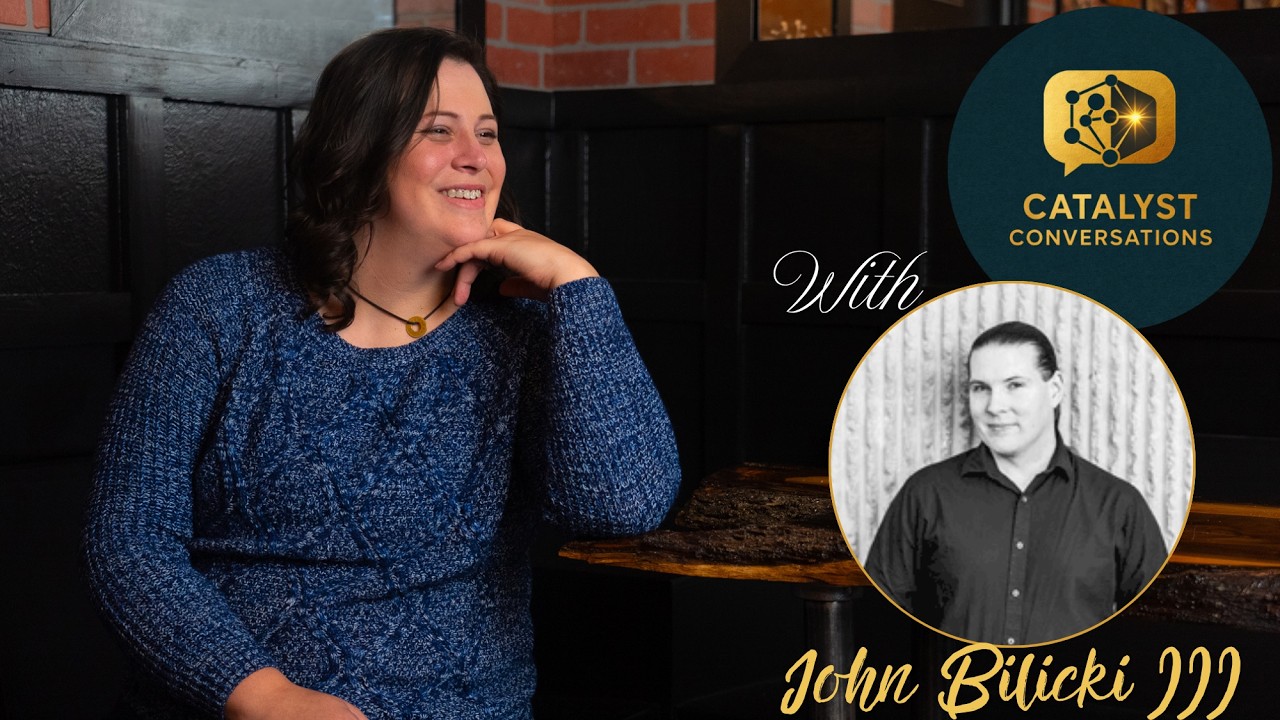
Technology strategist John Bilicki explains the convenience paradox: tools meant to save time often create more work instead. He shares how a custom email feature helped a 70-year-old clear 10,000 messages, and argues that leaders should choose technology intentionally, use AI as an assistant rather than a creator, and stay human-centered to prevent chaos.
Chapters
Technology was supposed to make life easier. Somewhere along the way, though, many of us found ourselves spending more time managing technology than benefiting from it. We update apps, we reset passwords, we organize the digital tools designed to help us organize our lives. And somehow, instead of creating freedom, technology often creates another full-time job. And today's conversation isn't about rejecting technology. It's about reclaiming it because leadership isn't about Using every new tool that appears, because there's a lot of them every single day. It's about knowing which tools actually support your clarity, which ones create unnecessary complexity, and how we stay grounded while innovation continues to accelerate. I'm excited to welcome back John Belicki. John always has a practical way of looking at technology, not as something to fear or worship, but as something that should serve people. John, welcome back to Catalyst Conversations.
Greetings, Desi. Thanks for having me.
Absolutely. John, before we dive into AI and automations, I'd love to start with something almost everyone can relate to. Have you ever had one of those moments where technology was supposed to save 5 minutes, and 45 minutes later, you're resetting passwords, proving you're not a robot, and wondering if that CAPTCHA secretly thinks you're failing life?
I mean, I work in technology, so it's, it's not if, it's like how many times a day. Um, Google is asking me to click on buses and palm trees and staircases and motorcycles, and it's like, I just— can I watch a 30-second video and not spend 50 seconds doing puzzles? Um, you know, and there's, you know, email and spam and oh my goodness, all the stuff that you get in there. So I think, you know, when we're— technology is supposed to be about automation. All right. So let me ask you, what's the difference between beer and whiskey?
Hmm. The ingredients that are used to make it.
All right. But in the context of automation?
Well, that's an interesting conundrum. I've not thought about that.
Well, not everyone's interested in the scenic route.
Right.
So when we're talking about automation, the point is that we don't care about every single possible detail that can be shoved in our faces. At some point, we've got to delegate things, and not everything needs someone getting paid to sit down and go through the mundane, right? We want to reserve human attention for the things that matter. So I, in fact, once— what was it, about a month or two ago? I called a hotel and they had an automated AI. There's no AI, but we'll just call it AI. Okay. And I'm like, I would like to talk with a human being, please. And it started getting snippy and they literally told us, told me, Yeah, our AI is a bit snippety. I'm like, and why are you using— why don't you pay someone to answer the phone? Because I'm— we're all gonna ask for a human being anyway. And then there's the things that, why am I doing this? Why, why can't this be automated? So I think it's about the context that matters there.
Yeah, yeah, no, absolutely. I love that story because we've all been there. We've all been there. It's such a perfect reminder. That convenience and simplicity aren't always the same thing. Yeah, right. Sometimes we confuse more features with more freedom, and more isn't always better.
Oh, speaking of convenience, I got a little story for you. Keep it— this one short. About 2 decades ago, it's 2 AM, and I wanted something to eat, and the options are kind of limited at 2 AM. So I went to this restaurant with a big M on it. And I ordered a double cheeseburger meal. Now, when you go to fast food restaurant at 2 AM, you can expect a mystery bag and some attitude. And so instead of getting a double cheeseburger, they gave me a double cheese. So convenience and automation is about putting things in the right order. Okay, so I'll give you an example for restaurant workers out there. 1, go to work. 2, go home. 3, then get high. So, you know, um, but convenience is very important, and I think it's, it's about knowing what corners are appropriate to cut and which are not.
Right, right. Now, John, for listeners meeting you for the first time— there inevitably will be some— I'd love to dive into a little bit more about your work in the lens through which you approach technology. What keeps you passionate about helping people navigate this rapidly changing landscape that we call technology?
So what works doesn't change. The approach changes. The perception of it changes. Okay. If you think of a relationship, right? Relationship, you know, how many people have you met that are very attractive but were total crazy pants, right? So, you know, okay, looks matter, but there's also the substance of the person that you're gonna engage with. So when we're talking about how things need to change, change— I wanna give you a little perspective. Software runs on hardware that runs an electrical grid on everything works. How many layers of 100% human, 0% natural? 3. Is there? Okay. We should have total full control over this dominion. All right. But for some reason we don't. Okay. And things need to change for the sake of change. No, they don't. Things change because people get these ideas in their head and, you know, oh, we— they got rid of the founder who had a vision and brought in the numbers guy and, oh, I know it's a good move. The guys who are doing the sales, let's fire them and our numbers will go up because that makes sense, right? So you've got to focus on what works, what stays working, and why.
Got it. One thing I really appreciate is that your perspective is always practical. You're not chasing every shiny object. You're helping people build systems that actually reduce stress instead of adding to it. Now, how, how do you personally decide whether a new press— a new piece of technology deserves a place in your life?
Let's talk about AI for the moment. Okay, AI— there is no AI right now. Okay, we are 5 decades away from anything remotely being AI. All right. I'm sure you're familiar with the rough saying, it's easy to fool people, right? The rough saying. Okay. Now, don't get me wrong. There's some amazing technologies, but we've got to call things by their proper name. That's one of the— one of my favorite quotes by Confucius. The beginning of wisdom is to call things by their proper names. Okay. We're at this point where I would not be surprised if someone walks on stage with a banana and says, this banana is AI-powered. Everything is AI powered, right? It's not. So, could you reiterate the question for me?
Yes. How do you personally decide whether a new piece of technology deserves a place in your life?
Whenever— I'm gonna touch on sales for a second. Sales, when done right, is like a cheeseburger. Okay, the bread is the emotional appeal. Okay, the meat is the substance. If you go to a restaurant and they give you half a pound of bread with an ounce of meat, probably purely emotional appeal, then it's it's not got much of any substance. Okay, so when I look at something. I ask, what is the intention of the people who are saying this is working, this is good, etc.? All right. I want to measure the substance, the end results, the why, the how, the details. So, you know, is there a better way to do something? We've actually had Multiple industrial revolutions, actually, but people just think, oh, it's just one. No, we had steam power, okay, but then you'd have 2 factories in the same town producing parts for the same, let's say, tractors, but they weren't compatible. So, and then, so there's just the issue of standardization, you know, and the metric system and stuff like that. Okay, so we've had multiple industrial revolutions. So at the end of the day, when you come across something new, it's how is this going to actually help? Is it hype? And ask people. And I see so many businesses, like an example, I love technology. So, you know, AMD is one of the businesses I buy their parts from. And I wish their marketing department would talk with literally everyone talking about All the other hardware products and say, hey, is this a good idea? And they would say, no, please don't do that. We don't want to have that kind of conversation. We want to have a positive conversation. So if you don't know, ask someone who does. And if they seem, you know, and then ask someone who disagrees. And then you can get an idea of the balance. Or I think it was you actually the other day says, The harmony,
right?
Because you want— because the whole point of that automation is to ultimately bring you harmony to your life,
right? Right. And one of the things that I see a lot in the entrepreneurial space are people, people are jumping in feet first on things that they don't even need. And, and that's kind of what I'm pointing to here. So thank you. Thank you for elaborating on that. Yeah, I wanna circle back and talk a little bit more on, on what we are calling the, the convenience paradox. That convenience paradox that, dang it, right? Technology promises to save us time and inevitably somehow we're spending hours maintaining those tools that were supposed to save us those hours. Why, in your opinion, does that happen?
Maybe email might be a good topic.
That might be a good topic.
Alright. So I released the mail. So I have my platform, CMS and CRM. In the CRM, I have my mail module. Module is a major part of the system. And as I'm test— I'm working on building my system, I've gotta deal with literally tens of thousands of emails. A lot of these are HTML emails and HTML emails, and I got to make sure my system handles everything without, you know, the, the gunk clogging things and stopping everything. And I have a neighbor and a friend who is in her 70s, and she has 80,000 emails. She doesn't have a chance in hell. And I looked at the problem. I said, this is actually a lot easier to fix. It's very easy to fix. So what I did is on my platform, on my mail module, I have a feature called Clean Inbox. Okay? And what it does is very simple. It counts all the emails that are in your inbox and that are not starred, and it figures out who sent you the most emails and sorts them. And so this person out of these 80,000 emails sent you 5,000 emails, 4,700, 4,670, so on and so forth. Okay. And now keep in mind, this is— she's 70. All right. When it comes to conversation, our conversations go like this. Hey, how's it going? John, that damn phone, that damn computer, blah, blah. Okay. That's how she feels about the convenience of technology. All right. I says, okay. So I go, I says, look, let's test this new feature out. We sit down and I explain when we check that in that that checkbox, it will select all the emails for that sender, just that sender, just in the inbox, and that are not starred. Okay. So it says, do you want these emails from this sender? And he's like, no, it's promotional, promotional, just saying promotional. All right. And after about 1 minute, we've got 20 checkboxes selected. We click on delete. It says it's gonna move all this to the trash just in case you screw it up. Alright? So you got, you got a safety net. And we just click delete, and it just, the system just goes. And after 5 minutes, we deleted 10,000 emails. That was the very first test. So now it's not everything's done and everything's, but She's no longer in pitch black. The sun has risen above the trees. There is hope. All right. Because you took a problem, especially for someone who doesn't even believe there's a chance in hell that there's a solution.
Right.
In a few minutes, we're strongly moving in the right direction.
Right. It totally reminds me of something we talk about often here at Catalyst, that clarity liberates. And technology without clarity in the solution multiplies, multiplies the confusion and the being stuck in the weeds, right? The tool isn't the strategy. The tools should support the strategy.
Yes.
Right? So I think there's a little bit of a piece there that we could dive into of understanding what the tool actually is before you commit to it. Because in a lot of cases, as I mentioned a few moments ago, that you're— you don't need that tool. It sounds good, and it sounds like it's something you need, and in reality, it's not. Right? And that's about making decisions from alignment. Right?
True.
True. Okay. I want to talk about the update dilemma.
Oh, here we go.
Here we go. Here's another one everyone has experienced. Right? The computer announces an update is available. Right now you're negotiating with your laptop like it's a coworker. Do I install it now and risk everything breaking before my meeting or ignore it until the computer starts acting like I violated that company policy?
Yeah.
Right? What are your thoughts on that?
So updates are entirely subjective to who is doing the updates and why. Microsoft is a perfect example of where I disable all the updates explicitly. It never even bothers to ask me. I am at a point where once I have 2 to 3 months of dedicated working with Linux developers, I'm never going to Windows 11. My policy is, and I'm very explicit, if you install the spyware that's Windows 11, you are getting fired because security is very important. And there's— I mean, it's just bad at this point, right? The security with Windows and all the broken features, whatnot. You gotta know what software is being updated and why. And so I'll give you an example, your browser. You should update your browser, generally speaking. There are some browsers that you shouldn't be using like Edge and Chrome, but that's fine. We get that. No one knows everything because some browsers are spying on you and they add spyware to the things like Windows is adding spyware. If you have the right tools, you're not worried about updates. As I'm testing out Linux distributions, it's not forcing updates and everything's open source. Now, don't get me wrong, closed source can be very solid because we look at WordPress and there's an update and it breaks the 15 extensions that were broken because they didn't know code. And so they just installed all this stuff from that, but there's all this version— it's a nightmare. All right. And so if you're using the right tools, the right software, you're gonna avoid upgrade hell because the people that are in charge— you wanna use things where people are using it and have a vested interest in that success. I think Linux versus Windows, that's a good example, and it's not a technical nightmare like it used to be. I think with browsers, like I use Waterfox and Firefox as an auxiliary. I, you know, I only use Chrome for testing. So it's really subjective, and that's where if you're not technical, again, ask people, and then if you really don't know, make sure you get conflicting opinions, because if you don't have conflicting opinions, you don't have the entire picture.
This conversation, it really feels bigger than software. That is right. Businesses need updates too, right? Teams need updates. Processes need updates. Culture needs updates. And timing matters. So how do leaders know when to evolve, evolve without disrupting everything?
So when I work with clients, I will give you an example of how I do my updates, all right, versus like WordPress, right? So if you go to a marketing firm, they're going to build you a WordPress website. They don't know code, they install 15 extensions, okay? And their update and security policy is very simple. So like an example, WordPress has 1,000 security vulnerabilities a month. How many doors do you have at your workplace? Leave them all open all night and then, and then get on the, the PAs, say, hey, please come rob us. You are still more secure than WordPress. Okay. So when you have a marketing firm that's trying to be responsible, okay, WordPress. So the finger is the website and here's WordPress, the software, right? Mm-hmm. They have— here's a website, here's a website, here's a website, here's a website. They gotta update every single website one by one. That's kind of a pain in the button. What if we just don't do that because the clients aren't paying attention? Right? That's the reality of what the fact— you know, it's 40% of the market. Okay? So when I do my updates, this is how my setup is. One system, And everyone's on there. All right. So this person's having a problem. Like, you know, I'm chatting with a lady who's having problems with their email, right? Well, I've already noticed the problem here and I fixed it and I fixed it. This. So I take this once everyone gets the update, everyone gets the fix. All right. And so because I build the systems in this certain way, I know what people love. And we all know what people hate, all right? Because if there's one thing they're going to tell you, you know, it's what they hate. You know, like, I'll give you an example with broken systems. I was having a business call about a month ago. And now I know my cell phone reception is pretty good, but the gentleman I was talking with, his cell phone reception was the equivalent of Marilyn Manson showing up to a Baptist convention. So I know what works and I know what doesn't, and I know where the fault lies. Okay, not him, just the reception area in this area, right? So it's about accountability, and if you don't have the accountability, then what is the guarantee that if you don't update, then you get hacked? Maybe. Or you do update and then who's the guy who did the melting watches?
Oh, Jackson Pollock?
No, that— no, we're going back another 100 years beyond that. But you don't want your computer acting like that painting, right?
Right. Right. Absolutely. Okay. We talked about AI a little bit. A little bit. I'm gonna dig deeper into the AI rabbit hole because that's what it is. Okay. Right? And, and we've all seen it. AI is probably the biggest conversation happening right now in the business space. And here's the irony that I see. AI promises to save us hours, at least in theory, right? Instead, I, I personally know people who are spending hours upon hours upon hours researching the AI. Right. Right? They're watching the reviews. They're comparing those platforms. They're downloading those free trials and never finishing the work they open the laptop to do. Why do we do this?
So, I mean, you— I'll give you— there's the tools that work and the tools that don't. Okay? We are— so it's, it's software. It's, it's more refined software supposedly because there's so many things that are being called AI, including the banana. Okay, so I give you an example, um, a large language model. Okay, large is like something like, um, ChatGPT. That's like the most famous one, right? Or Google Gemini, or what they're using on X or Twitter or whatever. Okay, and there is what you don't do, and there's what you should do if you're going to do this, right? Um, so on occasion I'll write something up and I'll say, How does this sound? You know, how's my, you know, because there's spell checkers, okay? But spell checkers don't catch everything, all right? You know, what was the saying? When life gives you melons, you need a proofreader.
Okay?
So I think large language models are useful for proofreading. What what you're saying, right? But at the same time, there's some really dumb stuff they do. So you don't go, hey, write me an article from scratch about this. Wrong. Okay, because guess what Google's doing? They got an AI and they're searching the web. And so when they look at the web and they see an article and it screams AI generated, they they they don't want that. even though they want you to use their Gemini. It's the irony there. If I write an article, I'll say, hey, give me a score and then give me find and replace, and then I will look at what it is and say, okay, this is out of context or this is removing my personality. But I'd say maybe 60% of the time, The suggestions are useful, so they— so there is value there, but you have, you have to be in control, okay? Um, you're the mother, it's the child, all right? And so you're the one who's supposed to be in control there. Um, if that, if that makes sense.
It absolutely makes sense. That last line made me laugh because my kids Are sometimes in control of me. That's just the way it is. Right. And what we're really pointing to here is technology should remove the friction. It should not become the friction. And it's a really, really important distinction. Like you brought up ChatGPT. I use it as an efficiency tool, a productivity tool. I don't use it to generate.
Yeah.
Right. I use it to speed up what I'm doing. I don't use it to fully create without proofreading myself, right?
Yeah.
Right. Never trust something that is fully, fully AI generated without reading it first.
And it'll, it'll keep saying, hey, you know, there's a cliff, let's drive off of it. Like, this is the 4th time. Set an account-wide preference, no driving off the cliff. It's like, okay, you wanna drive Near the cliff, right?
So, yeah. Yeah, no, absolutely. Like, for me, I have, like, I've trained my AI— well, I'm calling it AI, right? Quote unquote— that I don't want only the positive feedback. I also want what I'm missing, right? Because what I experienced is those softwares are designed to give you the positive, to encourage you and uplift you to do the thing that you're trying to do. But I've embedded in it now, hey, give me the full picture. What am I not seeing? What are the barriers that I'm going to come up against? And that has completely shifted how it's useful to me, as an example.
Okay. I would say, just to kind of respond there, like I've mentioned a couple of times, If you don't know, if you're— if you don't feel qualified, right, and you should always qualify yourself, and you should always say there's— there is something more that I don't know. Okay, it's not to belittle anyone. I'm not God. You're not God. Okay, we don't know everything, and that's fine. There's nothing wrong with that. Get an opinion and make sure you get conflicting opinions.
Yes.
All right, because there's what you know you don't know, and there's what you don't know that you don't know.
Absolutely. Absolutely. And you're never gonna know what you don't know, right? Until you continue to qualify yourself. I'm a perpetual student for that reason. I will never stop learning. Right?
Exactly.
I want to zoom out for a minute here, John, you know, because technology isn't just changing workflows. It's also, you know, it's changing leadership, it's changing communications, changing expectations. How In your world, do leaders stay human in an increasingly digital technological world?
Call your own phone number. So I've done cold calls in the past. Now, this is when I talk to people, I says, look, if you're going to send me a referral, only send me people who actually want to succeed. Everyone says, oh, I wanna succeed. Not so much. Right? 70% of phone, phone numbers I've called, net, you know, I, I go business networking. Okay? You gimme your card, unless I think you're a total crazy pants, I'm gonna call that card. We spend a few minutes talking. I, I'm gonna follow up, see if, if there's something that, you know, see how we can work together. I got like 2 people ever, 20 years of networking. Ever bother to do that, right? Call your own number. Um, my last host, the phone would pick up and the, the hold music would be blasting. Okay.
I hate when that happens.
And then they would pick up the phone and it was just like they're whispering from 10 houses down.
Yes.
All right. And it's like, are you serious? All right, and it's you got to go through your own systems, right? Put wear your own shoes for goodness sakes, right? Or or the shoes of of your of your clients, right? This is insane, right? And here's the better thing: I would say ask you know ha ha ask someone to dial a number. All right, don't tell the other person. All right, so you get a friend or a colleague, all right, and you say, I want you to help me get support. We're not going to tell you who we're calling. And you dial the number, you hand them the phone, and watch the fireworks begin, right? And you got to get— and that's part of psychology. And there's an interesting— about different cultures and businesses and how they do meetings and hierarchies and whatnot. And so one of the most important things I think in business psychology, and I think a lot of people miss that. Okay, I love psychology. Maybe not all the things it talks about, right? But I give you an example. All right, one-on-one people are amazing. In groups, yeah, not so much. All right, so I give you an example. If you have a business meeting, right, and you have a vote, never have an open vote ever. And it's, it's, it's, it's counterintuitive, right? Because like, no, I want everyone to share. But here's the problem is if you're surrounded by yes people, yes, yes, oh yeah, yes, that banana is AI-powered, definitely. We should throw billions of dollars at that banana, right? No. Okay. The more people say yes, all right, that's like the guy who's asked, hey, I'm late for the funeral. What's the fastest way to the cemetery? Oh yeah, put on a blindfold, slam on the gas. Okay. Don't do that. Okay. So you want people to be comfortable saying no. All right. This is wrong. This is off. This isn't working. And, you know, there was— I came across one of those motivational posters. Cliché, maybe. Okay. But it's true. All right. If you promote the wrong people, you'll watch the right people leave. Right. I give you an example of my workflow, is I log everything that's wrong, everything. Let's take this horribly technical aspect of web development, make it into farming, nice and simple. If there's a tick on the back of a pig 10 miles that way, I know, and my system will log it, and I hear a sound in the background. Now, I'm going to hear it, I'm going to finish what I'm doing, Then I gotta look at that and like, oh, I'm wrong. It's not that I'm wrong, it's that I need to know that I'm wrong. 'Cause no one cares about my chest-thumping egotistical mania, all right? No one cares about that. They care about the end results, okay? So when I called the same hosting company for 10 years and I'd have to like babysit the phone to not be disrespectful, 'cause they don't know, they don't call their own number. I'm not calling the workplace, right? And you— I've got— but I don't know if it's gonna be 10 minutes or 20 minutes before they answer the phone. So look at everything you're doing from your customer's perspective. Be prepared to be wrong, but have the attitude of, I wanna be— I wanna know that I'm wrong so I can fix the problems. Mhmm. Because if I'm not aware of it, my customers are. And the, and the, the big thing is when, when you'll have customers who will complain, How many of those customers encounter those problems are not letting you know about those problems?
Right.
And they just go to someone else.
Right. I mean, it definitely plays a big part. I've had times where I was on hold for 3 hours. By the time they answered the phone, I was frustrated to say the least. Or I've done a callback and it's been like 5 hours since I, you know, put myself in a queue to be called back. And then they call back in the middle of a meeting. Right?
You're right.
I mean, these things happen and they definitely impact the customer journey. They definitely impact how you're showing up for your audience. Right? One of the things that we believe is that here at Catalyst is that structure should support people, right? Not the other way around.
Yes.
Technology is one more form of structure. When it's healthy, for me, it creates freedom. When it's unhealthy, it creates overwhelm and chaos.
Yes.
And that's a powerful leadership lesson regardless of the industry you're in. Okay, John, before we move into our leader lightning round, I wanna leave listeners with a few practical actions. If someone feels digitally overwhelmed, Where should they start tomorrow morning or today?
What's your bottleneck? Ask what your bottleneck is. Your bottleneck— now, again, not to be negative, your bottleneck could be you. It could be an ignorance of, I don't know the process, or I'm not aware enough of a part of the process. All right? I've talked with 5 different people. They all say the same thing. I don't have someone saying, no, this is the thing. We need to find, you know, Harry, call 20 people. Find a guy who's gonna disagree with everyone else. We don't want yes-men. You know, your bottleneck, who's the vendor that you're working with? All right? Why are they doing updates? You know, is it, hey, this piece of software is gonna help save time because we have to endure this. And we've addressed this, or is it this cool thing, or are they getting political, or whatever the nonsense is? Is it substance or is it noise? So identifying that bottleneck, and I think that's a big part of it, is especially with the smaller businesses, one of the most important leadership goals when you're still working in the business until you can start working on it, is find and identify the bottlenecks over and over and over again. And then once you get to this point where you just have growth, I think maybe, and I'm not entirely sure, 'cause this is kind of something that's kind of dawned on me at this moment, being able to hire people fast enough is probably the bottleneck you want. That's probably gonna tell you we've got our systems in place, We've got good policies, we've got good training, our associates know how to handle the situation. They know when to say, oh no, it's above my pay grade. Let's get Nancy on the phone with that one, you know. Because when you have people as a bottleneck in a positive way, that means you've probably gotten everything else sorted out.
Mm-hmm.
That's probably where you wanna be. I could be wrong.
Right. I think it has to do with context again, as you mentioned in the beginning. Right. And it's, it's all very valid points. Very valid. All right, John, you ready for some more fun with the lightning round? We've done this before.
You ready to do it again? Yes. Okay.
One piece of technology you genuinely couldn't live without.
My macro keyboard.
Okay. One technology trend people worry about far more than they should?
Updating Windows.
Okay. One habit every leader should develop in today's digital world?
There's too many. Find the guy who says no.
That's a great one. It's really a great one. Paper notebook or digital notes?
I mean, where are we having the conversation? Did you call me and it's like, I woke up 5 minutes ago, I'm not in front of my laptop. I mean, you know.
Again, context. What's your preference?
It's subjective. If I make a list and I go grocery shopping, I'm not lugging around my laptop. I
don't—
I'm not going to put it on the phone. It takes me 20 seconds to do this on a notepad, and it takes me half an hour to type in 12 words on a phone.
That's why we have talk-to-text.
Right. Oh, and talk-to-text. And you gotta love talk-to-text. I got a friend who was talking with his girlfriend, all right? And he, you know, he's doing talk-to-text, and his girlfriend's sending him Family pictures, right? And he's kind of country. He's like, yeah, keep them coming. And autocorrect changes M to me, and that's an entirely different conversation. So, yeah.
Oh, yes.
And please don't text me what you can email me, because doing this on a phone for 20 minutes that I can do this on the keyboard in front of my 32-inch screen in 10 seconds, Email me, please.
Okay. All right. Bonus one. If technology disappeared for one weekend, what would you do?
Party.
There you go. There you go. I love it. John, this has been such a refreshing conversation because what we've really talked about isn't technology at all. We've talked about intentionality. Technology will continue changing. AI will continue evolving. Or being born, as it were, right? Because we made that distinction. AI isn't really here yet. New tools will arrive every week, and our responsibility as leaders remain the same: to choose clarity over chaos, to build structures that genuinely support people, right? And to remember that no piece of technology can replace wisdom, relationships, empathy, or purpose. Those are still, and will always be, Right? Our greatest competitive advantage. John, thank you for returning to Catalyst Conversations and for reminding us that the goal isn't to use more technology. It's to use the right technology in the right way so it gives us back what matters most— our time, our focus, and our capacity to lead well.
Don't forget the peace. And I— now I know why married women ironically appreciate funerals, because they really could use that moment of silence.
You just had to throw that last one in there, didn't you?
Yes.
Yes. To everyone listening, if today's conversation encouraged you, challenged your thinking, or made you smile because you've definitely argued with a software update before, share this episode with another leader who could use the reminder that technology should work for us, not the other way around. Okay. Until next time, remember to seek the clarity that liberates. To build the structure that supports and to protect the soul that sustains. We'll see you on the next episode of Catalyst Conversations.
More from Desi
Building More Than Websites: Designing a Business That Gives You Your Life Back with John Bilicki

The Power of Being Weird: Radical Self Acceptance and Leadership Without a Mask with Danielle Benzon




The Power of Authentic Connection as a Leadership Strategy with Mario Brondani

Why Clarity—not Hustle—is the Real Catalyst for Sustainable Growth with Kenny Perry

Financial Clarity as Leadership: Rewriting Your Relationship with Money with Joanna Tress