Why Clarity—not Hustle—is the Real Catalyst for Sustainable Growth with Kenny Perry

Kenny Perry, founder of Organic Mindset Agency, argues that unclear messaging kills referrals and burns out leaders. He outlines a three-stage conversion path: build relationships, establish authority and clarity, then discuss business. Without a clear Ideal Client Profile and aligned messaging, visibility alone stalls growth.
Chapters
There are a lot of talented leaders quietly stuck right now, right? They're visible, they're respected, they're doing meaningful work. And yet momentum feels inconsistent. Attention doesn't translate into action. Referrals stall. Growth feels heavier than it should, not because they aren't good enough, but because they aren't being understood quickly enough. Today's conversation is about that gap, the space between being seen and being chosen, between relationships and results. between effort and ease. My guest today is Kenny Perry, founder of Organic Mindset Agency. Kenny works with business owners who don't want louder marketing, right? They want clearer leadership, the kind of clarity that reduces friction, builds trust, and allows growth to happen without burnout or hype. Kenny, welcome to Catalyst Conversations.
Thank you. Thank you. Thank you very much. Appreciate it, Desi. It's a pleasure to be here. And obviously, I'm looking to dive deep into a conversation with you, you know, and really, really, you know, have these organic conversations, no pun intended.
Absolutely. Absolutely. Well, before we talk strategy, I want to talk experience. Every clarity-driven leader I know arrived there the hard way, right? Through confusion, overcomplication, and/or watching something good fail to land. Kenny, take us back. What were you seeing in yourself or in the businesses around you that made you realize something deeper than tactics was breaking down?
Yeah, something— that's a great question. When it comes to what made me realize that was just seeing people do the same things over and over and over again. And obviously, we live in a world now with the AI revolution where things are going to be evolving on a regular basis. And, you know, it's one of those things where if you don't evolve with the times, You're gonna be left behind. And what made me really dive deep into it is really helping people recraft their messaging and recraft their overall approach to make sure that they're able to connect with their ideal client profile. So that's what really made me come up with the concept of, of diving deep into the messaging to find clarity.
Amazing. What I'm hearing in that is that there's this tension between capability and traction. Right. You could, you could probably feel the value, but the market wasn't responding in proportion.
Correct. Yes. Yes. Sorry.
Yeah. Was there a moment where you realized this isn't a traffic problem, it's a clarity problem?
Yeah, absolutely. Because, I mean, if you look at people's— the way that they post, whether it's through social, whether it's through LinkedIn, whether it's through Instagram, whether it's through, you know, email marketing, whatever it may be, a lot of the time it's the same fluff over and over and over again. I mean, how many times How many times are you going to get somebody send a message saying, I can get you, you know, 200 to 300 quality leads in a month? And, you know, it comes off as generic, it comes off as spammy, and it comes off as overly salesy. So, you know, being able to identify problems, being able to, you know, give a value proposition is something that I find is very, very, very important, and it can be effective if done properly. Amazing.
How did that realization change the way you approached growth?
Yeah, the realization in terms of changing how I approach growth is I would say it really just comes down to, you know, understanding the why. And when you understand the why and what drives you and what made you start your business or made you reach out to clients or made you collaborate with people, that's what really pushes you over the top to really, really figure, okay, you know what, the why is the reason that's going to make me want to push growth. The why is the reason why I'm going to find find ways to align myself with strategic partners. The why is why I'm going to go network. The why is why I'm going to continuously market my business or find somebody to help me with my marketing of my business or finding a coach. It all comes back to the why at the end of the day.
I love that. That awareness alone is leadership, right? Because most people try to fix confusion with more output when what's needed in reality is refinement.
100%, absolutely. You know, fine-tuning messages is, is really, really, really important. And if you don't know how to refine, there's a ton of resources out there, whether you find somebody who specializes in it or you, you know, you have a coach, you have an accountability partner, whatever it may be, and they will give you the honest truth of yourself. And, you know, and I always tell people a good way to evaluate, you know, your branding or your messaging is if you Look at your brand or look at your site or your social media from the outside looking in. And you have to ask yourself, would I work with this company or this person?
Right.
And if you can be completely transparent and honest with yourself, that really helps you identify whether or not, you know, if you're being completely honest with yourself. And that's what really helps with the overall messaging of everything as well when it comes back to your why. And it ties into that.
I agree. Absolutely. Let's ground listeners in the heart of your work. Organic Mindset Agency isn't just about organic. It's about alignment between mindset, message, and systems. So in practical terms, who do you help most?
Yeah, business owners. I mean, at the end of the day, if you're a business owner, if you're, you know, the CEO, president of your company, and you feel that you need change done, or you need to have, you know, some enhancements, that's when you come to us and we can give you, you know, a lens from the outside looking in. We can really open your horizons in terms of, you know, reestablishing your overall identity for your business, essentially.
Amazing. And what's usually happening right before someone realizes they need your kind of support?
It could be just being stagnant. It could be, you know, social media traffic stagnant. It could be, I haven't updated my site in 10, 15 years. It could be, you know, oh, I just bought this company, or I just took over, and then I just want to have change. So, you know, if you want to change your branding, change your messaging, that's a lot of the time people come and they're like, hey, You know, let's just have a conversation with a marketing agency and then we come on and we have a very nice process that we walk people through in terms of, you know, re-identifying and, and, and, you know, reimagining how, you know, their overall, I'd say identity could, could look.
Amazing. So often what I'm hearing is these are relationship-based businesses, right? Coaches, consultants, business owners, people who rely on trust, referrals, and reputation. And yet Even with strong relationships, growth can stall, right? Why would you say great businesses struggle to convert attention into revenue?
Great businesses, because they don't understand who their ideal client profile is. That's a huge issue. There's people that are doing, you know, multiple millions in revenue that don't understand who their ideal client profile is. And a lot of the time when I have these conversations with people and I ask them, you know, what is the value of your client? Or, you know, your ideal client profile, a lot of time they, they get stuck on it and they can't answer the question in an effective manner that's like, okay, that allows me to understand that they really understand who their client is. So helping them identify that. I'd say also it's helping them see the value in whether it's digital marketing or, you know, whether it's, you know, getting their site revamped, getting their branding done, anything along those lines. It's helping them see the value because if somebody doesn't see the value in something They're not going to move forward with it. So, you know, helping them see the value in what they're doing and reestablishing the message to make it more universal, in a nutshell, as to why there's value in what it is that they're offering.
Amazing. In your experience, what breaks down first? Would you call it trust, understanding, or direction?
That's a very good question. And it's a loaded question. I would say in a nutshell, it really comes down to direction because if you don't have internal direction, how can you develop trust? And then, sorry, what was the last part of it? Understanding. Understanding. So yeah, so direction and understanding go a little bit, you know, hand in hand because you have to, one, understand what your why is, understand what your overall goal is. Direction is how you're gonna direct to get to that goal. And then in order to get the trust, you have to have your directions and your understanding. So it's like, it's like literally driving in a place you've never been to with no GPS and you're just going off of a whim. you may be able to navigate, but it's gonna be a lot tougher if you don't have a GPS. If you're in a foreign country or if you're in a place you've never been to, it's a lot tougher than if you have a GPS. So, you know, essentially to me, having direction and understanding is the GPS that's gonna drive you within your business and creating relationships.
I love that. That's a great metaphor. This is what I'm hearing. This is really where clarity becomes not just a communication tool, it becomes more of a business asset.
Correct. Yeah. Yeah, absolutely.
I love it. Let's move into the core of this conversation. You've said something powerful. Growth doesn't stall because you aren't talented. It stalls because you aren't being understood. I would like to unpack that a little bit. So many leaders are visible, yet still misunderstood. What's the difference between visibility and being clear?
Yeah, that's also a great question. The difference between visibility is being in front of people. So whether it's going to networking events in person, whether it's, you know, putting stuff on social media, whether it's, you know, just stacking up stuff on LinkedIn, that is where visibility comes from. In terms of being clear, that's where your messaging comes into play. So in order to have visibility, you have to be clear in your messaging, clear in your business identity, clear in many different aspects. But again, if you're just focusing heavily on the visibility aspect, Then you need to have— everything else has to be clear.
Amazing. And why is visibility alone no longer enough?
Because if you're visible and nobody understands what you do, or your messaging is not attractive, or your product or your service is not attractive, how are you going to get clients?
Right, right. So how, how in your experience does unclear messaging quietly erode trust?
Because if somebody looks at, you know, let's say you do a post and it's not clear in terms of the problem that you solve, it's not clear in terms of what you offer, it's not clear in terms of, you know, who your company even is, how can they have trust to want to work with somebody who's not even clear in their own messaging? If you look at it from that perspective, it's like, okay, if they're posting a lot of jargon that's, you know, just a bunch of words and a bunch of buzzwords, but it's not showing that they solve a problem, Why would I want to work with them?
Right, right. Absolutely. What signals confusion to a potential client, even if they respect you?
I would say the offerings, the offerings, if they're not laid out, if they're not clear. Again, I keep using the word clear a lot because it's— understanding is everything. And, you know, I would say clear. Clear messaging and trust is extremely important. And if you're on a call with somebody and they feel that, okay, you know, they'll say, you know, a lot of the go-tos is, oh, I can't afford it right now. I can't afford it a lot of the time comes down to I don't see the value in what you're offering at the end of the day. Right. It's not necessarily means they can't afford it. It just means that they don't see the value in it. I mean, there are situations, don't get me wrong, people just can't afford it. But a lot of the time when you hear somebody say, oh, I can't afford it, they don't see the value in what you're offering. It's just clear and it is what it is. You know, it's just they don't see the value in it. They're gonna say, oh, I can't afford it, or, oh, I gotta wait the next quarter. And, you know, whatever else other excuse it may be that instead of them just being blunt about it and saying, I'm not interested, it's, it's a lot of the time that's to go to because you have to go back and really evaluate. And a lot of the time what I do is when, if I'm on a sales call with somebody, I think about afterwards and I look at, okay, what did I do right? What could have I done better? And figure out ways to improve. So you have to really be as transparent as you can be as possible to understand, okay, if you watch yourself, say for instance, if you record your meetings, for instance, and You know, you go back and you look at it, and you have to look at through the lens of, if I was somebody being sold to by myself, would I purchase this service or high-ticket offer or, you know, the product, whatever it may be, you have to think of it through the lens of you have to be harsh on yourself, you have to be your own harsh critic, and look at it from the lens of would I do this, or, you know, even go to your friends, some blunt, honest friends, go to family members, and tell them, look at my website, look at my social media, If you didn't know what I did and you went to the site, would you wanna buy from me? And sometimes you may get some cold, harsh, harsh answers, but it's what you need a lot of times to be able to adjust and adapt, to be able to really figure out, you know, obviously how you're gonna put yourself out there.
Right. This is clarity. I love this conversation because this is clarity that liberates. When people understand you quickly, they don't hesitate. Right? They move. So let's talk about cost because confusion is expensive. Where do you see unclear messaging slowing momentum the most?
Yeah, I would say in terms of all assets, I mean, all aspects, if you're going out and you're networking or you're doing cold outreach or whatever it may be, and if, you know, it comes off as confusing or unclear, it's just people are going to shy away. They're not going to want to work with you. It's just, it's just, that's just how it is.
Amazing. And I totally agree. I see that as well. How does it affect referrals, word of mouth, or first conversations?
Well, people, first and foremost, going back to the, to the world of, you know, referrals, networking, strategic partners, however you want to call it, people refer who they like, know, and trust, and they know that you're good at whatever it is that you do. So if I'm going to, you know, refer somebody, you know, let's say somebody who's a chiropractor, I'm speaking from personal experience of working with them or based off of their reputation, whether it's through reviews, testimonials, or, you know, the knowledge that they have. So it just— it comes down to being able to make sure that you form strategic alliances with people that will actually vouch for you to want to make sure that you're getting yourself, you know, obviously to show that you're, you know, you're bringing people, whether it's certain traffic coming to your site or just whatever it may be, to want to either book a call with you or at least At least have a conversation. And that's— I feel that's important.
Right, absolutely. Why does being good at what, what you do no longer carry the weight it once did?
Because we live in an era now where it's almost like you have to be not so much braggadocious, but in the sense of you have to display some type of authority or confidence showing that you have, you know, the, uh, the moxie to really, really show that, you know, okay, this, this is why, you know, I'm good at what I do. And sometimes you can look at it as, you know, it could be looked at as somebody who's bragging. It could be looked at somebody who, you know, really, really believes in what you do. So like, you know, for instance, if somebody on there who's, you know, a sales coach and they're talking about, okay, you know, working with me, you can, you know, extra revenue by, you know, 3 or 4 times. Yeah. Okay. It sounds very generic. Okay. It sounds like everybody says that. But at the same time, they're establishing that they have the confidence and the authority to want to work with somebody. So, you know, whether it's credentials that are listed on there, whether it's experience, whether it's through LinkedIn profile, whether it's on your site, you're showing that you are qualified and good at what you do, and that's important. So, I mean, you have to almost explain it. I mean, to just go and be behind the scenes and people are referring or hoping that, you know, Google Business Profile will bring people in is not enough these days because, you know, we live in an era now where people have to really talk about what they do and, and, and show that they are good at what they do as well.
Amazing. Amazing. You have such good insights here. And how does confusion show up emotionally for the business owner?
That, well, that, you know, definitely that could show up on if they're on a sales call and, you know, there's the person on the other end that's getting an evaluation or getting a quote is confused about, you know, the quality of the product, the service, the offering, et cetera. And they're confused or they're unsure. So that really showcases it if there's not a will to want to purchase and move forward.
Right. Right.
Yeah.
So what I love this because confusion creates friction and friction creates fatigue on both sides of the relationship. Right. So this— I want to move into something right now and it's on relationships. And this might be my favorite reframe of yours. Relationships open doors and Clarity is what closes the loop. What does that mean in real life?
Yeah, absolutely. So repeat the question one more time. Sorry.
Yeah. How do— what does that mean in real life?
Yeah. So, you know, relationships open doors because you're trusted, you're liked, you know, people believe in what you do. It's— or whether you've done something for somebody else. It's like even in general, like if you look at even real life, You know, if I'm going to have, you know, a party and I'm going to mix friend groups together, they may have nothing in common. They may be completely different because a lot of people have different friend groups and then they bring them together. You have to think in your mind, okay, I want to bring this person around this person because, you know, they both have a common interest in investing. They might be completely different, different backgrounds. You know, they grew up differently, different parts of the country, different, you know, and then I just bring them together because of that common interest. So when it comes to relationship building, a lot of the time It's connecting people that may have something in common. Like, you know, a lot of times you meet with people who are like master networkers, master connectors. They always ask who you're looking to meet. And then I'm sure they have a plethora of people that they can refer, but there might be something that they picked up that they look at it and they're like, okay, this person might have this in common with that person. So I'm gonna try to, you know, introduce them and let them take it from there. And the reason why they do that, it's because that makes it significantly easier for them to close the loop when it comes to clarity. Essentially. So, you know, something as a common interest a lot of the time can lead to actual business opportunities. If somebody went to the same college, if somebody likes the same sports team, if somebody works in the same industry, if somebody, you know, is really into fitness, if somebody, you know, is into making, you know, gourmet pasta meals, these are things off of common interest outside of work that can connect people. to make them actually form a personable relationship that turns into a business relationship.
Amazing. In your experience, how do relationship-based businesses support trust without selling?
Yeah, how they support trust without selling. I would say in a nutshell, it's, you know, just being able to, I'd say, read people. I find a lot of the time people, it's not only just how well you speak, how good you look, whatever it may be, it's just if you have a certain aura to you that allows someone to feel that they can trust working with you. I feel that that goes a long way. You know, being a likable person in today's era goes a long way. It's like, yes, it's great to be business-minded or whatever. It's, you know, obviously if you have a business coach, they may be a lot more harsh on you or whatnot. But when it comes down at the end of the day to referring business or wanting to work with somebody, it's if you're personable and people like you, that's gonna get you in the door at least halfway.
Right, right, absolutely. Why does word of mouth stall when clarity is missing?
Because this— I love this question because this is something that I get in networking a lot. Because when I meet someone and I'm thinking about, okay, you know, who I can connect people to, I always ask somebody this. I say, please send me a quick paragraph. It can be like, you know, 2 sentences, 3 sentences max on who you are and how you want to be introduced. Because, you know, at the end of the day, I want to be able to give the strongest introduction that I could potentially do because I want to make sure that, you know, that person is being introduced in a manner where, you know, it's effective, it's strong, and it's through their words. So if I connect people, I want to be able to— it's a copy paste on both sides, and they'd be like, you two take it from here, because it's like, okay, nothing was left out. It's not going to be like somebody introduced me, it's like, hey, meet Kenny. Yeah, they, they make websites. There's millions of people that make websites. There's millions of people that do marketing. So it's like, okay, they make AI-powered sites within 21 days or less that are actually made with conversion focus, et cetera. Et cetera. That's a much stronger introduction than somebody just saying, meet Kenny, I make websites. And that's through my lens, through my words. So when that introduction is made, they may go look at my profile, they may look at my website, and they're like, oh yeah, I would like to connect with this guy, see what he has to say. So again, back to the point of a strong connection and understanding what somebody does is much more important in the world of networking than just looking at their page and just giving a half-assed introduction. Excuse my French.
Yeah, no worries. I love it. And what does an ethical conversation, uh, conversion path, uh, actually look like?
Yeah, so, you know, again, in the beginning, it's the relationship building in the beginning. They, you know, you have to establish authority, you have to establish credibility and trust. Once those 3 things are established, then it turns into, you know, obviously a work, uh, business conversation, and then turns into a business relationship conversation. So the 3 components are really having the clarity, the messaging, the trust in the beginning, and then it could just evolve from there.
OK, amazing. This is— what I love about this is it's structure that supports, right? It's not pressure. It's not persuasion. It's pathways that allow trust to turn into action naturally. So I want to zoom out again. When clarity is missing, leaders often internalize it personal failure. Yet when clarity is restored, something deeper shifts. How have you seen clarity change the confidence of the founders you work with?
Yeah, I've seen clarity change it because— okay, I'll give you an example. Like, if somebody has owned a company for a long time and what they've been doing for the last 20 years has worked, but then they're like, they're stepping down and they want to hand the business over to, you know, whether it's a son or another family member, They're gonna come in with a completely different mindset. Or if they just, they're still working and they hire them on, they're like, listen, you know, I wanna, I wanna get you to help me with the family business. They'll come on with the mindset that they have to evolve in a digital era. They're like, okay, you know, we have to have an Instagram that's present. We need to have a LinkedIn that's present. Then we need to have a Google Business page that's present. Where, you know, the previous owner that's had the company for 20, 30 years, is doing well, is not gonna think as much when it comes to the larger, you know, mind state when it comes to in a digital AI world. So that's what— that's another thing it really comes down to at the end of the day is, you know, that whole structure being shifted because of evolving times. And I like to use the evolution of AI and, you know, the evolution of, you know, digital marketing being so in the forefront that these are things that business owners must have to shift and adjust to.
Amazing. What happens to their energy when growth stops feeling forced?
When growth stops feeling forced. So what do you mean, like, when it stops feeling forced, where they're like, I gotta grow, I gotta grow, I gotta grow, like their mind is consistently—
Yeah, where they— where it just comes naturally. What happens to their energy?
Yeah, I would say what happens a lot of time with their energy, it becomes— they can become a lot more laid back because they're not worried about how they're going to get their next dollar. I feel that they can be a lot much more selective in terms of who they want to work with as well, because when you get to that point to where you can filter out who's going to be a bad client and a good client, because when they're in growth mode A lot of the time people will take whoever they can take because they're like, okay, you know, more business, more revenue coming in, but they're not really filtering out properly to be like, okay, you know what, they're not my ideal client profile, or they seem like they may not be a good client. Like, you know, for instance, like I've had, especially when I first started, I would just take anybody and everybody. And I realized when you take anybody and everybody that it's going to be more harm than good. And then you get to a point to where it's like, if somebody comes in and be like, I need leads, and you sense desperation, then it's like, you know, I'm thinking may not be the best fit because I know it takes some time to obviously, you know, gain traction. And if there's somebody that's really, really, you know, adamant about leads, then I can just filter it out right away and be like, okay, might not be the greatest fit just because I know that after, you know, month 1 or 2, as things are building traction, they're going to be stressed out about it. So being able to really filter and understand who will be a good working client and who wouldn't be, I find that's important. And I find that when you switch from growth mode to the point to where, you know, you're established, you have the luxury of really filtering and being able to filter that out essentially.
Amazing. There's, there's something profoundly human about this work. How do you personally ensure that growth stays sustainable, not just profitable, but healthy?
Yeah, it's really understanding what has worked and understanding how we can enhance what can work even better. So when you— like, a lot of times I speak to people and they're looking at potentially doing like a campaign or something, I want to find out what has worked, why has it worked, you know, what made you get to the point of building a system that's worked effectively because of this. And then when I'm able to determine that, that's able to make business— like, you know, my strategy be a lot more easier. So, you know, understand, like, when you really have those conversations with people, you want to make sure that you understand, you're able to determine what has worked for them.
Right,
right.
Yeah. What boundaries protect clarity over time?
Boundaries that protect clarity over time. I would say not going out of your wheelhouse. Like, if you have a certain skill set or certain expertise that you have and you have somebody that might be a potential client or asking you a question, don't try to overexert yourself to do something that you can't do. So you have to set a boundary to be like, I am great at X, Y, and Z. And if I'm good at X, Y, and Z, why am I going to, you know, extend myself to try to do something that I know I can't do just to basically presume a client or upsell something? So having strategic partners that you can align with in that sense to where it's like you can lean on them, potentially, you know, have a white label situation or potentially have a partnership collaboration and they master what it is that, you know, the client might be looking for. So that's what I feel is setting the boundary of not trying to do what you can't do. And have strategic alliances lined in place to allow you to be able to adapt.
Amazing. Absolutely. How do— I absolutely love this conversation. How do mindset and systems work together to prevent burnout?
Yeah, mindset is the foundation of everything. It's when you wake up, and I'm passionate about that word, as you could tell. It's the foundation of everything. It's definitely something that when it comes to, you know, your overall internal frameworks where it's like, okay, you wake up in the morning, you wire yourself a certain way. It's like, all right, I'm gonna go to the gym, I'm gonna hit my bench press max, my squat max, I'm gonna run X amount of, you know, miles on the treadmill. And then it's like, okay, uh, whatever my sales goal may be, whatever my, you know, day-to-day may be, you know, for whatever reason, it's put you in a sense of growth because you're consistently trying to lock yourself in to focus on something. And that's, that's, that's the main thing when it comes to mindset. And sorry, can you repeat the other part of the question?
Uh, I just asked how do mindset and systems work together to prevent burnout? Yeah. Okay.
Yeah. So systems on the other end is, well, you have to have the mindset to set the systems in place. So if you have an automation system set up where, you know, where there's newsletters going out or you have, you know, an outreach system going out, you want to be consistent with it. So when it comes to mindset and systems, the biggest word for me is consistency. Because if you have a system in place where you're posting every day on social media, that's part of the mindset because you have that mindset to get you there to the point to where you're actually doing it. Now, when it comes to the systems, you have to make sure that the one, the systems make sense, two, that the systems are in play to really, you know, help you make your job a lot easier. And then when you have the mindset and the systems in place and you're able to completely optimize your day and your calendar, that's how you really protect yourself from burnout. So you have to, you know, schedule X amount of X amount of hours per day for this, you know, X amount of minutes for this. And then you just tap at something individually over time. And then you have a system in place where, you know, certain times of the day are blocked off for certain things. That's the big thing. You have to make sure that you make a strict calendar and you stick with it. So if you go to the gym from 12 to 2 o'clock, you know, at noon, stick to that. Block that time off so that time is dedicated to that. If you have time where you spend time with your kids and you watch a show with them from, you know, let's say, you know, Uh, 5 to 7, block that time off. So therefore, when you have certain blocks in your calendar that are actually blocked off, it allows you to focus and, and, and not get burnt out because there's certain points of the day that are made for certain things. Or for instance, you take a Sunday and you work from, I don't know, 9 to 12. That's where you're creating content for the week. You do everything in bulk. Therefore, you can really optimize the schedule. So therefore, you're not going to feel like you're in burnout mode. If you did— went to a networking event, you want to filter through who you met at that networking event. Taking, you know, an hour and a half on, on a Friday to be like, okay, who did I meet? Why would they be good to connect with? You have that time. So every single point of your day, if you optimize it, and you can even use your AI to help you with that, it'll make your life significantly easier.
Hmm, that's incredible. This is, um, soul that sustains is what I'm hearing, right? Growth that doesn't require you to betray yourself. Right. I love this. Okay, so let's shift gears here for a lightning round. We're gonna do a fill-in-the-blank lightning round. Short answers from you, Kenny. First truth that comes through. Okay?
Yep.
Most businesses don't struggle because they lack clarity. Confusion shows up first as
unsure.
Okay. One sign your message needs simplifying.
No leads.
Trust breaks down before the first conversation when?
No confidence.
Okay. And one practice that keeps your leadership clear and grounded?
Consistency.
I love it. What stays with me from this conversation? Is this true? Right? People don't hesitate because they don't believe in you. They hesitate because they're confused. And confusion isn't solved by more effort. It's solved by clarity. Kenny, your work is a reminder that leadership today isn't about doing more. It's about being understood more quickly, more clearly, and more honestly. So I wanna say thank you to you for bringing this depth, restraint, and integrity into the conversation. If growth feels heavier than it should, don't ask, how can I push harder, right? Ask instead, where am I unclear? What might my audience be struggling to understand? And what would happen if clarity, not hustle, led the way? That's the kind of leadership that creates momentum without burnout. So again, thank you, Kenny. This was a fantastic conversation, and, uh, we'll see you next time on Catalyst Conversations. Thank you.
Thank you so much, Desi. Much appreciated. It's, uh, it was a pleasure having this conversation, and hopefully there's some great insight on here.
More from Desi

Technology Without the Overwhelm: Using Technology to Simplify Life with John Bilicki

Building More Than Websites: Designing a Business That Gives You Your Life Back with John Bilicki

The Power of Being Weird: Radical Self Acceptance and Leadership Without a Mask with Danielle Benzon

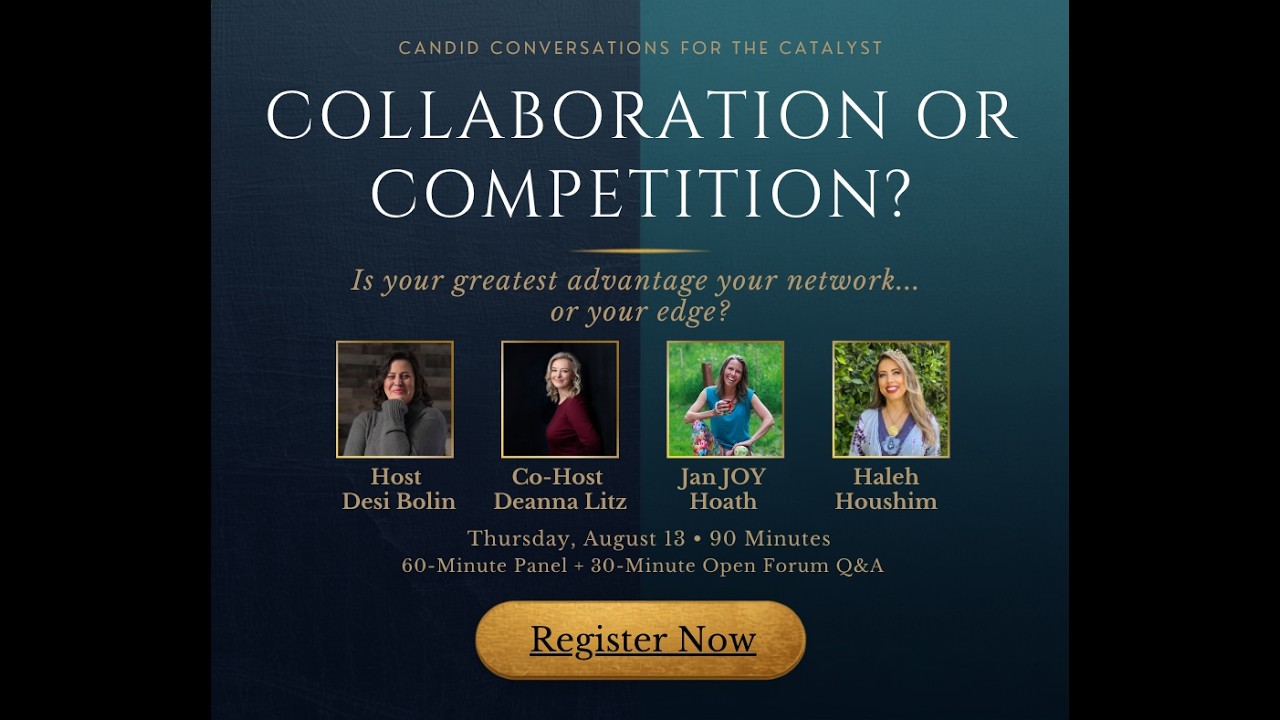

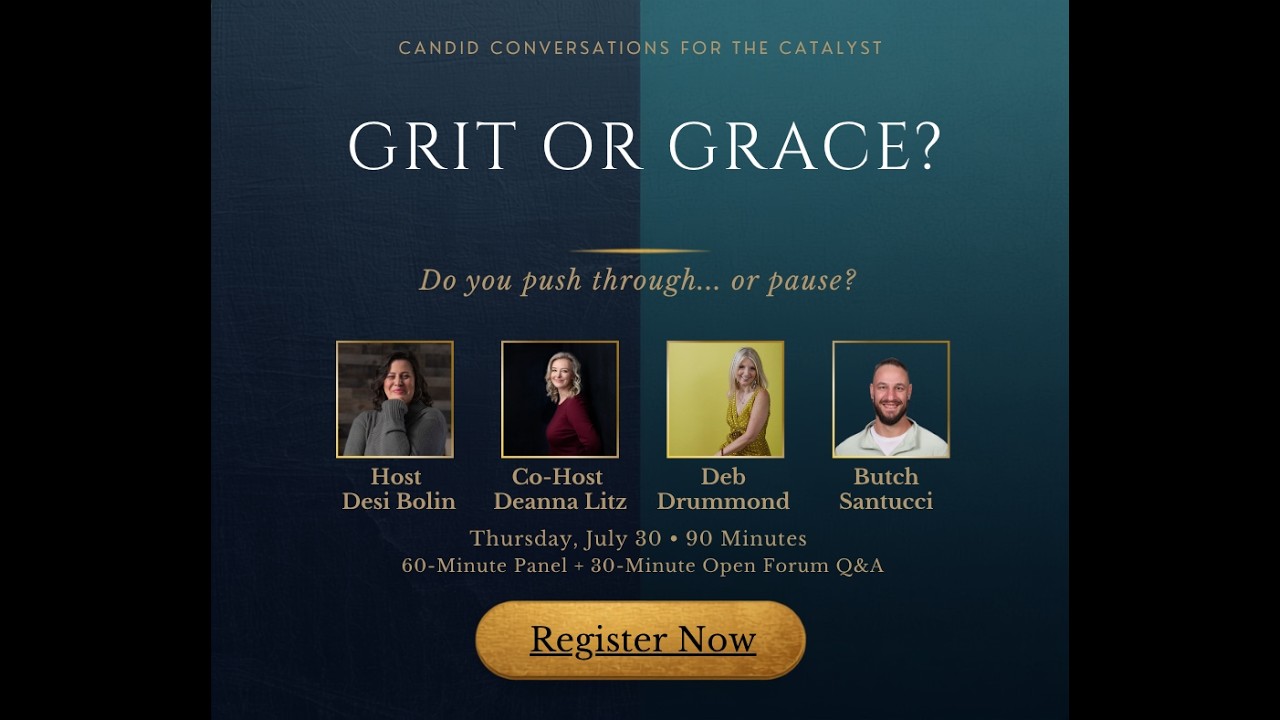
The Power of Authentic Connection as a Leadership Strategy with Mario Brondani

Financial Clarity as Leadership: Rewriting Your Relationship with Money with Joanna Tress