The Power of Being Weird: Radical Self Acceptance and Leadership Without a Mask with Danielle Benzon
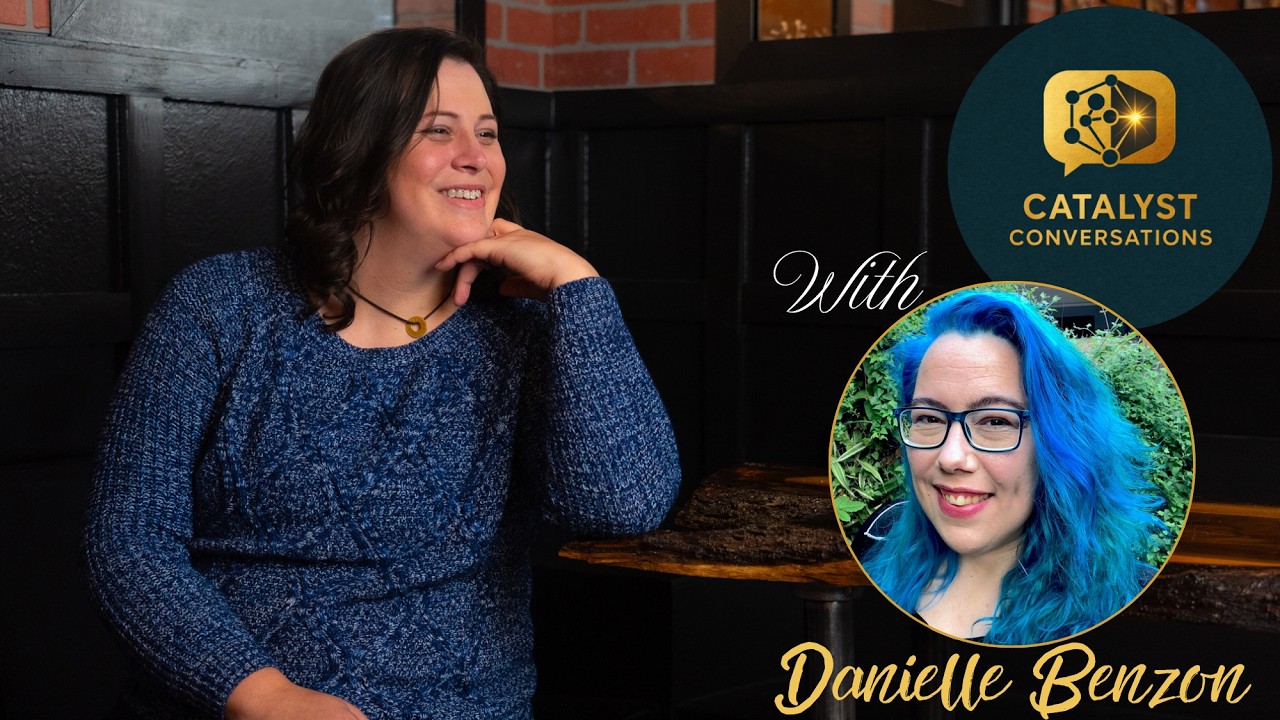
In this Catalyst Conversations episode, host Desi Bolin interviews speaker‑trainer Danielle Benzion about the transformative power of embracing one’s “weirdness.” Danielle shares her personal journey from a childhood spent trying to disappear to discovering authentic self‑expression through theater, which reshaped her identity and career. She critiques traditional, performance‑focused speaker training as stale and prescriptive, arguing for a model that honors each individual’s unique voice, especially for introverts, creatives, and “weirdos.” The conversation delves into the deep roots of speaking anxiety—primarily fear of judgment and imposter syndrome—and how radical self‑acceptance, emotional maturity, and presence can dissolve those fears. Danielle defines radical self‑acceptance as compassionate honesty that differs from resignation, emphasizing that growth requires acknowledging flaws while loving oneself. She discusses how emotional maturity enables responsible expression of feelings, preventing the misuse of authenticity as a weapon. The dialogue moves to organizational culture, identifying everyday behaviors that foster psychological safety (listening, consent, space for diverse expression) versus those that erode it (silencing dissent, mocking differences). Practical tools such as breath‑voice integration, deep breathing, and creating anonymous feedback channels are offered. Danielle also reflects on societal conditioning that suppresses uniqueness and advocates for early emotional education. The episode concludes with a lightning‑round where she highlights emotional maturity as a needed leadership quality, shares personal beliefs she unlearned, and offers advice to listeners to seek supportive communities, protect mental health, and stop trying to fit in. Contact information for her work (theinspiredspeaker.com, podcast, LinkedIn) is provided.
Chapters
To Catalyst Conversations, where we explore the ideas, stories, and leadership lessons that help us create lives and businesses built on clarity that liberates Structure that supports and soul that sustains. Today's conversation is for anyone who has ever felt like they were too much, not enough, too different, too creative, too emotional, too intense, or simply too weird for the room they were standing in. Because what if the thing you've been trying to fix isn't actually broken? What if your greatest leadership advantage isn't becoming more polished, more professional, or more like everyone else? What if it's becoming more fully yourself? Today's guest is Danielle Benzion, a speaker trainer who works with solopreneurs, business owners, creatives, and professionals who want to speak powerfully without forcing themselves in traditional speaking roles. Danielle helps people move beyond performance and into authentic expression. Her work centers around integrity, joyful self-expression, emotional maturity, and creating spaces where people can show up fully as themselves. Danielle, welcome to Catalyst Conversations.
Thank you so much for having me. I'm so excited to be here.
Oh my gosh. Oh my. Okay. I'm so genuinely excited for this conversation because I think so many leaders are exhausted from performing versions of themselves they think they're supposed to be. And I have a feeling we're going to challenge a lot of assumptions today.
Most likely. Yeah.
Most likely. Let's start with your story. When people see someone helping others become confident speakers, they often assume confidence came naturally. And usually there's a deeper journey underneath. What experiences shaped your understanding of self-expression and belonging?
Yeah. It's so funny. You know, they always say, you know, you're, you're called to do the thing that you struggle the most with. And that was definitely true for me. I was, So unhappy with who I was. I wasn't one of those kids that disappeared into the wall. I tried everything I could possibly think of to try and be one of those kids. But I've always just been very— I've always just been a lot. And I spent the first 20 years of my life trying to figure out how to vanish, how to disappear, how to camouflage, and it never, ever worked. So I wasn't that, but I was deeply unhappy with who I was and how I showed up in the world. And nothing more than to be one of the crowd, like that was my goal for a very, very long time. And then somewhere along the way, I kind of, I started acting lessons when I was very young as a way to kind of escape my life, to get out of, you know, to get away from the bullies for a couple hours on a Tuesday afternoon. Along the way, it's amazing what theater teaches you. You learn all these soft skills like leadership and emotional responsibility and empathy and all that cool stuff. By the end of my high school career, I was already starting to step into more leadership roles and trying to figure out who I was. It was really interesting because I got into acting because I was trying to get away from my life, but I ended up kind of figuring out who I was because of it. And then, you know, and then realizing as I started my business that this thing that everyone was trying so hard to do— how do we stand out from the crowd? How do we differentiate ourselves? And going like, wow, if you all just let yourselves be human, and if I embrace who I am by extension, then we all have our own differentiation points because we're all completely unique beings. So it was just— it was this really cool kind of discovery. I was a very Very cerebral, disconnected, neurotic actor, and I had to work a lot on my voice-body instrument specifically on how to get grounded and how to get connected. So I did a lot of work on how to just figure out who I was and how to express myself, and that totally changed my life. I was like I came home to myself in acting school, and it was the first time I was like oh this is what being at peace feels like holy moly what I'm not like constantly running away from something. I'm like, I'm here and I'm home and I'm present and it feels amazing. So learning all of those— I know this is a very convoluted answer, but it's a complicated question. So learning all that stuff and then going like, why is this not what we're teaching when we're teaching leadership skills and when we're teaching people communication skills? Why aren't we teaching them how to come home to themselves, how to figure out who they are? Because, yes, it's helped me in my business a lot. But it's helped me in my life just to, you know, find peace and happiness and love and all of those things that we're all looking for. It all comes down. It all comes down to that, you know. So, so I love, I love working with people and helping them, yes, with their public speaking, but also you can't express yourself if you don't know who you are. And so figuring that out as well and leaning into it because this idea that we're all supposed to be machines is— I mean, who— well, I know who came up with that idea. It's like the Industrial Revolution. But we don't need to be machines anymore. And it's actually our weird, wonderful messiness, our quirkiness that makes us appealing. So let's lean into that.
Yeah, right? I love that because, I mean, I did theater and drama too. And you're absolutely right. I mean, you get a lot out of it.
Yeah.
Such an important leadership lesson, right? So many people spend years, years trying to earn acceptance by minimizing themselves. And the irony is that the more we disconnect from ourselves, the harder it becomes to connect authentically to others.
Well, it's so true. And like, and I was bullied a lot as a kid, and I thought I had like bully me written on my forehead because it would happen wherever I went. Even with, you know, you introduced to a completely new crowd of kids, and within half an hour they've all decided you're the one. And I thought that I had like something stamped on my forehead. But it was because they could tell I was so uncomfortable in my skin. You know, they could, they could tell that I was, I wasn't comfortable. And as I got more comfortable with myself, as I started accepting myself, everyone else started accepting me too. And they're like, oh yeah, no big deal. And now that I'm weirder, outwardly weirder than I've ever been in my life, now because I accept myself and I don't really give a toss about what anyone else thinks. I'm amazed at how people treat me just, you know, so matter-of-factly. And, and I don't get any hate really compared to— this is the, the most hateless I have been in my life as well. And I'm like, I'm standing out the most, I'm the weirdest I've ever been, and everyone seems to be cool with it.
Yeah, I wonder why wouldn't they be? I mean, come on now. And really what you're sharing here is really so powerful because often we think authenticity is And, and what I'm hearing is that authenticity actually creates trust, and trust is the foundation of every meaningful relationship, team, business, and leadership journey.
And you just hit it on the head. You know what creates trust? Trust creates trust. And so when we can trust ourselves, trust ourselves that we're gonna be okay— I mean, you know, within reason, there are certain areas where you're not safe, and please be mindful of that. Don't be like, well, Danielle told me it was okay to, you know, be mindful of the realities of the universe. But without that kind of stuff, trusting yourself that you're going to be safe, that you're going to be okay. If someone doesn't like you, it's okay. And also trusting someone else. It's amazing how the moment we allow ourselves to be real and vulnerable, the other person will drop whatever, you know, whatever disagreement or argument or whatever they had, if you, if you let yourself be, and it has to be real, it has to be genuine. But if you allow yourself to be genuine, our human response is to be genuine in return. And it's like, it's like a switch.
Yeah, it's the law of reciprocity.
Yeah, exactly.
Yeah. Yeah. Oh, I love where this is going already. Um, you have described your work to me as Speaker training for weirdos, creatives, and nerds. And I absolutely love that. Tell us what that means. Who are the people you work with?
I work with the people who don't want to do the old school traditional, that really stuffy kind of— I feel like public speaking training hasn't evolved with the rest of the world. A lot of what's out there is still extremely stuffy, old school, and to be honest, just not really relevant. And because I come from a theater background, I didn't learn those rules of like, a good speaker walks about this part of the stage, or someone told me you should make eye contact for 20 seconds. Who's counting while you're making eye contact? I mean, come on. So it's just like, there's some weird rules out there. And I understand why those rules exist is because people try to quantify things, but you can't quantify human expression and connection. You have to just understand it. And we are humans. So you've got a good chance if you try. And because I come from a theater background, I'm very much about, you know, understanding the instrument, understanding why the rules exist. So you know when and how to break them, because that's really important. So the people that I like to work with are the people who don't fit into that standard model. They don't want to be boring. They don't want to be leeched of their personality in order to be professional. They want to be authentic, they want to be themselves, but they also want to be effective and they want to be engaging and they don't want to be unprofessional, but they know there's, there's something else out there. Usually they're like, they've got a big fear and a big fire, you know, that's often— those 2 things often coexist together. That person who is terrified of speaking because it is so important to them. Right. And there's that There's that thing going on, but it's not about—it's not about being a cookie cutter robot, automaton kind of automaton kind of person. It's about being expressive and being real and being genuine and really connecting with people. So often they're introverts. I work with a lot of introverts. Introverts make amazing speakers. You know, everyone's like, "Oh, but do you? What if you're not the class clown?" Class clowns don't actually usually make very good speakers. They tend to think they know everything. Sorry if you're— to anyone who thinks they're— self-identifies as a class clown. But, you know, the more coachable people are the people who make better speakers. And especially the way the industry and the world is trending, we're trending towards authenticity, we're trending towards being real and messy and not like a perfectly polished AI. So those are the people that I work with, the people who are Maybe a little bit unconventional, maybe a little bit shy, maybe a little bit introverted, maybe a little bit weird on the inside. They don't have to be as weird as me.
Mm-hmm.
I'm just there to kind of champion them on if they want to be. But someone who doesn't feel— they don't want to be salesy. They don't want to be the used car salesman. They don't want to be droning on and on. They don't want to kill people death by PowerPoint. They just want to make a connection. And they want to do it in a way that feels in alignment with who they are.
Oh, my favorite word, alignment. So good. I think that's so fascinating because you're right. Right. So much speaker training focuses on performance in an old, stuffy kind of model, and your work is focused on expression. In your opinion, what's the difference between performance and expression?
Oh, performance is one of those loaded words, you know, that has so many meanings. It's kind of almost become— it's almost become its opposite, you know. Yes, you want to be in performance mode because you want to be— you're giving something, you're giving, you know, a performance. You want to perform for people as in you want to deliver, not as in you want to be inauthentic. So there's the kind of performy inauthentic. I've kind of got this mask, this facade in front of me. I'm not being myself. I'm just being very jazz hands, kind of. That, that kind of performance is the type of avoidant performance I want to avoid at all costs. But I do want to perform at my best because I want to deliver something. So the word performance has become— I just, I just try not to use it, to be honest, because everyone just uses it differently. And I'm like, I just don't. Right. I'm just not even gonna bother to go there.
Okay. Well, let's go, let's go this route then. When someone comes to you terrified of speaking, what are they usually afraid of under the surface? Because we know it goes deeper. Is it really public speaking, or is it something deeper? The fear of being too much, for example.
Yeah, exactly. The fear of being too much. It almost always comes down to some sort of judgment, fear of judgment. I, and I I've, I've asked this of a lot of speakers. I used to open my, I used to open my workshop with this question and write down everyone's answers. So I have about 300 or 400 answers of this question. And pretty much all of them, 99% of them boil down to some sort of judgment. I don't want to look stupid. I don't want to be too much. I don't want to appear like I don't know what I'm talking about. They're gonna think I'm too fat. They're gonna think I'm not professional enough. It's all they think. And because we feel exposed when we're on stage or on camera, I mean, we are like, literally, we are standing for something, people are seeing us. That's the first thing is I need to— that's why I have to be okay with myself, because we're so terrified of people seeing through the facade, like through the mask to what we really are. And if we have imposter syndrome, if we're feeling like I'm presenting something that isn't what I am, people are going to see my fears about who I am, and they're going to think that's who I am. So there is some inner work that needs to be done around being OK with who you are, warts and all.
Mm-hmm.
And kind of getting— that's the first step I do with all my speakers is, getting in reality about how you come across. Because if you have that imposter syndrome, you always feel— even if you're putting forward this mask that is actually you, you feel like there's something that there is to see through or a wall that could come down. And then you feel in danger. Whereas if you don't put that wall up, then there's nothing to see through. Which is terrifying if you don't put that wall up because then you're like, oh my goodness, I'm naked in front of everyone. But when you're comfortable with who you are, and you're like, yeah, this is me. I have a big nose. I stutter sometimes, whatever. I know, I know what my room for improvement is. And I know what I'm good at, then there's nothing to divulge. There's nothing to unmask. And so that fear of— the fear of being judged is the biggest fear from public speakers by far. But also the other thing is that That comes from a self-consciousness, and I was actually talking about this on my on my podcast today on an episode that I've recorded that we can't be self-conscious and present at the same time. You have to choose one. I can either be judging myself or I can be present, but I can't be both. So the easiest way to get over that, to get over the like oh what if they think I'm not going to know what I'm talking about all that kind of stuff. Yes, it's to know yourself and. I have not tricks, but I have techniques that I teach my speakers to learn how to recover when you mess up, that kind of thing, so that you can build that trust in yourself so that you feel solid in who you are. But at the end of the day, if you're present, you don't have space to feel any sort of self-conscious. So learning how to get really present on stage and just be in that connection, you can judge yourself when you get off stage. Judge
yourself then. I love this because it's such an important distinction, right? Because often, I mean, it's kind of a mask of what we're afraid of too, right? We're often not afraid of speaking. We're afraid of being seen. We're afraid of rejection. We're afraid of people seeing actually who we are.
Yeah.
And, and this takes this conversation far beyond communication skills. It becomes a conversation about identity. Yeah. Yeah.
Yeah.
Oh, let's dive into it. Let's talk about radical self-acceptance, shall we?
Yeah.
This phrase—
I'm going to cry.
I hear it sometimes, and I don't hear it enough by far. And I think people sometimes misunderstand it.
Yeah.
To you, what does radical self-acceptance mean?
I think self-acceptance means having compassion and love for all of yourself. That's not the same as, like, if you do something wrong, going, oh, it's okay. Like, that's not acceptance. But acceptance is, this is who I am, this is where I am, taking radical responsibility for anything that I have done that I feel like isn't okay, but also having so much compassion for myself and just being like, hey, I'm doing the best I can. This is where I am, this is who I am. But acknowledging all of it. So there's an honesty piece, I think. I also believe in radical honesty. So radical self-acceptance, radical honesty, radical love, radical everything. I just like the word radical, really. I'm a '90s kid. But it's, it's that you can't grow if you don't know where you are, you know, like, you can't, you really can't work with yourself until you're in completely complete reality about yourself and who you are and what your faults are. And we all have faults. We all have things that we are ashamed of. We all have things that we wish didn't exist. And until you can learn, I mean, ideally to love them, but at least to accept them and accept them with compassion, not beat yourself— that's beating yourself up about something is not acceptance. You have to accept it and be like, this is who I am. And I love myself Regardless. And then we can grow and then we can improve. But until we acknowledge who we really are, we're living in denial and there's nothing you can do about it. You can't, you can't work with yourself. You can't shape yourself. You can't do anything when you're in denial because you're over here and reality's over here and you're just kind of floating along. Yes.
And you'll never improve.
You'll never You'll never be impactful. You'll never really get anywhere until you know who you are.
Right. How is acceptance different from resignation? Because some people hear self-acceptance and I think— and think it means never growing.
That's so— I mean, I suppose— I mean, I suppose resignation is a type of acceptance, but it's a really hopeless type. I always think of acceptance as a way of kind of accepting this is where I am in this moment. Who knows what tomorrow will bring? Who knows how I will grow? I mean, hopefully you recognize, hopefully everybody recognizes that they have grown to be where they are now. You know, you're not who you were 10 years ago. And I have a friend who's, bless her for saying this, because I do, I cringe at some of the things that I did even in my 20s, you know, like, or even in my early 30s, like, oh my goodness. I can't believe— I cannot believe I said that thing or did that thing or was that person, toxic person. But you know, if you don't make yourself cringe, if your past self doesn't make you cringe, it means you haven't grown enough. So growing is good, you know, and the fact that we are evolving is, is— that's, that's excellent. That's wonderful. That's what we want. So that kind of resignation of like, this is who I am, and I can't change. That's, to me, that's— I mean, it's just a victim mentality, and you're giving your power away to someone else. And You've only got one life, so let's live it to its fullest. I'm, I'm also— this is TMI, but I'm also a joyful nihilist. So I very much believe like, the world is chaos and has no meaning. And I find wonderful joy in that. I think, woohoo, that means I can do whatever I want, kind of thing. But, you know, in a wonderful way, and like, you know, There is infinite possibility. And we get, we get to choose what our life is. So why not? Like, if you are okay, you are where you are, okay. And maybe you, maybe you have to have a day or a week to grieve that. Sure, grief is important. But after that, if you just live your whole life in resignation, you're just, I mean, you're not really living, you're just kind of trapped. So I kind of say, well, at some point, pick yourself up and kind of go, OK, I've had that grief. I've honored that. And now what? What's next? What's next?
I love this. It's a distinction so worth highlighting, right? Yeah. Acceptance isn't giving up. Acceptance is telling the truth to yourself first and then to everybody else. And you can only grow from that reality. You can't grow from a facade. Right. You also talk about emotional maturity. What role does emotional maturity play in authentic expression?
Well, because some people can use authentic expression as a weapon. They're like, oh, I feel this, so I'm entitled to scream and, you know, have a fit or whatever. Your emotions are a huge part of you. They are the way you interact with the world. They are how your body tells you something's wrong. You know, they are, they're your direction and your compass. They are so important. That doesn't mean that you have a right to inflict your emotions on someone else. If I am angry, that is my job to figure out, to honor the anger, to feel the anger, express it in a safe way, and deal with it on my own. I'm not entitled to shout at somebody because I'm angry. I'm not entitled to blame someone for my emotions. My emotions are mine. And they're telling me something about the way that I'm living my life. Now, I might be angry because there's an injustice in the world. Great. That should make me angry. That doesn't mean that I am going to necessarily respond in a way that is immature, or dangerous. I'm still going to respond like a rational, responsible human being. But the anger is there to tell me that something's wrong. You know, so I still get to respond in a way that is compassionate, and rational and practical, and that isn't going to hurt innocent bystanders. But I'm still— but I want to feel the anger. And I want to feel pain, and I want to feel joy. And I'm one of those people who will walk down the street, like, if I'm having a really bad day, I will walk down the street with tears pouring down my face because I believe that we should normalize emotions. I— and expressing, like, that's, that's a safe expression. Like, I'm not shaking someone or hurting them in any way. I'm just— I'm having my own emotions and I happen to be crying. That's okay. If I'm having an emotion that shouldn't threaten anyone else, it should be normal. And we need to normalize emotions because emotional immaturity is why we have war. Emotional immaturity is why we have rape. Emotional immaturity is why we have murder. So we need to sort that out.
This feels especially relevant for leaders because leadership isn't suppressing emotion. And it's also not dumping emotion on everyone around us. It's developing the capacity to understand what we're feeling and communicate it in a way that is responsible. You agree?
Absolutely. And I think one of the reasons people don't feel like they can do this is because they don't realize it takes time to acclimatize to your emotions, especially as an adult. If someone's been suppressing their emotions their whole life, and they're like, okay, I'm gonna feel my emotions, and they're so big. because they've been suppressed for so long, and they scare them, and they feel like they can't control them. And so they bottle them back up again, or they, they, you know, they have a violent outburst or something. It gets easier. Like, when you get accustomed to navigating your emotions, you can feel deeply without feeling out of control.
Hmm.
It's just that it's not immediate, because it is a skill that we have to learn, a skill that we should be learning, When we're toddlers, when we're teenagers, when we're having big emotions, that's when we should be learning how to navigate them. But our society doesn't support that. And so those opportunities to learn how to be a grown-up are, are taken away from us, essentially.
Right. Why do so many people hide the very traits that make them unique?
Oh, we don't want to stand out. We don't want to— like you said, we don't want to be seen. We don't want to be different. There's, there's so much safety in anonymity, you know? And there is. It is. It's safer to be anonymous. No one's gonna point you out. No one's going to, you know, uh, leave stupid comments on your YouTube channel because no one's watching your YouTube channel. Yeah. It's— you're gonna, you're gonna stand out. You're gonna get— if you get attention, some of it's always going to be negative. And we are so terrified of negative attention. I think, um, it's safer. It feels safer. I think it's a primal instinct. I think it's one of those, those kind of herd instincts that we have. We're, you know, we're herd animals, pack animals, whatever.
Yeah.
Um, I think it's, I think it's a, a deep primal fear. Like a physical, like a physical, I'm isolated from the crowd, that means I'm in danger kind of feeling. But if you allow yourself to shift that, instead of, oh no, I've run away from— I'm being, you know, they're throwing rocks at me to get me to leave the cave or whatever. What if I was the guide? What if I'm standing out because I've been here before? And I'm leading the way. That's a nicer way of looking at it. It's all perspective. It is all perspective, isn't it? Perspective.
Yeah. How much of it do you think comes from childhood experiences, social conditioning, workplaces, schools, and systems that reward that conformity?
Yes.
I love it. Just yes.
Yes. I think, I mean, I think there is an intrinsic kind of maybe genetic instinct, but I think most of it is, I think, I think if we weren't conditioned, you watch children, watch children playing, watch children expressing themselves. I mean, we, we can beat it out of them pretty young, but young children, they have access to that. differentness that makes them light up. They do.
Yeah.
Um, yeah, I think, I think society is very much, very much to blame, unfortunately.
I mean, it's very interesting for me because I homeschool my kiddos and they haven't been exposed to anything, um, conformity. I actually, uh, push non-conformity, right?
Um,
and it's very, very interesting to see how they're continuing to develop their emotional maturity and understanding their, their emotions and things like that. And I think many listeners will recognize themselves in that, right? That they learned somewhere along the way that belonging required editing themselves. And over time, that editing became an automatic process.
It becomes part of your identity. I love that you homeschool your kids because I do think— and everyone's like, oh, you got to go to high school because you're like, I don't know how to conform. It's like, no, that's the That's what's wrong with our society. You know, if I feel like, yeah, I do. I really do feel that if children weren't pressured so much to conform, we'd have a much healthier society. But also, I wanted to say, oh yeah, that whole thing. When we're kids, so Kristen Linklater wrote a book called Freeing the Natural Voice. And she talks about in the, in the prologue, she talks about the psychology of self-expression, and how when we're very young, something happens. There's a formative experience where we're punished, or we're ridiculed for being the full, transparent, beautiful expression of ourselves. You have a temper tantrum in the grocery store, or you laugh at a funeral, or, you know, something happens. And you, you realize it's not safe. It's not safe for me to be transparent. As soon as that realization is made, the only way to speak and express yourself and not be fully transparent is to separate your voice from your breath. So this is what— this is a lot of what I do is, is the physical— you actually physically disconnect. your body and your expression, your emotional self and your physical self. We learn to physically disconnect those by disconnecting the voice and the breath. And so that— so that's how we learn how to lie and say I'm fine when I'm not, you know, and all that stuff that goes on, you know, when you're hurting inside and you're pretending you're okay, that is only possible because we've separated that part of ourselves. So a lot, a lot of what I do is just helping people bring that back together because Those habits that you build when you're really young. A lot of people think that's who they are by the time they become a teenager. And they've got this kind of small, breathy voice, like, but this is who I am. I've always been this way. Because that's when you're developing your identity. But when you were an infant, you didn't have that voice. You develop that voice over time. But it's just that it was so long ago that we think that's who we are. And so that the differential between habit and personality as well. Like, what is actually you? And what is just something you've been doing for so long,
right,
that it feels comfortable?
That it's become ingrained.
It feels safe, it feels comfortable, you feel like you can't change it. Of course you can change it. You can change, you can change how you express yourself. You can change your posture, you can change your, change your voice, you can change the way you dress, you could change your ideas. It's still you. Because you're the one who's doing the changing.
Maybe it's more you. I love this so much. I want to connect this to leadership if we could. And I think there's a growing conversation around diversity, inclusion, and belonging. And often organizations focus on external differences while ignoring authentic expression, um, you know, especially in that corporate environment. Um, let me ask you, what What behaviors create psychological safety and what behaviors quietly destroy it?
Like in an office environment? I mean, not letting people— like little things, like not letting people disagree with you, like those kind of things where it's not necessarily— it's not one of the kind of politicized differences. So we let it happen. You know, well, they've got a different opinion from us, so they, they're trying to stir the pot or whatever, when maybe they're just genuine about something. So those— there's a lot of those little things, like, oh, just not listening to people, putting them down, not giving them space for their emotions. Like if someone gets hurt, but it's not something that would hurt you, so you say, well, get over it. All those little things, I think. There's a lot of social pressure. And also this whole like, well, you have to be a team player, not allowing people to be less social if they want to be. If they want to be— consent is such a huge thing, you know, making people feel safe, making people feel like they can be who they are, they can have the feelings that they have, they're valid, and they get to choose when they interact, because then it's genuine. You know, I think those are the things that make us feel safe. And the things that undermine that, the things that undermine opinions, feelings, anytime we make fun of something different. My partner started wearing nail polish to work. And it was so funny because he wore black nail polish, it was fine. As soon as he wore a color, all of the guys at work made fun of him. And it was just so like, black nail polish is okay on a guy, but blue nail polish is wrong. I was just like, What? Where is your line? You know, it's just so strange. And but these little things, every time you point out something different, and you're telling someone that it's not okay to be different. So I think, yeah, that was a messy way of answering that question.
No, no, I totally got it. And I love that because honestly, culture isn't created by mission statements. It's created by daily behaviors. It's Created by what gets rewarded, tolerated, celebrated, and protected. And
yeah,
when leaders create environments where people don't have to hide, something remarkable happens, right? Innovation increases, trust increases, creativity increases, right? Engagement— people become more fully alive.
And people want to contribute. They just want to be seen. They want to be They want to be acknowledged for what they're contributing. So if someone is asking a lot of questions, instead of thinking, oh, they're just trying to stir trouble, like maybe they're really curious, maybe they have some better ideas, maybe they want— they're trying to contribute in some way. If someone is— yeah, if someone is working really hard, acknowledging that, all those little things. There's so many companies who talk a good talk. We're a family here. You know, everyone is accepted, but don't you do that, or don't, and don't you dare take time off when you're sick. And you know, like all these things, just so ridiculous. If we're families, we should be treating us each other with compassion and tolerance and acceptance. And, and, and yeah, giving everyone's— and it's, it's a lot of work to give everyone space to have a voice. It's, it's not easy because some people are going to take the mic and run away with it, and some people are going to be too shy. So creating that, you know, it's not obligatory, but creating that space for the people who are slow to warm up. And then also creating that balance for the people who just want to talk forever, you know, all that stuff. It's— being a leader is hard. And running a team is— it's so much work. It's so much easier to pretend you're a dictator and just—
It's easy.
It's a lot less work. It's a lot less work.
It is. I know when, when I have a team on board, I intentionally create the space to, like, when we're having our weekly meetings, I intentionally go to each and every single person and give the space. I mean, we do every— a lot of things virtually now too. So that's another complexity. To take into account because it's easier for people to hide on Zoom.
It is.
It is.
But speaking of hiding, also having that space for anonymous feedback if people don't feel safe to give it. So there's that. You need both, you know?
Yeah. Yeah, absolutely.
Yeah.
Well, let me ask you this. For the listener who's still struggling with self-acceptance, still feeling like they don't fit in, what would you want them to hear today?
Oh, I want them to hear that they're, they're really not alone. And if you are in an environment where you feel like you're the only one, it's the environment, it's not you. You know, I know that it can feel that way. I mean, I grew up in a very conservative, uh, community. I was the only person like me that I knew. I thought I was— I thought I thought there was something wrong with me for a very long time. And then I moved and I traveled the world. And I also— the internet is an amazing thing. Find people who are like you. Spend time with people who fill your cup. I know that that's not always possible, especially in like office environments. You, you know, protect your boundaries. Curate your company. Do not spend time with people who wear you down, who are bad for your mental health. My therapist gave me the best advice, and I'm going to give this to you. I want you to listen. You are not only allowed to, but you are encouraged, you are obligated to gleefully ignore people who are bad for your mental health. As much as possible. I mean, you know, you can't, you can't completely blank someone at work, but it's— but it even, even if it's only internally and emotionally, ignore them. They're bad for you. You wouldn't, you wouldn't ingest something that is bad for you. Stop ingesting other people's opinions and emotions that are bad for you. Protect your mental health. Protect your emotional health. You are— worth it. Don't be violent towards them, but be compassionate towards yourself and find your people. They're out there. They are. There's a lot of weirdos out there. Your type of weirdo exists, I promise.
Oh, I love this. That's beautiful. And I think it speaks directly to the heart of the conversation that we're having, right? The goal isn't becoming someone else. The goal is becoming more fully yourself.
Yeah. And what, what kind of a life could you live? How— this is to those people still— how— not to you, because I know you're awesome. But then, like, you know, self-acceptancy, happy, awesome. Not that those other people aren't awesome. You're awesome. You are awesome. And how awesome would your life be if you could let go all of that energy that you are spending trying to fit in? All of that energy that you were spending— and let's, let's face it, it's a losing battle because you can't change who you are. So you're trying to change who you are. You're spending so much energy on that. What if you could just let all of that go? How light would your life feel? How much more energy would you have? How much more joy would you have? How much more freedom would be in your life if you just let go trying to be someone you're not? And I'm not saying don't improve yourself. But that's being who you are and evolving through it. That's, that's growth. That's not denial. Stop trying to pretend to be someone you're not. Stop it.
Just stop it.
Just stop it.
All right, we're going into one of my favorite sections right now. It's called the Catalyst Leadership Lightning Round. So short answers, first thing that comes to mind. You ready? Ready? Okay. What's one leadership quality the world needs more of right now?
Emotional maturity. 100%.
What's a belief you had to unlearn to become who you are today?
I am unworthy.
What's one piece of advice you'd give your younger self?
They're out there. Your people are out there.
Damn straight they are. What's one daily practice that helps you stay aligned?
Breathing. Deep breathing.
That's a good one. When you hear the word success, what does it mean to you now? Joy. I love that. Danielle, this has been such a meaningful conversation. One thing I keep coming back to is this. So many people spend years believing their differences are liabilities, their weirdness, creativity, sensitivity, unconventional thinking, intensity even. And yet those very qualities often become the source of the greatest contribution. What you've reminded us of today is that authenticity isn't a branding strategy. It's a leadership practice. It's a daily decision to stop abandoning ourselves in exchange for approval. And when we do that, something powerful happens. We become more courageous, more connected, and more impactful. And perhaps most importantly, More free. Before we close, where can people connect with you and learn more about your work?
Find me at theinspiredspeaker.com. That is my website. I also have The Inspired Speaker podcast anywhere you get your podcasts. Find me on LinkedIn. Hook up with me there. Say hello. I love talking to people. I do all sorts of events and things all the time. Follow me. Find out about them. Connect with me, please.
And to everyone listening, here's the reflection I'll leave you with today. What part of yourself have you been hiding that might actually be your greatest strength? What if the thing you've been trying to fix is the thing you're meant to fully embrace? Because clarity liberates us from false identities. Structure supports us as we grow into who we are becoming. And soul sustains us when we choose authenticity over approval. Thank you for joining us for another episode of Catalyst Conversations. Until next time, keep leading with clarity, building with intention, and creating impact from a place of alignment. We'll see you in the next conversation.
More from Desi
Technology Without the Overwhelm: Using Technology to Simplify Life with John Bilicki
Building More Than Websites: Designing a Business That Gives You Your Life Back with John Bilicki





The Power of Authentic Connection as a Leadership Strategy with Mario Brondani

Why Clarity—not Hustle—is the Real Catalyst for Sustainable Growth with Kenny Perry

Financial Clarity as Leadership: Rewriting Your Relationship with Money with Joanna Tress