How I shifted my beliefs to become a millionaire in my 20's
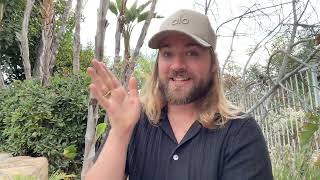
Devon Canup dropped out of college and built a million-dollar business in his 20s. He talks about the mindset shifts that got him there, why skill development matters more than credentials, and how to keep going when things fail.
That anybody watching this video can do incredible things, can make millions of dollars, like I have to live their dream life and can make millions of dollars online, on the Internet. I. I genuinely believe you watching this can accomplish that. Now why don't you accomplish that? You know, you probably see the amount of money that is in this world, and, you know, it's very easy to take blame and to. That other things are, you know, that things are out of your control. But I just wanted to, like, share with you guys some of the beliefs and some of the thoughts that got me to where I am today of making millions of dollars a year. Like last month, I just did. Did with one of my businesses. We hit $170,000 in cash collected. Not sales revenue, you know, not any sort of, you know, inflated numbers, just purely cash collected money in the door they made in just one of my businesses. And here's the thing. I just turned 26. I grew up without anybody in my life really being somebody that was in business or, you know, wildly successful. And if anything, like, all the odds were stacked against me, yet I was able to kind of, like, go and kind of etch out and carve out my own path in this world and do all sorts of cool, incredible things along the process. And so one of the things that kind of helped me through all this, like, here, let me tell you my story a little bit, is I went to. I was doing everything the normal way. Originally, I was gonna go to college because that was like, the best way to go and get rich and to. To make money. So I was gonna go do computer science and get my degree in computer science and that I had everything all made up. I thought I knew everything. I thought that was gonna be the way. And I ended up dropping out of college. I ended up going and down an opportunity that was making me just a thousand, $2,000 a month with the time. And everybody thought it was absolutely crazy. They thought it was batshit crazy. Like, devin, what are you doing? You know, everyone was like, you had to figure it out. You had the whole pathway. You know, you were. You were gonna go get the good job, the good career. You're gonna do every. You were doing everything right. And it was like, I went the other direction. I went against the grain. I went. I did the thing that everybody was like, what are you doing? You had everything made for you. I was a crazy person. You're probably a crazy person too, right now, watching this video, you know, amidst the other people that you're surrounded by. I was the crazy Person, I was the crazy one. I was like, everyone was so confused. I remember the amount of sit down and talks that people try to have. It got to a point where I just had to shut it all out. I was scared to tell people that I was gonna go start my own business. I. I made some money with real estate. I had a YouTube channel that was getting some views. And I decided, you know what, Screw all the schooling, screw college, screw the high paying, you know, $150,000 a year, cushy tech job salary, and I'm gonna go explore this over here. And it was seeing that there were other people that weren't smarter than me, that weren't more capable than me, that weren't more established, and if anything, they were way more worse off than I was, that they figured it out. And it was. There's parts of me where I thought, oh, it's a scam. That's, you know, it's only, only lucky people get the results. You look up on Reddit and you see all this crazy stuff, people saying it's all. And then you look at, you know, it's like all the business models that are out there. That kind of sounds sketchy, you know, trading penny socks or something like that. But I knew I wanted. I knew I was meant for more. I knew that I wanted to be extremely, incredibly rich and successful and I wanted to do things for the people that I loved. I wanted to. I wanted to take care of my family. I wanted to be able to explore more in this life. I knew that life was short. I remember at a very young age, I remember being afraid of getting old. I would have dreams, I would have nightmares that I would wake up and I was 80 years old. And I said, where did the time go? I think I was 8 years old at this time when I started having these dreams. Where did all the time go? It scared me. It was. It was a nightmare. I was scared of getting old and just blinking and missing everything. And that path of getting the college degree, that path of having this nice tech job, of having the same day and the same life over and over and over again. Something told me it was going to lead to that moment. That instance of me being in my 70s and in my 80s, wondering where all the time went and not being able to fully enjoy life, not being able to fully explore things, not to. Like, I felt like I. I was robbed of my life and didn't get to live. But it sounds so good, you know, you get to work a good job, you get to, you Know, move your way up the corporate ladder and stuff. But where did all the time go? These were dreams that I had, you know, when I was younger and it would haunt me in my teens and I knew I needed a change. I'd be up late at night, midnight, 2am just scrolling through social media, trying to find different ways of making money and finding ways of, of figuring out a different way out. And there was, you know, you see all these people that are doing just that. Like there's, it's not like there's nobody not doing, like, it's not like everybody's working this traditional Life. I know 95, 98 of people are living this traditional life, but there's some glimpses you get. I would see some ads, I would see some videos online of different people that were, you know, able to break free and live their life in a non traditional route and they had non traditional circumstances and non traditional outcomes and it was possible. It wasn't until I came across this guy when I was watching videos, when I had this sales job one year my freshman summer of college that I would be watching videos and I'd hear these stories of people that had these high paying careers, these high paying jobs and all these things and just the misery that they lived in those things. And they would, they would rather get paid half as much at that job knowing that their bills are at least covered. To not have to go do that anymore. To not be robbed from their kids growing up, to not be robbed from them being able to live life, to, to not be robbed of life. So I knew it was possible. That was the start of it. I knew that it was all possible. I knew that there were other ways of doing this. I knew there was other ways of doing this whole life thing and it didn't have to fit into this cookie cutter way that the society wants us to be is this baking sheet of cookies and you know, are supposed to be cut a certain way. You don't have to live a cookie cutter lifestyle. In fact, there's systems and there's processes and there's ways, there's models out there, there's methods that you can follow. And you know, it might not be a 100, but just like as the formula of going to college and getting this high paying job and doing these internships and getting a good job and then working your way up the corporate ladder, there's no formula specifically to that. There's like kind of a rough formula, but you kind of figure it out as you go. And just as that exact same Formula. The issue is the upside. You know, it's like you work for decades and, and you may be able to get some good equity in a company. You might be able to like set aside like a good 401k and retirement fund and stuff like that. Just as none of that stuff is guaranteed and can be taken away from you at any point in life as well. If you go on the other flip side of it, the non traditional route, and you learn the skill sets, you become the person, you, you try all these different things out. And even if you're left with nothing at the end of the day, if you're left with no money, you have something that no government can take away from you. You have something that, that can never be stolen from you. You have something, some thing, an asset that no matter the laws, no matter the policies, no matter the things that change in this world, especially as like the fast pace and changing world that we live in right now, it can't be robbed from you. And that is skill sets, that is knowledge, and that is experience. A man that has those things is free. No matter what changes in this world, if you master those things, of having knowledge, of having wisdom, of having experience under your belt, of having skill sets, you can negotiate any deal, you can sell anything, any product, any item, you can sell yourself into any room. You can find the loopholes and you can find the way for you to etch your own path. That's not traditional. It's a bit of a wild west. We live in the wild west of a world right now. There's a lot of unexplored territory. You know, just like the gold rush in the 1800s. It was, it was a wild west of, you know, there is a land of opportunity out there and there's like good luck. You go that way, it's that way somewhere, you know, and you hear some tales and some stories of, of other pioneers along the way. And some people their, their wagon broke, you know, and they broke down. And you'll see all the, you know, all on this way to the gold. All these stories and people even coming back and saying that there's no opportunity there. You hear this hope of this story, this opportunity that's out there. And what happened was, was the original opportunity was there and it attracted this large crowd. And then the opportunity has just simply changed over time. The opportunity went from, you know, mining gold to then helping the people mining gold to mine gold better. You know, some of them were mining gold and crush it and made, you know, tons of money and really established their wealth and their name. But then some people, you know, they help supplement all this. And then now that there were so many people, now there had to be food here, now they had to be stores, now there had to be housing, now there had to be jobs for all these people. Now there had to be, you know, products and services. And then it just kind of kept adapting and kept morphing into things. And so the people that got left behind in all of this are the ones that. That didn't try, they gave up, or they're like, oh, the original opportunity isn't there anymore. You know, it's. It's all dried up. You know, I just. It's. It's impossible. But the people that did establish their wealth and then their name and their legacy, talking legacy, the people that have, like, had their name for generations to come are the ones that molded with the opportunity. And they just kept showing up and they kept trying different things. And one thing, you know, there was some luck involved in meeting some of the right people, but you kind of create a surface area of luck. You know, they kind of. You get introduced to certain people, and then different dynamics change. There's all these people now, so we gotta do something with all these people. There's all this land, so, you know, building your house and setting up towns and all sorts of stuff. And the people that were opportunists and the ones that kind of just rolled with it and just instead focused on being around the opportunity are the ones that caught the opportunity. Eventually something was, you know, left there. And some. It needed somebody to fill that void in that gap in the marketplace for. For them to jump in and to take advantage of it. And the people that were able to take advantage of these opportunities that came up were the ones that had the skills, the ones that had the connections, the one that had the knowledge, the one that. The ones that have been building this intangible assets over time and these soft skills and these hard skills over time, inevitably, opportunities arose and they were able to be the puzzle, be the piece in that puzzle that was needed for that opportunity to see fruition to. To. To come. Come to light. All this to say is that you might go mining for gold and you might. By the time you get there, the opportunity is all dried up. But opportunity never just completely disappears. No, it's like the. One of the laws of thermodynamics is that mass cannot be created or destroyed. Energy cannot be created or destroyed. And all that opportunity is is it just changes its form. Like as money Changes form. Like, I have this nice cigar here that I was just smoking, a diamond crown Julius Caesar. I've got a case of these. My money changed form into these cigars. It was just a different form. And then that form turned into pleasure and joy. And then for the company that sold the cigars, they're able to make money, make more cigars, better cigars, increase supply, increase their manufacturing. I can buy more cigars. Same with this watch. You know, I'm able to take $40,000 and then I'm just able to transform that form of energy, that form of, you know, stored value of cash. And I'm able to transfer into a different form of stored value into a watch. And you're able to take that thing and it just changes its form. That's it. It's. Even if I, you know, there's some money lost in buying a watch or whatever into, you know, that is enjoyed in the maker and they are able to go and create more and make more. Now, hopefully I'm not losing you out here. It's like this all kind of makes sense here in a second. And so what I'm saying is just opportunity is always going to be out there. It just changes its form, it changes its shape, and it changes what it looks like and how it feels and the differences. And so what it is, is it's becoming somebody who's able to recognize opportunity. And so the belief of the person that I became today is I just had a blind, stupid faith that inevitably I would figure things out. There were so many case studies of so many people that were making millions of dollars. And it wasn't like. Especially when I met my first millionaire mentor and he showed me his bank account and he literally had like half a million dollars. He's like, this is what we have to spend. He also showed me his P and Ls. He made 300 grand a month. And, you know, he was in his early 30s and he was showing me all this stuff, and I was like, wow, this is insane. He kept introducing me to all these other people that he did business with. Title companies, mortgage lenders, other investors. And I was like, wow, this isn't just this one guy. And this was in a small town in Idaho. It wasn't even in the main city, Boise. It was like in a small town in Idaho. I met this guy who was making millions of dollars a year. And I started opening my eyes. All these businesses, everywhere you go, there's a whole thing behind it. There's cash flow, there's lots of Money and it's just like, it's not like there's just like a small group of people that are making, you know, enough money to be able to go live whatever lifestyle that they want. There's hundreds of thousands of these people out there. Somebody owns all these businesses, like everywhere that you go. Somebody owns this cigar company, somebody owns this watch company. Somebody owns the store that sells, sells the cigars. Somebody owns, you know, the clothing brands, the laptop that I'm recording on, you know, like somebody is producing the camera, like the lens on the iPhone, just the lens. Somebody is manufacturing that. Somebody owns the mine where they mine the sapphire crystal that's used to make this or however they manufacture that stuff. Somebody is manufacturing that one component and they're making tons and tons of money. Somebody's making these buttons like right here. So he's making these rings. There's like everything. There's all this different stuff that's all out and around. You know, somebody's landscaping my, my backyard and they landscape a lot of backyards. And so there's all these different forms of opportunity and need and necessity in society that all comes together. And it's just about finding your way of plugging yourself into that system. So what I realized, you know, it's like, I think a lot of times we try to ask ourselves like, how do people make money? You know, you're probably even watching this video like, how does Devin make all this money and stuff like that? And if you watch my content, you'll know how I make money. YouTube channels with building different info products, helping people, you know, consulting deals, software companies, different businesses, different trying like trying of different stuff. You might see all these other people making money online and stuff or you know, just you're on the Internet or you run into people seeing, making money and you're always asking how. But one thing that I've learned is that the how is way less relevant than the why. Because the how is always going to change over time. Over a long enough time horizon. The how is going to change, you know, at one point in time, if you were a pyramid designer, like an architect, you know, you were in charge of like the design of the pyramid. And then, you know, that idea, that idea was the thing that was of, of the pyramid. And then at one point in time, you know, it was like building the combustion engine, which still is kind of these days. But you know, that was an idea that revolutionized society. And I'm not even saying you have to be the person revolutionizing science, society. It's Just like he needed people to help him fulfill this idea of revolutionizing society. And so it's more so attaching a strong enough why, because why is the fuel source? So why is the combustion that happens? It is the thing that makes change, it's the thing that makes progress. It's the thing that is like the why is the catalyst of change. And so instead, if you can focus on the strong enough why. And for me, I'll tell you guys, my why, you know, my why kind of changes a little bit. You know, I have bigger whys, I have smaller whys, but all these are just essentially fuel sources. They're like a reason of why. There's a reason of being that explains everything of the how. And I came to the how and the what and, you know, all that stuff. So my why originally was just know. As a kid in high school, I got kind of bullied and I never really fit in anywhere. And I wanted to prove everything wrong, everyone wrong, that I can do something. I can be more than what they like treated me as. You know, there's a lot of my why originally, it's the same with like a lot of entrepreneurs, to be honest with you. Not always, but it's a lot of it. You know, it's just like you're like, there, there's something that you do not want to be in. You're running away from that thing. And sometimes that like Sigmund Freud talks about, we either have. We have two forces of. Of motivation. We either have getting away from pain and suffering, or we are moving towards pleasure. So I wanted to run away from the previous life that I had. I wanted to run away from pain. I wanted to run away from the previous version that I was being labeled as. You know, I just was kind of a misfit kid. I didn't really ever belong anywhere. It was hard for me to relate to anybody. That was my story. You know, I was bullied. I didn't fit in. I moved to like 20 different times, every 20 times by the time I turned 20. And just, you know, it was hard for me to kind of fit into places at first and I just couldn't find my. I didn't have a strong foundation or a ground for me to stand on. And so it was like a very, you know, rocky ground to build a house on and a weak foundation. And so it led to all sorts of insecurity and all sorts of beliefs and thoughts that like, you know, I wasn't good enough. And so I wanted to prove that I was good Enough in the eyes of these people that labeled me as not good enough, you know, and so that was a strong why for a long time. Now I will say, you know, you might. If that doesn't resonate with you, it might resonate with you a little bit differently. But it was just like, I was afraid of mediocrity, and then I was also afraid of, you know, getting old and. And I was afraid of missing out on life. So I was afraid of that as well. I wanted to run away from that, and I was afraid of not being able to be somebody that was able to take care of the people that I loved as well. I feared that. I was very concerned. I did not want to be somebody who was not able to take care of good people and people so close to me as my family or my future wife or my future kids. And I wanted to be a strong role model for those people. And so that was my why. And then what was the thing that would change, that would be the catalyst, the thing that allowed me to not be that person anymore. And that was money. That's the society that we live in. Value is to become a valuable person and to have a valuable service, to have a valuable, like, something that is able to, on repeat, being, like, be valuable to society and to the marketplace. And so that is when I came across. You know, at first it was real estate. I was doing real estate wholesaling was what the model was. Or actually, originally I was doing sales. I was helping people, you know, so I was on vacuum cleaners and air purification systems in people's houses. And I did that. I learned the skill set of sales, and then I took that skill set of sales and I transmutated it with over into real estate. And now that I had that skill set of sales, it was way easier for me. I was able to flip houses. I made like $60,000 in my first year of doing real estate wholesaling. Not a whole lot of money. But for someone that was a sophomore in college, it was a good amount of money. It was because I took that skill set that I had before and I just transmutated it into a higher leveraged opportunity. Because sales, I had to go knock on doors all day or go to appointments, and I can only do so many appointments every single day. But if I had a bunch of people doing appointments for me, if I had a bunch of marketing going out, then I was able to position myself as the person that was the center of the transaction of all these things. And I was just more so finding the people that wanted to sell their house at a discounted price. And I was finding the people that had the cash to want to buy those houses, flip the houses, invest in the houses, start up rental properties and stuff like that. And so I positioned myself in the middle of these two things, of this. That was the solution to, you know, this gap in the marketplace. And it's not like it was an original gap or solution, and by any means, it was just something that was out there. And then I put myself in the middle. And because I could use marketing and because I could use marketing on both ends, I could just connect the two and run a business, and I can start to build a business and start to hire people to do this for me and to start to build systems and processes around it. And it's just positioning yourself in the right place. And I saw that. I saw that if I did this for long enough, I'll probably fail. I'll probably make a lot of mistakes. But what's the downside? I was, you know, somebody that was necessarily that well off by any means. You know, I didn't have anything to lose. For me, I will tell you, I didn't have kids. I didn't have a family. I didn't have, you know, the stakes that a lot of people had. My stakes were just these consequences of just, like, if I lost everything. And the stakes for me was like living in mediocrity for my entire life. So for me, I had nothing to lose at that point. Know, I was already mediocre. I didn't really have much going for me. I was like, yeah, I had this career, like, this job or like, going to college and stuff, but if I just did this on the side side, and I did it for a few years, eventually I would figure out. Figure it out. I would fail enough until, you know, I got really good at getting punched in the face, and then I'd get really good at dodging the punches, and I'd be really good at returning the punches, and then I'd be good at winning fights. So I knew that I would. I would start off sucking, and then I would inevitably get better at sucking. I would suck less over time. And a lot of times that's just. It is just sucking a little bit less over time. And that was my strategy. That was the game plan. And I sucked. I lost so much money. I made so many mistakes, but I never had money to begin with. So I didn't really ever lose anything. I was just. It was like, I would have, you know, I went from $0 to $20,000 back to zero. But you're never technically ever back at zero. Here's the thing, thing. Even if you have like $100,000 now and you lost it all, you are not. You didn't lose anything. Like, yeah, maybe you lost, you know, you have less money, but you're actually back at zero. Plus one experience. You went from zero, let's say 20,000, 10,000, 5,000, 100,000. If you have less than 10 grand, then you definitely have nothing. Like, especially in this day and age, like, that's not a lot of money. It's gonna burn quickly. Like, that's not a lot. But if you go from 0 to 10 back to 0, or 0 to 100 back to 0 or down to 20, you're actually plus one experience. Plus one experience point, plus one story, plus one point of resilience. You're plus one affirmation of who the person that you want to be. And then you get to ask, do I want to play the game again? Most people, you know, they get so lost into their failure. And, you know, failure is scary. We're so developed in society and in life that failure is a bad thing. If we get bad grades on our school or in our class, you know, it's a. We're a failure. We're not good enough. But that's the frame of mind that we've developed and created. And this is the convenient mindset. That's the convenient way of looking at things. That's the victim mindset. A lot of you guys want to control life and want life to be a certain way, but you're actually giving up control by thinking you're a failure if you failed, when in reality, failure, a mistake, is a lesson, something that you learned. You actually gained something by failing. You actually gained by losing money, and you actually gained by. By going into a shitty situation. Shitty situation. But you actually gained an experience. You gained, you know, scar, a battle scar. You gained, you know, another lesson under the belt there. And then what you get to do is you get to take those lessons and you get to turn it into a form of value. Those things that you have learned, those pro, like, those, like, experiences that you have had are actually valuable because now that you've had this experience, it is a value point that you add to the universe, that you add to the world, that you get to talk from a higher place of. And so the most valuable people to society aren't just the ones with lots of money. In fact, some people are so broke, all they have is money. And in reality, you become a value to society by becoming a more valuable person. The way you become a more valuable person is you make more mistakes. The people who make the most amount of mistakes are the people that are the most valuable to society because they get to take all those mistakes and lessons and little small pivots of the things that they're doing and little adjustments and new versions and new variations that inevitably they become a, a thing of substance. The amount of times I've created a piece of content, I've literally recreated that same piece of content. And I changed like a few slight things with it. The intro, the title, the hook. And I don't really change a whole lot of the other stuff. Maybe kind of like some of the intention behind things. And I just kind of play with those little small variables that are very like beneath the surface and you know, not so big of a change and they're just like all these like little. My new shifts is the difference of I've posted something and it gets like let's say like 500 views or a thousand views and then I'll repackage it, it'll kind of change like kind of the form of it a little bit and I'll play with some of the variables and then that same exact thing gets like 300,000, half a million, millions of views just by taking that exact same thing, repackaging it, shifting the dynamic of how it, how it comes across and you know, the perceived value of it, without even changing the actual substance of the thing and it becomes perceived more valuable. And that's all because it's just a small few little tweaks that's probably in your life. You know, it's probably like this. You know, you have two options. You can either live in the past and just be like, oh my gosh, I'm a piece of, you know, I made all these mistakes and whatnot. Or you can instead realize that those are, you know, notches under the belt. Like those are experiences. Those are things that is all the reason why you're somebody of so success. Like, I always love it when I hear these people that have been in their corporate job for 10 years, 20 years, and they've been doing this for a long time. Those are some of the most valuable people in society. Their bank account may not say they're the most valuable people in society, but their experiences, the amount of 20, 30 year olds I know that have something that meant that they have skill sets and knowledge and they just don't have the Right vehicle, the right leverage to run with those, to supplement that, that, that person that they are, that the person that they have become. And if they just take that and then repackage it and reshape it, reform it like in the, in the, in the gold rush back in the 1800s, and then they're able to move with the times and move with the opportunity. They're able to be an insanely valuable person. It's like Ray Kroc with McDonald's. He was a salesman, I think he was selling like ice cream machines or something, something like that. And you know, he just took all that person that he become in these rooms that he was in and found an opportunity of McDonald's, these burgers that were incredible, that just didn't know how to scale things and to, and to be more valuable to the marketplace. And he was the person that was able to install that into McDonald's and turn them into the insane multi billion dollar company that they are today and where they're in every country almost and on, you know, own all this insane amounts of real estate and this insanely valuable company. All because he just, he was an older man, he was like, I think in his 40s or 50s. And he just took that experience that he had of being the salesperson and just applied it to a better opportunity, a better vehicle, a better product. And he was able to become a multi billionaire before he passed away. And now it's one of the most valuable companies, you know, in the food industry. All because he took what he had and he just changed it for the times, he changed it for the opportunity and was able to have success. And you probably, if you're somebody that's older, watching this video, you have that opportunity, you have that version of yourself inside of you that you can go and apply to things and it can just be a larger form of leverage to the marketplace that makes you a more, you know, provides more value to the marketplace and equates to you making more money in your bank account. And then a lot of the younger people, they probably understand the leverage, they probably already understand the opportunities. They just have to find their way. That is the lowest hanging fruits of becoming of value to the marketplace. All the while looking at the greater picture of things, knowing that inevitably if you do something for five years, 10 years, 20 years, you're going to set yourself up for massive amounts of success. I know I will be worth hundreds of millions of dollars in my lifetime because first of all, I've already made millions in my early 20s. But then I'm kind of already on that trajectory. But I know that if I just keep showing up and I keep building leverage and I keep developing not just leverage, but also the skill sets and the person that I become and the leader that I become and the ideas that I have and really molding these ideas and really kind of playing with the dynamics of the ideas and repackaging them and, and, and, and playing with the dynamics of everything I know, inevitably I will find greater forms of leverage with the things that I am already known like, already am and just refining it down to the point where it is insanely valuable. It's like Bruce Lee saying that he's not afraid of the man that's practiced 10000 kicks once though. Instead he's afraid of the man that's practiced one kick 10000 times. And I know inevitably that if I get really good at these skill sets of communication leaders, sales, marketing, video production, scripting, copywriting, hiring, recruiting, if I just become good at all of those in this world that we live in, it's inevitable that I will be making millions of dollars and I'm very detached to the outcome at a certain point point, then if I know that if I just focus on those skill sets, inevitably I'm going to be worth, be very valuable to society and very valuable to this world. I know inevitably I will get paid for the, for the person that I am and the things that I've created in the positioning that I've created for myself and the person I've become inevitably. And so in the short term, let's make sure that my bills are paid, the able to make payroll, I'm able to pay my taxes and I'm able to take care of the ones that I love in the interim. And I know inevitably that if I just focus on becoming the best creator that I possibly can and to position myself in the right, like just, you know, always just show up consistently and have discipline in that. I know inevitably that I will be insanely valuable to society and no matter what happens, whatever recession, whatever, you know, world economical collapse could ever happen or whatever, or however the change of hands of society works or whatever, I know that I will be valuable of value. I'll be so full of experience, I'll be so full of life lessons, I will be so wise, I will be so valuable that I get to ask for however much money that I want to make and I get to ask for whatever life that I ever want just by focusing on becoming that person. And as the opportunity changes, I will be able to be a part of the opportunity as it changes. I get to choose the opportunity at a certain point of what that looks like. And also I get to be the creator of opportunity. That's the best thing. I just paid someone $15,000 for this month for last month's work. That's cool. It feels really good, you know, to be able to pay somebody. Getting to where I'm starting to pay people a multi six figure income, you know, checks over to them for the work that they did, for the opportunity that I created. And because I created that opportunity, I'm able to to pay people appropriately for the opportunity that we have created and the value that we've created to society. I think I typically pay like, yeah, $50,000 a month in just payroll just for people providing value to my company. That provides value to the, to the world and to the people that we service and to the people that we help. I believe in you. Watching this video, you're made for great things. You probably had somebody in your life telling you that you were made for great things. I did. It was my mom. For me, she would always tell me growing up that, you know, you're made to do incredible things. And just as I know there's somebody in your life, whether it was your grandma or your mom or your dad or your sibling or a friend, they believed in you. The question is, do you believe in yourself? Do you have faith? Do you have trust in the opportunity that's out there? And are you able to choose to live in abundance instead of scarcity? And are you able to, instead of living in a limited world, able to look around at the birds and the trees and mountains, realize that those things have been around for millions of years, thousands of years, millions of years. Time's going to pass regardless. It's always going to pass. The question is like, what do you do with that time? Who's the person that you become? What's the legacy that you live? Do you want to live in despair and suffering and pain and not being good enough? Or do you want to try to give it a shot? Just keep being, giving it a shot, keep showing up and keep giving and keep doing your best. That's all you really can do, is just do your best. If you have faith, everything just seems to always work itself out. You're always provided for. If you just have faith and if you just have good values and if you're a good person, I aim to give you those values. I aim to give you that faith. I aim to lead you through the shitstorms of everything I've been through. You know, it just comes with business. The running out of money, the, the, you know, scary letters you get in the mail sometimes, or, you know, the people telling you, like, that you're a crazy person or not being good enough or, you know, whatever bullshit is out there. You know, the changing of world dynamics and power that we're going through or, you know, everything that's going on in this world. If you just keep showing up and if you just have faith in that future instead of living in scarcity, instead of like, you know, living in this little corner and in your, you know, shell and a cocoon, it's just safer to scroll through TikTok and watch YouTube videos all day and just like do nothing and just play video games and just be a suck of society and just be a vampire society and steal from all the value that other people are giving. Let me just tell you that consumeristic mindset is going to eat away at your soul. You're going to lose yourself. You probably already have if you're like me. But what I would tell you is if just have faith. Allow yourself to not put weight into these, into these labels that you were given and to question every, like question the labels of life and society and instead focusing on becoming the greatest version of yourself, to becoming a skilled person, to becoming a valuable person. If you believe in yourself, deep downside, you believe in yourself that you will always figure it out, and having faith in that and doing it, like doing everything you can with that, then everything will always work itself out. I believe in you, my friend. Thanks for watching.
More from Devon











Powerful dopamine junkies, Geniuses are depressed and Nueroscience of environments