I Made $2.4M with 27 Faceless YouTube Channels
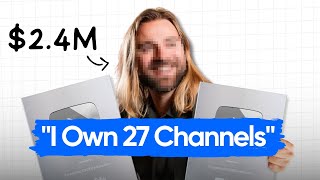
Devon Canup built 27 faceless YouTube channels that made $2.4M in ad revenue by finding Reddit content gaps and posting 2-6 videos daily. He scaled to 72 freelancers but learned expensive lessons when a history channel cost $130K with minimal returns, pushing him to cut channels and diversify into consulting and paid communities.
Questions this video answers
About $2.4 million (Devon: “We’ve done over 2 million right now… I’m just saying like 2.4 million is like a kind of round number”).
About 27 channels at the same time (Devon: “it was like 27 at the same time”).
Roughly six channels (two main ones and a few side channels; Devon: “probably like a total of like six right now. Six channels”).
Approximately 72–75 freelancers at peak (Devon: “we were managing, I think it was like upwards of like 72 freelancers or 75 freelancers at a time”).
About 12–15 people rotating (Devon: “Probably like 12 to 15, like rotating people”).
Chapters
Let's go straight into it. How much revenue have you generated from all your faceless channels?
From all the faceless channels? From ad revenue specifically. We've done over 2 million right now. I'm just saying like 2.4 million is like a kind of round number.
And how many channels are you currently running right now?
Currently? Honestly, we're just running two main ones and then a few sides. So probably like a total of like six right now. Six channels. And I say six now because at the peak we got to like 27.
I think it was 27 at the same time.
Yeah, yeah, it was like 27 at the same time. It was. Honestly, I was like 21, 22 and never had any business experience. And we were managing, I think it was like upwards of like 72 freelancers or 75 freelancers at a time. Like video editors, writers, voice actors. And there just wasn't like anybody I could go to at that time. And so we shut a lot of it down because I just couldn't figure it out.
And how big is the team? How.
How's that across the channels? Probably like 12 to 15, like rotating people.
So all of that I want to deep dive into, understand like the whole production side, how you're automating everything and that. But first for the viewers so they can replicate. I want to go back and understand how you went at this stage. Right. $2 million, 2.4. You said over 50 employees at, @ one point. That's. That's a lot, right? So how did you.
Start? Yeah, yeah, so I, I came from pretty humble beginnings. You know, I did not grow up with any sort of like rich parents or anything like that. I grew up. I. I grew up seeing my parents lose everything actually. Like, I remember my dad being a business owner. He started to like grow this like door to door sales company that he had. And then, you know, economy took a collapse in like 2007, 2008. Business partner ran off with all the money in the account and they were left to like pay payroll, which was like 30 grand or something like that. Had to take a loan from their parents to. To be able to pay payroll. And so I saw this, like growing up as a young kid, like seeing, you know, my dad like kind of having some success and then failing. And then like us moving into a small farm town in the middle of nowhere. I saw him like, his confidence growing like, you know, my dad was the freaking man. He was Superman. And then, you know, kryptonite came. You know, it was kind of. It was kind of sad to like, see all that as a kid. And I didn't, you know, have a lot of context. I didn't know a lot other than just seeing my parents fight and stuff. And so I remember growing up at a young age knowing that, like, I did not want that. And so flash forward the future. I was thinking, you know, pro sports, that's the way to like, make money. And the, like, that was the best way to make a ton of money and to get rich and be famous and to like, leave all this life behind, you know, is the dream growing up. And so I ended up going to college playing baseball.
There. What year are.
We? This is like 2017, 2016, 2017. I graduated high school, went to college, started playing college baseball, was going to school for computer science. So I had this like really engineering mind and this really engineering background. And I knew that I just didn't want to do whatever my dad was like doing. I just, I saw that as like, you know, the life was sucked out of him. He had to go back to working a job. And I just saw his life live miserably. So I was like, I'm not going to be that. I'm going to be something different. And then I started doing the sales job where I was like, selling vacuum cleaners in people's houses. My dad was able to get me a job selling when I was younger. And then at that I learned about this thing called like side hustles. You know, there was like, everybody had like a side hustle. I was like, I need a side hustle. What are those things? And then, long story short, I met this guy. He was teaching me all about business and all that about how, you know, he was working all these different side hustles. He was kind of like a hustler. He would do all sorts of different stuff. And then he was trying to get me to join his mlm, you know, like joining one of those MLM schemes. And luckily I didn't sign up. But I started looking up the side hustle thing and I started looking at like YouTube channels like Drop shipping, E commerce, like flipping houses. And then I came across this one called like real estate wholesaling. So actually me getting into YouTube, I was going to school for computer science. So I had a very systems brain. Um, I came across real estate and so I started doing real estate actually. So I didn't get into YouTube. So I started to, I started got into it. I found out you could like flip houses without like having any money, which kind of pain in the ass. Business with all the regulations and stuff like that in every different state and. But I was able to make some money with it. I made like 30, 40, 50 grand with it. And then I started making videos about that. So I started. I started recording my process. I was like 19, 20 years old. I just literally just turn on the camera. I was like, this is what I did. Very matter of fact, step one, step two, step three, step four, you know. Yeah. And then I would record those videos and then people just wanted to start just paying me a ton of money to teach them how to do faces YouTube channels. Or not to to do faces YouTube channels, but to do the real.
Estate. Just to say real estate wholesaling. What. What is that.
Exactly? So basically, real estate wholesaling is where you like go and someone's house, they like need to sell it because they have to move or something. Or you put in offers for people's houses, get them at an extremely discounted rate because, you know, they have to like move or sell or something like that. And then you would put an offer, they would accept the offer and then you would sell the contract over to somebody.
Else. People saw that as an interesting way to. To.
Make. Yeah, super niche, very small. It'd be like me playing, like doing no scoping, Call of duty, black ops 3, you know, something like that. It was like, it's very niche way of like making.
Money. But I mean, that's what's beautiful about YouTube. There. There's literally anything and everything will interest a small niche. And. And just with that niche, it can be.
Already. Yeah. That's when I discovered that like you can have super niche content and make. And I started making like 3, 4 grand a this YouTube channel, talking about this stuff. Yeah, I did a video every single day. I would literally, you know, I had an iPhone 6 at the time. I would put it up because my computer was too slow. I would put it on like a book. I would lean it up like against like a book or something like that. And I would like have it like up against it. And then I would just start like recording videos about whatever the fuck I could come up with that day, like every single day. And then I would edit it in imovie on my.
Iphone. No, I love that. I love. I love those kinds of beginnings because it's what I always say, fashion upload. And then with quantity, then you'll get better. Right. So that was your beginnings. Yeah.
Yeah. So I started doing that. And then there's these, like, I kept. They used to be called like they were called like cash cow channels at the.
Time. Yeah, that's true. It's not called that anymore now that you just made me.
Realize. Yeah. So everyone was like these cash cow YouTube channels I was watching like some of these ecom guys, some of these other, you know, like people in the make money online space. Everyone kept talking about like cash cow YouTube channels. I was like, what the hell are these things? They're basically just like the channels that didn't have anybody's like face on it or anything like that. But everyone was like so uptight, like nobody would tell you what they were, was the thing. Like everyone would just show money and they would never like show you anything like they do now today where like it's pretty, like it's pretty out there. Everyone's coming up with a channel list or something that's making money. And so you really had no sort of information on it or anything like that. And then one day I was looking at YouTube and I found this channel and they started, I think like a month or two in and they were getting like millions of views on the videos. And I'd watch them and I was like, dude, a frickin middle schooler can make these things. After me doing YouTube for like over a year, year and a.
Half. Wait, so for a year and a half you were doing real estate.
Content? Yeah, real estate content. Uploading it, like, like talking on the camera, like talking on the video. I think my most viral video got like, like now to this day on that channel has like 50,000 views.
On a very specific.
Niche. Yeah, yeah, like it was very specific. I was very well known in the space that introduced me to a lot of people. But it was like super small. Like the TAM was tiny, you know, the total addressable market. And then I came across these faces, YouTube channels. I was like, huh? Like my car just broke down. I had no money. I told everybody that like I dropped out of college. I told everybody like I, I made it, you know, like I'm gonna go figure this thing out. Like I don't, I don't need anybody. And honestly I had like no money in my bank account or anything like that. Right. It was kind of like I didn't want to go to my parents and move back in with them and tell them the embarrassment that I like failed. You know, I couldn't do that. That was like do the thing I couldn't do. And so then I came across these fancy YouTube channels and I was making some money with like the YouTube channel, but like rent would Come every month. And I was barely scraping by. And then I was like, I'm gonna do this every day for 30 days, whatever it takes. I'm gonna go make these videos every single day. And there are these, like. They would take, like, content from Reddit and then just add some, like, text to speech of it at the time I started doing the videos, and then after, like, 10 days, I started getting, like, a thousand views in a day, which was, like, way better than any other video. Like, that was how many views I was getting on the channel for a year and a half on the real estate channel. I was like, holy shit. So I thought I valued that. I was like, today, dude, motherfuckers get into YouTube and they're just like. They're like, dude, I'm only making. Getting a thousand views in a day. And they, like, you know, think that they're a failure or something like that on YouTube. Because then some kids, like, posting shorts or something like that of them getting, like, 10 million views a day these days on Twitter. Every single day. But, yeah, I was getting a thousand views, and I literally jumped out of bed, like, freaking. Like, I was, like, jumping because I didn't know what to do. I was so excited. The next day I got, like, 10,000 views, and then I hit, like, 30,000 views in a day. And then I ended up. It just blew up and took off, and I hit a million views in a single day after. It was like 14, 15 days in on the.
Channel. Wait, you got a million views 1450 days after starting the.
Channel?
Yeah. Okay. That's awesome. Can you.
Show? Yeah, yeah, I got you. It was crazy because I, like, never did it before either. So I literally went from just, like.
Uploading. You say you never did it, but you did, though. You know, you. You honed your. Your skills. Maybe not the same that would be used for. For the Reddit faceless, but.
Still. So, yeah, I started it here March 18th. I think these five views came from myself. Yeah. So I made, like, these other ones, and I started to learn how to do it. I think it took me, like, fricking 16 hours to learn how to make these videos. And then, yeah, so I, like, started getting six views a day. 14 and 21. Yeah, it was like, nothing. And then all of a sudden, one day, I woke up and hit a thousand from the eight. Ten days in. Yeah, ten days in. And then the next day at 3,000, and then it hit 27,000, and then I hit 100,000 and then 400, then a.
Million.
Beautiful. All within like, literally, this is the. Like, this is as far back as the channel goes. Like, it doesn't even. This is.
The. Yeah, tell the viewers. How did that.
Feel? I literally, like, because I grinded my face off to get to like, 50,000 views on this other channel, or like 30,000. 50,000 views a month for a year and a half. And then when I just hit like a thousand views in a day, I was jumping up and down. And then when I hit a million views, I was like, holy shit, I made.
It. I'm.
Done. When do I get the Lamborghini? Like. Like, there was no conception of money at that time, you know, like, now you make like, 30 grand a month and you realize it's not shit. But I was like. I was like, holy shit, dude. I finally made it. Like, fuck you. To all the people that said I was like, a loser, you know, in school, like, everybody thought I was a weirdo, you know, like, when I was doing the other channel, every single day, I was uploading a video, and it just felt like finally, like all that stuff was, you know, no longer define.
Me. I would say, what was the Reddit content.
Already? Yeah. So basically, like, this is one of the most viral ones, like lifetime supply contest winners really, like, reveal the sad truth of winning. It would be like a subreddit on Reddit. So then we would just take it, add some cool music, some transitions. There's a lot of strategy that actually went into these.
Videos. Yeah, do tell. Because this was basically during the that era, right? There was a huge boom of.
Reddit. It wasn't. This wasn't the big boom. I was channel probably number like three into the space, like two. I was one of the first ones in. I wasn't the first innovator, but I was one of the first movers. So there was already this guy that had been doing it for two years, and then all of a sudden his videos started blowing up. So he, like, took years of trying to figure things out, and then all of a sudden, one of his videos finally blew up, and they were blown up that month. And I noticed it. And so I was one of the first people to jump onto the trend once I noticed that there was, like, all this stuff going on. And so what I found is what he was doing is on Ask Reddit, if you ever go into the platform on Ask Reddit, there's like the. The. The top stories of the day, the top questions of the day. And so what he would do is he would just always take the top question of the day. And make it into a.
Video. But that was smart, I guess, since he knew there was a huge interest in that and just. Just funneled that into.
YouTube. Yeah. So what I did was I realized as he was only doing the top ones, he skipped out on all of the lifetime top stories. So he was doing the ones that were hot that day. But then when I went to, like, the top of all time, he only did like 10 of like the 500 of like the top, like, all time questions. And so what I did is I was the first person to notice that this guy missed out on so much content. And so then what I was doing is, like, I was literally uploading. If you go onto the channel, I was uploading twice a day, three times a day, because he missed out on all of this content that was not like, that was out there on the channel. So you actually go to, like, the date oldest. So as you see, like, 22nd, 22nd, 23rd, 24th, like, I was doing once a day, and then I started scaling up like three times a day because there's so much content that this guy missed out on. And I didn't want this guy, I didn't want anyone to beat me to making all this content. I wanted to be the first person to make all of.
It. You. You discovered the content gap basically from a data back from another platform, which, which was Reddit, just.
Executed. Yeah. And then I just kind of innovated the thumbnail style. You know, like, I would. There was like some, like, they would just always do, like, memes or they would do like emojis with a screenshot of the text. And then what I started to do is I started to, like, ask myself, what was it that made these videos do so well? I noticed the metals in the thumbnail. Like, on Reddit, if you have, like, certain metals, that means it's like people paid for this thing, like, to promote the post, basically. And then so what I started to do is I developed this strategy to where, like, I started kind of clickbaiting the quality of the post. So what I started doing is I like, started making it look like every post had, like, these metals giving.
A little social proof there.
Yeah. And then I started kind of playing with the dynamics of the image. So I would just kind of like, you know, like, I would kind of add pictures in that would, like, overlap. So then I would kind of like, you know, play with the text a little bit. I would start kind of, you know, innovating the text and the thumbnails. So it's like it was like, what is something illegal that you got away with? Or something like that. So I would start playing, like, with the words. I would highlight different words. And then I started to realize I was like, what's the point of all the text if you can't even read it? I don't know why, but that was, like, the trend in the niche. So then I started to, like, just point. Make my own templates of these things that looked. I used all the exact same fonts as Reddit and stuff. And instead of just taking screenshots, I just started making, like, my own, like, screenshots.
Essentially. Makes sense. Makes.
Sense. And then what I started doing is then I started to be like, why am I using the Reddit font only? You know, Like, I was like, why not? Why not just use a better font for thumbnails? It was just like. And then. So we then just started and like, why do I have to use everything that's in the screenshot? Why not just me write my own title, basically, for the.
Thumbnail? I like that. You kept optimizing. And you can see it in the views. Like, there's some that hit a million views here and there. Half a.
Million? Yeah. We were posting, like, two, three times a day. So we kind of had to. We were getting, like, we had. Because we had so much movement, we could test so much stuff all the time. And then as soon as something new would work, we would kind of then move everything to that strategy. And then what happened was we started playing with the colors of the background. Started, like, kind of playing with different fonts, and then I actually outsourced it all to somebody. So I was doing all this, and then I started outsourcing it to other.
People. What did you.
Outsource? So at first, I outsourced literally everything because I started making 40 grand a.
Month.
Right. And I went to Bali, and then I just called up some dude that I knew from college, and then I hired him, and I told him, like, hey, go make the videos. Figure it.
Out. And that's how you got your first in on the whole YouTube automation.
World. Yeah. And then my income went from 40,000amonth to 10 grand, like, to $8,000 a.
Month. Because of all the expenses or.
What? No, because I hired some, like, jackass that's never done YouTube before to, like, run my.
Channel. Okay, so you would say that was a.
Mistake. Yeah. So what I did was like, I. I just went to, like, I just called my people, you know, I was like, you know, everybody's trying to do Like a business with a business partner these days, you know, they want some sort of business partner. Okay, cool. I want to be done with this. I, like, I just want to make a ton of money, and it run on autopilot, and I can just, like, go mess around and, like, enjoy life, you know? And this is the part that every YouTuber gets to. And then they fail because they do everything themselves. They go figure it out, and then what they do is then they go, like, hire somebody to go. To go run the channel or whatever. And then they. They just forget what made them successful in the first place. So then what happens is they fall off from, like, they. They, like, stop doing what they were doing in the first place. So you can see here, this was me running it, and then I made $40,000 this.
Month.
Mm. And then I outsourced it. You can tell. I. I think you can almost tell the exact day that I started outsourcing the.
Channel. When you saw a decline, why didn't you just, like, fire him and get back to it and. Or maybe find someone.
Better? I didn't know how to move quickly, I would say. I didn't know how to pivot fast at that point. And I think I was scared. I was really scared of, like, losing what I had, which is stupid. You know, when you reflect on it, you're like, you literally lost what you had because you were scared to lose what you.
Had. If you had to go back at that time you were making 40k a month, what would you do.
Then? What would I do? I would, like, punch myself in the face and, like, be like, what the fuck are you.
Doing? But let's say you still wanted to delegate, right? You still wanted to maybe do other things. So working 40, 60 hours a week type.
Thing. Yeah, it's one of those things where, you know, I think the misconception that's being sold in the industry, I think it's just, like, conclusions that people come to in themselves is they want to have, like, lots and lots of channels and then have it all automated. And now, while that's the end goal, everybody's missing the bridge that gets you to that point, which. The bridge that gets you to that point is you need to have systems in place so then it's automated and have people to run those systems and man those systems. So then it's in a place where it's not just maintaining, but then it's also growing without you. And everybody makes that jump really quick. As soon as they start making money, then it's just like, you know, they're the. It's like it's out of the normal, what they're used to making. And so we get very uncomfortable in those situations. We don't know what to do. And we think that the first thing you need to do is just start hiring people and then getting yourself out of the way. But there's like. And then when you listen to all these business podcasts and all these entrepreneurs that are out there, they will talk about delegation, automating systems, like you shouldn't be running everything, especially like the four hour workweek or the four hour workday that's being sold right now, or the solopreneur business, like model. The issue with all that stuff is just like, it has everybody thinking that they need to just get out of the business as fast as they humanly can and that they're in the way. But what they don't talk about is the transition into that model. You don't just go from like having nobody to all sudden you hire somebody and then you're just making just as much, just as much money, if not more. And they know exactly what to do to run the.
Business. You gotta find killers, basically, and that are able to run those systems. That's. That's what I try to do.
Here. Yeah. And I think everybody kind of goes through that phase at a certain point. And then what I started doing is then I started to kind of realize my mistakes, then started to hire somebody EL and then actually started to build this, this channel as well simultaneously. It was called Ask Planet. And then so I hired, I had two production teams. So I had this, a team running this channel and then I had a team running the Reddit and chill channel. And then we got like some results like around the time of like building it, this was like another channel at some time. And then we repackaged it for YouTube so we were able to get like some results with this. And then what I really started to do is I started to pivot my model. Instead of like trying to find somebody to just like run everything, I wanted to find something. Because what I lacked when I was young is like, discipline. I was like the most undisciplined person ever. Especially when I started making like 10, 40, like 40 grand a month. I would sleep until like 2pm every single day, you know, and then I just had like. And then I would just like be so unserious and like, so just like all over the place. And like, I just was not good. Like, I was good at coming up with ideas, but Then like now I had like this system to manage and run and I just hated it. Like, I hated my life. And so I needed to find somebody like that. I realized that complimented me over, you know, finding, trying to find someone to replace me. What I started to look for is I met this one guy who was like a property manager who like, hated his life. He was good at his job as a property manager, but he just hated the business and the model of it and just dealing with all these tenants and, and all this like, bullshit policy and stuff like that that comes in real estate. But to be a property manager, you have to be like, there's lots of deadlines. It's very, you have to do it this way. It's very process oriented, it's very system oriented, and you have to do things the correct way. And so what I did was he wanted to quit his job. I was like, do is build a YouTube channel. And he said. And then I was like, you know what, try it here, let's, let's get you on this. As soon as he came in, he, he looked at everybody that was on our team. There's like a couple of video editors I was trying to work with and all sorts of stuff. And he just let everybody go. He just, he was like, they're lazy. They're not going to work. I was like, damn. Like, I was like, all right. Like, I felt like progress was being made. And then he went on a hiring spree. He went and hunted. He was like, hey, do you have any editors? I was like, I went and tried to find some people say, okay, this guy's like, good enough for now. And then like some scriptwriters and stuff. He never done YouTube before either, by the way. Like, the guy's Never ran a YouTube channel in his life. He just did real estate and was like a property manager. And so then every single day we'd get on calls and I would teach him like, like what I was doing, like, why this video went viral. Almost like if you ever do like your bookkeeping, if you've ever done like your, your taxes or anything like that, or, you know, working with an accountant, they always ask you the stupidest. You're just like, they're like, hey, what's this, like ten dollar charge over here with like some random miscellaneous, like, name, you know, you're like, right out of the millions of dollars that we spent this year, you're looking at this like little like ten dollar thing. First of all, it's like, if you get audited, you know, you need to have all your, like, ducks in the line. Like, everything needs to be buttoned up and, you know, T's crossed and I's dotted with. And they're just very, like, particular people about everything. And so it's just like that, like, he would just go through and he was just like, oh, why do you, like, put this inside of here? I thought he was asking, like, some stupid questions, but I was like, you know what? Yeah, whatever, we'll just. I'll go with it. But then he started. Started making videos, and I was like, dude, you know, these are pretty good, actually. You know, I was like, they're, like, almost as good as, like, as I would make them. But then the difference was, is he was starting to pump out, like, four videos, six videos a day. Like, I wasn't able to do that myself. Like, I knew how to make viral videos, but this guy was able to be, like, so consistent with it. And then what started happening was, is the channels just started, like, picking up steam. We were making, I think, like, 8,000, $10,000 a month. And then it was around this month right here where you see this, like, huge spike on this channel. It was around, yeah, going into January. You can, like, see almost immediately when this guy started hopping in, but it was, like, going in from January to April. We just started. He just started, like, dialing it. In that month of April, this channel was hitting, like, very consistently. Like, it was like, you know, this was very sporadic. You can tell when I was running it. But when I had a very disciplined person, it was very linear in growth and very consistent in growth. And that's when we had not just one channel going, but we also had two channels going. And that's when we broke. And then that's when we broke. I think it was like a total of, like, 20 million views that we did in this month of April. And then we ended up making. It was like $72,000 that we did that month fully on autopilot. I would just get on calls every so often. You got to kind of, like, make sure that he was like. He had the vision, right, of, like, how to make good videos. And then all I had to focus on that point was just, like, the strategy, like, you know, or the videos I needed to be make, like, what made the video so good? What was the marketplace doing at the time? And, like, how to differentiate ourselves? And I just purely focus on strategy is then what it changed to. And I was doing none of the work at that point, other than just the research. No one was out there watching our videos, kind of like seeing where things were going. But the day to day operations, like cue, seeing the scripts, cuesing the thumbnails, the video editing, it was all on autopilot because this guy was able to like, you know, he had the. He just woke up every single day and just eat, sleep and breathe this while I eat, sleep and breathe.
Strategy. Nice. I love that. Okay, so this was going well, right? This was the Reddit era, let's say. And then what happened? What let's say, made that whole era die and what was next after.
That? I've watched a couple of the interviews that we've had with some of the other faces, YouTube guys and just like theme of like on Twitter is just, you know, platforms have to like make big policy changes sometimes. Like they've had ad apocalypse and all sorts of stuff over the decades. But there was a video that was of mine that I did where I broke down my success on YouTube and I leaked one of the little titles for half a second in one of the videos. And then around this time here, like immediately overnight, there were like hundreds of channels being made in this niche. And they're like, this is how you make $50,000 a month. And there was no, like, no niches out there. No one, like, no one would tell anything about this whole industry of faces, YouTube. And then all of a sudden, people knew what chat, what, where the gold was, you know, and then it was like the freaking gold rush. Like everybody like jumped in, got.
It. Okay. And then YouTube ban everything.
Reddit. Yeah. And then it was just like you would go on your YouTube homepage. I mean, we were pumping out like, I think 20 videos a day or something like that. So we were part of the problem and getting like, I think it was like over a billion impressions that we got with these.
Videos.
Okay. Like a billion, 2 billion impressions with these videos. And it was like every time you go on the homepage, you would just see this content, I.
Think.
Yeah. Then they came out with this new like bullshit rule, which I'm probably to thank for. That is like the easily mass produced content. It was just like some random rule they came up with to like to demonetize channels in the.
Space. That's probably gonna happen with the AI.
Stuff. Yeah. I don't know how it's gonna play out because it was kind of obvious because the text to speech, you know, with AI stuff you can kind of like some of the stuff's really good. Like, I'm like, I can't even tell if it's a voice actor or not. So I don't know how they're going to do.
That. And it's only going to get better. That's what's.
Great. Yeah, it's kind of like there's a weird divide, I think. I think YouTube doesn't know. Like, if I came in at this point in time of like AI channels in the intensity, I was going at this shit with it, dude, I would have had so much fun, I think. But it was like Texas speed. Literally. I would find a short. I created a shortcut on my computer. I would screen record the audio and then I would manually screenshot all the clips from Reddit and then I'd put them into Premiere Pro and then manually edit it. It was a very manual process to make all of this stuff. We didn't have any like 11 labs. We have chat CBT. We didn't have like Mid Journey or anything like that. It was literally like I would add like a black square to cover over the text and then when it came to that part, I would remove the black square. Like it was like the most manual of manual processes to make it. And then we started building the software to make the videos and stuff like that. And then we would hire editors to make them.
Too. Reddit is out. What's going on with you? What is your next steps? What are you thinking? What's going through your.
Mind? Yeah, it was weird. It was a weird time, dude. It was like Covid started happening and I lived in more like red states in the US so everyone kind of thought it was bullshit, you know, but people were freaking out. Everybody wanted to get onto YouTube and know what we did. People were just hitting me up like every single day asking like for me to teach them one on one and stuff like that. These guys shut down the course. They just had so many refunds, they didn't know what to do because it was like people were freaking out. Like the people were like, couldn't go to work anymore, you know, they just paid whatever it was, I think two grand for the course and they're just like, dude, I need that money or whatever, you know, it was like weird chargebacks, like all sorts of stuff. I think it was like literally like 50% of the reasons for the refund was like because of like the. Because people were scared, like is what they said. I got paid like not a whole lot from that because they weren't very profitable. So they didn't really have, you know, that much profits to share. And then they shut it down and Then my channels were sort of like, I had a little bit of a run, like, after Covid started with these channels, and then I just, like, upgraded my lifestyle. I just got, like, this big house. I just got this new car. I. You know, I was like, oh, dude, I'm good. You know, I'm making, like, whatever, 70 grand a month. Like, I can do whatever the. I can do whatever now at this point. And then I think my income hit, like, $8,000 a month around the end of this, like, screenshot that's on screen.
Here.
Yeah. Around, like, September. Yeah. And then I ended up. What I did was I had a bunch of people reach out to me. They wanted to build channels. I didn't feel comfortable about building Reddit channels with them. But then I was like, you know what? Hey, are you willing to be, like, kind of a test monkey? And they said, sure. I was like, okay, cool. So then we just went. I partnered with a bunch of people to build, like, branded YouTube channels.
Essentially. Nice. Okay. And that's 2021 now.
Right? Yeah. I don't know. My math is terrible, but, yeah, 20. It was the end of 2020, middle of.
2020. So you. You decide to do branded channel. And how. How does that start? How. How do you find that niche? How do you get.
Started? Dude, I had no idea. Literally, I was pioneering this because no one would give away niches or anything. Like, nobody would. Like, this industry was so secretive at the point, like, no one would say anything. I kind of saw all these things out there, but I didn't like to have the data and information. I did, like, you know, like, I started finding all these channels, but I didn't know, like, the actual numbers behind it. Like, I just knew it was, like, they were good. Like, they were making money if they were uploading videos. And then I tried a bunch of different stuff. I tried, like, I did, like, a travel channel, a history channel. I kind of, like, hedge my bets. I tried a bunch of different niches. Some of them worked out. Like, some of them didn't work out. And then there was one of them. We did, like, for eight months, nine months. I had a lot of money at the time from the channels that I. So I just put all of it back into YouTube other than my lifestyle.
Costs. Those that didn't work out. How much expense was the cost per.
Channel? Like, probably between, like, three and six grand a channel or so. Like.
That. Okay. So that was the cost. And you would upload how many before calling it a.
Failure. There was some success that we had like, I had one channel and made like $7,000 in like a week or something like that, like from brand new. We would start off like Montice YouTube channels when they were more goated back in the day. So we would like try all these different channels. Some of them had success, some of them we had short term success. But then we tried to like automate it and outsource it. Like, I would launch on myself and then like once I tried passing it on, I just couldn't figure out how to like teach other people how to do it. Yeah, like, yeah, like we'd spend like three grand, six grand a channel or so. And then honestly, I would just do it based off of how much money I had. If I had money in the bank, we were launching channels. If I didn't have money in my bank, we weren't launching channels. Like, I was still all in, you know, like the channel started getting demonetized and stuff like that that we had. I ended up like getting partners to kind of like invest on some of the channels with me because, like, to kind of go a little bit more higher end, like people that had money but didn't know how to do the opportunity, like know how to do YouTube. And I brought in the YouTube expertise. And then like, tell you the truth, dude, this like, this history channel that we did, we ended up putting in like, I think it was something like a hundred and $30,000 into it and we made no.
Money. You put 130k for the duration of the whole channel or you mean at the.
Beginning? No, at the beginning, for the first like eight to ten.
Months. Oh.
Wow. Yeah, we made.
Nothing. Wait, when you say you meant yeah, you made nothing, you mean you made 130k meaning break even or you, you made zero dollar.
Revenue? No, like, like, so we put in 130k and then I was just like a idiot in business. I didn't know how business worked. I just knew money in, money out. And we made 700 off of.
100K. Okay. Holy. And what made you not want to stop at like 20k, 50k.
Spent? I don't know. I think I just hate being wrong. I don't know, my ego is big or something.
Or. Okay. You were so sure about this popping off.
Okay. Yeah, we were stupid though, to be honest. We were like, dude, we were hiring all these people from like Hollywood to like make these videos. That's why it costs so much. We were like hiring people from Hollywood. We were like, dude, I was trying to make it big, you know, I thought we were making like. Like we're gonna be on Netflix soon, you.
Know?
Yeah. So we started like, we just had a ton of money and we just like poured it all in. And then it just like, it got to the point where like. Like you see on this chart here, like, we made 700 and we started to be like. I think we got down to where we had like 5 grand left or something like that, you know, 10.
Grand. So that happened. Then what led to. To the.
Blowout? We switched the management. We had managers and we had production and all this stuff. We got on like, I think it was like an eight hour call. Me, the manager, business partner was kind of helping me fund it. And then we all got on a call. We just like sat there like, we have to make this work. Like, this is the last shot. You know what's funny is like, I don't think there was anything specifically done. Like, we were just kind of having this conversation. I don't know if we knew exactly what to do, but we were kind of coming up with all these different ideas. And then that month we just kept going. We're like, we. I think we gave ourselves like a 30 day deadline or something. Like, it had to work. We let go of everybody, rehired and stuff. Like rehired the entire team. What we did was, is we like, we kept going and it was like this month of February, all of a sudden we had a break. One of the videos from six months prior because it was such an evergreen channel. And this is like my thought process. I was like, it's an evergreen channel. Eventually the videos are going to blow up. You know, I don't know when, but they will. They're like, they were good. And then also in one of the videos, I was like 6 months old blew up and it got a million views in like a week. And so it was like instantaneously. Yeah, we made like whatever. It was like eight grand or something like that. Yeah, like $7,000. Like literally, if you look at this video right here, October 11, 2020 was uploaded. And then all of a sudden, like. Yeah, like after 120.
Days.
Wow. Out of the video, the.
Blue.
Okay. Yeah, just.
Like.
Yeah. And then around 146. Yeah. So over the span of like a 30 day sprint or something like that. Yeah. Like the video just went bonk.
Okay. So it blow up at the right.
Time. Yeah, it kind of. It blew up at the right time. And then we're like, we have another month. Let's keep going. And then we kept Uploading. And then I think the next month, I think we made it was like a thousand dollars or something like that. Two grand. And then from there, let's see if I can go. But yeah. And then so over the span of that year, just month over month, we kept increasing, and then we ended up that year generating.
$150,000. Let's go break.
Even. Yeah. I think at that point, just a little bit under break.
Even.
Yeah.
Awesome. Yeah. No, but you believed in it and you kept at it. That's really.
Impressive. Yeah. And then we were making, like two. We, at the end of the year, we're making like 1300, $1700 a day. 18.
Yeah. And you said you did a change of management. Right. And then started blowing up. I feel it's a recurring theme here. It's.
Interesting.
Yeah.
Dude. Whenever you fire and hire new people, for some reason, you know, change.
Happens. That's what's happening in Argentina. I don't know if you saw. They, like, removed everyone in the government, like hundreds of thousands of employees, and just cleaned up.
Everything. Yeah. There's something about it, like, sets like, a whole new precedent for everybody. Because every, like, anybody that stays, they're like, oh, dude, we gotta, like. We gotta figure our shit out, like, or else I'm.
Next. I mean, Elon Musk did that, and it's doing good so.
Far. Yeah. I always hate letting go of people. But then, like, anytime we ever, like, let go of somebody and we do it, like, kind of like, you know, we don't have to, like, say exactly why they left or anything, but, you know, other people notice. It brings up all. It builds up all these stories.
You know, people who are hungry and. And.
Killers. Yeah. And then anyone that comes in, it's just like. Like, it kind of like, it sets the culture. And a lot of times, just the issue that I've had over my career is just having, like, really poor culture, to be honest. And anytime, like, it's like culture in a company and production with YouTube channels, with info products, with any business, really, relationships, it's like, all it takes is, like, one bad apple and it ruins the entire batch. Like one of mine, I expect my guys to work for like, eight hours a day. And some of the guys are international and make them work us hours and, you know, they're working from like 10pm till like 6am every day. And then all it takes is one guy to say, oh, I'm tired. These hours are hard to work. It's like a plague that starts to happen. Everyone starts to believe that, like, you know, there's like, it starts to eat away at them. Are these hours kind of hard to work? And if you don't kind of nip that in the butt, it starts to become this story. It starts to become this, like, identity that they start to label themselves, that they, like, work terrible hours, that, like, this is, like, hard job or hard work that they're doing or, you know, whatever story it is that they tell in their head, if it's not. If it's not handled, it starts to build up. And that's what they like, the story that they start to tell themselves. And then that's how people get burnt out. That's like a lot of my success with YouTube and like, a lot of times you'll see, like, I always get. People come to me, Devin, like, I found this YouTube channel online, and it's like they. They got to where they're making $10,000 a month, $20,000 a month, and then now they're making 300amonth. They're like, is it niche? Is it bad? Like, what is it? And I was like, no, what happens is people get complacent, they get comfortable. People aren't used to making that amount of money or they don't know. Like, they thought it was going to provide some sort of feeling to them. They thought that, like, they were going to get something out of it. And they weren't just treating it very. Just black and white. Like, okay, this is money. This is a marker that I' growing. That doesn't mean I need to change my behaviors. If anything, it means I just need to keep doing what I'm doing. And then what happens is we get comfortable. Like, the culture kind of changes, you know, especially if you have a team. Like, there's so many people I've, like, I've worked with way too long. And then I had to rehire the entire team. I had to like, oh, the entire team. And then rehire because it's just like, weird values come in, weird beliefs come in. And it's just having like, a certainty of, like, this is where we're going. And if this is not you, if you're not a part of these, like, core values that we have as a company or these beliefs that we have, like, there's nothing wrong about you as a character or as a person, but you do not belong here, like, you'll probably be more effective somewhere else. But, like, that type of mindset, that type of personality is. Does not belong here because it's going to Eat away at everybody else. And it's going to make everybody like, if you start, if you start being easy on one other person, everybody else is going to want to like, have that same exact treatment. Like, expect that same treatment. And then they see that they're not getting treated the same. And then they get like, they're like, why is it, why are you so easy on Jeff over here? You know, what the.
Hell? Talking about your team, I'm curious, what kind of expense do you have running those? Like, how much does it cost to run the whole.
Operation? The YouTube channels, the most we got to is like 40, $50,000 a month. That wasn't sustainable. We weren't managing books. Like, I didn't really have anybody.
Operating. How much is it costing? Like an editor, producer? Like what, what? Like, so you're, you're like at the top. And then what's, what's.
Happening? So how I did it is it would be me. I would have a channel manager, and I actually built out a team of like seven channel managers at one point. And then each channel manager would be in charge of two to three channels. And then each channel would have one to two scriptwriters each, basically. And the script writers we would pay. I always give them like, I gave them a budget until they would kind of hit certain like revenue thresholds of like 120 to $150 a video. So they would. I would let them kind of pace that out themselves to what they deemed necessary in that niche. Some niches need to. Need to be a little bit more script heavy than one. And like they, they need more of like a storyteller, you know, to, to run that channel or they're more matter of fact of content style, like if they're more factual or just kind of more research heavy. So depending on the script style, they would kind of adjust the budget so it'd be anywhere as like low as like $30 a script. To some channels we allowed the budget to be like $80 a video because they just needed that. And then, and then that would kind of play out into the voice acting and the video editing role. So then the video editor would be the of in front anywhere from like 30 to $80 as well. Again, it was just ratioed based off of like where the resources needed more, more priority. Voice actor was usually pretty cheap, like 1520 a video and invest as much into that. And the thumbnail artist, because we were doing so many videos, at a certain point we were just paying I think like $5 of the thumbnail $10 a thumbnail. And then we would just always have them make, like, three thumbnails. It was just. We were just giving up. Like, we'd have one thumbnail designer that one person could work on, like, five channels, you.
Know?
Yeah. They would have lots of, like. Like, they were almost on, like, a retainer at that point, just because they were just getting so much work. So we did that model for a little bit, and then the channels, as they started to grow, like that one I just showed you was making, like, 30, $40,000 a month. We put the manager at. I did a base. I wish I did not do a base. I. I want to do, like, always. Performance pay, I think, is one of the things I learned there. We. We were paying them a base of, like, seven grand a month, which, you know, 30. Like, we were expecting a scale to $100,000 a month, so we were like, okay, cool. We'll pay him.
7. 7 grand a month for. For.
Who? To run one channel on the channel. Like, oh.
Okay. For the channel, man. Oh.
Wow. Okay. So that one was like, that channel was like, a proof concept. And we tried building a bunch of channels around, like, that style. Like, what happens over time, dude, is just, like, cost creep. Then you, like, you start paying this guy $5 more, $10 more to this guy. It just gets so inflated at a certain point that you just start paying, like, your script writer, like, 300 a script, and you're like, we're getting literally a 50 script. What the fuck is this? Especially if you don't have discipline and, like, really strong values and stuff like that and, like, culture. It just. Prices inflate. You start paying $5 here, $10 here, you know, and it's just like, oh, you know, it's like a little bit more work or, oh, you know, I've worked with you for three months. Like, I need to get paid more. Like, it's like, stupid. And then you don't notice it. And then now all of a sudden, you're paying, like, $700 a video for, like, a video that costs, like, 150.
Bucks. And your RPMs are like, 5.
$7. Yeah, yeah. They're like, yes, like, $6 or so. So, you know, you start making 30 grand a month, and then your costs are coming up to, like, 20 grand a month, you know, but you're like, oh, yeah, we're going to get to, like, $100,000 a month. But then, like, nothing's changing. And then. And then what happens is then all the channel managers, you give them a Lot of sauce. They teach them all the game. They start wondering, huh, I wonder if I should build my own channel while I'm doing this. And then they come to you one day, hey, Devin, like, this has been good, man. You gotta pay me more. Hey, I'm paying you, like, you know, like, whatever. A thousand, $2,000 a month. Yeah, you didn't even pay me triple that. I'm like, why the channel's not making money yet? Yeah, it just doesn't make sense. I'm making $30,000 a month on my own now, so I need this to be worth my time. And then you're sitting over here like, dude, the economics just don't make sense. But you want to keep them because you kind of want to have them. But then they're starting to do the math. They're like, they. Because then they go build their own channels, and you're just like, you know, they start making money. 30,000. One guy was making, like, 50 grand a month. He came to me, took what I taught him to build, like, one of these channels, and the channel did, like, okay. I think he got it to, like, three grand a month. And then he came to me, he's like, hey, Devin, I'm making 50 grand a month on my own channel that I was building while I was working on this.
Channel. I mean, yeah, everyone has aspirations, but. But, yeah, then you gotta. You gotta replace. And where. Where do you hire? How do you hire? What's your process.
There? So the process that I made of stupid is I found people that were relatable to me, so I'd find people that were like me that was like, you know, wanted to make money online and wanted to go build a business and, you know, and just couldn't figure it out. So I'd hire them to go run the channels with.
Me. But. But you'd find them.
Where? Like, on Twitter, off of, like, Instagram, social media, where I was, like, promoting the whole lifestyle and stuff like that and, like, post, like, cool pictures and stuff and, like, all these results. So they, like, they wanted to get results themselves. You know, they just figured it out. So then they would work with me to figure out to get results. But in reality, all I was doing was I was just doing free mentorship.
Basically. I think that's how you find killers. So those that are motivated, like.
You. Yeah, but I didn't know how to run with that. You know, it's like, then they started making 50 grand a month themselves, and then I couldn't compensate them fairly because they didn't build the channel that they're running up to a size that could pay them more.
Money. I mean. Yeah. Then. I mean, it is what it is at that.
Point. Yeah, yeah. And they're all, like, young. They're like 19 to, like, 23, you know, so it was like. Is younger people. So. Yeah. Then that all fell apart, basically, because it was just like. It was like the cost then started rising. We weren't making money. We were running like, 20 channels, spending like 30 grand a month to make, I think, like, 5, 10 grand a month or something like that at the time. Okay, there's some of the channels that were doing good. The cost just got so inflated that it just, you know, then I had to start, like, repaying production. I was like, dude, this sucks. Like, I'm putting money back into a business. I was making money. Like, I was like, dude, it was nice and was paying me. But then now I'm having to pay the business again, you know, so then how to renegotiate everything. Let a lot of people go, and then that kind of leads to where we are today, you know, like.
You had all those channels, and then you. You leaned back into now you said how many channels you're.
Running? It's really like, two main ones. And then I have, like, some side interests into some projects that I'm kind of like. Like, you know, kind of more consulting and taking a percent, you.
Know. And can you show on screen the two channels, lifetime revenue that people. Yeah.
Yeah. We're finally back to where we're profitable.
Again. Let's go. Okay. It's a learning.
Process. But, yeah, yeah, it was just getting. And then it's like this economy went crazy like you used to be able to get here. I'll show the lifetime of this one. You used to get, like, this channel made almost $800,000. Now it's almost a million subscribers. So it's like, on the way. And then we have. And then we have this one lifetime, some quarter million. The other channels, they are no longer monetized. We just haven't uploaded on them anymore. And then they follow the monetization requirements. So I can't show those. It just doesn't show it on here. But you can see that they've made, like, whatever. This one's had, like 90 million views. And then this one was like a $3 RPM. So it was like, whatever quarter million. And then here's another one. And then I also partner with some people, so I would take percentages. I would take like 40%, 50% of different channels. And then when we split apart, they kept the channel. So there's some of that stuff going on as well. What I realized is my skill set is really like, it's making million view videos is the easy part for me now. Like, like I just helped this guy. Like just making viral content is pretty easy. It's like a skill set that I've like learned and it's like something I've just, you know, if I were to like say out of like all the things, like making things that like gets attention and gets people's like to go towards it, that's probably like a like an 8 or 9 out of 10 for me. And then for what I suck at is like the daily management of systems and processes. It's a very like mature like, like profession. To be a manager, I would say, you know, you kind of have to be someone that has like, is really disciplined. And for me I'm like a life, like I like to maximize life and enjoy life. So I love like traveling to places all the time and like, you know, we have friends and that literally go to a new country like every like week or something, you know, like that. And I kind of like that way, that lifestyle as well. Like I've traveled, I think like gone on 30 flights this year and been to however many cities and stuff and I love that. So it's like, I think now I'm moving more towards like really investing into the people. I ended up building a coaching business that ended up because. Because I couldn't run my own. Like I had a struggle with like operational and discipline of running channels daily. I was like. But I was really good at strategy. I just started consulting like hundreds of people and building their channels. I just made them become the operational person. I didn't take a cut, I just took like a flat rate. And then I've probably generated people combined total of like 20 million subscribers and have helped. I don't know how much money people make like over $10 million with like the channels we need to have like a VA go and like track.
Everything. For me it's full.
Yeah. So I started doing that, just helping people. Other people making.
Money.
Yeah. Made a couple million dollars to help other people make 10 to 20 million dollars. And then. Yeah, now my goal is to start, I think, you know, I think there's like a huge bit of like asset value in these channels that are going to be around in the future that is out there. And so I think my goal like over the next probably like few years is then to start kind of really building like a, like a publishing company and having it to where we have like, you know, some core main brands. Like there's some crazy channels out there. Like real life lore right now is making like a quarter million dollars a month, which is crazy. And that's just like when you look at the ad revenue of the channel, let alone, you know, who knows how much they're making off brand deals. You have like, you know, that channel also owns like half as interesting and they also own like Wendover.
Productions.
Yeah. Literally have like three killer.
Channels. Yeah, they, they've got the branded channel figured out.
Yeah. Yeah. So that's like something I aspire to be like, you know, where they're like, they have this portfolio of channels and it seems like, no, stop with like growth and stuff like that. So finding operators to be a part of that developing. You know, we started building out all these AI channels with some of my students and it's been crushing it. And so starting to take some partnerships with some of them to like help them strategy, like scale the strategy and then also building like a software to make the videos and then, and then just, you know, I, I love helping people and like having like a face out there and like helping people find success, which, that's a whole venture I could go down. Most people, like, you know, it's like most people don't think that they need. That they can make $30,000 a month or a hundred thousand dollars a month. So that's why they don't make it. Because the way to do it is pretty easy. Like, it's. It's not easy, but it's like straightforward and it's.
Proven. Yeah, I just got to put in the effort. Basically. A question I ask everyone, every guest is, what's your dream? And a lot of people actually know what exactly is their dream. Like, people I meet not just on the podcast, but like everywhere. And it's interesting. Like, dreams are possible, but you just gotta put in the time and effort. But they are possible. Like you can make it happen. And what you said about the 30k, that's probably some dreams for people. They just gotta put in the time and try things out. Like, you tried a lot and you failed a lot, but in the end you succeeded. That's how it is for.
Everyone. Yeah, it's hard for like to be a little bit of like a public figure and then go through all these losses. You know, it's. That's been like the challenging part recently, I think. I. Now I'M at the like the pit of despair in the hero's journey. Or not the pit of despair, but you know, like the point where you just like to have that ego death where you're just like, yeah, cool, fuck it, I don't care. Like, just tell everybody that I failed channels actually, you know, it's like. But then I've also had all these successes and like, I've also like done a lot of cool, you know, and it's just like it's. It's hard cuz like behind every person that you see out there, you're probably seeing the one success out of like the 10 or the 20 or probably more likely the 100 failures that they've had. Because all it takes in business is you just have that one success and then now you're like, your life is good. You know, it's like, I think 90% of what I just told in the story was failures. But like, it's like, then you have like a. You learn all these lessons. But then on the other side of the lesson, if you can like, like stick through it and just keep swimming regardless of what happens and have that resilience, you start to just figure it out. And then what happens then is he's like, you know, we go to like Dallas at like vidsummit or something like that. Or you go to any of these places and any of the people that you see that are winning, like, you just become friends with all the people who like, just failed a ton and like figured out how to like, keep going. Like, I have so much, like I used to like think of competition. Like, oh my gosh, this is like, I can't let anybody know what I'm doing. Like, I have to like, be so like, protective of every little thing that I do. And now I won't give away necessarily like trade secrets of a specific niche to every single person, like all the time on like Mass Blast that I possibly can. So I, you know, have everybody know exactly what I'm doing and then directly compete against me. But you know, it's like I used like, I don't mind sharing things with like other people that are successful like anybody else. It's like a direct competitor me of making like 30 grand a month. Like, if I'm making 30 grand a month and they're making 30 grand a month for me right now, it's like I have people that are making a million a month that I'm competing against and. And I'm just like, dude, that's so cool. I Love that for you. You know, I wish on onto others what I wish onto myself, and then I, like, now, like, the more money I've made, the more I realize that, like, the only competition is yourself. You're actually the only competition that you have out there. And if anything, all the other people that are in the marketplace that are trying to take the market share as well, they're actually like, you guys are building the market share by, like, having this competition. And then at the same time as well, they're not really directly competing with you. You're like, the reason why your business goes out, like, maybe why your channel goes down 10% is maybe because of competition a little bit. The reason why you go from like a million views a month to like, or like 10 million views a month to like 500,000 views a month is because of you. You're the reason. A lot of times it's because you're not, like, jumping onto the trends that are working in the marketplace. It's because you're not getting rid of the bad apples that are in the bash because you're not constantly hiring new people, because you're not constantly innovating because you're not putting time into ideation and always, like, coming up with better ideas for your channel. And a lot of times it's like you're. You're limiting yourself. Like, you're getting in your own way. And so it's like at a certain level now, I think anybody that makes over like 50,000, $100,000 a month, you meet these people and you're just like, I don't give a what you're doing. Like, I just respect to you because I know you got kicked in the nuts probably like a thousand times to be at that point. And there's just like such a. Anytime you meet other successful people, when you're a successful person, you just have a mutual respect for them, even if you don't like the person. Like, I have many people that I'm like, I despise that they rip my all the time, and they take it, like, and I think it's annoying. But at the same time, I think they're like, I'll still say, hey, dude, I think that's cool. Even when I hate it. Even when I, like, hate that they're stealing my. I still, like, cheer them on a little bit. I'm like, you're a douchebag. But I still think, like, I still think you're a badass for, like, being consistent. You know, there's like, still it's like, it's like that, that love at the end of the day with the competition, you know, it's like there's like a certain point that you get to where you're just like, you almost are excited when there's competition because then that means there's somebody to go beat. But then what that means is if you're competing against somebody, you know, when tides rise, all boats rise. So if you have competition, it's like you're almost kind of like both like pushing up the level of the marketplace and what you believe is possible because you don't like worry about your beliefs as much as like you just want to beat that.
Person. I mean, it's like us, you know, one of 10. We've got view, Stats, Spotter, Vidiq that are the billion dollar companies out there. But like you said, I think the fact that we came in when, let's say Vidiq was not really innovating in the past five years, but in the past year did a lot. And then you've got all the others, I think it's elevating cool tools for.
Everyone. Yeah, they took the last couple of years for sure. They almost lost it. I wonder if, I wonder if they're going to hold on because I wonder if they're going to pull a tubebuddy on us.
Here. Yeah, I know they're, I know they're spending a lot on not copying but taking inspiration from what's, what's out there. So, so they're, they're up to date. We. More, more coming. We'll be the annoying little.
Guys. Yeah. And I think a lot of it's like cold following culture. I think like if you guys can be more the culture and just like lead from the culture, like this is a good just strategy for like YouTube channels. If you guys can like be the culture more than like the people that are the culture. If you see another channel that's in like the psychological, like, I don't know, like big ones, like self help. There's a lot of cults and like cult followings and like self help. If you can create the culture and be more the culture than everybody else, it's just such a huge competitive advantage because no one can be like you. You know, it's like if, if you're the, you know, if you're the, like, if you can become the person that's like the center of it and it's like you're like a voice and a standing voice for everybody that needs this thing to get this result to like, to, to be heard. And if you can like stand like leader of all the troops that are out there, you're never going to lose in business. You're always going to have like a brand. You're always going to have people that are like, always want to stand behind you. And it's like a lot of these days now I work on relationship management more than I am of trying to make viral campaigns or like making viral content. I used to always just try to make viral content. But then the more you can focus on like being a leader of the community, like, I'm thinking more and more about like creating discord groups, creating Patreon screen school groups, creating communities and then leading with the community. We. One of our AI channels one of my business partners is running, he started making some decent ad revenue, 10 to 20 grand a month. It's pretty up and down. And he started making a Patreon and then we pulled it up earlier. It had like, what did it have? Like, 500 people that was paying anywhere from like $7 to $20 a month. You know, the guy's making like five grand to seven, $8,000 a month. And inside of there, you know, the cool thing is like, YouTube's like super, like PG, PG 13. They don't want you like, putting like, you know, stuff that goes against their policy, but people are willing to pay for that stuff that they can't see on YouTube. You know, I think as much as I don't like it, OnlyFans created a huge business model for faceless YouTube.
Channels. Wait, what's the connection.
There? So with OnlyFans, it's like, you know, all these platforms, you can't post like porn on social media platforms or else you're gonna get mad, maybe Twitter a little bit, but, you know, you're. You can't really do it. And so what you see is the most creative way that like, people are trying to get to get them to like, they are finding any means necessary. I don't know if you've seen some of the YouTube channels too that like, are.
Of. Right, they're the top of funnel.
Basically. I'm not saying yeah, but what I'm saying is, like, because there's so much that YouTube is censoring, I think a lot of people view it as a bad thing. It's actually a good thing that they're censoring so much because that leaves so much opportunity for like, since there's so much censorship, to have a place for a paid community and like, paid products and like a paid solution to represent something and it just creates a huge gap in the marketplace. And so because things are censored, what you can do is you can have like a, like, especially like a documentary style or stories telling style or anything that's especially a little bit more, you know, not safe for work. Then what you could do is just you put all the safer work stuff online on YouTube. And then if, if someone wants to not say for work, the uncensored, the unfiltered stuff, or like just the, like the real stuff, you can have it to where they just paid for like a community. So if you have like a political channel, you know, probably don't maybe do like more general politics, but if you want real political advice or a place for people to, you know, kind of share their thoughts and opinions and you can have like a, like a community that you can build that's paid for people to have that place or to have that place to talk, or you can have a place to upload these videos that are not necessarily made for YouTube or YouTube's going to take down. And so it actually creates like a lot of opportunity because they're censoring so much. And so there's a lot of people that are making like 5,000, 10,000, $30,000 a month, $100,000 a month with things that are off platform revenue, like an actual business. Because YouTube can take down a channel any day technically. But if you have your own email list, if you have your own community, if you have something that's recurring paid, you know, you see like Nelk, you see it with like, Steve will do it. You see with like Andrew Tate. See with any of those guys, like they've been taken down many, many times. But like they, they seem to be making pretty good money to me. Like, I don't think like their incomes went down too.
Much. Yeah, I think they're, they're, they're surviving.
Yes. Well, yeah, I think they're doing okay, even though they're like the platforms don't really want.
Them. Well, yeah, that's true, that's true. Yeah. Paid communities is.
Thriving. What do you think of the State of Faces YouTube channels, Richard, and like YouTube.
Automation? Well, I mean, faceless channel, basically it's leading to a lot of AI type content. And it's going to bring two things. One, it's going to bring a lot of content, but on the other side, it's also, I think, gonna lead to high quality content. It's gonna be a small percentage of it, but that is Going to be some sick content. Like it's going to lead. It's basically lowering the barrier of entry for newcomers to come in and create content. Right? And those new guys, there's some that yeah, it's going to do basically let's say not great content. But then there's the other side where it's going to what you said earlier, always innovate, trying to create the best.
Content. So you think like a pendulum swing is going to happen here where like. Because I feel like it swung away. Like I made channels where I didn't edit videos. Like I noticed this trend. I would go on my YouTube and I'd see like old like 10 year old videos of people talking to the camera. No edits going viral. So I made this video one day about like people dumber than me or dumber than you are making millions. And I got like a quarter million views in a month from like a channel with like not that many subscribers. I've done some other videos that were talking head that I didn't even like edit the videos. And then now I'm building production teams. I haven't been as like active on uploading and I've been pretty busy like building channels and scaling my business. But I'm moving towards more of a higher production again. You know, macro trends, they cycle, you know, they go to like super under edited raw and then they go to super edited and then unedited and.
Yeah, you know, but I do think all of this will still like exist, right? Like I don't think exactly the pendulum will swing more. Like there's going to be a lot of this but everything's like still, still like going its course, let's.
Say. Like where do you like where do you think it's all headed? Like everybody's going to own a YouTube channel. Like that's, that's what I've been thinking about the next decade. Like is everybody going to be like a personality? Because it's like, like dude, I was walking around LA and there's fricking robots and taking over everybody's doordash. They were running into everything. They sucked. But you know, we're not like too far away from that like dystopian future. So what happens when it's like the freaking. The surgery from a grape, from a machine, you know, like machines are doing all the surgeries, everything's automated, all the processes. Like is everybody gonna like own YouTube channels or like what, like what's gonna happen do you.
Think? I think there's an upswing on Personal brands. So that's happening. Everyone's left and.
Right. Starting like you see Mark Zuckerberg, you see Bill Gates, you see like Elon Musk, like they're all building personal brand. Jeff Bezos, especially like Jeff Bezos, Mark Zuckerberg, Elon Musk, they're all getting into the personal brand.
World. I mean, yeah, Zuckerberg, he totally changed his style and public Persona, so that's done well for him. But more like, you know, anybody and everybody has a skill. It can be from a guy in finance to a guy in banking, to a guy to a guy, a person, cosmetics, whatever it is, everyone has a skill. Right. So I do believe that there's an uptick in basically talking about whatever you're. You're good at and then creating a personal brand around it. And then there create a community around that. But also you get to meet other people and that type of thing. So that I do see an uptick on YouTube. And then if everyone's going to have a YouTube channel, I mean, I don't think everyone, but definitely more accessible to any niche.
Really. Yeah. Do you think like people are going to get left in the dust if they don't jump on that wave of like being online? Like what happens to somebody that doesn't do it? You know, it's like. And then their job gets replaced. Like where do you think, like the rest of the people are going to.
Go? I mean, the rest will just do what they, I guess always do now. Is their jobs going to get killed and stuff? That's the thing. People need to know what's going on in their market. And we're talking about YouTube channel, but if we're talking AI in general. Yeah. Then definitely they need to know what's going on and what tool to use to help them. Because things are going to change a lot in the next five years. So talking about YouTube specifically, the thing is right now, let's say Sora and all AI tools, they're already good, but they're also the worst that they will ever be. Right. So then imagine in five years. In five years we won't be able to recognize if it's a. It's a human talking or human on camera. So then what will differentiate one video to the other? In the end, it's probably personality. But I'm also wondering if there's going to be an uptick of streaming. Because streaming, the person's like 24 7. It's a real person. People relate to it to, to that person more maybe than a YouTube channel. So we'll see how the whole AI world will impact.
Us. Yeah, it's gonna be interesting. I think there's gonna be like a lot of AI influencers like just. Yeah, like we, we've thought about that like developing like AI influencers to like live stream too where they're just like, it's like a face and then they just respond to comments and stuff because it's not that hard to build these.
Days. Yeah, yeah, it's gonna have all that for sure. Yeah. But then us human, so, so.
That'S where I think own a content farm of live streamers. You know, like have a thousand YouTube channels with live.
Streams. The thing is the AI can own a thousand itself so that there's gonna be multiple AI owning.
Multiple. Well then you own the AI that owns a thousand AI.
YouTube. We'll see where it goes. But yeah, no, it's, it's interesting. We're in an interesting moment of I guess content creation and anything.
Really. How are you preparing for all.
That? Me basically. Well, I'm helping. It's a building the tools around it so I'm in the know a bit of what's going on for AI and content creation specifically. But if not, yeah, just knowing what's, what's going on. I guess to be prepared is basically to be informed right now. That's, that's yeah the perspective.
I've. Because I view myself as a very like simple minded person. You know, I would say I'm pretty intelligent in some ways, but like like this podcast, I feel like autistic is shit when it comes to like analytics and stuff like that. Like yeah, like I don't know how to like talk about any like any of this stuff. Like I'm just like, yeah dude, just make viral videos and numbers and yeah, like go make videos about these topics. People want to see that and let's go make videos about that. You know, I'm kind of like the, I mean it's working so and so like for me I just view it as like everything you can with like the modern day tools, like just taking advantage of it. Even if like somebody can like go watch after this video. I think for me like as an action step is like go use these AI tools. Like go make some videos. Like go use ChatGPT to go write up a script, plug it into 11 labs, throw it into mid journey. At the end of the day if you hire people to go make the videos for you, then at least you know what they're doing because that's what they're going to be doing anybody you hire these days on the marketplace, like they're going to be using these tools. So at least go use the AI tools. So if you do hire people for your own channel or at the minimum, then you kind of know what's going on. If there's any opportunities that kind of come up, you know, like, like a good example of this is like it may be kind of behind the scenes, like behind the times to be able to do this is like go trade some crypto. And then now at least you know how to trade. So then when the market jumps, you're in a bull run, you know how to do it. Same with YouTube channels. Like the bull run is happening with YouTube channels. Everyone's talking about the crypto bull run, but I don't think anyone's talking about like the social media bull run. Everybody's moving on there. Like the amount of times I go to the gym now and I see people scrolling through social media or on YouTube, it's just like it's everywhere. I mean like cr. Like we've noticed that over the past decade, but it's like a, it's like a frog boiling in water. It's like it doesn't notice that it's cooked until it's cooked. And you know, it doesn't feel it because the temperature is slowly changing. If you look around now, everybody's on their phones. And especially after the election, like I think Twitter hit like all time high views. You know, I'm saying, go build a Twitter account. The monetization isn't necessarily the best day right now. But everybody's on their phones, everyone's spending time with it. Like YouTube surpassed Netflix with the amount of watch time that's on YouTube. It's only a matter of time until YouTube's more valuable than Netflix, if it isn't already. And everybody's spending time on these platforms. I think most of my channels now these days too, that most people don't realize is that like 70 or 80% of the views of a lot of these channels are from TV. Like people are watching YouTube on their television. And so it's like you need to optimize your videos for, to be on tv. Like you will have no idea how many people are like watching your videos on, on the television now these days, all the people that are watching the news that have their cable subscriptions. Dude, if you're not in America and you don't know this like, or if you're not paying cable because you're too Young for it to know. It's like stupid. You pay like $100 a month for cable in most places to get some like shows that are washed and outdated and stuff versus like YouTube's free. Or maybe you pay $10 a month for premium or whatever. You know everyone's watching YouTube. That's where all of the times are like on TikTok or social media and then if TikTok goes out, like if no one buys TikTok, I don't know, maybe I don't know when this podcast coming out, that's going to be a huge market trend. The.
Market. I wonder if it will happen.
When this like if that happens. That's going to be a huge shift. Everyone's going to have to be watching that. But, but the competition for your guys attention is like insane right now and it's winning like the. They have your attention now. It's like who gets the attention on the platforms because the views are at all time high. Everybody like I think YouTube gets 2.5 billion views or billion users are logged in on YouTube every single month. And it's like that's out of eight, like whatever it is. Seven billion people in the world, that's like 30% of the world is on YouTube every single month. The attention's there. Like we are here. It is now like it is like an economy, baby. Yeah. Like it is like it is winning the attention war like the these social medias and stuff. And it's. It's only a matter of time before like just real life is no longer what it was. Which it's kind of like moving that way. And so it's like there's really just kind of are you gonna be a part of it or are you just gonna go live off in the forest and if. And detach from.
Society. That's why guys, you're watching this podcast to basically create yourself in this attention.
Economy. This is my.
Controversial.
Yeah. View is that like either you have to go get some like go watch some Bear Grylls and go learn.
Survive or yo, by the way, the TikTok thing, I'm. We're seeing us, I think a scenario with the team. It's like if TikTok gets banned, there's a scenario where vine comes back because Elon Musk is quite good friends now with Donald Trump and he owns vine. So I could see that happening. Yeah, he owns vine with.
Twitter. Like Twitter owns.
Vine. Yeah, I could see that.
Happening. Twitter is starting to become the platform. I'm curious where it's like at in the scale of like everything I.
Wish they paid more on there might happen. I mean TikTok took years, but now it seems monetization is not that bad at 50 cents RPM or.
Something. Yeah. Especially with like TikTok shop and stuff like.
That. To finalize, just some quick rapid fire questions. How much are you making per.
Month? We did 200,000 total in.
October. If you restarted a channel today, what's one piece of advice you'd give.
Someone? Dude, I want to give two pieces of advice. There's like a lot of stupid I see like out there right now that people are doing because I coach so many people is like don't try to be original. If you've never done YouTube before, if you've never gone viral on Tick Tock or social media, don't be original. Just go find what's already working out there and do that. Go like, you know, bad advice because it's like illegal in college and school and stuff being taught to get taught it's a bad thing. Go plagiarize everybody else. Go take what they're doing and go remake that. If you were able to just do what I'm doing in a week and remake it and I lost my entire business. I don't own a business. Business that's not a business. That's just like, you know, a quick. That's, that's nothing. That means I didn't have anything in the first place that I had a foundation built on sand. So go find what's already working out there and go plagiarize it. I know it's very like, yeah, like counterintuitive. People feel icky about that because that's how we're raised, you know, going to school and stuff like that. That's what everybody does. Like every business book, this one's convenience on my desk. Steals this book thinking grow rich. Like everything right now in the world is like literally ripping this book. Which this book is actually based on the Bible and this book is actually ripping off the Bible and then just rehashing it and then just taking it and then putting it into it. Like with a different cover and just like a different idea. And most of this Napoleon Hill is a big, you know, big Christian. He took the, all the inspiration from the Bible and same with everything. It's like everybody is. Everything is a remix. Everybody's taking other people's stuff. Don't be the person that's a jackass trying to create new things. And also people don't like clicking on new things or Consuming new things. So go take what's. What's working for other people. And then what you do is you make, like, little pivots. So if someone did like, a video, that's like, how Elon Musk made his billions. Go make a video how Jeff Bezos spend his billions or some other video that has been made. Like, one we did was like, what drugs were like, in blank. So we did like, what drug. Like, we found, like, what hygiene was like in the Wild West. So then we did like, what drugs are like in ancient Egypt, what drugs? Like, we just switch hygiene with drugs and then did every time period. So go find something and then just rip it. And then when you start getting an audience, once you start getting views, then go make your own thing. If you keep ripping other people's stuff, you're gonna get a. You're gonna get a cease and desist letter, and you're probably gonna get sued. But just do it until you get, like, an audience so you get traction. So you learn what's working and then make a pivot when it's time, when you're getting momentum, especially if you're building a faceless channel, no one knows who you are. Like, it, like, words that's gonna happen. YouTube's gonna take down your channel. That's it. You know, you're not gonna, like, die. Like, people aren't gonna show up to your house, like, to come after you or anything. Like, nothing's gonna happen. If it does, I could go contact an attorney and go talk with them, but. And I'm not an attorney, so I'm not the.
Person.
Right. But that boundary is a lot further than what people realize. And then the other thing is, quit trying to treat YouTube like an art form, or else you're going to be a starving artist like every other art form that's out there. I think many people treat YouTube like it's an art. I got kicked off of the Vidiq podcast for this, actually. I. I went and did an interview with them, and they were asking me, if you're starting a YouTube channel with no money, what do you do? I told them, go get a job, because, you know, it's like, you need to pay bills and stuff like that and then use that money to go build the YouTube channel that you make. And it got a lot of hate on that video. Like, and they ended up. They asked me to send them some analytics. I went to send it to them. It was too late by the time I sent them some proof of my results. And they. They Took the video down because they, they didn't want to get a lot of heat from it. But then they got a lot of shit like that entire last year for making all sorts of like, shitty content. Yeah, that's thing is like, there's too many people that are like, oh, I want to like, monetize, like, I want to be a YouTuber. It's like, I don't know, it's the new like, painter or something like that. And to go live on the streets and do nothing or something like that. You don't have to be poor and be a YouTuber at the same time. The reason why you become a YouTuber and why it's so cool is because they're getting rich as fuck. And so go do it to make money. And then with that money that you're making and now you don't have to work a job, then go use that money to go build your art or whatever or to do that thing that's more of your passion project. I know that was a little bit over the top, but I, I hate seeing that shit every.
Day. I'm sure it's gonna help a lot of viewers. And lastly, you're living the dream, making 200k a month. But what is the big dream for.
You? What is the big dream? I like the whole Alex Mosey thing that's going around that he has right now, which is like, I view success as like the money that I make as like a mile, like, as a metric for like the personal development that I've had. I don't know if it's in my cards to become a billionaire, but I want to go at least be worth 10 figures, you know, multiple hundreds of millions or. I can't think nine. Nine figures are ten figures. Billions. But yeah, nine figure entrepreneur. So hundreds of millions of dollars. I feel like at that point, you know, unless inflation just keeps going crazy, maybe then I'll just naturally become a billionaire. Yeah, I just want to, like, do it as like kind of my measuring stick. I don't know, there's something fun about just like learning shit and just like keep growing and, and I care more about just like helping and impacting people and like seeing people's lives change than the actual, like, you know, amount of money that I profit from it. Like, that's, that's like a nice, like, side effect from it that kind of comes and it's more of like a measuring stick for me. Like, the more money I make and how much I make a month, like, tells me how much value I'm providing to the world. But besides that, it's like I want to meet really cool people like Richard over here. Like, hey, I know they're gonna go create good stuff. So whatever I can do to enable them, you know, to, to help them keep growing. And that means I need to become more of like a capable person and, and help more people change their lives and stuff like that. So. Yeah, I don't know, I just, I just think there's like a, to not get too woo woo on here. I just think there's like a big war that's going on and I want to be on the, you know, help the, help the good side win. So just want to be a part of.
That. Beautiful. On that note, Devin, thanks for joining us on the 1 of 10 pod. Do you have last messages for, for the.
Viewers? No, just. If you hate your job, if you hate your life, you're lucky. You live in one of the best opportunities in all of human society and all of human, human life to, to go do something really cool. And if you want to be a part of it, join the, join the adventure. If you want to stay where you're at for the rest of your life in the soul sucking job, go for it. I don't know about you, but I don't want to be sitting on a deathbed full of regrets. So that's what I.
Got. Let's go guys. Have a good one.
More from Devon











Powerful dopamine junkies, Geniuses are depressed and Nueroscience of environments