Dickie Bush: Daily Habits, Content Playbooks, and Business Strategy
In this interview, Dickie Bush and the host dive deep into the mechanics of scaling a creator‑driven business. They start by dissecting sales funnel metrics, emphasizing the importance of knowing close rates for both referral and cold traffic and identifying which metric can be doubled for the biggest impact. The conversation then shifts to the challenges of selling to cold audiences versus warm, existing followers, revealing that cold traffic requires a completely different funnel, messaging, and trust building. Dickie recounts a paid‑ads experiment that retargeted visitors who had already engaged with organic content, showing how high‑frequency retargeting can create predictable sales without the high cost of pure cold acquisition. They discuss the concept of “predictability of throughput” and how retargeting can stabilize revenue. The duo evaluates whether their current channels (Twitter, LinkedIn, Instagram, YouTube) are maxed out and explores the Hormozi framework of doing more, doing it better, then adding new tactics. Practical takeaways include focusing on low‑hanging fruit like retargeting existing email or site visitors, leveraging cheap CPM ads, and scaling content production—especially on YouTube—to fuel growth. Throughout, Dickie stresses data‑driven decision‑making, iterative testing, and the value of learning from failures to uncover hidden bottlenecks in the sales process.
Chapters
Highest leverage habit means you get the most potential upside for the inputs you put in. If there's one concept that I want to build the rest of my career around, it's iteration. Taking one thing, the next time you do it, it's a little bit better in some way. I think that simple idea applied to every area of your life, every conversation you have, every business you start, every tweet you write, every workout you do, everything you put in your body, every night you go to sleep, there's a chance to iterate across the board. You need to be informed by both People you work with and the customers you're eventually working with. So I actually put out a tweet today that's like, you never stop selling. It just changes who you're selling to as you ascend in a business. One of the best things you can ask any kind of product is right after they buy, you say, was there any reason that you almost didn't? Right away, all you got to say, and you'll improve your CRO, your conversion rate optimization, with 5 or 6 immediate implementations if you just start asking that question.
Dickie, man, it's great to be doing a round 2 with you literally 4 years later. Maybe not quite to the day, but middle of January 2021, we were doing this.
Dude, I look homeless in that video. It's got like a library background. I'm like hunched over a mic, probably working very hard. So we've come a long way. I've certainly grown up too.
Your intensity back then was inspiring, and a lot of the pieces of the story were. And I'm just excited to chat with you because I think there's a lot of indirect roles. I mean, direct as well, because I've kept you in the loop in a lot of ways, but you've really been an advocate very consistently for both, like, the opportunity of writing online from the personal development aspect of it, the career aspect of it. Like, in many ways, I've wagered a lot of my career on things that I've learned from you. And for the most part, like, I think things are working out well. So thank you for that. Hell yeah.
Absolutely, man. Well, you're the one who executed, so.
I appreciate that. Back when I interviewed you, you were still at BlackRock, right? You're still managing the Obsidian Fund, which is crazy to think about. And the way you described your job there is your— it was your responsibility to predict the global economy. Mmhmm. And a lot of why I felt confident making kind of the career bet that I have, like, what are the undercurrents, like the macro trends, that I have decided I think are strong enough to, like, go in this direction? Mmhmm. Uh, because a lot of, you know, another thing that you said was, like, I hadn't even graduated college yet last time we spoke, and I was like, what would your advice— I'm like, you seem to have had a great 2 years after college. I wanna have a great 2 years after college. Like, what would you say to me? And to some extent, your answer is like, pick skills that you think are gonna be worth investing in, and then have some accountability mechanism in public to getting better at those skills. I can't say, like, I followed that perfectly in terms of the publicly accountability— the public accountability mechanism. I do say, you know, now I have employees, like, that's an accountability mechanism. There's people I have to fire if I don't get better at certain things. Yeah. Um, but anyway, to bring it to, like, a question, those big macro trends are content marketing is gonna continue to be increasingly valuable over time, whether it's individuals or businesses. Like, they're going to— like, I wanna build my business around something that there's theoretically infinite and growing demand for, and that's that individuals, executives, companies need to produce more content, need to have an online presence. And then if we kind of even go one layer, like, deeper or more specific, it's, you know, companies don't have lead gen problems or sales problems, they have, like, education relationship problems, and content's kind of the mechanism. Mm. So with your background, one, just like, I mean, I don't know how many tens of thousands, if not millions of people that you've evangelized the value of writing online to that have, you know, purchased products from you, like your paid newsletter or your education programs about like, here's why you should also start a career in this respect. But how do you feel about the, I don't know, 5, 10, 20-year picture of those trends from your point of view?
Okay. A couple of things on that. First thing that comes to mind, it's crazy that I was still working for BlackRock back in 2021. I tell a story sometimes of, Every time I went on a podcast when I was working there, I always said I loved my job because I was worried that the people that I worked with or knew were listening to whatever I was talking. So I think you probably asked me like, how do you like it? I'm like, I love it. I see myself staying there forever. And then ultimately, I think one year later I was gone from there. So that was the start of the journey. And it's crazy to, to look back on that. And I guess if you look at that 4-year trend, like what's happened over the last 4 years, I don't think any of the trends are any different based on then versus now. Obviously, we didn't have AI then, which I think will accelerate a lot of the trends that we're working with right now. Big one. But the macro, if you're going to make like a one-chart bet, like I've heard some people talk about one-chart business, basically ride something that is going up and to the right. I think it's the amount of minutes per day that people spend online or consuming things via the internet. Like, that is still scratching the surface where it's headed. And so that has implications for individuals, for businesses. So as much as I want to sit here and give you like 3 to 5 big macro trends to bet on, That's the simplest one. Like, more people will be purchasing things online. They're going to be consuming things online. They're going to be spending time online. That doesn't necessarily devalue things offline. I think it actually increases the value of it. But in terms of time allocation, it's probably headed in just one direction. And then the value you spend offline will be equally— not equal time-wise, but probably more significance. And I would agree with that now. So that's probably the big one. And you're definitely hitched to the right. wagon in that respect.
I knew, like, on my— I have, like, a pen and paper outline, and I, like, drew a line in the middle so I could, like, make notes rather than, like— because I could have filled a page of questions, and I'd be flipping back and forth between that. It's like I've already got the first takeaway. Like, I left a column proactively. OK, good. We'll come back to that. Some positive constraints there. I love the idea of the one-chart bet. And I think to even, like, challenge that, like, I don't even think that's necessary, that, like, time spent consuming information. 'Cause, you know, I was listening to the podcast you and Cole did with Greg Eisenberg, where he talked about like, I think someone could make a career just making niche newsletters about niche paid newsletters specific to how to train and deal with a specific breed of dog. And it's like, I think even if the minutes stayed steady, there's opportunity in that people are going to continue to leave, let's say like centralized mass market news sources and still just prefer to consume from, like, individuals making the most unique— like, I think even if— I think we're at a good camp, even if the minutes spent consuming information don't increase at, like, a dramatic rate, because there's just an opportunity for fragmented distribution.
Right. I think so. Said another way, trying to come up with a formula for it, it's like relevant— the number of relevant sources will increase as well. And so that's probably part of it, is if more people are spending time online that probably decentralizes opinions and therefore makes it more important to have decentralized writers. Because if you have more people consuming the same thing— yeah, I don't know. I guess I need to think about that a little bit. If— would that lead to more or less? But I agree that if you're going to bet on a chart, individuals and businesses will need to do the education themselves too to win, because there will be more time, more competition. In that area.
Exactly. And I think, you know, as your business has to compete with like any other— like, everyone talks about how the internet's created more opportunity. It's also created more competition. Like, even with, you know, myself. And obviously, I want to like— I don't want to commoditize myself when I say this, but if we're to oversimplify what I do, it's like we're a writing service. And so the comparison in theory— and I don't think you should make this comparison, but if you did, right— any other writer you could hire internally, any other agency that quote unquote does writing or content marketing, etc. So the competition's global, so the ability to differentiate yourself is crucial.
It's difficult, but also I think you don't necessarily have to differentiate yourself as much given the demand is growing, right? So if you were in a supply-constrained market, meaning— or sorry, demand-constrained market.
That's why we start with the first chart, right?
Right, exactly. So if you're in a demand-constrained market, then you do have to differentiate yourself because there's a fixed pie. But you, you can be pretty good and still, because you're part of a growing market, you could capture even less of that market over time, but you're still going to grow because the entire thing is growing. And so in terms of allocating where you want to go versus if you provided some kind of service to newspapers like that as a physical delivery is going to go down, which means you have to very much differentiate yourself because you cannot grow just being a part of that industry.
I think maybe a fallacy I've had, and maybe it's actually not a fallacy, is just since I've been familiar with you for a long time, both personally and a consumer of your content, I kind of assume like Everybody is, and you have, like, a wide reach in the communities where we market and we're active— LinkedIn, Twitter, etc. But just, like, my blitz introduction to you and kind of, like, your portfolio of businesses, and a thing I wanna ask you about in a moment, is you have a series of digital products, you have a series of content-based products, like paid newsletters, you have education and consulting products, that's the Premium Ghostwriting Academy. Yep. And I'm curious to kind of hear the way that you conceptualize internally, 'cause a lot of my goal this quarter is like consolidating everything we have. Like, I don't want there to be a job done in the company that's not on this list. Mmhmm. It's like if you record every minute of your past week, like, was it already on this list? Otherwise, it's like we don't know what we're doing. Mmhmm. And so when you would describe, what are like the activities of your, like, how do you think about, 'cause I've heard you say like organic's your best performing channel, and organic's not just a factor of like you tweet like, hey, join the cohort. It's like, No, you tweet, get on this, join the newsletter, learn about this thing. They enter a funnel where, you know, nurture sequences, email marketing, newsletters, etc., and then they become a customer. Right. So basically, content— you're your own best case study for content. It's like, how do you think about your own content marketing efforts? Both like maybe just we could zoom in on your favorite product or your favorite content funnel, or across a portfolio of businesses, like how does everything interplay?
So the 3— yeah, the 3 main— well, I guess you could say 4, but There are 4 kind of different places we can drive attention. That's like the first decision we make is that at any time, anything we put out there, we want hyper-relevant CTAs relevant to the whatever it is we post. So for example, if I tweet out a writing tip for a beginner, the CTA or some mechanism from there is going to be relevant to our Start Writing Online product, our Ship 30 for 30 product. If I tweet something about ghostwriting and the opportunity to make a side hustle or make an income as a writer, it's going to go to that source. If I do something about how to make your writing online easier with templates and one-click publishing and things like that, it'll go to our software business, TypeShare. And then if I say, hey, this is how to write more efficiently, write with AI, it's going to obviously go to Write with AI. So that's where we start, is relevance and congruence to whatever it is that— if I want to capture as much conversion from all the impressions that I generate, I want as much congruence to whatever it is I send them to. So we usually start there. But if you pick a platform, right, so let's just take LinkedIn, right? LinkedIn's a popular platform to write. The way we look at it is let's first max out the publishing cadence on that platform that we can. So this takes experience of testing certain things, but they're kind of industry standards around different ones. LinkedIn, we find once a day works great. And then on any given week, we're like, okay, what are we going to talk about this week? And what proportion of things do we want to be relevant to different products, or do I want this to not actually plug any product and just be something that builds brand, builds value, could be completely irrelevant to writing itself but is tangential in some way. So that's where we'll start with LinkedIn, and then we pick the cadence for the week, say, okay, we're going to talk about ghostwriting 2 days, we're going to talk about journaling 1 day, which would be a brand exercise that's not going to have a hard CTA anywhere. We'll do 1 Here's the prompt that I'm using to plan my content for the week. That would plug right with AI. And then whatever's left over, we would talk about Ship 30. So that's basically the, the flow we go for. It's pick the platform, max it out, make sure you're publishing enough, have a ratio of some sort to CTA and not CTA. So I don't put an auto plug. I don't put a hard CTA on everything I post, but it's like a 1 to 3 ratio where out of every 4 posts, I try to plug CTA at least once, maybe twice. depending on the platform. And then over time, we just go, okay, here are all the views we've generated on that platform this week, this month, this quarter. How many clicks did that generate and go to each of our different products? And then what was the conversion on each of those? So I could geek out on this stuff all the way, but that— it's kind of a math problem of like, well, what's the highest revenue-generating business? It's PGA, right? Yeah. So we're probably gonna over-tilt in that direction, but what's the one with the highest conversion in terms of straight from content to email subscriber, it's usually a beginner writing tip. So we're going to try and have enough of those that gets people in the ecosystem in general, and then they can go down any rabbit hole from there.
That's interesting. The kind of spectrum of these types of products can go instantly from there's a tweet that kind of describes it, and then they're just like ready to buy the product because they're just there versus, you know, I don't know how many emails in the sequence, but like, let's just get them on the sequence and then we're going to wait to pitch them on anything after we've sent 10 emails over 30 days.
Right, exactly.
I think that's just such a misunderstanding people have.
We have— I mean, it depends on— you're exactly right. There are some that you need a little information to buy and some that you need a lot. And then it depends on the general familiarity with this world. So if I just said, hey, you should start running online and here's the course to buy it, if you've been in our ecosystem for a long time, that's an easy thing. But if you never met me, you're like, why should I do that in the first place? So I have been digging in over the last year to— I think it's Eugene Schwartz, but it's buyer's awareness. And so it's like unaware, problem aware, solution aware, most aware, I think it is. And thinking as I create content, like what bucket am I falling into for this specific product? And then try and make sure I'm hitting across the board there and where social media is probably going to be mostly unaware and problem aware people. And then further down the funnel with email, you're talking to, you know, solution aware, most aware people.
Yeah. I think something, you know, in our original interview, you made some bold claims, right? A lot of opinions, a lot of passion. Did I really? Like, extreme claims, not as— I'll just go.
Yeah, I can't remember what I said, so please, was I right or wrong?
I think you're right. Like, I think you've actually— I don't know if I'm disappointed or not disappointed. I just, I think you've been remarkably consistent, actually, in terms of like how many things you would have said back then that you like— I think maybe you would like, maybe say things, and I don't know, I feel like you really would Kind of come to bat for yourself on a lot of the things you said back then.
24-year-old me knew what he was saying.
Exactly. Somehow. And you said writing online is, you know, the highest leverage habit in all of human existence. Like, of all the habits, and you spend a lot of time thinking about habits, writing online is the best one.
Still agree.
Still agree. Yeah. I thought that's— I thought you'd say that. And I think what I find challenging in what I'd sell, and I think what you sell as well, is like you can take it Saying something's the most— of all habits, the most powerful one. It's like, how do you even pick, like, how to explain to someone why it's useful? Because there's just infinite good reasons. I
mean, let's define the terms, right? If I said highest leverage habit means you get the most potential upside for the inputs you put in, right? So in terms of scalability, the amount of effort it takes me to publish the writing I'm doing today to millions of impressions per week versus the amount that I was putting out in 2020, which was thousands of impressions per week, same amount of effort, right? So I now have far more leverage on this. And the only reason I've been able to unlock that leverage is because I've kept doing it.
Yep.
Right. So habit, you keep doing it, highest leverage, you get more output given the same level of input. I don't think you can say that about things like even taking care of your sleep. Like that doesn't have exponentially— maybe it does if you apply it in the right way. But like, am I— in terms of like output-driven, skill-based habits, it's 100% the highest one. And I'll stick by that.
I like that. You know, what's funny is the— because, you know, I have reflected kind of in less deliberate ways in terms of like, how did I get to this point in life? And like, what got me here? And then when you go like and actually re-listen to the podcast and like try to really trace the nuggets of like this, this, and this, and because it's just an— you know, we were talking beforehand how a lot of your YouTubes, not like your most consistent channel, but what you have been consistent with, is doing annual reviews. Yep. And so it's nice for me, like, I don't have the annual review, but I do have this archived conversation I had of, like, where I was in life at 20 years old recording this podcast. And you said, like, the catalyst for really this whole journey for you, which is so funny because, like, what's the, like, the number one word in my head every week? It's like weekly newsletter, weekly newsletter, weekly newsletter, because that's, like, what our product is. And that's what I believe, like, every person, every business should have some presence over email. Weekly is the most straightforward cadence that makes sense in terms of just getting off zero and getting something out the door. And that's like the actual mission statement that launched kind of your whole—
Yeah.
Like shift from—
Back in 2020.
That's like the thing that changed you from being, I don't know, like whatever you'd be 5 years later at BlackRock right now versus like whatever middle 20s you end up there versus the path you're on now is like you set out, I don't remember when, to write a weekly newsletter for a year.
Mm-hmm. It was January 2020, and I had already made this decision that I was gonna leave BlackRock because I saw someone I know that I worked with, asked for permission to go to his son's Little League game. Knew that was not the path that I wanted to take for the next 20 years. Didn't decide to quit immediately, but said I have to start to chart a path out of here. So I started to kind of go down the internet rabbit hole. What are the different things you could do? How do I make money? Dropshipping, whatever it is, just like explored. And I settled on— I'd actually started writing a newsletter internally at BlackRock.
Oh, so you'd done that beforehand?
Yeah. So I started doing that. And here's like how the pieces connected. I was writing a newsletter that basically just summarized the economic data of the week, plus any financial podcasts that I'd listened to during that week. And I called it Dickie's Digest, or I called it— it might have been Macro Digest. I can't remember exactly, but it came from me and I just started to send it to like the people in my analyst class because I figured they wanted to listen to similar things. And then slowly it started to grow and grow and grow. And I remember every week like updating the list. I had like 500 or 700 people on that list internally at the firm, like I remember seeing some of the higher-level names go into it. I was like, okay, there's something here. And I recognized that because I was spending so much time in my inbox. I'm like, what am I doing in here? And I was actually reading these like well-thought-out notes from some of the higher-level people there and then higher-level people across different banks because we had a lot of access to that research. And I said, okay, what I'm doing is working here. Like I'm getting more opportunity internally because of this, right? I got to meet other people. I got to sit in on meetings because I'd take some notes and then I forwarded it around. Yeah. And then I said, well, I'm, I'm constrained here because the max number of people— You're a wall garden. Right. The max number of people that could read this or know that I'm doing anything, I'll work here. And then so I started to write on the side and was like, okay, now I'm going to write a personal newsletter every week for 52 weeks. This was January 2020, before the pandemic, everything happened. So I picked the right time to do it.
Yeah.
But as I set out to do that, I was terrified to talk about anything that was related to what I was doing at BlackRock. And so I only talked about personal growth podcasts because every— any given week I had like a 30-minute walk to and from work every day. So I was getting like an hour of podcast listening time just during that walk.
That's when you found the time to listen to the entire Tim Ferriss podcast.
Exactly. Exactly. Where you found that every episode and then had a little bit more time after that when I moved home too. But like, that was the big thing for me is I had this outlet where I was consuming a lot of information. I wasn't learning it. I needed somewhere as a forcing function to put these things out there because I was taking notes, but I wasn't really learning what I was talking or listening to. So I did that, and that was January 2020, and then everything started to accelerate, like, 9 months into it, after publishing 35, 40 editions and having 400 subscribers. That's when I kind of hit my inflection point.
That's crazy. It's like, I didn't remember that detail in the story, and then, like, hearing that the seed for all of this, in terms of, like, how we both are in the seats we are now, it's like a weekly newsletter is what started it all. Did anyone take it over, or—
My newsletter? Internally? Oh, BlackRock? No, no, I stopped that. And so it was weird because I—
I got to reach out, man.
Yeah, that's a client, right? Exactly. Seriously. No, January '21, when we chatted, I'd been doing that for about a year. That was the first cohort of Ship 30. My, like, gross revenue at the time was like $30,000 or $40,000. And I did not think that I was going to be making enough that year to leave. Ended up doing $1 million in 2021 gross. And so I had plenty to leave. It was more of a financial risk to stay, but I overstayed there. Yeah. I was making so much more that it was almost like, is this really gonna keep happening? And I just kept reaching these levels. And then finally, 2022, I was like, all right, I'm outta here. But obviously, we skipped 100 pieces of that story that I've talked about plenty elsewhere, so.
I was in the same studio a few weeks ago with Daniel from your team.
Yep.
And so I sent him some texts yesterday. I was like, what are some, like, things Dickie, you know, likely hasn't covered in a lot of ways, or would be, like, more left curve— curveball questions to ask? And one he came up with, 'cause now, you know, I think especially the people who chose to listen to this because they're familiar with you, it's very easy to, like, well, of course, you know, Like you said, you've built the leverage. It took daily work for 4 years straight to get here. I don't have the luxury of pressing a button and getting a million impressions the way that you have that luxury, well earned, but still, it's just not gonna be relatable to the person who's not there yet. Right, yeah, exactly. Sees the path in front of them and thinks, oh my goodness. But what are some of the— what Daniel told me to ask you that I thought was a great question. What are some of the scrappy ways in the early Ship 30— early Ship 30 ways that you tried to, like, get people into your cohort, get people to like find you on Twitter? Not like, okay, I'm big, I'm established, you've seen my name in the feed 10 times, okay, you'll follow me. But like, I'm just a guy with an info product, with a community who's—
Man, great question. Yeah. So for anyone unfamiliar listening, Daniel, first employee, our most skilled employee right now, an absolute legend. He was part of the first Ship 30 cohort back in November of 2020. He was taking notes during one of the live sessions and then hit me with a DM afterwards and was like, hey, I don't know what you need right now, but I'm like happy to run the community. I'll do this, I'll do that, I'll do this, I'll do that. And for $1,000 a month, he was working for me the next week. And now he's— he runs our operations, our marketing. He was at my house today. We were doing like a quarterly marketing plan and has absolutely killed it. So everyone should go watch that episode because he's very, very smart. Very smart. Scrappy ways we got Ship 30 off the ground. Okay. So I mean, the original cohort, I was so terrified to charge money that it was $50 and I told everyone I'd give them their money back. if they completed all 30 days. Yeah. So that was number one. And then like day 20, day 25, as people were doing it, I was like, look, you can roll this forward into your next cohort if you want to keep this going. And then $50 went into the next one and I didn't have to give the money back. And the people who did, I did whatever. So that was one way is like there's zero risk to do this. The first one was it would have been free, but I had— I don't know if you remember, like the original tweet, I had 300 or 400 people respond to that original Typeform and I knew that that was going to be a mess. So I had to make it some kind of accountability.
So I have ChatGPT to fix that for you. Yeah,
exactly. If you're going to make some kind of free or initial digital product, any kind of service, you should always start for free, is my opinion, because you're going to get paid in skills and then you can use that testimonial later. So that was number one. Number 2 was every single person who completed it, I got a testimonial from. So in one free cohort, I had 45 people saying this changed their life. And I held a one-on-one interview with every single person during that original cohort saying, What'd you like about this? What worked? What didn't? Why'd you do this in the first place? Was there any reason that you didn't or almost didn't join so I could improve my marketing going forward? Then I had a little bit of a flywheel going on Twitter because I was writing some viral threads and then people were picking up on it and then I do another one on someone big and that would get picked up. So I had a nice like borrowed credibility streak where I was writing about other people who were doing well on Twitter and I had a knack for like if there was a big webinar between people someone looked up to, Or like a good chunk of Twitter looked up to, I would take notes on it, publish them. That would build the flywheel again, and then I plug Ship 30 at the bottom. But I'd say the big, big, big one, or big 2, were right when you joined Ship 30, from the very first day, immediate email came to you and said, hey, I've created this bonus resource. It's a behind-the-scenes look at blank blank blank. All you have to do is click this button, share that you've joined on Twitter, and then I'll send it over to you. Yeah, that automation single-handedly has probably made like 2 or 3 million. Wow. Legitimately, because all it does is create the flywheel on Twitter where I can engage with it, I can retweet it, I can share it, I can comment on it. And then anyone with a decent following that sees it goes, wow, this is clearly something other people are doing. So it's got like embedded social proof. And then what I did was from the first cohort, since they were publishing on Twitter, I just made this giant board. It was called Shoutout at the time of all the people who were publishing. I was like, look what everyone's doing. You're not actually just doing— joining this thing. There's hundreds and hundreds and hundreds of people publishing every day. So like the amount of social proof that was in there, it was like a risk-free purchase at that point. And then the very last thing, I single-handedly tweeted out a welcome for every single person who joined the first 3 or 4 cohorts of Ship 30.
Wow.
Up to 400 or 500 people. And what I would do, and because I had like a little bit of coding background, I would download everyone who bought the week before.
Okay.
And then I would schedule in HypeFury 400 tweets and where it was a thread that would post every 5 minutes, right? So what would happen is I would put the, hey, March cohort is coming up. Here's a warm welcome to everyone who's already joined. And then on autopilot for the next— Oh,
like reply to the thread.
Week, it would just say, welcome to so-and-so. He's writing about so-and-so. Welcome to so-and-so.
And that's something that we as participants gave you that one line.
Exactly right. So you gave us, hey, what are the 3 things you're writing about? I took that, formatted it. It would just— so anyone who was on the fence and followed me just saw another person. It's nonstop reminders. Another person, another person. And I mean, it's a writing challenge that's going to change your life, in my opinion. So like, of course, did I lose some followers? Yeah. Does that matter at all now? No. And so I think a lot of people are like, oh, aren't you afraid of like being annoying? Like, I don't care. I mean, the people who bought are clearly interested in this thing. They like giving— being given a warm welcome. So that further reinforced the brand. And then yeah, if you were on the fence, You were just getting inundated with another person, another person, another person. And so those were some of the scrappier things back in the day.
Yeah, it was the— it was like at that point in time on Twitter, it was just like such a— it felt like the cool kids club, right? Like it did. It just did. It was like the FOMO was unbelievable.
Yeah. Wild times thinking all the way back then. I mean, we, we kept that playbook for 3 more years. I mean, we did 21 live cohorts of Ship 30, 21, where Cole and I have said the same jokes time and time again. We've reformatted the curriculum. And it wasn't until April this year that we pivoted it into asynchronous, right? So we have actually not done like our official live cohort because we didn't even use that as a marketing bullet. If we ever do that again, we will. But for now it's asynchronous and people still love it. I mean, we, we took everything we learned over 20 cohorts and put it into the most actionable 30-day curriculum you could possibly create. 8-minute video template, little educational lesson. See you back here tomorrow. And so people still rave about it.
Yeah, I mean, I— it was fairly well organized 3 cohorts in. Like, I mean, first of all, it's like a simple enough concept. Yeah. Where it's like, do this every day, and then just the amount of like every potential reason someone could screw up or make an ex— it just was like bulletproof. So at a certain point, you've just mastered.
Right. I had a lot of fun though.
The person who comes to mind, um, who I think— and you know him well as well— is Daniel Fazio, in terms of like, I see a lot of similarities in the way that like you two market, in terms of, I think, And this is like a compliment. I think so many people have this like fear of being repetitive when it's like, do not understand marketing. It's kind of like, like you two, like you don't say the same thing every day. You like find different ways to say it and still valuable, right? There's also just value in saying the same thing every day. It's like, I don't know how many times you said writing online is the most powerful habit, but like—
And then you see it and you're like, you know, you're right. And I fell off my writing habit 3 weeks ago. Are you still— or 6 months ago, right? What are you going to do about— or do you have anything that can help me? Boom, you're in the rabbit hole just like that. And so Yeah, the getting— you will get far more tired of your content before your audience. Yeah, right. And so that doesn't mean I haven't set up systems that allow me to repeat myself with things I've said in the past without having to rethink them. Yep. And that frees up time for me to think about new things. So I do think that some people see my Twitter, LinkedIn, it's like, wow, you're still writing about the same thing. I'm like, no, I did a really good job saying what I had to say about those things that now they're going to work for me forever and they're validated that they will work. Now I can explore whatever it is that I'm interested in learning to grow the business.
You mentioned Cole, and I interviewed Cole a few weeks later back in 2021, and we haven't like reconnected for a part 2. Maybe we will. I'm curious what— and I recently had a new kind of VP of sales join our company, and it's so funny that he's like sending me all these videos of Cole. He's like, you need to watch this, you need to watch this, you need to watch this. I'm like, and I am watching it. It's great. Yeah. And I'm curious what you've learned working with Cole. I think people do It's just kind of like a natural human nature thing to like underappreciate your own knowledge and just like be able to— like I was on a sales call, I was being sold something like a mastermind community or something, and they asked my business partner and I to introduce each other rather than introduce ourselves. And I thought that was— I thought that was good. I think I did better for him than he did for me. I was disappointed. But sorry, sorry, Sean. He fell. It doesn't matter. But anyway, what have you— Cole's someone I also admire. I think like he talks a lot more about, let's say, if there's a split between— I mean, you both do sales and you both do marketing, but like I've been getting a lot of his sales content. Oh, nice. Which has been good. But Cole's someone that I also deeply admire. He's got a lot of like very— there's just a lot of similarities. But I'm curious what like maybe it could be this year, it could be over the last 4 years. Like again, it could be life, business, marketing. Just—
We'll start with he's the most talented writer on earth, in my opinion. Every time I watch him write something. So, you know, in Notion or Google Docs where you can be part of the document and like when someone else is working on it, you'll see it get filled up. There was— there have been like 3 or 4 instances in my life where I found my way inside a document that he was working on, and I just sat there for like 5 to 10 minutes and just watched. It was like I was watching an orchestra play where I just watched him prep the page in this beautiful way and bounce around. And it was not a linear writing session at all. It was so just mechanical in a good way, and that he just knew he saw this finished picture before he put his fingers on the keyboard. And there was no linearity about it. And it just— his speed, like fastest typer I know, fastest ability to go. If we're sitting here and I'm like, hey, can you shoot over a message to like so-and-so? I'll just watch him one-take this like perfectly formatted, like sales-driven, you know, benefit-driven. Hey, here's why and here's what we're doing and why we're doing it and here's what to do next, etc. And just every time I'll crack a smile because I'm like, dude, I don't know how you do that. And he's like, anytime you do anything with numbers, I feel the same way. And so that's why we have such a great partnership, is like we think very differently. We have different styles, interested in similar things, but have meshed together in that way. And then he is extremely resolute in his ability to do things, and that's what I admire a lot. Like, he knows he's a good writer and isn't— he doesn't think he's inadequate. Whereas I think, I think about a lot of times like the spectrum of how confident you are in your abilities. Like, independent of your actual ability, like how confident you are, I probably sit as a default more towards the, like, I have to prove to myself over and over and over and over again before I fully believe it. Like, my identity will lag my reality relatively for a longer time than the average person, and that's something I'm working on. He's not that way, and that I admire in him. And he's like, oh, of course we can do it, let's do it right now. Like, we could easily do that. We could be there. We could be there. And he's He thinks bigger than me as a default, and that's something I have learned heavily from him is like, okay, if you have the ability to do something, you should feel more confident in it than you do. And I'm not perfect with it, but that's another thing that I definitely admire from him.
Yeah, I love that. The conviction, that's critical to have on the team.
Yeah.
I like— that's a great answer.
Was that the answer you were expecting, or is there anything that you were expecting me to say? Because yeah, I mean, I could go down a rabbit hole.
I don't think I came to that question with an expectation. I mean, I really didn't.
Yeah, I could talk about, I mean, 100 things he's taught me on the business side, the life side. It's nice because he's 5 years older than me. So on the relationship side, as I was getting into mine, I'm like asking him like, hey, whatever, whatever, whatever. And yeah, sales, watching him sell a product or service is like chef's kiss, like you said, because he's done it so much of one specific thing to a level of person that you cannot have any hesitation in what you're saying, and you need, like you said, full conviction in it. So the list could go on and on, but we have, in our 4 years and 3 months of knowing each other, I've definitely learned a ton.
Yeah. I was thinking kind of back to you for a second, what, like, you know, cataloguing, like, what are the things about you that, like, have made me, like, want to continue to, like, you know, there's people you unfollow, there's people who, like, are, like, a mentor for a season, and there's people who've, like, been enduring mentors, like the people you've continued to turn back to, or just, like, have never really straight from, and part of it's just like the surface level, which is like, you talk about writing, content marketing, that is what I need to continue to learn about. Again, you and Cole are some of the most like knowledgeable people and spent more time, especially on the Ship 30, like you've taught this thing 20 times. How many people have taught anything 20 times? Right. So like, you're just gonna have frameworks and it's super valuable. But the other thing would be just like the consistency. Like, I think, I don't know if you take, if there's like a secret off day you've never told the world about or not, this isn't the platform to expose you for that, if that's the question. But what seems like outward consistency in alignment with everything, like, you're the embodiment of, you're, like, practicing all the things that you say are terribly important. Mmhmm. And so one of them that I thought was interesting, another one that actually came from Daniel, like, I had already written that as kind of, like, a note of, like, what I think that's very interesting about Dickie is this kind of alignment between, it seems like you're doing all of the things. Like, you're not telling people to do crazy routines, anything crazier than what you're doing, whereas you see a lot of that in a lot of other educational, online education type people.
More extreme, it's gonna get more clicks, yeah.
Exactly. And so one thing that Daniel mentioned to me was that you actually have your team do end-of-day reporting, which like he sent me like the questionnaire and it's like a journal entry. Like, why do you have your team basically do a journal entry as an end? 'Cause it was like wins, like that's like in terms of like a productivity, like it's not like, it was a very psychologically informed practice more than it felt like a management practice.
Right. There's multiple reasons. One, it— And so what are the questions?
Just so—
it depends on the department, but it's usually, what were your wins of the day? How are you feeling about things? Um, so I guess actually let's start with my end-of-day journal because that's what informed it. At the end of every day, I go, what were my biggest wins of the day? Start there, first question. Then if I feel like I could have done one or two things better, I'll write a quick note and like mentally replay it. So, you know, You know, got distracted doing this, check my phone first thing tomorrow. I'm going to put it in a separate room so I don't look at it. Like, I try to have daily feedback loops on it, and then either what's going on tomorrow, and then like a lessons and realizations section.
Yep.
All I'm trying to do there is get people to recognize that what they do every day is a chance to iterate. Meaning you did something today that was good. Recall that. Remember what you did that was good. You probably had 1 or 2 things that you could do better that you will go 3, 6, 9, 12 months continuing to do If you do not bring that to top of mind, then the lessons or anything you've learned—one thing you learned—is what I try to say based on that. So it's usually hey, I messed up here, and so using my example, I checked my phone first thing. Why? Because I left it next to my bed rather than charging it across the room, which is what I normally do. Let's fix that tomorrow. And what led to that? Like just that five-minute introspection—the amount of progress you can make iterating your work environment, iterating your mindset, iterating. Your exercise, your diet, whatever it is, that small thing adds up over the course of the year. And then yeah, what are you working on tomorrow? Because I like to go to bed or end my workday primed with what my subconscious is going to think about. So yeah, I basically took my end of day journal, was like, hey guys, you don't have to do this at night, but let's do it at the end of every day. And everyone enjoys it. It doesn't feel like homework because it's mutually beneficial for them. And then selfishly, I get a pulse check on however everyone's doing, right? If you have to put an end of day, you're naturally more accountable during the day. And then if you're going to reflect on it, I can tell, like, I have my sales guys also rate their hydration, their workouts, and their diet. Because how do I know those are— I
probably should have the Andy Elliott mentality. Your sales team has to be jacked. Yeah.
No, our sales team's not that jacked. Not as jacked as Andy Elliott, that's for sure. And we certainly don't yell as much. But yeah, I think that the highest performing position is always sales, because in terms of treating yourself like an athlete, like if you're a bookkeeper and you slept poorly the night before, You're probably still gonna get the books done, but you're not gonna sell anything to anyone. So that is— that's what I manage personally too. I run the sales team. So it's like, what are the things that I wish if I was a salesman they would hold me accountable to? Because I know the downstream effects it's gonna have on my life. And so that's what informs their end of day. But yeah, entire team, I can then one-take, hey, what are all the things that got done today? And then I'm also on the pulse of it as well.
Yeah, that's, um, You know, the full list of, that I opened the question with, was, you know, of like the main thing, like, 'cause I think everyone's, it's not like I'm not the first person to ever say this, like, even like Napoleon Hill in like Think and Grow Rich is like, list out for him, it maybe was like Andrew Carnegie and Rockefeller. Yep, right. Would be like his kind of like people. And so it's like, you catalog those people, and it's like, okay, but what is it about them? And like, what is it that I wanna like emulate from those people? And from you, what I came up with was like, just the clarity of thought, the clarity of goals and purpose, The embodiment and then the speed of execution. And so, 'cause like you have something, and so those feedback loops, it's kind of funny how just even in that one answer, you just like ran through the same catalog. And another mantra I like is, you know, we don't learn from experience, we learn from reflecting on experience. True. Right? That's the difference. Wow, that's good. That's the difference between making the same mistake every day and being like, and going to bed with the thought of like, damn, I should do better at that. Damn, I should do better at that. And it taking, making that mistake 90 times, Versus making the mistake once and having those backstops, if you will.
I think if there's one concept that I want to build the rest of my career around, it's iteration. Taking one thing, the next time you do it, it's a little bit better in some way. I think that simple idea applied to every area of your life, every conversation you have, your— every business you start, every tweet you write, every workout you do, everything you put in your body, every night you go to sleep. there's a chance to iterate across the board. I'm not gonna sit here and say that I'm some kind of master at doing this. I've struggled across this year, multiple years, fixing things, changing things. But a lot of what I say publicly is what I'm trying to do. Yeah. And what I'm actively working on doing. And so you'll see me sometimes more raw, like, here's exactly what I'm learning right now. And this is like, you'll see my end-of-year video is probably the more raw style that I typically do, and that's why I like it. It's like, I write down these 10 lessons, I turn the camera on, and I'm going to talk for 2 hours, because I got a lot to say on them. So that culture, though, is what I think defines our business, is trying to iterate as quickly as possible. And if I can define my life around it, I'll be pretty happy as well.
I think that's great. The other potential idea I had from the previous answer about the end-of-day reports, just kind of loop— like, in the loops that go on in my mind, and one that it caught was— and this isn't a book— this is a book that I read, like, the introduction, like I downloaded the Kindle preview. I haven't even bought it yet. Just another podcast guest had recommended it to me, and it's called They Ask, You Answer. And so like, I think about content strategy can be so simple. Like, if all you have is what you said, it's just something I love to bring up on sales calls. I didn't know it was like a Gary Halbert thing. Yeah. But just the buyer's journey. So it's like when I— people ask us, like, they have to give them the vision of what the newsletter is going to look like. And I'm like, look, all we do is just dissect what your customer journey is and make sure that we're hitting all 4 buckets, because what so many people do is only fixate on like, we're the best, we're the best, we're the best, when people just aren't ready to buy for whatever reason in terms of problem awareness. It's like I was on a sales call today where the guy has a platform where he helps people make relationships with other similar vendors so you can send each other referrals. If someone's ready to like go find referral partnerships, they're ready to buy, they're ready to sign up for this platform because like, why not? But you have to spend all your time convincing people like, here's why referrals are the best way to get leads or whatever. Right. And the other one, though, is this book called They Ask, You Answer, which is basically like all of these internal nuggets. I mean, this is what you would do with Cole really well, which is like espresso hour where you basically just talk about like quarterly planning, for lack of a better term, as a podcast episode.
Right. And we did our first one back and we committed to do a weekly one this year. So we did one this morning and the clarity of thought I emerged from that with was, was huge. So definitely a resource for us.
But I'm almost certain that kind of in addition to that, to the extent you can, like, scrub and censor. And, like, I'm sure you've seen something come up in an end-of-day report that gave you, like, an idea for a piece of content, right? Okay. In terms of, like, a business lesson, a life lesson, just, like, seeing internally. Like, I could even think if I had, like, my fulfillment team do that, like, my writers do, like, an end-of-day report, I'm sure they've, like, came up with an interesting subject line or turned that into, like, a framework that we could add to, like, a library of templates. And then those become content I share of, like, 5 templates that are working really well for subject lines right now. Interesting. Just the idea of, like, they ask, you answer is— I haven't even read the books, like, now I'm just being a total charlatan, but, like, what I— the ideas I had from the first page—
Right, which is a lot of the value of a lot of books, by the way.
Which is actually the value of a lot of books. Hey, it's kind of the same thing of, like, I got something useful from it, so I put the book down, and I'm doing stuff with it, rather than just, like, reading the book to read the book. But just how much value comes in just talking, like, in these unexpected places. It's
not like
going out into the corner and doing content strategy, it's just like,
You need to be informed by both the people you work with and the customers you're eventually working with. So I actually put out a tweet today that's like, you never stop selling, it just changes who you're selling to as you ascend in a business, right? So initially you're the one selling to customers, then you have a closer who sells to customers, and then you're selling to them to stay. Then you have a sales manager who's— you're selling to stay to get the closers to stay to keep selling to the customer, and then you just ascend, right? And so I spent actually a lot of this year— I probably wrote and created the least amount of public content that I have, but I spent by far more time creating internal trainings, internal lessons, internal hiring, internal playbooks, training my team. Because a lot of the content that I needed to create to attract people into the business, I've said before. And so I set up systems where we have people who manage some of our posting and things like that where—
Yeah, you already know how to sell the product.
Right. I know how to sell the product, right? I don't have to write new things. Now, granted, I probably should have wrote more than I did or found a vehicle, which I will do this year, of when I create something for my team, I need a vehicle to put it publicly. It didn't always mesh with written form because it wasn't always that polished where I would say a lot of it because it's easier to talk than to write.
Yeah.
And so I'm going to have a podcast and video this year that I put out consistently, not on any kind of set cadence, but it's like, here's what I'm thinking about and working through right now as a forcing function for me to create that could eventually get turned into written content. So I say that because the end of day report, but as well as just customer questions and like one of the best things you can ask any kind of product is right after they buy, you say, was there any reason that you almost didn't? Right away.
That's a great one.
All you got to say, and you'll improve your CRO, your conversion rate optimization, with 5 or 6 immediate implementations if you just start asking that question. Because they'll say, yeah, you know, when I went on the landing page, I saw this and I almost was like, oh, that's not for me. And for every person who buys who says there was a reason they almost didn't, there's 50 people who didn't buy for that exact reason.
Yep.
And so in the same way, if I'm now selling less to customers but more to employees, I need to capture those things that they're putting in their end-of-day report. Like, man, I'm kind of burnt out right now, man. Another day with 3 calls on the calendar that were unqualified. Very frustrating. Yeah. Man, these 2 clients that we're working with are really taking up 80% of my bandwidth. Or so that's if I want to help them have a better experience. But I also could see some EODs where like, we missed an EOD. Why'd we miss an EOD? Well, I didn't do it. Like, if you don't have anything to share that you did that day, you're less likely to submit it. And then there's a problem that we can address.
Yeah, that's a board employee. Exactly right.
Exactly. Challenge, right? You need more to there. And then also as we go, what are we doing in this department? I just go, look, here's the EOD from the last week. Okay, we need to stop doing this, stop doing this, stop doing this. Cut, cut, cut, cut, cut. Or if I want to make a hire, I go, okay, what are the exact activities that we're going to take off this person's plate that are lower leverage and put them on this person's plate that are higher leverage? Boom. I just go to EODs, throw them in ChatGPT, summarize the 10 things that they're actually responsible for. These 5 are going away, these 3 we could give to someone else, boom, we have their whole day freed up again. And so those are the ways, like, it's all, you're selling something at all times, and so all I'm trying to do is optimise my conversion or retention, and so I could ask that to customers, I could ask that to employees.
Yeah, it's like you alone can't achieve everything you wanna achieve in the world, right? And so it's all about just, I think, I don't know if you're like a Founders guy, like David Senra?
A little bit, yeah, I like him. I got to meet him in Miami, good dude. Oh, that's cool. Really nice dude.
Yeah, I haven't had the chance to connect with him yet, I'd like to, but something he always says is like the best founders are sloganeers.
Yep.
Which is again the same idea of like repetition internally. And so a big project for me right now, kind of along the lines you said, is having a document that identifies every area of responsibility within the business. Your method of seeing that is like end-of-day reports come in, describe what everyone's doing daily, feed that to an AI, it extracts the data. I guess I'm taking more of like just a different approach, like a backwards approach, maybe top-down versus bottom-up, if you want to call it that way.
Well, so we're actually working on doing the same thing right now because I think if you want— I— this is the first year that I've had employees that I have to manage that aren't performing as well as I would like because we're up to 29 now. That naturally ebbs and flows. We just got this kind of nice life hack from the Hormozis at the workshop we were just at, and it's like, if you have an underperforming employee, you need a side-by-side where you print out the job report. Mm-hmm. They go highlight in green all the things they're doing well, yellow they think they're doing okay, red the things they're not doing
Yeah, I did that. I did that basically this morning. I was self-assessing as a company, like, are we above average at this? Excellent. So like one example is like our referral program.
Okay.
So it's like one component of that is paying referrals, paying commissions on time. I gave us an excellent. We're paying everybody on time.
Right.
But it's like maintaining relationships with existing referral partners. It's like not
as good,
below average. Okay. So it's not systematized.
Here's the challenge for you and how we do it with our team. They do it and then the manager does it. And the misalignment is usually where there's poor communication, or you are not seeing the field correctly. Yeah. And so for you, I would— and I'm going to do something similar— is I'm going to put our core responsibilities down and then go to my department heads and say, rank how you think we're doing on these things, or how I'm doing on these things as well, because you want to get that feedback from your team as well of, hey, they think this is going better than it actually is, or they think it's going worse and I need to communicate the wins more. So It all comes down— you can avoid almost every problem in relationships, business, yourself with clear communication.
Yeah.
And so until you have this rubric to measure the things you're trying to clearly communicate, you're probably just shouting— not actually shouting, but just word vomiting— and no one really resonates with it. But if you can have a conversation— this is the behavior we expect, this is what you did, this is unacceptable, and therefore we must bridge that gap to get there— again, goes back to iteration. You'll be able to move much faster.
Yeah, I think that's also such a core process of You know, if you have the— someone might be doing a bad job at one thing, and they're responsible for 11 things, and you've, like, been so mad at them, it's like, okay, holistically, you've actually been doing a 10 out of 11, which is decent. 'Cause, like, there's, you know, again, someone on my team who there's something like, I think I maybe have him do 9 things, and, like, there's one thing that he's just really not doing well yet, but I'm so fixated, and then he's literally at an 8 out of 9 on the other. Like, all the other ones, I'd give him, like, an A.
Right.
but I'm just, like, pissed. I'm like, okay, like, I'm being— first of all, now there's one thing really clearly to fix. Maybe he just doesn't do it altogether. Maybe we stop doing it. But in terms of, like, being fair as a manager, it's like, okay, I'm ready to, like, let go of this person when they actually have just, like, one mistake, and everything else is actually pretty sensational.
This was one of my relationship lessons of the year, but uncommunicated expectations lead to premeditated resentments. And so taking that in 2 parts, if you look at the one thing that that employee is not doing, I, in my experience, whenever there's one thing, it's only a function that I have not communicated the importance of it. And so here I am staring at this 9 thing and I'm like, he just won't do that one. Why won't he do that one? Like, that's the only thing I want. And then you go to him, you do the same exercise. He didn't even know that was a responsibility. You go, oh, could you do this? Of course. And then he's 9 out of 9, right? Exactly. So if you Err on the side of communicating all those premeditated resentments. And this happens in relationships. If someone's leaving the towel on the bed or something like that, they just like fester over it for weeks and months and years and years, not saying that's what's happening to mine. If my girlfriend's watching this, she'll be like, I don't do that, I promise. But other— I've seen that. And if you just clearly communicate what you expect in a certain situation and how that is not what is happening, you can avoid a lot of conflict.
I think that's you know, debate that my business partner and I had, uh, somewhat related, and was just like paid ads. Like, is now the right time for paid ads? And so kind of back to this core processes thing, I've come to this like really hardline conclusion, or I guess maybe you could call it like accumulated frustration about what feels like ops debt, which I'm like, if we try to grow faster with all of these paper cuts, we're gonna be like in a bad spot. Okay. And so let's use the core processes to identify all of the ops, grade the Maybe if there's 65 things we do at the company, if you, like, really narrow it down, and I'm saying, like, really granular. So, like, in terms of publishing newsletter, so there's, like, the content research process, the writing process, there's the grading process, then there's the communication with the client. So it's like, we only, like, have one service, but within that is, like, 10 component pieces. Mmhmm. Then the same thing with, like, hiring and everything else. So maybe it's 65. Like, we need to get to, like, 60 of them being, like, above average before we, like, try to add a second offer in, add new sales channels, add new marketing channels. Otherwise, we're just like continuing to like misspend and misallocate resources on things that like aren't good. But anyway, like I think what led me to that exercise, this has just been like all of my Q1 planning kind of like coming out in a bit of a word salad, is my business partner's like, we need to launch paid ads because of reasons. I'm like trying to communicate why we're not ready for that yet.
Okay.
And I think like this kind of gives me the evidence. But what I want to ask you about, because again, bringing the conversation back to something a bit more like— there's not— there's no such thing as like on topic. What I always tell people is like the point of the podcast is I interview interesting and successful people where content is a very big part of their success story. Like that is the common thread. It's still otherwise I'm somewhat selfish. It's like, who do I want to talk to? What do I want to talk to them about? So long as the person listening to this was like, yeah, a meaningful part of this conversation was like valuable about content marketing. Yeah. And so one of those questions, Hormozi workshop as well, you kind of brought it up, was like the, where paid ads have been in your business. Because like, what terrified me about paid ads is like the lack of, like we have our newsletter and it's really good, but we don't yet have like a lot of very aggressive like automated nurture sequences for people at different stages. We don't have like as many lead magnets as I'd like, and kind of like these conversion assets for the people in the middle of the funnel. And I'm like, this is why we shouldn't spend money on ads, 'cause these aren't that sophisticated yet. And so, unless we had, like, a really, really, really, really great sales team, we're just gonna lose way too much business, and not convert. Makes sense. So I'm wondering, and, like, you, in my opinion, are, like, the North Star of excellent mid-funnel, excellent top of funnel. Someone's gonna follow you on Twitter, follow you on LinkedIn, get an email, like, I get a lot of emails from you all, they're all really good, and, like, you've got a great mid-funnel, and I heard you say you spent a quarter million dollars on ads, and you're shutting it down. I'm like, we don't have the quarter million dollars to, like, we could, like, have a bad experiment, on half that size and still not learn enough. So I'm curious to hear a little bit of like the battle scars, the takeaways, how you're thinking about it now.
Let's do this exercise with your business, right? First, what problem are you solving with paid ads?
We'll start low resolution. We'll just say sales. I've got more writers than I've got clients in terms of like, I don't wanna say overhired, but I've hired enough where I could probably take on about 1.5 times the workload we have without needing to hire more people. Aggressively get them busy again and put the burden back on ops rather than on me on sales.
Okay, so I'm going to parrot a lot of Hormozi's topics here because I think he says it better than I could, and we personally are using it in ours, right? So you're—
I will say, like, I won the debate and we're not doing it. No, we're not doing it.
They're going to sell you or not sell you on it based on what you tell me. Yeah. So your goal is predictability. That was our goal too. You want more people on your landing page Potentially booking calls.
And because a, like a related aspect of predictability is speed, because if it's predictable, if you want it to be 5 times faster, just accelerate the budget.
Right. And so I'm going to just make a hypothesis that the current problem you have is clarity of funnel metrics. And I'll inspect that a little bit, right? So the goal ultimately, you want more sales, right? Exactly.
Let's work up. That's what I'm saying. I know that's a low-resolution thing, but if I was to like—
Right. So let's go back and forth on it. Sales. How do you generate a sale? Someone gets on the phone, you close them.
Exactly.
Do you know the close rate over the last 30 days on your calls?
We'll come up with a hypothetical number of 30%.
Okay. But so if you don't know that, that's now the bottleneck, right? Because if I said 10%— Well, see,
what I really need to be careful about as well is the referral close rate versus the cold close rate, because there's a totally different—
extremely, extremely different, right? So you should break those out, but you still should know the aggregate because even if you're— that's true. If your referral close rate is 15%, you could double the business if you got your sales team to perform at 30% with no additional traffic. That's true, right? Exactly. And so scaling cold on top of a 15% close rate, you can double the business right away. And so as you go through these funnel metrics, right, I want to go from there all the way click to close.
Yep.
There is going to be one metric that you could double.
Absolutely.
And so the best way— more than one, probably more than one. I'm
telling you, we are again,
like, It's actually very hard to double some of these. And so I'll explain why, right? To go from 15% to 30% close rate, people would go, okay, so let me just give you 2 examples, right? Let's say that 50% of people go to your landing page and book a call, or 50% of people that visit the call booking page end up booking, right? And then you close—
They have the widget in front of them to pick a time.
50% of them pick a time. Perfect. And then you close 15%.
Sure.
So those 2, if I said you could boost your close rate from 15% to 30%, or your application rate from 50% to 65%, both 15%, right? Which one sounds easier?
That's a good question. I think— I don't know how you would— I mean, there's— you can put like a testimonial embedded in the widget or something to bump it up by 15%. I mean, it's hard to— you got to think like, I mean, I guess it's personal to the situation. If it's like, well, I think there's low-hanging fruit in our sales process, which I think there is. I don't know, like I would probably still attack the close rate, right? Rather than like that funnel step.
Here's the beautiful thing. Both are 15% increases, right? Yep. The sales one is 100% increase though.
Yep.
Because
you have to get twice as good,
right? And so that is where you want to get
marginally better,
right?
Yeah.
Going from 50 to 65 is only 33% better. Yeah, right. And so that is where we look across the board within our funnel is what metric could we potentially double? Once you are there, there's going to be very little that you can do other than just put more upfront, right? So we look at our funnel right now, it's dialed across the board. There's very little that we're going to see. And
that's what surprised me when it, like, you decided not to invest in ads, 'cause like from an outsider who's gone through a lot of these funnels, I'm like, there's a lot happening here. Like, on like the PGA side, there's like phones, there's a lot in the process that like no one's getting away without a fair shot.
Right, exactly, and so the—
No one's abandoned.
Right, the hard part about that though, Is this goes back to buyer awareness, right? The people who are joining PGA, we can't track their entire journey, but there is probably very, very few people who see me one time and then are on the phone buying.
Yep.
They are watching podcasts, they're doing research, they're looking us up on YouTube, they go on Twitter, they follow us for a month, they apply but they don't book because they get nervous, and they get an email and then they forget, and then 3 weeks later another email and then they book. Right. And so we thought that based on all our numbers, that was going to happen in the exact same way to cold traffic.
Okay.
That did not happen. And in fact, it is almost— I almost want to say it is a completely different business trying to sell something to people who've never met you. We could—
sounds reasonable.
It is. You need a different funnel, you need different words, you need different framing, you need different everything. And we started to do that, and like—
Even if it's the same customer profile, and the only difference—
Yes, 'cause they don't trust you at all.
Is their familiarity with you. Yes, exactly. So it's like, you could say like, for example, finance professionals that earn a high income are great candidates for this program, and the only difference between these 2 people, both live in New York City, both earn the same amount of money, both are the same age, one's heard of Dickie Bush before, one hasn't.
Right, exactly. Literally, and just do an example, the next time you go to buy something, like, What you do is you see something and then you go Google them, and then if you like them, you'll follow their stuff. It takes a longer time. Mm-hmm. And so we could go, I'm going to start cold traffic, go backwards, look at close rate on cold. Okay, they're coming in the wrong thing. I need to put this on the front page. Cool. Now that's fixed this. That would take a year to do, and it might work, but at the end of the day, I'm not that interested in selling something to someone who doesn't trust me that much. Because even if there is a game
worth winning,
it's not really a game worth winning because the amount of effort it takes to— you're convincing rather than taking someone's order, which is what most of our PGA sales are. People who watch an incredibly large amount of our stuff, respect what we do, have gotten a lot of value. And so as we really reflected on what we were trying to solve and why I started with that question of what are you trying to solve here?
Yeah.
It was predictability of throughput. We wanted more people to try to join PGA and get on the phone. We elected to solve it there because if you can solve that, you can build something absolutely massive, like absolutely stratospheric. I'm not sure that this is a $100 million, like, EBITDA company. I do think we could get to $2 million a month, and that's awesome, and we'll see where that goes. But as I reflected on that, I was like, okay, what problem are we solving? We just want predictability. Well, have we maxed out every platform? Twitter? Yes, we're booking a lot from there. LinkedIn? Yes. Instagram? I just started posting. I have 10,000 followers. If I had a million followers on LinkedIn, is the business going to grow significantly? Yes. Yeah. Yes. I don't have a YouTube channel. I don't have a YouTube channel. Cole has started to post on YouTube for 4 months. So
we walked to 40K subscribers. His channel's doing well.
We stopped the entire conversation. We said none of this matters if both you and I, Cole, have 150,000 YouTube subscribers and we put out a video each week.
Yeah.
And then from a predictability perspective, we will then take the skills we learned from cold traffic and retarget.
And I say it just sounds crazy, right? That you're even considering the alternatives. Exactly. You've like looked under these rocks, right?
And so we're like, yeah, it makes sense. But I was interested in learning the skill, and in doing so, I've learned a tremendous amount of what it takes to sell something to someone who doesn't know who you are. If you want to see all the parts of your business that are broken, Do that. Try to sell something to someone who doesn't know you. Like, it smooths over a lot of this.
Yeah. For me, like a few hundred dollars in, I'm like, oh God. Yeah, I see some problems. Like, I was like, I've learned enough from this. Money well spent. Right.
Yeah. And so the exercise to do is like, we're not actually going to go there. But what I did learn is that I can show an ad predictably on a very high frequency, 8, 10, 12 times over a 7-day period to someone who goes to our landing page from our organic. And they already know who we are. So you're retargeting. I'm just retargeting. And so that creates the predictability that we were seeking from cold traffic, but you are only showing it to people who know who you are. And so that, I think, like a lot of the people on Twitter and LinkedIn, like creators around there, they're afraid of paid advertising because they're like, oh, like—
And so then, yeah, like promoting a tweet, for example, it's also like potentially like—
It doesn't look as good. I mean, I don't really promote tweets, but I'll throw— I'll throw— we have tons of Twitter ads running right now, and it's direct offer to people who have been to our landing page over the last 7 days and they haven't bought, right? So I'm just putting ourselves programmatically in front of people who already know us. And so that was the big takeaway from as we ran that experiment. Like, we almost broke even. Like, we didn't lose money or we lost a little bit of money on that experiment. But the lessons I learned and the skills that our sales team built, well, well, well worth it. Now we're just reflecting of like, okay, if we were going to spend $100 grand a month on ads, our marketing spend right now is $30 a month without ads. What could we spend on the organic content side? What else could sell again? With $70 grand? Yeah. Like, I'm going to have a massive YouTube channel. That's it. And so I know that, that I'm going to be able to execute on that. And I feel better about that process from a what aligns with what we like to do more than pure cold traffic. And so, yeah, that, that's our big takeaway. Now for you guys, I would encourage a similar thought process on the, the low-hanging fruit is just service-based agencies retargeting people who are on their list in some way. Yep. Because they do not remember that you exist. And it is— CPMs are like $20. So cost per 1,000 impressions on Facebook or Meta or whatever is $20. You probably had over the last month like a couple hundred people visit your page, 1,000 people visit your page, meaning you could show them an ad, every single person, for $20 a month, right? $20 a month. That's one frequency. But like, call it $500, right? Call it $600. Yeah. I mean, that's— You spend $20 a day to show your offer to every person who's visited your page every single day for a month, would your sales go up or down? Yeah, up right away. Right. Because people just forgot you exist. And so that is something that we're trying to bring to other writers on Twitter, other writers across different platforms. It's like you— and I'm only sharing this because I literally had no clue how this worked until like 4 months ago. It's that you can just put a pixel on a page. The second they go, the next time they open up Instagram, it's almost always Cole. And it's like, how'd that happen? Because frequency. Facebook knows the last website you visited. Yeah. So the congruence is show them that because they're the most likely to take action on that ad. If someone takes action on that ad, Meta makes more money. Boom. So that is what we're trying to do. And we think that any service business, especially as you're like one of our most successful ghostwriters, Matthew Brown, he runs like $60K, $70K a month. And we're trying to get him to do this because I'm like, dude, you got a lot of traffic that's going there that forget who you are. You don't have the best email flow, just like film a couple direct offer ads straight to your application page, $20 a day, and I promise you'll book one call from that, and it's worth it from there.
Yeah, well, we're running into the edge of the clock here, but I think that, first of all, that's an extremely actionable takeaway for anyone, and it's, I think if we were to classify what it is, both, I said, what I said was low resolution was like saying the goal was to fix sales with paid ads, Paid ads is a low-resolution word as well, right? 'Cause paid ads is— Yeah, what does that mean? What does that mean? And so paying to be in front of people who already know about you is very different than— Yes. I think really what you're saying as a business owner when you're asking yourself the question, should I start paid ads, is should I all of a sudden try to sell to a brand new ICP, right? And that's a whole different thing of like— Yep. Anytime you're like, should we try to sell to a new segment, that's a way bigger question than should we activate a new marketing channel, right? 'Cause retargeting ads are just a new marketing channel versus having the sales team reach out to those people versus a new customer segment.
Hormozi's whole thing on this is more, better, new. So, yep, more— do more of what you're doing. Better— do it a little bit better. Once you're maxed out, so whatever content, however you guys are getting customers, max that out. Then try to improve the numbers where you can have any low-hanging fruit doubles. Once that's fully dialed, you probably just go back to more and put more inside, like more overall visitors, which retargeting will take care of.
Yeah, I'm trying to use that core process list to be like very clear in my own mind, like what are the things that are working? on the marketing side. But, um, Dickie, this has been amazing.
Hell yeah.
Um, I loved it. You are super active on Twitter. YouTube's gonna be big for you this year. Newsletters are great. LinkedIn's great. Um, you're very easy to find. I don't think you've got much competition anymore on the, on the namespace.
There we go.
That's right. So absolute pleasure. Thank you so much for coming back.
Hey, thanks for having me, bro. It was good stuff. And, uh, yeah, I'm Dickie Bush. Twitter, Instagram, LinkedIn, all that good stuff. And, uh, if anyone's got a DM, any questions, hit me up. I'm happy to answer. And it's been a lot of fun. Glad to be valuable.
Thanks so much.
Dope.
More from Dickie


Dan Koe & Dickie Bush On One-Person Businesses, Creative Workflows, and Lifestyle Design
Compounding Your Knowledge and Credibility with Dickie Bush | Mind Meld Podcast #46

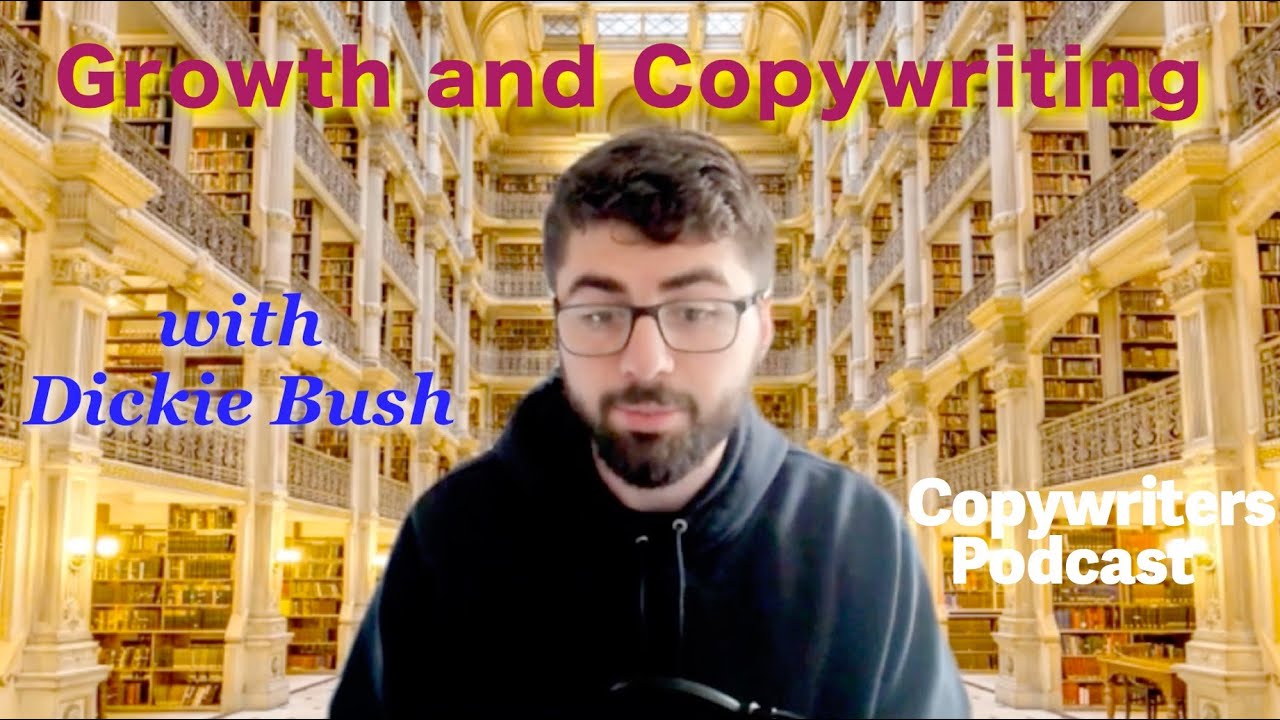

Dickie Bush on Princeton Football & Personal Growth | The Danny Miranda Podcast #021