Growth and Copywriting, with Dickie Bush -- Copywriters Podcast 199
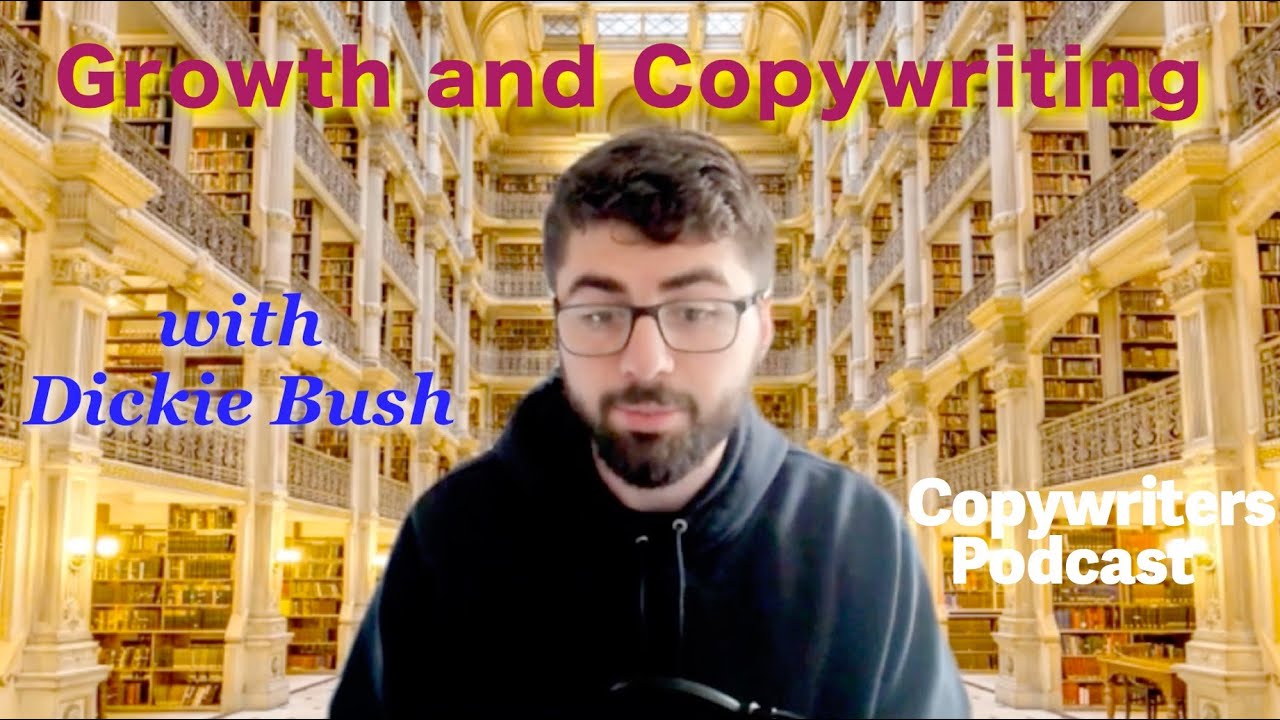
In this episode of The Copywriters Podcast, hosts Nathan and David Garfinkel interview Dickie Bush, a macro hedge‑fund portfolio manager who has built a reputation as a prolific online writer and growth enthusiast. Dickie explains how he began a weekly newsletter in 2020, transitioned to daily writing, and created the "Ship 30 for 30" challenge—a 30‑day program where participants publish 30 atomic‑essay screenshots on Twitter, using each essay as a mini‑landing‑page to practice copywriting. He describes his method of extracting ideas from thought‑leaders, turning them into Twitter threads, and how this practice sharpened his copy skills. Dickie also shares his systems‑thinking lens for understanding growth across finance, health, startups, and productivity, citing influences such as Peter Senge’s The Fifth Discipline and Deborah Meadows. The conversation covers audience‑first product creation, the importance of daily feedback loops, and the role of copywriting as a psychological tool for influencing behavior. Dickie promotes his upcoming cohorts, provides his Twitter handle and the ship30for30.com site, and reflects on the broader implications of content as a growth engine.
Chapters
All right, welcome back to The Copywriters Podcast with your host, the world's greatest copywriting coach, David Garfinkel. David, how you doing today, man?
Nathan, I'm good. How are you?
I'm doing fantastic, and we have another special guest interview today lined up for the listeners. So I'm pretty excited for what we've got in store today.
Yeah, I am too. Our guest today has a curious connection to copywriting, though he is not a copywriter or even a traditional entrepreneur by trade. He is one hell of a copywriter anyway. His name is Dickie Bush, and he describes himself as a macro investor. I'm not sure what that means, but I think it has to do with hedge funds and numbers with lots of commas in them. It's a paid program he has that he had to learn how to write copy to sell it. He did. We'll talk about the program in a minute. Yesterday he told me he's getting 10% conversion on his sales page. Not half bad. That's a skilled copywriter, no matter how you look at it. Dickie is also a keen student of, and I would say an expert in growth. Growth of all kinds— how people grow, how systems grow, how businesses grow. This, of course, is very closely related to what we do as copywriters, since a good copywriter will help a business grow tremendously, sometimes exponentially. And there's more, and we'll get into that in our freewheeling conversation to come. But first, here's my contribution to the theory of growth. Copy is powerful. You're responsible for how you use what you hear on this podcast. And most of the time, common sense is all you need. But if you make extreme claims, and it's— or if you're writing copy for offers in highly regulated industries like health and finance and business opportunity, you may want to get a legal review after you write and before you start using your copy. My larger clients do this all the time. So Dickie, before we start talking about growth, let's talk about writing. You're an online writer. You've gotten a lot of interest in, in your posts, which I think originate on Substack. And you've got this Ship 30 for 30 program. How did that all come about?
So first off, thanks for having me on. I'm super excited to be here and get to chat with you guys today. The, the origin of my writing online started as I came into 2020 with— I'd been doing a lot of work reading, learning a bunch of different things. And so I kind of built up this routine where every week I would sit down and say, you know, what did I learn this week? What did I read this week? And that was kind of laying to rest in the back of my notebook and over time, I said, you know, I'm building all this up, but I need a forcing function to better understand it and actually kind of internalize it. And that was the result of that was my newsletter, which started 52 weeks ago this week. So this will be my 52nd edition. Congratulations. Yeah, thank you. That kind of kicked off my online writing journey. And so from there, I really focused on just I wasn't too caught up in growing it, but just said, I'm going to do this for 52 weeks and see what happens. Because from everyone I talked to, it's anyone who gets over that 26-week hump in the middle of it is more than likely going to see some success just from the network effects. I like to say that no one has 52 shitty newsletters. They have 10, or they figure it out after 52 of them. So, you know, that was my goal, was to get all the way there. And then recently, in the last probably 3 months, I, I've doubled down on writing Twitter threads, which has been a very fun way to kind of take ideas from podcasts or books or things I'm learning and put them in a medium That is a little bit different than, say, a blog post, right? Because tweets—
Can I interrupt you about that? Because that's how I— I didn't mention this yet, but that's how I found out about you. You had a very famous name in our copywriting community sign up for your 30-day Ship 30 for 30 program, Craig Clemens. And you did this Twitter thread where you broke down the structure of his sales letters, which blew me away. And I shared it with a group of other copywriters on an email thread. And one guy who's probably the sharpest or the second sharpest analyst in that group— and these are guys who Brian Kurtz, if you ever heard of him, put them on Mount Rushmore of— I mean, really guys who had controls for borders— he said, God, he nailed it. That's Perfect. And so I thought, I'd love to have you on the podcast and find out. But anyway, you know, please continue with your story. I just wanted to point out that Craig Clemens thinks enough of you to spend money. And, and I think he said on Twitter, after, after you broke down his sales letter, he said, well, thanks for writing the outline for my book. Now I can write the book.
Yeah, the, the story of, of how I got in touch with Craig is really born out of My Twitter threads. So I had written 5 or 6 that had gone somewhat viral and got picked up by a few people who, you know, liked and retweeted it. And so one day I just put out— basically the focus of my threads were, I really like to understand the way people see the world and really dive into their worldview. So 6 or 7 of them, I would listen to 5 or 6 podcast episodes. read their book and say, you know, how does this person see the world? What are their core principles that they repeat, you know, time and time again? And you get that when you listen to— really, it kind of coincides when these authors go on book tours and podcast kind of tours. So I listen to 5 or 6 of them and say, okay, what are the things that they're actually repeating a ton of? And then I would try and just atomize it into a Twitter thread. And the beauty of Twitter threads is You know, there's 7 or 8 tweets, but they're all kind of standalone ideas. And so people can comment on one of them if one of them resonates. So it's just a fun way in a unique medium. And from there it was— I put out a tweet that said, you know, who should I do kind of a thinker deep dive on? And Craig said, it'd be great if you did one on me. And I said, absolutely. You know, here's a skill that I've never been introduced to copywriting and I'm kind of doing it already because on Twitter, the goal of every Twitter thread is to get the reader to stop scrolling, right? In this competition for attention, which is fundamentally what copywriting is all about, Twitter is such a cool medium to practice it because you have people just scrolling, scrolling, scrolling. And how are you going to write a tweet that gets them to stop. So that's kind of the goal. Every tweet becomes a practice in copywriting and every thread is really a small landing page design, right? You need to get someone to click through and look at the 10 tweets that come after that, right? So I dove into Craig's worldview and said, you know, how does this guy write such legendary sales pages and videos and I just kind of listened to everything he said in a bunch of different speeches and a bunch of different podcast episodes and read all his articles and said, you know, here's how he goes about doing things. And so that's now internalized for me. That's the best part of all the writing I do online is that once I do it, I've internalized the ideas and sharing it with others is just free upside.
You weren't writing once a week for 52 weeks. You were writing every day. Is that right?
So I love this spiel that I've been kind of going on recently. And so I spent the first 9 months writing weekly and trying to find my voice, publishing a weekly blog post. And I, I struggled to find really the ideas that resonated most heavily with me. And so I pivoted and said, I want to start writing every day because there are a lot of ideas that I want to explore that I felt were too long for tweets but too short for blog posts. And we'll get into this. This was the origin of Ship 30 for 30, which is a 30-day writing challenge with a community of writers who publish 30 atomic essays in 30 days. So an atomic essay is, is a small screenshot. We'll link to it, but it's a small screenshot essay where you read the entire thing in just one screenshot. And it's a medium that really lends itself to idea exploration. And so by doing it every day, you kind of accelerate the idea exploration process. And I think for early writers in any skill, if you try to just write weekly, you're going to struggle to really find your voice. But if you accelerate that process and write daily, you're gonna— you have 7 times more ideas to find out what resonates with you and with others. So I call it making noise and listening for signal. And atomic essays accelerate your noise-making, which in turn accelerates your signal finding.
Yeah, and, you know, among people who aren't into your system, as far as I know, I had this one client, Cliff Meez, And he was writing really good daily emails in the hypnosis training niche. And one day I asked him, how do you come up with so much good stuff every day? And he said, I've been doing it for 10 years. You know, it's like you get into the cycle, you get into the rhythm and you discover capabilities you never thought you could discover in yourself.
Yeah. And the only way to do that is to write every day. When you do it on a weekly basis, you just don't have the feedback loops. You don't have the— just writing is about finding the ideas that resonate with you and with others and doubling down on that overlap, right? So you, you put ideas out into the world, you listen for what resonates with you and what resonates with others, you find that overlap, the Venn diagram, you double down on those, and then you repeat. And you keep honing and honing and honing that message. And soon enough you find, okay, I have a core group of people who are paying attention to what I'm writing. I love to write about it. And then you found like, it's all— that's the hard part is getting there. Once you're there, words just flow out of my fingertips now, right? So that's kind of what I'm encouraging with Ship 30 for 30 is you want to accelerate that process and not make the same mistake I did of publishing weekly blog posts into the void of, of 6 readers, right?
Yeah. So, so describe, I mean, how does Ship 30 for 30 work?
So you, on day 1, you join an online community of everyone else who's taking part in the challenge. And this takes place in a Slack channel. We give you all of the resources to Perform your daily writing habit. And so it's hard to kind of explain in words, but an atomic essay is, is one single screenshot. So we give you templates to upload your text and write your daily essays. So all you have to do is paste in your text at the end of it and it makes this nice aesthetic screenshot. And then we encourage everyone to upload their essays onto Twitter. And it's actually an exercise in copywriting is how I explain every single essay that they write, right? So they write a daily essay that's got a screenshot, but their goal is for people to actually click on that picture on Twitter and read it, right? So I explained to them, you need to double down on the AIDA framework at the start of your tweet and say, your goal is to get someone to click through on this, right? So how are you going to do that? How are you going to get their attention? How are you going to get them to stop scrolling? So Not only is it a 30-day writing challenge where they explore their ideas, they're going to become copywriters along the way. Otherwise, they're going to have no feedback. So it's a very fun challenge that way.
I'm curious, have you studied martial arts? Because this sounds a little like martial arts training to me.
I have not, but I think that's on my bucket list to do a little bit of Brazilian jiu-jitsu at some point.
Okay, just curious. Yeah, I mean, I really love the idea. It's, you're not trying to sell a product or start a business or do an affiliate promotion. You're just trying to get someone's attention and keep it and get them to click and get them to share the idea, which I think, I've never thought of this before, but it seems to me, and I'd love your thoughts on this. I heard somewhere that content is the single most consumed commodity in the world today. Being a coffee drinker, I have a hard time believing that, but I'll accept it for the moment. It seems like if you can create an idea that will get people's attention by clicking and get— and then go viral by virtue of the idea itself, not the graphics, not the offer, not the name, but just the idea, that's the core of Business these days in one sense.
Oh, absolutely. I think that the rise of audience-first products is here to stay where you no longer want to create a product and say, let me find people to sell it to. You want to gain attention from a core group of people who have the same problems and resonate with the same ideas and then You simply ask them what their problems are and you solve them. And then you position yourself as a very clear solution to that problem. And that's where the copy comes
in. That's awesome. So what kind of, what different kinds of people, obviously Craig is one, but what other kinds of people have you gotten in your Ship 30 for 30 program?
All kinds. They, so we have 165 people in the first cohort. And within the Slack channel, there are 10— no, I'd say 20 subchannels: psychology, philosophy, business, productivity, leadership, all of those, where every day every member posts their essay in that subchannel to kind of get feedback and explore different ideas with different people. So really what it is, is this audience-first product, quote unquote, came from me really wanting to start writing every day for 30 days. So I started sharing content around the importance and benefits of writing every day for 30 days, right? So anyone that resonated with that faced fundamentally the same problems, right? They struggled with writing consistently. They They started and stopped, they overthought their writing, right? So these things kind of begin to write themselves when you, when you hold on to a core group of people who— an audience is not a demographic, it's not a certain type of person, it's simply people with the same problems. And then once you have that, solving their problems is very easy.
Yeah, that's, that's wonderful. You know, One thing I like about this is it seems increasingly in the academy, universities, in the media, in the conversations you have at work if you work for someone else in a large organization, and since I live in San Francisco, what you might say to the barista at Starbucks when you're getting your cold brew, all of that language is policed. It's getting increasingly policed. And from a, you know, intellectual libertarian point of view, seems like, you know, aside from maybe threatening violence or, you know, extreme aggression, other than that, you can pretty much say what you want in an environment like this. And you can develop a market of people who like it and those who don't like it instead of, you know, writing you up. Just go away.
Right. It's not about the number of people that don't get it. It's about the number of people that do. And so every unfollower you have, every person who clicks on your essay and says, ah, this is not for me, that's just you pruning your message, right? The pathway to mediocre results is trying to please everyone. And I think that's a staple of all, all kinds of life.
Yeah, I agree. So, um, we'll, we'll get back to Ship 30 for 30 in a, in a, just a little bit, but would you talk about your, your studies and your thoughts and your findings about growth? I mean, that's always fascinating to me and I've never found anyone who concentrates on it before.
Sure. My realization that I talked about earlier that came from me writing every day was I struggled for the first 9 months to kind of have a lens to view my writing through, right? I was very interested in just what seemed like disparate interests— financial markets, health and wellness, startups, macroeconomics, writing, productivity, goal setting, things like that. And so I took a step back and said, you You know, what, what is it about these things that I'm really interested in? And Richard Feynman has a great quote that says, nature uses only the longest threads to weave her tapestry. And so I said, what are the long threads that kind of weave through all of my interests? And after some reflection, it was the improvement of system, a person, or a business that I was really interested in. And so this is just the growth, right? And what that allowed me to do is have these seemingly disparate interests like startups or markets or, you know, health and wellness, but view them through a lens of they're simply systems and people trying to improve, right? So it honed— it created a lens for me to view the world through. And now everything I see, I see as a system. And how is that system trying to improve? And writing about that has been— the words just flow effortlessly from my fingertips once you kind of find that thing of like, oh, this feels right. And that resonates with me.
Have you studied Deming at all? Or is that too old school for you?
Studied? Can you say that again?
Yeah, Edward Deming. He was the guy who invented the idea of systems more as an industrial process, and I think the Japanese took his idea and improved on it, called it kaizen, you know, gradual improvement.
I need to, I need to.
Yeah, okay, just curious. I mean, you're here in 2021 and I'm reaching back into the past. I'm more interested in what you're doing, but I'm just curious what your influences were.
So yeah, it's, it's really, you know, I've dug into some, um, I think it's Deborah Meadows. She talks a lot about systems. Um, The Fifth Discipline by—
Peter Senge. Yeah.
Yeah. So all of those kind of talk about systems and that's what I'm digging into now because I actually hadn't read any of those as I pruned my interests. And then I said, oh, these people have written all about this, right? They've said, what are the first principles that weave through all these things? So now I'm kind of digging into that.
That's very cool. And you're also an investor, correct?
Correct. So what I do full-time is I'm a macro hedge fund portfolio manager. So the way I describe that is my goal every day is to try and predict the global economy and figure out how that unfolds, which is been quite a wild ride in 2020, to say the least. But 2021 already off to a swift start. So we'll see.
Yeah, you don't take small challenges, do you?
No, not at all.
Okay, well, I'm impressed. Yeah, that's, that's very cool. So tell us, you know, one more thing about, or maybe a couple more things about Ship 30 for 30 and how people can get— you have a new cohort every month, is that right?
So right now we're working on figuring out the right cadence, and I think a monthly cadence will be the right thing to do. Um, but then there's a lot of different lenses or not lenses, but directions you can go with it where we can encourage people to continue their writing by following this path or There's a lot of different ways, but ship30for30.com is the website and you can find out all the information about joining. And I highly encourage anyone who wants to really study or learn anything to take the challenge and say, here's what I'll do for 30 days. I'm going to write 30 days of copy. I'm going to pretend every day that I have to sell X, Y, and Z, and I'm going to write A small sales page every day for 30 days.
Yeah. I mean, I like this so much more than just journaling or, um, I don't know how familiar you are with the tropes of copywriting, but sitting down and copying 100 of the world's best headlines every day. I mean, it's good. It gets the rhythm and the language into your neurology, but this, this is about generative thinking. This is about really Learning to create and focus and, and reach out to others who, who are in your problem tribe.
Right, exactly. And I love— I think that's probably from the Bourne Letters, right, of copying certain essays every single day for a long time, right?
Yeah, Gary suggested that. A lot of people do. I mean, you know, it's It's not a bad idea. It's like if you think of how painters used to be trained, they would go to the Louvre and they would, you know, copy all of the paintings. And, you know, musicians transcribe stuff by ear. It develops a lot of awareness and sensitivity and so forth. But you're talking about taking it to a more proactive next level. I love that.
Yeah, I think the only way to learn things is not just in case or just in time. Sorry, the only way to learn things is just in time, not just in case, where putting things into practice because you have to, because you're working on a project that forces you to, is in my opinion the best way because you could read every great copywriting book for the next 2 months. Or you could launch a product where you actually have to write a copy page. One of those is going to get you really good results and the other is going to— is really just planning masked as procrastination, right?
Well, I take a slightly different view as a coach. I'd say read the books and maybe outline a few things and then do what you're talking about. There's a lot of people go into copywriting with Very ill-informed ideas. I guess you're going to have to learn the hard way sooner or later anyway, but it's better to reduce the odds of the number of train wrecks you're going to have starting out as a copywriter.
Yeah, that's fair.
All right. Well, any other thoughts? By the way, is that the New York Public Library in your background? I'm trying to—
Oh, so this is my— so I'm home in my childhood bedroom. And it is, as much as I'd like to display that to the world, I think this elegant library is much better.
It's truly impressive. If you guys are only listening to this on audio, you ought to at least get a little grab of it on YouTube because it's pretty awesome. Thank you, Dickie.
No problem, guys. And yeah, this has been great. I think that What you guys are doing is tremendous. I think copywriting is— what I've learned is life is sales and everything you're doing is trying to win others to your way of thinking. And copywriting is just doing that with the written word where you just— it's such a cool problem to me because someone is going to land on your content. with a certain frame of mind, and you have one goal, is to win them to your way of thinking. And how you go about doing that is such an interesting problem in psychology. It takes everything, everything about the world, you know, incentives, psychology, money, all in one spot. And it's just such a cool problem.
Yeah, we think so too. That's why we do it.
Dickie, before we're out of here, one more time, where can people go to join your program or to find out more about what you're doing?
Sure. So I spend probably too much time on Twitter, and that's @DickieBush, D-I-C-K-I-E-B-U-S-H, all one word. And I'm sure we'll link it in show notes and whatnot. If you want to learn more about Ship 30 for 30, you can go to ship30for30.com. So ship, the number 30, for, the number 30, dot com, and learn all about— we have a February cohort that is launching. I'm not sure exactly when this is airing, but that's the current signup right now. And so we'd love to have anyone who wants to.
We'll be running this middle of February. So will you have one in March or April?
Yes, we'll have a March cohort. So if you're listening to this right now, hopefully things have accelerated and you get to join an even bigger cohort with more people.
Awesome. Awesome. And David, any final thoughts before we're out of here today?
No, I hope everyone enjoyed this really unusual type of show. Dickie's unique to begin with, but our approach to the topic is kind of different than what we normally do. And Dickie, thank you for being here. It's really wonderful.
Hey, appreciate you guys. It's been fun.
Awesome. All right, if you want more of your Copywriters Podcast fix, head on over to copywriterspodcast.com. And until next time, we will catch you later.
See you later.
More from Dickie



Dan Koe & Dickie Bush On One-Person Businesses, Creative Workflows, and Lifestyle Design
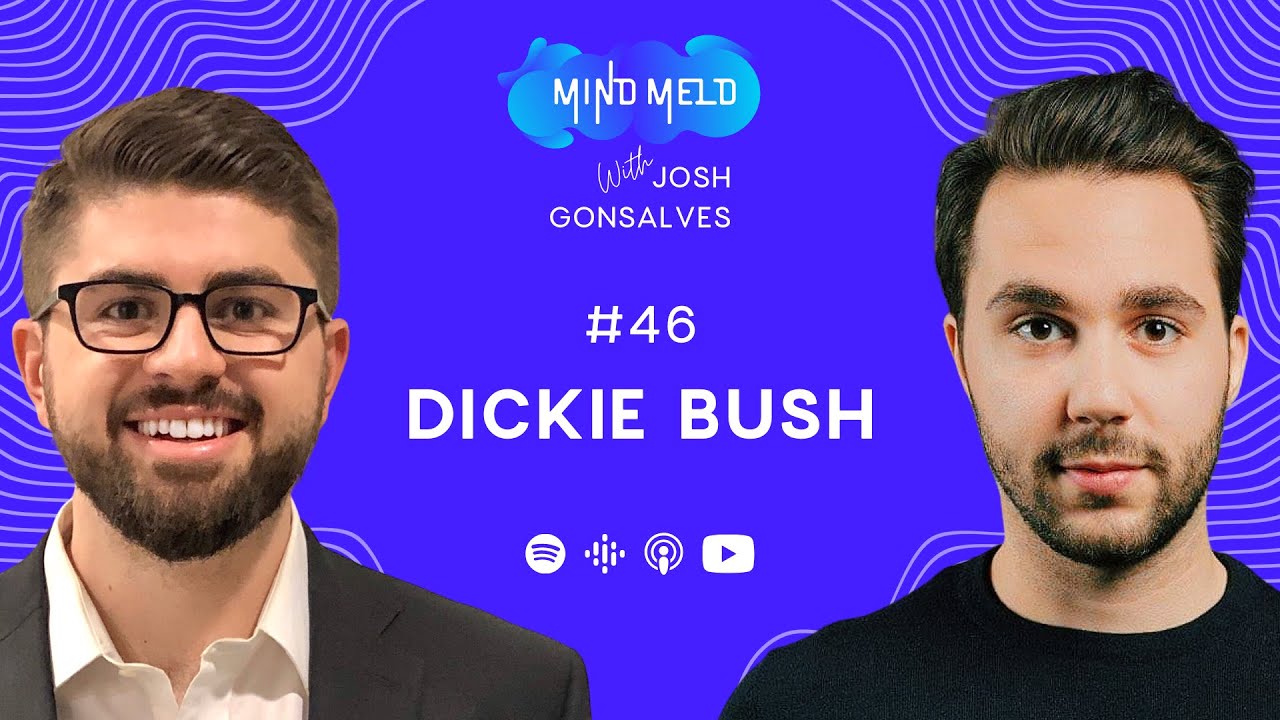
Compounding Your Knowledge and Credibility with Dickie Bush | Mind Meld Podcast #46


Dickie Bush on Princeton Football & Personal Growth | The Danny Miranda Podcast #021