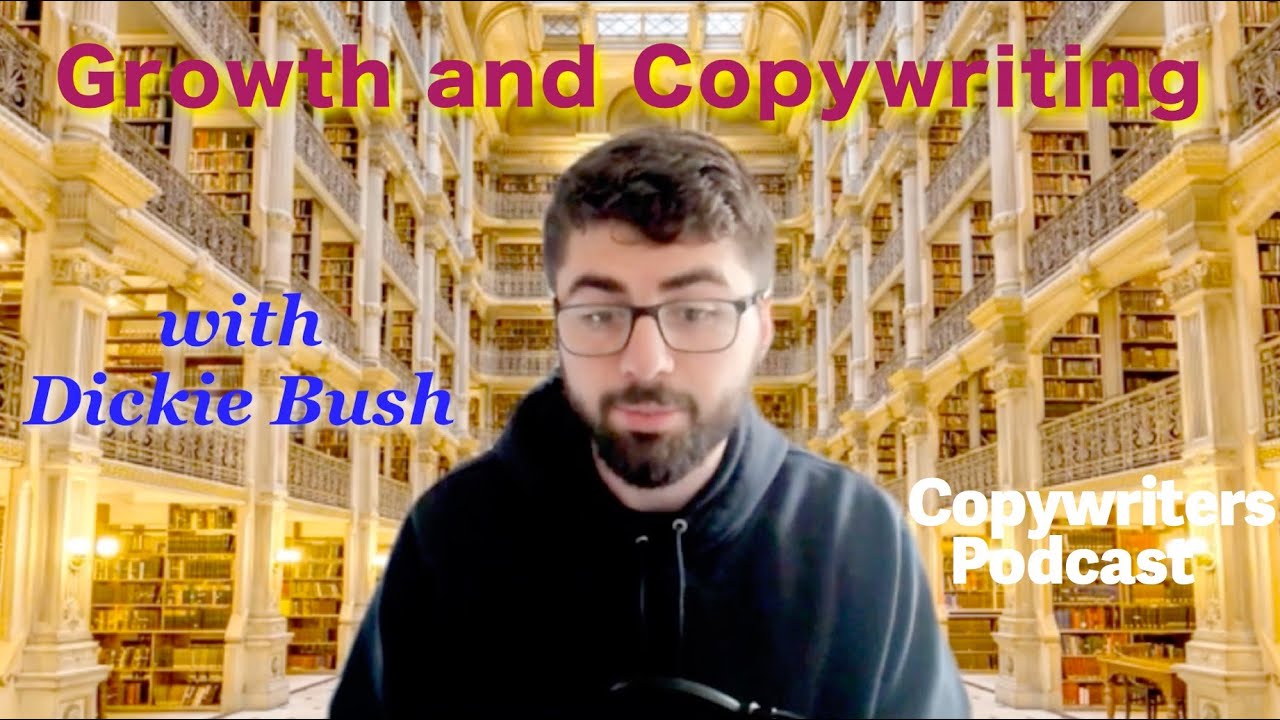
Dickie Bush on Princeton Football & Personal Growth | The Danny Miranda Podcast #021
In this episode of The Danny Miranda Podcast, host Danny Miranda interviews Dickie Bush, a former Princeton Division‑I football player, financial engineering graduate, and hedge‑fund portfolio manager. Dickie shares how he balanced rigorous academics and athletics using Parkinson’s Law, describing a “busy‑edge‑of‑chaos” approach that made him a better student and player. He recounts his post‑college fitness transformation, shedding over 100 lb through disciplined diet, daily movement, and habit formation, emphasizing the importance of sustainable habits over short‑term intensity. The conversation shifts to Dickie’s online writing venture – the weekly "Dickie’s Digest" newsletter – which began as a modest commitment to publish 52 issues in a year. He explains how consistency built credibility, created a content‑creation flywheel, and opened networking opportunities, including meeting Danny. They discuss habit theory, referencing James Clear’s Atomic Habits and the identity‑based view of behavior change, stressing that small, consistent actions shape self‑identity. Dickie outlines his daily routines: morning and evening journaling, a day‑rating system (‑2 to +2), alertness tracking, sleep optimization, and a 10‑minute HRV‑focused meditation practice, all logged in Notion and tracked with a Garmin VivoSmart. He also shares his personal “12 operating values” (acceptance, leverage, efficiency, momentum, ownership, polarity, patience, self‑control, empathy, gratitude, honesty, clarity, transparency) which he reads each morning to guide decisions. The dialogue touches on his habit of listening to every episode of The Tim Ferriss Show, extracting lessons, and the broader theme of data‑driven personal optimization. The episode concludes with Dickie expressing excitement about upcoming opportunities, the presidential debate’s market impact, and the democratizing power of the internet for forming like‑minded connections. Listeners are directed to Dickie’s Twitter, website, and newsletter.
Chapters
Hello, beautiful people. Today I'm joined by Dickie Bush, and Dickie played football and received a degree in financial engineering from Princeton University. But I'm not here to talk to him today too much about football. We did touch on that a bit in the beginning, but we more so focused on writing and personal growth. And Dickie's a fascinating character. And it's really interesting because like many of these conversations, it's crazy because some of these people I've never spoke to before and I only know them from their writing. And Dickie is one of these people, super blessed to have him on. This is probably one of my shortest podcasts, but action and value-packed. Really think you're going to enjoy it. Also, before we get into the episode, make sure you hit that subscribe button on iTunes, Spotify, wherever you listen to podcasts. Would really appreciate it if you subscribed. And enough about that though, let's get right into the podcast. Let's get it to my man Dickie Bush.
Interesting people, thought-provoking conversations, nutrition for your brain. Journey through the minds of the world's top performers and discover what it really takes to achieve your highest version. This is the Danny Miranda Podcast.
Dickie, how are you doing today?
Doing well, man. Doing well. Glad to be here. Appreciate you having me on and looking forward to what we can, you know, riff on today.
100%. So Dickie, tell everyone a little bit about yourself for those who are unfamiliar with Dickie Bush.
Sure. So a little Background on me, I studied math and played football at Princeton. I graduated 2 years ago and have been working full-time as a hedge fund portfolio manager. On the side, I love to tweet. I write a weekly newsletter, Dickie's Digest, and I write on my personal blog, dickiebush.com. The way I kind of talk about things I am interested in is growth of all kinds. So personal growth, Physical growth, mental growth, intellectual growth, and then economic growth, financial growth, anything. The broad themes that kind of cross all those areas are, are what I like to study, learn, share, all that. So I've been doing that for about since the start of the year. I came in saying I wanted to start sharing the things I was interested in, and COVID kind of accelerated that for everybody. So been nice to kind of ride that wave.
Yeah, man. Well, it's been a pleasure reading your stuff online and a pleasure reading your tweets and your essays. And the first thing that I want to talk about is something that you kind of just briefly touched on, which was your football career at Princeton. And, and it's, it's interesting because when I think about a Division I athlete and I think about them going to class, it's almost like 2 jobs, right? It's almost like 2 jobs and you have to wonder like, okay, if you're working full-time as a student and full-time as an athlete, talk to us about that process of pushing your body and your mind during those 4 years.
For sure. I think it's, you know, I didn't know it at the time, but Parkinson's Law really governed everything I did in school and playing football. And anyone unfamiliar with Parkinson's Law is Work expands to the time that you allot for it. And so what was interesting when I was a student was you had kind of in the fall, it would be full season school or football, but then in the spring you had a bunch more free time. Spring football is a much lighter commitment. And oddly, a lot of people would go into the spring and say, oh wow, I have all this free time. You know, I'm going to be a much better student. I'm going to be able to do all this different stuff. But what I found was by being as busy as possible as I was in the fall, I actually was a much better student and a better football player. Where when you don't have all the, uh, kind of free time at your disposal, there's less that you can really screw up. So I think a good way to say it is People sometimes say, if you want to get something done, give it to a busy person. And so when I had as many commitments as I could, things kind of— I like to say living right on the edge of chaos, where taking on just enough to keep everything moving but not going overboard. So that was really the balance. I didn't really understand it at the time and can look back and say, you know, that made sense. But that was Kind of my process.
Yeah, man. And so what I'm curious about is, do you have any— from a physical fitness perspective, do you have any tips that you could give us for just like as a D1 athlete? Were you— you were obviously trying to optimize for strength as a center, probably, but also speed and endurance. So talk to us about like just the tricks and tips, some things that come to mind as a Division 1 football player? Because I know the training is real and it's legit.
Sure. So what's interesting is I've lived almost 2 physical fitness lives where for the first— I started playing football when I was in high school. So between my football career was really 8 years. And in that time, everything I did was focused on really one thing: being as big and as strong as possible. So I played center. I ended up my senior year, I was about 280 pounds, which it's awesome to look back on pictures at the time because I think I'll never get paid or rewarded to eat and lift weights again, which I'm definitely gonna miss. But it was something that looking back on will be Was, was definitely, was definitely a treat. So yeah, that kind of training was squat, bench, deadlift, clean, get as strong as you possibly could, be able to generate as much force as you could. But it was also staying in shape. We, we ran a very up-tempo offense, so we, we like to call ourselves the best conditioned offensive line in the country, was the way we prided ourselves. Unclear if that was always the case, but Uh-huh. We certainly did our best. And then after football ended for me, there were really 2 ways that things could go. I was either gonna gain 75 more pounds and continue that same kind of lifestyle of eating and working out in that way, but was obviously gonna lose kind of the conditioning aspect of playing football because at the end of the day, I, I'll always be a lineman at heart and never really enjoyed long kind of conditioning jogging sessions. Or I could go the other way and say, look, if I want to live a long time and really be healthy and enjoy life, I'm gonna have to kind of shed some of this. So right after the season, kind of went on a little bit of a 3-month bender of just, I'm gonna have as much fun as I possibly can. I'm gonna just— I'm not gonna worry about it. I'm not gonna work out, etc. And then February kind of rolled around and I said, all right, it's time to kind of buckle down. So I started at 280 pounds and have been on kind of a, uh, not, not a one-way track, but a relatively, uh, relatively steep slope from there. Uh, got down to, in the first year, 220 pounds. So that was 60. And then from there I've been kind of trending down where I'm sitting right at 190 here. So if I can lose 5 more, I'll be able to say I lost 100 pounds, which is something I think it— I just want to be able to say. We'll see if this is long-term sustainable. But on that front, it was from the jump kind of identifying diet and exercise that I think was long-term sustainable, which we can talk about for sure. But, um, I think it's just moving the, the The fundamental things that are going to last me a long time are building habits of moving every day and healthy eating, etc.
Yeah, Dickie, I applaud you for your commitment and your decision to make that choice. Because when you look down that road of like, oh, I'm 280 pounds and I want to be not 280 pounds, that's a, that's a long road to go down. And that's a commitment. And to get to this point is Is hugely impressive. From a personal standpoint, I'm also incredibly jealous of you because if you're 280 pounds, that means you have a substantial amount of muscle. Muscle as me, a skinny kid, will never have. And I started my fitness journey at like 140 pounds and I'm at 180. But I think to myself all the time like, oh my God, if I was ever 250 pounds and lost that weight, I'd have so much muscle. So a little part of me is jealous of you, but I know it's still awesome regardless of what you've done. So hats off to you, brother.
Yeah, I appreciate that. It was a, it was a good ride. And all I've learned from it is patience in the process. And that your point on looking forward 3 years, I just, I tried never to look forward 3 years because I didn't know it was going to be kind of a long path. And if you'd have told me it was gonna All the ups and downs that you go along the way are kind of all what you learn to almost fall in love with of just the process and things like that.
Yeah. So let's talk a little bit about how you took the process and are now taking that online and started to write online and start to publish your thoughts and put yourself out there. So talk to me about the process of writing online and what that has— what skills have transferred over maybe from Your, your fitness and weight loss journey to, to now writing online?
For sure. It was really— I came into the year saying— so I guess 2 years ago when I moved to New York, I, I started reading a lot more than I did, um, just kind of on that journey of, of improvement and wellness and, and growth, and was writing these summaries to myself at the end of every week of the interesting things that I read or listened to. So I had, I called them just my weekly recaps where by the end of the year I had probably 35 or 40,000-word little, probably a little less than 1,000 words, but recaps of the podcasts or the books or the articles or the things that I read or was interested in and how I could apply those to my life. And then Coming into the year, I said, what are some of the things that I'm already doing where with just a little bit of extra effort would lead to super positively convex and asymmetric upside? And for the initial, it was, why don't I just take this kind of curation that I'm doing of things that I'm interested in that I'm writing to myself every week and start sharing it? So that's what I did. And that was a of origination of Dickie's Digest, which is my weekly newsletter. And I write— it's coming up on 41 issues, so since the beginning of the year. And just building that from the jump, saying, here's what I'm gonna do, is do this for at least 1 year. And that was all— the only promise I made was that I was gonna write 52 editions. And what you'll find is it's very hard to write 52 editions of something without having any kind of success, where just the consistency kind of breeds credibility, where someone looks that you've, you've written something every Sunday for a long time, you might want to pay attention to some. They probably have something good to say, or there's been some kind of feedback that has kept them going. So that was my commitment at the beginning of the year, was I'm gonna do this for 1 year. And look, if, if I have no one reading it, worst case, I was doing things that I was already gonna do. And so that's kind of been my theme with everything that I'm doing online is with what just slight additional marginal effort can I put in to really expose myself to some awesome opportunities, meet incredible people, like just being on this podcast, right? It would never have happened if the notes of the things that I was learning kind of stayed in my notebook. And so that's been the evolution. And over time, now it's kind of become a flywheel. And something I'm trying to flesh out right now is just the flywheel of content creation where you find new ideas, you share them, you meet people who are interested in those ideas, they show you more ideas, you write about those, you meet more people. It's just a flywheel that spins faster and faster every time where now I sit down to write and Things are much easier now than they were in the first week when I was either tweeting to a void or writing my newsletter to 3 people, and one was my email, one was my mom's, and one was my roommate's. So things have gotten a little bit easier, but no, it's been a very fun process so far.
Well, you sound like a young Jim Collins talking about the flywheel effect, but it's really interesting, and it gave me chills when you said it. Was that you made the commitment to do this for 1 year. And if people are listening right now and you listened to the last episode with Ryan Mulholland, you should check that out. He also interestingly said the same exact thing. I'm going to start writing online for 1 year. And I told him on that episode, I said, you know, that's really interesting because I made that same promise to myself.
Oh, no way.
So you have 3 people who are now— I'm currently 6 months into writing online at the time of this speaking. You are 9 months into it, or 10. It sounds like 9 or 10 months. And here you have Ryan Mulholland, who's also 9 months into it. And it's just, it's fascinating, man. It's fascinating how 3 people can come to the same conclusion and make the same commitment to themselves. After just before starting and with having no collaboration. So, it just goes to show what the internal and the importance of having an internal is in starting a goal or setting yourself up with a system.
Absolutely. And I'd be curious to hear your thoughts. I almost think that 1 year now looking back is too short of a time horizon. Where you really can start to see those gains 2 and 3 years out. And especially, um, so I'm 24, and something that I've been very cognizant of is when I ask kind of older people what they did, um, in their 20s, they often refer to their 20s as their 20s, right? That's a 10-year period that they almost kind of gloss over. Of, yeah, I did this and this and this, right? And so you think about one year in your 20s as it feels like everything to us right now, but people look back on it as almost a kind of wash of a time. So if you can really leverage some of these earlier years, I think are extremely valuable.
Yeah, man. And I totally agree in the sense that one year isn't gonna do it. But the way I look at it, and I definitely agree now looking at it, you know, after, you know, let's say 6 months of writing online. But the way I look at it is like, you need a small enough timeframe to give yourself an out if you don't like it, but enough to stick with it to say like, oh, I like this, I enjoy this. Oh, this is making sense. But yeah, I'm totally with you from the perspective of I'm not thinking about 1 year. I'm thinking about 5, 6, 7, 10 years. I'm thinking about a decade. Where's this podcast going to be in a decade? Where's my writing online going to be in a decade? That's really what I care about now. But in the beginning, a decade seems like such a long time. I can't wrap my head around that. I can't— a decade? I haven't even written 1 post. How am I supposed to do this for a decade? You know, so when you start, it's almost like you need something small enough that you could just commit to, to really get yourself to bite into it and to really see, like, and figure out if this is for you. You know what I mean?
Absolutely. And I think James Clear puts it perfectly when he says consistency over intensity, which is don't— the— you have to start with consistency before you can build any kind of intensity. And I think that's with Any habit. And I could riff on Atomic Habits all day and the impact that— I think I read that a little bit over 2 years ago now, and right when it came out, and it just struck me of these are— this is a fundamental skill, the ability to— I don't think of habits as— or I don't, I don't think of Atomic Habits as a book on behavior change. I think of it as a book on teaching you how to do the things You say you're going to do, which is really a, I think, a fundamental skill of if you can come up with a plan and stick to it, which obviously we've both kind of put that in motion of wanting to write for an entire year. That, that's not something you do lightly, right? So I think consistency is what you have to start with, and then, then you kind of earn the right to, to establish some intensity.
Yeah, man. And I've had a long struggle with this myself. And it was really when I did this program called 75 Hard. I'm not sure if you're familiar with it.
I just read your post on it. And it looks like it's everything that you would want to be doing for 75 days, right?
Yeah, exactly. So for those listening who are not familiar, it's just to write It's just to have 2 workouts a day, 1 outside, follow a clean diet, take a progress picture, read 10 pages, and there's one more thing that I'm forgetting. I should know. I've been doing this program for the last— I don't know.
That just means it's become a part of you by now, right? Yeah, exactly. It just means that you don't even think about those things, which is the goal with any of those challenges, right? at the end of it say I didn't just complete a challenge, I changed fundamentally my identity of I am now someone who does 2 workouts a day, I'm someone who reads 10 pages a day, etc.
That's exactly right. And the point I was trying to make was that doing this program changed my perspective and self-image of who I was. And it allowed me to, to be like, Oh, I actually am the type of person who completes things. Oh, I actually am the type of person who is capable of being consistent over a long period of time. Oh, everyone else is saying what I'm doing is hard, but I find it easy and I can do it. So that means that I must have achieved something. And so slowly but surely, my, my own self-image changed to the point where I could set a goal for myself. I could set up a system where I could say, Okay, I'm gonna write for 1 year online, 2 posts a week, and I'm gonna figure it out. And so let's just go, let's figure it out. And it's like, so my question to you then is like, were you always that type of person who could just set themselves up and do it? Because if so, that's super impressive. And I would love to know more.
Absolutely not. Was I always the type of person that could do that? And I think it was Like I said, Atomic Habits was really a zero-to-one book for me. And what I think the most— one of the most important parts of it is behavior change isn't— or behavior change is identity change, where every action you take is a vote for the type of person that you want to become. And so you really need to cast your votes accordingly. And I get chills saying that because it's played such a profound role. In my life where the goal isn't to become— or the goal shouldn't be to read 20 pages a day. It should be to become a reader, right? Because any habit— what you've learned in that book is any habit that is aligned with your self-identity will be extremely easy to stick with, right? If you told a reader to read 10 pages a day, they would not struggle with that. But if you told someone who thinks that they hate reading to read 10 pages a day, They're really gonna struggle with that, right? So with any of these challenges or kind of long-term habit commitments, it really is a reshaping of your identity, which you— it's hard to wrap your head around when you start doing things like that. But now looking back, it's so clear that there was a fundamental shift in the way I thought about taking on a new goal or a new endeavor or starting something new. It really is. It's a, it's hard to put into words, but you can just feel the difference of, of from back then to now.
Yeah, absolutely. And one of the things that I used to do a lot was I used to label things and I used to label, oh, okay, I'm gonna have, I have to read 30 pages. Oh, that's so hard. Oh, I have to do this workout. Oh, I don't want to. That's, that's difficult. That this is going to be such a grueling workout. And now I have to say, I might know it might be a difficult workout. I might know that I might not want to read 30 pages, but it's like, it's so much more in me as who I am. It's so much— I'm less likely to think about my own feelings about doing the task and more likely to just do it and then think about, oh, that was hard, that was easy, whatever. But it doesn't matter. You know what I mean? Does that make sense?
Exactly. I think you, you, you start to see obstacles as opportunities and things that you're just going to kind of take on. You stop seeing things as difficult as, as they appear to be in your mind, and you just start taking action on things. And you realize, okay, the, the things that I'm— I've— the stories I've built up in my head about either taking action on something or very rarely true. And the only way to kind of recognize that is by just doing them.
Absolutely. So Dickie, I was going through your website and I saw something that kind of blew my mind. And you have to tell me if this is true, that you've, you've listened to every episode of The Tim Ferriss Show. Tim Ferriss has, has more than 400 episodes. You've listened to every one?
I've listened to every one and I, I've listened to them in order. So one day I just said, I just said, I'm gonna start, uh, start from the first one because it really was, I'd learned so much just starting from episode, call it, I don't know the number, but, um, I probably listened to the last 100 and change, um, at that point and said, There's just gotta be more hidden gems in some of the earlier episodes that people might not have heard as much. So I just started from episode 1, and it was really cool to hear his kind of journey on his own podcast of growing. And you can tell what's so cool about his podcast, and I think is a fundamental truth across all the best podcasts, is they are almost self-indulgent to the host, where he is having a conversation with almost a selfish intent of getting as much information out of that guest for him as possible. And the byproduct is an incredible interview where you can tell that at certain stages of the podcast, he had a different goal. At some points, he was writing a book. At some points, he was working on his own mental health. At some point, he was worried about kind of his own exercise and health and things like that. So it's been so cool to kind of map his progress during that. And it really just, it creates an indispensable learning experience. I'm thinking of putting together a, just everything I've learned from every episode there, because it's truly, uh, that I've taken away something from every one of them for sure. And it's funny to look back on some of my notes from them. and see kind of the genesis of a few things that are so fundamental to me now that I got from a single podcast episode. You talked about Jim Collins, and I could talk about that, that episode for, for months because just there were 4 or 5 ideas that I think about no, no less than once or twice a week just from an hour and a half long conversation. So that's why I think podcasts are so powerful. And listening to one all the way through like that was, was pretty fun.
Dude, that's incredible. And, and it gave me chills when you said that about, you saw his own journey and you could saw, you could see how he was trying to get something out of the guest at a certain point because he was really doing it selfishly and how he's able to create such a great podcast, but doing it selfishly and trying to figure out just for himself. Because it's something that I have explained to my parents and grandparents, and they're like, who would listen to this podcast? And I said, I don't know who is going to listen to this podcast, but I'm just doing this for me. I'm creating the podcast, talking to the people that I want to talk to, and if someone wants to listen to it, great. If no one wants to listen to it, also great. I'm just doing this for me. And to hear that you say something similar about Tim Ferriss's Yeah. Is really awesome. About the Jim Collins episode now and about that, because that was a mind-blowing episode for me as well. I'm talking about Jim Collins and Tim Ferriss. You can Google it or you can go to daniemarano.com/jimcollins. I wrote a blog post about it. And the thing that sticks out to me that is so simple and so profound is rating your days. It's so simple because anyone could do it. You can rate your days on a scale from -2 being the worst to +2 being the best and 0 in the middle, like 0 is a neutral day. And if you do this every day, and I don't do this every day, but I started doing it when I, when I listened to the podcast and it's something that I'm going to start doing in the future, it's like if you do this every day, you can tell what are the days where you are having the best day and what are the days you're having the worst day. So talk to me a little bit about that podcast and what it meant to you specifically.
Yeah, that's definitely one of the best ideas from it. And it's funny to hear you say you started it when you first listened to it because I did the exact same thing. And so I have a morning and nightly routine that I kind of churn through every day. And part of it is I have a simple spreadsheet. It's in Notion, but just because it looks better than Excel, but Every morning I wake up and I log my weight, my alertness, my motivation, and something I'm grateful for. And then every night before I go to bed, I'd write like a 50-word little blurb of everything I did that day and rank my day on -2 to +2, right? So what's so fun at the end of the year— I do it every couple months— of looking through that, tracking the average of my day rankings over time to see, you know, Fundamentally, was I having a good time or was I enjoying what I was doing? And when you start to spot trends of, okay, I had a little dip for a while there. What was I doing differently? What was going on? How could I have reacted better? It just creates the ability to get feedback in super tight feedback loops of, okay, I quickly saw that I had 6 or 7 kind of not great days in a row. Was my sleep okay? Was my exercise on point? What was I doing differently? Who was I hanging out with? Et cetera. You're able to quickly keep super tight feedback loops on your life just by 5 minutes in the morning and 5 minutes at night at kind of tracking your, your emotions and feelings and things you're grateful for and other things like that.
So I love that you mentioned alertness. Alertness is not something that I thought about, but it's something that I'm going to add to my morning routine now because that is such a good one. And
yeah, I think it's a— the, the goal of a good night's sleep is to wake up alert, right? Mm-hmm.
It—
there's, to me, there's nothing more frustrating than getting 7.5, 8 hours, but waking up not alert. And so I'm actually trying to optimize to wake up as alert as possible. And so finding that optimal amount of sleep and, and diet and things like that, um, that's kind of how my overall health approaches has pivoted from trying to lose weight to now maintaining and thinking, you know, what are the things I want to do to feel good all the time? And I think alertness is one of the most important ones. And it's definitely an interesting ballgame, and I'm starting to figure it out a little bit. But like this morning, I woke up and I was a 2 out of 5, and— but I slept for 8 and a half hours. So that's where you start to wake up and say, you know, That's the frustrating part. I'm doing what people, or what the, you know, kind of mainstream ideas around sleep are. And yet, I woke up and did not feel great this morning. You know, what am I doing wrong? How can I fix that? So, and that goes back to the feedback loop.
Yeah. So specifically to that, one of the things that I've not tested on myself, but I've heard from my friend Tej Dossa in episode 1, he didn't talk about this specifically in the episode, but It's something that he's mentioned in the past is that we sleep in 90-minute increments. And that could explain why you sleep for 8.5 hours as opposed to 9 or 7.5, and you wake up feeling groggy because maybe you're in the middle of a cycle. I don't know if that's science. That's something you have to test out for yourself. That's also something for anyone listening to test out. But could be something interesting to think about. That you could be more alert after 7.5 or 9 as opposed to 8.5.
Yeah, I need to, I need to just dig into it more. I, so I read Sleep by Nick Littlehales and I think that's where the idea is from. And I've been on and off with, with that because it's hard to, I think I wake up a little bit throughout the night. And so it's, it's hard to predictably say it's always 90 minutes, but there's so, what's so cool about sleep is there's so much you can optimize around it and to get better. And once you find I'm still trying to find it, but I think once you really find that sweet spot, it's gonna stick with you forever. And there, I think there are a few better things you can do than really try to optimize that.
Yeah, I remember Tim Ferriss saying that, you know, one of his goals for one year was just to optimize sleep. And because that was such a big lever that would impact so many other areas. So yeah, man, do you have an Oura Ring or a Whoop band?
So I wear just a Garmin VivoSmart 3. I've been wearing it for 3 years and it's probably— so it tracks sleep and heart rate and steps and all that. And there are probably some more accurate ones out there, but I'm just, I'm holding onto it because it has so much of my data on it that I almost don't wanna switch because it's got my whole kind of health journey logged on it, right? So I— Unless I can transfer my data to Whoop or Oura when I get it, I'm going to stick with this one till it breaks down on me just because it's almost got a little bit of sentimental value at this point.
Oh, I totally get that. It's really interesting how, you know, you start with a program or you start with something and you don't want to give it up because you've invested so much into it already. Yeah, I relate to that. It's part of the process. It just seems like you're such a data-oriented guy and you're just so willing to optimize and so willing to try to figure out where the best comes from and how to figure out the best. Where does this mindset come from?
I think it's the most exciting part of life is trying to optimize things. Right. To me, the process of looking for ways to do things better, and I just call it growth, of what are the ways systems or people or businesses or anything improve. And I think a fundamental part of that is a data-driven approach. And because it's— this goes back to the feedback loop. You need some kind of measure and mapping of whatever you're doing to incrementally change your process for going about it. Where if you're flying blind without kind of a true key performance indicator, KPI, or something like that to say objectively, because otherwise I just lie to myself, right? If I didn't have a— if I didn't weigh myself every morning and just went on however I looked or something like that, we're able to lie to ourselves when we're not kind of biased or governed by a data in my mind. So that's why I do kind of keep that focus. And then the optimization of it is, what are the things that are leading to better performance in that indicator, and what are the things that are leading to worse, and how can I get rid of it? Or what are the high-leverage things that take up much less of my time that are improving it, and what are the things that only add just a little bit of value but are taking up way too much of my time? So it's a whole ball game. And those are just the kind of things I enjoy.
I love it, man. I love it so much because these are things that I think about as well. Switching gears a little bit is you— I read through your 12 operating values post and you mentioned that you read these 12 operating values and maybe you could get into some of them, but you mentioned that you read it The list within 10 minutes of waking up in the morning. And this is also something that I do as well. So, I wanted you to touch on why you read it within 10 minutes of waking up and also just talking about your 12 operating values, which I support 100% and we'll link to in the show notes.
For sure. That was a very personal piece that had kind of been in the making for a while. And It's been an incremental process. So just a little background on what they are. It's kind of 12 overarching themes that I use to make decisions and I try to have govern my actions. And so you can read more about it, but it's basically an iterative list that I've built up incrementally over time as I read more or discover these themes or learn from experience and things like that. Yeah, they're part of my morning routine just because they prime me for the day, right? These are my ideal way of doing things. And if I let all my decisions, or if these govern all of my decisions, I'm gonna have a good day. So that's my way of thinking about it. And so by reading them when I wake up, it just puts them top of mind. Now, by no means do I follow them every day. I mean, that's That's the goal, right, is to align the things that I say I should do with the things that I actually do. And that sounds fantastic on paper, but it's very difficult in practice. So that's part of the whole ballgame is how can I better align them? So just to run through the 12, it's acceptance, leverage, efficiency, momentum, ownership, polarity, Patience, self-control, empathy, gratitude, honesty, clarity, and transparency. So these are the 12 things that I really want to kind of have run my life, right? These are the things that I've searched for in opportunities. When I weigh different ones, I run through this list. When I'm making a big decision, I run through this list. And it's a kind of a personal operating system that I'm always honing over time, but it was fun to share it because it got— it was just a, you know, let me put this on paper, something that I've been working on for a while and kind of put it out into the world. So it was fun to do.
Amazing, brother. And so one that, that sticks out to me and is one that I've really had the pleasure of building over the last year is empathy. And one question that sticks out to me is, were you always an empathetic person? Was that something that you built consciously? Or, and why is that on the list specifically?
I would say I've not and am still not a very empathetic person. It's something I'm very actively trying to, to improve upon. And it's hard for me because, well, just empathy is seeing things through other people's opinion or point of view and stepping into their shoes. And I've been— I struggle with it sometimes because if I see someone who who isn't acting the way I would or has a different way of operating than I do, I initially jump to, you know, they're doing it wrong. And so that's how it found my— it's around my list because you can't go through life living that way. If you look at everyone who does things differently than you and you think that they're doing it wrong, you're going to struggle. And so to me, it's— I needed something on this list to say, How can I look at what other people are doing through the lens of why they're doing it and what they've told themselves are the reasons they're doing it, or what are the reasons they have for doing it? Right. So that is a— it's something I need to put it up higher on the list so it sticks with me a little bit more because it's a difficult one.
For sure. And one of the things that I can attribute empathy to and building it is meditation. And that's something that I saw you do in your morning routine. And talk a little bit about your meditation practice.
Sure. My meditation practice has been definitely up and down. I think I've done it almost every day for a couple years, but it has taken on a lot of different forms. And my current practice is less of an either Buddhist meditation or Zen meditation, which I've done In the past, but now I'm, I'm just focused on taking 30 heart rate variability breaths where heart rate variability training is basically training your heart rate to have subtle jumps in between them. There's a lot of science behind it on how that it just primes your nervous system. There's just a lot of benefits that the best kind of cardiovascular athletes have very high heart rate variability and It just leads to a lower stress outlook. It's great for longevity, things like that. So my current is takes 10 minutes to do 30 breaths of 5 seconds in, 6 seconds hold, 8 seconds out. And really focusing on that for 10 minutes every morning after exercising takes my heart rate back into a super sustainable zone, which has been my current meditation practice. But in the past, I've done 30 minutes in the morning of trying to do Buddhist Zen meditation, and that's extremely difficult. And it's really been what works for me at the time. What do I think I need more of? Do I need more silence or do I need kind of a more streamlined routine? But it's really just, I see it as a 10-minute period where you have carved out for yourself that you do every single day without any kind of, uh, No one can, can come and take that time away from you if you structure some time around it.
I think it's something so much like exercise. And I think what you're doing is amazing. Because it's like, at some points in your life, you're going to want to run. At some points in your life, you're going to want to play football. At some points in your life, you're going to want to lift weights. This is what meditation is, right? Like, and the different meditations that you've been doing and you've done, It's like you have to figure out what works for you at that time in your life. And there's not going to be one time that works for you. There's not going to be one type or one style that works for you. So yeah, man, hats off to you.
I think it's a fundamental thing that I hope is with me forever. And it's always going to be a— I'm always going to be tinkering. What's so fun about it is there's A thousand ways and everyone's got a different opinion on it. So it's just one of those things that I can experiment with and try and, and find what works. And right now it's this, and I'm sure in a month or two, I'm going to read something that says, try it this way. And I'll give that a whirl. And it's just one of those things that you can add to your routine that gives you some, something to experiment with. And, you know, that, like I said, it's some of the most exciting things for me.
Yeah, man. And it's just about consistency, right? It's like, if you just do it over a long enough period of time, even just 10 minutes a day, even, you know, like, the littlest thing, like going back to James Clear, Atomic Habits, it's like, doing it, doing something small for a long amount of time is, can be better than doing intense, intense, intense over a short amount of time. Because the person over the long run is just getting more reps in. And, you know, I found this doing a 3 or 5 minute yoga practice, just doing simple poses. And it's like, you can gain such benefit from doing that, that it's like, you— it's so important to cultivate that length, as opposed to that intensity, like you were saying before.
Right. And it goes back to just casting the tiny votes for the type of person you want to become. Right. The best way to do that is to make your votes even tinier and make it much easier to do them.
Absolutely. So Dickie, tell me, what are you excited about today? What's just getting you so fired up? And like, there's a tendency with these interviews and these podcasts where people talk about the stuff they've done in the past, and that's cool. But I want to know, what are you excited about today?
Oh, I'm excited about Quite a few things today. First was looking at my schedule this morning and saying, I get a chance to be on a podcast and talk about things I'm interested in, right? That just to me is a sign that some of the things I've done over the past few weeks and months are paying off, right? I get to share experience with someone who is interested in similar things to me. And it just, it was a motivating and forceful factor in What keeps me doing the things I'm doing are getting opportunities like this. So that is one thing. Second thing, and it's interesting that so much of the things I share and think about online don't really have much to do with what I spend almost all my time during the day on, which is as a portfolio manager. And it's a good way of doing things for me because you can only stare at charts and think about numbers for so many hours a day. So having a separate practice, it's almost perpendicular to or in the opposite direction of what I do for most of the day. But tonight is the first presidential debate and that has huge implications for the market and all the things that I stare at all day. So I'm very excited about that. But longer term, it's continuing to just do all these things that Excite me every morning, which are improving, growing, sharing, meeting interesting people, working hard, those kind of things. It's really that I've come to just get so excited by the process of waking up every day, which, uh, which I think I'm in a lucky spot to be in.
Dude, that's absolutely amazing. And you mentioned that tonight's the first presidential debate. It's funny because when this is posted, We will either have a new president elected or it'll be Election Day. And people who are listening to this will be— they'll already know the results of how those went. So
there we go. So if you don't hear from me, it meant things really hit the wire. And so you'll know, we'll know by then.
Yeah, we'll know. So Dickie, it's been such an absolute pleasure to have you on. I definitely want to have you on in the future as well. Just You are the type of dude who, when I started putting out content online, I was like, oh, this is the type of person I want to read and who I want to connect with. And so I'm so grateful that this has come to be, so grateful to have you in this conversation, and really, really pleased with just how everything came out. So thank you very much, brother.
I appreciate you having me on. And isn't it just so exciting what the internet can do for— the way I like to say, and I think I wrote about this, was the internet has democratized access to friendship. Mm-hmm. Where in the past, if the people that you were around didn't— weren't interested in the same things as you, or the people on your street that you grew up with played a different sport than you, you were kind of out of options. But the internet And sharing your journey and the things you're interested in publicly, just you become a lighthouse for like-minded people where you're able to quickly see the things that, wow, this person sees the world very similar to me. I want to talk to them, see what interests them that maybe I haven't checked out. So it's exciting to meet someone like yourself, and I appreciate you having me on and look forward to being on in the future.
Dickie, so before you leave, tell everyone where they could find you on the internet.
So the best place to find me is on Twitter. It's @DickieBush, D-I-C-K-I-E-B-U-S-H, same as my website, dickiebush.com. And I write a weekly newsletter called Dickie's Digest where I share thoughts and links on growth of all kinds. And so that comes out every Sunday. It's a— I put a good amount of effort into it. People have really started to enjoy it recently. So you can sign up for that at dickiebush.substack.com. So everything's pretty much the same, but you can find links to everything, uh, I'm sure in the show notes, but it's Dickie Bush just about everywhere.
Yep. Those will all be in the show notes. And thank you again, Dickie, for joining us.
All right, Danny, take it easy, brother.
That was my episode with Dickie Bush. If you enjoyed this episode, let me know on Twitter @HeyDannyMiranda, or feel free to sign up for my newsletter, Tuesday Treasure. You can find that at dannymiranda.com/tuesday. Thank you so much for listening. I appreciate you so, so, so much. Sending love to you wherever you are in the world listening to this. I appreciate that you listened to the final second. I'll see you guys in the next one.
More from Dickie



Dan Koe & Dickie Bush On One-Person Businesses, Creative Workflows, and Lifestyle Design
Compounding Your Knowledge and Credibility with Dickie Bush | Mind Meld Podcast #46