1 on 1 Interview with Sean Pratt
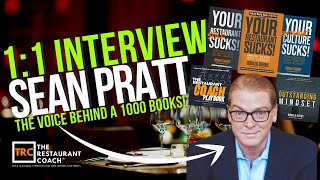
Sean Pratt, an audiobook narrator and coach, talks with Donald Burns about narration technique, restaurant leadership through daily rituals, and why listening matters as much as reading. Pratt coaches people on voice work and performance while Burns discusses his writing process and expanding into Spanish markets.
Chapters
And welcome to the Restaurant Coach podcast. It is the cure for the common restaurant. I am honored to be joined today. Now, he hasn't said anything yet, but when he speaks, if you listen to any of my audiobooks, you probably recognize the voice. It is the voice of Sean Pratt. Sean Pratt is a audiobook kind of narration God in the world, in a sense. And I was very, very fortunate. When I first did my audiobooks and I'll tell this kind of story, I was like, I listened to a lot of audiobooks, like, on Audible itself. I probably have. I think I have over 900 audiobooks on audible by itself. So I, you know, and one of my favorite narrators was Sean. And so I decided that, you know, hey, man, he's so good, man. Just love his. I love his tone. I love the way he just brings the book to life. And so I was like. And at first I was like, there's no way. There's no way he's ever gonna, you know, narrate my little audiobook, my little book, you know, your restaurant sucks. My first one. So then we connected on LinkedIn, made a connection on LinkedIn and just, you know, just one of those days. And this goes to that fact that you should just. Don't ever be afraid just to reach out. And what are you gonna say? No? So I reached out to Sean on LinkedIn. He said, hey, you know, send me a copy of your PDF. Let me look at your book. Let me check out the style. And he reached. Reached out back to me and said, yeah, I'd be honored to. And we started a great business relationship. And now what, five audiobooks later, here we are.
Yeah. Well, thanks for having me on the show. Yeah, I know. It's funny, when I do a lot of private work, that's what we would call it in the industry, because you. Mainly my main source is with the major publishers like Random House or Harper Collins Hachette, or the audiobook companies that sometimes buy the books, you know, like Blackstone Audio, Tantor Media, things like that. But I've been doing this long enough now that I have. I regularly do work privately, like your projects. You know, I'll have an author reach out to me. I usually it's through ironically through the main. Is LinkedIn, followed closely by Twitter. And then I recently I did a book where the author found me on Instagram. And so, you know, I. They'll say, I've listened to you. I've heard you do other books, or you can recommend it to me because, you know, you narrated My friend's book. And so, and I said, well, I said the same thing. They'll send me, you know, send me the PDF, let me see if I'm going to be a good fit for it. Because, you know, when you cast an audiobook, not every voice fits every book, as it were. It's like a part. So for instance, you know, I've got this sort of a lighter voice. I tend to do a lot of positive kinds of self help positive, you know, business books and so on. I don't tend to do things, although I have on occasion. But it's really rare, you know, like books about like armed conflict, like World War II or really greedy True France. Yeah, you want to, you want a more, you want a heavier voice for that. And so, yeah, it's funny, ironically, I liked the books because, you know, you swear in them. That was great. And you, and you were funny and so, and, and you know, by having, you know, for a very short time I was a, I was a server myself and my daughter is a bartender. And, and I don't know, I just like, and I just like the philosophy behind it. It was a very, no nonsense kind of, here's what you can do to be better. And so, yeah, that was. And, and it's also been interesting. I was talking about you to some of my students because I teach audiobook narration technique about your evolution as an author over these.
Oh yes, and you've talked about that when I've written and you've said, yeah, you've changed.
Well, yeah. And well, you've become what I tell my students. And I did a podcast recently with an author, a book I did called Tickled. The author was named Duff McDonald and we were talking about, he had me on his show and I said, when you narrate a nonfiction piece, you live inside the intellect and the head of the author for however many hours it takes to work on the piece. And, and you get to see how clear their thinking is or the way they want to approach a topic. And it's a character, it's like a character performance. It's like getting to play Hamlet for 10 hours or whatever, you know, and it's interesting to see the evolution of how you as a writer have taken the concepts you teach all the time. And with each book you've gotten clearer and clearer and clearer with them. The structure is there. Right. And that's been a nice, it's been an interesting journey to, to watch. Every time I get a new manuscript from you, it's always, it's always sharper than the last one. It's a. You know, the structure is better. Yeah, absolutely.
And I also think, too, you know, and this is. This goes back to working together for a longer time. I think you get to know my work a little bit more, and I think a little bit more of the personality comes out. Like my latest book, you know, your restaurant culture sucks. I mean, and I don't think. I hope people don't think this is weird. I listen to that audiobook all the time because I think it's great.
I am so writing. That's fantastic.
That's a good stuff, man. I'm like, oh, my God.
It's. You know, I can tell you from experience that I've narrated audiobooks where the idea might be really unique. Of course, there's no such thing as a new idea. It's about the author's take on the idea is really unique. But unfortunately, the way they teach it to you is not very clear or. I've also had books that the topic's been done to death, but it's still interesting because the author presents the ideas very, very clearly. And, you know, it's just. It's. You know, I feel like, you know, you hang to me when your books. The central thing I always come away from them is that you say all the business problems, our restaurant problems are people problems.
Exactly.
You know, that's that central. That. That thing is stuck with me through all of them. And. And the way you explore that. That challenge, whether it's having them do, you know, the. The disc profile stuff, or having team meetings or coming with an agenda or acknowledging their work, it's just it. You. You explore the idea really well so that people can pick up on it. And ironically, I thought of you just the other day, and Friday was it Friday. My. My daughter works for Sodel, which is a company in southern Delaware, and she's a bartender at one of their restaurants. And she got an award, and she was just tickled pink about it. She put it up on Facebook. Yeah. You know, like, it was like the. The spark plug award or something. Like, she brings creativity and energy to the thing. And I thought that's what Don was talking about. You know, acknowledgement's important.
It is. It's huge.
Yeah.
People. I mean, gratitude. One of the things. And we talk about this in the third book, is that, you know, I tell everyone talk about the daily five sermon. Daily five sermons. What the owner should be just preaching every day, your mission, your core values, your vision, your standards, expectations. And then Words of affirmation, appreciation. Because I think it's the biggest thing we have in this industry is that we just don't appreciate people. I think everywhere in the world, we just need a little bit more appreciation, a little less judgment, a little more appreciative.
Yeah, yeah. We need to be. I hate to use the term, but kinder, gentler as a nation. Right. Especially right now. And. And it's hard, you know, the pressures. I mean, I was a. I. I was a waiter when I was in college for a brief time at Cafe Pasquale's in Santa Fe, and. And I was. I was okay. You know, it was more of a job to get through because I was an actor. I was in between carpentry work, and I, you know, needed some money, and I really enjoyed the people I work with. But in retrospect, having now, you know, lived with your coaching through those books, I realized one of the reasons why there was a lot of hiccups or friction in the restaurant. There was because the owners, the management, didn't take the time to do a lot of the stuff that you talk about. You know, just. I go, oh, that's why we had a disconnect between front of house and back of house, or why there was people left because they didn't feel appreciated. You know, I made a lot of money there, but I didn't feel necessarily like it was the best situation. So. No, there's stuff I, you know, I narrate a lot. I narrated basically, a book a week or every other week now. And so for when a concept sticks in my head, I know it's a good concept because I, you know, I narrate so much material if it does.
You narrate a lot of stuff?
Yeah, yeah. If it's not unique or if it doesn't come across as unique, it won't stick in my head.
So you're one of those narrators that. If I see on Audible that you narrated a book, I usually tend to buy it. Oh, good.
Yeah. You know, I've got a couple coming out that I'm really happy about, too. Yeah. So, good, good.
One I really liked recently was Mind Reader.
Yes, that was good.
That was a very good. Yeah, just because, you know, I mean, I'm really into the neuroscience and the psychology of people and how words have power and how words, you know, form people's opinions and how what they say and don't say and the pronouns they use and things like that. Really? Really. I mean, I love that kind of stuff, and I think you get into that little bit stuff a little bit more, it will make them better leaders because you understand people.
Yeah, yeah. No, the psychology behind, you know, looking at verbal and non verbal cues, you know, to, to get on, you know, if you can learn to read people and that, that's what I. And that's the other thing I love about narrating non fiction. You know, I, I used to do 50 books a year. Now I'm about 25 because I coach and that's. Yeah. You know, that's basically 2/3 of my time. So these projects tend to be shorter. But I. One of the things I love about narrating non fiction is I'm always learning something.
Yeah.
You know, having. When I started out, I was doing tons of fiction, Murder mysteries, sci fi, fantasy, you name it, romance. And while that's fun as a performer, after a while you start to fall in like, oh look, the butler did it again. You know, and again. And so, you know, and nothing to the quality of the writing. It's just that I wanted something a little different. And when I went back to my clients and said I need more work, they started sending me nonfiction. That's when I rediscovered how much I enjoyed just reading it, you know, on my own. But I've narrated things on topics I never would have picked up on. And you know, I did a book, it's not necessarily business related. I did a book called Impact, which is about meteorites. And it was really interesting and really funny. It was like Ryan Reynolds wrote a book about geology. It was really funny. And before we started, I mentioned that I'm getting ready to record two books. One is about a con man out of Hollywood who. They've captured him. He was called the con queen of Hollywood. So it's that story and about the woman investigator who tracked him down and got him arrested and so on. And then I'm also doing a book about the American withdrawal from Afghanistan. The last few days at the Kabul airport. You know, it's. I get these moments of history or science, like in the Mind Reader that I, you know, I would never would have picked that book up or more than likely I wouldn't have, you know, and it's just, it's such a wonderful bonus.
So, yeah, one of my tricks, so I, I teach, I teach all my, my coaching clients this trick, one of my tricks to learn and retain better is that I'll get the book and I'll also get the audiobook and, and I'll read while I listen to the narration at the same Time. And I find, I mean, I can retain sometimes like 60 to 75% more than just reading or just listening. So it's a really cool hack I use.
So, you know, that's. I have to do that. I've been prepping, I'm getting to write, beginning to write my second book. It's a class that I've taught for 20 years about, for freelance performers, about when to take a job and when to turn it down and how to know the difference. So it's basically a book about negotiating as a freelance artist. And I've done this class scores of times, but I've always wanted to turn it into a book. And so as part of my prep, I'm going back and listening to really good negotiating books that I remembered I might have to give that a try. I've never done that before. I've just listened and made shot of note.
I'll get the book lots of times. I do. I travel a lot, so I use Kindle and I'll get the Kindle book and I'll listen. Now, depending on the narrator, sometimes I'll have to speed it up like 1.25 or 1.5 faster.
Oh, heresy, heresy.
But it forces me actually to read a little faster.
Oh, I see.
You know, because, you know, because I read pretty fast. I took a speed reading class years ago because I wanted to learn how to read faster. So as I'm, you know, I use my fingertips and I scan as, as they're talking really fast, you know, do.
You find, do you find when you listen and you say retain it, do you, do you, do you stop to make notes about that or do you highlight something, Highlights?
I'll make a little note on the side or else I usually have like a lot of times if I'm at home listening, I'll have a notebook or a pad next to me and I'll stop real quick. Oh, I like that. And then there'll be something I want to expand on or I want to learn a bit, a little bit deeper about later. So I'll write down a note about it and I'll bookmark it or I'll tag it, or I'll put a note in there and then I'll come back on it and kind of readdress it a little bit later.
My challenge is that since I teach, I have about 100 students on my roster and we do one on one sessions. So I see three people a day, six days a week. And so I'm. And I have a curriculum of material that they record. So it's always the same pieces. I'm listening for stuff, I suppose, in, in, in. In the restaurant world to be like, you know that story you tell about making mashed potatoes?
Oh, yeah, yeah.
Right. Okay. So like I make everybody make mashed potatoes, right. So I don't have to worry about anything as I'm focused on a lot of different levels in the performance. So I listen to words and I narrate as well during the day. So it's, it's. I only really listen to audiobooks when I'm traveling, you know, in the car, in the airplane, at the airport or whatever, because I'm so. I'm surrounded by language all day. Right. You know, which is why, like, usually when I'm. It's time to make dinner, I'm putting on like classical music or jazz. I don't want to hear language anymore. Yeah, I, it does, it's really, it really does affect, you know, it's just, it's, it's a challenge because you, you know, I owe it to the students to be always fresh when I listen and I owe to, you know, when I'm narrating a book to the client and then ultimately listener to bringing the best performance. And if it wears me down with just language all the time, I'm not going to do my job right or to my own standard. So. But coaching is.
You gotta listen to. A lot of times, I would say coaching. The whole beauty of coaching, I always say, is listen to what is said, listen to the words they say, but also listen to what they don't say.
Mine comes in, okay, so one coach to another. So they do the performance. And also I have them written assignments. They do, they build different marketing tools, networking things. I give them things so they can negotiate rates and so on. But it's in the one on one. And you were talking. You've touched on it multiple times throughout your series. You know, you have those students who, you know, I have a checklist. I'm their accountability coach as well. And I'm like, so, you know, how are you doing on social media? Have you been researching books on Amazon? And then, you know, you have that hang dog expression. Well, it's been very busy. And I'm like, you know, it. You have to pull it out of them. Like, okay, why haven't you done the thing that you know you should be doing? Exactly, you know, you know, and, and you have to. Sometimes you have to cut them slack because they have a spouse that's ill or they have to move across country or something. But other times they're just being lazy, and that's when you got to get your boots out and kick them in the butt, you know?
So remember, all business problems, doesn't matter what, what business you're in. All business problems are people problems. And people problems all stem from the same kind of different needs, same lack of accountability, same lack of time management.
Well, you know, and not to toot your horn too much here, but why not? All the different things you have, you know, your Facebook group and to be involved in those. Those account. I mean, that's. I do that with my students as well. I have them find other narrators and they meet weekly in different groups. It's. I also love the idea that you do where you bring industry professionals in there to talk with them. I think that's a really clever idea, and I'm trying to incorporate more of that in my own workshops. When I do them, I'll have somebody come in, another coach or other, live or via, you know, Zoom or something, and field questions and. But it's important that they know that someone's going to follow up with them. They can't get away from it.
So.
Yeah. Yeah, that's really cool.
Yeah. It's like, pay me now or pay me later. But.
It'S. You either there's two pains, right? The pain, the pain of regret, or the pain of discipline. Can you get to choose?
Exactly, exactly.
Exactly. I think some. I think Marcus Aurelius said that or something. Anyway, there is.
I'm a huge believer. I think Jocko will, you know, discipline buys you freedom.
Yes, yes, it does.
Freedom. It does.
You know, and it's interesting, too, you talk about in your books. My. My father was a professional fireman here in Oklahoma City for 22 years, and he retired. He started as a firefighter, retired as battalion chief, and mom was a secretary for 40 years. And they really taught me the concept of planning, goals, execution. And. And it was funny early on. And I. I'm not sure if it was the first or second book you talked about. There's no such thing as time management. It's about focus management. And. And they. They said they had a slightly different way of using it, but. Yes, it's like you can schedule to say in this hour, I'm supposed to be doing this, but, you know, if you don't focus on it in the moment, if you get pulled into your phone every five minutes, you're not going to get anything done, even though that was the time to do X, Y or z.
Distractions will kill everything.
Right. So how's the new. How's. How's the new book going?
The new book, book number four, is going quite well, actually. So I have a discipline of I write 1500 words in the morning.
Wow.
So that's my discipline.
Well, you also have your. You have your blog posts and things like that blog, Right, Right.
And people are always shocked when I tell them that, you know, 80% of my books were written on my phone.
Really?
Yeah. Did you just note? Taker app on my phone, on my iPhone, Like, I. Anytime I have, like, a down. You know, you probably heard it in some of my books. I have this kind of catchphrase I use all the time. What's next? What's next?
What's next? What's next? Yep.
And, like, I'm always, like, in, like, an outstanding mindset, my little booklet, I talk about, like, setting up alarm nudges, and I have, like, five alarm nudges that go off all day. One of them always says, like, 9 o', clock, you'll say, what's next? 11 o' clock says, what's next? And it always just keeps me kind of on target, on track. Like, okay, okay, what am I working on? Am I distracted? Did I go down a rabbit hole on Instagram? Like, I didn't want to, but yeah. And then my alarm goes off and just pulls me right back to reality. It's like, all right, Donald, what's next? Get focused on this stuff. And, like, if I have. I have coaching calls all day long, like you with clients. And, like, let's say a coaching call normally is like, 30 minutes. Let's say coaching call ends early and I got 10 minutes left. So I go right to my phone and I'll start writing something. I'm always, like, managing the minutes and see how can I take advantage of the next 10 minutes and get something done.
Yeah. You know, I did a book. Oh, I'm going to find it. I'll send you the link. It was a great book about time management. I did it several years ago. And he talks about something my mom taught me. The author of this particular book, he said, you should always have a B list of to dos ready. List of things, you know. Yeah. On a moment's notice. So for me, too, sometimes a coaching session will end early or. Or, you know, for me, really, the thing is, if I have a student that has to cancel at the last second, I just get back in the booth and keep narrating because it's. To me, this is office time. I do build in time. I think you should too. Well, you just, you go and watch Instagram, you know, you have, you know, I, I usually do that at lunchtime or I take a little nap.
I'm having lunch at the counter, I go out, I get away from my desk, I go have lunch in my kitchen, I set the counter. A lot of times I'll just kind of. Bruce, you know social media.
Yep. That's when I check into it because I get, you know, I, I have to, it's just part of the job because I have students contacting me, I have authors contacting me, publishers, you know, and I also have to have a presence on social media. So I'm checking in to see if anybody responded or asked a question that I want to follow up on. And so, yeah, but it's all very, you know, the last couple hours of the day because I go to bed by around 9 o', clock, 9:30 at the latest. Because I get up at 6 and I just go all day. Those last couple hours, that's when I watch the woodworking video on Netflix, I mean, on YouTube or, you know, something to just. This is my time to just check out. But yeah, during the day and especially if you're doing a job where if you created it yourself, as opposed to say, I'm not an investor, I don't have a business that makes money when I'm asleep. The restaurant is different. But for me, when I'm, if I'm not working, I'm not making money. So that discipline is important to say, all right, you know, if I got my three students, I've got this time to narrate and later on that time to narrate. And this time and that time, it just keeps. Keep me on track. My, I'm pretty good with my calendar. Although I do set reminders for myself as well to remind me to get back or don't forget this little thing you have to do.
So, so of my three books, I'll tell you, just like I always think of them like they're like three children. No one wants to admit they have a favorite child.
Yeah, right, right, exactly.
I got a favorite child. What? Of my three books that you've narrated, which one has been your favorite to narrate?
Oh, the latest one.
The latest one.
Yeah. Well, here's. You are just from, just from my perspective, having narrated so much, like I said, nonfiction, you keep evolving as a writer. You haven't plateaued. You're evolving with your ideas, how you're putting them out there and your idea. And the topics of the book are getting more focused. I mean, the first book was like, here's all these ideas I want to share. Right. I want to get them out there. And then the next one started to focus in on, you know, you're tightening the scope. So now we have the restaurant culture issues, which is great. If you don't mind asking. So what's the topic of the new book?
Well, the new book, actually. So, you know, I'm done with the Suck series. So the new book actually is more about. It's gonna. Yeah. And you talk about focusing it down a little bit more. So I'm gonna take that culture piece. I'm gonna focus down even more into developing a code of conduct to how to conduct your life. So the new book is. Is going to be called the Seven Code.
Okay, cool.
Seven. It's seven kind of keys to living your life at a higher level.
Specificity I found just from my work as a narrator. The more specific the author gets with the topic, the more satisfying it is for. Well, me. But personally. But I think for a reader. I've also narrated books that were just all over the place. They didn't focus on anything. They were just talking about broad concepts without getting into the nitty gritty or give you action plans. And I always feel, you know, yes, I'm still performing. My job is to perform the piece. You know, there's a certain acting concept I teach about how to do that. We could talk about that if you want. But the. But sometimes I did a series of books. Well, series, but three or four over the last several years. And the author, he's always just. He's just being vague. He doesn't give me enough nitty gritty information. And so I feel that the listener is not going to have as good an experience because they're going to be like, well, then what do I do with these things you've told me about? You've given me information, but I don't know how to use it, you know, and what I like about what's been interesting to see is you're evolving with more specific. Like, here's the problem. Let's break it down. Here's exactly how you get through it. And also with the. Even as something with the year long compendium we just finished working on.
Yeah.
You know, the restaurant. There you go. The playbook. Thank you. I blanked on it. Yes. You know, you've got an actionable thing to meditate on. Yeah. Every day, you know. Yes.
If you haven't heard, you know, we just finished up. Sean just finished a narration of the Restaurant Coach Playbook. It's a little bitty booklet. It's like my outstanding mindset. And I like these little companion booklets. Honestly, I think sometimes the booklets are pound for pound, sometimes more powerful because like an outstanding mindset, I really narrow down just about focus and time management and the problems with time management because I think some of the biggest thing restaurant owners have is the management of time and not really managing time, but managing their attention. So a standing mindset was designed for my clients. I wrote it for my clients to help them kind of get a good. This is how you start the day, this how you end the day, book in the day, this is how you tackle it. And then this new book, the Restaurant Coach Playbook, was created as like daily meditations for you to take one concept, one little quote, one little philosophy or one idea. And it's basically. I pulled these concepts of three books. It's over 300,000 words. If you put all my books together, it's a lot of words, it's a lot of narration for, for Sean, I mean, I think together we got like 30 something hours, easily. First two books, first book's eight, second book's 12, third book's 12.
Yeah, I think, yeah, they, they get. Yeah. I mean, that's another funny thing. The. It's funny when you also have it. It's a rarity in non fiction. Most authors just have one book in them. Yeah, most of them do, the majority. So it's interesting when you have an author that has this, who develops a series, but what usually does happen is the books get. Start getting a little bigger, a little bigger, a little bigger, a little bigger, you know, because they have more to say. They, they want to explore facets a little more and. But yeah, no, it's about 30 hours altogether, I guess so. But you know, I don't even, I don't think of it in those terms. I, you know, it's the old cliche of how do you eat an elephant? One form full at a time. 32 hours. All of it.
Okay, two hours all together.
Yeah, I'm just, you know, I'm focused on, I'm focused on that moment in the piece and. But at the end of the day, I try to get one finished hour done a day when I'm working, you see, and because, you know, writing, it's one thing, performing is a different discipline. And I'm in the moment of performing it when I do it. The. I was Saying that other author, I was on the show, he asked me, he said, what's it like? Or what do you do to prepare to narrate the book? I said, we'll be on. You know, I go through and research it and so on. I look up the author on YouTube and I ask very pointed questions to prep it very quickly and. And then to help me bring it alive, as it were, I use an acting concept I learned as a kid working in the theater. I grew up in theater. I started acting when I was 10. And it's called your acting triangle. So you ask yourself, who are you? Where are you? And who are you talking to? You answer those three questions as an actor, you make yourself believe in it, and you're ready to start to perform form. That's pretty straightforward. So who am I? Well, when I. I become you, when I narrate the book. But I don't. I'm not trying to be Donald, the person. I turn you into an archetype. So I am a restaurant coach, a business coach for restaurant tours. And then I. I come up with a space that I have been to so I can actually visualize myself there. So depending on whatever that feels right for the piece. Because some books feel very intimate and small, some feel really big and broad. And I think with this last one with. Not with the Playbook, but the third book in the series, yeah, it felt like a big TED Talk kind of feel to me. So I used Grauman's Chinese Theater in Hollywood. I've been to that space. And it just, I just. It just felt like, you know, like this was a big restaurateur convention or something. It was a space like that. And then the audience, of course, is always an interested audience, in this case, restaurateurs, and who want to know how to make their business better. And so the shorthand term, the concept I teach my students is TED Talk. Narrating nonfiction is like giving a TED Talk.
Right.
And. And what that does by having that triangle, it puts me in a real place where I can see those people in my mind's eye and I reconnect with it helps me reconnect with the text and who I'm talking to. Because when you listen to bad non fiction or AI, The. One of the, One of the things those two have in common is that they don't have an opinion about what they're talking about.
Yes.
See, an author has an opinion. Yes, Right, right. But the, Your opinion and your opinion about what you're talking. Whatever the topic is, it Changes.
Yes.
So you can talk about something that's really serious, like talking about when you had your heart attack outside the dojo. That's a very serious moment. But then it could be something about, you know, a little more fun or humorous or then it gets really serious, like. Like a drill instructor, like, you guys got to get your act together. AI Or a disconnected narrator will just read the words. And that's why it doesn't. It doesn't stick in an audience's mind. And so by using this triangle idea, I always have that audience to reconnect to. And I have a reason for being up there, reason for trying to communicate your words. And, you know, it's. It's what I've done since day one as a narrator, and that's what I teach. And it. I stand, you know, it's the cornerstone of everything I perform.
It's funny. You talk about acting and getting into state or, you know, getting into a role for your narration. I use acting a lot also when I'm talking to service teams, because I always say, like, you know, a lot of times I call the dining room to call it the floor. Like, you're on the floor. I always say, let's remember. And you know me, words are powerful. I say, we don't call it the floor. We call it the stage.
Yes.
And every time you're out there, you're on stage, you're playing a part. And that acting triangle actually would be really good for service teams to understand, like, who. Who are you? What's your role here?
Right. You're playing a part, and you know it. And it's. It's a. It's a version of, you know, because ultimately, when I perform, I have. It's. It's your words meets my personality and technique, and it's a blending of the two. And my job is to pick up on the. The attitude and tone of what you're putting across, to sort of learn to hear the music of your writing, to get the cadence of your of way you speak down. And so it's. It's a blending of those two things. But, yeah, you're playing a part, you.
Know, and also that part of the triangle, too, where you're like, who are. Who am I speaking to? Who is the audience? Who is the guest? That's important to understand because you don't want to say. You don't want to come up with the same approach to every table, because every table is different.
You know, it's funny. I remember now. I. I think it was your first book, I decided to have fun with it for myself and I did. I was in, let me think about this. I was in Santa Fe at an outdoor park. There's an outdoor park there that's got a bit of an amphitheater. And I thought, oh, this will be fun. Everybody's there on like a, on a weekend retreat. And it so just, I envisioned everybody wearing like, you know, like southwestern shirts and flip flops and shorts and having a great time because it felt like up and positive. And let's talk about these things. And it just depends on the piece. But I always come up with something very, very specific and it makes it real. Yeah, it really does make a difference.
But these are things like service teams could really implement to help elevate the.
You said, you say in the book you do role play all the time. Exactly. You know, what do you think restaurants.
Do enough role playing?
Well, yeah, you know what, it's, it's funny. I, There's a, there's a, there's a restaurant here in town called Pub W. I'm not sure if you know the chain. It's a local area and I've never had a, never had a bad meal there. And the service is wonderful. And you can tell they take the time to really train their people. They're. They're all professional. Yeah. You can just tell that the, the way they approach the table, you know, and, and the minute the food hits the table, not even two minutes later, the floor man, I guess the floor manager comes by. How's everything? You know, and it's, it's just a well oiled team and it really shows. And that's why it's always, it's always busy in there, you know, that I would assume they're doing role play. Go ahead.
As a diner, what are some of your kind of pet peeves when you go to a restaurant?
You know, my number one pet peeve actually doesn't have to do with the service. It has to do with the person across the table from me. I, as a businessman, as a person, if how a person I'm having a dinner with or whatever, a meal, how they treat the staff to me is a marker of whether or not I want to be with them, you know, when I was dating or whatever. But also just, just getting to know somebody if they are a jerk to the waiter unnecessarily, I'm like, I don't want to deal with this person because. Right. But as far as I think it's just about, it's about that Calm confidence that comes with somebody who knows their. What they're doing, you know, and if they don't have that. There was one time we had a new waiter, and it was his first Saturday shift or Sunday chef for brunch, and he told us. And he was a really young guy, maybe. I'm not sure if he was even 21. And he was. He was a rookie and he was struggling trying to, you know, oh, yeah, I'll get your coffee. Or he would go get one thing, come back. And I guess because I had been a waiter before, I have was much more forgiving for things like that, because I remember that as well. You know, I think it comes with. When you encounter somebody who's. They've just burned out.
Yeah.
They've been mistreated by management. They've been doing it too long without a break or. Or, you know, the clientele is bad sometimes. You know how it is. If sometimes you go into some restaurants, you're like, you look around like these people, even the people who walk in the door here are not really nice. That can wear you down. So it's, It's. Those are the things that I, as a. When I'm in a restaurant that I pay attention to. And if someone's really burned out or rude in that sense, or just very brusque, it registers on me. But like I said, I. I'm. I'm much more forgiving, having been a waiter myself.
Yeah. Yeah, that's true. I think we're all a little bit more tolerant.
Or we should be. It should be. Anyway, you know, I think. I think there's. I've. I've heard other people talk about this, that there should be some kind of law that everybody in the United States should have to work for like, six months to a year.
In a restaurant.
This industry. Yes, In a restaurant.
Yeah, definitely.
That would eliminate a lot of Karen's and Chad's that live and make our lives miserable.
I had my restaurant. I've kicked people out before for being rude to my team.
Oh, yeah. You know, and I. And I would. I would agree the customer is not always right. No, no. The customer is not always right. In fact, the customer sometimes can be the problem. Yes.
Yeah.
And I love your. Oh, go ahead. I'm sorry.
Go ahead. Yeah. Well, my statement is, I usually say is the customer's not always right, but the customer is always the customer, and it's okay for the customer to be wrong.
Fair enough. Fair enough.
Yeah.
I like how you. I liked this. You've told it Several times in your books about the evolution where, you know, having worked for your father and his My way or the highway kind of thing, you took into your first restaurant and how, and it was causing all sorts of friction until you had that conversation with that one guy who said, you gotta, you know, change the way you're, you're working here. And, and then overnight things started to get better for you.
Yeah, no, it was, you know, sometimes you gotta have those kind of reality checks and sometimes it's nice to have a mentor or someone who can just kind of pull you in and say, hey, you know, you're heading down the wrong path.
Yeah, it's not going to end well. Yeah, yeah.
We used to call them, we used to call them CLCs. Career line cooks would be a CLC. A career line cook being 40 something years old. I mean I was like 20 and I saw this like there's this old curmudgeon guy, he's like, you know, in his 40s. At the time I thought that was like forever old. And he's just like still just coming in, just banging on pots and pans, just working the line, just curmudgeon, just, you know, can't wait to get his 50 minute smoke break. Just, you know, just mad at the world. I just didn't want to, I didn't want to be that guy. I didn't want to be.
Just don't want to be that guy. You know, I encountered as an actor because, you know, I started out in the theater and then I stayed after I graduated in New Mexico with my acting degree in the late 80s. I stayed around for a couple years, did a lot of movies in the Southwest and Shakespeare in the park stuff. I went to New York. Theater Actor. Yeah. And you, if you stay in it long enough, you meet those kinds of people there, especially in the theater world because you don't get a lot of money. It's a lot of work for not a lot of money. And people who get bitter about situations and, you know, they're not fun to work with. They can bring a whole cast down, whole team. You know, it's the same thing. It's being on the cast is like being on a team.
It is.
And the, and you know, I, I can remember seeing people like that and saying to myself, I don't want to end up like that. I have to. The day I start to feel that way about say working in the theater is the time to move on to another venue or the day I feel that way about being an actor is the time to leave. But I got lucky that I've always had a new mountaintop to aim for. First it was theater, then film and television, and then audiobooks, and now coaching and now writing. There's always a new challenge that keeps it fresh for me.
Every level, every level requires another devil. Right.
It. You have to evolve. And that's. I think that's the part that keeps it interesting.
Yeah.
You know, I might someday go back and do theater. I don't know when, but I. I'm so busy doing what I do now, and I really enjoy it. But you were saying, getting back to being a coach is that I, the minute I see, start to sense a student getting bitter about their world. Like, I've done 25 auditions, you know, on the audio, creative exchange, or sent out these things, nothing. And I'm like, welcome to show business. This is a temperament issue. And I said the only way through it is to keep doing it. And I walk through how to do it, you know, in a smarter fashion. But, you know, if I sense a student turning sour or bitter or worn out, you know, I've, I've had some people come to me who've been doing it a while and they're, they feel stuck and I'm like, okay, then, you know, I try to advise them or give them plans so that they can try to break out of that funk. And it's hard because I know you hear that, that mental tape in your head, you gets going. And if it's all negative, it's not a good thing, you know, not at all.
What does that. Dr. Amen. Calm ants. Automatic negative thoughts.
Yes. Yes, that's right.
I talk a lot about belief systems. A lot belief systems pop up in your head.
So what's next for you as far as your. You were just in Spain.
I was in Spain, yes. I speak every year at a really, really fantastic exposition called Hospitality Innovation Planet. It's an amazing event. They, they had record attendance this year, over 40, 000 people. It was crazy.
Good lord.
I mean, they're really invested. Like when you go to. When you go to trade shows in the United States, the trade shows, the United States, they do a little bit of educational stuff, but man, in Spain, they treat education like it is, like the platform. And they had like nine stages, 600 speakers there. 350 different sessions for education for attendees. And you can tell it paid off because the place was packed. All the stages were packed. People lined up outside of staying room only at my Spain.
So you're having different People from different countries in different languages, teaching and doing. Yeah, okay. I have to say, I was, I was, I was more than a little jealous. My girlfriend is a British narrator, but her family is Spanish. Her mom's, her dad was from Valencia, her mother's from the Canary Islands. And we've been trying to get over to Spain for a while now, but of course, Covid sort of threw a wrench in that we're finally having an opportunity. So I'm learning Spanish as we speak. But yeah, I was like, he's in Madrid and I'm stuck here in Oklahoma. And I was, I was so jealous. I gotta tell you, it's awesome.
I love. Madrid's probably one of my favorite cities in the world. And the beautiful thing when I speak we're there is that I start getting introduced to new people. And I just had my first book, your Restaurant sucks, translated into Spanish.
If you don't mind my asking, have you able to follow up on that? Did I, with the, with the woman?
Yeah, yeah. We're auditioning narrators now.
Fantastic. Good.
Yeah. So your restaurant sucks, which in Spanish is tu restaurante a pesta. Restaurant really stinks. Really bad.
Well, you know, it's funny, I, I, I realized I've been learning, you know, to read Spanish and speak and I, I, so I've been using your book, trying to, to just, you know, translate it on my own, but my vocabulary isn't quite large enough to get all of it yet. But it's a good, it's a good piece too because, you know, you write it, your writing is a very, it's a, you don't, you don't try to. And I've had this happen with other authors. Sometimes I'll do a non fiction piece where the author seems to be, they took out a loan because they're using nothing but $10 words. Or I'll have an author that I feel is talking down to an audience. And I, and you're doing neither of those. Yours is just really straightforward language. And, and so I thought, oh yeah, I could practice on Donald's book. I can try to read it. My problem comes when you have esoteric concepts that in, you know, like, you know, like.
Right. It's hard.
Positive thought. It's like, what is that in Spanish?
Yeah, it's hard sometimes it's the, the concept doesn't translate well.
Right? Yes, because, and also when you go back and forth with languages, it takes, you're right. Some, some concepts don't translate well or some just need more language to Describe it. You know, I probably had.
I sent out to, like, a lot of my. I have. A lot of my clients are bilingual. And when I first talked about doing my book in Spanish, I sent out the. You know, I said, hey, what do you think is a good. What's a good translation for the cup, for the title, Your Restaurant sucks. And I got probably 10 different options, you know, everyone. Yes, about what?
Because, you know, a translation. I mean, this goes back from, like, you know, my theater days. You know, we might do a new translation of the famous Greek or Roman play. So you're translating from the ancient, or the author or the playwright is. And translations are part science, and they're also art.
Yeah.
You know, you can do a little literal translation, but. And miss the meaning. You also have to add in, like, what is the. What's the spirit of the. What's the author trying to say? You know, I'll be really interested when you're finished with the process and talking with the narrator. I would be interested who you finally pick as well.
I'm excited.
Yeah.
They're sending me a bunch of audition tapes this week, and. And so we should narrow down.
How are you gonna demand. How many are they going to be auditioning in Spanish?
So we're gonna be listening in Spanish. I'm gonna go. You know what I'm gonna go by. I'm gonna go by just tone, tempo, you know, because, you know, like, the way. The thing I love about your narration, and I think it matches my style, is that I'm trying to be upbeat.
Right.
I don't want to be a downer. I don't want to just beat you up. I want to be honest with you. But I also want to give you tools and empower you to lift yourself up and say, listen, you can have this restaurant, you can have this life. You can have it all if you're smiling. You know what I mean?
Well, yeah, that's. Yeah. I mean, you know, listen to. See, it also might just. As a word of the wise, it might also behoove you, if you have a good friend who is bilingual, have them listen as well. Like, how clear is the. How clear is the presentation? Because that's something that, you know, it's just in a different language. It's hard to tell. But, yeah, if you're listening for the general, maybe I'll send a melody, rhythm, and tone of it. Sorry.
If you and your girlfriend, you guys can tell me.
It's. It's funny. Anna does a lot of bilingual narration and e learning and corporate, but also, you know, Spanish language audiobooks as well. And so it's, it's near and dear to her heart as well. So. But yeah, I'm really excited. When you sent me that email, I was like, whoa, this is fantastic. What a great, you know, offshoot for the, for the project.
And we'll do book number two and then we'll do book number three. Yeah, yeah.
I think. Yeah. I was gonna say you have to do them all.
Yeah.
To get started. Yeah, yeah, absolutely. Yeah.
And that's what I told her too. I told, I told over at the. Jess. I told Jess that it would be a, it would be a multi bill book deal because I want to keep the same narrative. So just keep that in mind that it would be someone I would want to use for the other books too, because I, I'm a big person in congruency and I like to keep the same.
Oh, yeah, no, you're thinking the same way that the audiobook companies think. Once you start a series, you gotta stay, you know, it. It's.
Yeah.
I mean, they want the same narrative because the, the listeners, if you listen, let's say you listen to my friend Scott Brick do James Patterson stuff and let's say he stops and you have a brand new narrator. People freak out.
They freak out, you know.
Yeah, yeah. And usually that happens. Well, it could happen for a variety of reasons. And it's always the, it's like going on as the understudy in a show, you know, and you're going on as the understudy for the lead. I've had that happen. And it's never fun. You can never win the best you can. The best you come off with is. You were like, yeah, he was all right.
I think, I think when we did the second book, your restaurant still sucks, you were really busy with a bunch of. A bunch of stuff you already had on the books. And you're just like. And you kind of reached out to say, hey, it's going to take me a while. And I was like, I'm cool. I'll wait. Because I'm like, I'd rather have you do it and I'll wait.
I had a patch there for about a year during that time. Yeah, yeah, yeah. I had a bunch of new students come on board and a bunch of workshops to do, but mainly I had a lot of a list material from the bigger publishers and you know, it has to do with politics. It were. When a bit when Harper Collins says, we want you to do this book, you're like, yes, ma'. Am.
So I'm there, you know, and, and.
Even if it's not a great book, it's an A lister for them. And you really want to do a great job because the next book they get from there might be something fantastic, you know, whatever. And not to say that they send me bad material. I'm just saying you, you know, sometimes the topics are a little more academic, shall we say, or they're a little far away from me and so I have to work extra hard to get connected to the piece when I perform it. But yeah, no, I hit a, I hit a stretch there for about 14 months where I worked six, sometimes seven days a week. Just end on end just to keep everybody happy. But it's okay. It paid for all my vacations when I finally had time. Yeah, yeah.
So I got, I got the next book already working on. And then after that I already got the next series of books. I got another trio coming.
Oh, is that. It's still sketching out the idea?
No, I already got the idea. Oh yeah, it's gonna be. So it's gonna be.
Remember, what's your opportunity to tease this now?
So in your restaurant culture sucks. I talk about something really, really powerful that I teach all my coaching clients called the 3P framework. The 3P framework, always people, product, process. Well, after I do this next book, the next series is going to be a trilogy and we're going to go down the rabbit hole about people. One product, one process.
Okay. See, it's. Yeah, you know, a lot of things I teach, like my, my book about when to take a job and when to turn it down you go, okay, you. It just sort of, it starts to write itself and the structure they all.
Do.
It'S just about setting time. I'm going on a little. I've been just, you know, now talking as writers. The. I've been sketching out ideas. The core of the book is already done because it's the class itself now in written form. But to sort of. It's been a rather intense couple of months of work and so. And then she's also working on a book of her own, a self help book. And we're going on a three week sort of sabbatical to Gran Canaria to stay at one of her family's places and just write every day.
Writing retreat.
Yep, we're gonna do it. And. Yeah, well, you know, I, I tend to work better when those kinds of real focused times. Once I sit down to do something.
I finish up a book, I try to time myself to finish up a book when I'm take a long vacation. So every December I do a long vacation. Every year, like a 10 day vacation, I usually take some short vacations. I'm a real big believer in self care and taking short breaks.
Absolutely.
I usually do four day, you know, I do three, four getaways, you know, four day getaways during the year. And then December I'll do a 10 day getaway where I go, you know, around the world, just get away. And that's usually when I'm like close to wrapping. So it always helps me out because it puts the pressure on me to get the timing down. So I know I gotta have my book pretty close to that time so I can put the finishing touches on it during that vacation. So accountable.
Setting those, setting those, those kinds of long term deadline goals really do keep you on track. Because then like you mentioned, I've done other books too. Oh, I'm doing a new book. I just got a new book you might want to listen to. It's called you'd future self for HarperCollins. And it's about this, the challenges we have when we set long term goals for ourselves. And they've done study after study that shows the further out the goal is, the harder it is to necessarily relate to Sean a year from now. Because the further out they go, it becomes more of a stranger to you, if you know what I mean. Right. So it talks about those, the obstacles and then also how to get around them. And it was, it was a really nice read. It's something, you know, since I'm out already, so many books, it should be, it's coming out really soon. I just did the pickups on it, so I'm guessing probably in April at the latest. If you, if you look me up and look, you know, on my catalog, it'll be right. And then, and also for your, for your listeners too. The book that I mentioned earlier, I couldn't think of the title. It's called your best Just got Better. And he's a business coach now. His name just popped right out of my head again. But it's about time management, goal setting. It was a great book. I recommend it to, I would recommend it to anybody. Your Best Just Got Better and your future Self. They're both really good pieces.
So speaking about self care, because you know, I'm a huge advocate of self care and you know you're at the top of your game. What do you do? How important is self care to you?
Oh, it's it's, it's absolutely vital. I'm. The problem I have is I'm a bit, I'm a bit of a workaholic. I really love what I do. I really like coaching and I really love narrating and if, you know, if I, and, but the problem is, of course you can wear yourself down. So, you know, every I budget time throughout the day, I have, I take a nap every day for half an hour. I go to the gym every day. I. On the weekends, Sunday, usually Sunday is my absolute day off. I don't get in the studio, you know, I don't do. I sketch. That's something else I do. I've been doing my bike rides, but I plan those days now. I'm much more deliberate. When my kids were little, they're grown now, Noah's 32 and Lily's 22. And when they were little, there was no time. We just, my, my wife and I, we just, you know, when we were married, we, we worked all the time because we had to. And you know, when, when you're, as you're raising kids as you know, it's just like you operate about 80% if you're lucky. So yeah, self care is important. And, and when I go on vacation, as it were, when I go on holiday, you know, I, I really do go on holiday. I do bring my sketch pad with me. I go and I go for long walks, I get in the beach. I really try to make that break deliberate and not, oh, I'll do. You know, we're such Americans, you know. You know, there's a great difference. I saw this funny post on like the difference between someone from Europe and like, you know, England or whatever and someone from America. It's like dear friends from the person in Europe. Dear friends I'm going into for outpatient surgery. I will be unavailable for the next week and a half, you know, for this outshade thing. So, you know, please, you know, leave your emails here or follow my assistant. And the American's like, I'm going in for a kidney transplant, but I'll be available the next day for all emails and work calls by 12:30. And we do that. And I also think it's harder when you work for yourself.
It's super hard. That's one of the biggest things I have to work with my clients is teach them how to work on the restaurant.
Not in their restaurant, in their restaurant. Yes. And it's so easy to get sucked in the restaurant or in the day to day.
It is so easy.
And yeah, it's so easy, and you have to. So for me, it's about budgeting time, being deliberate with it every day.
That's the biggest thing. I would say it helps me out, too. It's just being very, very conscious of where am I spending my time. So much a day. That's it.
Well, for me, it's also a vocal issue. I can only talk so much in a day. I mean, I just don't have. I have. You know, I. I have friends who are narrators. They have voices of iron. You know, they can just talk and talk. And also, you know, they smoke or they. They. They really. Oh, even. Well, not. That's a dying thing. I have. I have a couple friends who still smoke, and they. But they have these voices that can just go forever. Sounds like a rat.
Yeah.
Well, yeah, there's. There is that, but I'm. But there's. It depends on the. The intensity of the piece you're doing. Right. But at the end of the day, there's only so many hours I can speak, and so I have to stop whether I like it or not. But also, there's also just the mental fatigue because it's. I suppose it would be analogous to when you're in the dinner rush and the tickets are piled. You know, it's like. Well, I was. I was just recently back east. See, my kids and I had dinner at the bar where my. My daughter's the. She's the. She runs the bar. She's our bar manager. And, you know, to watch that ballet of those orders coming in and the tickets and what goes first and, you know, doing the cocktails and all. It's a ballet that never stops. And she has to be on physically, but also just mentally, what goes in what order and how. How long does it take to take this drink and all that stuff. And it's the same thing for me when I'm narrating the amount of mental energy to stay on point. Because it's like when you work in a movie or a TV show, whatever you film that day that's ending up on the screen. So you better be on point. You can't. You know, you. It's also an internal standard as a chef or me as a. You know, you have a. You have your own standard that you want to meet with every book. And. Because in the end, that's what gives you longevity within the industry, because you're always pushing yourself to be a tiny bit better, that you never sleep, walk your way through a book that's never, ever Good enough. And the minute it is, that's when you start to atrophy. That's when you start to die, when you start phoning it in. And the same thing would go in, you know, restaurants, too. Yeah, absolutely.
Like, yeah, that's. You're done. That's consistent. That's complacency, which leads to mediocrity and mediocrity.
Oh, yeah, it's death. Yeah, absolutely. And I tell my students that I, you know, I try to drill into their head. It's like. It's. I. My. I've acquired the nickname over the years from students. They call me the Ginger Yoda.
Yeah, I know. I love it. Somebody graduates from your school, you say, a graduate of the Ginger Yoda Studio.
Yeah, the Dojo. The Dojo.
Dojo. The Dojo. That's it. Yeah. Yeah.
My. My office here is. Is filled with little redheaded Yodas on coffee mugs and bobbleheads and posters and stuff. And. But the. The thing I try to drill into them is, like, look, we don't say the B word at the dojo, meaning boring.
Yeah.
A book is either well written or it's not. It's that simple. Right. And just because you. My students, you know, might not really dig a book about meteorite, I say there's. The author put their heart and soul in that book, and there's an audience that can't wait to hear that book about meteorites or your future self or whatever. And always remember, you're playing. You're. You owe it to the author and the audience to always bring your A game, to always bring that sense of. To be enthusiastic, to be engaging, but most of all to be entertaining. You know, to being the full force of your personality, your charisma, your sense of humor, to the performance, you owe it. Because once that book is out and if you. If you blew it off, trust me, the reviews will show it. And if you get enough bad reviews, because the publishers monitor those things. They really do. You know, if you. It's like Yelp reviews. Oh, yeah. You know, if you. If a restaurant consists.
All of my audiobooks. All of my audiobooks have been best sellers on Amazon.
Well, of course they are.
It's funny, you know, you mentioned, like, all coaches have, like, a word. They don't want any of their coaches, their. Their students to use or their clients to use. Like you say, we don't ever use the B word. I have one, too. I call. I always tell my clients, when they use the T word. Try. I said, what? What? What? What'd you just say? Did you give me the T word? I say the T word is worse than the F word to me.
Right.
You know, I was always telling that, don't give me the T word. Never give me the T word.
Well, as the real Yoda said, do or do not. There is no try.
There is no try. That's exactly.
And you do. And, and, you know, I try. I try. Listen to me. I do. In my, When I'm coaching, I try. I try my best to make this a safe space for them. But that's a different kind of use of the word try. Oh, yeah. I want them to feel, I want them to feel safe when they work here. You know, when you're in the rehearsal for a play or a movie or they're in class, that's the place where you try, try. You, you go for something and if you fall on your face, that's okay. No one's going to mock you for giving it your best.
Yeah. Coaching is the same space to talk about things and work things out.
Right? Yeah. That's what I mean in that instance of try. But, yeah, I don't, I don't, I don't let them say, well, I'll try to do better posting on social media. And I'm like, stupid. Well, yeah. Or, you know, as, you know, as a coach, everybody wants a silver bullet. Everybody wants a silver bullet. And I tell them, I'm like, there, there are, you know, to stretch the metaphor or the analogy, there's a lot of bullets, and each of them have a little tiny bit of magic unless you're going to deploy all of them. So you have to be on social media talking about your engagement like you talk about, you know, like posting all the time and being creative and so on. You have to be able to follow, track down every lead. You've got to. There's all these things that have to happen, and it, A lot of my students come from a small seat, like a corporate background, where they showed up at work and somebody told me what to do. And like I said, those days are gone.
Yeah.
You know, you've got to, you have to seize. I always joke that, you know, when you work for yourself, sometimes your boss is a real asshole, and sometimes you need it. You know, sometimes I have to kick myself in the butt and I am.
The hardest on myself.
Yeah, I, I, I, I've said that to my students, too. I'm like, I'm. No, I'm harder on myself than I am on you. Oh, yeah. Yeah. And, and but that kind of standard. I said, do you want to be able to do this for a living? Yes. Okay, then. Now it's time to get your big boy pants on and go do it. So anyway, and on that happy note.
So if people want to find you where they find you, on social media.
Instagram, Twitter and Facebook, I am Sean Pratt Presents, or at SP Presents. I'm online at SP Presents and my website is Sean PrattPresents.com for those of you who are listening. If you are interested in perhaps wanting to have a book turned into an audiobook, talk to Donald about his experience. And if you're interested in reaching me.
Amazing.
I also, and I also throw this out. You may, I may not be the right voice for your book, but if you do approach me, I can, I might be able to help point you in the direction of someone at Can.
Yes. It's a great network.
Yeah, it is. It's, you know, I have all my students work, they work professionally and they are everything from, you know, a 22 year old, you know, young, young person to someone who's in their 60s and 70s, all different kinds of voices and sounds. And, you know, if, if you've written your book on Southern cooking and you wanted to have. I have Southern narrators who would be a perfect fit. Yeah, you see, so even though I might not be the right person for your particular book, I will extend it because you've been so nice to have me on the show that I'll be happy to point them in the right direction.
It's the same thing I do for coaching too. It's like when people talk about restaurant coaching, I always tell them I might not be the right coach for you. Yeah, but we should talk about coaching, you know, and depending on your situation, depending on where you're at, depending on your time and stuff like that, you know, some people actually just like narrator. Some people want, you know, some people want a female coach, some people want a male coach or, you know, more involved in the operation side. Somebody wants more. Somebody on the culinary side, you know.
Yeah, I'm a, I'm a strategic coach because I have a curriculum, but I have friends who are tactical coaches.
Yeah, I'm a strategic. I'm more of a strategic. I have a curriculum, I have my framework, I follow, you know, to the.
You know, so, and there's value in either one, depending on what you need in that moment.
Yes.
You know, and so I, I, when I do my consultation with a possible student, I always insist I. That they take three or four Days and think it over. I never take a yes or a no. Yes. Most of the people who come to me want to work with me, but I still make them take those days and say, think about this one more time. This is a, you know, this is over a year commitment because. Because we meet once a month and it's, you know, am I the right coach? Like you said, am I the right coach for you, the right style? Do you think my personality and yours would be a good fit? You know, go talk to my students, you know, on social media. Don't take my word for it. It's important because it's a, you know, you're with this person for quite some time.
Yeah, my clients are with me a year. I've had clients with me now. Two, three years now.
I love the stories, though. You had one great story. Maybe it's this last book about. It was a woman restaurateur who, she didn't take any of your advice whatsoever. Oh, you know, with the menu and the layout or whatever, you know, and. And I was like, I've actually had. Every so often I'll get a student like that. And I was like, I don't think we're the right fit.
Yeah, no, we had to, we had to part ways because it wasn't.
Yeah, so it does happen on occasion, but I think if you happen occasionally. But I think if you put out. This is like anything else. If you put out a quality product as a coach. Right. And word gets around. People talk on social media, they message each other and the next, you know, and that's where the real value is. You know, I don't, I don't advertise what I do. I just have my website and I let word of mouth, other authors, you know, I, like I said, I do a lot of private work and almost, you want to say, at least half of the jobs I'll do privately in a year were from recommendations from other authors I've worked with or small book publishers who said, you should have Sean narrat your book or so from stalkers.
Like me who just reach out to you.
And, you know, I'm glad you did. You're right. If you, if you don't ask, you don't get.
You don't ask, you don't get. And I was actually, honestly, I'll tell you, I probably waited a month to send that message on LinkedIn because I was so, so scared. But then I got past myself. Maybe this goes back to our limiting beliefs. I got past myself and just saying, look, you know, what's the worst you gonna say no? You know, you've heard no before, Donald.
Yep. Yeah.
So I, like, I said it out there, and then you were, you were super easy to talk to, super easy to approach. And, you know, and I have to say, 100%, I mean, over the moon, stoked with the quality of your work, the professionalism. Your engineer Aaron is just. He's amazing. I mean, it's just the. The files come. You want to talk about having things that a lot of people ask me, why didn't you narrate your own book? Well, number one, I don't have the time because I like to spend my time doing what I love to do is ask. Writing, developing content, developing training programs, developing coaching and coaching. I mean, I love doing that. That's why I love spending my time with and just thinking about the raw time I mean, it took. I mean, my finished book, my third book is 12 hours. Think about. It's probably 20 hours of work at least.
Oh, at least.
At least just to get 12 hours of finish. I don't have that kind of time in my week where I could, you know, and also, too, it's like, you know, do I really want to sit down and do I have to, you know, the editing and all this stuff, it was so much a pain for me, is like, you know, I'd rather just have a professional do it and do it right.
Well, and I agree. But, you know, I would tell you, the listeners, that writing a book is one discipline. Performing it is a completely different thing.
Totally different discipline.
Yeah, it's a totally different discipline. And I know that you might have friends and family say, oh, no, you'd be great. Why don't you do your own book? I'm like, you know, I do coach on occasion, and that's nothing I do. I coach authors who have decided I am going to narrate this piece. So I try to get them up and running. I can't tell you how many books I've gotten that way, where we get a couple lessons in and they're like, wow, this is way more complex and challenging than I thought it was going to be. And so either I end up narrating it or I recommend a colleague to come in and do it for them. Like I said, you know, previously, but when you actually are, you know, in the in the trenches with the piece, the worst thing you can ever do is turn in a bad performance. It's like, it's like, I suppose, like, for me, it's like, well, I can read, you know, I, I listen. I can make. Hello. Fresh. Right? I can't make. I can't make a. A reduction sauce or a souffle from scratch. I might be able to read it, but I don't have skills. It's different, you know? Yeah, it's totally different. And so performance is everything.
I. And I've listened. There's been books that I've read that I was like, oh, my God, it's available on Audible Audio. Right. And I go to get the audiobook and I listen to it, and the author narrated his own book, and he ruined it. He ruined it for me. I couldn't even listen to the first chapter. It was like, so monotone, so nasally, and just like, just. It just. It felt like they were just, like, looking at their book going, well, that's the thing that they are something that happens to you. It's something you do to yourself. I was just like, oh, my God, are you kidding me?
You can't. We have to understand when they. For a lot of the situations, that author has insisted in the contract that they narrate it so they'll have a director or an engineer in the studio. But you can't. You know, I'm getting ready to record a book for Random House next week with a director on the phone. And really, for me, that director is. They do the research for me, which is great. They're the first round of proofing. So if I make a mistake in the moment, we correct it. And they're. They're. They're more of a producer in the sense of. To make sure that we're recording a certain amount every day. But when you have an author come in who doesn't have any kind of training, the director can really only do so much into that in that compressed time frame. And so I. Yeah, I. Unless the. The caveat that is. I. If an author is a public speaker, and they've done a lot of it, and they've done lots of workshops, they have a. They stand a good chance of turning in a. A good performance.
Yes. The authors I know that are big public speakers. They do a lot better. But even then, there are some people that are pretty famous public speakers have narrated their own books, and still it has that kind. Doesn't have that, that cadence.
Well, it. The amount of energy involved. And suddenly they're with this piece. And. And if it starts to sag, it's. I mean, there's only one yardstick that matters in an audiobook. When you're done and It's a really simple. Was the audiobook listening experience entertaining? That's it. That's it. And if it's not, it doesn't matter who you are, how famous you are, if it's not entertaining, people are going to walk away from it going I, you know, not remembering it, not being happy with it. That'll end. And this is about a long term thing too. If you, if an author narrates their first book like that and it does terribly, that might hold them back from getting a better contract for their next book that they might want to do, do. But if the book is done really, really well, whether it's by them or a narrator, it can open doors. You know, this is a mark, you know, like you're the, the coaching playbook. Ultimately, you know, it's a good marketing tool for what you do. Right. And so, you know, you can either give it away free at conferences or the audio they get, whatever. But the point is they hear your thoughts presented in a way that is entertaining. And because they like that, they associate that feeling of I liked that with you before they even mention, meet you in person or they get, pick up the phone and go, would you come and speak at our conference or will you help me with my restaurant? All because, you know, I mean, I'm tooting my own. But whoever. The narrator of that book did a great job.
I think it does. It's just like going to a gym and having a good, you know, a good coach. Like when I go to Orange Siri, having a good coach makes or breaks the class.
Absolutely, absolutely.
Yeah. And I'll tell anybody out there right now, anybody who has written a book, if you're, if you've written a book and you're thinking like, I don't really know if I really want to get an audiobook game, I will tell you now, the audiobook game is very, very great for increasing the sales of your book. I sell a lot of books as it is on Amazon. I sell probably four times as many audiobooks which then increases the regular book sales. Just so you know. So it is a beautiful kind of. You need this little kind of cycle of the book and audiobook to kind of self stimulate each other. Because when I market my audiobooks, I find my audiobook sales go up. My also my regular books go up. Yeah, I market my regular books like my, my printed books, my audio, they both go up. Both my sales go up on audiobooks and also with printed books when I market either one by themselves.
And then that's another the key is marketing. A lot of. I had to drill it in their head. I'm like you, you have a great product thing here, but if you don't promote it, no one's going. You've got to be really aggressive about.
It's like when I opened my first restaurant, I thought, you know, I had been a chef for a while. I've been a chef in Santa Fe, Taos. I thought, you know, open my first restaurant, it's going to be a slam dunk. People are be lined up the door. I'm gonna have to have an armor truck to take the bags of money out the back door. It did not happen like that. No, because you got some notoriety. And just because you think your stuff's good does not mean just as soon as you launch a book, you're gonna sell 50, 000 copies. It doesn't happen.
Right. It's the tree in the forest analogy. If you don't. If no one's. If you're not out there making noise, you have to. They're just the market, you know, the marketplace is very crowded. You have to stand out. You got to do a lot of things anyway, so. Well, thank you, sir. Oh, yeah. Thank you very much for having me on the show. I really appreciate it.
Awesome. If anybody needs to get a hold of Sean. Sean. You can find Sean at Sean Pratt Presents, Right. Or sm.
Yeah. And my email address, if you want to direct directly, would be Sean prattomcast.net Sean Pratt.
Comcast.net One word, or is it. Between Sean Pratt.
No, it's one word.
Sean Pratt. Comcast.net and if you have any questions about the audiobook experience, I can tell you it was the most, most amazing, professional and rewarding experience I've ever experienced as an author. Highly recommend using Sean. I highly recommend his team if you know. And again, reach out to Sean if you're not sure if he's the right guy for your audiobook. He has a whole network of people. He's like me. We both been. He's been in his industry quite a long time. I've been in the restaurant industry for 43 years now. So I always say, if I'm not the right person for you for restaurants, trust me, I got people I know that are friends of mine, that are consultants, that are coaches that might be a better fit. I have coaches that are bilingual. I have coaches that just speak Spanish. So don't, don't be afraid to reach out to us. We're just. We're both here to help you. Become the best version of yourself. That's where we're.
Absolutely. Absolutely.
Thanks, Sean. I appreciate you, man.
Yeah, thanks for having me on the show. Appreciate it.
More from Donald




If your restaurant only works because you work 80 hours a week, it doesn't work.






