Building A Better Restaurant with Michael Kontras
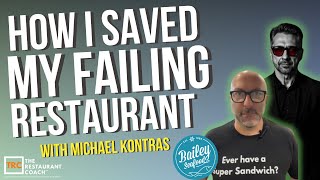
Michael Kontras turned Bailey's Seafood in Buffalo from a struggling fish market into a profitable takeout operation. He cut staff from 19 to 9-11 people while keeping $2M in sales, and moved from barely breaking even to consistent 20-25% monthly profit by applying the TRC method: firing underperformers, controlling food costs, and building the right team.
Questions this video answers
April 14, 2025.
22 fryers.
About two and a half years.
Before: ~19 staff and a little under $2M sales with no profit. After: 9–11 staff, same sales, 20–25% monthly profit.
15 years; 3,000 restaurants; 23 countries.
Chapters
And hey, welcome to the Restaurant Coach podcast. It is the cure for the common restaurant. I am honored and very, very excited to welcome Michael Contras here tonight as my guest. Michael is a couple things about Michael. Michael is number one. He is the owner of Bailey's Seafood in Buffalo, New York. And Michael is also. Full disclosure. Michael is also one of my certified restaurant coaches. And together we are trying to just trying to help as many restaurants as we can break free from where they are to where they want to be. Michael, I want to say thank you for taking the time. I know you're like me, man. Coaching, coaching, coaching. But I want to say thanks for jumping on the podcast tonight. Tell people a little bit about your background and about how you got started in this crazy restaurant business.
All right, well, thank you for having me, Donald. It's my pleasure and my honor. But how to get into this business? I was born in this business, you know, like me. Yeah, you're automatically, you know, you come out of the womb and you're working in a restaurant. So this is what happened. This is what happened to me. So all my relatives, everybody I know growing up were just in restaurants our whole life. And in my parents, they bought like a really crappy old fish market back in the day, 38 years ago, it was a fish market. So we used to fillet fish. And, you know, the, the trucks would come and we would fillet and scale fish. And, you know, we didn't have heat for like 10 years in the store. It was really hardcore. And then fast forward, you know, I went to college and, you know, I said, you know, I need my. I want to have my own business. My father's like, buy the store for me. If you want to be your own boss, it's the greatest thing ever. I'm like, sounds beautiful. Awesome. I'll be my own boss. I can take vacations. I'll make so much money. And, and so I bought the. I bought the fish market from them. And then I realized that, that I don't want to wake up 5 o' clock in the morning to scale fish or to order fish or it's not fresh, you got to send it back. And, and, and then I slowly converted it to a. That, you know, like a cooking area instead of just fresh fish. So eventually I just, I remodeled it twice. I took out the whole fish market side of it, and we just do all complete takeout now. So we have 22 fryers.
When you see, like your social media, you see the bank of fryers. I mean, that's Pretty impressive to see 22 fryers lined up, like, all. And they're pristine, too. I mean, super, super.
Yes, yes, yes. It's. I'm proud of those fryers. I'm proud that we clean them and keep them so clean. It's a lot.
And then a lot of people might not know that, you know, Michael, even though he's. He's one of my. He's. He is, you know, a certified restaurant coach with me. Michael actually started off as a client. Michael actually started off. He joined my accelerated program, what, two years ago?
Like, two and a half. Yeah, yeah.
And a half years ago. Yeah. Yeah. And like, Michael, tell this story about just people. Tell people where your mindset was when you did decided, like, oh, my God. I'm just like, I can't take this no more.
Yeah, well, we were super, super busy. We were always super busy. And it was kind of like the neighborhood seafood joint.
Yeah.
We're just always packed on the weekends and there's lines out the door. But I. Even from. Even from when I was younger, I just remember my parents, they could never pay the bills on time. Vendors were always calling, and, you know, we're always making excuses like, oh, we sent the check and we'll pay you next week. And, you know, this is. This is a constant growing up in my life. Constant. And, you know, fast forward. I was, you know, I found myself doing the same thing, just constantly struggling to pay the bills. And it was super busy. And, you know, everyone thinks you're a millionaire because you're so busy, but money just comes in and goes right out. And then, you know, but I. I knew. I knew how to invest early. So I kind of had that mindset of investing and saving. Like, I knew how to grow my money. And, you know, we, you know, when it was busy, we made money, but in the summertime, know, we lost the money. So it was kind of like. Kind of like breaking even. And then I'm like, I'm doing something wrong here. I can't. I cannot figure out what I'm doing wrong here. I didn't. You know, whenever I heard P and L, I was afraid anything financial. I was just, you know, I went away from. I ran away from it.
Like most restaurant owners. Most restaurant owners, man, we get in the business, we like the hospitality part, but, man, the money part, the finances, the spreadsheets.
Yeah. Like, I know when I say P. L to clients and their eyes gloss over, and I'm like, that was me. So I can't say that.
Yeah, me Too. That was like, me, like, you know, because I had been a chef for years before my first restaurant. And I figured, like, those rules don't apply to me now. Since I own my own restaurant, I can do what I want. You know, I don't need to do inventory, cost out my menu. Who needs to do that? Right?
Yes, exactly. So that. Yeah. And then. And then I came across you online, actually a couple of people. And I was like, let me. I want to interview. You know, I was like, I want to interview. I want to interview some guys because I don't want to make sure they know what they're talking about. And then I think you were interviewing me, actually. So.
And then.
Yeah, and then we, you know, I joined and here we are. Here we are. I learned everything. I mean, I was doing all the work and we're meeting every week, and I don't even think I missed a call with you.
You never missed a call?
Yeah.
You never missed a call. And like, in all the time, too, like, so all my clients also have. They all have access to my private cell phone number. And if they ever have an emergency, they know they can text the code word to me, snake bite. And I think Michael didn't snake bite me for like two and a half years. He finally, like, finally I got one from him. Like, but, you know, usually I say, like, most clients, probably within six, eight months, they usually, they give me at least one snake bite. But yeah, yeah, it's been good. And here we are. So Michael went from, you know, again, like most restaurant owners, chained to his restaurant, working seven days a week, all day, all night. Can't leave the restaurant putting out fires all day. Now Michael actually has his restaurant up and running super smooth. I mean, you've actually. You have less people now, but you make more.
Oh, yeah. We started with 19. 19 people and about 2 million. A little under 2 million with 19 people and, like, no profit. So we cut the menu way down.
Yep.
Now we're down to like, between 9 and 11. The same sales, 20, 25% profit every month.
Every month. Like, like, like a machine, too. Yeah.
Yep, yep. In fact.
In fact, and this goes back to the point where, you know, a lot of restaurant owners talk about getting the restaurant life they want. Michael actually is living proof of this, that the system works. So the TRC method is what we teach in our coaching program. The TRC method is a step by step process map, basically. And it's basically a frame within a frame. And we always say it all the time. If you want to win the game, you just gotta follow the frame. And Michael followed the frame. Here's the thing. It works.
Yes.
And so now. So now, Michael, actually, you bought a house in Costa Rica.
Yes. We go on vacations, like, four times a year.
Yeah. Before, like, you never got vacation.
Yeah. And you know, when we go on vacation sometimes, like, well, we'll talk about it with a crew, with the team all together, and we'll close. And we will pay them, too. So we'll pay them. We close, they go on vacation. We go on vacation. Like, everyone's happy. You know, they deserve it. So this is like, I would never thought this would happen in a million years, ever.
So that kind of leads us into. The thing I want to talk about first, is like, you know, leadership is so critical in restaurants.
Yes.
What do you think is the number one trait a leader needs today?
The number. I mean, there's. You can come from all different angles. I think the number one thing for a leader is you need to know your vision and just follow that vision no matter what. You cannot stray from that vision or your goal. And you need to let everybody know that's on your team, that no one is fucking with my vision or my path. And once you exert that energy, then. Then you're a leader.
Yeah. Yeah. Nothing's. You know, this is our destination. That's where we're going.
Yeah.
You're on board or off board. It doesn't matter which one you choose. I've always, always been the same way, too. Like, if you decide it's not for you, that's cool. Shake hands. Go find another restaurant you want to.
Ruin, and if you're in the way, you're just cut off. That's it. There's no turning back. That's my superpowers.
Cutting power. It is a superpower. You got to be able to do that. You know, you have to be able to just move people out of the way.
Yes.
So many restaurants are hesitant of it. They are so hesitant to get rid of the. The dead wood.
Yeah. I mean, now that. Now that I'm coaching and I'm. I'm talking to all these clients and it's and people are just like, I'm not doing that. I'm not firing this person. I'm not doing this. And I'm like, it's so obvious to me that you need to fire these people or get rid of. You know, this is toxic, and your. Your culture is toxic, and you need to, like, clean house. And people are just like, I'm not doing this. And I'm like, oh, my God. Then. Then keep working 18 hours a day.
Keep being. Change your restaurant.
Yeah.
Doing the same thing you're doing. Yeah. If, you know, if you want different results, you gotta take different actions. Most restaurant owners are the definition of insanity.
Yes.
Do the same thing over and over and expecting different results or they help. It's like, yeah, I hope it's busy. I hope we have some changes. I hope things. I hope things manifest. I hope we get some. I hope we get some business. I hope we get this and that. And then what happens is it never happens. And then next thing you know, you.
Know, it's like a mindset issue. Like, I'm glad that you. You have all these mindset modules, because people don't even realize they have mindset issues at all. And this is, this is. I think this is the number one thing just from. From all the clients that we have. That mindset is everybody's issue, like, right off the bat, you know.
Yeah. And then we talk about, like, the TRC method basically is a frame within a frame. And the basic frame, I would say, like the main frame we teach is called the 3P framework. And the 3P framework is people, product, process. And then each one of those kind of modules, each one of those sections or combinations, there's another little series of blocks. Like in the people part, it's always mindset. First your mindset, and then culture, and then hire, where a lot of people, you know, call us. You know about coaching and like, oh, I just need. I just need to hire better people. I just need people. I need some staff. I need some staff. Or I'm not getting good people. Well, you're not getting good people because your culture sucks.
Yeah.
And your culture sucks because your mindset sucks.
Yep. And this took. This took me like six months to realize that. Yeah, it's all about culture. Because I didn't. We didn't know. I mean, we're. We had such a toxic environment. I mean, for like 30 years, like 20 something years, toxic. Like. And I didn't know anything else that was. You have to yell at people. That's it. That's, you know, my dad.
My dad, like, break them down, build them up.
Yeah.
The whole. I explained. This was about my dad all the time. My dad's philosophy again, was that break them down, build them up. And I. I use the kind of stories like, you ever take something apart, put it back together, and then you have one screw that's missing? That's what happens when you, when you break people down and you try to build them back up, you break them down. You broke them now, like in a corner, like, talking to himself and like.
Yeah, yeah, our dads would have been friends.
I think our dads would have been best friends. And it was said that we were. So one of the things I believe in, you know, and you hear me talk about a lot. You see it on my Instagram, you see in my pot, you know, we talk about in the podcast, in the books. Self care. Self care, I feel is so part. It actually goes back to that mindset stuff because if you don't take care of yourself, your body, your being, your balance, and also especially your body, you just don't have that energy and that drive and that just passion inside of it. What do you do to take care of yourself?
Well, I mean, you know, every morning is. Is a workout, something. Right now I'm just doing cardio. Injured my arm. But no, we'll do cardio. We, you know, we eat good. Anyways, my wife is Bulgarian and I'm Greek, so we're. We do that Mediterranean diet, like, you know, by default. Anyway, so. So that's our. That's. That's what we do. Take care of ourselves. You know, meditation, journaling every day. You know, we do stacking in the app and, and that's. I mean, that's what we do. Take care of ourselves. And it's. It's easy now because my wife does it as well. So this is just our lifestyle, how we live.
You know, it's so easy when you got a partner that's supportive like that and does it with you.
So. Yeah. And also having days off and just, you know, just going on date nights and things like that as well. Just hanging out together and just making. Making the house like a home, like an environment, like a happy environment to live in. That's enough.
Like not going home and just. Just complain about work all night.
Right, right. And, you know, and it helps not having cable. Like, we don't really watch tv, so we just. A lot of hangout time, so it's good.
Yeah. I don't have cable. I don't even know what time. I don't have cable. I don't need cable. I don't need cable, so.
Oh, yeah.
Yeah.
That's what we do. Take care of ourselves. Yeah. So perfect. It's simple.
When we're talking about the core principles of the T or C method, how would you say it differentiates from like, you know, like those traditional kind of restaurant coaching Approaches.
Well, the traditional ones are just a lot of checklists. And yeah, do this, do that. The trc, like the people product processes, I mean, you're building everything from the foundation up so you can apply it to really anything in your life. Really anything you can, you can run. And I tell clients this all the time because they're, you know, people try to, you know, what's your experience? And I'm like, but you can use a TRC method. TRC method to run a hot dog stand in a gas station or like a Michelin star restaurant. I mean, it's the same, same principles. Yep. You know, so this is, I think this, this is what's different from everything else is. Plus we have live group calls, we have live coaching as well. So that's the difference. And, and you know, you have all the experience as well. Like, you're, you're the number one restaurant coach in the world. So I mean, you can't really, you can't beat that.
So.
So once you join, once you join, you're like, you know, lock in. It's almost a proven path of success. It's. It is, you just have to do the work. That's really all it is doing. Do the work.
I mean, how many years, how many years you've been in the restaurant business?
Oh, my God, my whole life. My whole life. I'm 40, you know, I mean, I've been, I've been working since I was 12 years old. Yeah.
Yeah. So you're like me. I mean, between the two of us, we probably got like 80 years of experience between the two of us.
Oh, yeah, yeah. And you see everything. I mean, you've seen as well.
And that's the beautiful thing about the TRC method and what I've done is, you know, as far as the restaurant coach brand, I mean, 15 years, 3,000 restaurants in 23 different countries.
Yeah.
Here's the thing. I tell you, and I say it, in all my books, it works because all business problems are people problems. And the TRC method and coaching works on the people problems. And that's the biggest. I would say that's probably the biggest change that we see.
Yes.
Now, when people implement the TRC method, what immediate changes tend to occur in the operations as far as, like, team dynamics?
Oh, I mean, right, right. When you're implementing, especially the core value stuff, you see who's on board, so you see who's giving pushback. So this, this is something that, that you taught me as well. And so you have a, B and C players And I had like all C players. So what happens is once we never really had A players before. So once you start getting A players inside your restaurant, everything changes. You can teach people things, you can start implementing things. People, listen, you're not micromanaging. This is all things that you had to do when you have C players and B players. But as soon as you get A players in there, it's a whole different ball game.
I mean, a whole different game.
Completely different. And this is something I had no idea. I didn't even know anything like this even existed. I didn't know A players. Like, I didn't know people can actually, like, you can tell them to do something and then walk away and they'll actually.
And they'll do it.
This is insane. Pay a little bit more money and they work for two people.
Yeah, yeah. I always say like, and look at you like now, I mean, you had 19, 19 members. Now you got 10, you got half the staff.
Yeah.
And you do just the same amount of sales and you're like five times more profitable than you were before.
Oh, yeah, yeah, yeah. Also the process, like cutting down because it really, you really focus in, on, on just little things, like minor details, but like hundreds of them. And then those added up will just cut, cut costs and cut labor and, and you're just running a super smooth operation, you know, and this is what, this is what we've done. It's. It's crazy. It's crazy the changes we made. I mean, we have so much space in our restaurant now. It's like unused, you know, so like.
For a lot of restaurants struggling with like, you know, guest satisfaction, what tools or strategies do you say the TRC method offers to help improve that area?
Oh, I mean, there's so much, I mean, just, just how, just how we, we talk about just the Google reviews. Just, just re. Just answering all Google reviews is like the number one thing, just how we treat guests, you know, things like that. And this is something that we never really, we never really think of. I mean, if you're a restaurant, you kind of think of that, but just how you greet somebody and just little things, even when they leave your restaurant, you know, you greet them on the way out, greet them on the way in. These are all things that we never think of. When you have a restaurant, you're too busy thinking about the food, which is, you know, it's a piece of it, but it's not the whole thing at all.
Yeah.
So this is, this is something we learned as well. You just have to treat the guests like family. Their guests.
Yeah, I guess we don't use the word customer. That's why there's a couple. There's a couple. Like, we call them taboo words in the TRC kind of world. Some of the taboo worlds, we. Words we do not use. We don't use customer. We always say. Gus.
Yeah. You actually sent me a. I posted something Instagram one time with the word customer on there, and then you. You texted me and you said.
What did you say?
Do you remember that? What are you doing?
I was like, what are you doing? And we don't say customers. Yeah, yeah. We don't say. We don't say staff. We say team.
Right.
Never use the word try. No. That's the worst word in the world.
Yes. Yes.
Don't ever tell me. Like, I would rather you tell me to off. You know, Off. Okay, cool. I'm good with that. Hey, Donald. I'm gonna try. Oh, my God, I'm gonna have a heart attack when I hear. Anytime I hear someone say the word tribe.
No, we don't try. We don't try.
We go Yoda on that. Do or do not. There is no try. We do not do the word try at all. That is, like, the worst word we can hear any client say is the word trust.
Yes.
Or should.
Yes.
Yes. Yeah. Yeah, we hate that one, too. Like, you know, most people just all over themselves.
Or maybe. Or maybe.
Yeah, maybe.
Yeah.
You know, and I. I know I should cost out my menu. You should.
Yeah.
When would now be a good time? Right?
Yeah. I mean, everything. Everything works. I mean, you're saying costing out the menu, that's another huge thing that most people don't really do. They think they're doing it, but they're really not. And then, you know, you're talking about the. You're talking about theoretical food costs versus actual food costs. And these are things that. I mean, I've never even heard of that before, ever.
Most people don't. Yeah, it's like when I'm interviewing people, like, if I, like, sometimes, you know, I'll do some consulting for clients, and they'll have me interview, like, people for, like, GM roles or director of operation roles. And one of my favorite question is, I always like to ask, tell me what you know about theoretical food cost. It's crickets.
Yeah.
They don't know what I'm talking about. So for those people, like listening to the podcast. Theoretical food cost. Theoretical food cost. There's two numbers. You have to know. There's theoretical food Cost and actual food cost. Actual food cost is how most restaurant owners operate. And I get a call every month. This is honestly God truth. Every month, someone will text me, email me, call, you know, get on my calendar, and the first question will ask me, donald, my food cost is 30%. Is that good? And I'll say, I don't know. And they go, what do you mean you don't know? Aren't you the restaurant coach? I go, yeah, but let me ask you one question. What's your theoretical food cost? And they go, I don't know. I said, that's the problem. Because again, theoretical food cost is what we call perfect world, ideal food cost. It's when you cost out everything on your menu down to the penny. That gives you what's called theoretical or perfect world. Now, the world is not perfect. We make mistakes, we drop things, things get spoiled, things get burned. I think, you know, human beings are human beings. So you can't ever run theoretical, but you can run around 2% above theoretical. So that person who called me and said my food cost is 30%, if they said my theoretical is 28, is my food cost good? I'll say, yeah, your food cost is really good because you should be able run around 2% above theoretical. Now, if they're like the average restaurant in the United States, they're probably theoretical is like 21. I mean, the average restaurant has a gap between theoretical and actual 9%. So many people leave so much money on the table. And if your restaurant's below 5%, just understanding that gap between theoretical and actual, and then getting some tools from us, like the forty thieves of food cost to close that gap down, we can easily add 5% to your bottom line in 90 days. Easy.
Oh, yeah, yeah. Even just. Even just portioning, Even just setting up portions, portion controls. That's an easy 5% right there.
Easy, easy 5%. Didn't you help someone with some portion control stuff?
Yes, he was doing.
He.
We tightened up his theoretical actual. And that's 13, 500amonth in savings.
Yeah. In savings. That goes right to him. Yeah, yeah, yeah. Just by making one tweak?
Yes, one tweak.
$13,000 by making one tweak.
Yes.
The. Here's the thing. I'll tell every restaurant owner listening to this podcast today, it's not that you don't know what to do. You just are not doing the right things in the right order.
Exactly.
You're spinning your wheels. You're doing. You're paying attention to things that you think are important, like you think if I just hire people, you know, anybody, or if I just market more, or if I just, you know, if I just, you know, work on this, or I get. I get some checklist or I get a new software system. It's like what Michael talked about earlier, like traditional restaurant coaching approaches. They want to sell you some software. There's tons of restaurant coaching companies out there that will. Hey, you just need our software. You just need to track your data. You need to train your people better. Well, training people is great. We love training, you know, but it's more important if I have my culture right and I get the right people on board. Yeah, training is easier. How is it now today with your new team, with your A team in place, training, compared to two years ago when you had a bunch of C players and you're trying to train them?
Oh, it's completely. I mean, we, We. We train with the meta glasses. We have a training library. I mean, it's. Training is just. It's just off the charts now. It's so easy. Plus, we've streamline all our processes, and these are all things that, you know, took a couple years to do, but just, you know, you're. You're so used to doing things a certain way, and then. And then, and then when you change them, you're like, it's so much, so much different. And training that way is so much different as well. But A players, I mean, training A players is, I mean, so easy. And they train each other.
They want to perform.
Yes.
That's what they're A players, they want to perform. C players, they take the lazy. They take the easy route. They always, like, cut corners. They're always asking for, like, subs. You know, hey, could I do it like this instead of that? Like, no, we do it like this.
Yeah. And it's such a difference just because, like I said, I, you know, I was a client and I've seen. I've seen both sides of it and. Yeah, and just seeing, Just seeing how C players perform and just never want to be. Never want to be in this situation ever again. If there's even a hint of. Of a C player, they're com. They're out the door. Like, it's instant.
It's almost like we talked about that today on Mastermind Call today. We talked about toxic people. Like, just get, you know, cut them out fast. Cancer out. Really? Right away.
Yeah. It's funny how people are like, how do I. How do I find people? How do. It's like they're out There, you know, you have to find them. You know, we have way we can show you. We have the tools we have. We can teach you.
Yep. One of the things you'll get with any of our coaching programs and you know, and we have a lot of different programs available.
Available.
If you're not sure, like, what coaching program is best for you, best thing I can do is I say go to my website, therestaurantcoach.com apply and speak to me personally, and I will be able to guide you based on what your restaurant's at right now. So a lot of times our coaching programs are based on your profitability. So, like, if you're, you know, below 5%, we have a certain thing we want to put you into. If you're below 5 to 10%, we have a different program for you. If you're 10% or higher, we have a different program for you. Because where you're at with profit also determines what your mindset is. Because we also know from doing this for 15 years that we can't give you advanced stuff if you're in desperation phase. It's like Maslow's hierarchy of need. If you're worried about shelter, you're worried about paying payroll and paying bills. I can't teach, you know, paid, paid funnels, you know, geo fencing. Like, dude, like, I just. Dude, I have to make payroll, man.
Yeah, even. Even people, when you're asking what their. What their profit percentage, most people don't know.
They don't know.
Which means it's like zero.
If you don't know, what do we say? If you don't know your numbers, you don't know your business. In fact, you don't have a business. You got a hobby.
And a lot of people have accountants too, that don't. That don't even. They still don't know their numbers. No. You know, with accountants.
Well, accountants tend to be. I'm not beaten up by counter. But most accountants, 10, tend to have a certain way of doing things. And restaurant P. Ls are a lot different than like a regular, like retail store, you know, or mama papa little place, you know, that you're running down. Down the road. So looking ahead, what do you see is. What do you see? The TRC method evolving to meet the future needs of the restaurant industry.
Oh, I see. Oh, my God. There's so much I see using tech.
Oh, yeah? Yeah, A lot.
Especially for training, even marketing, like AI Stuff, which we're going to get into. Super psyched about that.
Yeah. We got some really Cool stuff coming up.
Yeah, just. Just a lot of. A lot of. Even. Even for interviewing, there's just a lot of. There's just. AI is literally going to be everywhere. You still need manpower, obviously, but I think. I think the future of restaurant is just way more efficient. I think smaller menus are the way to go.
I agree with that.
Yeah. I think tighter processes and just easier. Easier steps to build a plate. I think that's the way to go. I think people's attention spans are way shorter than before, you know, which. You know, which leads to simpler food, which. What I think is going to happen.
And one thing. And one thing. Michael. And Michael will probably back me up on this, too. Is one thing you know about me is that I never stop evolving. I always like pushing. I'm always trying to come up with new stuff. I'm always looking for new ways to help all my clients get better results. So, like, our TRC method has a solid foundation, but we're always building new layers, and we're just kind of reinforcing all the training and stuff like that. And in our library, in the TRC method universe, the library we have, I mean, I think it's a thousand hours of videos, 500 different downloads. You can take templates, stuff like that. There's never something you couldn't learn.
Yeah. I mean, even. I can even tell you today, like, an example, you're talking about recipe cards, which I'm gonna do a presentation of the vault on, but recipe cards? How do I make recipe cards? And I was like, showing. Showing a client with chat. I'm gonna go on chat GPT and make a recipe card. Oh, that's super cool. I never even thought of that before. I'm like, yeah, it's super easy. Put her in. And I was showing her. I was sharing my screen, and she's like, then what? And I'm like, all right, leave a little space. You're gonna put a little QR code there. She. She's like, what is that for? I'm like, that's gonna be a QR code that's gonna lead to the video of you actually making that dish and plating it. How am I gonna make the video? I'm like, with meta glasses. She's like, what is that? I'm like, you're Amazon. So that, like, blew her mind. Completely blew her mind. You know, these are all stuff that we learned from the TRC method, and these are all things you can't learn from checklists. These are all things that, like, I said, this Is this is tech. This is all evolving stuff.
Yeah. And anytime you're doing kind of any kind of coaching program, here's the thing. And I'm just, you know, of course we would love to have you in our coaching program, but if you're looking for a coaching program, there's four elements any coaching program should have. And this is why the TRC method is what we call an integrated coaching system and not just a coaching program. It's an integrated coaching system should have four elements. Number one, it should have some kind of online library on demand learning where you can go on 24,7, have a username and password, you can go in, watch a library, watch some videos, whatever, on demand, whenever you need to. There should be some kind of group calls where you have networking and peer to peer accountability with other restaurant owners around the world. So we have three group calls a week depending on your program. But usually there's three to four group calls a week that you can jump onto. Number three, you need to have some kind of accountability person or a partner. That's where you get a coach. Because having a coach, the coach will customize your program for your restaurant. Again, I write books all the time. You can read any of my books. You get tons and tons of ideas on how to make your restaurant better. But how do you adjust it, how do you modify it for your restaurant, your market? That's where coaching comes in. And then the fourth element that you need for a really good integrated coaching system, you should have some kind of immersion training where they pull you out of your restaurant and have you come to a different location like we do every October. We have a three day restaurant success summit that's here in Scottsdale where we bring in speakers and people come in and restaurant owners come from around the world and they have three days, 18 workshops. And it gets you out of your restaurant, which does a couple things. Number one, it gets you out of your restaurant. Number two, it just puts you in immersion where you're just in a state where you're with like minded people that want to learn and grow and develop. Everyone loves restaurant success. And now we're going to be starting up again doing our in person workshops every other month here also in Scottsdale called Restaurant Owner Boot Camp. So if you like, if you just want, like, if you've never like, you know, hey man, this sounds really cool, but I'm not sure, you know, I like to check out a little bit. Hey, you know what, Buy a ticket to Restaurant Owner Boot Camp. Come down. Michael will probably Be here too, for a lot of the boot camps. Come on down, get to meet us, have two days. We go over what's called the eight driving force of restaurant success. A two day workshop. You can get a lot of stuff, and even if nothing else, you'll walk away with tons of clarity, tons of practical tools, tons of ways to make your restaurant better.
Oh, tons. I mean, Donald. Yeah, You're. You're underplaying it. This is like when I went to my first summit. I remember I got back to the hotel that night and I called my wife and I was like, this is only the first day. I have a whole notebook full of stuff. I'm like, I left right now. We can make the restaurant way better right now.
Yeah, right? And we do three days.
It was. It's insane. The summer I think you've been to.
Have you ever been to restaurant owner boot camp yet? Have you?
No. No.
Oh, yeah. Yeah. This next one is gonna be in May.
Okay.
Yeah. So next one's gonna be in May. It's gonna be a two day restaurant owner boot camp. It's gonna be a great one. I'll tell you, man, I love doing restaurant owner boot camps because, number one. So the restaurant success summit, it tends to be a little bit bigger, kind of a program, an event. Anywhere from 50 to 75 restaurants at the summit. The boot camp is really, really small. It's only 12. And I keep it small because that way you get a lot more interaction with me. And I can actually sit down and we can sit and have lunch and I can really ask you questions about your restaurant, what's really going on, and I can actually give you some really good practical tools and some really good kind of guidance on how to break free from where you are. So restaurant or a boot camp is a powerful, powerful thing because it's really, really intimate and you get a lot more time with. With Michael and I. So.
Yeah, yeah, yeah, that sounds amazing. I'll be there for sure.
For sure. Yeah. So what? So you've been like me. You've been all around the world, all kinds of restaurants. What's the best meal you ever had?
You know, I got a. Since I'm Greek.
Yeah, the best.
I'll tell you. I'll tell you right now. The best meal I ever had was on a. Was on a beach in Greece. After a long day. The restaurant was literally on the beach and they had a big grill outside. They had.
And.
And we didn't eat all day. And I told the waitress, we just want meat and like vegetables. We just, just hook us up. Like we don't care what the, what the grill is. And they brought a big tray. It was like chicken off the grill and steak and it was fresh fish and there was octopus hanging. There were grilled octopus and shrimp from. You know, everything was caught fresh.
Yeah, yeah.
And that was the best meal. And I have pictures of it. I mean, it's just insane. It's just a mountain of food. That was the best meal ever had. It was so rustic and it was just, it was just pure, like, food. It was nothing fancy. It was just on a wooden board. But that was the best meal I've ever had in my life, ever. I still remember that meal.
Yeah, that sounds amazing. Yeah. Oh, that sounds really, really amazing.
Yeah. It's a different ballgame over there. It's different ball game.
Yeah.
You can sit there for four hours and they don't kick you out, you know?
Well, I always say, like, in the United States, we eat to eat. Like, just because I gotta get some food. In Europe, it's an, it's a, it's a, it's a social event. You go for hours. I mean, you don't think about time.
No, never.
When I'm in Europe and I'm traveling and I'm speaking and we go out to dinner in Europe, man, it's just, it's an event. It's an all night event.
Oh, yeah.
You don't worry about it.
Yeah.
Like, we're all about table turn. Like you got 90 minutes. So we got turn tables, you know.
Yeah. Over there. It doesn't, it doesn't apply there. Yeah, yeah. I mean, yeah. I mean, I would spend my summers in Greece growing up, you know, and then.
Yeah.
So that's just how it is. Like when you go out to eat, it's like you're not gonna be back in an hour or like two or three. Like you're gonna be back in like four hours.
Yeah, exactly. Yeah. It's an experience. It's not just a food. It's not about just eating. It's about a whole dining experience.
Yeah.
It's also about the social components. I mean, I love when I go to Europe, I just love the experience there because. And then there's. Unfortunately, you get spoiled and you come back.
Yeah, yeah, yeah. They're not about speed. Nobody cares about speed. Over.
They don't care about speed at all. What do you think is the biggest problem you see with restaurants when it comes to profitability?
I just think people don't know their numbers. And they don't know how to tackle it. They don't know how to. They don't know. They just think, I'm not making profit. Let me add more items to the menu.
Oh, yeah, that's the number one. Or I just need to market more.
Yeah, I got a market more. I got it. And more things in the menu. Or I got to be in the back cooking because the cooks aren't doing a good job and the food isn't good, and I gotta. I gotta make it better. That's. But the number one thing that I'm just from coaching is people are just adding more stuff to the menu.
Yeah. They think a bigger menu is going to be better because we need to be more. We need to be everything to everybody.
Yes, yes. But the thing is, people don't know how to read their numbers. They don't know what a piano is. They don't know how to read a piano. They don't know prime cost. And I think that's the biggest problem, because once you. Once you educate yourself on that and it's super hard to do unless you have a coach. Very hard.
Very hard.
And once you learn how to do that, then you can pinpoint what the issue is and you can fix it really quick, as opposed to like calling your accountant, then him getting back to you in a couple months and kind of telling you what he thinks. But then by then, it's a whole nother issue going on. But I think learning your numbers and getting your prime cost is the number one thing restaurant owners need to know.
I'm gonna throw this out there right now. If you're listening to this podcast and you have no idea what theoretical food cost is, and you have no idea what prime cost is, you need to call this. Because you need to figure out this right away. Yeah, that's like. And I get. That's another question I'll ask. Like, if I'm doing interviews with people. Tell me what you know about what I'll say. I'll throw like a loaded question. I'll say, what's a good prime cost? You know, and then somebody will say, 30. I say 30. 30%. Say, if you can run a 30 prime cost. Dude, I will have you run every restaurant I ever knew. Yeah, no one can run a 3% prime cost.
Yeah, but nobody. I mean, nobody knows what it is, though. It's crazy.
Nobody knows what prime cost is.
Yeah, even. Even big restaurants, they have, you know, they have multiple locations, they still don't know. They're just, you know, they're barely hanging on a lot of them.
Yeah.
You know, and you can do big numbers, but, you know, you know, I have clients that are like, I'm the most famous guy in town. I own restaurants. I own this chain. And, you know, they don't know that I'm not making money. It's crazy.
And that's another thing. So prime cost. If you don't know what prime cost is, number one, you should call us because we help you fix it. Number two, if you do know what prime cost is, it's basically, it's your food cost and labor cost put together, and there's certain numbers that we call our benchmarks that kind of tell me where you're at. So 65% prime cost is like the line in the sand. If you're above 65%, you're basically bleeding out. And the higher up you are, the faster you're bleeding out. Now is all lost. No, I've had. I had a client now. She's been with me for five years now. But when she started with me, her prime cost was 143%. I mean, she wasn't bleeding out. She was hemorrhaging money. I mean, hundred. I mean, tens of thousands of dollars a month just hemorrhaging cash. Call me every week crying. Just horrible, horrible situation. And we just took the 3P framework, broke it down, people, product process, started implementing the steps step by step by step. Within a year, she had her prime cost from 143% to 53%, and she's been locked in at 53% ever since. Now she just makes money all the time.
Yeah. Yeah. Amazing. And she didn't know probably what prime cost was.
She didn't know what prime cost was.
Yeah.
All she knew is my bank account's empty.
Yeah.
You and I make the joke.
A lot of time.
Like, a lot of restaurant owners. How you doing? I don't know. It depends what the baker cut looks like. Well, that's not. That's not a way to judge your quality of, like, this success. Like, oh, there's money in the bank. We're doing good.
Oh, yeah, I was there, man. I was there. Trust me, I was there.
All of us were there, man. I Like my first restaurant. I was there, too. I was like, oh, my God. Like. Or the. You know, we talk about it. The. I hope it's busy this weekend so I can pay the bills on Monday. That's another. You're in that situation, too. You need the calls.
Yeah. You're waiting for the holidays.
Yeah. Yeah, I'm waiting for the holidays. I'm waiting for the busy weekend. I'm waiting for, oh, we got a big holiday. Oh, my God. Mother's Day's coming up. It's gonna be great. We're gonna make some money.
And I think, I think people that have code, like, especially if you have a restaurant coach, you're already ahead of the game. You're gonna be better than 99 of other restaurants. Like, for sure. Yeah.
So much farther. Yeah.
Because, like, the average restaurant does what, like 5% profit?
Something like average restaurant, 5%. Yeah. Our clients actually average right now. 19.
Yeah.
Which is amazing.
Yeah.
Program. We have people in our program go from, in six months, go from breaking even to 22% profit in six months.
Yeah.
So it could be numbers. Those are great numbers. Now, is that common for everybody? No, but if you're willing to do the work and, and double down and do what we tell you to do, it can happen.
Yeah. You just have to do the work.
That's it. Coaching is not a miracle cure. I tell everybody all the time. Because the number one thing we're doing is we're trying to fix your bad habits.
Yes. Bad habits.
How bad? Your bad habits are depending on how much we gotta work to turn you around.
Yeah. Yeah. But we have accountability. Like, we're gonna give you accountability. This is our, this is our business. And Donald will for sure. I know that.
Oh, trust me. I fire. Fire. I fire a client every week. Here's the thing about firing clients. If you're not going to do the work. Michael and I both believe this with our heart. We don't want your money. I don't want your money. I, I, I get paid for one reason. I get paid to get your results. That's exactly what I get paid for. Nothing else. I get paid to get your results. I'm not going to be your friend. I'm not going to be your buddy. Now, we can have friendly conversation on our coaching call, but you understand one thing. I am here to do one thing to get you results, and I will do whatever I need to do to get that. And if that means you don't want to do the work, then fine, keep your money and just go down the drain with your business and just, you know, have that sinking ship and just go down and, you know, ego, pride and denial take down more restaurants than anything.
Oh, yeah, you said it. And I, I see it.
You. You see it all the time. And you've seen a couple of your clients, too.
Yeah.
Going down. That Path, baby.
I heard you. I heard you talk about it so many times. I'm like, oh, my. It's so true. It's so true.
So true. Ego pro. And denial kills more restaurants than anything in the world. And what. Talk about ego. Ego. You know, I don't need any help, you know, Pride. I don't want to ask, you know. Oh, I'm just. I'm just too proud to ask for help. And then denial. It's not that bad, right? If your restaurant sucks, it sucks. Just be honest about it.
Yeah. And a lot of times, not. It's not. It's not. You know, it's not their fault. You know, they don't know. They don't know. They didn't have a teacher. They don't have a coach. Yeah.
You can't do better if you don't know better. You can't. You just can't.
Yeah. So, I mean, having a coaches, I mean, you're. You're so far ahead of the competition by having a.
Far ahead. And here's the thing. Coaches have coaches.
Yes.
Like Michael has. Michael's a coach. A restaurant coach. He's a certified restaurant coach with me, but he also. I'm also his coach. And here's the thing. I have coaches, too. Why? Because I believe in coaching. That's another number one warning sign. If you ever have anybody hit you up to be a restaurant coach. If they don't have a coach, run because they don't believe in the power of coaching. Anybody who's not willing to invest in themselves to become better version of themselves is not a person you want to be. You want your. As your coach. I spend. And this is no bullshit, I spend easily $200,000 a year on coaching because it makes me better.
Yeah. Yeah.
Because I know if I become a better person, a better coach can help my clients better, too.
And you do. On the. On the calls. Three calls a week. Four call. Four calls. We have.
Yeah. Four calls a week. Four group calls a week, plus one on one calls. That all our clients each week. Yeah, yeah.
No, we can tell whenever you learn something, you share with us.
And it's every time. Yeah, yeah, yeah. And that's what. That's another reason I invest in coaching. Because they. These are the guys that are. And ladies that are at the forefront of what their industry is. And they're always giving me stuff on marketing, give me stuff on this, and then I take what I learn and I teach it to. I give. I share it with my clients. So you don't have to pay $200,000 a year. You got to kind of get it as kind of included, which is nice. It's really, really nice.
Yeah, yeah, yeah. I mean, but you can tell that, that this is working. You know, you're. You're showing us what you're doing, and then you're saving it to the video library that we have access to. So this is like, this is just a library of I don't know how many hours of videos.
Think about this. Four hours of video a week that we do just in group calls.
Yeah.
Four hours. Four hours a week times 52 weeks.
Yeah.
And we've done this for quite a few years now. Yeah, it's.
I mean, it's. You can go down rabbit hole after rabbit hole after rabbit.
No one can catch us. No one can catch the. The Restaurant Coach brand, the TRC method. No one can catch us. As far as the number, the quality, the quantity of content that we have. No one. No one can touch us.
No. This is a class of itself. This is. I mean, this is past world class.
Yeah, there's the TRC method and there's everybody else.
Yeah, yeah. And then people that want to be the TRC Method.
Yeah, there are people that want to be the TRC method. That's the truth. And now, like, I tell you, it's the funniest thing in the world. Like, a lot of people ask me, like, how did you decide to do this restaurant coaching, Become the restaurant coach? So when I started, like, looking at restaurant to being actually a coach, so the economy crashed in 2008, I was consulting back then, and then I hired a business coach to help me rebrand. And he took me through the coaching process, and I was like, I really like this coaching process. And I asked him, I said, do you. Do you certify people to be certified executive coaches? And he said, yeah. And I actually have a certificate on the wall. It's probably. I think it's back on one of these walls. I have a certificate. There's a bunch of shit back there, but there's all kinds of certificates back there. You can't see it, but there's all kinds of. And he took me through this thing, and all of a sudden I was like, in 2009, I Google restaurant coaching. Nobody was calling themselves a restaurant coach in 2009. Nobody. So that's why I became the restaurant coach. And I branded it, I trademarked it. Now it's a registered trademark, actually. And here's the thing you Google now. Restaurant coaches today, everybody's a restaurant coach.
Yeah. Yeah.
Everybody's a restaurant.
Well, somebody owned a restaurant. Now they're a restaurant coach.
Yeah. Or worse. They never owned a restaurant. That's the worst.
Yeah.
There's two things that you should look for if you're looking for a coach. Number one, your coach should have a coach. And number two, they should have owned a restaurant.
Yes.
If they had never owned a restaurant. Run. Run. Because I'll tell you right now, there's a certain mindset and mentality that you have to understand as a restaurant owner that you only understand as a restaurant owner because you never put everything on the line, put all your life savings, put everything you have into this every. Your blood, sweat, tears, all your. You put your home up. You have no idea the stress a restaurant owner goes through.
So true.
Yeah. 2:00am The 2:00am kind of wake up like, oh, my God.
Yeah. I mean. I mean, you know, we hear from the clients all the time that, you know, they can't. They can't pay their bills. They can't. So it's like, I know how that feels. So it's. It's easier coaching somebody.
I know exactly the pain you're at, because I've been there. I've had that. Oh, and then suppressing and drowning all the pain and the stress with booze.
Oh, yeah.
Junk food. I mean, there was a time I, you know, I'm. I'm in decent shape now. I'm in probably the best shape of my life. And I'm gonna be 60. And I mean, there was a time that I was like £285. I mean, just totally. I was just eating like crap. Horrible, horrible, horrible.
Yeah. And you wish you had a community to.
Yeah, I wish I did.
People like, even, you know, the TRC community, we have tons of members. And, you know, we have the group.
We have the members in the.
In the vault, and everybody talks to each other. So I mean, imagine. Imagine you're part of this group that other restaurant owners exactly like you are in. You know, you're in the same group and you can reach out to anybody you want and ask anything. You can ask a recipe. You can ask. How do you deal with this?
And we share recipes all the time.
Yeah. And you just ask, like, anything. Ask anything. Like, what's the best POS system to use?
Like, what do you get? Like, you get a lot of questions about, like, third party delivery. What. How do you negotiate your deal? And then you just tell them, oh.
Yeah, yeah, Yep, yep. Anything. Anything.
The beautiful thing about the TRC method and the TRC community we have, we call it the TRC Nation, is that the nation is all dedicated to helping each other. We want to help. Everyone wants to help each other. That's why it's such a powerful network that we have.
Yep.
Yeah.
It's. It's cannot compete. I mean, this is nothing like this.
Nothing like in the world. Nothing like in the world. So if you came with a warning label, what would your warning label say?
My warning label?
Yeah.
Don't. Don't get in my way of my vision. Do not get away from my path.
I got a sign on my wall. It's right over there. You can't see it, but it says you either on my side, by my side or in my way.
Yes, yes.
That would be like my warning label. Just choose. I mean, here's my thing. I don't care what you choose. Just make a choice. Yeah. You're on my side, by my side. You're in my way. Just choose.
Yeah, yeah, yeah.
Because I eliminate obstacles.
Exactly. Yep. I cut them off. You cut them off and you just keep going. That's it. There's no other way to do. Especially if you're a restaurant owner and you're. And you have high stress. You cannot linger on things. You have to just cut them off and move on and keep going.
Now, you and I both know that culture is so important as far as restaurant success. What do you say? What do you say is the. If you had to pick one thing is the key to creating a great culture, what would it be.
To create a great culture? Is. Is higher, slow.
Higher, slow and.
And fire. Fast hiring slow and hiring with intention is the number one thing.
That's true. Yeah, yeah, yeah.
That's the number one thing.
Yeah. One of the exercises we do in the TRC method is, you know, we always talk about marketing. We talk about your ideal guest. Like, who is my ideal guest? Who is the ideal person I want to market to for my restaurant? Well, you should also have an ideal team member portfolio kind of avatar who is like the ideal team member I'm looking for. Because I'll tell you what your vibe attracts your tribe and what you swamp want, what you kind of put out there in the universe, you will attract to yourself. Yeah. It's crazy.
Yeah. And this is the whole thing with, with taking care of yourself, taking care of your body, having the energy coming up your restaurant with the energy and people have to match your energy, you know, and super important. And you know, and I, and I tell my clients all the time only hire people that you are gonna love to work with. If you don't think you're gonna be able to work with this person, do not hire them. No way. No. Yeah.
We call that vibe. That vibe check. If I had to like put. If I had to work 12 hours next to you side by side, would I be.
Yes.
I can hang with Michael. Yeah.
Yeah. Do they pass a vibe check?
Pass the vibe check?
Yeah.
Yeah. What's one thing you think that restaurants can do right now to make more in 2025?
Food cost, for sure. Yeah. Get the food cost. That's the easiest one.
That's the easiest one. That's like the low hanging fruit.
That's, I mean, that's easily. I don't know if you agree. 10% right there.
Easy.
5.
10% easy, easy.
And food costs, not by like, oh, I make $3 on this dish. I make $5. Like work with percentages.
Work with percentages. And then putting all that, once you have that numbers, then taking that data and putting into a menu engineering worksheet where you actually understand the stratifications, where you actually extract out even more profitability in your menu, which is powerful.
And inventory on top of it. So, yeah, everything, everything, everything follows a path.
Everything, everything follows a path. And trust me. And we have the step by step blueprint for you. So if you've never done it before, don't worry. We have a great workshop. It's called Food cost boot camp. Food Cost boot camp will take you through the step by step process, understanding your theoretical food cost and also how to use menu engineering to make more money and also give you some tools on how to fix that gap. Gap between theoretical natural food cost.
Yeah. This is like the Harvard of, of restaurant college.
Let me use that as a quote right there.
Yeah.
Like I said, this is the Harvard of restaurant. Of restaurant college.
Yeah, yeah. This is what it is.
This is the Harvard for restaurant owners.
Yeah. You literally have courses online and you have teachers, you have us coaches that they're going to give you, you know, we're going to give you accountability.
Yeah.
And, and you do homework, you do work every week. And you make money doing it and you make money.
That's the beautiful thing. You actually make money.
Yeah, yeah. I mean, this, it's. I mean, I don't know how many years worth of videos you have, but I mean, you can go for like four, five years.
I mean, never watch the same video.
Right, right.
I mean, it's like is. And it actually, and we did set it Up. So when I designed, when I designed the Excel accelerator program that we teach, I set up the accelerator program almost like a college course where it's like, there's four levels, like just like freshman, sophomore, junior, senior year. And we basically call it, there's prime, there's pro, there's platinum, and plus. And every level is just a deeper dive into the 3P framework. A deeper dive into the people, deeper dive into product, deeper dive into process. And then we go to next level. Deeper dive, people, deeper dive, product, deeper dive, process. There's always another level. But here's the thing. You gotta start off with the foundational stuff.
Yep.
You gotta start with the foundation.
And you gotta, and you have to, you have to because I hear a lot of people saying this isn't gonna work for my type of restaurant, but it works for every type of restaurant. You literally once, once you go through the system and develop processes and your, you know, your culture, the only thing, I mean you can go from having a, an Italian restaurant to like a, like an Asian restaurant. The only thing you have to change is your recipes. Everything else is you keep the same.
Yeah.
So you can, you can use this to scale just different concepts.
Yeah. This is how my restaurant groups work. Do it so they follow the 3P framework, the people parts always the same. The culture's the same. The way they hire is the same. The way to interview the same way. The train's the same. And then the process part on the back end is always the same. Checklist, accountability systems, how would you. Strategic planning, P Ls, budgets, KPIs, they look at, that's the same. And then all you gotta do is just plug and play the pro, the product part in the middle. And that's how, that's how these big restaurant groups do it.
Yeah, I mean it's. Yeah.
And we'll give you the step by step process for it. In fact, I have, if you ever want to like, if you're like, hey man, I just really want to go all in on this thing. I do have a very, very nice invitation only program. You have to like talk, you know, reach out to me. And if you don't know how to reach out to me, you can always reach me@DonaldRestaurantCoach.com but I have a very, very super, super advanced program. It's called Restaurant Empire Builder, where I will give you a step by step plan on how to build a million dollar profitable brand. I'm not talking about million dollars in sales. I'm talking about a Million dollars in profits. And I've done it with five other restaurants over the last 15 years. So the program works. Restaurant Empire Builder is my top level program. For those people that are just like this, I'm Donald. I want to go on it. I want to build a freaking empire. I want to have five restaurants in five years, and I want to have a million dollars in profit. I will show you the exact step by step blueprint. I've shown five other restaurants to do this, and they've all done it. And now, I mean, One guy has six restaurants. He does close to 30 million in sales.
Oh, my God.
Yeah. He's just crushing it.
Wow.
25 profit.
Yeah, it's. Hire a coach.
Yeah. Any higher and how to start? He hired a coach.
Right.
Hired me years and years ago.
Right, yeah.
So how do you deal with stress?
How do I deal with stress? Well, I try to do the hardest thing in the morning is working out. That's. That's a big stress. So after, after you do something hard in the morning, then nothing's stressful, you know, that's how I deal with stress.
Perfect. And when you were a little kid and so when you were a little kid, what did you want to be when you grew up?
Not a restaurant owner.
Nobody wanted to be a restaurant.
But now I. Now, now I love it. Now I love it.
Yeah.
Yeah.
What'd you want to be when you were a kid, though?
What did I want to be? Well, actually, I wanted to be an astronaut. That's. That's what I want to be. I actually used to write letters to NASA and.
Did you? Really?
Nice.
I want to be a zoologist.
No, you never say.
I wanted to be like you remember, like Mutual Volvo Hall's Wild Kingdom.
Really?
Yeah. I wanted to be like that guy. I want to be like Marlon Perkins. I want to be like, you know, I want to be the guy, like, out with animals and like, running zoos and stuff like that. I want to be a zoologist. When I was a kid, that's what I wanted to be.
It's. I'm actually rereading. It's actually on my desk, I'm actually rereading a book called. Called the Soul of an Octopus. I don't know if you ever.
No way. That's. That's cool.
Yeah, yeah. It's about. It's about consciousness. Animals. It's about.
Yeah, yeah, yeah.
It's about octopus having conscious. And it's. And it's a. It's like a naturalist. And I think she's a Scientist. And she. She does all these studies on octopus. It's just a. You should read it.
It's a. It's a.
It's a quick read. Soul of an Octopus.
Very cool.
Very cool. Yeah. Yeah, that's. That's another way to really stress to us is reading.
I love to read. Yeah. So talking about that, like, name, besides that book, is there another book or a podcast or an audiobook that you would recommend?
I mean, I have books everywhere. I have the. I have Profit First.
I love that. That's a good one, too.
I just started reading this one, Casey, and that's.
That's from Mike Michalowicz.
Yeah. I used to be big on, like, the Tim Ferriss books, like the Four Hour Work Week. I like books like that. I'm not really into, like, fiction. I just like those kind of books.
Yeah, Yeah.
A lot of, like, Daily Stoic. I just. I just read that one.
I love the Daily Stoic stuff. Yeah. Lately I've been. Because, you know, I've been into the samurai kind of mindset, so I've been reading a lot of samurai books about the samurai way, Bushido code, you know, things.
Yeah, yeah, yeah.
I've been really into those lately. Yeah.
Yeah. I like those kind of books, too.
Yeah. What's a quote that you live by?
I'll tell you my quote. So it's from Confucius. He who conquers himself is the mightiest warrior.
There you go. Perfect. I love that.
What's your quote?
I have a couple favorite quotes. So my favorite quote. And I built my whole TRC brand. The TRC brand is built around this one quote from Zig Ziglar. You can have everything you want in life if you just help enough other people get what they want. It's probably my favorite quote, my second favorite quote, and is a great quote for restaurant owners. If everything seems under control, you're just not going fast enough. That's Mario Andretti.
Yeah, yeah. There's also a quote that says. I think you might have told me this is if you reach your goal, it means you didn't set it high enough.
You didn't say higher enough. Yeah, yeah.
That's a great one, too.
Perfect.
Yeah, yeah.
So if you need to reach out to us, you can reach. You can just go to my website, therestaurantcoach.com Michael mentioned earlier he does a lot of training. He does a lot of live training inside our TRC Vault. TRC Vault is our kind of like our exclusive private community. Owners, chefs, operators. You go to the restaurantcoachvault.com and you can join it. It's actually, it's a really great deal. We have a lot of training in there. You get a lot of stuff, like to start off with. If you're not really sure where to start again, you reach out to me. You can email me donalderestaurantcoach.com and you can always like, just send me a message. We got the restaurant owner bootcamp coming up in the October. October 20th, 21st, 22nd. It's going to be a restaurant success summit in Scottsdale. Great stuff here. And if you're looking for, I mean, just, you want to just talk to us about coaching. That's the best way to do it.
If you have a restaurant, you should have a coach.
100% coach. Yeah. Especially like we mentioned, like, if you don't know what your theoretical food cost is or do you know what theoretical food cost cost is? You don't want. Prime cost is. You definitely need to contact us. Yes, definitely need to contact us.
Yes, 100%.
Yeah. And you can reach out, you can reach out to me, donalderestaurantcoach.com you can always go to the website, the restaurant coach.com and you can book a call. And then pretty soon Michael will be taking some of those calls too. So probably talk to either Michael or me.
Yeah, book a call. We'll talk to you guys.
We'll be more than happy to get you going in the right direction.
Yeah.
Yep. And again, we have a program for no matter where your restaurant is. So we always base it on profitability because profitability is mindset. So wherever your restaurant is with profitability wise, we will put you in the right program. We're not going to just sell you like, you know, oh, we're going to sell you the, you know, you're gonna get a Cadillac Escalade with all the, all the things you need. Donald, I just need a car to get to work. All right, well, this Escalade still no. We're not going to put you in a high end vehicle. We're going to put you in the vehicle that's going to be best for you for where you are now. And then as you learn, grow and improve, then we'll elevate you.
Yep. Doing that Lamborghini.
Then we'll get you into Lamborghini. Eventually you get the Lambo. Eventually, yes. Right now you're starting with a Prius. Then we're going to move you up. Nothing wrong with Priuses, by the way. All right, thanks, Michael. I appreciate you being here. If you have any questions, you reach out to us. Everyone have a fantastic day.
Thank you.
More from Donald




If your restaurant only works because you work 80 hours a week, it doesn't work.






